
Last Updated: February 28, 2026 • 22–28 min read • Pillar Guide: Troubleshooting + Dial-In + Extraction Science + Gear
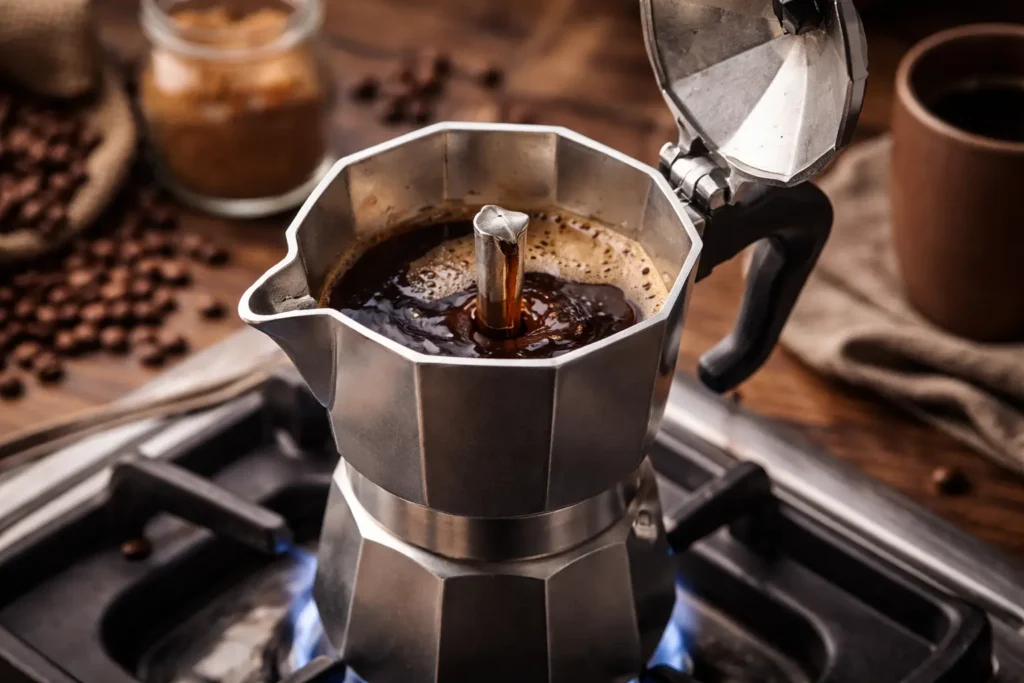
✍️ Editorial note: This guide is researched and written by the editors at CoffeeGearHub.com using manufacturer specifications, published brewing science, recognized specialty-coffee standards, and established community knowledge. Product links are affiliate links — we may earn a commission at no cost to you. Affiliate Disclosure: CoffeeGearHub.com participates in the Amazon Services LLC Associates Program. As an Amazon Associate, we earn from qualifying purchases.
🛒 New to Amazon? Try Prime free for fast, free shipping on every pick in this guide — or try Audible free if you’d rather listen while your coffee brews.
The 30-Second Answer
Moka pot troubleshooting starts with four variables: heat too high, grind too fine (or too coarse), a worn gasket, or a clogged filter. Lower heat to medium, target a medium-fine grind (table salt texture — finer than drip, coarser than espresso), never tamp the basket, and stop brewing when the stream turns pale. Fix those four things and 90% of moka problems disappear.
- Bitter or burnt: Lower heat, stop earlier, cool base under tap water
- Weak or sour: Go finer, fill basket fully, check bean freshness
- Leaking / sputtering: Replace gasket, go coarser, never tamp
- No flow: Clean filter plate, go coarser, check water level
Who This Guide Is For — Jump to What You Need
🔍 Diagnosing a bad cup
Start at Quick Diagnosis — match your symptom to a fix in one table.
🌡️ Understanding the science
Read How Moka Pots Work and Extraction Science.
⚙️ Dialing in grind & dose
Jump to Grind Size Guide or Dose by Pot Size.
🔧 Gear & maintenance
See Cleaning Guide or Gear Upgrades.
Table of Contents
- Leaks from the Middle (Gasket/Threads)
- Metallic / Off Flavors
- Sour Coffee (Under-Extraction)
- Grind Size Guide + Grinder Settings
- Coffee Dose by Pot Size
- Stovetop Type Guide (Gas, Electric, Induction)
- Roast Level Adjustments
- Advanced Dial-In Techniques
- Cleaning & Maintenance
- Quick Reference Troubleshooting Table
- Recommended Gear Upgrades
- FAQs
How a Moka Pot Works (and Why Problems Happen)
A moka pot has three main parts: the bottom chamber (water), the funnel basket (coffee), and the top chamber (finished brew). As the water heats, steam pressure builds and pushes hot water up through the coffee bed and into the top chamber.
That sounds straightforward — until you realize the moka pot doesn’t actively control much. There’s no pump, no PID temperature controller, and no pressure regulation beyond the safety valve. Brew quality depends entirely on:
- Heat input — how fast pressure rises and how hot the water gets at the basket
- Grind size — how easily water passes through the coffee bed
- Coffee dose — basket fill level and distribution
- Water level — must stay below the safety valve
- Seal quality — gasket condition and alignment
- Timing — when you remove the pot from heat
Over-extraction (bitter/burnt)
Usually too much heat, too fine a grind, or letting the late sputtering phase run too long. The bitter compounds extract last — collecting that tail ruins an otherwise good brew.
Under-extraction (weak/sour)
Usually too coarse a grind, an under-filled basket, too little heat causing stalling, or stale beans that have lost their soluble compounds.
Mechanical issues — leaks, no flow, steam at the valve — are typically seal or blockage problems: a worn gasket, coffee residue on the rim, a clogged filter plate, or a grind so fine it chokes the basket entirely.
Extraction Science: Why Moka Over-Extracts So Easily
Understanding the extraction physics behind your moka pot makes troubleshooting much faster — because once you know why bitterness happens, the fix becomes obvious.
Water temperature at the moka basket is typically 90–96°C — higher than most people realize, and close to the upper edge of the ideal espresso extraction range. Unlike a manual pour-over where you control water temperature directly, moka temperature is a function of heat input and timing: the faster you apply heat, the hotter the water gets before it reaches the coffee bed. This is why high heat is the single most common cause of bitterness. You’re not just speeding up brewing — you’re raising the extraction temperature of every milliliter of water that contacts the grounds.
Moka brewing also has distinct phases. The early flow extracts the sweeter, more soluble compounds first — acids, sugars, and pleasant Maillard-reaction flavors. As the bottom chamber empties, the remaining water gets hotter (less thermal mass to moderate it), pressure rises, and the brew transitions into a steam-heavy tail phase. This tail phase is where chlorogenic acid breakdown products and other bitter compounds dominate. Letting it run into your cup is the primary cause of that harsh, ashy aftertaste.
Grind size controls flow resistance and contact time. A finer grind slows flow, increases contact time, and raises extraction — good up to a point, then over-extracts sharply. A coarser grind speeds flow, reduces contact time, and can under-extract before enough sweetness is pulled. Because moka uses pressure rather than gravity, the relationship between grind size and flow is more sensitive than in drip brewing: a single click on a good hand grinder can be the difference between a balanced cup and a bitter one.
🔬 The key insight: Moka doesn’t regulate anything — it just builds pressure until something flows. Your job is to control heat (temperature), grind (flow resistance), and timing (when to stop) to keep extraction in the sweet zone and away from the bitter tail.
Quick Diagnosis: What Your Symptoms Mean
If you only read one section of this guide, make it this one. Match your symptom to the most likely cause and you can fix it in one brew cycle.
| Symptom | Most Likely Cause | Fast Fix |
|---|---|---|
| Bitter / burnt | Heat too high; brew runs too long; water too hot | Lower heat; stop early; try hot water start at 80–90°C |
| Weak / watery | Grind too coarse; basket under-filled | Go finer; fill basket fully — no tamp |
| No coffee comes out | Choked basket; clogged filter; valve blockage | Go coarser; clean parts; check valve |
| Sputtering / spraying | Heat too high; late phase running too long | Lower heat; stop when stream turns pale |
| Leaking from middle | Worn gasket; dirty rim; misalignment | Clean rim; replace gasket; tighten evenly |
| Metallic taste | New aluminum pot; residue; hard water scale | Season pot; rinse well; use filtered water |
| Sour / sharp | Under-extraction: coarse grind or low heat | Go finer; use medium heat; try hot water start |
| Grit / grounds in cup | Damaged filter plate; worn gasket; very fine grind | Replace gasket + filter set; go slightly coarser |
Fix Bitter or Burnt Moka Pot Coffee
What it tastes like: harsh, ashy, burnt, overly dry, aggressive. If your moka coffee makes you wince or leaves a lingering char, you’re almost certainly over-extracting the late-phase brew.
The real reason moka coffee goes bitter
Moka brewing has phases. The early flow is balanced and sweet. As the bottom chamber empties, temperature rises and the brew transitions into a steamier phase — this is where the bitter compounds dominate. If you let that phase gush into your top chamber, you’re adding a harsh, over-extracted concentrate on top of your good coffee.
- Heat too high (most common) → fast pressure rise + hotter brew + more bitter tail end
- Grind too fine → slower flow + more extraction + more bitterness in the cup
- Brewing too long → you’re collecting the harsh sputtering phase
- Water too hot at start → boiling water (100°C) in the base drives extraction temperature above 96°C at the basket, over-extracting bitter compounds before sweetness can emerge
- Very dark roast + aggressive heat → amplified bitterness from pre-developed bitter compounds
Fix it in one brew
- Lower heat to medium once the pot warms. You want a steady, controlled stream — not a violent surge.
- Stop the brew early: remove from heat when the stream turns pale or blond and the pot starts to hiss.
- Cool the base under cold tap water for 3–5 seconds to halt extraction immediately — especially helpful on electric coils that retain heat after you turn off the burner.
- Try a hot water start at 80–90°C instead of cold or boiling — see the water temperature section below for why this helps.
- Adjust grind slightly coarser if the stream is slow and the coffee still tastes aggressive after fixing heat.

Water Temperature: The Hidden Bitterness Cause Most Guides Skip
Most moka troubleshooting advice focuses on heat level and grind size — but starting water temperature is a separate variable that has a significant impact on extraction, especially for bitterness.
When you fill the moka base with cold tap water, the entire assembly heats slowly from the bottom up. The coffee grounds in the basket begin warming before water even reaches them, effectively pre-heating and stressing the grounds before extraction begins. By the time water arrives at the basket, it may already be at or above 96°C. Starting with boiling water (100°C) makes this even more extreme — water that hot drives extraction into the bitter zone almost immediately.
The solution is a hot water start at approximately 80–90°C. At this temperature, water reaches brewing pressure more quickly and smoothly, spends less time over heat in the basket, and stays in the sweet extraction window longer before the bitter tail phase begins.
Water Temperature Quick Guide
| Starting Water | Basket Temp (approx.) | Result | Recommendation |
|---|---|---|---|
| Cold tap (~18°C) | 90–96°C+ | Slow heat-up; grounds pre-heat and stress before water arrives | Avoid if bitterness is a problem |
| Hot water (~80–90°C) | 90–94°C | Smooth, even extraction; shorter heat-up; less bitterness risk | ✅ Recommended default |
| Boiling water (100°C) | 95–100°C+ | Aggressive extraction; high bitterness risk — especially with dark roasts | Avoid unless you stop very early |
💡 Practical tip: Use a kettle to heat water to approximately 80–90°C (or let boiling water cool for 90 seconds). Fill the moka base carefully and use a kitchen towel to handle the pot — it will be hot immediately.
Fix Weak or Watery Moka Pot Coffee
What it tastes like: thin, tea-like, hollow, sometimes sour. Weak moka coffee is almost always under-extraction — or a dose problem.
Common causes (ranked by frequency)
- Grind too coarse → water passes too quickly without picking up enough soluble compounds
- Basket not filled → less resistance and lower extraction; moka baskets are designed to be filled completely
- Stale coffee → dull, flat flavor regardless of technique
- Heat too low → weak pressure rise, slow and uneven brew that can stall mid-extraction
Fix it in one brew
- Go a step finer until the cup gains body and sweetness — refer to the grind guide below for specific settings.
- Fill the basket fully, level it with your finger, and do not tamp. Tamping can choke the brew and trigger valve issues. If you want less coffee, use a smaller pot — never half-fill the basket.
- Use fresh beans. See: Best Coffee Beans for Moka Pot for roast and freshness guidance.
- Use medium heat. Too low creates a slow drizzle that stalls before proper extraction completes.
Pro tip: If you love moka but want a smoother, less intense result, fix the extraction first and then dilute with hot water to taste — like an Americano. Don’t try to compensate for under-extraction by using less coffee.
No Coffee Comes Out (Blockages & Choking)
If the moka pot heats but nothing reaches the top chamber, treat it as a flow restriction problem. Most of the time, the coffee bed is choked — too fine, too packed — or the filter system is clogged with oils and fines.
Likely causes
- Grind too fine (espresso-fine or finer)
- Coffee tamped or overpacked
- Clogged filter plate or screen
- Blocked safety valve (rare but serious)
- Not enough water (below minimum fill)
Fix checklist
- Let the pot cool fully before opening
- Disassemble and rinse all parts thoroughly
- Clean the filter plate holes with a soft brush or toothpick
- Go coarser and never tamp
- Fill water to just below the safety valve line
If no-flow happens repeatedly, you likely need a grinder with tighter particle consistency. Blade grinders create excessive fines that choke the basket and add bitterness. A burr grinder is the single most impactful moka upgrade — see Recommended Gear below.
Sputtering, Spraying, or “Exploding” Brew
Some bubbling at the very end of a moka brew is normal. Violent spurting typically indicates too much heat or a choke-and-release flow pattern caused by a grind that’s too fine.
Why it happens
- Heat too high → pressure spikes and drives a turbulent stream
- Grind too fine → water struggles through the bed, then surges when resistance momentarily drops
- Overfilled or tamped basket → resistance too high, creating the same choke-and-surge pattern
- Brewing too long → you’re collecting the full steam-heavy tail phase
Fix it
- Use medium heat and avoid any temptation to speed up the brew.
- Stop brewing as soon as the stream turns blond or pale — this is the moment to act, not after sputtering starts.
- Cool the base under cold tap water immediately.
- If sputtering happens early in the brew, go slightly coarser and re-check basket fill (no tamp).
Leaks from the Middle (Gasket, Rim, Threads)
Steam or coffee escaping from the seam where top and bottom chambers join is both a flavor issue (loss of pressure = poor extraction) and a safety issue (unpredictable steam release).
Most common causes
- Worn or hardened gasket — rubber dries out and loses elasticity over time
- Coffee grounds on the rim — even a small amount prevents a complete seal
- Basket not seated correctly — misalignment breaks the seal
- Cross-threading or damaged threads — more common on older aluminum pots
Fix it fast
- Wipe the rim and gasket area clean of grounds before every brew
- Replace the gasket — cheap, easy, and high-impact (see gear picks below)
- Tighten firmly and evenly — snug, not gorilla-tight
Metallic Taste, Soapiness, or “Off” Flavors
Metallic taste is common with new aluminum moka pots, or when cleaning habits leave residue. The good news: it’s fixable — and largely preventable.
Causes and fixes
- New aluminum pot: brew and discard 2–3 cycles with water and coffee to season the interior
- Soap residue: avoid dish soap especially on aluminum — it penetrates the porous surface; rinse with hot water only
- Hard water scale: changes flavor and flow over time; use filtered water if your tap is hard
- Old oils in the filter plate or gasket area: deep clean periodically (see Maintenance section)
Want lower maintenance? Stainless steel moka pots are less reactive and easier to keep tasting neutral — see the picks in Recommended Gear.
Sour Coffee (Under-Extraction)
Sour moka coffee is almost always under-extracted — water didn’t pull enough sweetness and solubles from the grounds. People often confuse “strong” with “well-extracted.” A concentrated cup can still be under-extracted and sour.
What causes sour moka coffee?
- Grind too coarse — water passes through without doing enough work
- Heat too low — slow, uneven extraction or mid-brew stalling
- Light roast brewed like dark roast — light roasts resist extraction and need more finesse; see the roast adjustments section
- Stale coffee — dull acidity can present as “sharp” or “sour”
Fix
- Go slightly finer — small changes matter more in moka than in most brew methods
- Use medium heat (avoid “barely simmering”)
- Try a hot water start at 80–90°C for smoother, more even extraction
Grind Size Guide for Moka Pot (Including Grinder Settings)
Grind is the most impactful dial-in variable in moka brewing — more so than water temperature or brew timing in most cases. The target is medium-fine: finer than drip coffee, coarser than espresso. Visually, think table salt or fine sand. Particles should hold together slightly when pressed between your fingers but not clump or feel powdery.
Because moka uses pressure to push water through the coffee bed, the relationship between grind size and flow is more sensitive than in drip brewing. A single click on a quality hand grinder can swing a cup from bitter to balanced. This is why a burr grinder with reliable repeatability makes such a difference — not just for cup quality, but for your sanity during dial-in.
| Grind Size | Texture Reference | Most Common Result | Fix |
|---|---|---|---|
| Too coarse | Sea salt / chunky sand | Thin, sour, hollow cup | Go finer by 1–2 steps |
| ✦ Target: Medium-fine | Table salt / fine sand | Sweet, balanced, clean finish | This is your baseline |
| Too fine | Espresso-fine / powdery | Bitter, sputtering, harsh | Go coarser; never tamp |
Grinder Starting Settings for Moka Pot
These are starting-point settings for commonly used grinders. Dial in by making one-click adjustments and brewing: finer if sour or weak, coarser if bitter or sputtering. Keep everything else constant between adjustments.
| Grinder | Starting Setting for Moka | Direction to Adjust | Notes |
|---|---|---|---|
| KINGrinder K6 | 2–3 rotations from closed, then adjust by 2–4 clicks | Fewer clicks = finer; more clicks = coarser | Site’s recommended hand grinder; near-zero retention; 1-click precision makes moka dial-in easy |
| Baratza Encore (ESP) | Setting 7–10 (out of 40) | Lower number = finer | Consistent electric burrs; great for set-and-repeat daily moka |
| 1Zpresso J-Series | Internal burr: 2–2.5 rotations from zero | More clicks from closed = coarser | High precision; well-suited to fine-sand moka zone; good for travel |
| Generic blade grinder | Medium-fine pulse (approx. 10–12 seconds) | Longer = finer, but inconsistency is the core problem | Not recommended — excessive fines cause choking and bitterness; upgrade when possible |
💡 Dial-in tip: When dialing in a new bean, lock heat and dose and change only grind. Brew, taste, adjust one step. Repeat until the cup has clear sweetness and a clean finish. Once you’ve found it, note the setting — you’ll want to come back to it.
Coffee Dose by Pot Size (Basket Capacity Reference)
One of the most common under-extraction causes is simply using too little coffee. Moka baskets are designed to be filled completely — underfilling reduces resistance and lets water race through before extracting properly. If you want less coffee, use a smaller pot, not a partially filled basket.
These figures are approximate starting points — basket capacity varies slightly by brand and model. Weigh your specific basket’s actual capacity on your first brew to calibrate.
| Pot Size | Basket Capacity (coffee) | Water in Base | Yield (approx.) | Notes |
|---|---|---|---|---|
| 1-cup | 5–7g | 50–60ml | ~40ml | Fill basket fully; easy to over-extract — use low-medium heat |
| 2-cup | 10–12g | 90–100ml | ~80ml | Good for one strong serving or two short cups |
| 3-cup | 15–18g | 130–150ml | ~120ml | Most common size; good starting point for dial-in |
| 6-cup | 28–32g | 280–300ml | ~240ml | Two full servings; may need slightly finer grind than 3-cup |
| 9-cup | 42–48g | 430–460ml | ~360ml | Use medium-low heat to avoid scorching the base |
| 12-cup | 55–65g | 560–600ml | ~480ml | Longer heat-up time; stop early — sputtering phase arrives fast |
Stovetop Type Guide: Gas, Electric Coil, Ceramic Glass, and Induction
Your stovetop type is a major source of moka frustration that most troubleshooting guides ignore. Gas, electric coil, ceramic glass, and induction all behave differently — and each requires a slightly different approach to hit the “medium heat” sweet spot that moka needs.
| Stovetop Type | Behavior | Key Adjustment | Common Problem |
|---|---|---|---|
| Gas | Instant response; visual flame control; even heat distribution | Most forgiving — use medium flame, reduce to low-medium once flow begins | Flame too wide for small pots can heat the sides; use a small burner or flame diffuser |
| Electric coil | Slow to heat and slow to cool; retains heat after turning off | Start on medium; turn off 30–45 seconds before you’d normally stop — residual heat continues extraction | Bitter cups from residual heat; cool base under water immediately after removing |
| Ceramic glass (radiant) | Responsive but retains heat; smooth surface can slide pot | Medium setting; remove from heat a little early; cool base if needed | Pot slides on smooth surface; use a silicone pad or hold handle; residual heat similar to coil |
| Induction | Instant, precise control; requires magnetic-compatible pot | Most controllable — set to medium-low (typically 4–6 on a 1–10 scale); reduce once flow begins | Standard aluminum moka pots don’t work on induction; need stainless or an induction adapter plate |
🔬 Induction users: A standard aluminum Bialetti-style moka pot won’t work on induction because the base isn’t magnetic. You have two options: buy a stainless steel moka pot designed for induction, or use an induction adapter plate (see gear section). The adapter plate also stabilizes heat transfer and can smooth out extraction on coil and ceramic surfaces.
Roast Level Adjustments for Moka Pot
Roast level significantly changes how coffee extracts in a moka pot — and the adjustment is usually grind size. Dark roasts extract more easily; light roasts resist extraction. Using the same grind setting across roast levels is one of the most common dial-in mistakes.
| Roast Level | Extraction Behavior | Grind Adjustment | Heat Adjustment | Common Problem |
|---|---|---|---|---|
| Light roast | Dense bean; resists extraction; needs more work to release solubles | Go 1–2 steps finer than medium roast baseline | Use full medium heat; consider hot water start at 85–90°C | Sharp, grassy, sour cups — often mistaken for bitterness |
| Medium roast | Most forgiving; balanced extraction window; sweetest default | Baseline setting (table salt texture) | Medium heat, standard approach | Least prone to problems; start here when trying new beans |
| Medium-dark roast | Extracts readily; shorter sweet window before bitter tail | Standard or 1 step coarser | Medium to medium-low; stop slightly earlier | Can tip into bitterness quickly if heat is high or timing is late |
| Dark roast | Extracts very easily; high bitterness risk at any misstep | Go 1–2 steps coarser than medium baseline | Medium-low heat; stop early; cool base immediately | Ashy, harsh cups; oily beans can also degrade gaskets over time |
Exploring different beans for your moka? See: Best Coffee Beans for Moka Pot — covers roast profiles, origins, and Arabica vs Robusta for moka specifically.
Safety Valve Steam: What It Means (and What to Do)
If steam releases from the safety valve, the moka pot is telling you pressure is rising beyond normal brewing levels. This usually means something is blocked — a choked coffee bed, a clogged filter, or a packed basket. The valve is doing its job. Don’t ignore it.
What to do immediately
- Turn off heat.
- Let the pot cool completely before opening — never force it open under pressure.
- Disassemble and clean the filter plate, basket, and valve area.
- On next brew: go coarser and do not tamp.
Advanced Dial-In: Three Moves That Make Moka Taste Smoother
Once you’ve resolved the core problems, these refinements can dramatically improve sweetness and reduce bitterness — without changing your beans or grinder.
1) Start with hot water (reduces harshness)
Starting with pre-heated water at 80–90°C in the bottom chamber reduces the time the coffee spends heating before water arrives, lowers the peak basket temperature, and produces a smoother pressure rise. This is one of the most impactful single changes you can make if bitterness persists after fixing heat and grind.
- Heat water in a kettle to approximately 80–90°C (or let boiling water rest 90 seconds)
- Fill the base to just below the safety valve
- Assemble carefully using a kitchen towel — the base will be hot immediately
2) “Stop early” and skip the bitter tail
Most bitterness lives in the final phase of extraction. When the stream lightens from dark to pale and the pot starts to hiss, stop the brew. Many experienced moka brewers intentionally collect only the middle portion — the first pale stream signals the start of the tail, which is your cue to remove from heat and cool the base.
3) Control heat once flow begins
Once you see the first coffee emerge, your job is to keep it controlled — a steady flow that looks like warm honey. If the stream speeds up dramatically, lower heat. If it stalls and sputters early, you may be too fine on grind or too low on heat. The goal is the same steady stream for the full sweet phase of extraction.
Cleaning & Maintenance (Prevent Problems Before They Start)
Good moka coffee depends on clean flow paths and a reliable seal. Oils and fines accumulate in the filter plate, around the gasket, and in the threads — exactly where they cause bitterness, leaks, choking, or off flavors.
After every brew
- Disassemble and rinse all parts with warm water — no soap on aluminum
- Wipe the rim and gasket area clean; grounds here cause leaks on the next brew
- Dry completely before storing to prevent odors and corrosion
Weekly (or every 10–15 brews)
- Remove the gasket and filter plate and rinse behind them
- Brush the filter holes gently with a soft brush to remove accumulated oils and fines
Monthly deep clean (as needed)
If flavors are drifting bitter or “old,” soak the metal parts (not the gasket) in hot water with a small amount of baking soda, then rinse thoroughly. Avoid harsh chemicals. A very dilute vinegar solution can address scale if your water is hard — rinse extremely well afterward and don’t do this frequently.
Gasket replacement schedule
If you brew frequently (daily), replace the gasket once a year as a baseline. Replace sooner if you see leaks, the gasket feels stiff or cracked, pressure seems weak, or grounds start appearing in the top chamber. Gaskets are inexpensive and keeping a spare on hand is good practice — see gear section for options.
Troubleshooting Quick Reference Table
| Problem | Likely Cause | Best Fix |
|---|---|---|
| Bitter / burnt | High heat; late-phase over-extraction; starting water too hot | Lower heat; stop early; cool base; try 80–90°C hot water start |
| Weak / watery | Coarse grind; under-filled basket; stale beans | Go finer; fill basket fully (no tamp); use fresh beans |
| No flow | Choked bed or clogged filter | Go coarser; clean screen/plate; check valve; never tamp |
| Sputtering / spraying | Too much heat; choke-and-surge from fine grind | Medium heat; coarser grind; stop early |
| Leaks from middle | Worn gasket; dirty rim | Clean rim; replace gasket; tighten evenly |
| Metallic/off taste | New pot; residue; hard water scale | Season; rinse well; use filtered water; deep clean |
| Sour / sharp | Under-extraction; coarse grind; low heat | Go finer; medium heat; hot water start |
| Grit in cup | Damaged filter plate; worn gasket; excess fines | Replace gasket + filter set; upgrade to burr grinder |
| Safety valve steam | Blockage; grind too fine; tamped basket | Turn off heat; let cool; clean all parts; go coarser |
Recommended Gear Upgrades (Grinders, Gaskets, Stainless Moka Pots)
If you troubleshoot moka issues repeatedly, these upgrades address the most common failure points: grind consistency, seal integrity, and material or maintenance. Each pick is named and matched to the specific problem it solves.
1) Burr Grinders (Biggest Upgrade for Better Moka)
Most bitterness, sputtering, and no-flow problems trace back to inconsistent grounds and excess fines from blade grinders. A burr grinder gives you repeatable particle size so you can dial in once and maintain it. The three picks below cover the main use cases for moka brewers.
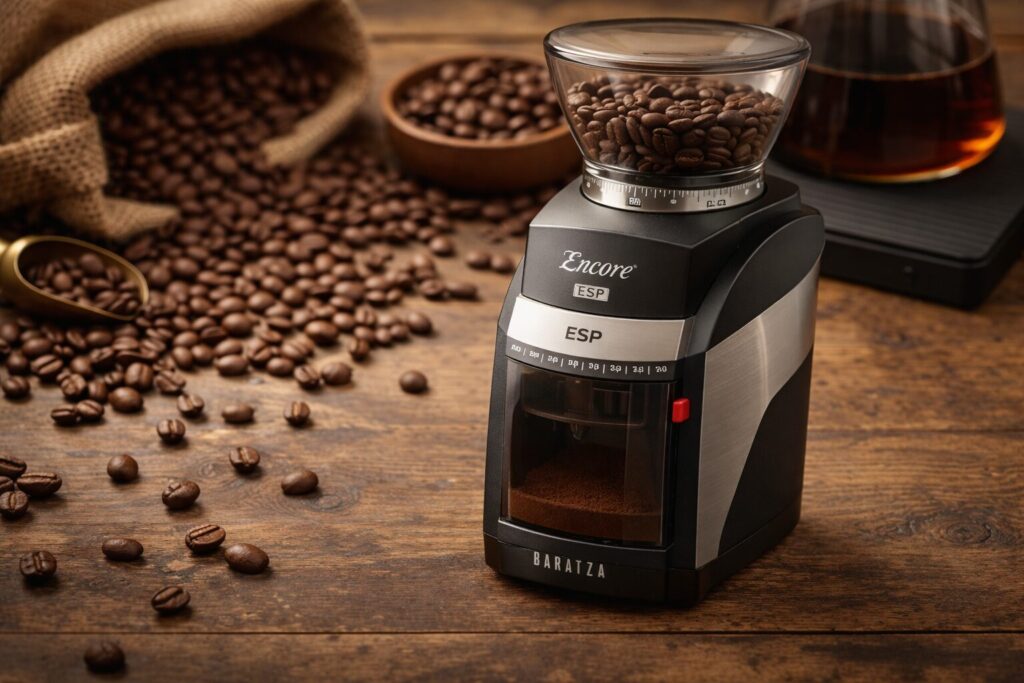
Baratza Encore ESP — Best Electric Burr Grinder for Moka
Why it helps: The Encore ESP’s 40 grind settings give you precise control in the medium-fine moka zone. Consistent particle sizing means fewer fines (less bitterness) and no choking (better flow). Ideal for daily set-and-repeat moka brews without manual grinding.
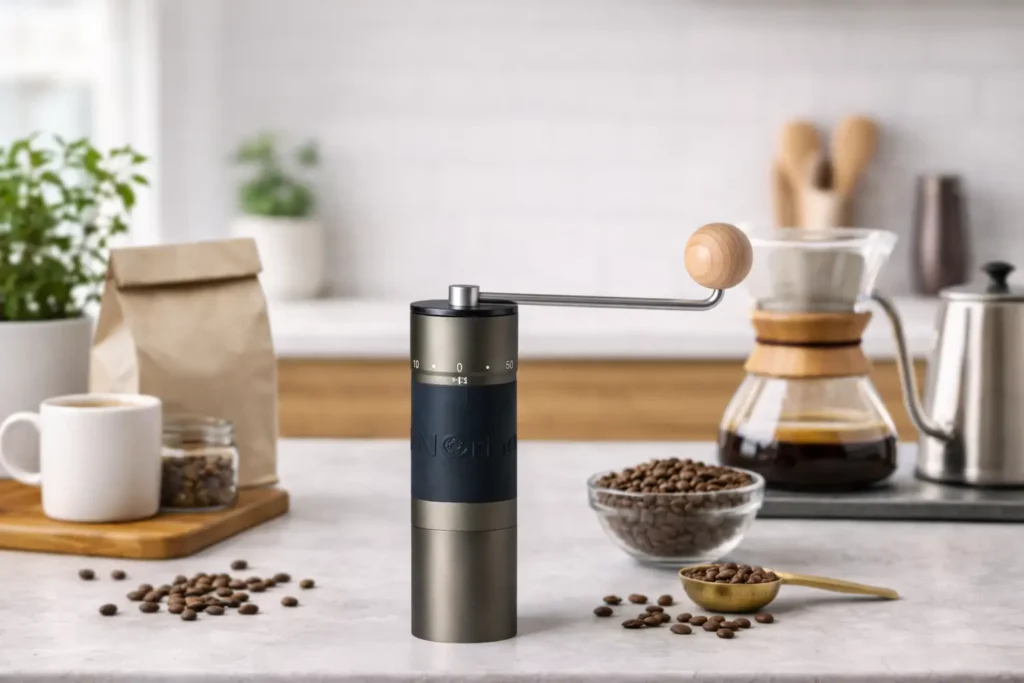
KINGrinder K6 — Best Hand Grinder for Moka Dial-In
Why it helps: The K6’s click-based adjustment system and consistent steel burrs make it ideal for the fine-sand grind zone that moka needs. Near-zero retention means no stale grounds carried over. Start at 2–3 rotations from closed and adjust by 2–4 clicks — finer if sour, coarser if bitter.
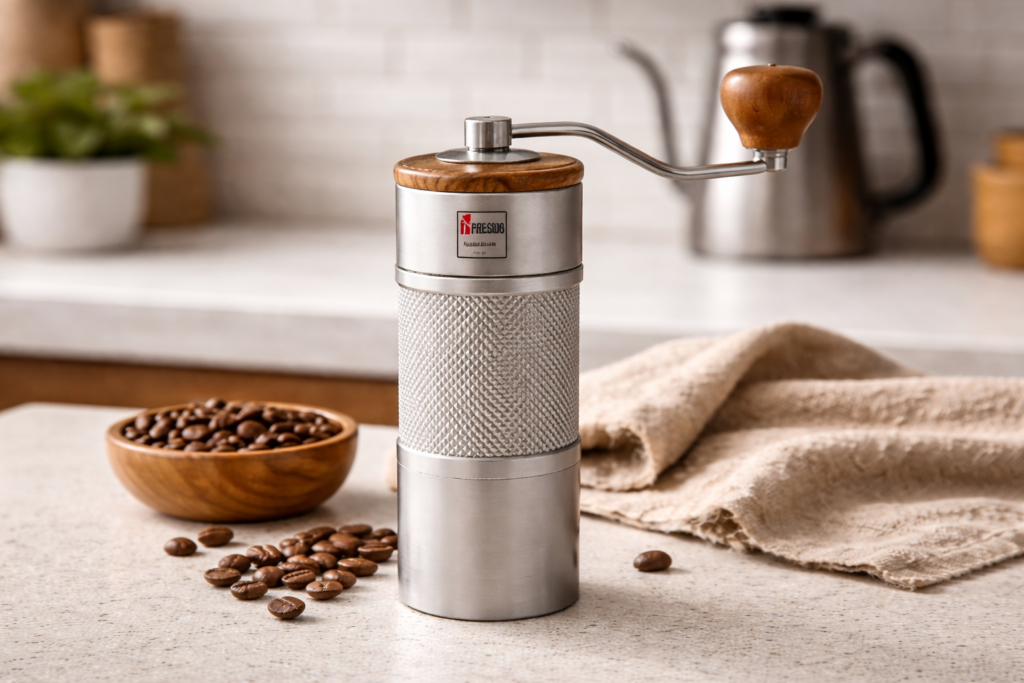
1Zpresso J-Series — Best Premium Manual Grinder
Why it helps: The J-Series produces a very narrow particle distribution — fewer fines than most hand grinders, which directly reduces bitterness and the risk of choking in moka. Great for travel setups and for those who want espresso and moka from the same grinder.
For a full grinder comparison with additional settings and model details: Best Coffee Grinders for Moka Pot.
2) Replacement Gaskets + Filter Plates (Fix Leaks & Off Taste)
If your moka pot is leaking, tasting off, or sending grounds into the top chamber, a gasket + filter plate replacement set is often the fastest and cheapest fix. If your gasket feels stiff, cracked, or doesn’t sit flush, replace it before your next brew.
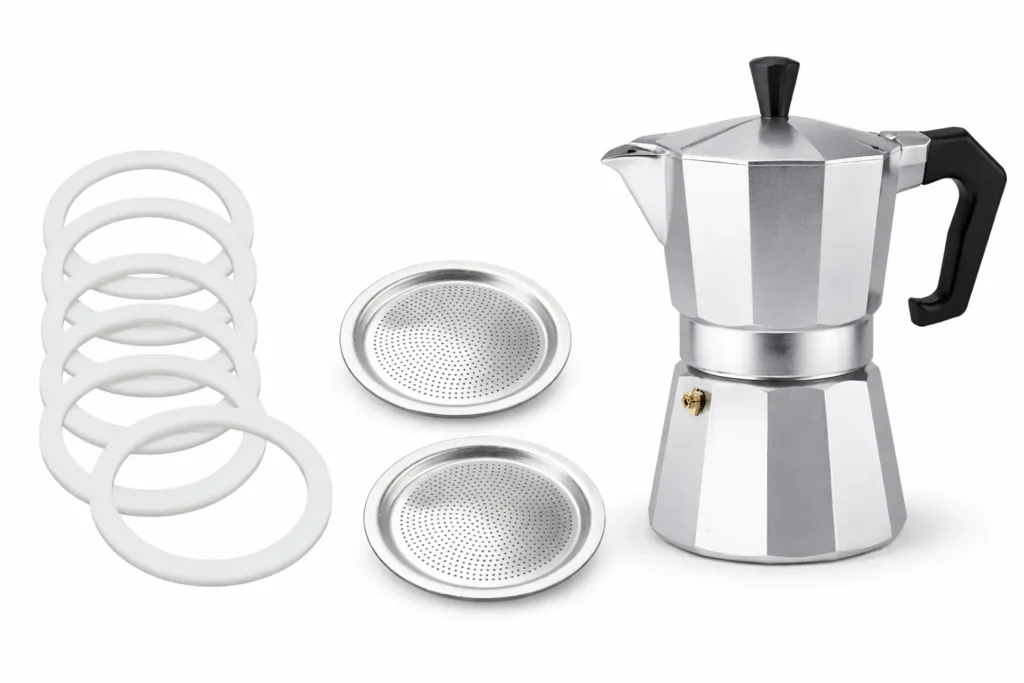
Gasket + Filter Plate Replacement Set
Best for: leaks from the middle seam, grounds in the cup, weak pressure, or old-rubber flavor tainting your brew. Replace both together — a new filter plate with an old gasket still leaks.
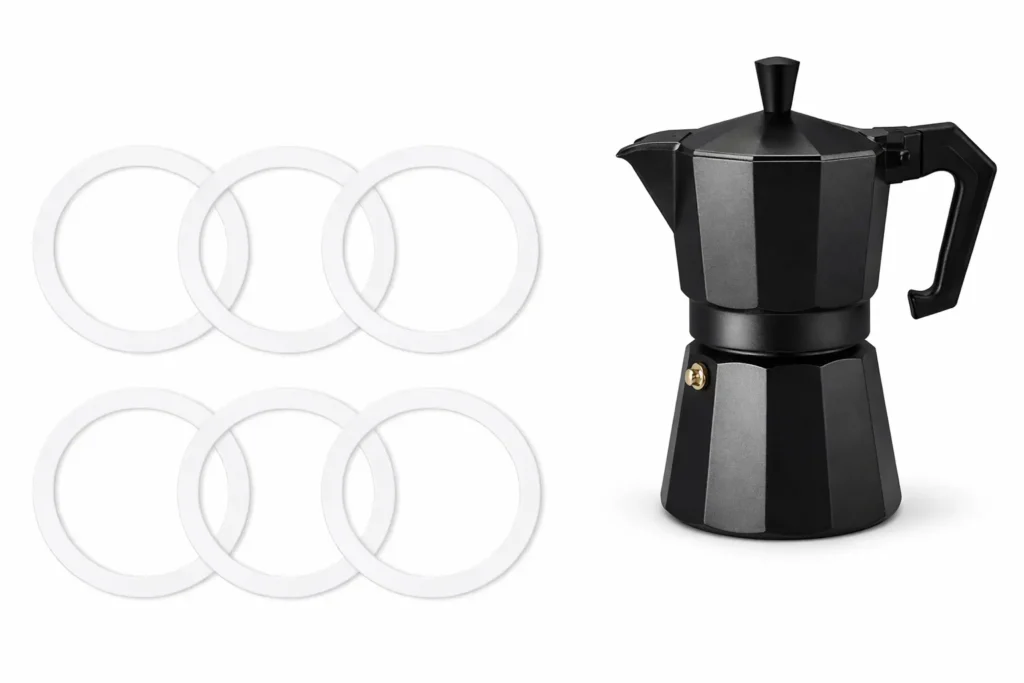
Silicone Gasket Upgrade (Optional)
Best for: frequent brewers who want durability and easier cleaning. Silicone gaskets maintain their shape and elasticity longer than rubber, meaning fewer leaks over time and a longer replacement interval.
3) Stainless Steel Moka Pots (Cleaner Taste + Induction Ready)
A stainless moka pot won’t fix technique issues — but it reduces metallic taste, lowers maintenance demands, and opens up induction cooktop compatibility. If you brew on induction or find aluminum pots hard to keep tasting neutral, stainless is worth considering.
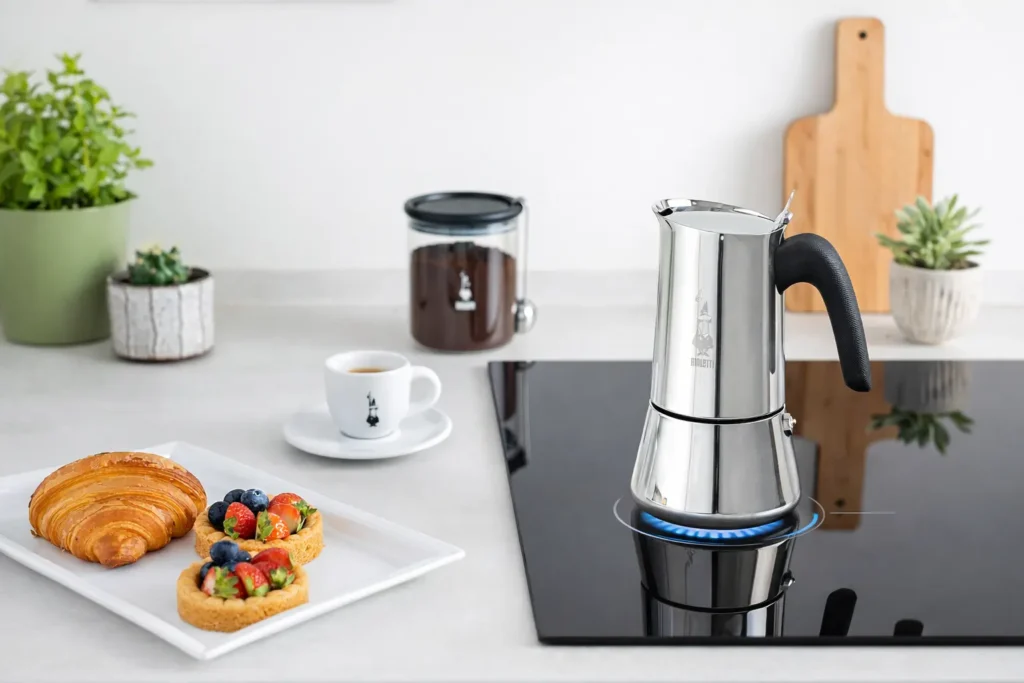
Bialetti Venus — Best Stainless Moka Pot (Induction Compatible)
Best for: induction cooktops, cleaner taste with no metallic notes, and lower maintenance. The Venus works on all stovetop types and holds its flavor neutrality well over time.
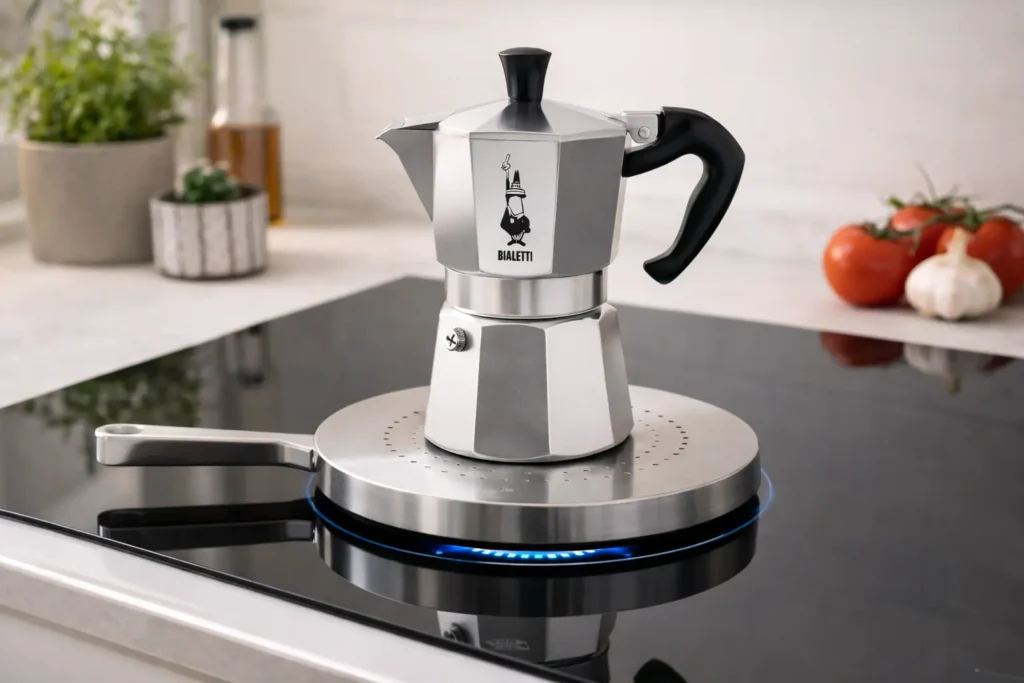
Induction Adapter Plate — Use Any Moka Pot on Induction
Best for: using a standard aluminum moka pot on an induction cooktop without replacing the pot. Also helps stabilize and moderate heat on electric coil and ceramic glass stoves — useful if you’re fighting bitterness from uneven heat.
FAQs: Moka Pot Troubleshooting
Why does my moka pot coffee taste bitter?
Bitterness usually comes from too much heat, a grind that’s too fine, or letting the sputtering tail end run too long into the cup. Use medium heat, stop the brew when the stream turns pale, and cool the base under cold water. Starting with 80–90°C water instead of cold tap water also helps by reducing peak basket temperature.
What grind size should I use for a moka pot?
Target medium-fine — finer than drip coffee, coarser than espresso. Think table salt or fine sand texture. On the KINGrinder K6, start at 2–3 rotations from closed and adjust by 2–4 clicks at a time. On the Baratza Encore, start around setting 7–10. If the brew is weak or sour, go finer. If it’s bitter or sputters early, go coarser.
Should I tamp coffee in a moka pot basket?
No — never tamp. Fill the basket to the top, level it with a finger or flat edge, and keep the bed loose. Tamping creates the same over-pressure as a grind that’s too fine: it chokes flow and can trigger safety valve steam or a harsh, sputtering brew.
Why is my moka pot leaking from the middle?
Leaks mean the gasket is worn or hardened, the rim has grounds on it preventing a seal, or parts are misaligned. Wipe the rim clean before every brew, ensure the basket sits correctly, and replace the gasket — often sold with the filter plate as a set.
Why does my moka pot sputter or spray coffee?
Sputtering is typically too much heat or a choke-and-surge flow pattern caused by an overly fine grind or tamped basket. Lower heat, adjust grind slightly coarser, and stop the brew the moment the stream turns blond or pale. The sputtering phase is where most bitterness lives.
Why is no coffee coming out of my moka pot?
Almost always: grind too fine, coffee tamped or overpacked, or a clogged filter plate. Turn off heat, let the pot cool completely, disassemble and clean all parts including the filter holes, then brew again with a coarser grind, no tamp, and water filled to just below the safety valve.
Is it okay if steam comes from the safety valve?
Safety valve steam means pressure is too high — usually a blockage from a fine grind, a tamped basket, or a clogged filter. Turn off heat immediately, let the pot cool fully before opening, clean everything, and on the next brew go coarser with no tamp.
How do I stop my moka pot coffee from tasting metallic?
New aluminum pots often taste metallic until seasoned — brew and discard 2–3 cycles. Avoid soap on aluminum (rinse with hot water only). Use filtered water if your tap is hard. If metallic taste persists despite good maintenance, consider upgrading to a stainless steel moka pot.
How often should I replace a moka pot gasket?
Annually is a good baseline for frequent brewers. Replace sooner if you see leaks, the gasket feels stiff or cracked, pressure seems weak, or grounds start appearing in the top chamber. Keep a spare on hand — gaskets are inexpensive and a worn one can ruin otherwise perfect brew technique.
Should I start with cold water or hot water in the moka pot base?
Hot water at approximately 80–90°C is recommended. It reduces heat-up time, lowers peak basket temperature, and produces a smoother pressure rise — all of which reduce bitterness risk. Use a kettle to heat water before filling the base, and handle the pot with a kitchen towel since it heats immediately.
Continue Reading
MOKA POT CLUSTER
- Best Coffee Grinders for Moka Pot — Fix choking and bitterness with consistent grind
- Best Coffee Beans for Moka Pot — Choose roasts and origins that shine in moka
- How to Use a Moka Pot (Step-by-Step) — Build solid technique from the ground up
COFFEE SCIENCE & GEAR
- Arabica vs Robusta — Understand intensity, caffeine, and bitterness tradeoffs
- How to Dial In Coffee at Home — Same logic applies across all brew methods
- Espresso Troubleshooting Guide — Same diagnosis principles; different pressure range
☕
Written by the CoffeeGearHub Editorial Team
CoffeeGearHub is a specialty coffee equipment resource produced by the CoffeeGearHub Editorial Team. Our guides are researched using published brewing science, manufacturer specifications, and established specialty-coffee community knowledge. We review and update our pillar content regularly. About CoffeeGearHub →