
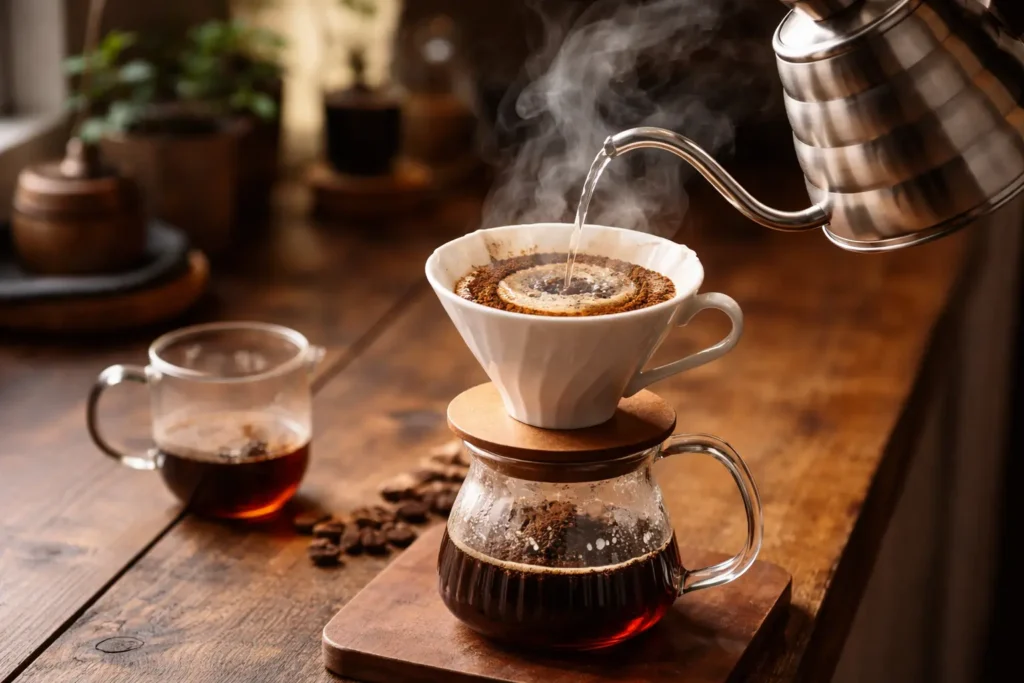
How to Make Pour Over Coffee
Last Updated: March 2026 • 20–25 min read • Complete Guide: Pour Over Science + Brew Sequence + Dripper Recipes […]
Pour-over is the most hands-on brew method in home coffee — and the one that rewards attention to detail more than any other. Every variable is in your hands: grind size, water temperature, pour speed, bloom time, and total brew time. That level of control is what makes pour-over capable of producing extraordinarily clean, complex, and nuanced cups. It is also what makes it unforgiving when those variables are off.
The good news is that most pour-over problems trace back to the same two or three variables, and fixing them is straightforward once you understand what each one does. Grind size controls flow rate and extraction speed. Pour technique controls how evenly water contacts the grounds. Dripper shape — cone versus flat bottom — affects how forgiving the brew is on an off day. Understanding those relationships is what separates a consistently excellent pour-over from a hit-or-miss one.
This section covers pour-over technique and equipment in full: a complete brewing setup guide covering gear priority and extraction fundamentals, a dedicated grind size reference for pour-over, a troubleshooting guide for fixing sour, bitter, or weak results, and comparison guides covering the most common dripper decisions — V60 versus Chemex versus Kalita Wave, flat-bottom versus cone, and drip coffee versus pour-over for those still deciding between the two methods.
For pour-over equipment roundups and bean picks, head to Best Picks where the buying guides live.
Last Updated: March 2026 • 20–25 min read • Complete Guide: Pour Over Science + Brew Sequence + Dripper Recipes […]
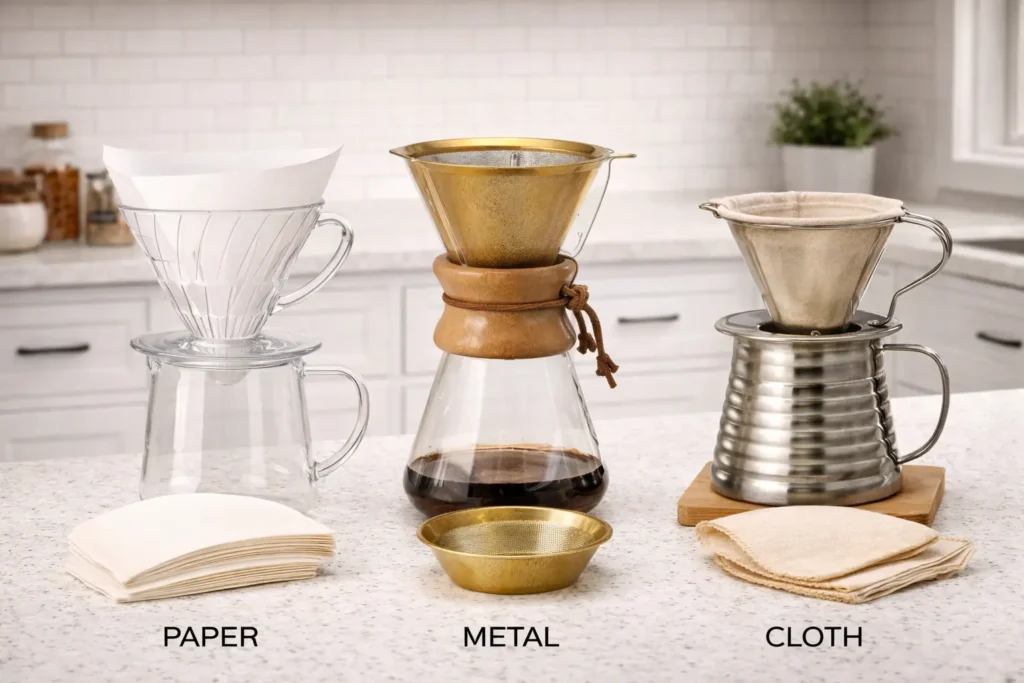
Last Updated: March 2026 • 18–24 min read • Covers: Paper vs Metal vs Cloth + Filter Taste Differences +
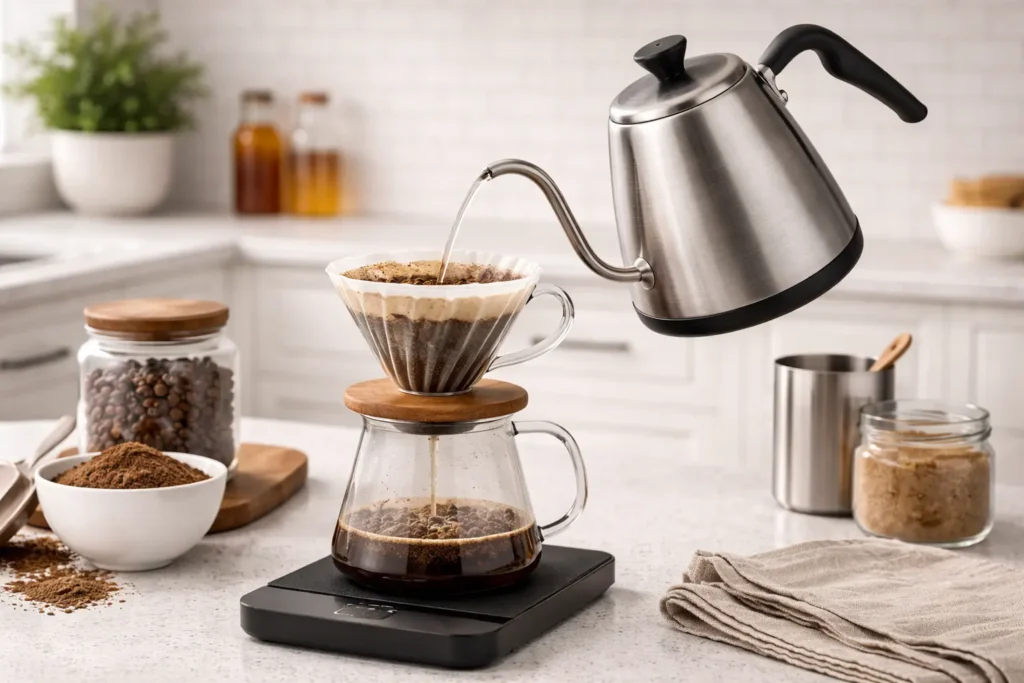
Last Updated: March 2026 • 18–24 min read • Covers: Ideal Temperature Range + Roast Level Adjustments + How Temperature
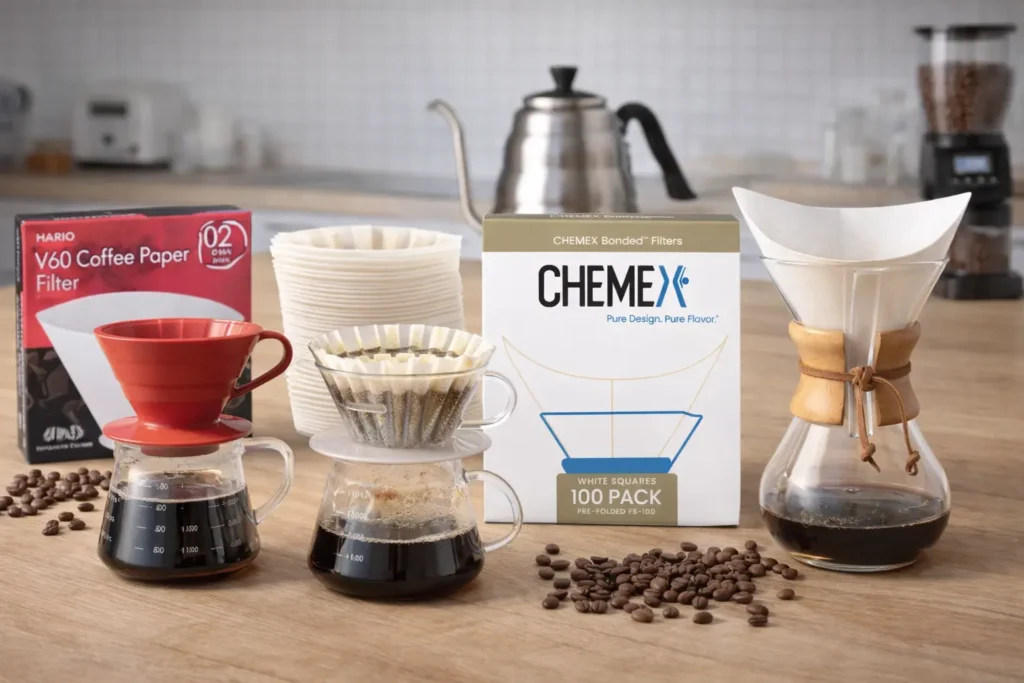
Last Updated: February 2026 • 18–24 min read • Pour-Over Comparison: Filter Design + Taste + Brew Parameters + Product
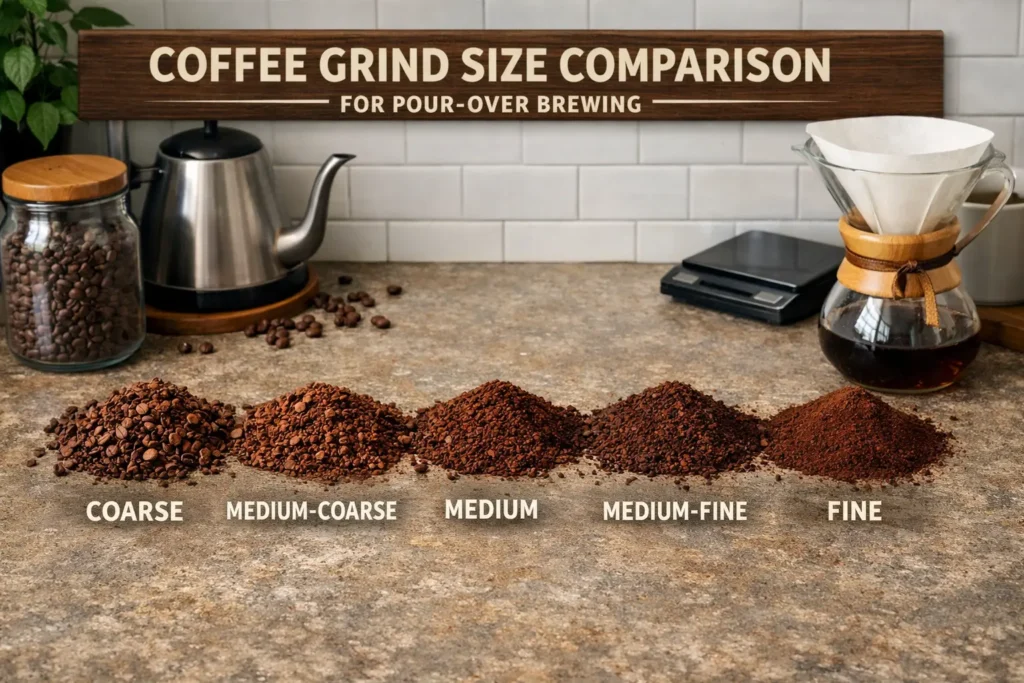
Quick Summary: Grind size is the single most important variable in pour-over coffee. If your brew tastes sour, bitter, weak,
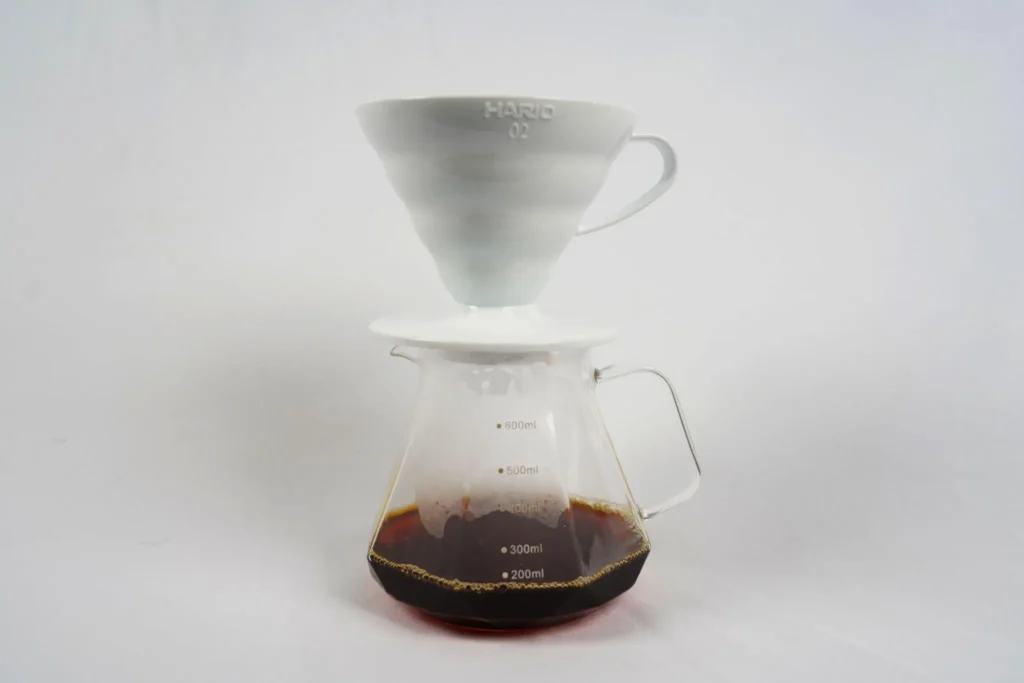
Last Updated: March 2026 • 20–25 min read • Complete Guide: Dripper Science + Flavor Differences + Recipes + Product
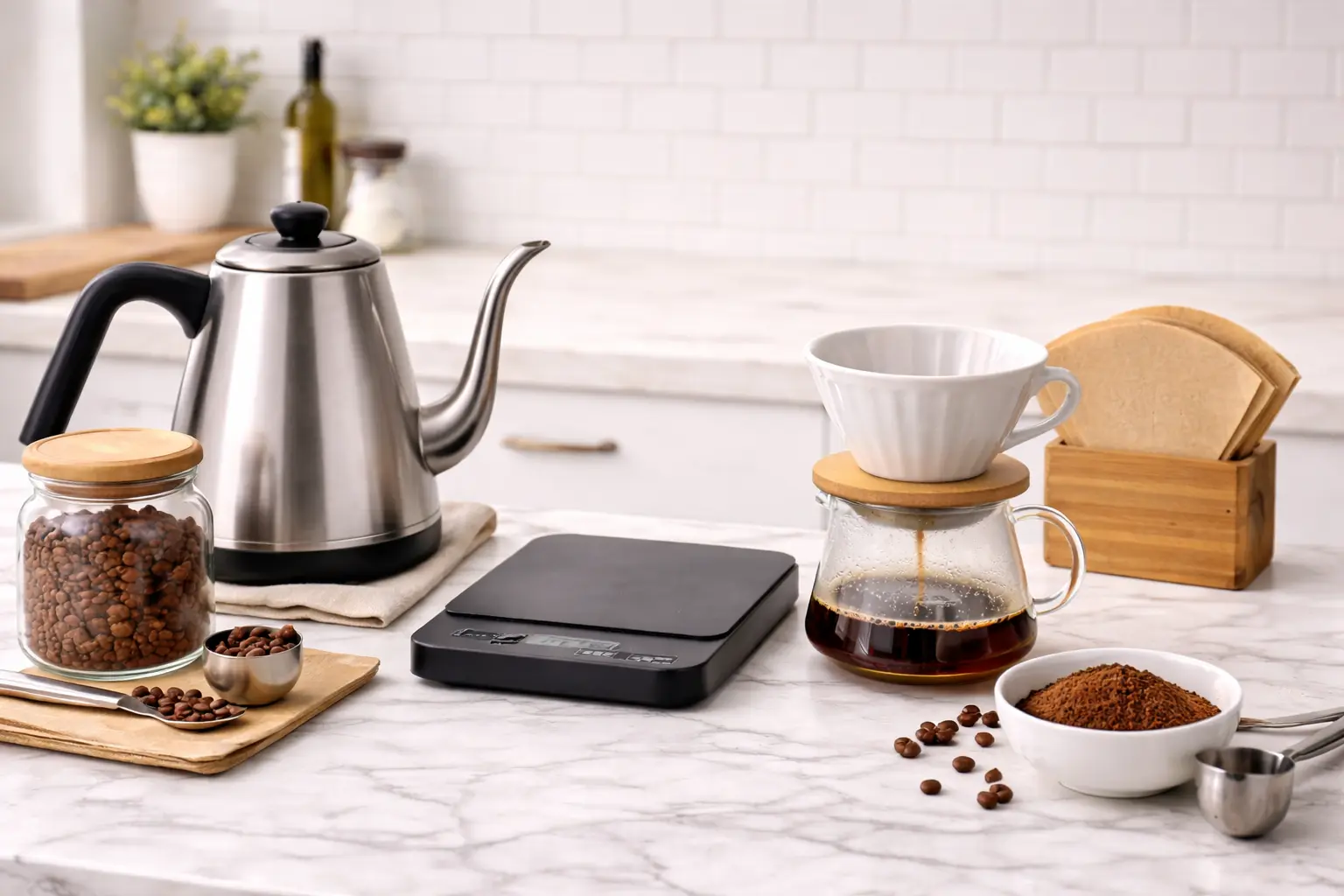
Last Updated: March 2026 • 25–35 min read • Complete Setup Guide: Gear Priority + Extraction Science + Dial-In System
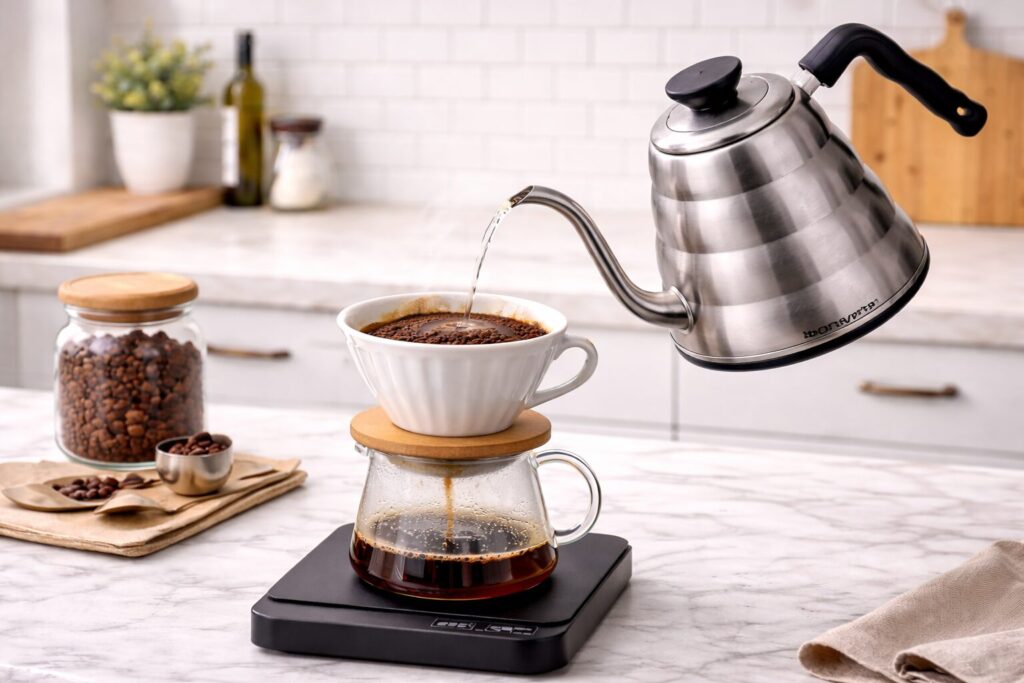
Last Updated: March 8, 2026 • 18 min read ✍️ Editorial note: This pour-over troubleshooting guide is researched and written by the
Last Updated: March 9, 2026 • 20–25 min read • Pillar Guide: Brewer Comparison + Brew Mechanics + Recipes +