Best Coffee Gear for Beginners (2026 Starter Guide)
Editorial standards: this starter guide prioritizes useful, durable equipment over buying a large bundle of gadgets. Recommendations are based on brew-method needs, repeatability, workflow, and published product information unless hands-on testing is explicitly stated.
At a glance
What this guide covers
This guide builds a practical first coffee setup in order of impact: choose a brewer, add a burr grinder, use a scale, manage water temperature, and buy only the accessories your chosen method actually needs.
Editorial analysis
A smaller, better-matched setup beats a drawer full of accessories
Beginners often spend too much on secondary tools before solving the variables that most affect the cup. Fresh coffee, a consistent grinder, a repeatable ratio, and a brewer you enjoy using matter more than a long accessory list.
Build around one primary brew method first. Once that workflow is repeatable, add equipment only when it solves a real limitation—such as inconsistent grinding, poor pouring control, or inaccurate dosing.
The 30-Second Answer
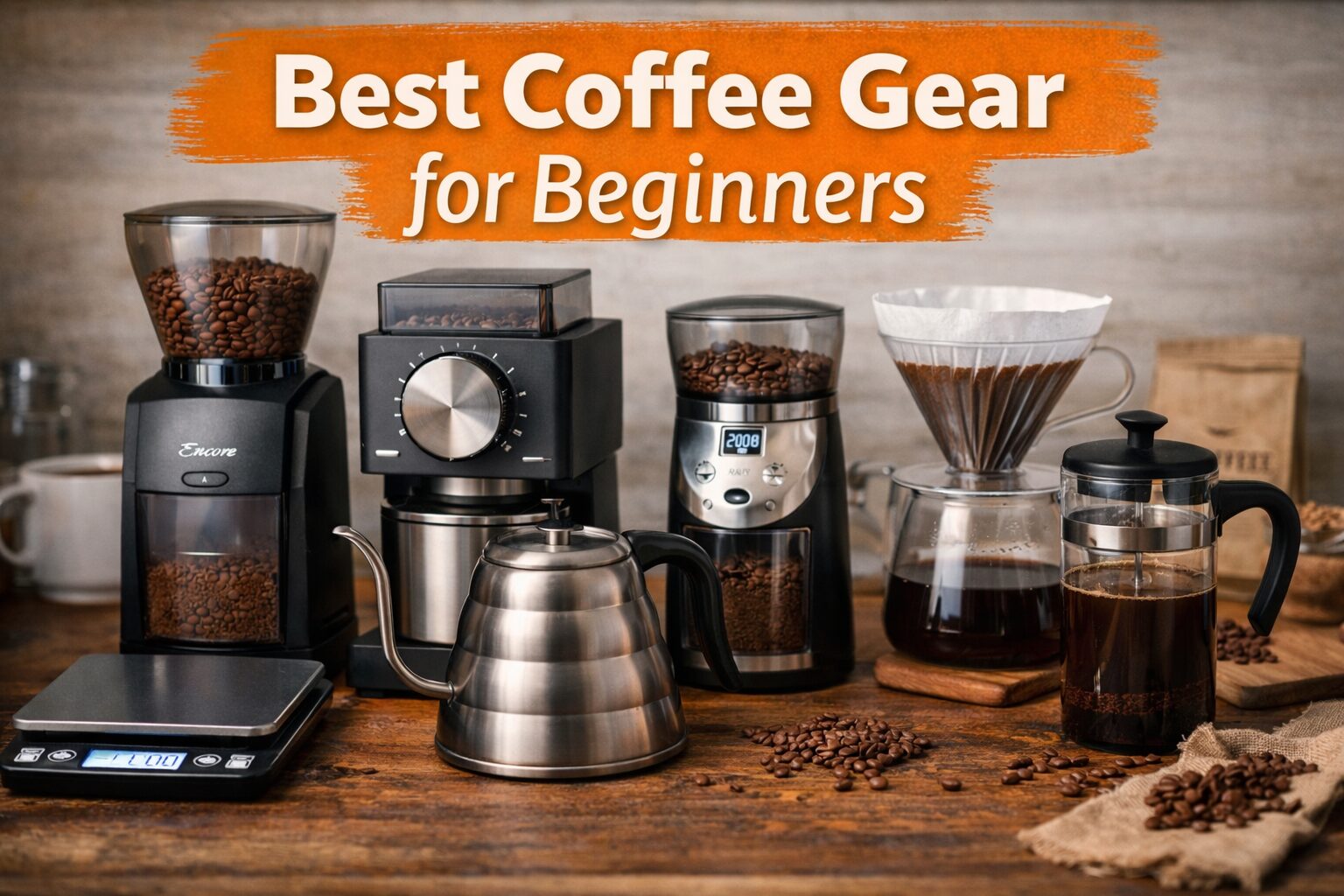
A smart beginner setup is a brewer you will use, a burr grinder, a basic scale, fresh coffee, and an appropriate kettle. Start there; add accessories only after you know what problem they solve.
How to Build a Beginner Coffee Setup Without Overspending
The easiest way to waste money on coffee gear is to shop by product category instead of by brewing workflow. Start with the drink you make most often. Someone who wants one clean cup each morning needs a different setup from a household brewing a full carafe, and both differ from someone primarily making milk drinks.
1. Pick one primary brewer
Choose a method that matches your serving size, cleanup tolerance, and morning routine. AeroPress works well for one or two cups and quick cleanup; drip machines suit larger batches; pour-over gives more manual control; French press emphasizes body; moka pot makes concentrated stovetop coffee. You do not need several brewers to learn good coffee.
2. Put more of the budget into the grinder
A burr grinder improves repeatability because it produces a narrower range of particle sizes than a blade grinder. That makes adjustments meaningful: when you move finer or coarser, the brew changes more predictably. If the budget is tight, a capable manual grinder often offers better burr quality per dollar than an inexpensive electric model.
3. Use a scale before chasing advanced technique
A simple scale lets you repeat coffee dose and water amount. That gives you a baseline you can actually diagnose. If yesterday’s cup used 18 grams of coffee and 288 grams of water, you can reproduce it today instead of estimating with scoops and cup markings.
4. Match the kettle to the brewer
For immersion brewers, moka pot, and many automatic machines, a standard kettle can be sufficient. A gooseneck kettle becomes more useful for pour-over because it improves control over flow rate and placement. Variable temperature is convenient, but it is not mandatory for learning to brew well.
5. Delay optional accessories
Distribution tools, specialty filters, storage systems, dosing funnels, and smart scales can all be useful in the right setup. They should come after the core workflow is stable. A useful rule is simple: if you cannot name the specific brewing problem an accessory solves, it probably is not the next purchase.
Quick Picks: Best Coffee Gear for Beginners
This guide covers simple, reliable tools that improve flavor, consistency, and confidence while keeping costs reasonable.
| Category | Recommended Gear | Why It’s Beginner-Friendly | Price Range |
|---|---|---|---|
| Coffee Grinder | Baratza Encore / OXO Brew | Consistent grinds, simple controls | $100–$150 |
| Brewer | Hario V60 / French Press | Low cost, easy learning curve | $15–$40 |
| Kettle | Gooseneck (Stovetop/Electric) | Improved pour control | $25–$80 |
| Scale | Digital Scale with Timer | Repeatable results | $15–$40 |
| Filters | Paper Filters (V60/Chemex) | Clean, forgiving brews | $5–$15 |
If you’re still choosing a grinder, start with our detailed comparison: Best Coffee Grinders for Beginners. Not sure which accessories matter most? See Coffee Accessories: What Actually Matters to prioritize the right upgrades.
Essential Coffee Gear for Beginners
These five items form the foundation of any home coffee setup. Prioritize quality in these areas first.
1️⃣ Coffee Grinder
The Most Important Tool
A quality grinder has more impact on coffee flavor than any other piece of equipment. Freshly ground beans brew more evenly and taste noticeably better.
Beginners should prioritize: Burr grinding (not blade), simple grind adjustment, and consistent medium grinds.
Top picks: Baratza Encore (best overall) and OXO Brew Conical Burr Grinder (easiest to use). Learn why grinders matter more than brewers in Coffee Accessories: What Actually Matters.
2️⃣ Coffee Brewer
Manual or Automatic
For beginners, manual brewers offer the best balance of control, price, and learning value.
Best options: Pour Over (V60 style) for clean flavor, French Press for full-bodied results, or Drip Coffee Maker for convenience.
If you enjoy hands-on brewing, pour over is an excellent place to start.
3️⃣ Digital Scale
Highly Recommended
Using a scale removes guesswork and helps beginners brew consistently good coffee every time.
Key benefits: Measures coffee and water accurately, improves repeatability, and many include built-in timers.
This is one of the cheapest upgrades with the biggest impact on consistency. See why scales are essential in our accessories guide.
4️⃣ Gooseneck Kettle
Optional but Recommended
A gooseneck kettle gives you better control over water flow, which improves extraction—especially for pour over brewing.
Options: Stovetop kettles are affordable and durable, while electric kettles offer temperature control and speed.
This upgrade isn’t mandatory on day one, but noticeably improves consistency. Read Coffee Accessories: What Actually Matters to learn which accessories improve taste vs convenience.
5️⃣ Filters & Basic Accessories
Beginners should stick to paper filters and basic accessories that simplify cleanup and reduce bitterness.
- Paper filters (V60 or basket style)
- Simple coffee scoop or dosing cup
- Airtight coffee storage container
Beginner Coffee Gear Budget Breakdown
Here’s what you can realistically build at different price points—and where your money makes the biggest difference.
| Budget Range | What You Get | Quality Level |
|---|---|---|
| $75–$100 | Blade grinder + brewer (basic results) | Starting Point |
| $150–$200 | Burr grinder + brewer + scale | ⭐ Recommended |
| $250–$350 | Full beginner setup with scale & kettle | Excellent Setup |
| $400+ | Premium grinder + complete accessory kit | Enthusiast Level |
The best value range for beginners is $150–$200, prioritizing a burr grinder first. Build your setup gradually and learn one variable at a time. For detailed guidance on what to buy now vs later, bookmark Coffee Accessories: What Actually Matters.
Common Beginner Coffee Gear Mistakes
Avoid these common pitfalls when starting your coffee journey.
- ❌ Overspending on espresso machines too early – Master the basics with simpler brewing methods first
- ❌ Using blade grinders for pour over – Uneven grinds ruin extraction quality
- ❌ Ignoring grind size and ratios – Technique matters more than expensive gear
- ❌ Buying too much gear at once – Start with grinder + scale, then expand (see our guide to upgrading in the right order)
- ❌ Skipping the digital scale – Eyeballing measurements leads to inconsistent results
- ❌ Neglecting water quality – Bad water ruins even the best beans and equipment
Final Verdict: Build Your Setup Smart
If you’re starting from scratch, prioritize a burr grinder, simple brewer, and digital scale. This combination delivers the biggest improvement in coffee quality with the least complexity.
💡 Key Takeaways
- Grinder first, always – This upgrade has 10x more impact than any brewer
- Scale = consistency – The cheapest way to dramatically improve repeatability
- Build gradually – Master one variable at a time before adding complexity
- Good coffee comes from consistency – Not expensive gear
Related Beginner Guides
Frequently Asked Questions
Is it worth buying coffee gear as a beginner?
Yes. Even basic beginner coffee gear improves flavor, consistency, and repeatability compared to pre-ground coffee and cheap equipment. The key is prioritizing the right upgrades—starting with a burr grinder and digital scale rather than expensive brewers or unnecessary accessories. See Coffee Accessories: What Actually Matters to learn which upgrades improve taste vs convenience.
What coffee gear should beginners buy first?
Beginners should prioritize a burr grinder, a simple brewer, and a digital scale. These three items provide the biggest quality improvement and form the foundation of any home coffee setup. Everything else—kettles, timers, fancy accessories—can wait until you’ve mastered the basics. Read our complete guide to coffee accessories for detailed priorities.
How much should beginners spend on coffee gear?
Most beginners can build a solid coffee setup for $150–$200 by prioritizing a burr grinder and manual brewer. Spending more than that before mastering technique usually doesn’t improve results. Focus on quality in the essentials, then upgrade gradually as you learn what matters most for your brewing style.
Do beginners need expensive coffee equipment?
No. Beginners should focus on consistency and technique rather than expensive or complex equipment. A $100-150 burr grinder will dramatically outperform a $500 brewer paired with a blade grinder. Invest in the fundamentals first, then upgrade selectively based on what actually improves your daily coffee.
Should I buy a blade grinder or burr grinder as a beginner?
Always choose a burr grinder, even as a beginner. Blade grinders produce inconsistent particle sizes that lead to uneven extraction—meaning bitter and sour flavors in the same cup. Even an entry-level burr grinder like the Baratza Encore or OXO Brew dramatically improves coffee quality compared to any blade grinder.
CoffeeGearHub product shortlist
Build a starter setup with CoffeeGearHub
Browse the main equipment categories before comparing merchant offers.
Continue Learning
In this guide