
Last Updated: February 11, 2026 • 14 min read
✍️ Editorial note: This guide is researched and written by the editors at CoffeeGearHub.com using published brewing guidance, manufacturer care instructions, and established specialty-coffee community knowledge. All product links are affiliate links — we may earn a commission at no cost to you.
The 30-Second Answer
Learn how to clean French press if your French press coffee tastes bitter, muddy, or “off,”. Rinse and soap-wash after every single brew (2 minutes). Once a week, fully disassemble the filter stack and soak the parts in hot water with coffee cleaning powder to remove hidden oil buildup. Do a vinegar soak monthly for mineral scale. Replace the mesh screen when it looks bent, rusty, or lets through noticeably more sediment.
- Daily: rinse + mild soap wash + air dry (2 min)
- Weekly: disassemble filter stack + cleaning powder soak + soft brush scrub (10–15 min)
- Monthly: white vinegar soak for mineral scale
- Every 6–12 months: replace mesh screen (heavy daily use)
Who This Guide Is For — Jump to What You Need
☕ First-time French press owner
Start with the Daily Routine, then bookmark the Weekly Deep Clean.
😬 Something tastes off right now
Jump straight to the Why Cleaning Matters section and the Deep Clean Steps.
💧 Hard water / chalky spots
See the Hard Water Scale section.
🔧 Filter worn or plunge feels rough
See When to Replace the Filter.
Table of Contents
Why French Press Cleaning Matters for Flavor
How to clean French press is one of the most overlooked variables in home brewing — and one of the fastest fixes for bad-tasting coffee. French press brewing is full immersion: grounds and water spend the entire brew time together, which means more oils and fine particles end up trapped in the plunger screen and between the filter layers. Those oils oxidize quickly and add bitterness and stale flavors, even when you’re using fresh beans and a solid recipe.
If you’re troubleshooting flavor, cleaning is one of the highest-impact fixes available — right up there with using the correct grind size and ratio. A visually clean press can still have weeks of rancid oil hidden in the filter stack. (If your cup is muddy or consistently bitter after cleaning, also review your grind size: Coffee Grind Size Guide.)
Daily French Press Cleaning: The 2-Minute Routine
Do this after every single brew. The goal is to remove oils before they dry and bond to the metal — once they do, a simple rinse won’t remove them.
- Dispose of grounds correctly. Scoop grounds into the trash or compost — never dump them down the sink drain, as they can cause clogs over time.
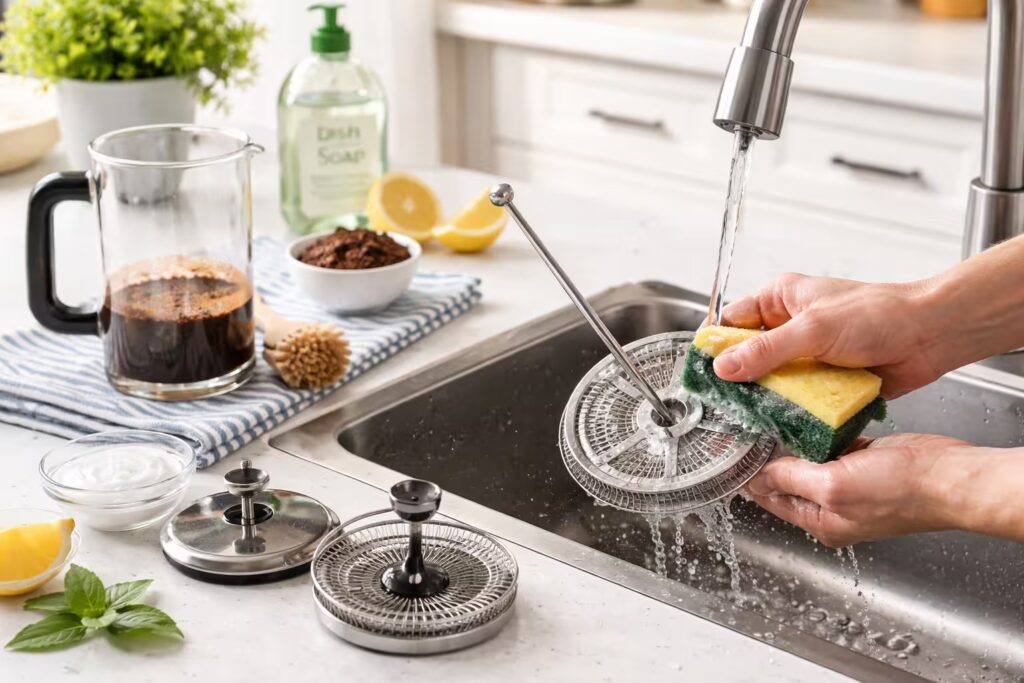
- Rinse immediately with warm water. Swirl the carafe to loosen residue, rinse the plunger assembly, and flush the mesh screen under running warm water.
- Light soap wash. A drop of mild dish soap on a soft sponge is enough for the glass or steel carafe and the plunger rod. Avoid abrasive scrubbers.
- Air dry fully. Leave all parts to air dry before reassembling. Drying prevents odors, mineral spotting, and residual oil film.
💡 Flavor tip: If your press still tastes “muddy” after cleaning, the cause is usually grind-related (too fine) or over-agitation rather than cleanliness. Start here: Coffee Grind Size Guide.
Weekly Deep Clean: How to Remove French Press Oil Buildup
Even if your French press looks clean after a daily rinse, oils hide between the filter layers. A weekly deep clean (or every 2–3 weeks for less frequent brewers) removes that hidden buildup, keeps the plunge smooth, and is the most effective way to eliminate persistent bitterness.
What you’ll need
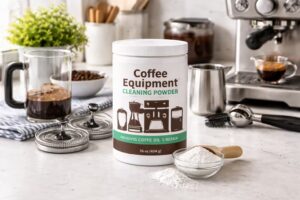
Urnex Cafiza Coffee Equipment Cleaning Powder
The same cleaner used by specialty cafés. Dissolves coffee oils on plunger screens and stubborn residue far more effectively than dish soap alone.
Affiliate disclosure: CoffeeGearHub may earn a commission from qualifying purchases at no cost to you.
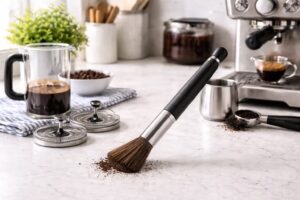
Soft Coffee Equipment Cleaning Brush
Soft bristles scrub fine sediment from the mesh screen edges and the plunger rod threads without warping or tearing the mesh.
Affiliate disclosure: CoffeeGearHub may earn a commission from qualifying purchases at no cost to you.
Deep clean steps (10–15 minutes)
- Disassemble the plunger fully. Unscrew the filter assembly to separate every layer: cross plate, mesh screen, and spiral plate. This step is non-negotiable — oils between layers are invisible from the outside.
- Soak parts in hot water + cleaning powder. Fill a bowl with hot water, add Cafiza or a similar coffee cleaning powder per the product instructions, and submerge the metal parts for 10 minutes.
- Gently scrub the mesh. Use a soft brush to clean the mesh screen edges and between the spiral plate grooves — this is where oils collect most heavily.
- Scrub the plunger rod threads. Fine coffee particles build up in the rod threads and cause gritty plunges. The soft brush handles this in seconds.
- Rinse thoroughly. Any cleaner residue will affect the taste of your next brew. Rinse under running water until the water runs clear and there is no soapy feel.
- Dry completely and reassemble. Reassemble only once all parts are fully dry to prevent odors and premature corrosion.
How to Clean the French Press Mesh Filter Properly
Most French press “off” flavors originate in the filter stack, not the carafe. A standard plunger assembly has three or four layers: a cross plate, a mesh screen, a spiral plate, and sometimes a second screen. Coffee oils and fine particles get trapped between these layers, so rinsing the outside of the assembled plunger is not enough — even if it looks clean.
🔬 Best practice: Fully disassemble the filter stack during every weekly deep clean. If you plunge and notice unexpected grit or resistance, cleaning between the individual filter layers is almost always the fix.
When reassembling, layer order matters. From bottom to top (closest to coffee, toward the handle): spiral plate → mesh screen → cross plate → rubber gasket → lid nut. Putting layers back in the wrong order is a common cause of sudden leaking or press resistance after cleaning.
When to Replace Your French Press Filter
Cleaning restores performance, but mesh screens do wear out. Replace your filter screen if you notice any of the following:
- Noticeably more sediment in the cup than before (even with correct grind)
- Bent, warped, or frayed mesh around the edges
- Rust spots or dark discoloration that doesn’t clean off
- Plunge feels rough, sticky, or inconsistent
- Persistent bitterness or stale flavor even after a full deep clean

Replacement Mesh Filter Screens (Multi-Pack)
An inexpensive upgrade that immediately restores cup clarity and plunge smoothness. Keep a spare set on hand so you’re never brewing through a worn screen.
💡 Tip: Match your press size (e.g., 8-cup / 34 oz). If unsure, measure your current screen diameter before ordering.
Affiliate disclosure: CoffeeGearHub may earn a commission from qualifying purchases at no cost to you.
If coffee still tastes muddy after cleaning…
Cleaning fixes oil-related bitterness and stale flavors, but French press clarity is also heavily influenced by grind size and agitation technique. If you want less silt and more sweetness, also review:
Hard Water Scale: What It Looks Like and How to Remove It
If you see chalky white spots, a cloudy film, or a milky haze on the carafe interior, that is mineral scale from hard water. Scale creates a rough surface that traps coffee oils and contributes to stale odors — and it doesn’t respond to soap or coffee cleaning powder. Vinegar is the right tool.
Quick scale removal (monthly)
- Fill the carafe with warm water.
- Add a 1:1 mix of white vinegar and water — enough to cover the scaled area.
- Soak for 10–15 minutes, then rinse thoroughly.
- Follow with a mild soap wash and air dry.
If hard water is a recurring problem, addressing it at the source will improve both taste and equipment longevity. A filtered water pitcher can make an immediate difference.
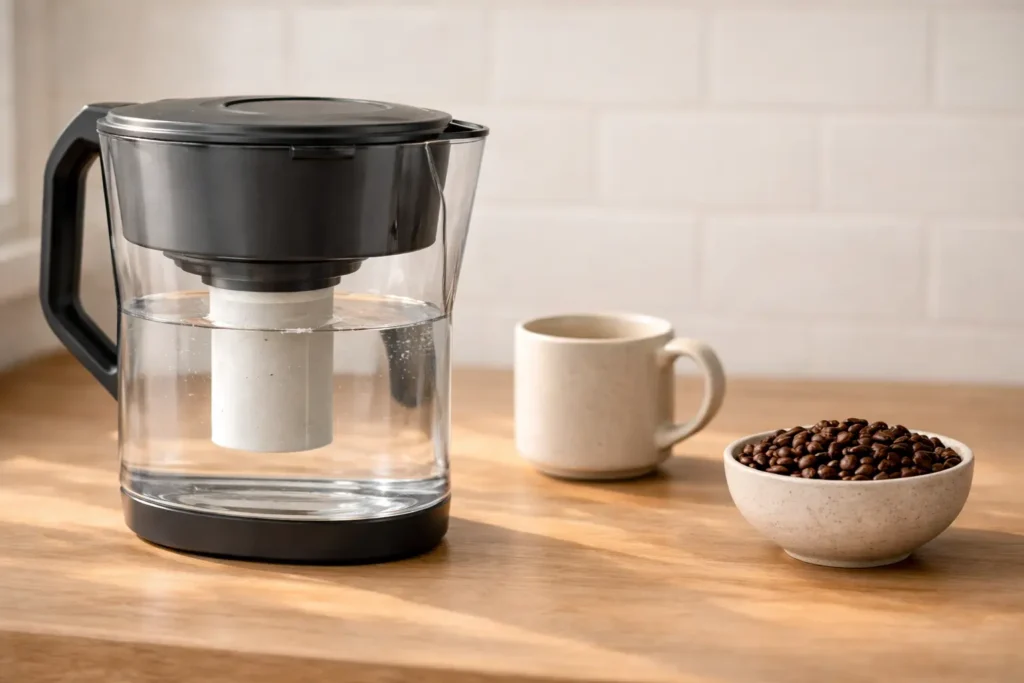
Coffee-Friendly Water Filter Pitcher
Reduces chlorine, heavy minerals, and the compounds that cause hard water scale. Better water means less mineral buildup in your press and noticeably cleaner-tasting coffee.
- Reduces scale buildup and chalky deposits
- Improves coffee flavor by removing off-tasting compounds
- Makes grind adjustments easier to taste
Affiliate disclosure: CoffeeGearHub may earn a commission from qualifying purchases at no cost to you.
Mistakes That Damage Your French Press
- Using abrasive pads or steel wool. Scratches glass permanently and warps the mesh screen over time, accelerating sediment problems.
- Leaving grounds in overnight. Grounds sitting in moisture for hours create rancid oil compounds and stubborn staining that requires heavy cleaning to remove.
- Not disassembling the filter stack. Rinsing the assembled plunger only cleans the outer surface. The inner layers hold weeks of accumulated oils that cause bitterness.
- Putting fine mesh screens in the dishwasher. Dishwasher heat and water pressure warp the mesh and degrade the rubber gasket faster than hand washing. Carafes are often safe; plunger assemblies generally are not.
- Ignoring the plunger rod threads. Fine particles collect in the rod threads and cause gritty, inconsistent plunges. A soft brush during weekly cleaning takes 10 seconds.
- Using coffee cleaning powder without rinsing thoroughly. Any residual cleaner affects the flavor of your next brew. Rinse until the water runs completely clear.
French Press Maintenance Checklist
| Frequency | What to do | Why it matters | Time required |
|---|---|---|---|
| Every brew | Dispose of grounds → rinse with warm water → mild soap wash → air dry fully | Prevents oils from oxidizing and bonding to metal before the next brew | ~2 min |
| Weekly | Fully disassemble filter stack → soak in hot water + Cafiza-style powder → soft brush scrub → thorough rinse → air dry | Removes hidden residue between filter layers; prevents persistent bitterness | 10–15 min |
| Monthly | Vinegar soak (1:1 vinegar:water, 10–15 min) for carafe interior → rinse → soap wash | Dissolves mineral scale from hard water; stops chalky film and related odors | 15–20 min |
| Every 6–12 months | Inspect mesh screen for warping, rust, or fraying; replace if needed | Worn mesh passes more sediment and can cause rough plunges even when clean | 5 min + part cost |
FAQs: How to Clean French Press
How often should I deep clean a French press?
If you brew daily, deep clean once per week by fully disassembling the filter stack and soaking it in coffee cleaning powder to remove oil buildup. If you brew a few times per week, every 2–3 weeks is usually enough.
Why does my French press taste bitter even with fresh beans?
The most common cause is oxidized coffee oils trapped in the plunger screen and between the filter layers. Fully disassemble and deep clean the filter stack first. If bitterness persists after cleaning, the next thing to check is grind size — too fine a grind consistently over-extracts. See our Coffee Grind Size Guide at https://www.coffeegearhub.com/coffee-grind-sizes/
Can I put my French press in the dishwasher?
Many glass and stainless steel carafes are technically dishwasher-safe, but fine mesh screens frequently warp or degrade faster under dishwasher heat and water pressure. Hand washing the plunger assembly is the safer long-term option.
How do I reduce sludge and sediment in the cup?
Cleaning helps, but sediment in French press coffee is usually a grind problem. Use a coarser grind setting, reduce agitation (gentle swirl instead of vigorous stirring), and let the fines settle for about 30 seconds before plunging. See our Coffee Grind Size Guide for French press-specific guidance.
What is the best cleaner for French press coffee oils?
A dedicated coffee equipment cleaning powder — Urnex Cafiza is the most widely recommended — is best for dissolving oils from metal screens. It is far more effective than dish soap on oxidized oil residue. Always rinse extremely thoroughly after soaking to avoid any cleaner affecting the taste of your next brew.
How do I know when to replace the mesh filter?
Replace the mesh screen if it is bent or warped, shows rust spots, lets through noticeably more sediment than it used to, causes a rough or inconsistent plunge, or if coffee still tastes stale even after a full deep clean. Heavy daily users typically replace filters every 6–12 months.
Does hard water affect French press cleaning?
Yes. Hard water deposits mineral scale on the carafe interior that traps coffee oils and contributes to stale odors. Do a monthly 1:1 white vinegar soak for 10–15 minutes to dissolve scale. For better taste and less maintenance overall, improving your brew water with a filter pitcher makes a noticeable difference.
Should I clean the plunger rod threads?
Yes, and it is often overlooked. Fine coffee particles and oils accumulate in the rod threads over time, causing gritty, inconsistent plunges. A soft brush during your weekly deep clean takes about 10 seconds and solves the problem entirely.
Can I use white vinegar to clean my French press instead of cleaning powder?
Vinegar is effective for mineral scale but is not the right tool for coffee oil removal. For oil buildup — the main cause of bitterness — use a coffee equipment cleaning powder like Cafiza. For chalky hard-water deposits, vinegar works well. Use both: cleaning powder weekly, vinegar monthly.
How do I clean a stainless steel French press carafe?
The method is identical to glass: daily soap wash, then a weekly deep clean with coffee cleaning powder. For stubborn interior staining, fill the carafe with hot water, add a teaspoon of cleaning powder, and soak for 10–15 minutes before scrubbing with a bottle brush. Stainless is actually easier to maintain long-term because it does not crack or cloud.
Next Steps: Taste Upgrade Path
FRENCH PRESS CARE
French press cleaning done — now dial in flavor. Even a perfectly clean French press produces muddy or bitter results if grind size is off. The fastest path to a noticeably better cup starts here.
☕
Written by the CoffeeGearHub Editorial Team
CoffeeGearHub is a specialty coffee equipment resource produced by the CoffeeGearHub Editorial Team. Our guides are researched using published brewing science, manufacturer care guidance, and established specialty-coffee community knowledge. We review and update our content regularly. About CoffeeGearHub →
Disclosure: This page contains affiliate links. If you purchase through these links, CoffeeGearHub may earn a commission at no additional cost to you.