Last Updated: February 28, 2026 • 28–38 min read • Full Comparison: Flavor + Extraction Science + Grind Strategy + Recipes + Troubleshooting + Gear Picks

✍️ Editorial note: This guide is researched and written by the editors at CoffeeGearHub.com using published brewing science, equipment manufacturer specifications, and established specialty-coffee community knowledge. Recommendations reflect research consensus rather than in-house lab testing. All product links are affiliate links — we may earn a commission at no cost to you.
The 30-Second Answer
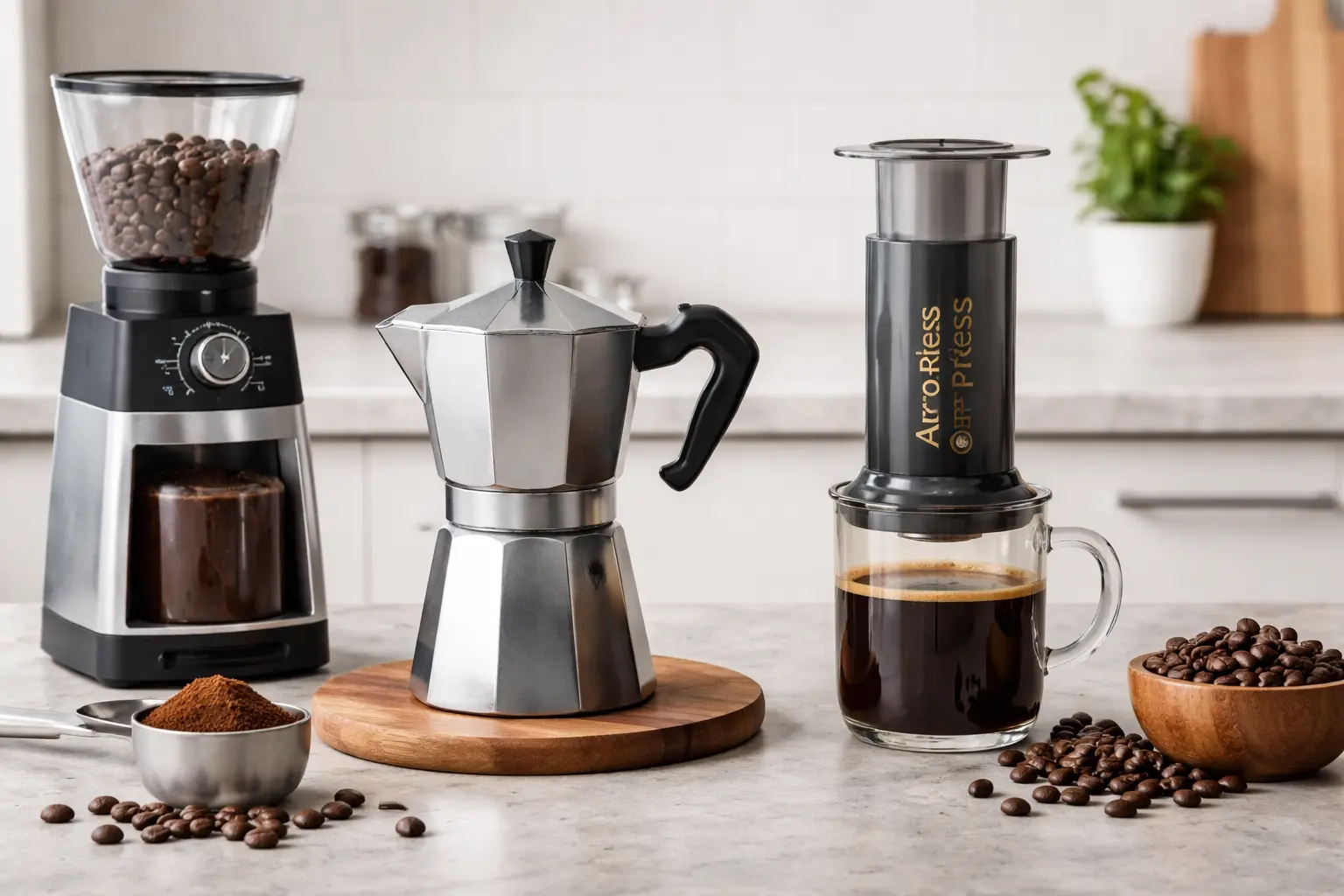
Moka pot vs AeroPress is less about which is “better” and more about what you want from coffee day-to-day. A moka pot is a stovetop pressure brewer that naturally produces bold, concentrated coffee that shines in milk drinks. AeroPress is a fast, forgiving immersion brewer that excels at smooth, clean flavor and portable brewing. Both are inexpensive and rewarding — but they pull in completely different flavor directions.
- Pick moka pot if: you want bold, espresso-style intensity, drink lattes or cappuccino-style drinks, or love heavy body with roasty-chocolatey flavor
- Pick AeroPress if: you want smooth, low-bitterness coffee, the fastest cleanup, or you travel and brew away from home
- Grinder note: whichever brewer you choose, a burr grinder upgrade is the single biggest taste improvement available — bigger than switching brewers
Who This Guide Is For — Jump to What You Need
☕ Deciding between the two
Read Quick Verdict + Flavor Comparison + Decision Guide.
🧪 Ready to brew now
Jump to Moka Pot Recipes or AeroPress Recipes + Ratio Scaling Tables.
🛠️ Fixing a bad cup
Go straight to the Troubleshooting Matrix.
🔬 Extraction nerd
Read Extraction Science + Strength vs Caffeine.
Table of Contents
Quick Verdict (Choose in 30 Seconds)
Pick a Moka Pot if…
- You want bold, espresso-style intensity without an espresso machine
- You drink lattes or cappuccino-style drinks at home
- You enjoy stovetop brewing and don’t mind a little technique
- You like heavier body and darker chocolate or roasty flavors
Pick an AeroPress if…
- You want smooth, low-bitterness coffee with clean flavor
- You want fast brewing and the easiest cleanup
- You travel, camp, or brew at work
- You want a forgiving brewer that works with many recipes
At-a-Glance Comparison Table
| Category | Moka Pot | AeroPress |
|---|---|---|
| Best flavor style | Bold, heavy, concentrated | Smooth, clean, balanced |
| Body | Thick / textured | Medium (paper); fuller with metal filter |
| Bitterness risk | Higher if overheated | Low — very forgiving |
| Roast preference | Medium–dark shines | Light–medium shines (but flexible) |
| Brew time | 5–8 minutes | 2–3 minutes |
| Cleanup | Moderate (disassemble, rinse) | Fast — puck eject, one rinse |
| Portability | Needs a heat source | Excellent — works with any hot water |
| Milk drinks | Excellent base | Works, but lighter body |
| Durability | Very long (aluminum or stainless); needs gasket replacement | Long (BPA-free plastic); cap seal wears over years |
| Long-term cost | Very low — occasional gasket ~$5 | Low — paper filters ~$10/yr or use metal |
| Best for travel | No — needs stove | Yes — compact, lightweight, durable |
💡 Important: Grinder quality and bean freshness impact results more than the brewer choice. If you’re battling bitterness or flat flavor, a burr grinder upgrade often produces a bigger taste jump than switching brewers entirely. See: How to Dial In Coffee at Home.
What Is a Moka Pot (and Why It Tastes “Espresso-Like”)

A moka pot is a stovetop brewer that uses steam pressure — roughly 1–2 bars — to push hot water up through a compact bed of coffee grounds into an upper chamber. It doesn’t reach true espresso pressure (typically ~9 bars), but it does create a more concentrated cup than drip or pour-over, with heavier body and a roast-forward profile that pairs exceptionally well with milk.
Moka pot extraction: the “sweet spot” and the danger zone
Moka pots have a rising temperature curve. Early flow is often sweeter and smoother; late flow can become harsh if the pot runs too hot or sputters aggressively. The goal is a steady, controlled flow on moderate heat — and pulling the pot before it turns sharp. Think of it as a brief extraction window, not a set-and-forget process.
How to make moka pot coffee smoother: 3 high-impact tweaks
- Lower the heat: slower, steadier flow reduces bitterness and gives you more control over when to stop.
- Go slightly coarser: reduces harshness if you’re over-extracting. Never use espresso-fine grind in a moka pot.
- Stop earlier: late-stage sputtering is where most harsh, bitter notes appear. Remove from heat when flow turns pale.
🔬 If you’re consistently battling bitterness, it’s almost never “bad beans” — it’s too much heat, too fine a grind, or brewing too long. A universal troubleshooting flowchart lives here: How to Dial In Coffee at Home.
Moka Pot Recipes + Brew Ratio Scaling Table
Baseline Moka Pot Recipe
- Grind: medium-fine (slightly coarser than espresso)
- Basket: fill fully, level, do not tamp
- Water: fill to just below the safety valve
- Heat: medium to medium-low
- Stop: when flow turns pale or sputters aggressively
Fix bitter: lower heat, grind coarser, stop earlier.
Fix weak/sour: grind slightly finer, ensure basket is fully filled.
Moka Pot for Lattes (Stronger Concentrate)
- Grind: medium-fine (same baseline)
- Basket: fully filled, leveled, not tamped
- Heat: medium-low (slower = sweeter concentrate)
- Stop: at first sputtering — don’t wait for full flow
- Then: add steamed or frothed milk directly to concentrate
Stopping slightly earlier keeps the concentrate sweeter and less harsh under milk.
Moka Pot Brew Ratio Scaling Table
Moka pots are sized by “cups” — these are small Italian-style servings (~50ml each), not standard 8oz cups. The basket size determines how much coffee you use; always fill the basket fully for best pressure and extraction.
| Pot Size | Coffee (approx.) | Yield (approx.) | Use Case |
|---|---|---|---|
| 1-cup | ~7g | ~50ml | Single espresso-style shot |
| 2-cup | ~14g | ~100ml | Strong solo cup or short latte base |
| 3-cup | ~18–20g | ~150ml | Standard solo daily use |
| 6-cup | ~36–40g | ~300ml | 2–3 small cups or larger latte base |
| 9-cup | ~54g | ~450ml | Small household, 3–4 people |
| 12-cup | ~70g | ~600ml | Entertaining or larger households |
💡 Moka pot sizing tip: For a single person making one “full mug” of coffee (not espresso-style), a 3-cup or 6-cup is the most useful. For lattes, a 6-cup gives you enough concentrate to cut into milk well. See our full sizing breakdown below: Moka Pot Size Guide.
Best Moka Pots on Amazon
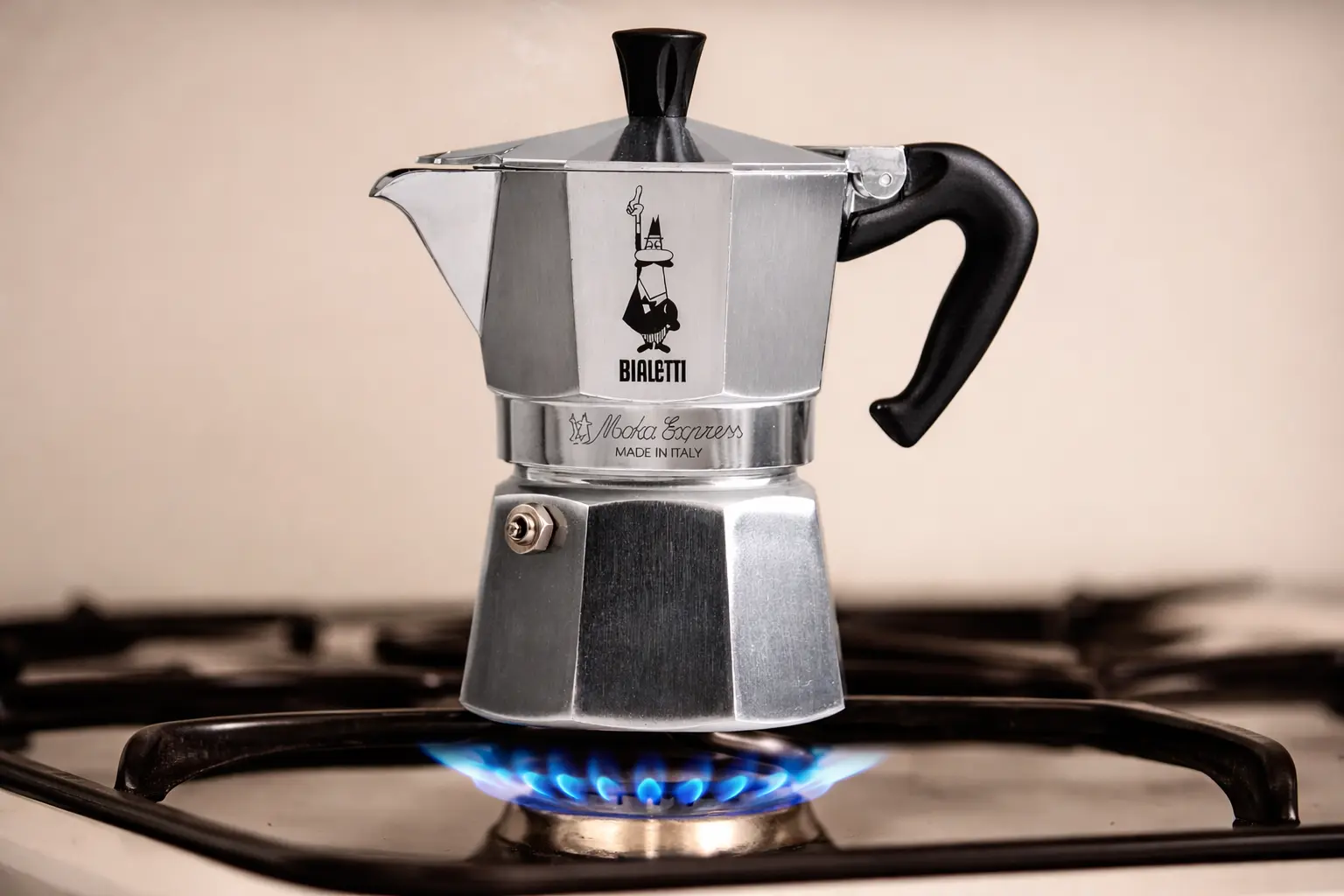
Bialetti Moka Express
Why people buy it: iconic stovetop moka flavor, strong value, widely available in multiple sizes.
- Classic aluminum build — the original design since 1933
- Bold, traditional moka cup
- Great base for milk drinks; not induction-compatible
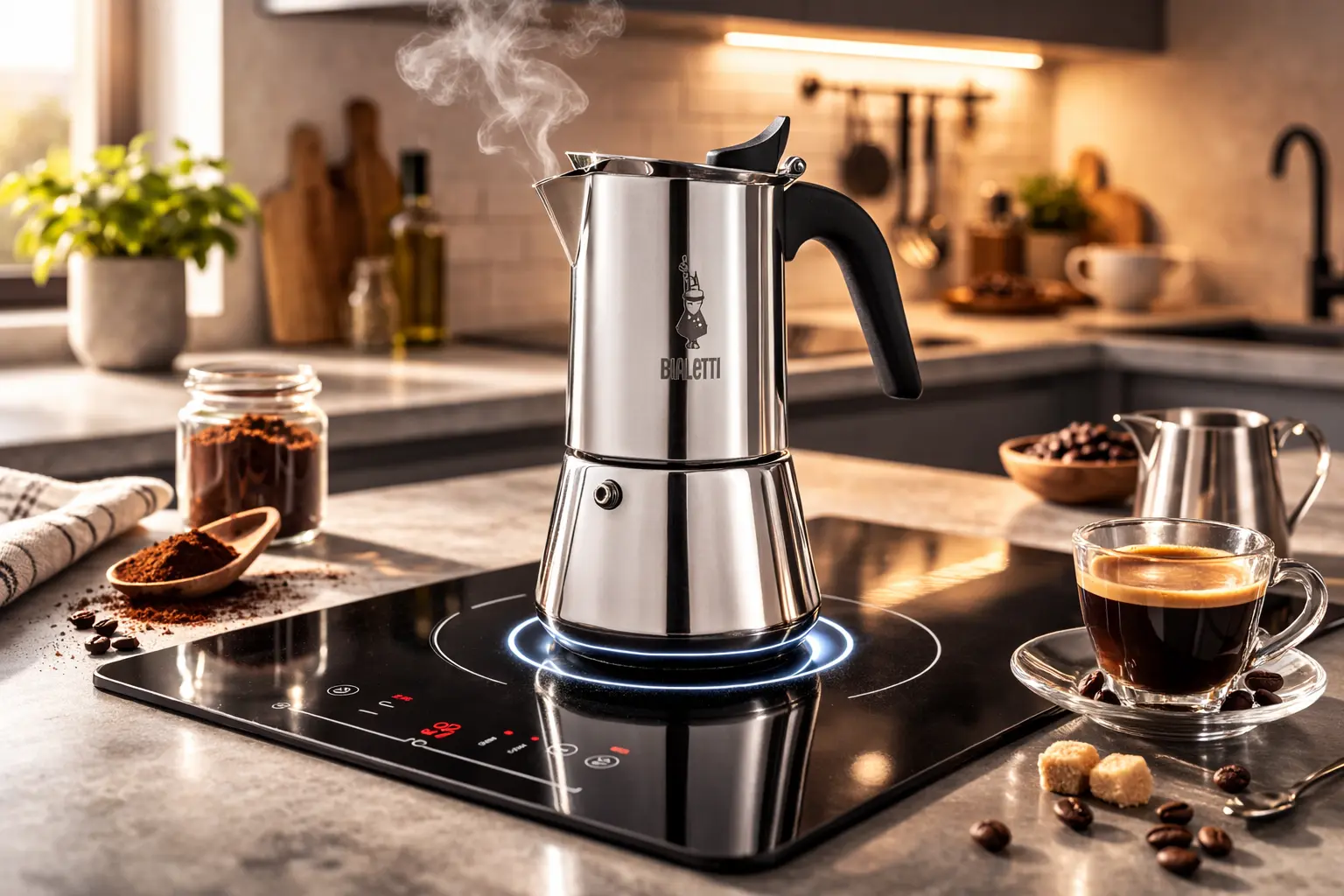
Bialetti Venus (Induction)
Why people buy it: stainless durability plus induction compatibility — no adapter plate needed.
- Induction-ready stainless steel
- Easy care and a very long lifespan
- Same great moka flavor, modern cooktop friendly
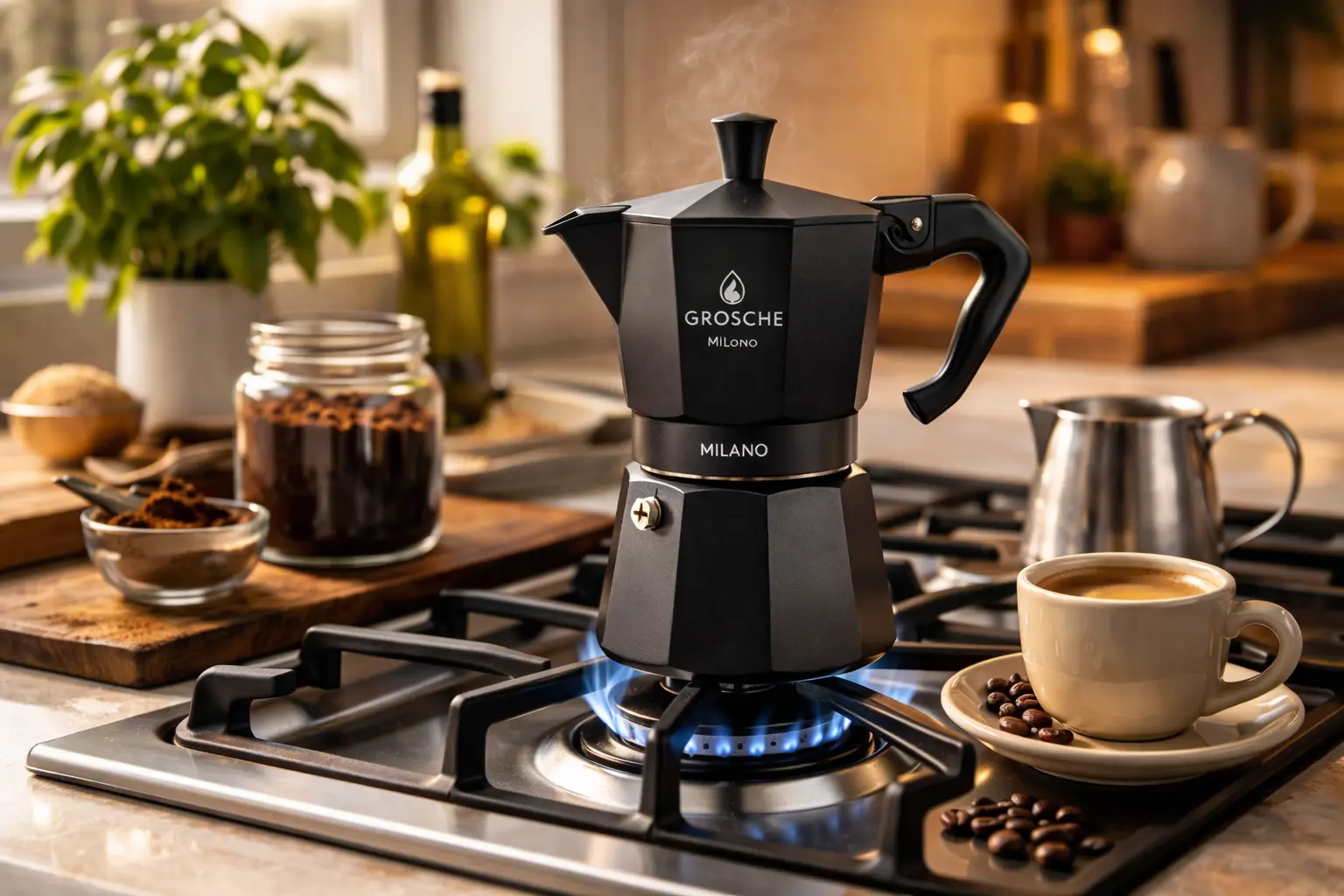
GROSCHE Milano
Why people buy it: strong starter value while delivering real moka intensity. A solid first moka pot.
- Budget-friendly entry point
- Reliable, repeatable results
- Available in multiple colors
Best accessories for moka pot (high-ROI upgrades)
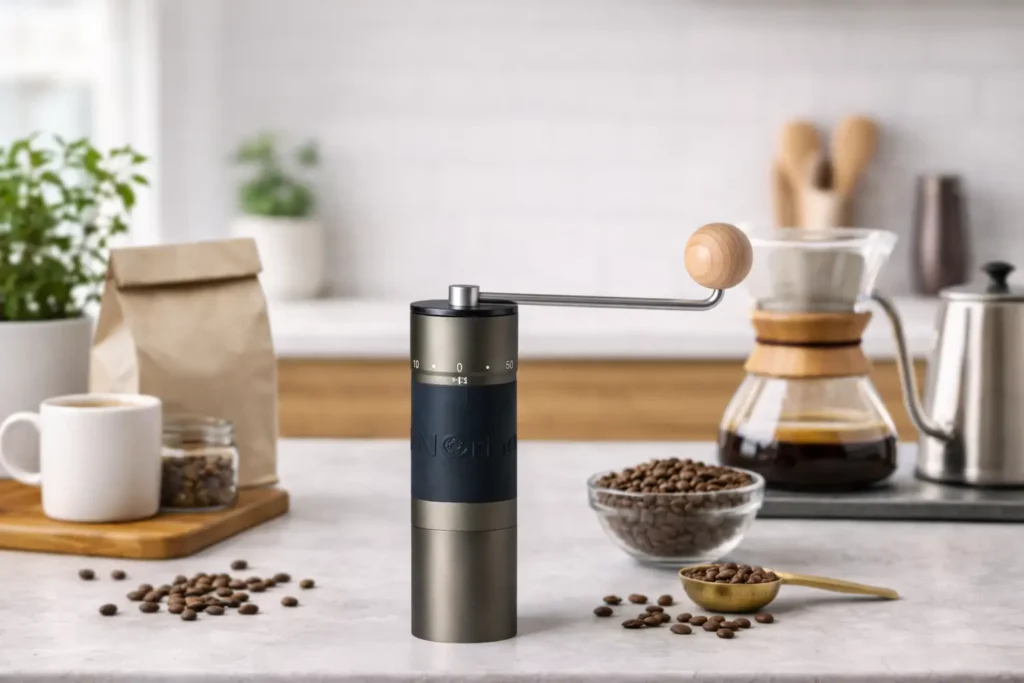
KINGrinder K6 — Best Grinder for Moka Pot
Grind consistency is the biggest taste lever in moka pot brewing. The KINGrinder K6 delivers precise, fine-step adjustment with very low retention — eliminating the stale-ground flavor that plagues pre-ground moka coffee. It’s the grinder we recommend for moka pot across the site.
- Excellent medium-fine consistency — the critical zone for moka pot
- Precise click-step adjustment for repeatable grind changes
- Compact, low retention, and great for home + travel
- Induction adapter plate: if you have induction and an aluminum moka pot
- Milk frother: the biggest upgrade for moka lattes and cappuccino-style drinks
- Digital scale: repeatability — your best friend for dialing in any brewer
Moka Pot Size Guide: Which Size Should You Buy?
Moka pot “cup” sizes refer to small ~50ml Italian servings — not standard 8oz mugs. This trips up most buyers. A “3-cup” moka pot yields about 150ml of coffee — a single concentrated drink or a small latte base. The most common mistake is buying too small.
| Your situation | Recommended size | Why |
|---|---|---|
| Solo brewer, espresso-style shots | 1-cup or 2-cup | Matched to small serving; very fast brew |
| Solo brewer, full mug of coffee | 6-cup | Yields ~300ml — enough for a generous mug; better extraction than half-filling a large pot |
| Solo brewer, lattes | 3-cup or 6-cup | 3-cup for short lattes; 6-cup if you want more concentrate for larger drinks |
| 2 people daily | 6-cup | The sweet spot — fast, even extraction and enough for two drinks |
| Small household or entertaining | 9-cup or 12-cup | Yield is high enough for a table of 3–5 small cups at once |
💡 Key rule: Always fill the basket fully. A half-filled basket produces inconsistent pressure and often sour, under-extracted coffee. Buy the size that matches your daily serving need — don’t try to “scale down” a larger pot by under-filling.
What Is an AeroPress (and Why It’s So Consistent)
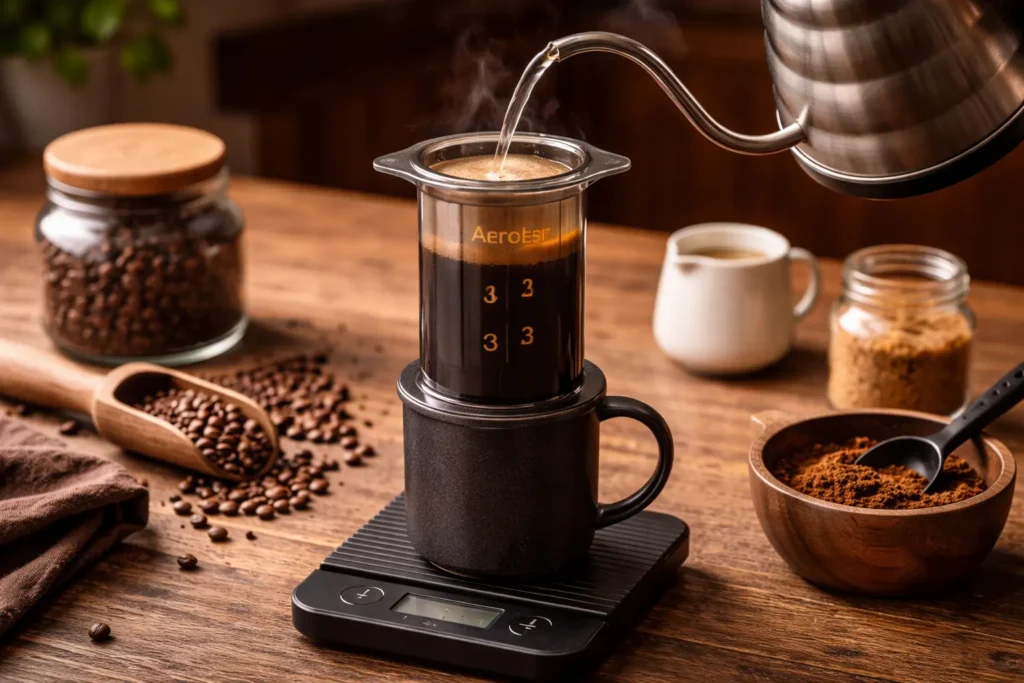
The AeroPress is a manual immersion brewer that finishes with gentle pressure filtration. You steep coffee and water in a chamber, then press through a filter. Because immersion extraction is naturally even and you control water temperature directly, AeroPress is famously forgiving — producing smooth cups with low bitterness even when timing or grind isn’t perfect. It also brews in 2–3 minutes and ejects the puck in one push, making cleanup faster than any other manual brewer.
Paper vs metal filters in AeroPress (taste impact)
Paper filter yields a cleaner cup with more clarity, less oil, and a lighter body — this is the default for most recipes. Metal filter increases body and texture and produces a cup that’s closer in mouthfeel to moka pot, especially with a slightly finer grind. If you love heavier coffee, a metal filter is a smart, inexpensive add-on.
AeroPress Recipes + Brew Ratio Scaling Table
Baseline AeroPress Recipe (clean daily cup)
- Coffee: 15g
- Water: 230g filtered
- Ratio: ~1:15
- Grind: medium
- Temp: 90–96°C / 194–205°F
- Steep: 60–90 seconds
- Press: 20–30 seconds (gentle)
Fix bitter: reduce steep time, lower temp, grind coarser.
Fix sour/weak: grind finer, extend steep to 90–120 seconds.
AeroPress Concentrate Recipe (better for milk)
- Coffee: 18g
- Water: 90–120g filtered
- Grind: medium-fine
- Temp: 92–96°C / 197–205°F
- Steep: 60 seconds
- Press: 20–30 seconds
- Then: dilute for Americano or add milk
Metal filter optional here — it adds body that makes the concentrate feel closer to a moka base.
AeroPress Brew Ratio Scaling Table
| Style | Coffee (g) | Water (g) | Ratio | Notes |
|---|---|---|---|---|
| Light / gentle | 12g | 200g | 1:17 | Tea-like clarity; great for light roasts |
| Standard daily | 15g | 230g | ~1:15 | Baseline recipe — start here |
| Standard (larger cup) | 18g | 270g | 1:15 | Bigger mug without changing ratio |
| Strong / milk-friendly | 18g | 90–120g concentrate | ~1:6 | Dilute after pressing or add milk |
| Inverted method | 15–17g | 220–250g | ~1:15 | Longer steep, higher extraction ceiling |
Best AeroPress Models on Amazon
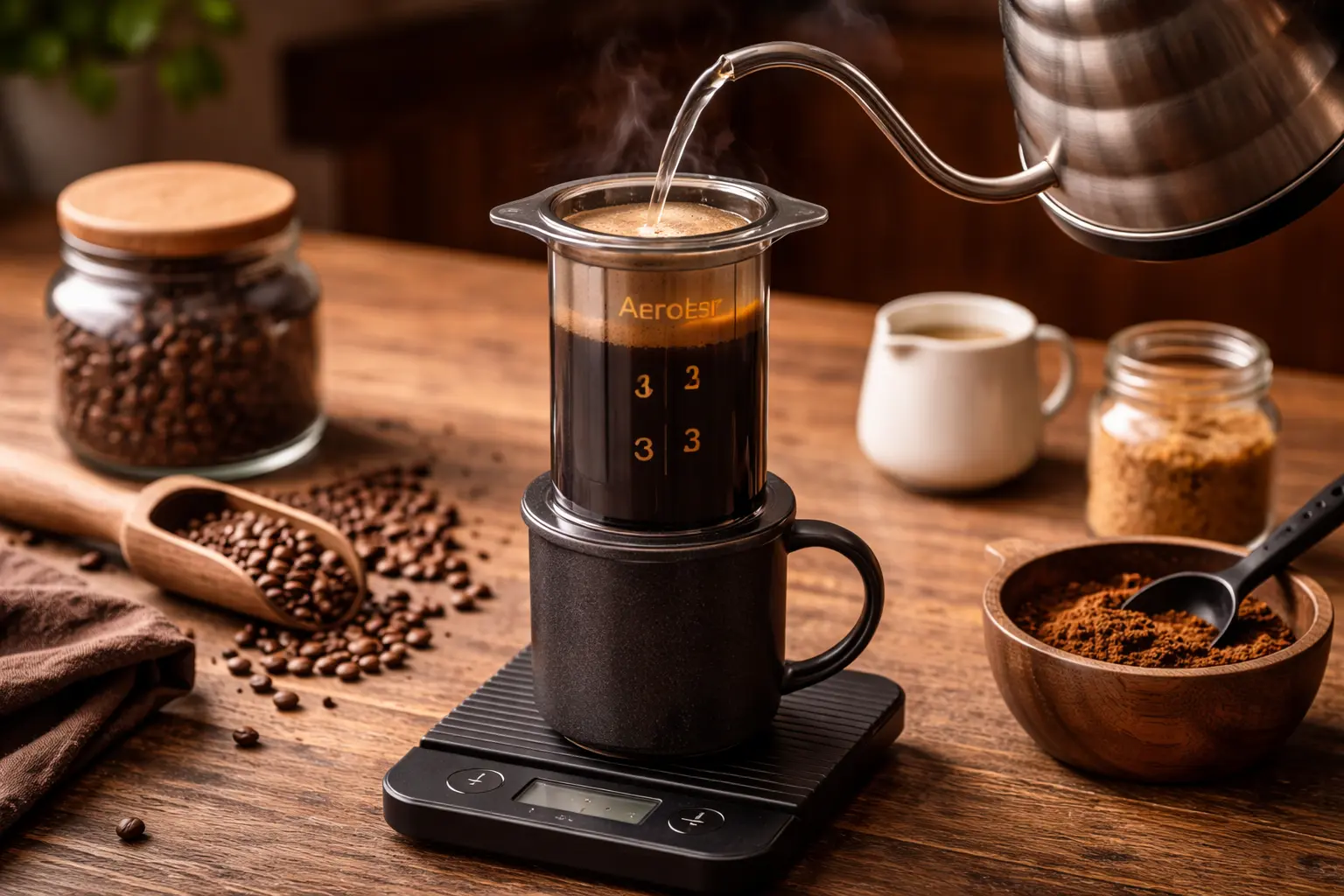
AeroPress Original
Why people buy it: simplest workflow, consistently smooth results, widest recipe community.
- Fast 2–3 minute brewing
- Very forgiving — hard to make a bad cup
- Easiest cleanup of any manual brewer
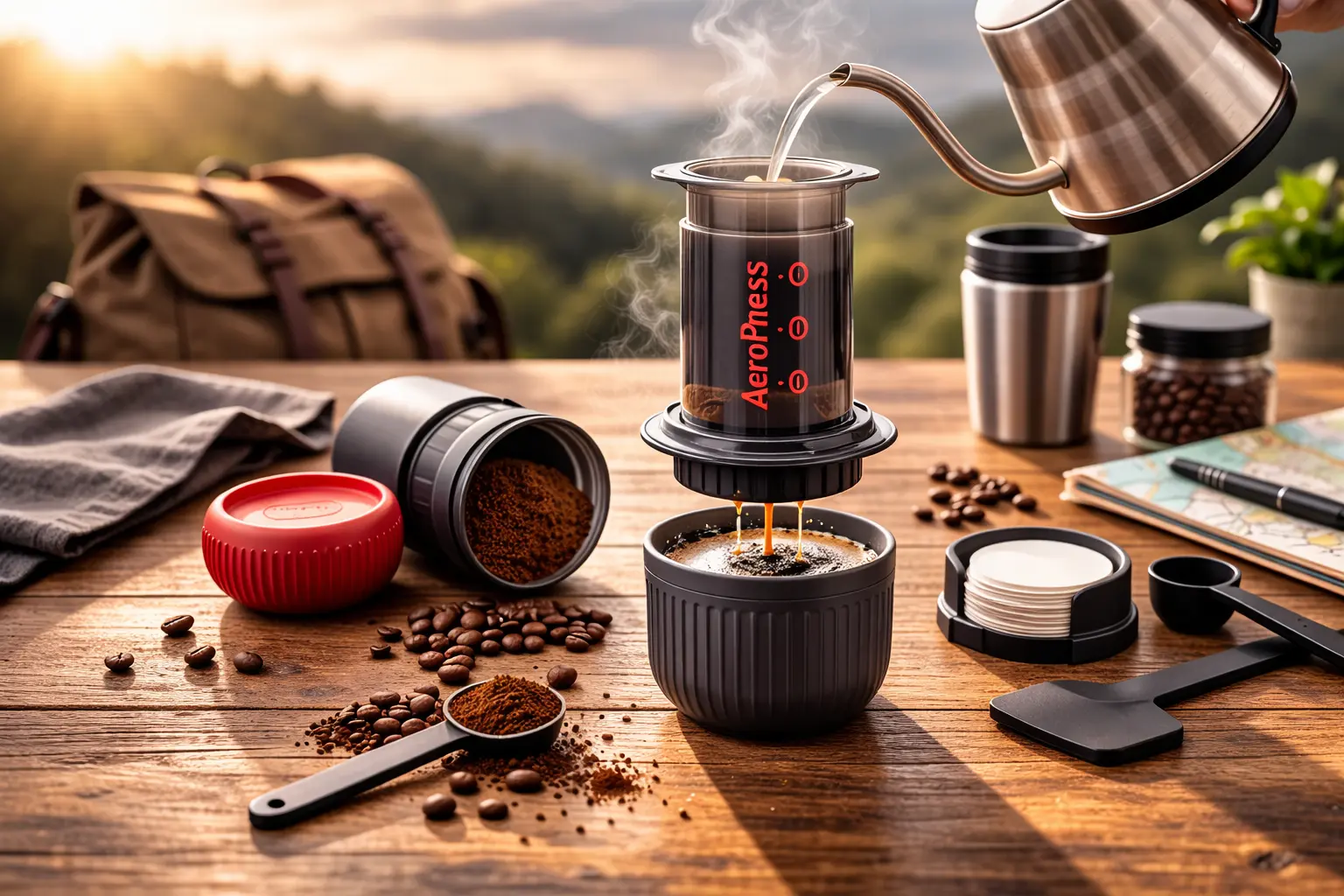
AeroPress Go
Why people buy it: travel and office brewing with a compact carry kit built in.
- Portable and durable — doubles as its own travel mug
- Great with hotel kettles or office hot water
- Same consistent results as the Original
AeroPress XL
Why people buy it: larger brews — up to 500ml per press — for bigger mugs or brewing for two.
- Same forgiving workflow at larger volume
- Ideal for large travel mugs or sharing
- Uses standard AeroPress paper filters
Note: Update this link to the AeroPress XL ASIN when available.
Best accessories for AeroPress (what actually improves taste)
KINGrinder K6 — Best Grinder for AeroPress
The biggest single taste upgrade for AeroPress is consistent grind. The KINGrinder K6’s precise click-step adjustment makes it easy to dial in medium grind for standard brews and medium-fine for concentrate recipes — and then repeat it exactly every time.
- Excellent grind consistency across medium and medium-fine ranges
- Compact — the ideal travel companion for the AeroPress Go
- Low retention keeps every dose fresh
- Metal filter: adds body and texture — great for milk-drink AeroPress brewing. See: AeroPress Grind Size Guide
- Digital scale: repeatability and faster dialing in
- Compact travel kettle: completes the AeroPress Go into a full travel brewing kit
Extraction Science: Pressure vs Immersion (Why They Taste Different)
Moka pot combines rising temperature with steam pressure pushing water through a compact bed of coffee. This increases body and perceived intensity, but also amplifies roastiness and bitterness if the brew runs too hot or too long. The pressure-driven extraction pulls more oils and heavier compounds from the grounds, which is what gives moka its characteristic thick, punchy character.
AeroPress is primarily immersion extraction — coffee steeps evenly in water, then you add gentle pressure to push it through the filter. Immersion is naturally forgiving because all grounds contact water simultaneously at a controlled temperature. Paper filtration removes fines and most oils, which is why AeroPress typically tastes cleaner and smoother than moka with the exact same beans.
Strength vs caffeine: what’s actually happening
Moka coffee tastes stronger because it’s more concentrated and heavier-bodied. But caffeine depends largely on dose — how many grams of coffee you use — and total volume consumed. If you use similar grams of coffee and drink similar volumes, caffeine levels can be quite comparable between the two methods. Perceived strength is mostly about concentration and body, not pure caffeine content.
Flavor: Which One Matches Your Taste Preferences?
If you love bold & chocolatey
Choose moka pot with medium-dark roasts. Expect heavier body, a punchy finish, and concentrated flavor that stands up to milk. If bitterness appears, lower the heat and stop earlier — don’t blame the beans.
If you love smooth & clean
Choose AeroPress, especially with paper filters. It’s excellent for light-to-medium roasts and consistently highlights sweetness and clarity with low bitterness — forgiving enough that even beginners get a good result on the first brew.
If you want heavy body without bitterness
Try AeroPress with a metal filter and a medium-fine grind. This gives you more oils and body than paper — closing some of the gap with moka — while keeping the immersion method’s inherent smoothness. The closest “middle ground” between the two brewers.
Cleaning, Durability & Long-Term Cost of Ownership
| Factor | Moka Pot | AeroPress |
|---|---|---|
| Daily cleanup | Disassemble, rinse basket + chamber, let dry. 2–3 minutes. Never use soap on aluminum — it strips the seasoning layer that prevents off-flavors. Stainless is dishwasher safe. | Eject puck into bin, rinse chamber, done. ~30 seconds. |
| Dishwasher safe? | Stainless: yes. Aluminum: no. | Yes — all parts are dishwasher safe. |
| Hard water buildup | Scale accumulates in the lower chamber over time. Descale every 1–3 months with citric acid solution or diluted white vinegar. Use filtered water to slow buildup significantly. | Minimal — no heating element. Rinse is sufficient for daily maintenance. |
| Replacement parts | Gasket/seal wears over 1–2 years (~$5–8 to replace). Easily available for Bialetti. Safety valve should be checked periodically. | Rubber plunger seal may flatten after several years. Replacement seals are available from AeroPress directly (~$5). |
| Lifespan | Decades with gasket maintenance. Aluminum moka pots are nearly indestructible. | Many years under normal use. BPA-free copolyester doesn’t degrade significantly. |
| Ongoing cost | Near zero — occasional gasket replacement | Paper filters ~$10/year, or one-time metal filter ~$15 |
💡 Moka pot hard water tip: If your tap water is hard (chalky or mineral-tasting), scale will build up in the lower chamber and affect flavor over time. Use filtered water or run a citric acid descale every 1–2 months. This single habit keeps a moka pot tasting fresh for years.
Can You Own Both? (Yes — Here’s Why It Makes Sense)
Both a moka pot and an AeroPress cost under $50 combined, which makes owning both a genuinely practical choice — not an indulgence. They serve meaningfully different needs and complement each other well:
| Situation | Reach for… |
|---|---|
| Morning latte or cappuccino at home | Moka pot — bolder concentrate holds up in milk |
| Quick clean cup before work | AeroPress — 2 minutes start to finish, easiest cleanup |
| Traveling, camping, or at the office | AeroPress — no stove required |
| Brewing for guests who like strong coffee | Moka pot — impressive stovetop ritual, café-style result |
| Experimenting with light roast flavor | AeroPress — clean immersion showcases delicate notes |
If budget is a consideration, start with whichever fits your most common use case first. But if you’re already deciding between the two and enjoy coffee enough to read this far — owning both is one of the best $80–100 investments in home coffee.
☕ Want to find the best beans for your moka pot? Roast level makes a big difference in how moka extracts — not all coffees shine under pressure. See: Best Coffee Beans for Moka Pot (2026).
Troubleshooting Matrix: Fix Bitter, Sour, Weak, or Harsh Coffee
Change one variable per brew, taste, then adjust again. Grind is almost always the first variable to change.
Moka Pot Troubleshooting
| Symptom | Most likely cause | Fix (in order) |
|---|---|---|
| Bitter or burnt | Too much heat, grind too fine, brewed too long | Lower heat first → grind coarser → stop earlier before hard sputtering |
| Weak or sour | Grind too coarse, basket not full, gasket leak | Grind slightly finer → ensure basket is fully filled → check gasket seal |
| Harsh metallic taste | Scale buildup or new aluminum pot | Descale with citric acid solution → season new aluminum pot with 2–3 “dummy brews” before drinking |
| Coffee spitting / sputtering aggressively | Heat too high, brewing too long | Reduce heat significantly — moka pot should flow steadily, not violently |
| Watery result | Basket underfilled | Fill basket completely — moka pots rely on a full, tight coffee bed for extraction pressure |
| Flat despite correct grind | Stale beans or poor water | Check roast date (within 2–6 weeks of roast); switch to filtered water |
AeroPress Troubleshooting
| Symptom | Most likely cause | Fix (in order) |
|---|---|---|
| Bitter | Over-extracted: steep too long, grind too fine, water too hot | Reduce steep time → grind coarser → lower water temperature |
| Weak or sour | Under-extracted: grind too coarse, steep too short | Grind finer → increase steep to 90–120s → use a tighter ratio |
| Gritty or muddy | Metal filter passing fines, or fine grind with paper | Switch to paper filter → grind slightly coarser → ensure filter is seated properly |
| Inconsistent day to day | No scale — variable dose and water | Add a scale; weigh coffee and water every brew |
| Leaking during press | Worn plunger seal | Replace rubber seal — available from AeroPress directly |
For a full any-brewer dial-in system: How to Dial In Coffee at Home.
Which Should You Buy? Practical Decision Guide
| Your priority | Buy this | Why |
|---|---|---|
| Milk drinks & bold flavor | Moka pot | Natural concentration + heavier body stands up to milk |
| Fast weekday coffee | AeroPress | 2–3 min brew + 30-second cleanup |
| Travel / camping / office | AeroPress Go | Portable, durable, only needs hot water |
| Traditional stovetop ritual | Moka pot | Classic method with strong identity and satisfying process |
| Light roast clarity | AeroPress | Cleaner immersion + controllable temperature |
| Induction cooktop | Bialetti Venus or stainless moka pot | No adapter plate needed |
| Beginner wanting easy wins | AeroPress | Forgiving — hard to make a bad cup even on attempt #1 |
| Most intense base for espresso-style drinks | Moka pot | Closest to espresso intensity available without a machine |
FAQs
Is moka pot coffee stronger than AeroPress?
Moka pot coffee usually tastes stronger because it’s naturally more concentrated and heavier-bodied. Caffeine depends mainly on dose and what you drink. AeroPress can match strength with a tighter ratio, but it typically tastes smoother and cleaner.
Can AeroPress make espresso?
Not true espresso. AeroPress can make concentrate-style coffee, but it doesn’t reach espresso pressure (typically ~9 bars). It can still work as a strong base for milk drinks with the right recipe and a metal filter.
Which is better for beginners?
AeroPress is usually better for beginners because it’s forgiving and consistent — it’s hard to make a bad cup. Moka pot can be fantastic but is more sensitive to heat control and timing.
Which is better for milk drinks?
Moka pot is generally better for milk drinks because it produces a bolder, more concentrated brew that holds up in milk without going flat or watery.
What grind size should I use for moka pot vs AeroPress?
For moka pot, start medium-fine and never tamp. For AeroPress, start medium and adjust finer for more strength and body, or coarser for more clarity and lightness.
Is moka pot safe on induction?
Only if the moka pot is induction-compatible stainless steel, or if you use an induction adapter plate. Aluminum moka pots like the Bialetti Moka Express are not induction-ready without an adapter.
What’s the easiest way to reduce moka pot bitterness?
Three changes solve most moka bitterness: lower the heat, grind slightly coarser, and stop brewing before aggressive sputtering begins. Start with lower heat — it’s the most common culprit.
What’s the best AeroPress setup for travel?
AeroPress Go plus the KINGrinder K6 and access to hot water makes a complete travel kit. A small scale helps consistency if you brew daily on the road. The AeroPress Go’s mug also doubles as its carry case.
Should I use paper or metal filters in AeroPress?
Paper filters produce a cleaner cup with more clarity and less oil. Metal filters increase body and texture — closing the gap with moka pot-style mouthfeel. Choose paper for smoothness, metal for heavier texture.
Which method is cheaper long-term?
Both are very inexpensive to run. Moka pots need an occasional gasket replacement (~$5–8 every 1–2 years). AeroPress uses paper filters unless you buy a metal filter once. Grinder quality and bean freshness dominate actual long-term cost and taste outcomes for both.
Next Reads
MOKA POT CLUSTER
AEROPRESS CLUSTER
Want bold moka flavor with the right beans? Roast level makes a significant difference in how moka extracts. See which beans work best under stovetop pressure.
☕
Written by the CoffeeGearHub Editorial Team
CoffeeGearHub is a specialty coffee equipment resource run by home brewers and coffee enthusiasts. Our guides are researched using published brewing science, equipment manufacturer specifications, and established specialty-coffee community knowledge. We review and update our pillar content regularly. About CoffeeGearHub →