
Last Updated: March 2026 • 50–60 min read • Complete AeroPress Iced Coffee Guide: Flash Brew + Cold Brew + Concentrate + Dial-In System

✍️ Editorial note: This guide is researched and written by the editors at CoffeeGearHub.com using published brewing science, specialty-coffee community knowledge, and established AeroPress techniques. Recommendations reflect research consensus and real-world testing experience. All product links are affiliate links — we may earn a commission at no cost to you.
The 60-Second Answer
The fastest path to great AeroPress iced coffee is flash brewing: brew a concentrated shot (18g coffee / 120g water) directly over 120g of ice. Use a fine grind — finer than your usual AeroPress setting — since concentrate recipes need more extraction. The ice instantly chills the coffee and provides your dilution water. Total brew time: under three minutes.
- Target grind: fine (fine sand texture — one step finer than table salt)
- Target ratio: 1:6 brew ratio (18g coffee / 120g water / 120g ice)
- Target press: 25–40 seconds, steady and never forced
Who This Guide Is For — Jump to What You Need
☕ Quick Recipe
Go to the Flash Brew Recipe and Brewing Steps.
🔬 Want to Understand Why
Read Why AeroPress Works + Flash Brew Science.
🔧 Fixing a Problem
Jump to the Troubleshooting Matrix.
🎒 Traveler / AeroPress Go
See AeroPress Go Adjustments + Travel Gear.
Table of Contents
Why AeroPress Makes Exceptional Iced Coffee
The AeroPress is uniquely suited for iced coffee because of its hybrid brewing design. Unlike a drip machine (gravity-only) or a French press (immersion-only), the AeroPress combines immersion steeping with pressure-assisted extraction. This lets you produce a strong, balanced concentrate in under two minutes — the essential starting point for any iced coffee method.
Traditional drip coffee poured over ice dilutes immediately and tastes flat. AeroPress coffee starts strong enough to remain flavorful even after the ice melts and provides its share of dilution. The result is a cup that’s bright, sweet, and complex — not just cold and weak.
Why It Works for Iced
- Produces strong concentrate in 2 minutes
- Paper filtration removes oils and fines for a clean iced cup
- Pressure extraction maximizes flavor from a small water volume
- Portable — works on a countertop or while traveling
AeroPress vs Other Iced Methods
- vs Cold brew: 3 minutes vs 12–24 hours; brighter, more aromatic flavor
- vs Drip iced: far more concentrated; won’t taste watery after dilution
- vs Chemex flash brew: similar method, faster; AeroPress produces more body
- vs Moka pot iced: cleaner, more control; Moka can turn harsh when iced
Flash Brew Science: Why Brewing Over Ice Works

Flash brewing — sometimes called Japanese iced coffee — is the technique used by specialty cafés for iced filter coffee. The principle is simple: brew hot coffee directly onto ice, so the coffee is chilled in the same instant it finishes brewing.
The science behind why this produces better iced coffee than simply chilling brewed coffee later comes down to volatile aromatic compounds. Hot brewing unlocks fruity esters, floral aromatics, and bright acids. When coffee is brewed hot and then slow-chilled in a refrigerator, those volatile compounds continue escaping as the liquid cools. Flash chilling halts this process almost instantly, trapping aromatics that would otherwise be lost. The result is iced coffee that tastes bright and complex rather than flat and stale.
🔬 The dilution is intentional: the ice isn’t just for cooling — it provides the water that would normally be added to a concentrate. A properly calibrated flash brew recipe accounts for ice melt in the ratio, so the final drink hits the correct strength without being watery.
Best AeroPress Iced Coffee Recipe
This is the core flash brew recipe. It produces a clean, bright, balanced iced coffee in under three minutes. All other variations in this guide branch from this starting point.
Recipe Parameters
- Coffee dose: 18g (weighed)
- Hot water: 120g
- Ice: 120g
- Grind: fine (fine sand — one step finer than table salt)
- Water temp: 93–96°C / 200–205°F
- Filter: paper (rinsed)
- Target press time: 25–40 seconds
Taste → Adjust
- Tastes sour or sharp: grind slightly finer
- Tastes bitter or drying: grind slightly coarser
- Tastes watery: reduce ice by 10–15g (too much dilution)
- Press stalls: go 1 step coarser, reduce agitation
- Good flavor but weak: increase dose to 20g (strength, not extraction)
Step-by-Step Brewing Instructions
- Weigh 120g of ice into a large mug or glass and set it below the AeroPress.
- Insert a paper filter into the AeroPress cap. Rinse the filter with hot water to eliminate paper taste and pre-warm the cap.
- Grind 18g of coffee to a fine setting (fine sand texture — see Grind Size section for specifics).
- Assemble the AeroPress in standard (non-inverted) position directly on top of the glass of ice.
- Add your ground coffee to the AeroPress chamber.
- Pour 120g of hot water (93–96°C) over the grounds. Start your timer.
- Stir for 8–10 seconds with a paddle or spoon to ensure even saturation.
- Steep for 45 seconds total from first pour.
- Press slowly and steadily for 25–40 seconds. Stop pressing just before you hear the hiss — that last air push adds bitterness.
- Stir the finished drink over the ice to combine the concentrate with the melt water. Taste and adjust ice level if too strong or too dilute.
💡 Stop before the hiss: The satisfying hiss at the end of a press pushes the final bitter dregs through the filter. For iced coffee — where every drop is more concentrated — stopping just before it matters more than usual.
The Inverted Method for Iced Coffee
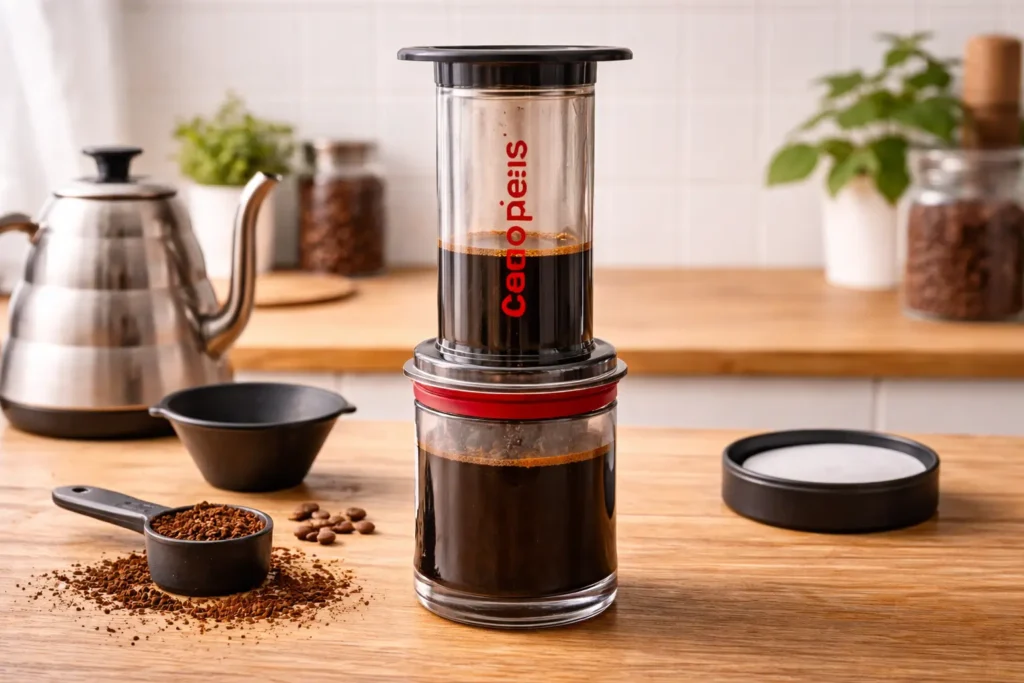
The inverted method is one of the most popular AeroPress techniques — and it has a specific advantage for iced coffee. In standard position, a small amount of coffee begins dripping through the filter during steeping. For hot coffee this is negligible, but for a concentrate destined for ice, every drop counts. Inverting the AeroPress eliminates drip-through entirely, giving you true immersion control.
Inverted Iced Recipe
- Coffee: 18g
- Water: 120g at 93°C
- Ice: 120g in the receiving glass
- Grind: medium to medium-fine (slightly coarser than standard, as the longer steep compensates)
- Steep: 1:30–2:00
- Press: 25–35 seconds after flipping
Inverted Step-by-Step
- Insert plunger ~2cm into the chamber with AeroPress upside down
- Add ground coffee to the inverted chamber
- Pour 120g hot water and stir 8 seconds
- Steep 1:30–2:00
- Attach the cap and rinsed filter
- Flip confidently onto the ice-filled glass, press steadily
Best Grind Size for AeroPress Iced Coffee
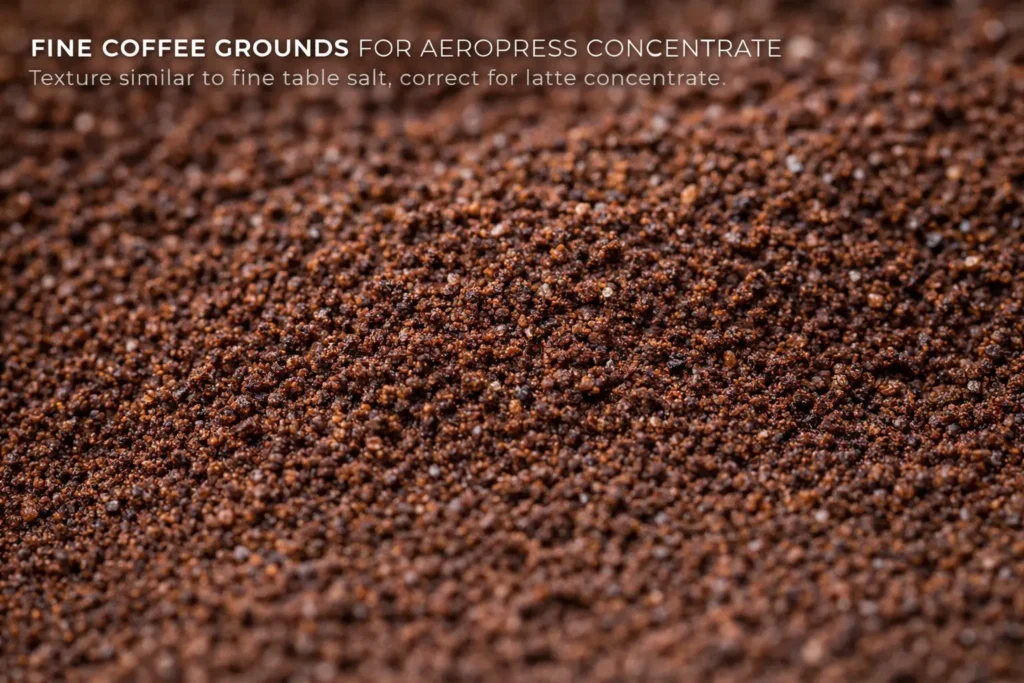
Grind size is the biggest flavor lever for iced AeroPress coffee — more impactful than water temperature or steep time. Iced coffee requires a finer grind than your regular AeroPress setting because you’re brewing a concentrate with less water. Less water means a shorter extraction window, so finer grounds compensate by increasing surface area and speeding up extraction.
Your standard AeroPress hot coffee might be dialed in at medium-fine (table salt). For iced coffee flash brewing, start one step finer: fine, like fine sand. For cold brew AeroPress, you’ll go back to medium-fine or even slightly coarser since time does the extraction work.
| Grind range | Texture reference | Press feel | Most common taste | Best use | Fix |
|---|---|---|---|---|---|
| Medium | Sand / kosher salt | Easy • 15–25s | Weak, watery after ice melt | Inverted with long steep | Watery: go finer |
| Medium-Fine | Table salt | Smooth • 20–30s | Good for hot AeroPress; can run weak for iced | Inverted iced, cold brew AeroPress | Sour: finer. Weak: increase dose. |
| Fine ✦ Iced Baseline | Fine sand | Resistance • 25–40s | Sweet + intense when dialed in | Flash brew, concentrate | Bitter/hard press: coarser. Sour: slightly finer. |
| Espresso-fine | Powdery | Stall risk • 45s+ | Harsh and overpowering | Not recommended for iced | Stalls: coarser immediately |
Grinder settings for iced coffee: If you use a Baratza Encore, try settings 10–13 (vs 14–16 for regular AeroPress). On a KINGrinder K6, go 2–3 clicks finer than your normal AeroPress dial-in. On any hand grinder, move 3–5 clicks finer than your usual pour-over/AeroPress position and adjust from there.
Brew Ratio Guide and Scaling Table
Iced AeroPress uses a 1:6 brew ratio (coffee to brew water) rather than the standard 1:15–1:17 used for hot AeroPress. The ice provides the remaining dilution: since the ice melts into the drink, the total liquid-to-coffee ratio ends up around 1:13, which lands in normal drinking strength territory.
This is the key insight that prevents watery iced coffee: you aren’t brewing weak coffee — you’re brewing concentrated coffee that becomes correctly diluted as the ice melts.
| Coffee dose | Hot water | Ice | Final drink approx. | Strength |
|---|---|---|---|---|
| 14g | 90g | 90g | ~170–180ml | Regular |
| 18g ✦ Standard | 120g | 120g | ~220–240ml | Regular–strong |
| 22g | 110g | 110g | ~200–215ml | Strong concentrate |
| 24g | 100g | 150g | ~240ml | Iced latte base |
🔬 Strength vs extraction: if your iced coffee tastes balanced but weak, the fix is more coffee (strength issue) — not a finer grind. Increase your dose by 2–3g before touching grind size.
Water Temperature by Roast Level
Temperature controls how quickly flavor compounds dissolve into water. For iced AeroPress, where your brew window is already short, temperature becomes an important tool for getting enough extraction out of a small water volume. Higher temperature extracts more aggressively — useful for light roasts that resist extraction; lower temperatures reduce harshness in dark roasts that extract easily.
☀️ Light Roast
- Temp: 96–100°C / 205°F
- Grind: fine or slightly finer
- Why: Light roasts are dense and resist extraction. Higher heat helps dissolve sugars and aromatics in the shorter brew window.
🌤 Medium Roast
- Temp: 93–96°C / 200°F
- Grind: fine (standard iced baseline)
- Why: Most forgiving range. The recipe parameters in this guide are calibrated for medium roast as default.
🌑 Dark Roast
- Temp: 85–91°C / 185–195°F
- Grind: medium-fine (1–2 steps coarser than iced baseline)
- Why: Dark roasts extract aggressively. Lower temp and coarser grind prevent the bitterness that intensifies when chilled.
AeroPress Concentrate Method
The concentrate method takes the flash brew approach one step further: you brew an even more intense shot that you then dilute to taste — either with more ice, cold water, or milk. This is the best base for iced lattes, iced Americanos, and batch-prepared iced coffee.
Concentrate Recipe
- Coffee: 22–24g
- Water: 100–110g at 90–95°C
- Grind: fine (not powder)
- Stir: 10 seconds
- Steep: 45–60 seconds total
- Press: gently, 30–45 seconds
Press the concentrate into a small cup or pitcher (not directly onto ice). Dilute 1:1 with ice water, or pour over ice and add milk to taste.
When to Use Concentrate
- Making an iced latte (concentrate + milk over ice)
- Preparing for multiple servings at once
- Batch prep — concentrate stores in the fridge for up to 48 hours
- When you want to control dilution precisely (e.g., different ice amounts for different glasses)
AeroPress Cold Brew Method
AeroPress cold brew is a lesser-known method but a genuinely useful one. Instead of steeping in a mason jar for 12–24 hours, you use the AeroPress chamber as your steeping vessel and the built-in filter as your straining mechanism. You can do it two ways: a fast version (20 minutes in the fridge) or an overnight version for a more traditional cold brew flavor.
Quick Cold Brew (20 min)
- Coffee: 20g
- Water: 200g cold or room temperature
- Grind: medium-fine
- Stir well, steep in fridge or at room temp 20 minutes
- Press gently over ice
Result: cleaner and less acidic than flash brew; slightly less complex than overnight cold brew.
Overnight Cold Brew (8–12 hr)
- Coffee: 25–30g
- Water: 200g cold
- Grind: medium (slightly coarser than your flash brew setting)
- Stir, refrigerate 8–12 hours
- Press gently in the morning
Result: smooth, low-acid concentrate. Dilute 1:1 with water or milk over ice.
🔬 Flash brew vs cold brew: Flash brew is brighter, more aromatic, and faster. Cold brew is smoother, lower acid, and better for batch preparation. Both are excellent — choose based on flavor preference and time available.
Best Coffee Beans and Roast Levels for Iced AeroPress
Iced coffee brewing preserves aromatics exceptionally well, which means the bean quality and roast level you choose matters more than it does for hot brewing where heat masks subtle flavors.
| Roast level | Flavor profile when iced | Best for | Watch out for |
|---|---|---|---|
| Light roast | Fruity, floral, bright acidity; complex aromatics shine over ice | Flash brew, sipping neat over ice | Can taste sour if under-extracted; use hotter water + finer grind |
| Medium roast | Balanced sweetness, caramel, mild acidity; most versatile | Any iced method; iced lattes | Safe choice for all methods; hardest to go wrong |
| Dark roast | Chocolate, low acid, bold; “classic” iced coffee taste | Iced lattes, concentrate-based drinks | Can turn bitter and harsh over ice; use cooler water + coarser grind |
Freshness matters more for iced. Since iced brewing captures aromatics so effectively, stale coffee produces flat, lifeless results that no amount of technique can fix. Use beans within 2–4 weeks of roast date. For iced coffee specifically, beans roasted 1–2 weeks ago tend to be at their best — the initial CO₂ off-gassing has slowed, but aromatic compounds are still fully present.
AeroPress Iced Latte Recipe
An AeroPress iced latte uses the concentrate method as a base, combined with cold milk over ice. The result is a café-style drink that costs a fraction of a coffee shop order and takes under five minutes.
Iced Latte Method
- Brew AeroPress concentrate: 22g coffee / 100g water (see Concentrate Method). Press into a small cup, not directly onto ice.
- Fill a tall glass with ice.
- Pour 150–200ml of cold milk over the ice. Whole milk produces the richest texture; oat milk is the most popular dairy-free option and adds a subtle sweetness that complements coffee well.
- Pour the hot concentrate over the milk. The contrast creates a visually striking layered effect before it mixes.
- Stir gently and taste. Add sweetener at this point if desired — simple syrup dissolves better than granulated sugar in cold drinks.
Milk ratios: for a strong latte, use 100g milk / 100g concentrate. For a café-style longer drink, try 150g milk / 100g concentrate. There’s no wrong answer — adjust to taste.
💡 Milk alternatives for iced lattes: Oat milk (barista edition) is the most popular choice — its fat content holds up over ice. Almond milk is lower calorie but can separate. Coconut milk adds sweetness that can clash with light roasts. Full-fat oat or whole dairy milk give the most consistent result.
AeroPress Go: Adjustments for Iced Coffee
The AeroPress Go’s smaller chamber changes the maximum dose and water volume you can work with, but the core iced coffee technique is identical. The grind size target stays the same; you’re just scaling down.
| Parameter | AeroPress Original | AeroPress Go | Why it differs |
|---|---|---|---|
| Coffee dose | 18g | 14–15g | Smaller chamber capacity |
| Hot water | 120g | 90–95g | Scale down to avoid overflow |
| Ice | 120g | 90–95g | Match water reduction |
| Grind | Fine (iced baseline) | Fine (same target) | Same extraction mechanics |
| Press target | 25–40s | 25–40s | Same diagnostic signal |
💡 Travel shortcut: scale any recipe to ~80% of the original coffee and water volumes, keep the same grind, and adjust based on press feel. A smooth 25–40 second press is your signal regardless of chamber size.
Storage and Make-Ahead Guide
AeroPress iced coffee is best consumed immediately — the flash chilling is designed to lock in aromatics at the moment of brewing, and those same aromatics begin escaping the moment the drink sits. That said, there are practical options for batch preparation.
Storing Flash-Brewed Iced Coffee
- Refrigerate in an airtight container immediately after brewing
- Best within 12–18 hours; still drinkable at 24 hours
- Flavors flatten noticeably after 24 hours
- Store without ice — add fresh ice when serving
Storing Concentrate (Better for Batch)
- Concentrate stores significantly better than diluted iced coffee
- Refrigerate in an airtight jar or bottle
- Good for up to 48 hours; quality starts dropping at 72 hours
- Make 2–3 batches of concentrate in one session for weekday use
Common Mistakes and Troubleshooting
Most iced AeroPress problems come back to grind size, ice quantity, or using a recipe calibrated for hot coffee without adjustment. Start with grind before changing anything else.
| Symptom | Most likely cause | Fix (in order) |
|---|---|---|
| Watery, tasteless | Too much ice OR grind too coarse for concentrate | Reduce ice 20g → go finer → increase dose |
| Sour, sharp | Under-extraction: too coarse for the short brew window | Go finer → add 15 seconds steep → raise temperature (especially light roast) |
| Bitter, harsh | Over-extraction: too fine, or using hot-coffee grind settings | Go 1 step coarser → reduce steep time → lower temperature (dark roast) |
| Press stalls or takes 60+ seconds | Grind too fine, excessive agitation, or fines clogging filter | Go coarser immediately → reduce stirring → try double paper filter |
| Muddy, silty texture | Fines passing through filter with aggressive stirring | Swirl instead of stir → double paper filter → slightly coarser grind |
| Balanced but weak | Strength issue (ratio), not extraction | Increase dose 2–3g; don’t change grind |
| Sour AND bitter simultaneously | Uneven grind distribution — blade grinder or worn burrs | Upgrade to burr grinder — see Best Gear |
| Good flavor day 1, flat day 2 | Stale beans or aroma loss during storage | Buy fresher beans; store in airtight container; make smaller batches |
🔬 If your cup tastes both sour and bitter: that’s the classic sign of an inconsistent grind — where coarse “boulder” particles under-extract (sourness) while fine dust over-extracts (bitterness). No recipe adjustment will fix this cleanly. A burr grinder upgrade is the right call.
Best Gear for AeroPress Iced Coffee
A scale and a burr grinder are the two highest-impact upgrades for AeroPress iced coffee. Everything else is optional but useful.
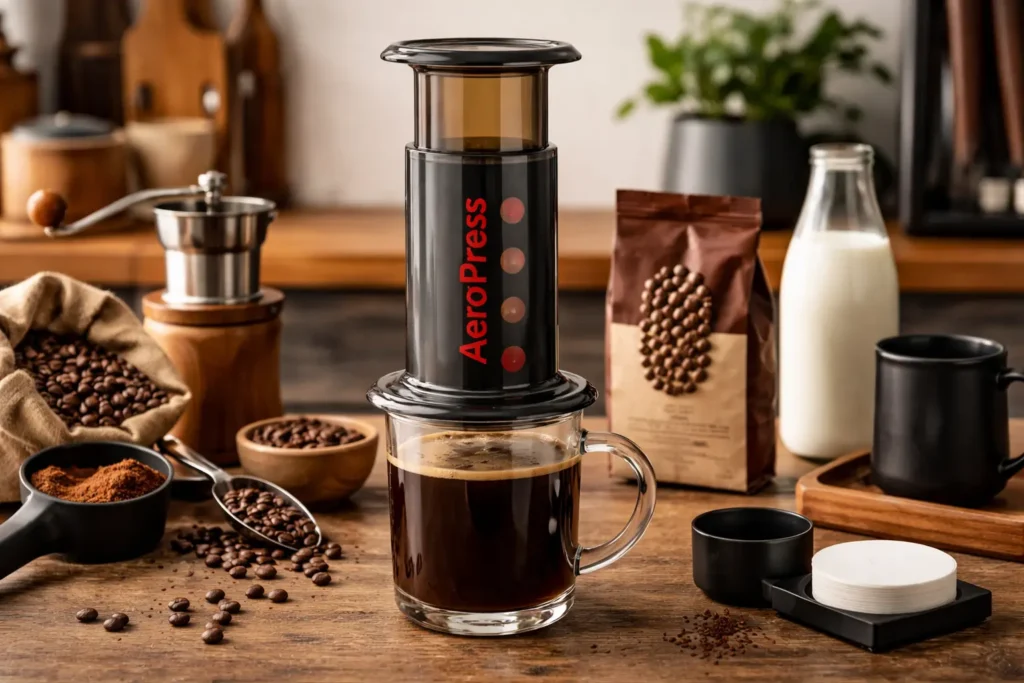
AeroPress Original
The standard AeroPress is the most versatile of the three models. Best for home use where chamber capacity isn’t a constraint and you want access to all methods (standard, inverted, concentrate).
Disclosure: CoffeeGearHub may earn from qualifying purchases.
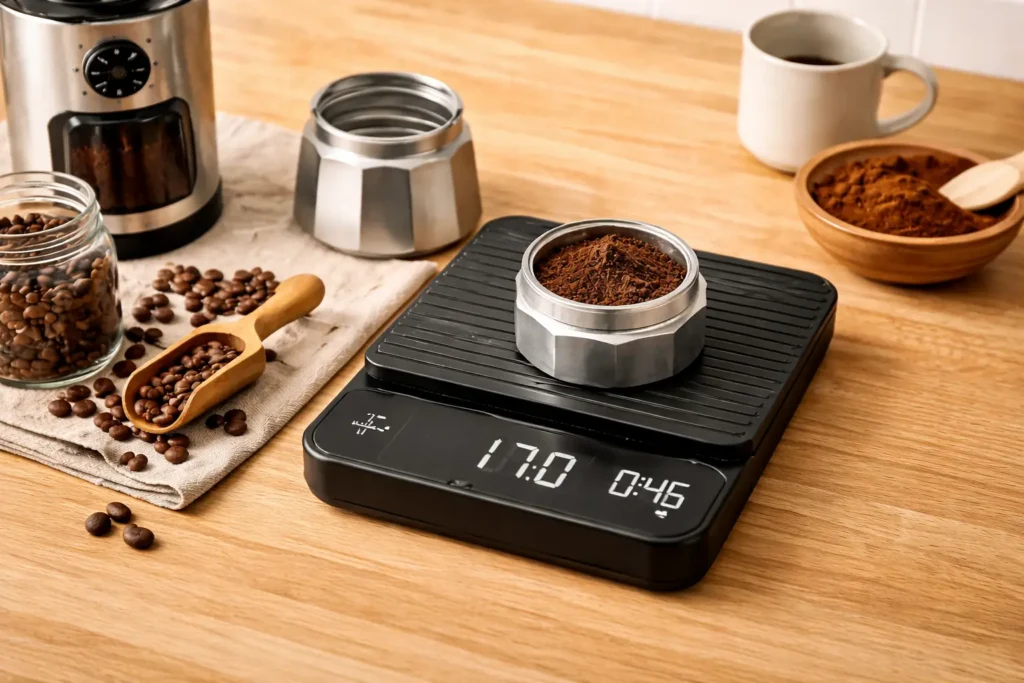
Digital Coffee Scale (0.1g Resolution)
Iced AeroPress recipes live and die by ratio precision. A few grams too much ice and the drink is watery; a few grams too little and it’s harsh. A scale with a built-in timer removes this guesswork and makes your grind adjustments meaningful.
Disclosure: CoffeeGearHub may earn from qualifying purchases.
Best Grinders for AeroPress Iced Coffee
Iced coffee amplifies grinder quality differences because the fine grind target is less forgiving than a standard hot recipe. The gap between a blade grinder and a quality burr grinder is especially noticeable in iced drinks.

Baratza Encore
- Best overall electric value
- Consistent fine-range performance
- Repairable, long-term supported
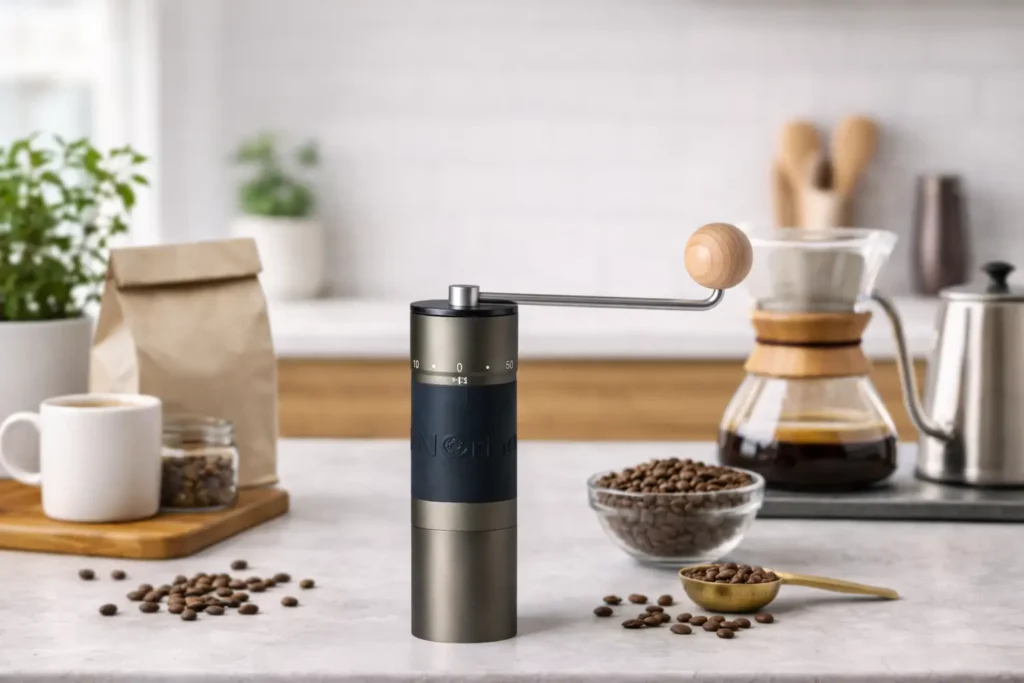
KINGrinder K6
- Best manual value for iced coffee
- Precise fine-range click adjustments
- Excellent travel companion

Timemore Chestnut C3
- Best first burr grinder upgrade
- Biggest flavor jump per dollar
- Compact and travel-ready
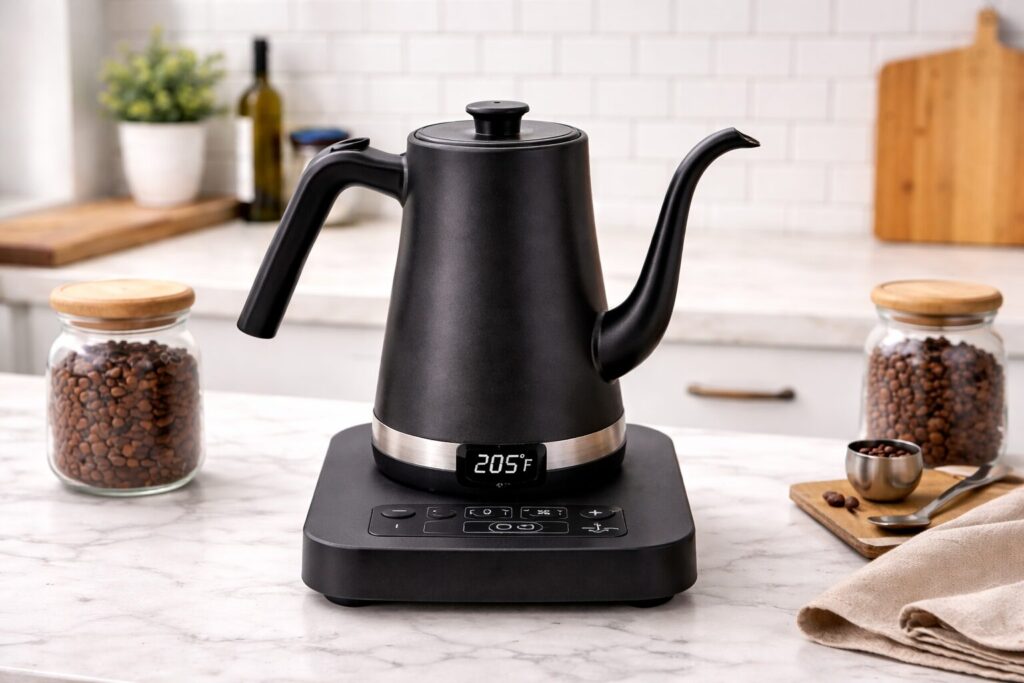
Temperature-Controlled Gooseneck Kettle
Temperature is a meaningful iced coffee variable — especially for light and dark roasts. A temperature-controlled kettle removes guessing and lets your grind adjustments produce clean, isolated feedback.
Disclosure: CoffeeGearHub may earn from qualifying purchases.
FAQs
Can you make iced coffee directly in an AeroPress?
Yes. Flash brewing directly over ice is the fastest and most flavorful standard method — total brew time under three minutes. The AeroPress’s pressure extraction produces a concentrate strong enough to withstand ice dilution without tasting watery.
What grind size should I use for AeroPress iced coffee?
Use a fine grind — one step finer than your regular AeroPress setting (which is typically medium-fine/table salt). Fine grounds compensate for the shorter brew window in concentrate recipes. For inverted or cold brew methods, medium-fine is appropriate since contact time is longer.
Why does my AeroPress iced coffee taste watery?
Usually too much ice relative to coffee, or a grind too coarse for a concentrate recipe. First, reduce ice by 15–20g. If still watery, increase your coffee dose by 2–3g (strength issue) or grind slightly finer (extraction issue). Don’t change both at once — adjust one variable per brew.
Why does my AeroPress iced coffee taste bitter?
Over-extraction: usually the grind is too fine for the short brew window, or your regular hot-coffee settings are too aggressive for a concentrate. Go 1–2 steps coarser, reduce steep time by 10–15 seconds, and for dark roasts lower your water temperature to 85–91°C.
Is AeroPress iced coffee stronger than regular iced coffee?
Yes — by design. AeroPress iced coffee is brewed as a 1:6 concentrate, which is roughly twice as strong as standard hot AeroPress (1:15). The ice provides dilution as it melts, bringing the final drink to normal strength. If the drink still tastes strong after the ice has melted, you used too little ice.
How long does AeroPress iced coffee last in the fridge?
Flash-brewed iced coffee is best within 12–18 hours and still drinkable at 24 hours, though aromatics flatten noticeably. Concentrate (without ice) stores better — up to 48 hours in an airtight container. Store without ice and add fresh ice when serving.
What’s the difference between AeroPress flash brew and AeroPress cold brew?
Flash brew uses hot water over ice for a bright, aromatic cup in under 3 minutes. Cold brew steeps coffee in cold water for 8–24 hours for a smoother, lower-acid result. Flash brew is faster and more complex; cold brew is mellower and easier to batch-prepare.
Can I use the inverted method for AeroPress iced coffee?
Yes, and many brewers prefer it. Inverting eliminates drip-through during steeping, which gives you true immersion control — particularly useful for concentrate recipes where every drop counts. Use medium to medium-fine grind for inverted iced (slightly coarser than standard, since the longer steep compensates).
What’s the best coffee for AeroPress iced coffee?
Medium roast is the most forgiving for iced methods. Light roast produces complex, fruity iced coffee but requires hotter water and a finer grind. Dark roast works well for iced lattes but needs cooler water and a coarser grind to avoid bitterness. Whatever roast you choose, use beans within 2–4 weeks of roast date — freshness is noticeably more important for iced brewing.
Do I need a scale to make AeroPress iced coffee?
Technically no, but ice quantity is the trickiest variable in iced AeroPress — a few grams too much and the drink is watery, too little and it’s harsh. A scale removes that guesswork entirely and makes recipe adjustments meaningful. It’s the single highest-value accessory for anyone brewing AeroPress seriously.
Continue Learning
AEROPRESS CLUSTER
Want café-style iced lattes at home? Use the concentrate playbook above, then pair it with a quality milk frother for a barista-level result in under five minutes.
☕
Written by the CoffeeGearHub Editorial Team
CoffeeGearHub is a specialty coffee equipment resource run by home brewers and coffee enthusiasts. Our guides are researched using published brewing science, grinder manufacturer specifications, and established specialty-coffee community knowledge. We review and update our pillar content regularly. About CoffeeGearHub →