
AeroPress Troubleshooting Guide: Fix Weak, Sour, Bitter, Muddy, or Stuck Brews (With a Repeatable Dial-In System)
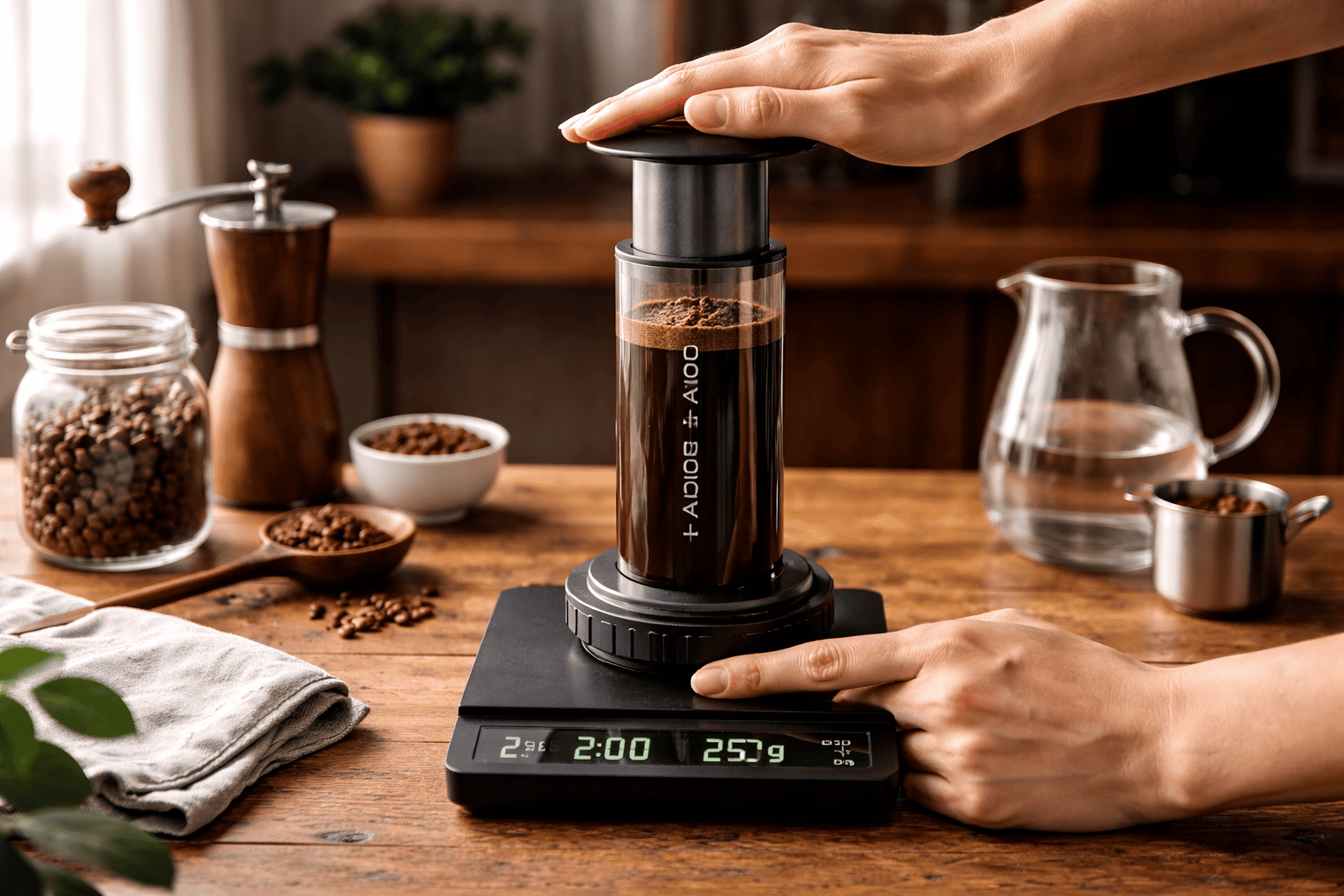
Editorial standards: this guide diagnoses AeroPress problems through repeatable changes to grind, ratio, temperature, steep time, agitation, filter choice, and pressing. Change one variable at a time so the result remains interpretable.
At a glance
What this guide covers
This guide covers weak, sour, bitter, muddy, stalled, and difficult-to-press AeroPress brews, with a stepwise dial-in process rather than a list of disconnected fixes.
Editorial analysis
Diagnose the symptom before changing the recipe
Weakness can be a concentration problem while sourness is often an extraction problem. Treating both by simply adding more coffee can make the cup stronger without fixing the underlying flavor.
Start with the dominant symptom, choose the most likely variable, make a small change, and brew again. That loop is faster than changing grind, temperature, and dose simultaneously.
The 30-Second Answer
For AeroPress troubleshooting, identify one dominant problem and change one variable at a time. Sour usually points toward more extraction, harsh bitterness toward less, and simple weakness toward a stronger ratio.
Troubleshooting tools
Start with these representative choices
Before replacing the brewer, stabilize grind and make sure the AeroPress itself is in good condition. Those two checks solve a large share of inconsistent results.
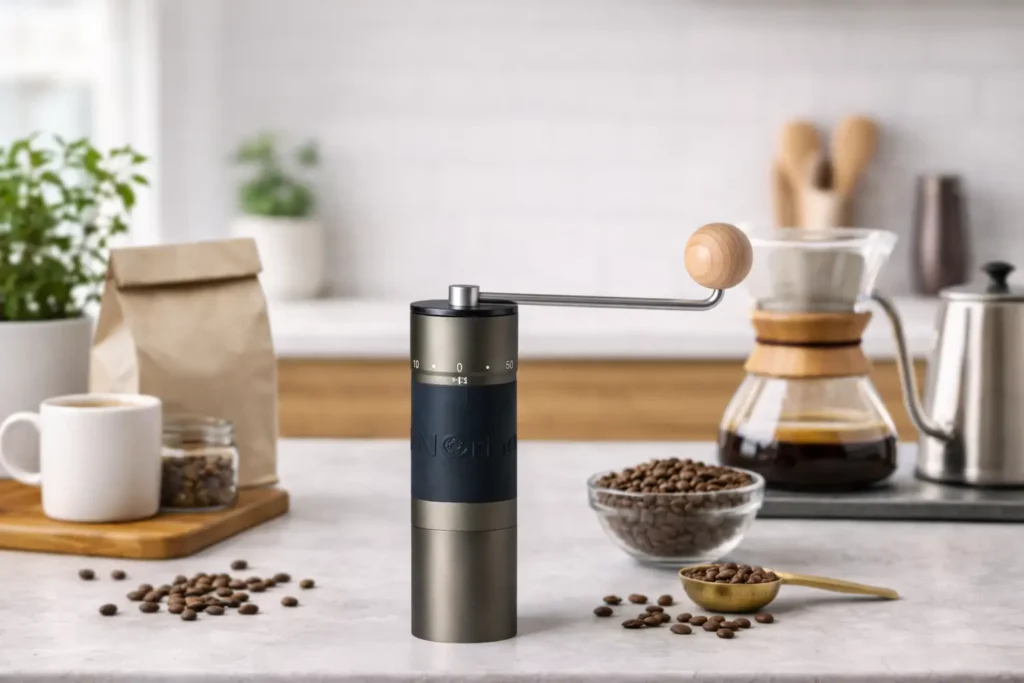
KINGrinder K6 — grind-consistency reference
A repeatable burr grinder helps separate recipe problems from excess fines and inconsistent particle size.
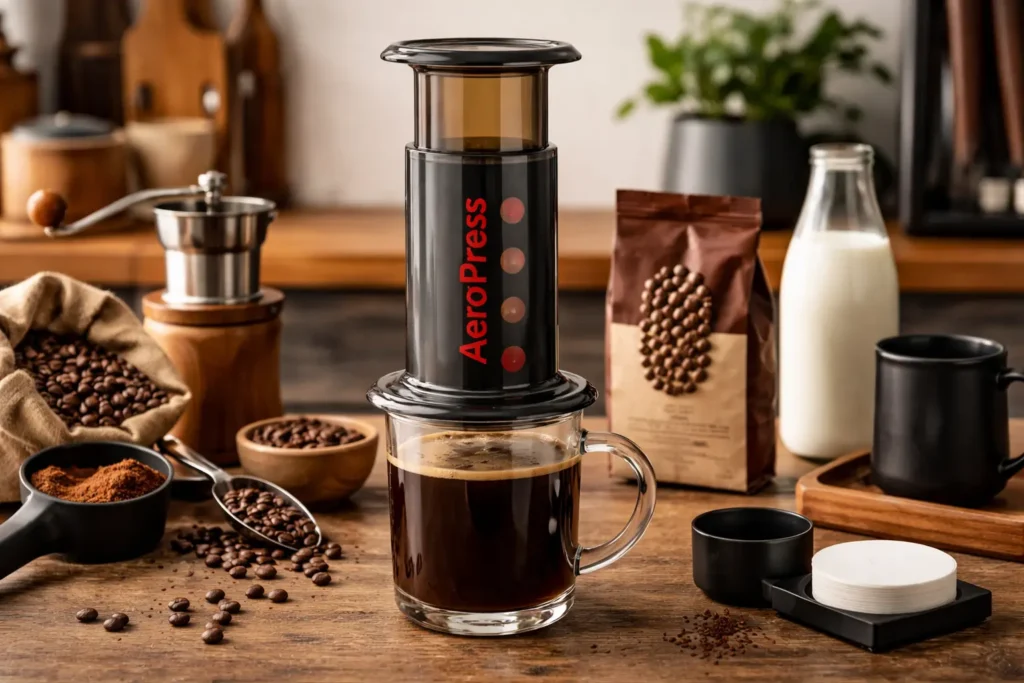
AeroPress Original — brewer reference
Use the current brewer as a reference when troubleshooting worn seals, damaged filters, or replacement needs.
Affiliate disclosure: Amazon links may earn CoffeeGearHub a commission at no additional cost to you. Prices and availability can change.
How AeroPress Extraction Works (and Why Problems Happen)
The AeroPress is best understood as a steep + filter brewer. Most of the flavor is decided during the steep (immersion) phase. The press phase mainly controls flow, resistance, and how many fine particles end up in your cup.
Brew quality depends entirely on how well you control:
- Grind size — surface area and extraction rate
- Coffee-to-water ratio — determines strength independent of extraction
- Water temperature — extraction speed and compound solubility
- Steep time — total contact time before pressing
- Agitation — how evenly the bed is wetted and stirred
- Filter choice — clarity, body, and fines in the cup
Over-extraction (bitter/harsh)
Usually too fine a grind, too long a steep, very hot water, or aggressive stirring. The harsh compounds extract last — over-extracting concentrates them in the cup.
Under-extraction (sour/weak)
Usually too coarse a grind, too short a steep, cool water, or poor wetting. Acids extract before sweetness and body have time to develop.
Clarity issues — muddy, gritty, silty — are typically filtration problems: a metal filter letting fines through, inconsistent grinding creating excess dust, or aggressive stirring keeping particles suspended.
Extraction Science: Why AeroPress Is So Diallable
Understanding the extraction physics behind your AeroPress makes troubleshooting much faster — because once you know why sourness or bitterness happens, the fix becomes obvious.
Coffee solubles extract in a predictable order. Acids dissolve first, which is why under-extracted coffee tastes sharp and sour — you pulled the acids but not enough sugar and body. Sweetness and fullness come next. Harsh, drying bitterness extracts last. Your goal is to stop in the sweet zone: past “sour” but before “harsh.”
Grind size is the most powerful dial because it controls surface area and flow resistance simultaneously. A finer grind gives water more surface area to extract from and slows the press. A coarser grind reduces surface area and speeds flow. That’s why a single click on a quality grinder can shift a cup from sour to balanced — or from balanced to bitter.
The AeroPress is uniquely forgiving because it separates steep time from press time. You can stop the clock, taste, and adjust before the next brew without changing multiple variables. That’s the main reason AeroPress rewards a systematic approach: one change, one brew, one assessment.
🔬 The key insight: Separate strength from extraction. Weak but balanced → add coffee or less water. Sour or bitter → adjust grind, time, or temperature. Never try to fix a sour cup by adding more coffee — you’ll just get a stronger sour cup.
Quick Diagnosis: What Your Symptoms Mean
If you only read one section of this guide, make it this one. Match your symptom to the most likely cause and you can fix it in one brew.
| What you taste / feel | Most likely cause | Fastest fix |
|---|---|---|
| Weak, watery, hollow | Ratio too weak (under-dosed or too much water) | Move to 1:15 (18g : 270g) or brew stronger concentrate then dilute |
| Sour, sharp, thin acidity | Under-extracted (coarse grind, short steep, cool water) | Grind finer OR extend steep +20–30s; use ~200°F |
| Bitter, harsh, drying | Over-extracted (too fine, too long, too hot, too much agitation) | Grind coarser OR shorten steep −15–30s; reduce agitation |
| Muddy, gritty, silty | Too many fines + filter letting them through | Use paper (or paper+metal); grind slightly coarser; stir gentler |
| Plunge extremely hard / stalls | Grind too fine; filter clogged; puck compacted | One step coarser; rinse paper; avoid over-stirring; press steady |
| Plunge too easy / no resistance | Grind too coarse (fast flow, low resistance) | One step finer; aim for 20–30 second press |
| Both sour and bitter | Uneven extraction (boulders + fines, poor wetting) | Improve grind consistency, stir evenly, calm press, stop at hiss |
Fix Weak or Watery AeroPress Coffee
What it tastes like: thin, hollow, watery — like a faint suggestion of coffee. Weak AeroPress coffee is usually a ratio problem, not an extraction problem. The fastest diagnostic: does the coffee taste watery but not particularly sour? That’s strength. Does it taste watery and sharp? That’s under-extraction.
Common causes (ranked by frequency)
- Ratio too dilute — eyeballed scoops and fill lines often land at 1:17–1:20
- Under-dose — using less than 15g of coffee for a standard AeroPress chamber
- Weak + sour together — this is under-extraction, not just dilution
Fix it in one brew
- Weigh coffee and water and move to 1:15 (18g : 270g) as your baseline.
- Brew concentrate at 1:11–1:13, then dilute with hot water after pressing. This often tastes better than a large weak brew because extraction stays controlled.
- If weak and sour, keep ratio steady and follow the sour coffee fixes below — adding more coffee to a sour cup just gives you a stronger sour cup.
| Desired strength | Coffee | Water | Ratio |
|---|---|---|---|
| Balanced cup | 18g | 270g | ~1:15 |
| Stronger cup | 18g | 240g | ~1:13 |
| Concentrate (dilute after) | 18g | 200g | ~1:11 |
Fix Sour AeroPress Coffee (Under-Extraction)
What it tastes like: sharp, thin, acidic, sometimes lemony in a harsh way. Sourness is the most common AeroPress complaint because acids extract first and extract easily — but sweetness, body, and balance need more time, more heat, and enough surface area (grind). If any of those are short, you taste acidity without the round flavors that balance it.
Most likely causes of sour AeroPress coffee
- Grind too coarse — less surface area slows extraction significantly
- Steep time too short — stopping before sweetness fully develops
- Water too cool — lower temperature slows extraction rate
- Uneven wetting — dry pockets under-extract and taste sharp
High-confidence fix order (one at a time)
- Go one grind step finer — the most powerful change.
- Add +20–30 seconds to steep time.
- Raise temperature toward ~200–205°F (especially for light roasts).
- Stir evenly for 10–15 seconds to fully wet grounds.
Most sourness resolves in 1–2 iterations once you dial grind. Keep ratio and temperature locked while adjusting.
🔬 Light roast note: Light roasts are dense and extract more slowly than medium or dark at the same grind and time. If you’re getting sour, flat, or underdeveloped cups from a light roast, push temperature toward 202–205°F, go one step finer, and extend steep by 30 seconds before adjusting anything else. Light roasts reward patience and higher heat.
Fix Bitter AeroPress Coffee (Over-Extraction)
What it tastes like: harsh, drying, astringent, lingering. Some bitterness is normal — especially with darker roasts — but harsh bitterness that coats your mouth and doesn’t fade is over-extraction. You’ve pulled the compounds that come after the sweet zone.
Most common bitterness triggers in AeroPress
- Too fine a grind — extracts quickly and overshoots into harsh compounds
- Too long a steep — continuing past the sweet extraction window
- Water too hot — increases extraction rate, amplifies harshness especially in dark roasts
- Over-agitation — frantic stirring suspends fines and increases muddiness and edge
- Pressing too hard or fast — turbulence pulls more fines through the filter into the cup
High-confidence fix order
- Go one grind step coarser.
- Shorten steep by 15–30 seconds.
- Reduce agitation (stir less or stir gentler).
- Lower temperature to ~195–198°F (or ~190–195°F for dark roasts).
Common misconception: pressing harder doesn’t improve extraction quality. In AeroPress, the press phase mostly controls flow through the filter. A hard, fast press increases turbulence and pulls more fines into the cup — which usually makes bitterness and dryness worse. Aim for a calm 20–30 second press and stop at the hiss rather than forcing air through the puck.
Fix Muddy, Silty, or Gritty AeroPress Coffee
What it tastes like: heavy, textured, sometimes clean in flavor but unpleasant in mouthfeel — gritty sediment in the bottom of the cup. Muddy cups come from fines and oils passing through your filter. That’s not always unwanted (metal filter users often love the body), but when it becomes unpleasant grit, your filter setup and grind distribution are the main levers.
Why muddy AeroPress coffee happens
- Metal filters — let more oils and fines through than paper (bigger body, less clarity)
- Very fine grinds — create more dust-sized fines that slip past any filter
- Uneven grinding — blade grinders create dust + boulders simultaneously
- Aggressive stirring — keeps fines suspended and increases sludge in the cup
Fix order for clarity
- Switch to a paper filter for the cleanest cup.
- If you like metal’s body, stack paper + metal (best of both worlds for many brewers).
- Grind one step coarser.
- Stir less aggressively — even mixing, not whipping.
If mud is inconsistent brew to brew, grind quality is often the culprit. A burr grinder with a stable setting reduces dust and makes your filter choice behave predictably. Hard to beat: paper filter + consistent burr grind + calm press.
Plunger Too Hard to Press (or Stalls)
AeroPress pressing should feel like controlled resistance — not a workout. When pressing gets extremely hard, something is restricting flow: the grind is too fine, the filter is clogging, the coffee bed compacted from over-stirring, or you overfilled the chamber and created too much back pressure.
Hard plunge checklist (fix in this order)
- Go one grind step coarser — most common fix.
- Rinse your paper filter — reduces initial clogging and eliminates paper taste.
- Stir less aggressively — over-stirring compacts the bed and migrates fines to the filter.
- Don’t overfill past the practical safe fill level.
- Press slower — steady pressure is better than forcing it.
💡 Fresh coffee tip: If you’re brewing very fresh coffee (especially darker roasts), trapped CO₂ can increase foam and resistance. Let the coffee bloom for 10–20 seconds after the pour, then stir and proceed. That small pause often smooths the press significantly.
Plunger Too Easy to Press: Why “No Resistance” Usually Tastes Underdeveloped
If the plunger drops with minimal resistance, water flowed through too freely — usually because the grind is too coarse or the dose is too low. That tends to create thin, underdeveloped cups that sometimes taste slightly sour even when steep time looks “long enough.”
Fix order
- Go one grind step finer.
- Aim for a 20–30 second press with steady, moderate resistance.
- If still thin, verify your dose and ratio with a scale — don’t guess.
“Both Sour and Bitter”: Uneven Extraction
A cup that’s simultaneously sour and bitter is one of the most frustrating experiences in coffee — because it feels like the rules don’t apply. In reality, this is a sign your grind contains both boulders (large particles that under-extract → sour) and fines (tiny particles that over-extract almost instantly → bitter). Both problems happen simultaneously in the same brew. It can also occur when wetting is uneven or the coffee bed creates preferential flow paths during the press.
Why it happens
- Wide grind distribution — blade grinders, dull burrs, cheap inconsistent grinders
- Poor wetting — fast pour without stirring can leave dry pockets
- Over-turbulence — frantic stirring suspends fines and increases edge
- Bed compaction — pressing too hard or too fast after heavy agitation
Fix it: consistent grind + even wetting + calm press
- Use a burr grinder (or improve grind consistency any way you can).
- Stir evenly for 10–15 seconds (stop whipping it).
- Press steadily for 20–30 seconds.
- Stop at the hiss — don’t push air through the puck.
If you only change one thing: improve grind consistency. It makes every other troubleshooting step “stick.”
Temperature and Water Quality Mistakes That Sabotage AeroPress
If you’re doing the basics right and still getting inconsistent outcomes, temperature and water are the variables most people overlook. Temperature changes extraction speed and compound solubility; water mineral content changes how effectively flavors dissolve and how the final cup tastes.
AeroPress temperature: a practical cheat sheet
| Roast level | Recommended temp | Why | Common problem at wrong temp |
|---|---|---|---|
| Light roast | 200–205°F (93–96°C) | Dense bean; needs full heat to develop sweetness | Sharp, grassy, sour if too cool |
| Medium roast | 198–203°F (92–95°C) | Balanced extraction window; forgiving baseline | Muted flavor at either extreme |
| Dark roast | 190–198°F (88–92°C) | Extracts readily; lower heat reduces harshness | Harsh, ashy bitterness if too hot |
Don’t overthink it. Start at 200°F and use it consistently while you dial grind. Once the cup is close, fine-tune temperature to highlight sweetness or reduce edge — not before.
🔬 Light roast AeroPress note: Light roasts resist extraction more than medium or dark — they need higher heat and a finer grind to fully develop. If you’re getting flat or sour results from a light roast, push to 202–205°F, go one step finer, and extend steep by 30 seconds before changing anything else.
Water quality: the “invisible” reason AeroPress coffee tastes flat
Very soft water makes coffee taste dull and underwhelming. Very hard water can emphasize bitterness and mute clarity. For most home brewers, the biggest upgrade is simple: use clean, filtered water and avoid distilled water unless you remineralize it. If your coffee consistently tastes “muted” and you’ve already dialed grind, time, and ratio, water is a smart next variable to address.
Paper vs Metal Filters (and Why Stacking Is a Cheat Code)
AeroPress filters don’t just remove particles — they shape aroma, body, and clarity. If you’ve ever wondered why the same coffee tastes “brighter” one day and “heavier” the next, filter choice may be the reason. For a full side-by-side breakdown, see our AeroPress paper vs metal filter comparison.
Paper filter: clarity and sweetness
- Cleaner cup, less sediment
- Brighter flavors and clearer aromatics
- Great for light roasts and fruity coffees
- Fastest fix for muddy texture
Metal filter: body and richness
- More oils, more body
- Can allow fines → sediment in cup
- Great when you want a “fuller” mouthfeel
- Sometimes mutes brighter high notes
💡 Stacking tip: Stack paper + metal together in the filter cap. Many AeroPress users end up preferring this combo — it reduces grit without making the cup feel thin, giving you metal’s body with paper’s clarity.
Inverted Method Leaks and Stability (Without the Mess)
The inverted method can reduce drip-through during steeping, but it adds new failure modes: leaks, slips, and messy flips. If you brew inverted, insert the plunger far enough to create a reliable seal before adding water. Flip onto a stable mug or server that won’t slide, and avoid bumping the brewer while inverted. For a complete step-by-step walkthrough, see our inverted AeroPress method guide.
If leaking persists even with correct technique, inspect the rubber seal. A seal that’s worn, dried, or loose can slip and leak during steeping or flipping. Replacing the seal is a simple fix that restores stability — and it’s often the overlooked culprit when the inverted method “never works” for someone.
Beans, Freshness, and Flat AeroPress Coffee
If you keep chasing sweetness but every cup tastes flat, your beans may be the limiting factor. Coffee loses aromatic compounds over time. Once those aromas are gone, no amount of technique will fully restore them.
Signs your beans are holding you back
- Muted aroma even immediately after grinding
- Flavor stays dull across grind and time adjustments
- Noticeable papery or “stale pantry” notes
- Needing extreme ratios or temperatures to taste like anything
Fresh doesn’t mean “roasted yesterday” — many coffees need a short rest after roasting and taste best around 7–21 days off roast. But if a bag has been open for weeks, muted cups are normal. Buying smaller amounts more often is a simple, high-ROI upgrade for home brewing.
Grind Size Guide for AeroPress (Including Grinder Settings)
Grind is the most powerful variable in AeroPress dial-in. The AeroPress is forgiving of many things, but grind size inconsistency — from a blade grinder or worn burrs — makes every other fix harder to stick. The target is medium-fine: slightly finer than drip coffee. Think table salt or slightly finer. From there, adjust by symptom.
Because AeroPress uses immersion rather than pressure, grind size shifts are less dramatic than in moka — but they’re still the first thing to adjust. One step finer adds surface area and slows the press. One step coarser reduces extraction and speeds flow.
| Grind size | Texture reference | Most common result | Fix |
|---|---|---|---|
| Too coarse | Coarse sand / sea salt | Sour, thin, quick press | Go finer by 1–2 steps |
| ✦ Target: Medium-fine | Table salt / slightly finer than drip | Balanced, sweet, 20–30 sec press | This is your baseline |
| Too fine | Powdery / espresso-fine | Bitter, hard to press, muddy | Go coarser; press slower |
Grinder starting settings for AeroPress
Starting-point settings for commonly used grinders. Dial in by making one-step adjustments: finer if sour, coarser if bitter or hard to press. Keep ratio and temperature constant between adjustments.
| Grinder | Starting setting for AeroPress | Direction to adjust | Notes |
|---|---|---|---|
| KINGrinder K6 | 70–85 clicks from closed | Fewer clicks = finer; more clicks = coarser | Site’s recommended AeroPress grinder; 1-click precision makes dial-in straightforward; near-zero retention |
| Baratza Encore (ESP) | Setting 12–16 (out of 40) | Lower number = finer | Consistent electric burrs; good set-and-repeat daily grinder for AeroPress |
| 1Zpresso J-Series | Internal burr: 3–3.5 rotations from zero | More clicks from closed = coarser | Very tight particle distribution; fewer fines = cleaner cup even with metal filter |
| Timemore C3 / C3 Pro | Setting 14–17 (out of ~25) | Lower = finer | Popular budget hand grinder; consistent enough for reliable AeroPress dial-in |
| Generic blade grinder | Medium-fine pulse (~8–10 seconds) | Longer = finer, but inconsistency is the core problem | Not recommended — excessive fines cause bitterness and muddy texture; upgrade when possible |
💡 Dial-in tip: When trying a new bean, lock ratio, temperature, and steep time. Change only grind. Brew, taste, adjust one step. Repeat until the cup has clear sweetness and no harsh edge. Once found, note the setting — you’ll return to it.
The Repeatable AeroPress Dial-In System
Most troubleshooting fails because it encourages random tweaks. This system is different: it prioritizes control. Lock the variables that shouldn’t change, then adjust the one variable that gives the most information per brew.
Step 1 — Lock these three variables first
- Ratio: 18g : 270g (1:15)
- Temperature: ~200°F (93°C)
- Agitation: 10–15 seconds consistent stirring
Step 2 — Dial grind (one step at a time)
Sour → grind finer. Bitter / hard press → grind coarser. Keep everything else identical so the result is meaningful and repeatable.
Step 3 — Adjust steep time (if needed)
If you’re close but not perfect after fixing grind, adjust steep time by 15–30 seconds. Longer increases extraction; shorter reduces it. Only adjust time after grind is dialed — changing both simultaneously makes it impossible to know which one worked.
Step 4 — Use filter choice to shape body and clarity
Once flavor is balanced, filter choice becomes your texture dial: paper for clarity, metal for body, stacked for both. This is the last lever — adjust it after flavor is where you want it.
Troubleshooting Quick Reference Table
| Problem | Likely cause | Best fix |
|---|---|---|
| Sour / sharp acidity | Under-extraction: coarse grind, short steep, cool water | Go finer; extend steep +20–30s; raise to ~200°F |
| Bitter / harsh / astringent | Over-extraction: fine grind, long steep, hot water, heavy agitation | Go coarser; shorten steep; reduce agitation; press calmly |
| Weak / watery / hollow | Ratio too dilute; under-dosed | Weigh to 1:15 (18g:270g); or brew concentrate and dilute |
| Muddy / gritty / silty | Fines through filter; blade grinder; aggressive stirring | Switch to paper; stack paper+metal; go coarser; stir gently |
| Hard to press / stalls | Grind too fine; filter clogged; over-stirred bed | Go coarser; rinse paper filter; stir less; press steady |
| Plunger drops with no resistance | Grind too coarse; under-dosed | Go finer; verify ratio; aim for 20–30 sec press |
| Both sour and bitter | Uneven extraction: inconsistent grind, poor wetting, bed compaction | Upgrade to burr grinder; stir evenly; press calmly; stop at hiss |
| Flat / muted / no sweetness | Stale beans; cold water; ratio too weak | Check bean freshness; raise temperature; tighten ratio |
| Inverted method leaking | Worn seal; poor flip technique; wrong plunger insertion depth | Inspect and replace rubber seal; insert plunger further before adding water |
Recommended Gear Upgrades (Grinders, Scale, Filters, Kettle)
If you troubleshoot AeroPress issues repeatedly, these upgrades address the most common failure points: grind consistency, ratio accuracy, and temperature control. Each pick is matched to the specific problem it solves.
1) Burr Grinders (Biggest Upgrade for Sweetness and Consistency)
Most “both sour and bitter” and muddy-cup problems trace back to inconsistent grounds and excess fines from blade grinders. A burr grinder gives you repeatable particle size so you can dial in once and maintain it. The three picks below cover the main use cases for AeroPress brewers.
KINGrinder K6 — Top AeroPress Grinder Pick
Why it helps: Precise 1-click adjustments and consistent steel burrs eliminate the boulders and fines that make troubleshooting impossible. Start around 70–85 clicks from closed and adjust 3–5 clicks at a time. Near-zero retention means no stale grounds between brews.
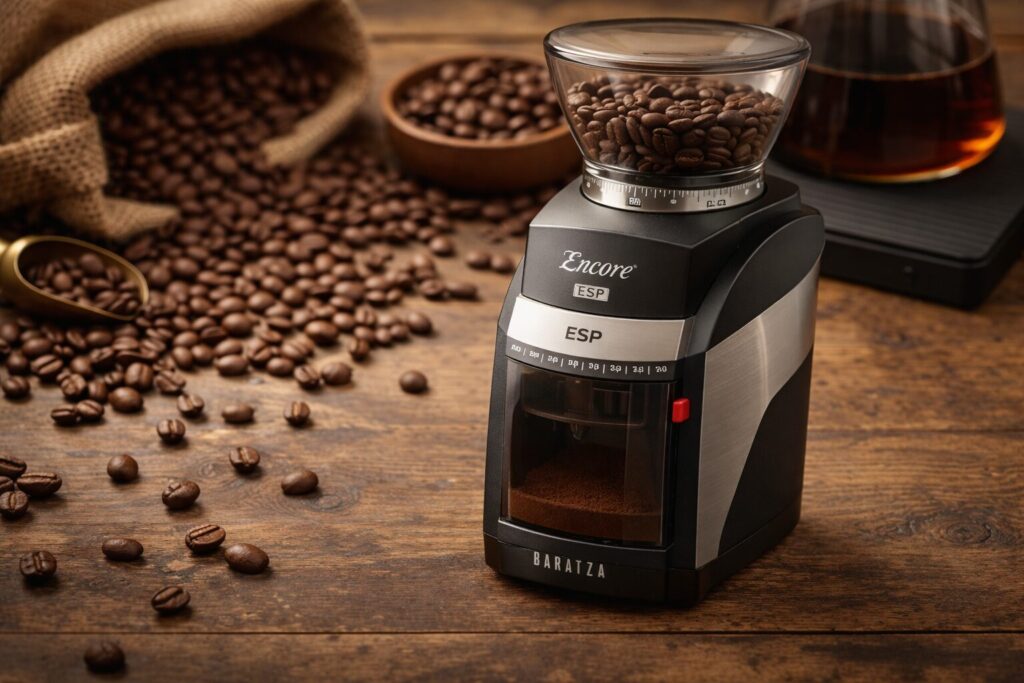
Baratza Encore ESP — Best Electric Burr Grinder
Why it helps: 40 grind settings give you fine control in the AeroPress medium-fine zone. Consistent particle sizing means fewer fines (less bitterness) and predictable press resistance. Ideal for daily set-and-repeat AeroPress without manual grinding.
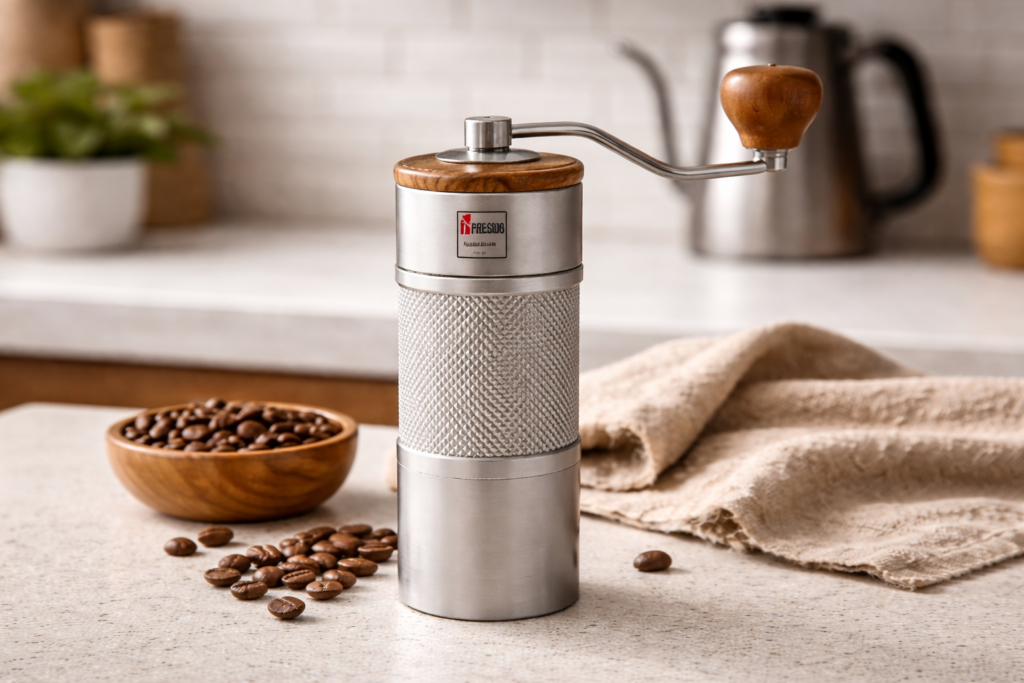
1Zpresso J-Series — Best Premium Manual Grinder
Why it helps: Very narrow particle distribution — fewer fines than most hand grinders, which directly reduces bitterness and muddy texture in AeroPress. Great for travel and for those who also brew espresso with the same grinder.
For a full grinder comparison with additional model details and AeroPress settings: Best Grinders for AeroPress.
2) Digital Scale + Timer (Fix Weak Cups and Make Dial-In Repeatable)
Without measuring dose and water, you can’t troubleshoot ratio vs extraction — you don’t know which problem you have. A scale eliminates “accidentally weak coffee” overnight and makes every grind adjustment meaningful.
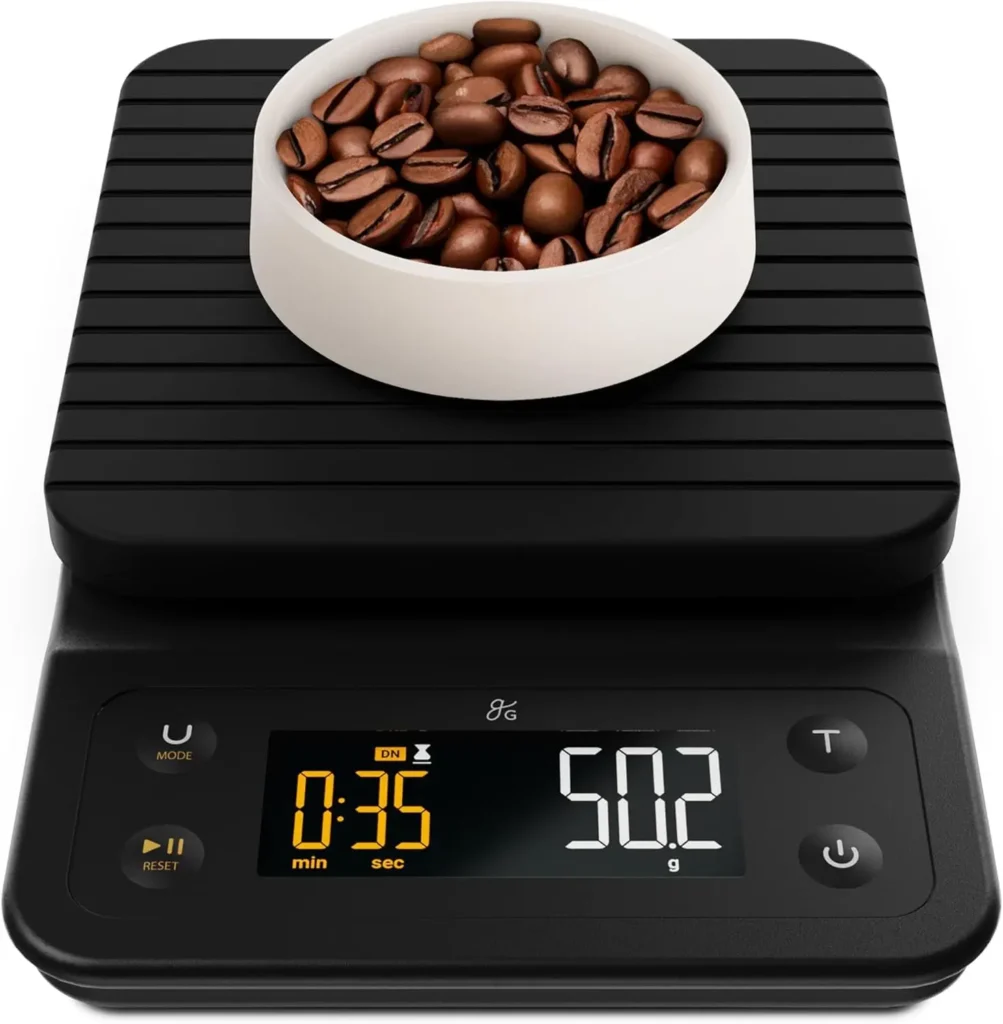
Digital Scale with Timer
Why it helps: Locks ratio so every grind adjustment is the only variable that changes. Built-in timer removes the need for a separate phone timer. Improves consistency more than any new recipe.
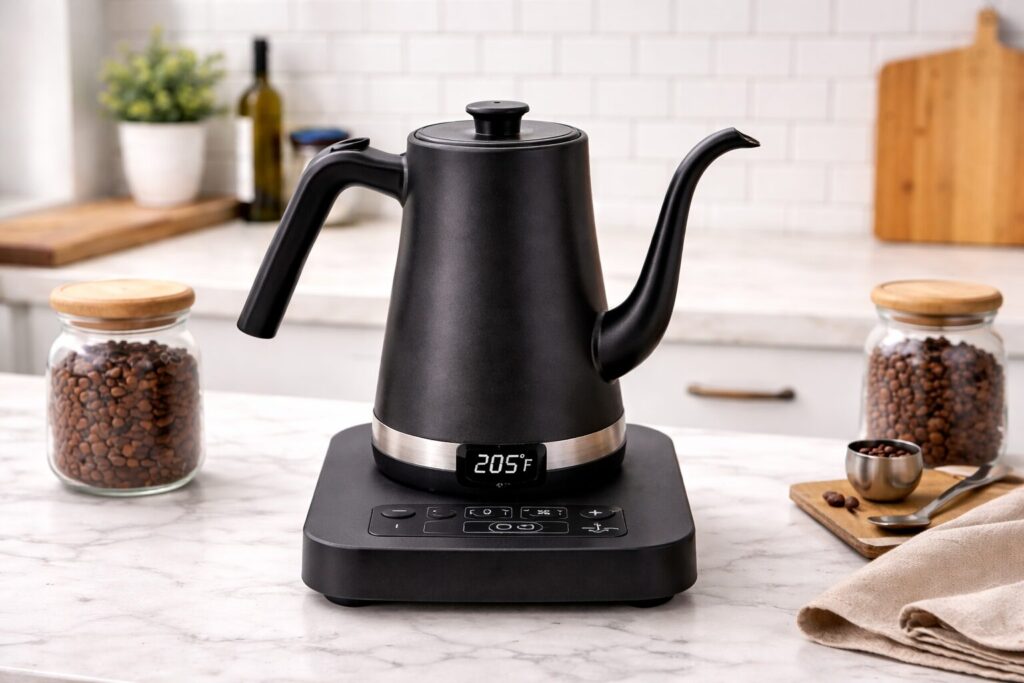
Temperature-Controlled Kettle
Why it helps: Temperature swings cause extraction swings. A controlled kettle lets you hold 200°F for light roasts, 198°F for medium, or 192°F for dark — eliminating “random” inconsistency in cups that were otherwise dialed in.
3) Paper + Metal Filter Combo (Customize Body and Clarity)
Paper cleans up muddiness fast. Metal boosts body. Stacking them gives many brewers the best “clean but rich” cup without choosing between the two.
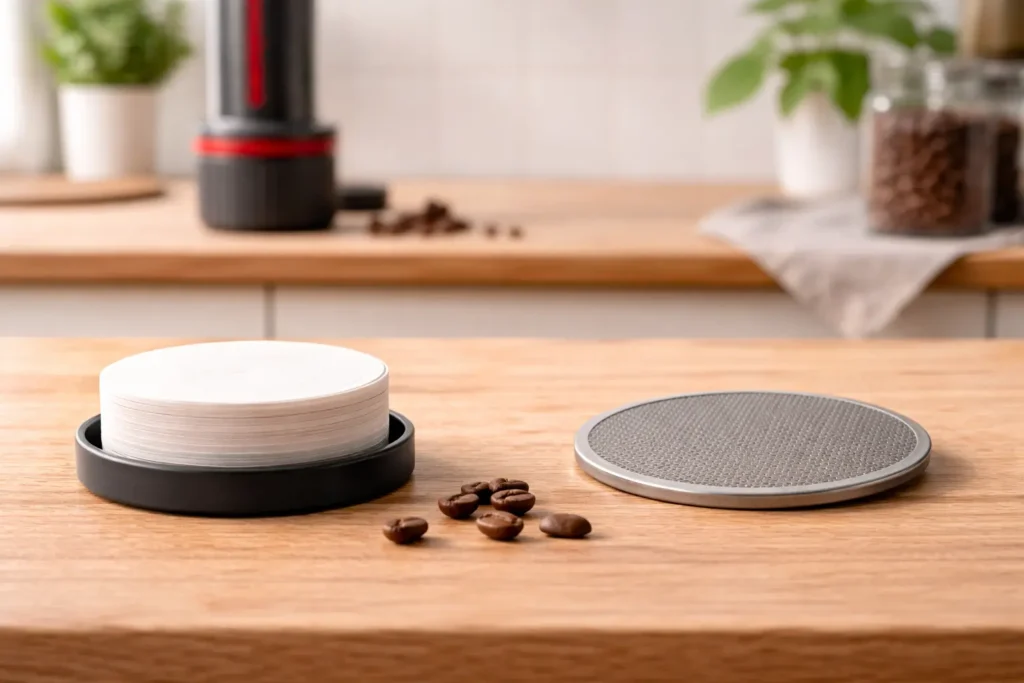
Paper Filters + Reusable Metal Filter
Why it helps: Paper alone = fastest fix for muddy cups. Metal alone = richer body. Stack both = clean but full. Having both on hand lets you adjust texture without changing grind or recipe.
Full comparison: AeroPress Paper vs Metal Filters
AeroPress Original (the brewer itself)
Why it matters: If you’re troubleshooting a borrowed or older unit with a degraded seal, owning an AeroPress in good condition removes equipment condition from the equation. Includes 350 paper filters; replacement seals are available separately.
FAQs: AeroPress Troubleshooting
Why does my AeroPress coffee taste sour?
Sourness is usually under-extraction: grind too coarse, steep too short, or water too cool. Keep ratio steady, grind one step finer, and extend steep by 20–30 seconds at ~200°F.
Why is my AeroPress coffee bitter and harsh?
Harsh bitterness is usually over-extraction from a grind that’s too fine, too long a steep, very hot water, or aggressive stirring. Go one step coarser, shorten steep by 15–30 seconds, reduce agitation, and press steadily.
Why is my AeroPress coffee weak and watery?
Weakness is usually a ratio/strength issue. Try about 1:15 (18g coffee to 270g water), or brew concentrate and dilute after pressing. If it’s weak and sour, adjust extraction with a slightly finer grind.
Why is my AeroPress hard to press?
Hard pressing typically means the grind is too fine or the filter bed is clogging with fines. Go one grind step coarser, rinse paper filters, avoid over-stirring, and press steadily rather than forcing it.
Why does my AeroPress taste muddy or gritty?
Muddiness usually comes from fines in the cup, especially with metal filters or uneven grinding. Switch to paper (or paper+metal), grind slightly coarser, and reduce aggressive stirring.
What grind size should I use for AeroPress?
Start medium-fine (slightly finer than drip). Sour → go finer. Bitter/hard press → go coarser. Keep ratio and temperature stable while dialing grind.
What temperature should I use for AeroPress?
~200°F (93°C) is a strong baseline for most roasts. Light roasts benefit from 200–205°F for full development. Medium roasts sit comfortably at 198–203°F. Dark roasts often taste cleaner at 190–198°F, where lower heat reduces harshness. Make temperature changes in small steps after grind is dialed in.
Paper vs metal filters: which should I use?
Paper gives a cleaner, clearer cup with less sediment. Metal gives more body and oils but can add fines. Many brewers stack paper + metal to combine clarity and body.
Is the inverted method better than standard?
Not strictly better. Inverted can prevent drip-through during steeping, but it adds spill and leak risk. Standard is simpler and very consistent when done with a good seal.
How long should I steep AeroPress coffee?
For a balanced cup, start around 1:30–2:00 total contact time. If sour, steep longer; if bitter, steep shorter. Dial grind first, then time.
Continue Reading
AEROPRESS CLUSTER
- AeroPress Grind Size (Complete Guide) — Deep dive on grind settings and dial-in
- AeroPress Inverted Method (Step-by-Step) — Full walkthrough of the flip technique
- Best AeroPress Recipes (Beginner → Advanced) — Starting recipes once your baseline is dialed
GEAR & COFFEE SCIENCE
- Best Grinders for AeroPress — Full buyer’s guide with additional models
- AeroPress Paper vs Metal Filters — Side-by-side comparison and stacking guide
- How to Dial In Coffee at Home — Same principles across all brew methods
☕
Written by the CoffeeGearHub Editorial Team
CoffeeGearHub is a specialty coffee equipment resource produced by the CoffeeGearHub Editorial Team. Our guides are researched using published brewing science, manufacturer specifications, and established specialty-coffee community knowledge. We review and update our pillar content regularly. About CoffeeGearHub →
CoffeeGearHub product shortlist
Compare AeroPress brewing gear
Browse grinders, brewers, and accessories that support a repeatable AeroPress workflow.
Continue Learning
Dial-in fundamentals
In this guide
- The 30-Second Answer
- How AeroPress Extraction Works (and Why Problems Happen)
- Extraction Science: Why AeroPress Is So Diallable
- Quick Diagnosis: What Your Symptoms Mean
- Fix Weak or Watery AeroPress Coffee
- Fix Sour AeroPress Coffee (Under-Extraction)
- Fix Bitter AeroPress Coffee (Over-Extraction)
- Fix Muddy, Silty, or Gritty AeroPress Coffee
- Plunger Too Hard to Press (or Stalls)
- Plunger Too Easy to Press: Why “No Resistance” Usually Tastes Underdeveloped
- “Both Sour and Bitter”: Uneven Extraction
- Temperature and Water Quality Mistakes That Sabotage AeroPress
- Continue Learning