
Affiliate disclosure: Some links on this page are affiliate links. CoffeeGearHub may earn a commission if you buy through them, at no additional cost to you.
Last Updated: March 2026 • 35–45 min read • Cornerstone Guide + Extraction Math + Dial-In Framework
The AeroPress inverted method is the most controllable way to brew immersion-style AeroPress coffee: no early drip-through, predictable contact time, and a wider “sweet spot” for dialing in body and sweetness. This is a complete guide covering step-by-step recipes, a practical extraction-math model (TDS/EY), a full troubleshooting playbook, common mistakes to avoid, and conversion-optimized gear recommendations — everything you need to master the inverted method from your first brew.
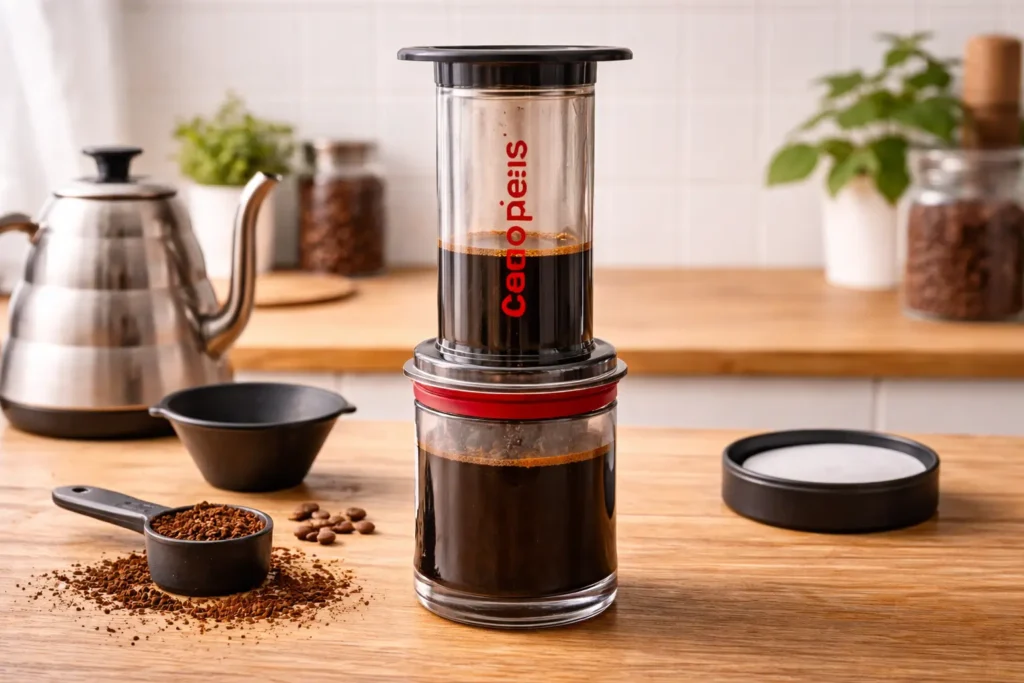
Best for: richer cups, full immersion control, latte-style concentrates (with bypass), repeatable brew times, and “competition-style” AeroPress recipes.
Quick warning: inverted is safe when done correctly, but it does add a small spill risk. This guide shows the most stable flip technique.
Table of Contents
What Is the AeroPress Inverted Method?
The inverted AeroPress method flips the brewer upside down during the steep so you can run a true immersion brew: water and coffee stay together for a controlled contact time, then you attach the cap, flip onto a mug, and press. The main goal is simple: prevent premature drip-through that can make standard AeroPress timing and extraction less consistent.
In practice: you insert the plunger slightly into the chamber, invert the brewer so it stands plunger-down, add coffee and water, steep, then secure the cap and filter. After the flip, you press like normal—slowly and evenly.
Why Brew Inverted? The Practical Extraction Science
AeroPress extraction is driven by the same fundamentals as every coffee brewer: grind size, contact time, water temperature, and agitation. Standard orientation introduces a fifth variable—uncontrolled percolation—because water can seep through the filter as soon as you start pouring.
That early drip-through changes the brew in two ways:
- It shortens immersion time (some water exits before the steep really begins).
- It splits extraction into phases (a small early percolation stage + a later immersion/press stage).
Inverted brewing removes most of that variability. You steep for a known time, then press. That’s why inverted is so popular for repeatability and for recipes that depend on a clean, consistent contact-time window (especially for light roasts and “espresso-style” concentrates made with bypass).
Simple takeaway: inverted doesn’t automatically “taste better,” but it gives you more control. More control usually means it’s easier to land on sweetness and balance—especially when you’re dialing in a new coffee.
Standard vs Inverted AeroPress: Which Should You Use?
Both methods can make exceptional coffee. Use this comparison to choose based on goals, not trends.
| Feature | Standard Method | Inverted Method |
|---|---|---|
| Early drip-through | Yes (varies) | No (minimal) |
| Control over steep time | Medium | High |
| Body / texture | Medium | Medium–High |
| Clarity | High | Medium–High |
| Spill risk | Low | Moderate |
| Best use case | Fast daily cups | Repeatable “dial-in” brewing |
The Safest Flip Technique (No-Spill Workflow)
If you’ve ever avoided inverted because of spill anxiety, this is the technique that makes it feel routine. The key is stability, controlled fill volume, and a secure cap before the flip.
- Insert the plunger deeper than you think: about 1–1.5 cm (roughly ½ inch) is a good baseline. Too shallow increases leak risk.
- Set the inverted AeroPress on a stable, flat surface (not a soft towel).
- Don’t overfill: leave enough headspace so agitation doesn’t push liquid past the seal.
- Attach the cap firmly while holding the chamber steady with one hand.
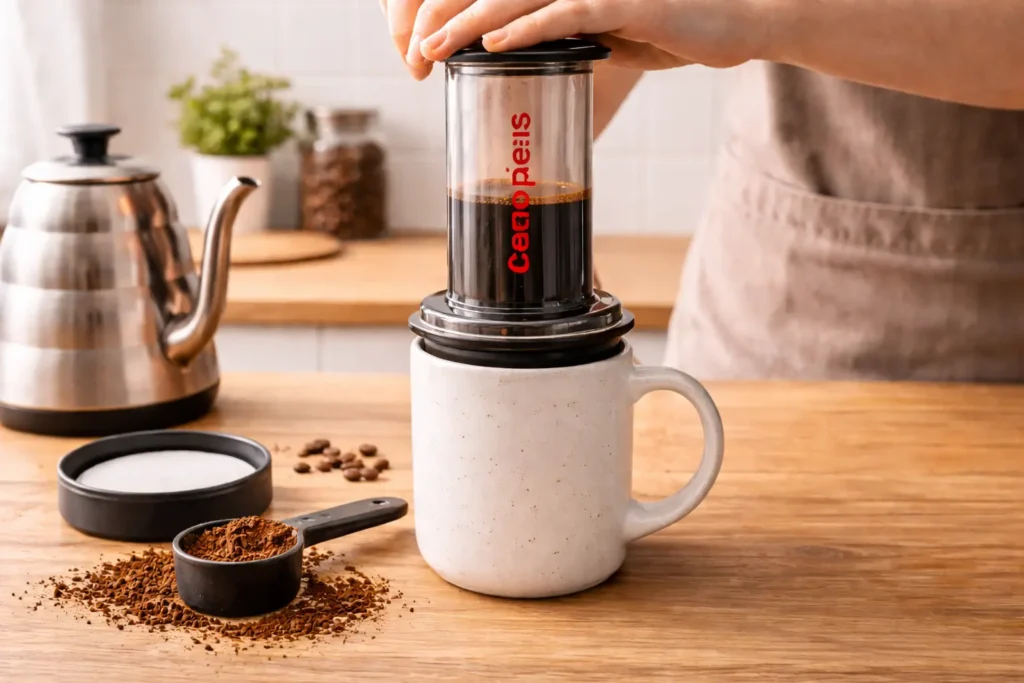
- Flip onto the mug in one confident motion: mug upside down over the cap, hold both, rotate together, then set down.
Press tip: once flipped, wait 5–10 seconds for grounds to settle before pressing. This can improve clarity and reduce silt in the cup.
The Core Inverted Recipe (Balanced, Sweet, Repeatable)
This is the “baseline” recipe you can use to learn your grinder, understand a new coffee, and build a consistent flavor reference. It’s designed to land in a forgiving extraction zone and produce a cup that’s sweet, rounded, and clear enough to taste origin notes.
Recipe: Balanced Inverted
- Coffee: 16 g
- Water: 240 g (about 240 ml)
- Ratio: 1:15
- Grind: medium-fine
- Temp: 200°F / 93°C
- Total time: ~2:05
Steps:
- Assemble inverted (plunger inserted ½ inch).
- Add coffee, start timer.
- Pour all water (240 g) within 15–20 sec.
- Stir 6–8 sec (or 2 gentle swirls).
- Steep until 1:30.
- Cap + filter on, flip onto mug.
- Wait 10 sec, then press 25–35 sec.
Target flavor: sweet, chocolate/caramel body with distinct notes (fruit/floral in lighter roasts), no harsh bitterness, no sharp sourness.
⚖️ Get repeatable results every time: these recipes assume you’re weighing coffee and water. A compact coffee scale with a built-in timer is the most underrated AeroPress upgrade — it’s the difference between “pretty good most days” and hitting the same sweet cup back-to-back. See our scale recommendation →
Recipe Variations (Concentrate, Light Roast, Iced)
Once you have a baseline, variations become easy. Think of these as “presets” that change strength and clarity while keeping technique consistent.
1) Latte-Style Concentrate (With Bypass)
This produces a strong concentrate that behaves like “AeroPress espresso” in milk drinks (it isn’t real espresso—no 9-bar—but it can be delicious in lattes).
- Coffee: 18 g
- Water in brewer: 90 g
- Steep: 1:20
- Press: 25–35 sec
- Bypass: add 60–120 g hot water after pressing (to taste)
Milk drink shortcut: press the concentrate directly into the mug, then add steamed/foamed milk. If you like it less intense, increase bypass water before adding milk.
2) Light Roast Sweet Spot (More Extraction, Still Clean)
Light roasts usually need more extraction energy. Your options are: slightly finer grind, higher temperature, more agitation, or more time. This recipe uses two of those so you don’t have to push any single variable too hard.
- Coffee: 17 g
- Water: 250 g
- Temp: 203–205°F / 95–96°C
- Steep: 2:00
- Agitation: 8–10 sec stir (or 3 swirls)
3) Iced Inverted AeroPress (Fast + Bright)
Iced coffee works best when you brew a hotter, stronger concentrate that melts into ice. This keeps flavor bold instead of watery.
- Coffee: 18 g
- Water: 170 g (hot)
- Ice in server: 120–150 g
- Temp: 200–205°F depending on roast
Grind Size for Inverted Brewing (The “Why,” Not Just the Setting)
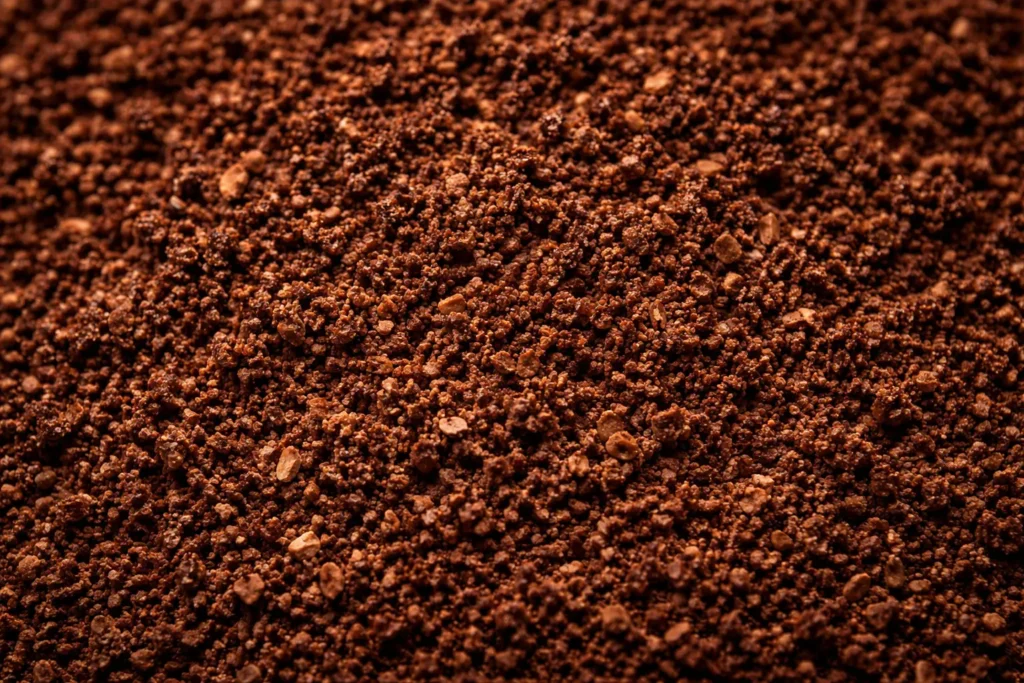
Grind size controls surface area and therefore extraction speed. Finer grinds expose more surface area, so flavors extract faster—both the good (sweetness, aromatics) and the bad (bitterness, dryness) if you overshoot.
A practical inverted-method grind target is medium-fine: finer than drip, coarser than espresso. If you’re using a hand grinder, it’s usually in the range where the grind feels like table salt with a slightly powdery tail, not flour.
Micro-Adjustments That Actually Work
- Sour / thin / “watery”: grind slightly finer or add 15–20 seconds steep time or raise temperature by 3–5°F.
- Bitter / harsh / drying: grind slightly coarser or reduce steep time by 10–20 seconds or lower temperature by 5–10°F.
- Muddy or silty: reduce agitation, consider paper filter, and press a bit slower.
Rule of thumb: when your cup is close but not perfect, change only one variable at a time. For AeroPress, grind size is usually the most powerful and most predictable lever.
Water Temperature for Inverted AeroPress (By Roast Level)
Temperature changes extraction energy. Hotter water increases extraction speed and can help light roasts taste sweeter and more developed. Cooler water reduces harshness and can make dark roasts smoother and less ashy.
| Roast Level | Recommended Temp | Why |
|---|---|---|
| Light | 200–205°F (93–96°C) | More extraction for sweetness + clarity |
| Medium | 195–200°F (90–93°C) | Balanced development without harshness |
| Dark | 185–195°F (85–90°C) | Less bitterness/astringency; smoother body |
Water Quality for AeroPress (Why It Matters More Than You Think)
Water is roughly 98% of your brewed coffee, so its mineral content directly affects both extraction efficiency and flavor. This isn’t an academic concern—it’s one of the most common hidden reasons a recipe works brilliantly in one kitchen and falls flat in another.
The key mineral to think about is magnesium: it’s particularly effective at binding to flavor compounds and pulling them into solution. General hardness (calcium + magnesium combined) matters for overall extraction energy. Sodium at low levels can suppress bitterness. And chlorine or chloramine (common in tap water) suppresses aroma and can add an off-flavor that no recipe adjustment will fix.
| Water Type | Typical Effect on AeroPress | Recommendation |
|---|---|---|
| Soft tap / distilled | Flat, thin, under-extracted feeling | Avoid — add mineral drops or use filtered |
| Hard tap (200+ ppm) | Muted, chalky, can taste harsh | Use a filter or mix with bottled |
| Filtered tap (Brita / ZeroWater remineralized) | Good baseline for most recipes | Reliable everyday option |
| Low-mineral bottled (e.g. Volvic) | Clean, lets origin notes through | Best for dialing in a new coffee |
Quick practical rule: if your tap water tastes good on its own, it will probably make decent AeroPress coffee. If it tastes of chlorine or has a mineral edge, run it through a basic carbon filter before brewing. You’ll notice the difference immediately in aroma and clarity.
Extraction Math for AeroPress: TDS, Strength, and Extraction Yield (EY)
You don’t need a refractometer to make great coffee—but a simple extraction model helps you dial in faster and understand why a change worked. We’ll keep this practical and use math only where it makes your brewing decisions clearer.
TDS: “How Strong Is This Coffee?”
TDS (Total Dissolved Solids) is the percentage of brewed coffee that is dissolved coffee material. If your cup has 1.35% TDS, that means 1.35% of the beverage mass is dissolved coffee solids and the rest is water.
Typical ranges:
- Filter-style cups: ~1.15% to 1.45% TDS
- Stronger AeroPress cups: ~1.35% to 1.70% TDS
- Concentrate for milk drinks: can be higher, then diluted (bypass/milk)
Extraction Yield (EY): “How Much Flavor Did You Pull Out of the Grounds?”
Extraction Yield is the percentage of the coffee dose that ended up dissolved into the final beverage. It’s a useful concept because two cups can be equally strong (similar TDS) but one can be under-extracted and one over-extracted depending on dose and beverage mass.
A common simplified equation is:
EY (%) ≈ (Beverage Mass × TDS) ÷ Dose
Where:
- Beverage Mass = how much coffee you actually have in the cup (not how much you poured in)
- TDS = strength as a decimal (1.35% → 0.0135)
- Dose = dry coffee mass (grams)
AeroPress Beverage Mass: The Missing Piece
In immersion brewers, the beverage mass is usually close to the brew water you added minus how much water the coffee grounds retained. Coffee typically retains about 2x its mass in water (this varies by grind, roast, and pressure), so a reasonable first estimate is:
Estimated Beverage Mass ≈ Brew Water − (2 × Dose)
Example with the baseline recipe:
- Dose = 16 g
- Brew water = 240 g
- Estimated retained water = 32 g
- Estimated beverage = 208 g
If the cup tastes slightly too strong or too weak, your actual beverage mass might be different than the estimate. But for dialing in, this gets you close enough to understand what’s happening.
Practical EY Targets for Inverted AeroPress
For most coffees brewed as a clean cup (not concentrate), a useful target band is roughly:
- Under-extracted: below ~18% (often sour, thin, sharp)
- Balanced “sweet spot”: ~18% to ~22%
- Over-extracted: above ~22% (often bitter, drying, hollow)
Important: these are not laws. Dark roasts can taste best at slightly lower yields; some light roasts can taste great at higher yields if bitterness stays controlled. Use the numbers as a map, not a rulebook.
Worked Example: Estimating EY From a “Good Cup”
Let’s say your baseline recipe tastes great and you (hypothetically) measured it at 1.40% TDS. Using the estimate above:
- Beverage mass ≈ 208 g
- TDS = 1.40% → 0.014
- Dose = 16 g
EY ≈ (208 × 0.014) ÷ 16 = 2.912 ÷ 16 = 0.182 = 18.2%
That’s right at the lower edge of the sweet spot—exactly where many AeroPress cups taste bright, sweet, and lively without harshness.
How Brewing Changes Move EY (Fast Mental Model)
When you change a variable, you’re usually changing extraction yield (how much you dissolved) and/or the beverage strength (TDS). Here’s a practical way to think about it:
- Grind finer: EY up (faster extraction), press may slow, risk bitterness if pushed too far.
- Grind coarser: EY down (slower extraction), risk sourness/thinness.
- Steep longer: EY up (more time for dissolution), but diminishing returns after a point.
- Increase temperature: EY up (more extraction energy), can boost sweetness in light roasts.
- More agitation: EY up (refreshes boundary layer, increases diffusion), can increase fines migration if extreme.
- Higher dose at same water: TDS tends to rise, but EY can fall if grind/time/temp don’t compensate.
- Bypass dilution: TDS down (weaker), EY mostly unchanged (you’re diluting after extraction).
Dial-In Framework: Fix Your Cup in 2–3 Adjustments
Dialing in is easiest when you separate problems into strength vs extraction. Many brewers try to fix everything with grind size alone; that works sometimes, but it’s faster when you diagnose what the cup is telling you.
Step 1: Is It Too Strong or Too Weak?
Too strong: heavy, intense, maybe “muddy,” but not necessarily bitter. Fix strength with more water (or a small bypass) before changing extraction.
Too weak: watery, hollow, “tea-like,” even if it’s not sour. Fix strength with a slightly higher dose or slightly less water.
Step 2: Is It Under-Extracted or Over-Extracted?
- Under-extracted signs: sourness, sharp acidity, salty notes, thin body, fast finish.
- Over-extracted signs: bitterness, dryness/astringency, harsh finish, “hollow” cocoa husk.
The Two-Move System (Most Cups Fixed Here)
For most AeroPress issues, these two moves fix the cup quickly:
- Move A (Extraction): adjust grind one step (finer for under-extracted, coarser for over-extracted).
- Move B (Balance): adjust temperature by 5°F (up for light roasts that taste sharp, down for dark roasts that taste harsh).
If the cup is still off after those two moves, then adjust steep time by 15–20 seconds. Keeping changes small makes the learning curve steep (in a good way): you’ll know why the cup changed.
Agitation, Bloom, and Bypass: Advanced Controls That Actually Matter
Advanced AeroPress brewing isn’t about complicated steps—it’s about applying the right control at the right time. These three techniques are the biggest levers after grind/time/temp.
Blooming in AeroPress (When It Helps)
Blooming is a short pre-wet stage that releases CO₂ and helps grounds saturate evenly. It matters most for very fresh coffee and light roasts. For darker roasts or older coffee, bloom impact is smaller.
- Add coffee.
- Pour 40–60 g water.
- Stir 3–4 seconds.
- Wait 20–30 seconds.
- Add remaining water, continue recipe.
Agitation Strategy (Stir vs Swirl)
Agitation increases extraction by moving water through the grounds and refreshing the boundary layer around particles. Too much agitation can push fines into the filter, increase resistance, and create bitterness or silty cups (especially with metal filters).
- Stirring: strongest extraction bump; easiest to overdo.
- Swirling: gentler; often improves uniformity without over-extracting.
- Recommended default: 6–8 seconds stir or 2–3 swirls.
Bypass Brewing (The Cleanest Way to Get Strength + Clarity)
Bypass means brewing a stronger concentrate and then diluting with hot water after pressing. This is a powerful technique because it lets you aim extraction for flavor while setting strength separately. In other words: you can hit sweetness and balance first, then adjust intensity without changing extraction.
Simple bypass formula:
Final beverage = pressed coffee + bypass water
If your concentrate tastes great but is too intense, add 30–60 g hot water. If it tastes thin but balanced, you likely need more extraction (finer grind / more time / higher temp) rather than less bypass.
Common Inverted AeroPress Mistakes (And How to Fix Them)
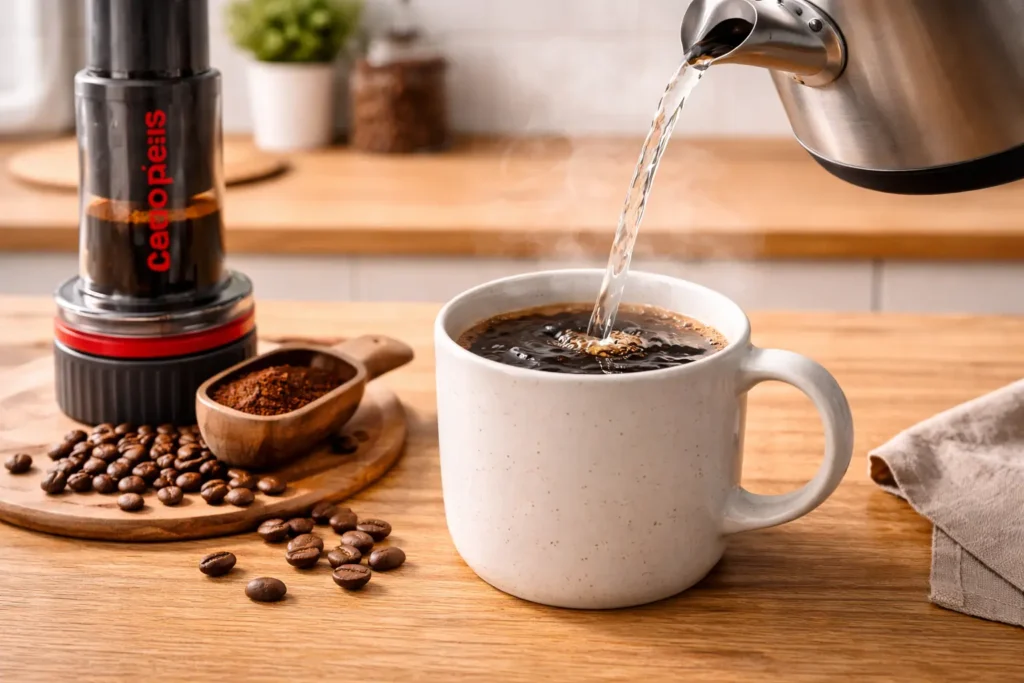
Most people who struggle with inverted brewing run into the same handful of problems. Here are the most common mistakes and exactly what to do about each one.
Mistake 1: Plunger Not Inserted Far Enough
This is the #1 cause of leaks and spills. If the plunger rubber is barely inside the chamber, the seal won’t hold under the weight of the liquid — especially when you agitate. Fix: insert the plunger at least ½ inch (1–1.5 cm) before you start. When in doubt, go a little deeper.
Mistake 2: Overfilling the Chamber
Pouring more water than the chamber can hold with a seal buffer means liquid pushes past the plunger during agitation. The inverted AeroPress has a finite headspace. Fix: keep total brew water at or below 250 g for most recipes, and leave a small gap between the water surface and the open end of the chamber.
Mistake 3: Hesitating During the Flip
A slow, tentative flip is actually more dangerous than a confident one — it creates a window where liquid can shift and break the seal. Fix: use the mug-sandwich technique: place your mug upside down over the cap, grip both firmly, and rotate in one smooth, controlled motion. Commit to it.
Mistake 4: Pressing Too Hard or Too Fast
Forcing the plunger down creates back pressure that can push the cap off, spray hot coffee sideways, or compress the coffee bed into a dense puck that produces bitter, over-extracted liquid right at the end. Fix: press steadily with about 2–3 lbs of pressure. If it feels like you’re fighting it, stop — your grind is too fine or the bed is too dense. Adjust before the next brew.
Mistake 5: Skipping the Post-Flip Wait
After you flip, most brewers press immediately. Waiting just 5–10 seconds lets the grounds settle to the bottom of the now-upright chamber. This small pause improves clarity and reduces the amount of fine sediment that makes it past the filter. Fix: set the flipped AeroPress on the mug, take a breath, then start pressing.
Mistake 6: Never Rinsing the Paper Filter
Unrinsed paper filters can add a mild papery or cardboard taste to the cup, especially noticeable in lighter roasts. It’s a 5-second fix that many people skip. Fix: before capping, rinse the paper filter with a small splash of hot water and shake off the excess. This also pre-heats the cap.
Mistake 7: Ignoring Seal Wear
The rubber seal on the AeroPress plunger degrades over time. An old seal creates inconsistent pressure during the press and can leak during the inverted steep. Fix: inspect the seal occasionally — if it feels stiff, cracked, or no longer grips the chamber walls smoothly, replace it. Replacement seals are inexpensive and widely available.
Troubleshooting: Fix Every Common Inverted AeroPress Problem
Problem: Sour, Sharp, or “Salty”
Diagnosis: under-extraction (low EY) or too cool for the roast. This is most common with light roasts, too-coarse grind, or short steep times.
- Grind 1–2 clicks finer (or a small step finer on your grinder).
- Increase steep time by 15–30 seconds.
- Raise temperature by 3–7°F (especially for light roast).
- Add a gentle bloom step for very fresh coffee.
Problem: Bitter, Harsh, or Drying
Diagnosis: over-extraction (high EY), often compounded by too-fine grind, too-high temperature for dark roasts, excessive stirring, or slow press with lots of fines.
- Grind slightly coarser.
- Lower temperature 5–10°F (especially for medium-dark/dark).
- Reduce agitation (switch from stir to swirl).
- Press more gently and don’t “force” the last few drops.
Problem: Weak or Watery (But Not Sour)
Diagnosis: strength issue (low TDS) more than extraction. If it tastes balanced but just too light, adjust ratio first.
- Increase dose from 16 g → 17–18 g (keep water constant).
- Or reduce water slightly (240 g → 220–230 g).
- If it becomes sharp after strengthening, add a small extraction bump (finer grind or +15 sec).
Problem: Muddy, Silty, or Overly Heavy
Diagnosis: too many fines in the cup or too much agitation. Metal filters amplify this; paper filters reduce it.
- Use a paper filter (or paper + metal combo if you like body).
- Reduce stirring; try 2 gentle swirls instead.
- Consider a grinder with better uniformity (burr grinder upgrade).
Best Gear for the Inverted AeroPress Method
Inverted brewing is forgiving—but the right gear makes it more consistent and more enjoyable.
1) The Brewer: AeroPress Models (Pick the Right One)
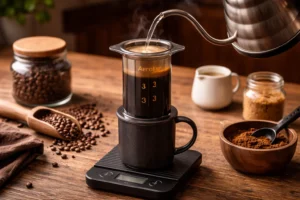
AeroPress Original
Best for: most people — best value, easiest to find accessories.
- Classic size + capacity
- Most recipe compatibility
- Great daily driver for inverted
Affiliate disclosure: as an Amazon Associate, CoffeeGearHub may earn from qualifying purchases.
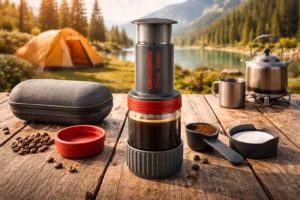
AeroPress Go
Best for: travel, office, and compact kits.
- Packable system
- Great for hotel brewing
- Easy inverted workflow on a stable counter
Affiliate disclosure: as an Amazon Associate, CoffeeGearHub may earn from qualifying purchases.
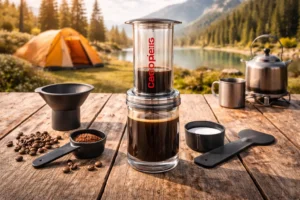
AeroPress Clear
Best for: durability + visibility for technique work.
- Great visibility for bloom/immersion
- Solid countertop aesthetic
- Excellent for repeatable inverted timing
Affiliate disclosure: as an Amazon Associate, CoffeeGearHub may earn from qualifying purchases.
2) The Grinder (The #1 Upgrade for Better AeroPress)
If you want noticeably better cups, prioritize a burr grinder with good consistency. In AeroPress, grind uniformity controls both clarity and how easy it is to press. Here are strong options across budgets — if you’re brewing inverted for the first time and already have a blade grinder, the hand grinder below is the single most impactful upgrade you can make.
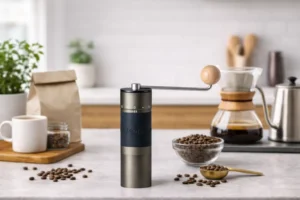
Kingrinder K6 (Hand Grinder)
Best for: maximum grind quality per dollar + travel-ready.
- Excellent for AeroPress + pour-over
- Consistent medium-fine results
- Great “first serious grinder” pick
Affiliate disclosure: as an Amazon Associate, CoffeeGearHub may earn from qualifying purchases.
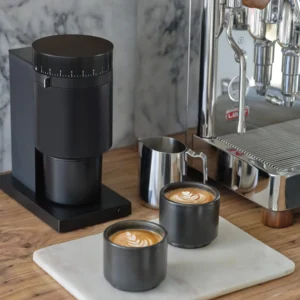
Fellow Opus (Electric)
Best for: convenient daily workflow + solid range for AeroPress and beyond.
- Easy daily workflow
- Good for medium-fine brewing
- Nice fit for countertop setups
Affiliate disclosure: as an Amazon Associate, CoffeeGearHub may earn from qualifying purchases.

Baratza Encore (Electric)
Best for: proven reliability + great support ecosystem.
- Classic entry burr grinder
- Easy dial-in for AeroPress
- Strong long-term ownership value
Affiliate disclosure: as an Amazon Associate, CoffeeGearHub may earn from qualifying purchases.
3) The Scale + Kettle Combo (For Repeatability)
Inverted AeroPress is easiest to repeat when you control dose and water precisely. A compact coffee scale with a timer is the most helpful accessory after a grinder. A gooseneck kettle is optional but useful for controlled pours and bloom consistency.
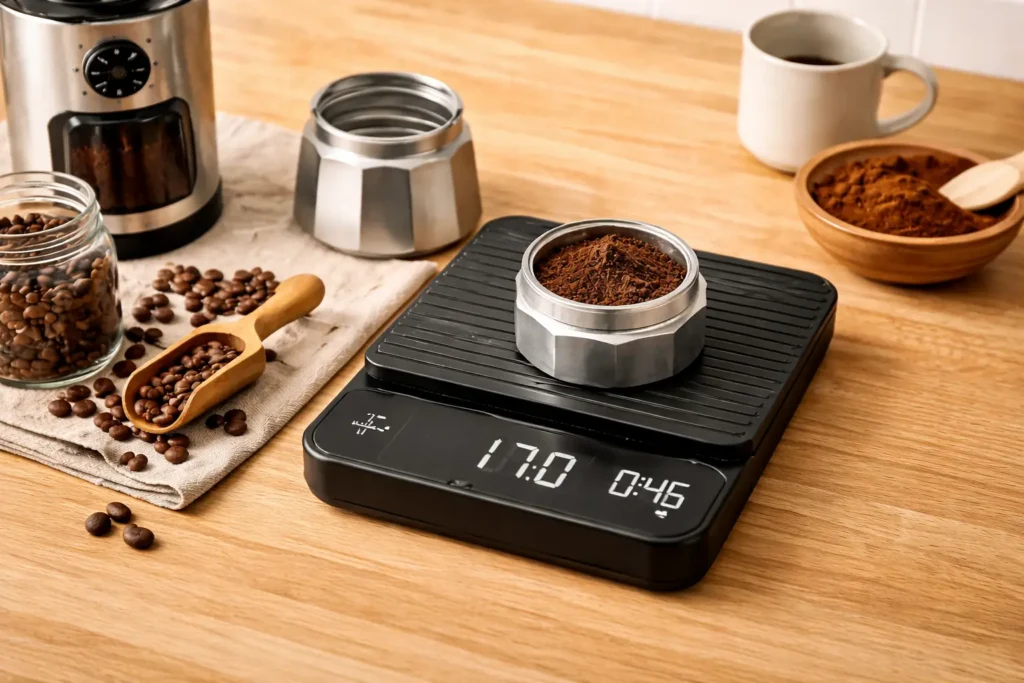
Compact Coffee Scale (With Timer)
Why it matters: the single most impactful way to make your AeroPress recipes repeatable. Most competition AeroPress brewers weigh every gram.
Affiliate disclosure: as an Amazon Associate, CoffeeGearHub may earn from qualifying purchases.
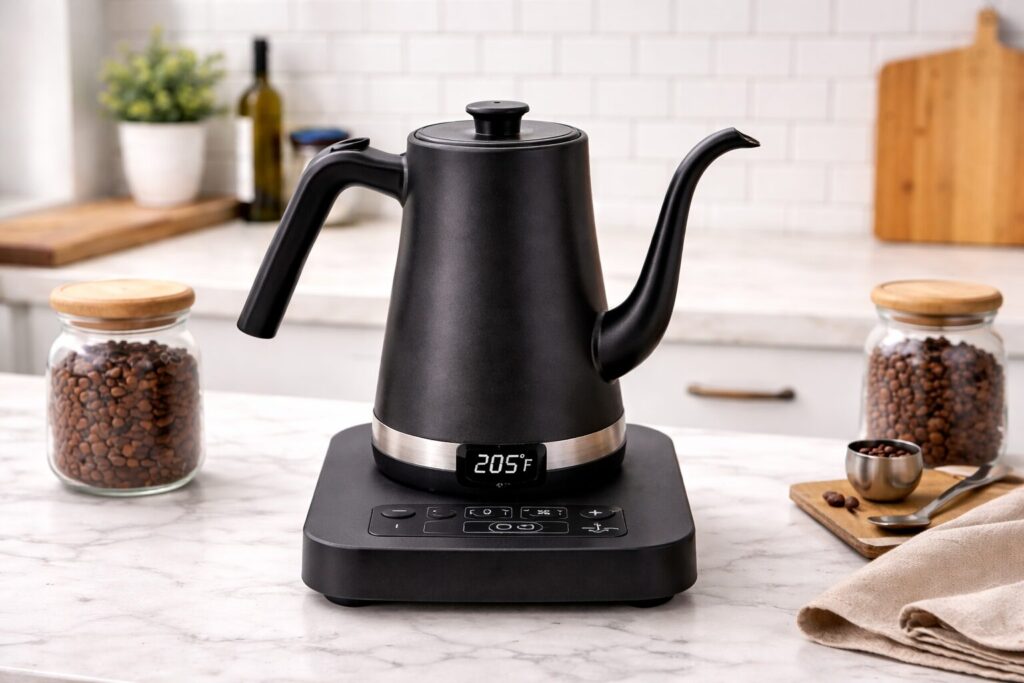
Electric Gooseneck Kettle
Why it matters: precise temperature control for every roast level + consistent bloom pours.
Affiliate disclosure: as an Amazon Associate, CoffeeGearHub may earn from qualifying purchases.
4) Filters: Paper vs Metal (Clarity vs Body)
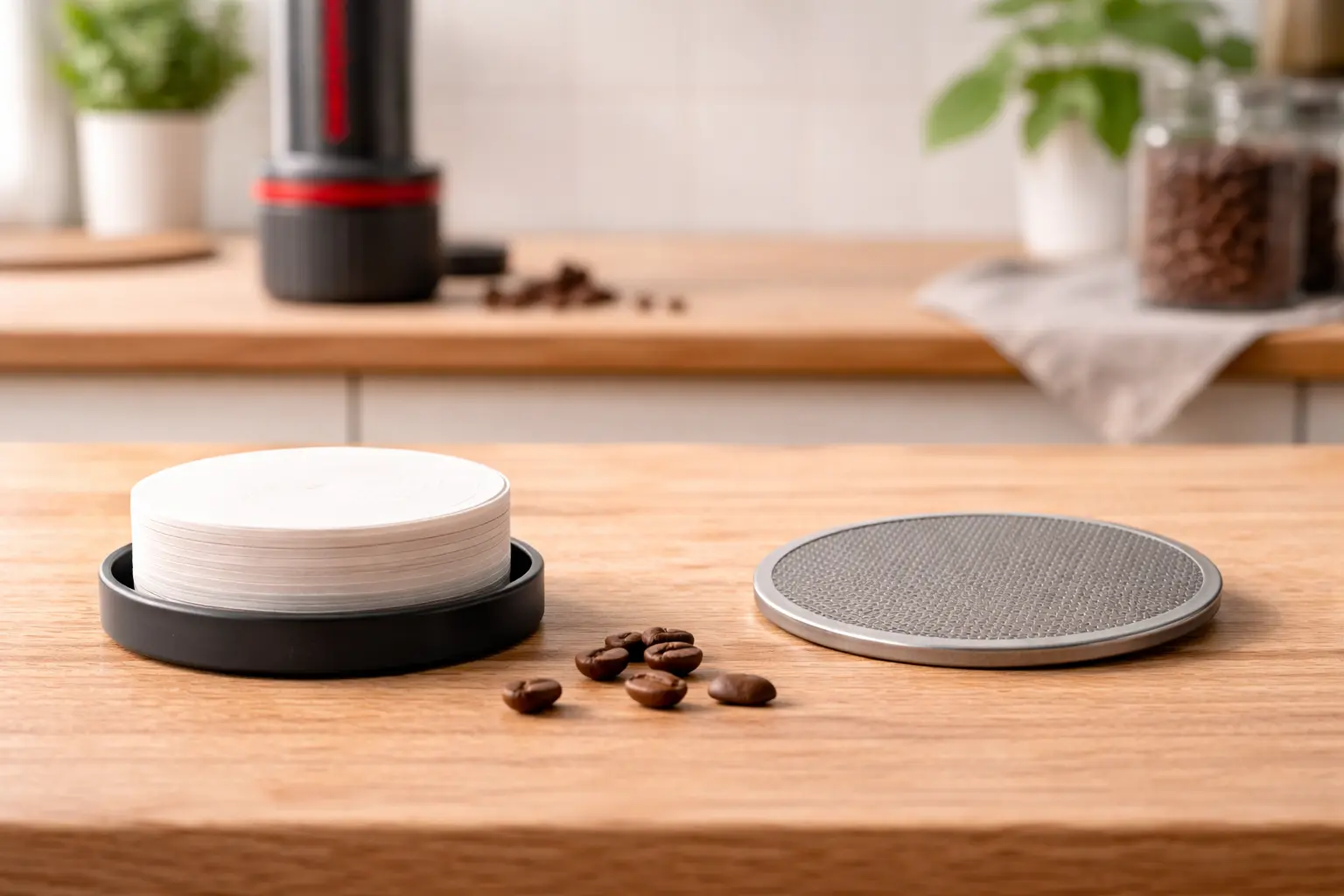
Your filter choice changes cup texture more than most people expect. Paper filters remove more oils and fines for a cleaner cup; metal filters keep more oils for heavier body and a slightly more “espresso-like” mouthfeel. New to inverted? Start with paper — it’s more forgiving and easier to dial in. Once you’ve nailed your recipe, try metal to explore what additional body does to your favorite coffee.
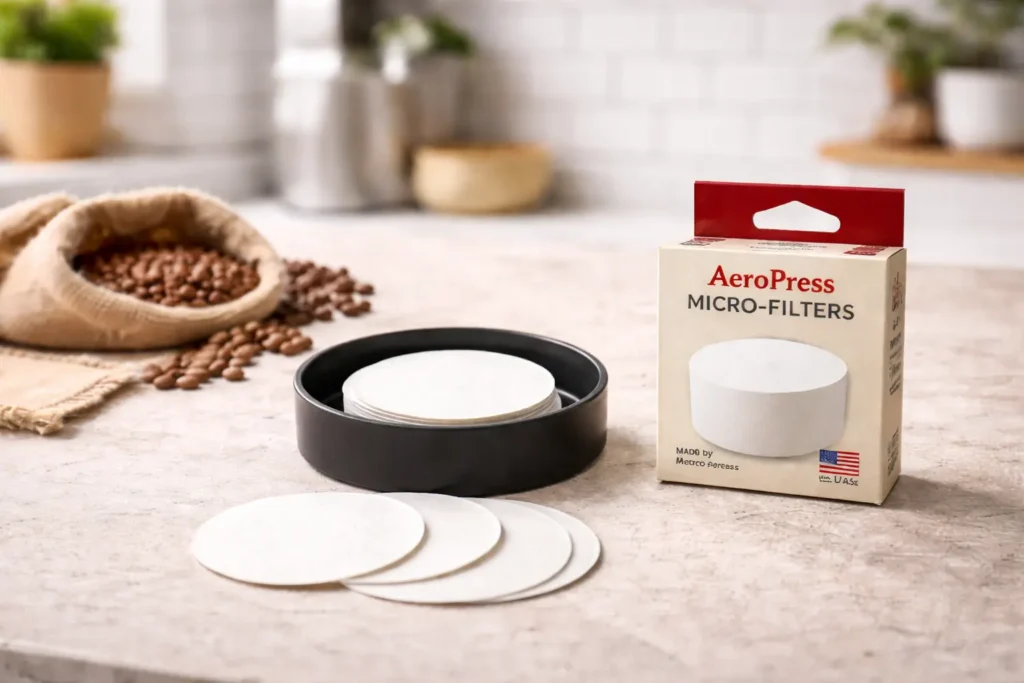
AeroPress Paper Filters
Best for: clarity, cleaner finish, brighter flavors — and first-time inverted brewers.
Affiliate disclosure: as an Amazon Associate, CoffeeGearHub may earn from qualifying purchases.
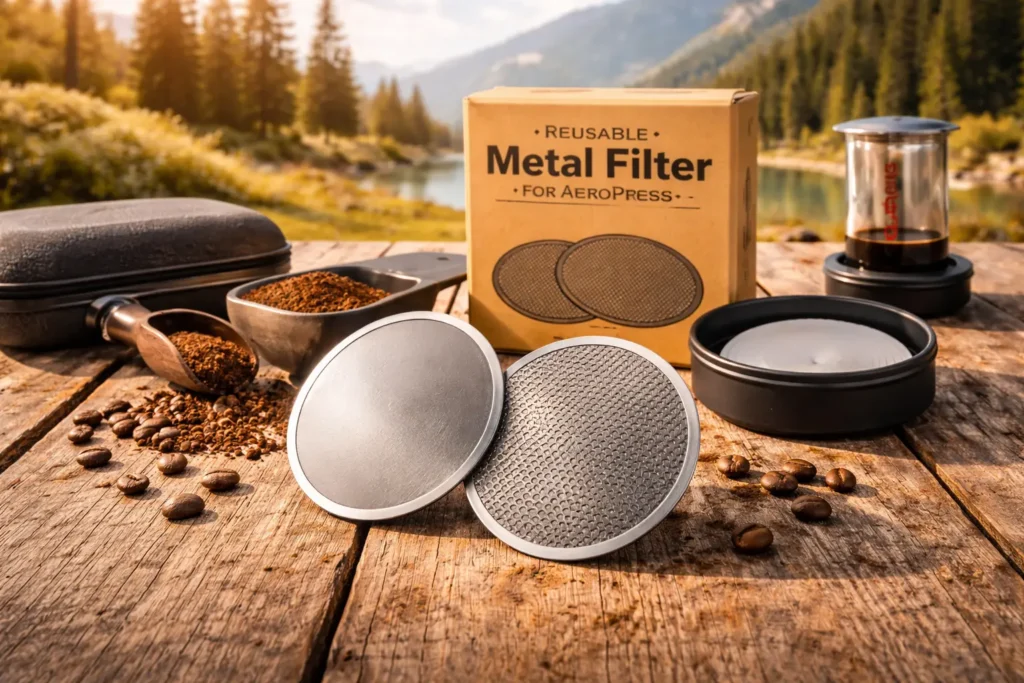
Reusable Metal Filter
Best for: more body, more oils, stronger texture — once you’ve dialled in your recipe.
Affiliate disclosure: as an Amazon Associate, CoffeeGearHub may earn from qualifying purchases.
FAQs: AeroPress Inverted Method
Is the inverted method “better” than standard?
Not universally. Inverted is u003cstrongu003emore controllableu003c/strongu003e and often easier to dial in, but standard can be cleaner, faster, and lower risk. Use inverted when you want full immersion timing and repeatability.
Is inverted safe?
Yes, when you use a stable surface, don’t overfill, insert the plunger enough to seal, and flip using the mug-and-brewer “sandwich” technique.
Why is my inverted AeroPress leaking?
Most leaks happen when the plunger isn’t inserted far enough, the seal is worn, or the brewer is bumped during the steep. Insert the plunger about ½ inch and avoid over-agitating near the seal.
Can I brew inverted with a metal filter?
Yes. Expect more body and more oils. If the cup turns silty, reduce agitation and press slower (or stack paper + metal for a cleaner result).
How do I make “espresso-style” AeroPress coffee?
Brew a strong concentrate (higher dose, lower water), then use u003cstrongu003ebypassu003c/strongu003e or milk to reach your preferred strength. It won’t replicate espresso pressure, but it can produce an excellent latte base.
What grind should I use for AeroPress inverted?
Start at medium or medium-fine depending on steep time. Inverted brews often benefit from slightly coarser grinds paired with longer steeps for sweetness and body.
Do paper filters change the best grind size?
Paper filters usually make dialing easier and can allow slightly finer grinds without muddiness. Metal filters often taste best with a slightly coarser grind and reduced agitation.
Why is my AeroPress press so hard?
A hard press usually means the grind is too fine or there are excessive fines clogging the bed. Go slightly coarser, reduce agitation, and press steadily—don’t force it.
Balanced but weak—should I grind finer?
If the flavor is balanced but weak, it’s usually a strength (ratio) issue. Increase dose by 1–2g or reduce water slightly before grinding finer.
What’s the best grinder upgrade for AeroPress?
A consistent burr grinder is the biggest upgrade. For electric, the Baratza Encore is a strong value. For manual, the KINGrinder K6 is excellent for medium-fine consistency and low fines.
How do I know I’ve found the right grind?
You’ll get a clear sweetness “pop,” integrated acidity (not sharp), and a finish that isn’t drying. Press time is typically smooth and steady, finishing around 20–30 seconds.
How long does the inverted AeroPress method take?
From start to finish, the inverted method typically takes u003cstrongu003e2 to 3 minutesu003c/strongu003e including grind, steep, flip, and press. The core recipe runs about 2:05 total brew time. Setup and cleanup add another 1–2 minutes, making the full process around 5 minutes—comparable to a standard AeroPress but with more control over the steep window.
What water temperature is best for AeroPress inverted?
It depends on roast level: 200–205°F (93–96°C) for light roasts, 195–200°F (90–93°C) for medium, and 185–195°F (85–90°C) for dark. Lighter roasts need more extraction energy; darker roasts benefit from lower heat to reduce bitterness and astringency.
Next Reads
☕
Written by the CoffeeGearHub Editorial Team
CoffeeGearHub is a specialty coffee equipment resource produced by the CoffeeGearHub Editorial Team. Our brewing guides are built from published extraction science, specialty-coffee community consensus, and manufacturer specifications rather than in-house hands-on testing across roast levels, grind settings, and temperature targets. We update pillar content regularly as brewing consensus evolves. About CoffeeGearHub →
Compare current CoffeeGearHub product pages
Use these stable CoffeeGearHub product pages to compare specifications and current verified merchant offers before leaving the site.