
Origins, Processing & Flavor
Great coffee starts with great beans. This hub shows you how to pick coffee based on origin, processing, and roast—so you can predict flavor before you buy. If you want the biggest taste upgrade per dollar, pair fresh beans with a good grinder from Best Coffee Grinders (2026).
Key Takeaways: Choosing Coffee Beans
- Beans matter more than gear. Origin, processing, and roast determine most of what you taste—before brewing even begins.
- Medium roast is the safest default. It’s balanced, forgiving, and works across drip, pour-over, and espresso.
- Origin predicts flavor. African coffees skew brighter and fruitier; Central/South American coffees skew sweeter and more chocolatey.
- Processing controls sweetness and body. Washed = clean and crisp; Natural = fruity and heavier; Honey = balanced middle ground.
- Freshness beats brand names. Always look for a real roast date and buy whole beans whenever possible.
- Match beans to your brewer. Light, bright coffees shine in pour-over; fuller, lower-acid coffees excel in espresso and French press.
Quick Bean Selector
Use this as your shortcut. Find your preference, then buy beans that match the origin + processing + roast combo.
| If you want coffee that tastes like… | Choose this roast | Processing | Best origins to start with | Best brew methods |
|---|---|---|---|---|
| Bright, fruity, floral (clean + lively) | Light–Medium | Washed | Ethiopia, Kenya, Rwanda | Pour-over, Chemex, AeroPress |
| Sweet, balanced, easy (daily driver) | Medium | Washed or Honey | Colombia, Guatemala, Costa Rica | Drip, Pour-over, Espresso |
| Chocolatey, nutty, smooth (low bite) | Medium–Medium Dark | Natural or Washed | Brazil, Peru, Colombia | Espresso, French press, Cold brew |
| Heavy, earthy, low-acid (bold + deep) | Medium Dark–Dark | Wet-hulled (if available) or Natural | Sumatra, Java, India | French press, Moka pot, Cold brew |
| Jammy, wine-like, intense fruit (adventurous) | Light–Medium | Natural | Ethiopia (natural), Costa Rica (natural), Brazil (natural) | AeroPress, Pour-over, Espresso (for experienced dial-in) |
Fast default if you’re unsure: buy a medium roast from Colombia (washed or honey process). It’s the most forgiving choice across most brewers.
Next Steps: Get the Most From Your Beans
Match Your Beans to the Right Grinder
Lighter, brighter coffees are less forgiving. If you love fruit-forward beans, the grinder matters more. Use this table to pick the right grinder style for the flavor you’re chasing.
| Bean style (what you like) | Typical roast | Best grinder type | Why it matters | Recommended brew methods |
|---|---|---|---|---|
| Bright, fruity, floral (clean + lively) | Light–Medium | Quality burr grinder (more uniform grind) | Even small grind inconsistencies make light roasts taste sour, sharp, or thin. | Pour-over, Chemex, AeroPress |
| Sweet, balanced (daily driver) | Medium | Any burr grinder (entry-level is fine) | Medium roasts are forgiving; consistency still improves sweetness and clarity. | Drip, Pour-over, Espresso |
| Chocolatey, nutty, smooth (low bite) | Medium–Medium Dark | Burr grinder (wide range, stable settings) | Consistency helps keep body without turning bitter or muddy. | Espresso, French press, Cold brew |
| Heavy, earthy (bold + low-acid) | Medium Dark–Dark | Burr grinder (or even pre-ground in a pinch) | Darker roasts mask flaws better, but a burr grinder reduces bitterness and sludge. | French press, Moka pot, Cold brew |
| Espresso-focused (sweet + syrupy shots) | Medium–Medium Dark | Espresso-capable burr grinder (fine adjustment steps) | Espresso requires precise grind changes; coarse steps make dialing in frustrating. | Espresso machines |
Rule of thumb: If you buy light roast or highly aromatic coffees, your grinder quality becomes a bigger part of the flavor outcome.
Want a Simple Starting Point?
If you’re unsure what to buy, start with a fresh medium roast and pair it with a burr grinder. That combo delivers the biggest quality jump for most home brewers.
Tip: If you mostly brew pour-over, prioritize grind consistency. If you brew espresso, prioritize fine adjustment steps.
Why this matters: Great beans only shine when grind size and brew method match. These guides help you turn a good purchase into a great cup.
Coffee Bean Foundations
These explain most of what you taste. Once you know them, coffee labels stop feeling random and start working like useful signals.
🌍 Origin
Origin is your fastest flavor shortcut: Africa trends brighter and more aromatic; Brazil trends chocolatey and smooth.
🍒 Processing
Processing predicts sweetness + body. Washed is clean. Natural is fruitier and heavier. Honey is the balanced middle.
🔥 Roast
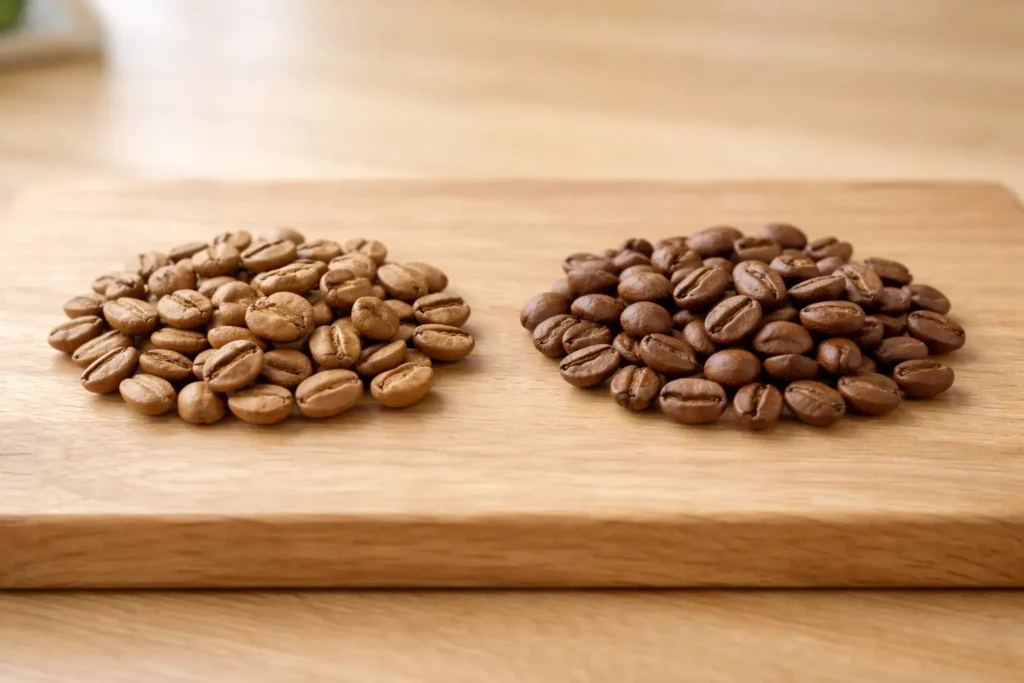
Roast decides whether you taste more origin (lighter) or more body and roast flavor (darker). Medium is the best default.
Choose Your Bean Path (By Taste)
Pick the style you enjoy most. These paths help you choose beans that fit your preferences and brew method.
🍋 Bright & Fruity
Clean, lively, “tea-like”
- Origin: Ethiopia / Kenya / Rwanda
- Processing: Washed (or a clean natural)
- Roast: Light to medium
- Best brewers: Pour-over / Chemex / AeroPress
🍫 Balanced & Sweet
Easy daily driver
- Origin: Colombia / Guatemala / Costa Rica
- Processing: Washed or Honey
- Roast: Medium
- Best brewers: Drip / Pour-over / Espresso
🥜 Chocolatey & Smooth
Comforting + low bite
- Origin: Brazil / Peru
- Processing: Natural or Washed
- Roast: Medium to medium-dark
- Best brewers: Espresso / French press / Cold brew
Processing Mini Guide
- Washed: cleaner, brighter, more clarity
- Natural: sweeter, fruitier, heavier body (can taste “funky” if poorly processed)
- Honey: balanced sweetness with good clarity (excellent default)
Roast Mini Guide
| Roast | What you taste most | Best for |
|---|---|---|
| Light | Origin + acidity | Pour-over, Chemex |
| Medium | Balance + sweetness | Drip, espresso |
| Medium-dark/Dark | Body + roast flavor | Milk drinks, French press, cold brew |
Bean Picks
These are safe picks: dependable flavor, widely available, and easy to brew well.
⭐ Best “Start Here” Pick
If you only buy one style, buy a medium roast from Colombia/Guatemala. It’s forgiving and works across most brewers.
☕ Espresso-Friendly
Look for medium-dark roasts with cocoa/nut notes. They’re easier to extract and shine in milk drinks.
🌸 Pour-Over (Bright)
Light-to-medium roast washed Ethiopian styles for clarity and aroma. Best with a burr grinder.
FAQs
What roast level should I buy if I’m new to specialty coffee?
Start with a medium roast. It’s the most forgiving option, works across drip, pour-over, and espresso, and balances sweetness with clarity. Very light roasts can taste sour if brewed incorrectly, and very dark roasts can taste bitter or flat.
Does dark roast coffee have more caffeine?
No — not in a meaningful way. Caffeine depends more on how much coffee you use and how you brew it than roast level. By weight, light roasts may actually have slightly more caffeine because the beans are denser.
What’s the difference between washed, natural, and honey process coffee?
Washed (wet process): Clean, crisp, and highlights origin flavors
Natural (dry process): Sweeter, fruitier, heavier body
Honey (pulped natural): A balanced middle ground with smooth sweetness
Processing is one of the best predictors of sweetness and mouthfeel.
Which coffee beans are best for pour-over brewing?
For pour-over, look for light to medium roasts with washed or honey processing. Ethiopian, Kenyan, and Colombian coffees are popular choices because they offer clarity and aromatic complexity.
Which coffee beans are best for espresso?
Espresso is easier to dial in with medium to medium-dark roasts that emphasize sweetness and body. Brazilian and Colombian coffees are common, especially for milk drinks. Very light roasts require advanced grinders and careful dialing.
How fresh should coffee beans be when I buy them?
Look for a roast date, not just a “best by” date. Coffee usually tastes best 7–30 days after roasting. If no roast date is listed, the coffee may already be stale.
Should I buy whole bean or pre-ground coffee?
Always buy whole bean if possible. Ground coffee goes stale much faster because it’s exposed to oxygen. Grinding right before brewing is one of the biggest flavor upgrades you can make.
Do I need an expensive grinder to enjoy good coffee beans?
Not necessarily — but a burr grinder is strongly recommended. Entry-level burr grinders are good enough for medium and dark roasts. If you enjoy light roasts or espresso, grinder quality becomes more important.
Why do light roast coffees taste sour sometimes?
Sourness usually means under-extraction, not bad beans. Light roasts need a finer grind, hotter water, or longer brew time. The beans aren’t the problem — the extraction is.
What’s the biggest mistake people make when buying coffee beans?
Buying coffee with unknown freshness and assuming the brewer is the issue. Start with fresh, whole beans matched to your brew method before changing equipment.
If you’re still unsure, start with a fresh medium roast, grind it with a burr grinder, and adjust grind size before changing anything else.