
Grind Size Explained: How Grind Affects Coffee Extraction
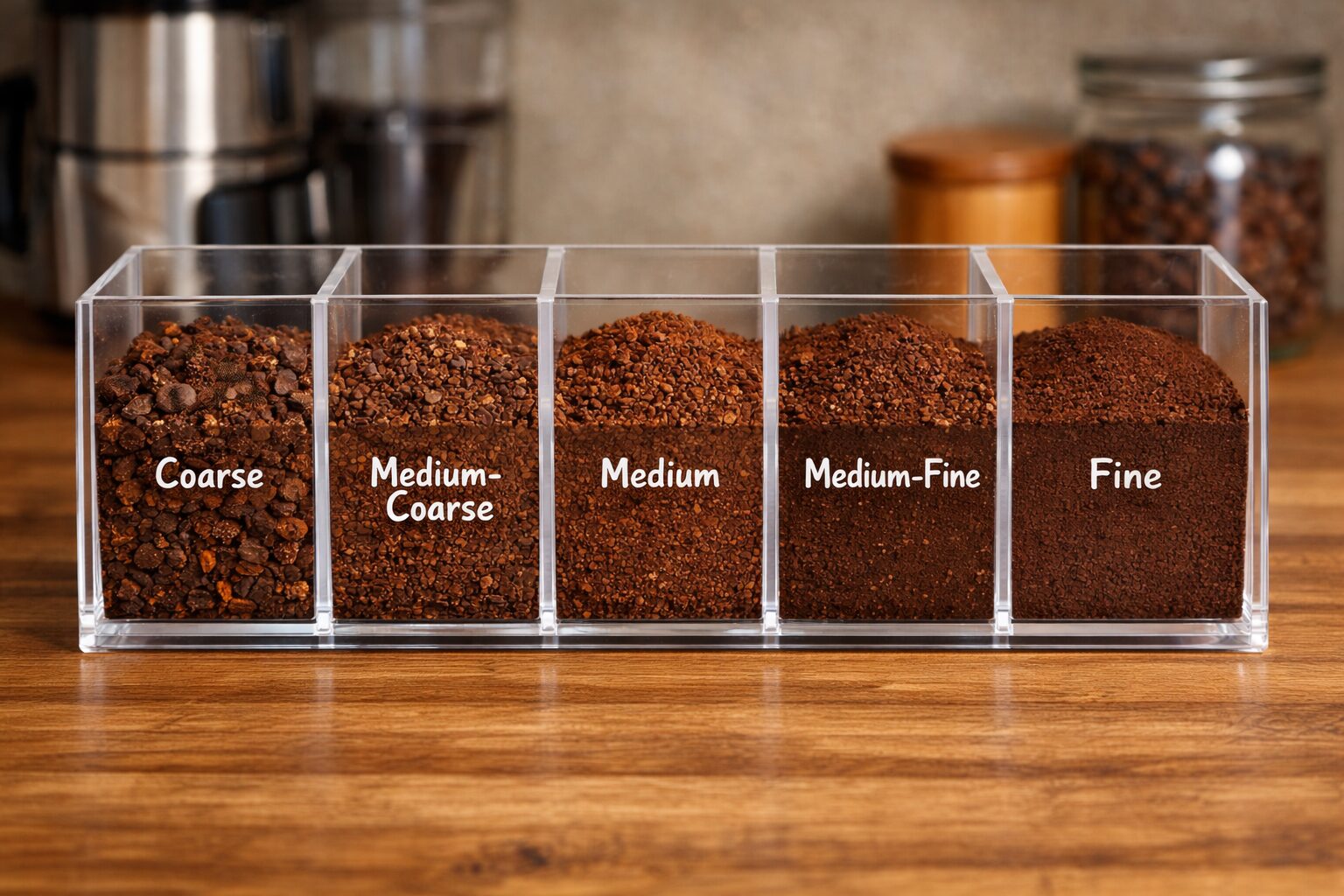
Editorial standards: this guide treats grind labels such as fine, medium, and coarse as practical ranges rather than exact particle measurements. Grinder calibration, burr design, coffee, roast, dose, and brewer resistance can shift the useful setting.
At a glance
What this guide covers
This guide explains why grind changes extraction and flow, how to read taste and drawdown together, and how to move finer or coarser systematically. The full brew-method chart lives in our dedicated grind-size reference.
Editorial analysis
Grind size is the fastest extraction lever most home brewers control
Finer coffee exposes more surface area and usually increases extraction while also slowing flow in percolation methods. Coarser coffee usually extracts less and allows faster flow. The exact result depends on brew time, temperature, agitation, and the brewer.
That is why a chart should be a starting point, not a command. Lock the other variables, taste the cup, and make one small grind change at a time.
The 30-Second Answer
Use brew-method charts to choose a starting range, then dial in by taste. If a brew is sour, thin, or fast, try finer; if it is harsh, bitter, drying, or unusually slow, try coarser—while keeping the other variables stable.
A Practical Grind Dial-In Framework
The most useful way to think about grind size is as a control for both extraction and flow. A grinder setting does not have an independent meaning: it only becomes useful when paired with a dose, water amount, brewer, temperature, and brew time. That is why copying another person’s grinder number often fails even when the grinder model is the same.
Start with the brewer’s broad range
Espresso usually sits at the fine end of the spectrum, moka pot around medium-fine, pour-over and automatic drip around medium to medium-fine, AeroPress across a wide middle range depending on recipe, and French press toward medium-coarse to coarse. Cold brew commonly starts coarse, particularly for long immersion recipes. These are ranges, not fixed targets.
Use taste and flow together
A sour cup can indicate under-extraction, but it may also come from water that is too cool, a brew that ended too quickly, or an unusually light roast. A bitter or drying cup can indicate over-extraction, but very dark coffee can taste bitter even at a reasonable extraction. Flow adds another clue: if a pour-over drains much faster than expected and tastes thin, finer grinding is a logical first move; if it stalls and tastes astringent, coarser grinding is usually more useful.
Change one variable at a time
Keep dose, water, temperature, and pouring pattern the same while changing the grinder one or two small steps. Brew again and compare directly. If the cup improves, continue in that direction until the improvement stops. If it worsens, return toward the previous setting. This simple loop is more reliable than trying several new variables at once.
Watch for grinder limitations
If one setting is too fast and the next is too slow, the grinder may have steps that are too large for that brew method. If cups stay muddy or inconsistent across several settings, particle distribution may be the issue rather than the nominal grind size. In that case, better burr consistency can matter more than finding a new recipe.
How Grind Size Affects Extraction (Under vs Over)
Coffee “extraction” is the process of water dissolving flavor compounds from coffee grounds. Grind size is the main control knob for extraction speed.
Too Coarse = Under-Extraction
- Sour / sharp acidity
- Thin body
- Weak sweetness
- Short, hollow finish
Fix: grind slightly finer (or extend brew time)
Too Fine = Over-Extraction
- Bitter / harsh
- Dry, astringent finish
- Muted flavors
- Heavy, sometimes “chalky” body
Fix: grind slightly coarser (or shorten brew time)
Pro tip: If your coffee swings between sour and bitter from cup to cup, it’s often a consistency problem (uneven particles), not a recipe problem. That usually points back to the grinder. If consistency is solid but flavor still feels “wrong,” it’s often the beans—use the Coffee Bean Buying Guide to choose a more forgiving roast or a flavor profile you actually like.
Use the Grind-Size Chart as a Starting Reference
Grind labels such as fine, medium, and coarse are useful only as starting ranges. The exact setting depends on burr geometry, calibration, dose, coffee, brewer resistance, temperature, and brew time. This page focuses on why grind changes extraction and how to dial in; the dedicated reference page owns the full method-by-method chart.
Move finer when
- The cup is sour, thin, or hollow and other variables are stable.
- A percolation brew runs much faster than expected.
- Espresso gushes quickly at an otherwise appropriate dose.
Move coarser when
- The cup is harsh, drying, or excessively bitter.
- Pour-over drawdown stalls despite reasonable technique.
- Espresso chokes or flows unusually slowly.
Need starting ranges by brewer? Use the Coffee Grind Sizes Chart for espresso, moka pot, AeroPress, pour-over, drip, French press, cold brew, and Turkish coffee. Then return here for the extraction logic and dial-in process.
Why Burr Grinders Matter (Consistency & Control)
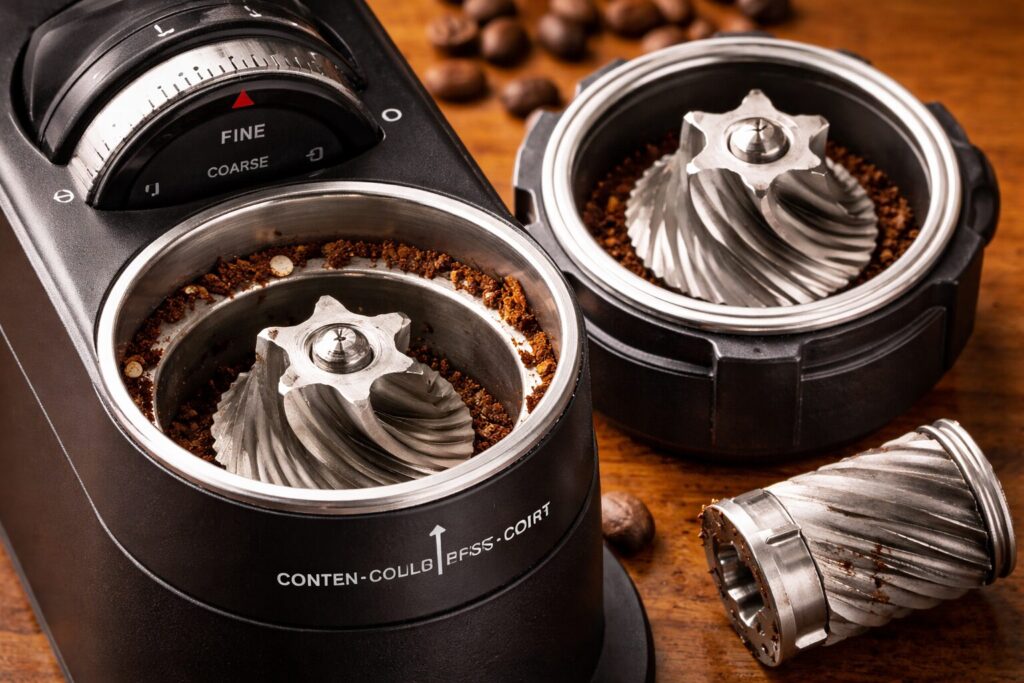
Grind size only works as a control lever if your grinder produces consistent particles. Inconsistent grinding creates both fines (over-extracted) and boulders (under-extracted) in the same brew.
Burr Grinders
- More uniform grind size
- Better adjustment control
- Better for pour-over and espresso
Blade Grinders
- Inconsistent particle size
- Limited adjustment control
- Harder to repeat results
If you’re still using a blade grinder, upgrading to a burr grinder is one of the fastest ways to improve coffee quality—often more than changing beans or brewers. Once you’ve upgraded the grinder, the next “big win” is matching roast and origin to your method—use the Coffee Bean Buying Guide.
Related: Burr vs Blade Coffee Grinders
How to Dial In Grind Size (Simple Step-by-Step)
Dialing in is simply adjusting grind size until the coffee tastes balanced. The key is to change one variable at a time and make small moves. If you want a faster dial-in experience, start with beans that match your brew method and preference—use the Coffee Bean Buying Guide.
- Pick the recommended grind size for your brew method (use the chart above).
- Brew with a consistent recipe (same dose, same water amount, same time).
- Taste and identify the main issue: sour/weak vs bitter/harsh.
- If sour/weak → grind slightly finer. If bitter/harsh → grind slightly coarser.
- Repeat until the cup tastes balanced and repeatable.
Shortcut: If you’re close but not perfect, adjust grind size first before changing dose or temperature.
Common Grind Size Mistakes (And What to Do Instead)
- Using a blade grinder for espresso: choose an espresso-capable burr grinder.
- Changing multiple variables at once: change grind size first, then dose/time.
- Grinding too fine for French press: go coarser to reduce sludge and bitterness.
- Expecting one setting for all methods: each brew style needs its own range.
- Ignoring old beans: coffee changes as it ages; small grind tweaks help. If you’re unsure what “fresh enough” means or which roast styles are most forgiving, use the Coffee Bean Buying Guide.
Next step: If grind size adjustments aren’t fixing flavor issues, your grinder may be the limiting factor. If your grinder is solid but you still want better flavor, your bean choice is the next lever—start with the Coffee Bean Buying Guide.
👉 See our full guide to the best coffee grinders for home brewing
Frequently Asked Questions
Is grind size more important than brew method?
They work together. Even a great brewer can’t compensate for an incorrect grind size or inconsistent particles. Matching grind size to your method is one of the fastest ways to improve results. If grind is dialed but flavors still aren’t right for you, use the Coffee Bean Buying Guide to choose a roast and flavor profile that matches your taste.
Can one grinder handle both espresso and drip?
Some grinders can cover both ranges, but espresso usually benefits from tighter adjustment control. If espresso is your priority, choose an espresso-capable grinder first, then confirm it’s convenient for filter coffee too. Also note: different roasts can require small grind tweaks—see the Coffee Bean Buying Guide for bean styles that are easier to dial in.
Does grind size affect caffeine?
Indirectly. Grind size affects extraction efficiency, which can influence how much caffeine ends up in the cup. In practice, brew ratio and total coffee used have a larger effect. Bean choice can also influence perceived strength—use the Coffee Bean Buying Guide if you want a more “classic” strong coffee profile.
Why does my grind “look right” but still taste wrong?
Two common reasons: (1) your grinder produces an uneven mix of fines and boulders, or (2) your recipe variables (dose, time, temperature) aren’t consistent. If the taste swings between sour and bitter, consistency is the first thing to check. If the grind is consistent but you still don’t like the flavor direction, your beans may be the mismatch—use the Coffee Bean Buying Guiide
Final Thoughts
Grind size gives you real control over flavor. Start with the chart, make small adjustments, and keep the rest of your recipe consistent. If you want repeatable “great coffee” outcomes, a burr grinder and sensible grind dialing are the foundation. Once your grind is consistent, the next step is choosing beans that match your preferences—use the Coffee Bean Buying Guide to make that part easy, too.
Related Guides
- Best Coffee Grinders for Home Use
- Burr vs Blade Coffee Grinders
- Manual vs Electric Coffee Grinders
- Beginner Espresso Guide
- Espresso Beans vs Coffee Beans
- Coffee Bean Buying Guide
CoffeeGearHub product shortlist
Compare grinders and brewing gear
Use CoffeeGearHub’s product catalog to compare current grinder and brewing options.