
Last Updated: March 2026 • 30–35 min read • Cornerstone Guide: Machine Types + Boiler Systems + Pump Types + Pressure Profiling + Product Picks + Troubleshooting Matrix

Are you curious about espresso machine types? Choosing the right espresso machine type is the single decision that determines your ceiling — how good your espresso can ever get at home, how consistent it can become, and how far your skill can take you. Buying the wrong type first is the most expensive mistake in home espresso: a super-automatic you outgrow in six months, or a lever machine purchased before you’re ready for the learning curve. This guide covers every major machine type — manual lever, semi-automatic, automatic, and super-automatic — with boiler system comparisons, pump types, PID and pressure profiling explained, recommended picks at every tier, and a complete troubleshooting matrix for the most common espresso problems.
✍️ Editorial note: This guide is researched and written by the editors at CoffeeGearHub.com using published brewing science, manufacturer specifications, and established specialty-coffee community knowledge. All product links are affiliate links — we may earn a commission at no cost to you. Affiliate Disclosure: CoffeeGearHub.com participates in the Amazon Services LLC Associates Program. As an Amazon Associate, we earn from qualifying purchases.
The 30-Second Answer
For most serious home baristas, a semi-automatic espresso machine is the right first choice — high extraction control, a manageable learning curve, and a clear upgrade path as your skills develop. Choose a manual lever machine if maximum shot shaping is the goal and you’re committed to the craft. Choose automatic if a busy household needs volume and programmable repeatability. Choose super-automatic only if one-touch convenience genuinely outweighs flavor control. And regardless of machine type: your grinder determines your ceiling more than your machine does.
- Best for most home baristas: Semi-automatic — high control, room to grow, café-level potential
- Best for maximum shot shaping: Manual lever (Flair 58) — deepest control, highest learning curve
- Best for busy households: Automatic (Breville Barista Express) — programmable volumes, built-in grinder
- Best for one-touch convenience: Super-automatic (Philips 3200 LatteGo) — push-button everything, less flavor ceiling
- Temperature stability matters: Dual boiler > HX > single boiler — especially for milk drinks
- Grinder first: A quality burr grinder improves results on any machine more than upgrading the machine itself
Quick-Pick Comparison Table
Use this table to find the right machine for your setup and priorities in under a minute. Detailed reviews follow below.
Disclosure: CoffeeGearHub may earn a commission on qualifying purchases. All links use the coffeegearhub-20 Associates tag.
| Our Pick | Best For | Type | Key Advantage | Trade-Off | Link |
|---|---|---|---|---|---|
| 🏆 Flair 58 | Enthusiasts who want maximum pressure profiling control | Manual lever | True 58mm basket workflow; full pressure curve control without electricity | Steepest learning curve; manual effort every shot | Check Price → |
| ⚡ Breville Bambino Plus | Beginners who want semi-auto with fast heat-up and steam | Semi-automatic | 3-second heat-up; auto steam wand; compact footprint; beginner-friendly workflow | Single boiler; less headroom for advanced technique | Check Price → |
| 🔬 Gaggia Classic Pro | Serious home baristas who want a platform to grow into | Semi-automatic | Commercial-grade group head; large mod and community ecosystem; decade-long ownership potential | Requires PID add-on for optimal temperature stability | Check Price → |
| 🥇 Rancilio Silvia Pro X | Precision-focused brewers and frequent milk drink makers | Semi-automatic (dual boiler) | Dual boiler with full PID; simultaneous brew and steam at stable temperature | Higher cost; larger footprint | Check Price → |
| ☕ Breville Barista Express | Households wanting one machine that grinds and brews | Automatic | Built-in conical burr grinder; programmable shot volumes; self-contained workflow | Built-in grinder limits future grinder upgrades independently | Check Price → |
| 🤖 Philips 3200 LatteGo | Convenience-first users who want one-touch milk drinks | Super-automatic | Fully automatic grinding, brewing, and milk frothing; easy cleaning system | Least extraction control; grind range limited | Check Price → |
Jump to What You Need
☕ Ready to buy
Use the Quick-Pick Table above or go to the full section for your machine type.
🔬 Want the technical breakdown
See Boiler Systems, Pump Types, and Pressure Profiling for the specs that actually affect your cup.
🔧 Troubleshooting bad shots
Jump to the Troubleshooting Matrix — every sour, bitter, channeling, and stalling problem mapped to its machine-related cause.
📋 New to espresso technique
Start with our foundational guide: How to Dial In Coffee at Home before choosing a machine.
Table of Contents
Why Machine Type Determines Your Espresso Ceiling
Espresso is a high-pressure, high-precision extraction. Every variable — dose, grind size, tamp pressure, water temperature, flow rate, and brew time — directly affects the flavor in the cup. Different machine types give you different levels of control over those variables. That’s not a minor distinction: a super-automatic and a semi-automatic can sit at the same price point, but one locks nearly every variable behind software and the other puts all of them in your hands.
The decision framework is straightforward: how much do you want to control, and how much time do you want to invest in learning to control it? People who want to understand espresso and develop real barista skill should choose machine types that surface those variables. People who want great coffee with minimal daily effort should choose types that automate them — accepting the trade-off in ceiling.
🚫 The most common expensive mistake in home espresso: buying a machine type before you understand what it requires. A manual lever machine purchased without technique foundations produces frustrating, inconsistent shots. A super-automatic purchased by someone who actually wants to dial in espresso becomes a source of regret within months. Choose the type that matches where you are — not where you imagine you’ll be.
☕ New to espresso technique? Learn dose, yield, grind, and dialing-in before choosing your machine — the concepts apply to every type.
Machine Types at a Glance
| Type | Extraction control | Convenience | Learning curve | Grinder required? | Best for |
|---|---|---|---|---|---|
| Manual lever | Maximum — full pressure curve in your hands | Low — effort per shot | High | Yes — espresso-capable burr grinder essential | Enthusiasts; hobbyists; pressure profiling |
| Semi-automatic | High — you control grind, dose, yield, and shot stop | Moderate | Moderate | Yes — essential | Most serious home baristas; skill-building |
| Automatic | Medium — grind and dose controlled; volume auto-stops | High | Low–moderate | Yes — or use a machine with built-in grinder | Busy households; multi-user consistency |
| Super-automatic | Low — nearly all variables managed by the machine | Very high — one-touch | Minimal | No — grinder is built-in | Convenience-first; one-touch milk drinks |
1. Manual (Lever) Espresso Machines

Manual lever machines are the most hands-on category in home espresso. Instead of an electric pump, you generate brewing pressure with a lever connected to a spring-loaded or direct-pull piston. This gives you unmatched control over how pressure rises and falls during the shot — the variable that professional baristas on pressure-profiling machines spend years trying to replicate electronically. On a good lever machine, that control is direct and immediate: you feel the puck’s resistance in real time and respond to it.
🔬 What lever machines do that pumps can’t: The spring on a spring-lever machine naturally produces a pressure curve — a gentle pre-infusion as the spring loads, a peak at 8–9 bar, then a gradual taper as the spring decompresses. This taper at the end of the shot is what enthusiasts credit for the texture and sweetness characteristic of lever espresso. Replicating this profile on an electronic pump machine requires programmable pressure control hardware that adds significant cost. On a lever machine, it’s built into the mechanism.
The trade-off is physical effort, heat management, and learning curve. Every shot requires you to actuate the lever, maintain consistent pull speed, and manage the boiler temperature (which you cannot brew and steam from simultaneously on most lever machines). For dedicated enthusiasts who want the deepest possible engagement with espresso craft, no machine type is more rewarding — or more demanding.
Disclosure: CoffeeGearHub may earn a commission on qualifying purchases through affiliate links. CoffeeGearHub.com is a participant in the Amazon Services LLC Associates Program.
🏆 CoffeeGearHub Pick — Best Manual Lever Machine

Flair 58 — Best Manual Lever Espresso Maker
The Flair 58 is the most capable manual lever machine at its price tier and the CoffeeGearHub recommendation for anyone committed to learning lever espresso. Its 58mm portafilter is the same diameter as commercial espresso machines, which means your puck prep workflow — grinder, dosing ring, distributor, tamper — translates directly if you ever move to a pump machine. The stainless steel construction and modular design make it maintenance-accessible and durable. The optional pressure gauge accessory gives you real-time extraction feedback as you pull, which is the fastest way to develop consistent lever technique. For single-serve enthusiasts who want to understand espresso at the deepest level, no machine under $500 offers more.
- Portafilter: 58mm — commercial standard; works with most aftermarket baskets and accessories
- Pressure profiling: Direct-pull mechanism; add pressure gauge accessory for shot feedback
- Best for: Dedicated enthusiasts; anyone who wants maximum espresso craft engagement
- Requires: A separate heating source for water; an espresso-capable burr grinder; patience with the learning curve
Disclosure: CoffeeGearHub may earn from qualifying purchases.
☕ Classic Pick — Decades of Community Knowledge

La Pavoni Europiccola — Classic Lever Espresso Machine
The La Pavoni Europiccola has been in continuous production since 1961 and is one of the most documented home espresso machines in existence. That ownership history is genuinely valuable: decades of forum threads, community guides, repair documentation, and technique resources mean you are never without support when learning or troubleshooting. The integrated boiler heats water for both espresso and steaming — sequential, not simultaneous — and the machine’s direct-lever action requires more active temperature management than the Flair. It rewards patient, methodical baristas who enjoy the ritual of the machine as much as the espresso it produces.
- Heritage: In production since 1961 — one of the most documented home espresso machines ever made
- Community: Massive international user community; extensive repair and technique resources
- Best for: Enthusiasts drawn to the ritual and craft history of manual espresso
- Note: Requires learning boiler temperature management; more technique-intensive than spring-lever machines
Disclosure: CoffeeGearHub may earn from qualifying purchases.
2. Semi-Automatic Espresso Machines

Semi-automatic machines are the home espresso standard for serious brewers. An electric pump generates the 9-bar pressure required for extraction, but you control every other variable: grind size and distribution, dose weight, tamp pressure, and when the shot stops. This combination — machine-generated pressure, human-controlled everything else — is why semi-automatics produce the most skilled espresso of any machine type. It’s also why they have the highest skill ceiling: a genuinely great semi-automatic shot requires good grinder calibration, consistent puck prep, and the ability to read and adjust the shot in real time.
🔧 Getting sour or bitter shots on a semi-auto? Use the espresso troubleshooting guide for a step-by-step diagnosis.
Boiler Systems: Single Boiler vs Heat Exchanger vs Dual Boiler
The boiler system is the most important hardware specification in a semi-automatic machine. It determines temperature stability, whether you can brew and steam simultaneously, and how much warm-up time the machine requires.

| Boiler type | Brew and steam simultaneously? | Temperature stability | Typical price tier | Best for |
|---|---|---|---|---|
| Single boiler | No — switch between modes; wait between brew and steam | Moderate — temperature surfing required on some models | Entry to mid | Straight espresso drinkers; budget-focused buyers; those willing to add a PID |
| Heat exchanger (HX) | Yes — brew and steam from a single large boiler simultaneously | Good — requires a flush to stabilize brew temp before pulling | Mid to prosumer | Milk drink brewers who want simultaneous workflow without dual-boiler cost |
| Dual boiler | Yes — dedicated boilers for each function | Excellent — set brew and steam temperatures independently | Prosumer to professional | Precision-focused users; frequent milk drinks; the most consistent daily workflow |
🔬 Why temperature stability matters more than you’d expect: Espresso extraction is highly sensitive to water temperature. A variation of even 3–5°C between shots changes extraction rate measurably — which shows up as inconsistency between otherwise identical brews. Single boiler machines without PID can vary significantly during a session. Dual boiler machines with PID hold within ±0.5°C. If you’re chasing consistency shot-to-shot, boiler system and PID are the hardware specifications to prioritize.
Pump Types: Vibratory vs Rotary

The pump type determines noise level and pressure consistency during the shot. For most home users, pump type is a secondary consideration after boiler system — but it’s worth understanding when comparing machines at similar price points.
| Pump type | Noise level | Pressure consistency | Typical price tier | Notes |
|---|---|---|---|---|
| Vibratory (vibe) | Louder — audible buzzing during the shot | Good — slight pressure fluctuation at peak; not perceptible in the cup for most users | Entry to mid | Most home machines; standard for machines under $1,500; adequate for all home brewing |
| Rotary | Quieter — near-silent operation | Excellent — smooth, constant pressure delivery | Mid to professional | Preferred for open-plan kitchens; required for direct plumb; marginally better for pressure profiling |
PID Temperature Control, Pressure Profiling, and Flow Control

| Feature | What it does | Who benefits most | Worth it? |
|---|---|---|---|
| PID temperature control | Regulates boiler temperature within ±0.5°C instead of the ±5–10°C range of thermostat-controlled machines | Anyone who wants consistent shot-to-shot results; light roast drinkers who need precise temperature | Yes — the most impactful upgrade on single boiler machines; often worth adding as a mod (Gaggia Classic Pro) |
| Pressure profiling | Changes brewing pressure during the shot — pre-infusion, peak, taper — to improve sweetness, clarity, and body | Advanced users dialing in light roasts; anyone chasing reduced harshness | Meaningful at a skill level where you can hear and taste the difference; not necessary for beginners |
| Flow control | Adjusts water flow rate through the puck via a valve — slows or speeds extraction independently of grind and dose | Advanced users managing channeling risk or experimenting with longer, gentler extractions | Powerful when understood; adds complexity; not a first-upgrade priority |
Disclosure: CoffeeGearHub may earn a commission on qualifying purchases through affiliate links.
⚡ Best Beginner Semi-Automatic — Fast Heat-Up, Auto Steam
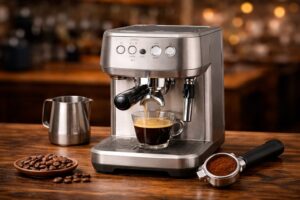
Breville Bambino Plus — Best Entry Semi-Automatic
The Breville Bambino Plus is the easiest entry point into genuine semi-automatic espresso. Its 3-second heat-up time means no waiting — press the button, the machine is ready before you’ve finished tamping. The automatic steam wand with temperature sensor takes most of the technical difficulty out of milk texturing, which is the hardest skill for new home baristas to develop. At its compact footprint, it fits most kitchen counters without displacing anything. For beginners who want real espresso control — grind, dose, yield — without the setup overhead of a more serious machine, the Bambino Plus is the clearest starting recommendation.
- Heat-up time: 3 seconds — the fastest in its class; no warm-up ritual required
- Steam wand: Automatic temperature-sensing steam — produces decent microfoam with less manual technique
- Boiler: Single boiler with thermoblock — adequate for home use; not suitable for high-volume steaming sessions
- Best for: Beginners and small households; anyone who wants semi-auto control without a steep setup learning curve
Disclosure: CoffeeGearHub may earn from qualifying purchases.
🔬 Best Growth Platform — Upgrade Path into Serious Espresso
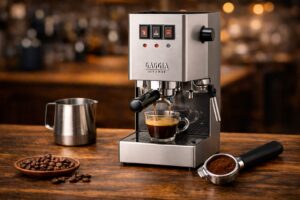
Gaggia Classic Pro — Best Semi-Automatic for Long-Term Development
The Gaggia Classic Pro occupies a unique position in home espresso: it’s affordable enough to be a reasonable first machine, but its commercial-grade group head and robust build quality make it a platform that serious baristas keep for a decade. The community around the Classic Pro is one of the largest and most active of any home espresso machine — meaning modification guides, upgrade paths, and troubleshooting resources are genuinely deep. The most common upgrade is a PID temperature controller ($50–$80), which transforms the machine’s consistency and is a straightforward installation. After adding PID, the Gaggia Classic Pro competes with machines at two to three times its price. It requires more active technique than the Bambino Plus, which is a feature, not a bug — it will make you a better barista.
- Group head: Commercial-spec E61-style — robust, repairable, compatible with quality aftermarket accessories
- Recommended upgrade: Add a PID temperature controller after purchase — transforms temperature consistency
- Community: Massive mod and support ecosystem; every problem has been documented and solved
- Best for: Serious home baristas who want a machine that grows with them; anyone who enjoys understanding and modifying their equipment
Disclosure: CoffeeGearHub may earn from qualifying purchases.
🥇 Best Dual Boiler — Precision and Simultaneous Steam
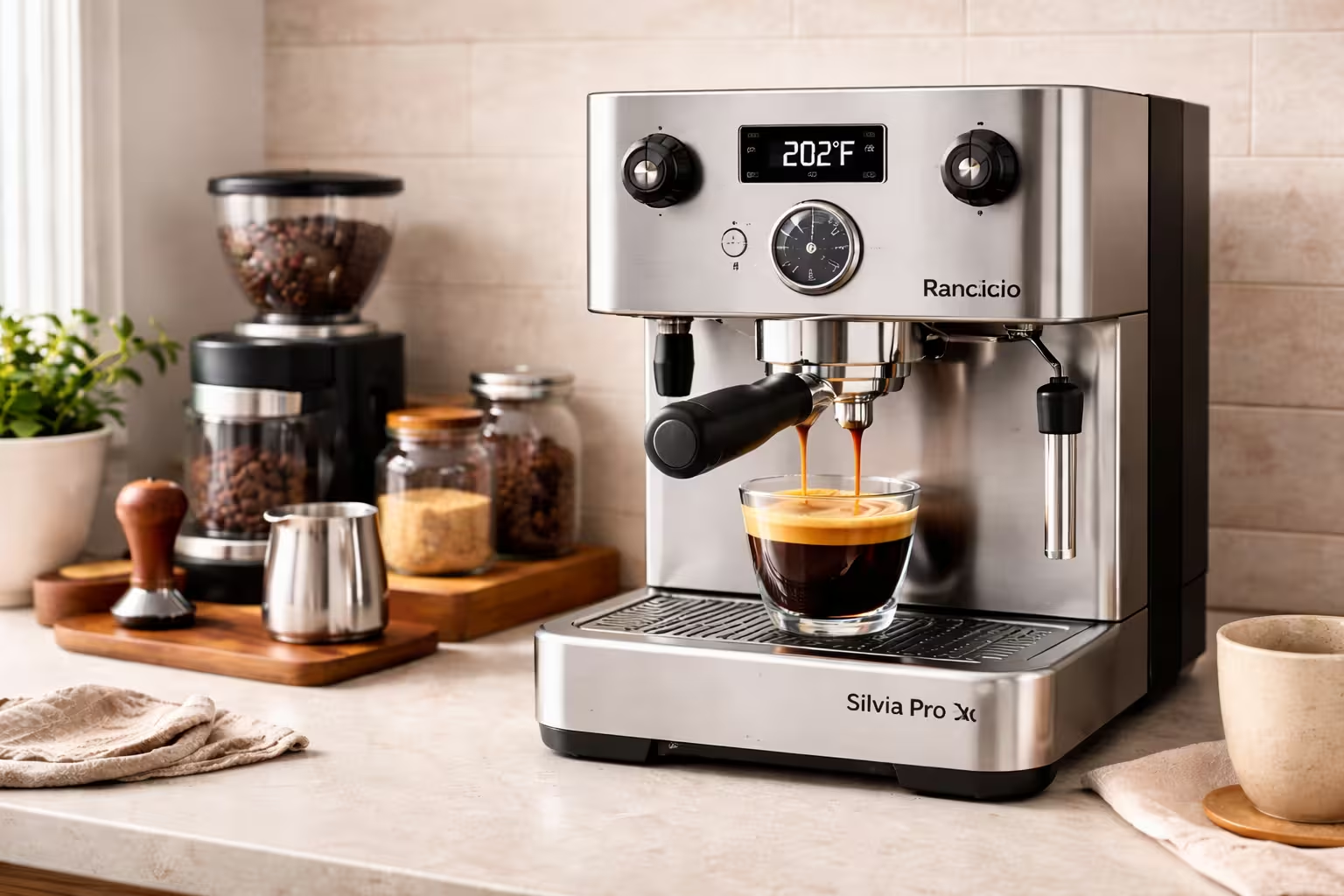
Rancilio Silvia Pro X — Best Dual Boiler for Home Espresso
The Rancilio Silvia Pro X is the dual-boiler recommendation for home baristas who want to eliminate temperature as a variable entirely and steam milk simultaneously with pulling shots. Dual independent boilers — one for brew, one for steam — with full PID control on each means you set your brew temperature to 93°C and your steam boiler to 125°C, and both hold those values independently across an entire session. That stability produces the most repeatable shot-to-shot results of any machine in its class. For households that make lattes and cappuccinos daily, the simultaneous workflow is a genuine quality-of-life upgrade over the sequential heat-and-wait routine of single boiler machines. Rancilio’s build quality is prosumer-grade: with proper maintenance, this is a 15-year machine.
- Dual boiler + full PID: Set and hold brew and steam temperatures independently — best thermal stability in its class
- Simultaneous workflow: Pull a shot and steam milk at the same time — no sequential waiting
- Build quality: Prosumer-grade stainless construction; designed for 10–15 years of daily use with maintenance
- Best for: Advanced home baristas; frequent milk drink brewers; anyone who wants to remove temperature as a variable
Disclosure: CoffeeGearHub may earn from qualifying purchases.
3. Automatic Espresso Machines

Automatic machines occupy the middle ground between semi-automatic and super-automatic. They still require manual grinding, dosing, and tamping — all the puck prep decisions that determine extraction quality — but they stop the shot automatically based on a programmed volume rather than requiring you to watch and manually cut the flow. This makes them well-suited to multi-user households where different people pull shots with different levels of attention, and to any situation where you want repeatable output volumes without watching a scale during extraction.
☕ Note on built-in grinder machines: Machines like the Barista Express include a conical burr grinder. They’re a genuine quality step up from any blade grinder, but a dedicated external grinder at the same price tier will typically outperform the built-in — and can be upgraded independently of the machine.
Disclosure: CoffeeGearHub may earn a commission on qualifying purchases.
☕ Best Automatic — All-in-One with Built-In Grinder

Breville Barista Express — Best Automatic All-in-One Machine
The Breville Barista Express is the most popular self-contained espresso machine in its price category — and its popularity is justified. The built-in conical burr grinder doses directly into the portafilter, the dose timer can be calibrated to your target weight, and the programmable shot volumes mean you push a button and the machine stops itself at your preset output. For busy households where multiple people make different drinks and nobody wants to watch extraction weights, the workflow simplification is meaningful. It still requires you to learn grind adjustment, tamp, and puck prep — enough involvement to develop real technique — but removes the scale-watching step that many beginners find overwhelming.
- Built-in grinder: Conical burr with dose timer — covers a useful espresso range; saves counter space
- Programmable volumes: Set your 1-shot and 2-shot volumes once; machine stops automatically on every pull
- Steam wand: Manual — produces good microfoam with technique; steaming is hands-on
- Best for: Households who want one machine, less counter clutter, and programmable repeatability
Disclosure: CoffeeGearHub may earn from qualifying purchases.
4. Super-Automatic Espresso Machines
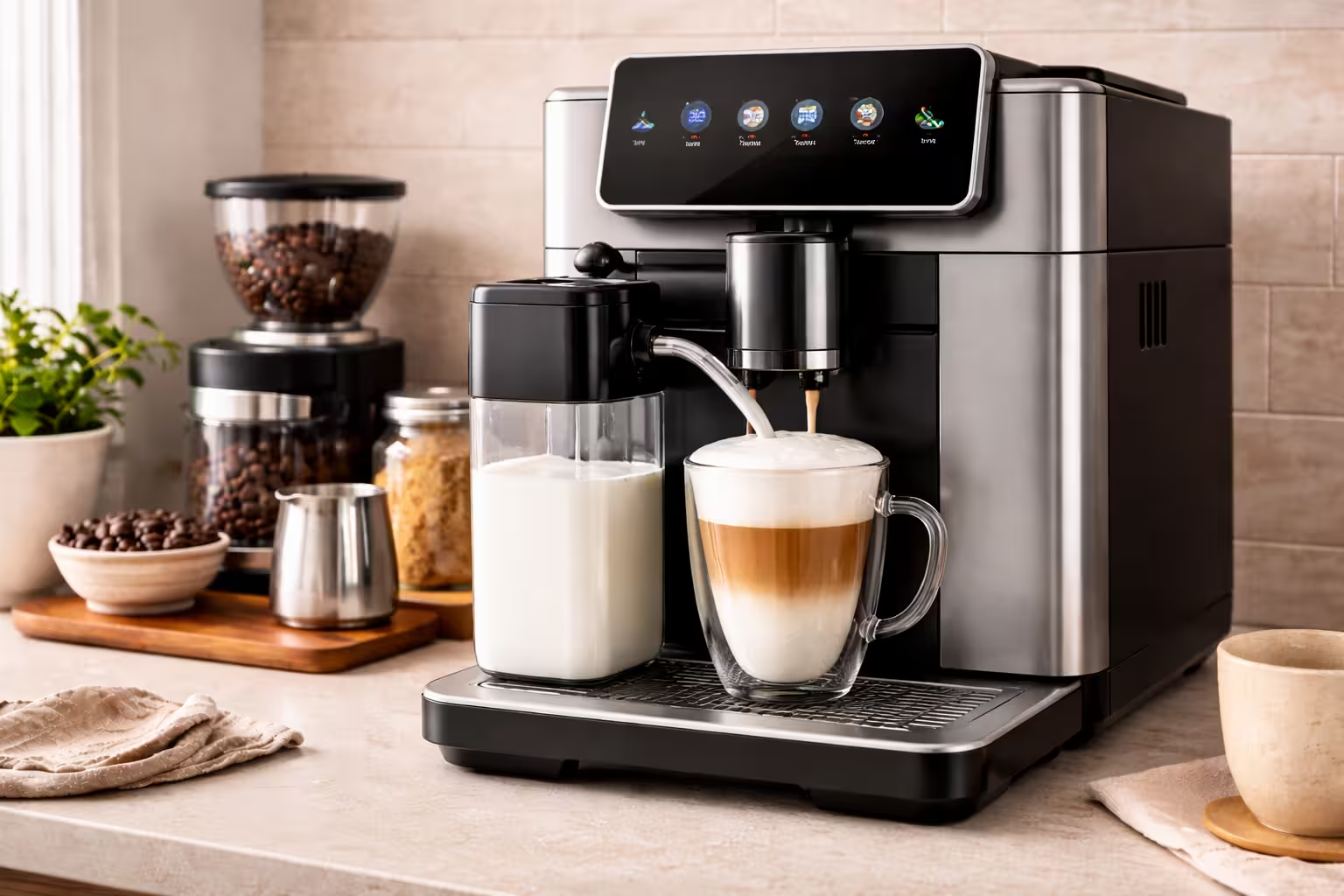
Super-automatic machines handle everything: grinding, dosing, tamping, brewing, and in most cases, milk frothing — all at the push of a button. They’re the right choice when convenience genuinely matters more than extraction precision, and they make enjoyable drinks that most non-espresso-enthusiasts cannot distinguish from café output. The trade-off is ceiling: because every variable is managed automatically, the machine cannot be dialed in the way a semi-automatic can. Grind range is limited, puck prep is fixed, and shot shaping is unavailable. They also require regular cleaning of the internal grinding and brewing pathways — the convenience of operation does not extend to maintenance.
Disclosure: CoffeeGearHub may earn a commission on qualifying purchases.
🤖 Best Super-Automatic — One-Touch Drinks, Easy Cleaning
Philips 3200 LatteGo — Best Super-Automatic for Home Use
The Philips 3200 LatteGo is the most consistently recommended super-automatic in its price tier — and the LatteGo milk system is a genuine differentiator. Instead of a traditional steam wand that requires disassembly to clean, the LatteGo uses a two-part carafe that rinses under the tap in seconds. For households that make multiple milk drinks daily, this is a meaningful time saving. The ceramic grinders are quieter and more durable than steel grinders at this price, and the five intensity settings give meaningful control over strength without requiring any technical knowledge. For anyone who wants excellent one-touch coffee with minimal daily friction, this is the clearest recommendation in the super-automatic category.
- LatteGo milk system: Two-part carafe cleans under the tap in seconds — the easiest milk cleaning of any super-auto
- Grinder: Ceramic — quieter and more durable than steel grinders; 5 intensity levels
- One-touch drinks: Espresso, lungo, Americano, latte, cappuccino — all at a button press
- Best for: Convenience-first households; anyone who wants great daily drinks without technique or maintenance overhead
Disclosure: CoffeeGearHub may earn from qualifying purchases.
☕ Premium Super-Automatic — Everyday Usability, App Control
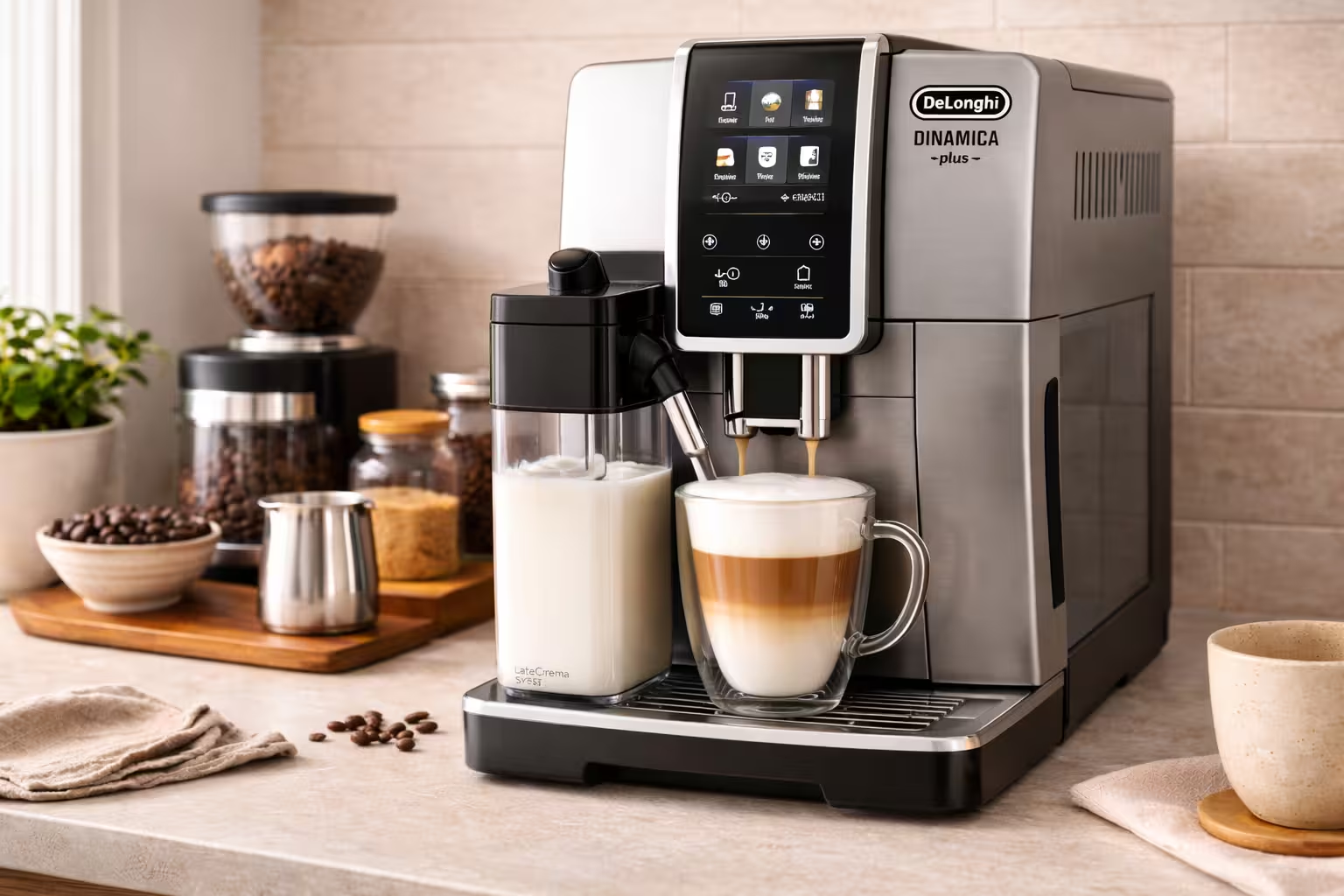
DeLonghi Dinamica Plus — Premium Super-Automatic
The DeLonghi Dinamica Plus sits at the upper end of the super-automatic category with a feature set that justifies the step up from the Philips for the right household. The connected app allows recipe customization beyond the machine’s physical controls, which is genuinely useful for households where different users want meaningfully different drink profiles. The LatteCrema automatic milk frothing system produces high-quality microfoam across a range of temperatures and textures without manual technique. The TFT color display makes navigating settings straightforward. For households that want the most capable, convenient super-automatic available and are willing to pay for it, the Dinamica Plus is the premium recommendation.
- App connectivity: DeLonghi Coffee Link app — customize recipes beyond physical controls; useful for multi-user households
- LatteCrema system: Automatic milk frothing with adjustable temperature and texture settings
- Display: TFT color touchscreen — clearest interface in its class
- Best for: Premium convenience buyers; households with multiple users wanting personalized drink profiles
Disclosure: CoffeeGearHub may earn from qualifying purchases.
☕ Machine chosen — now pick the grinder to match it. See our Best Coffee Grinders guide for espresso-capable picks at every budget.
Troubleshooting Matrix: Espresso Problems → Causes → Fixes
Most espresso problems trace back to one of three variables: grind, dose/yield ratio, or temperature. Machine type determines which of those variables you can actually control. Identify your symptom below and fix in the order listed — change one variable at a time, re-pull, and taste before adjusting anything else.
| Symptom | Most likely cause | Fix — in order | Machine type note |
|---|---|---|---|
| Sour / sharp / thin body | Under-extraction — grind too coarse, dose too low, temperature too low, or shot stopped too early | Grind one step finer → confirm dose is 18–20g for a double → confirm brew temp is 93–96°C for light roast → extend yield slightly (stop at 36–40g out instead of 30g) | Single boiler machines without PID are prone to low-temperature under-extraction early in a session — flush a shot of water first to thermally stabilize |
| Bitter / harsh / drying finish | Over-extraction — grind too fine, temperature too high, or shot running too long | Grind one step coarser → confirm brew temp is not above 96°C for medium roast → stop shot earlier (reduce yield by 5–8g) → check puck for channeling | Single boiler machines can overshoot temperature after steaming — let the machine cool before pulling the next shot |
| Channeling — blonde streak on one side, fast run-off | Uneven puck prep, dry spots in the bed, or grind too coarse allowing water to find a low-resistance path | Redistribute grounds evenly before tamping → tamp level (use a leveler) → grind slightly finer to increase bed resistance → use a straight-sided tamper that fits the basket correctly | More common on higher-flow machines; lever machines naturally pre-infuse which reduces channeling risk |
| Shot running too fast (under 20 seconds, high yield) | Grind too coarse — low bed resistance, water draining before adequate extraction | Grind finer in small steps → confirm dose is correct for your basket size → check tamp pressure is firm and level | Super-automatics: adjust grind setting 1 step finer; if still fast, check that the brew unit is clean |
| Shot stalling or no flow (choked) | Grind too fine — puck resistance too high for pump to push through | Grind 2 steps coarser → confirm dose is not over-packed for basket size → check that tamping is not exceeding 15–20kg of pressure | Can also indicate a clogged group head or solenoid on semi-automatic machines — run a backflush cycle |
| Inconsistent results session to session at same settings | Temperature variation between shots (single boiler without PID), or dose variation without a scale | Add PID to single boiler machines → weigh every dose on a scale → allow machine full warm-up time before first shot → flush a blank shot before pulling | Dual boiler machines with PID effectively eliminate this problem; single boiler machines are inherently more variable without PID |
| Weak, watery, low body | Under-dosed, ratio too high (too much water out), or grind too coarse | Confirm dose (18–20g for standard double basket) → reduce yield (stop at 36g out, not 50g) → grind slightly finer | Super-automatic default volumes are often set too high — reduce volume setting by 10–15% |
| Good first shot, worse second shot | Temperature drift — machine overheated between shots (single boiler) or insufficient cool-down | Wait 30–60 seconds between shots → run a short blank flush to cool the group head → if using a single boiler after steaming, wait 3–4 minutes before the next brew cycle | Dual boiler machines prevent this — brew boiler is independent of steam boiler and holds stable between pulls |
| Flat / no crema / dull cup | Stale beans, or extraction temperature too low | Check bean roast date — espresso needs beans roasted within 2–4 weeks; very fresh beans (under 5 days) over-gas and also reduce crema → raise brew temp 2°C → confirm machine is fully warmed up | Super-automatics with pre-ground bean hoppers compound staleness quickly — use whole beans and grind fresh |
| Machine not reaching temperature consistently | Thermostat drift, limescale buildup in boiler, or inadequate warm-up time | Descale the machine → allow 15–20 minutes of full warm-up before pulling shots → consider PID addition for single boiler machines → check boiler seal if temperature variance is severe | Hard water accelerates scale buildup significantly — use filtered water or a water softening filter |
🔧 Still getting bad shots? Use the full espresso troubleshooting guide for a complete step-by-step fix-first checklist.
FAQs: Espresso Machine Types
What is the best type of espresso machine for beginners?
For most beginners, a semi-automatic espresso machine offers the best balance of control and usability. You can learn proper dialing-in — dose, yield, grind, and shot control — without being locked into one-touch automation. The Breville Bambino Plus is the clearest entry recommendation.
Is a semi-automatic espresso machine better than a super-automatic?
Semi-automatic is better for flavor control and long-term skill growth because you control grind, puck prep, and shot stopping. Super-automatic is better for convenience and one-touch milk drinks, but limits extraction control. The right choice depends on whether you want to develop espresso skill or minimize daily effort.
Do I need a separate grinder with a semi-automatic espresso machine?
Yes. An espresso-capable burr grinder is essential because grind size and particle consistency control puck resistance and extraction quality. A quality separate grinder paired with a capable machine produces better results than a machine with a built-in grinder at the same combined price — and the grinder can be upgraded independently.
What is the difference between manual lever and pump-driven espresso machines?
Lever machines generate pressure with a lever and piston, giving you direct control over the pressure curve during the shot — including natural pre-infusion and taper. Pump machines generate pressure electrically and are generally more consistent and easier to use — especially for beginners and multi-user households.
What is the difference between a single boiler, heat exchanger, and dual boiler espresso machine?
Single boiler machines can brew or steam but not simultaneously — you switch modes and wait. Heat exchanger machines can brew and steam at the same time from one large boiler, but require a temperature flush before pulling. Dual boiler machines have separate boilers for brew and steam with independent PID control, offering the best temperature stability and workflow.
Is a dual boiler espresso machine worth it at home?
If you make milk drinks frequently and want stable temperatures while brewing and steaming simultaneously, dual boiler is worth the investment. If you mostly drink straight espresso, a strong single boiler or HX machine with PID is still an excellent choice at lower cost.
What is PID temperature control and do I need it?
PID temperature control stabilizes brew temperature by regulating the heating system within ±0.5°C instead of the ±5–10°C range of thermostat-controlled machines. It improves consistency significantly — especially with lighter roasts that are more temperature-sensitive. For single boiler machines like the Gaggia Classic Pro, adding a PID is the highest-impact upgrade available.
What is pressure profiling in espresso machines?
Pressure profiling changes brewing pressure dynamically during the shot — for example: a gentle pre-infusion at 2–3 bar, a ramp to peak pressure at 9 bar, then a taper at the end. It can improve sweetness, reduce harshness, and enhance body, especially with lighter roasts. It’s an advanced feature that rewards skill rather than immediately improving results.
What is flow control and how is it different from pressure profiling?
Flow control adjusts how quickly water moves through the coffee puck via a needle valve — slowing or speeding the extraction rate independently of grind size and dose. Pressure profiling changes pressure directly. Both shape extraction, but flow control is often more accessible for managing shot speed and channeling risk without requiring full pressure profiling capability.
Which matters more for espresso quality: the machine or the grinder?
For most home setups, the grinder matters more. A consistent espresso-capable burr grinder improves particle distribution, reduces channeling, and makes dialing in measurably easier — even on entry-level machines. Buying a better grinder before upgrading your machine produces more improvement per dollar spent.
Can super-automatic machines make real espresso?
They can make enjoyable espresso-style drinks and milk beverages, but they limit grind range, puck prep control, and shot shaping. Most experienced espresso drinkers can taste the difference. If maximum flavor control matters, semi-automatic or lever machines offer significantly more — but for convenience-focused households, super-automatics produce consistently good drinks with minimal skill.
How long do espresso machines typically last?
With proper maintenance, correct water chemistry, and regular cleaning, entry-level machines typically last 5–8 years, mid-range prosumer machines 10+ years, and premium dual-boiler machines 15+ years. Descaling on a regular schedule and using filtered or softened water are the two most impactful maintenance habits for extending machine lifespan.
Continue Learning
ESPRESSO GUIDES
Ready to pick a grinder for your machine? The Best Coffee Grinders guide covers every espresso-capable option from the KINGrinder K6 through prosumer flat-burr picks — matched to machine tiers.
☕
Written by the CoffeeGearHub Editorial Team
CoffeeGearHub is a specialty coffee equipment resource run by home brewers and coffee enthusiasts. Our guides are researched using published brewing science, SCA standards, manufacturer specifications, and established specialty-coffee community knowledge. We review and update our pillar content regularly. About CoffeeGearHub →

