
Breville Bambino Plus vs Gaggia Classic Pro E24 (2026 Comparison)

Editorial standards: this comparison uses current manufacturer specifications and documentation, independent reviews, and the practical differences in workflow, milk steaming, accessories, and maintenance between the two machines. CoffeeGearHub does not claim hands-on testing where it has not occurred.
At a glance
Bambino Plus reduces friction; Classic E24 gives you a traditional workflow
The current Gaggia model and what changed, a side-by-side comparison, daily workflow, 54 mm versus 58 mm portafilters, espresso control, automatic versus manual milk steaming, the grinder both machines need, which suits beginners, maintenance, and who should buy which.
Editorial analysis
This is really a convenience-versus-involvement decision
Both machines are semi-automatic espresso machines that can make excellent shots with fresh coffee and a capable grinder. Neither has a built-in grinder, and neither is a push-button super-automatic. The real difference is how much of the heating and milk workflow the machine handles for you.
The Breville Bambino Plus is built to remove friction: it heats in seconds and can texture milk on its own. The Gaggia Classic Pro E24 is built around a traditional boiler, a commercial-size 58 mm portafilter, and a manual steam wand, so you manage more of the process yourself. Which is better depends on whether you value speed and ease or a traditional, hands-on platform.
The 30-Second Answer
Choose the Breville Bambino Plus if you want the easier routine: a heat-up of about three seconds, automatic milk texturing, volumetric shot buttons, and a compact 54 mm portafilter. Choose the Gaggia Classic Pro E24 if you want a traditional 58 mm espresso platform with a brass boiler, a commercial-style steam wand, and a more hands-on workflow.
Either way, budget for an espresso-capable grinder. It matters as much as the machine.
Compare current options
Start with these representative choices
The two machines, plus an example grinder that suits either. Neither machine includes a grinder, so plan for one from the start.

Breville Bambino Plus — Easier routine
ThermoJet heat-up in about three seconds, a 54 mm portafilter, volumetric buttons, and automatic or manual milk texturing.
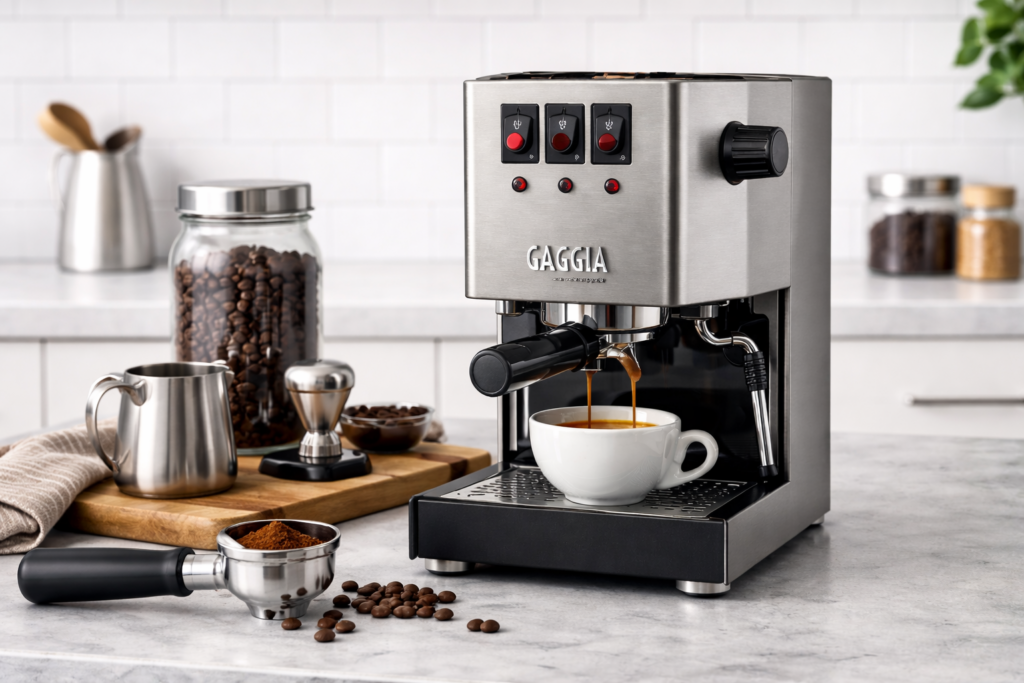
Gaggia Classic Pro E24 — Traditional platform
A brass boiler, 58 mm stainless portafilter, three-way solenoid valve, and a commercial-style manual steam wand.
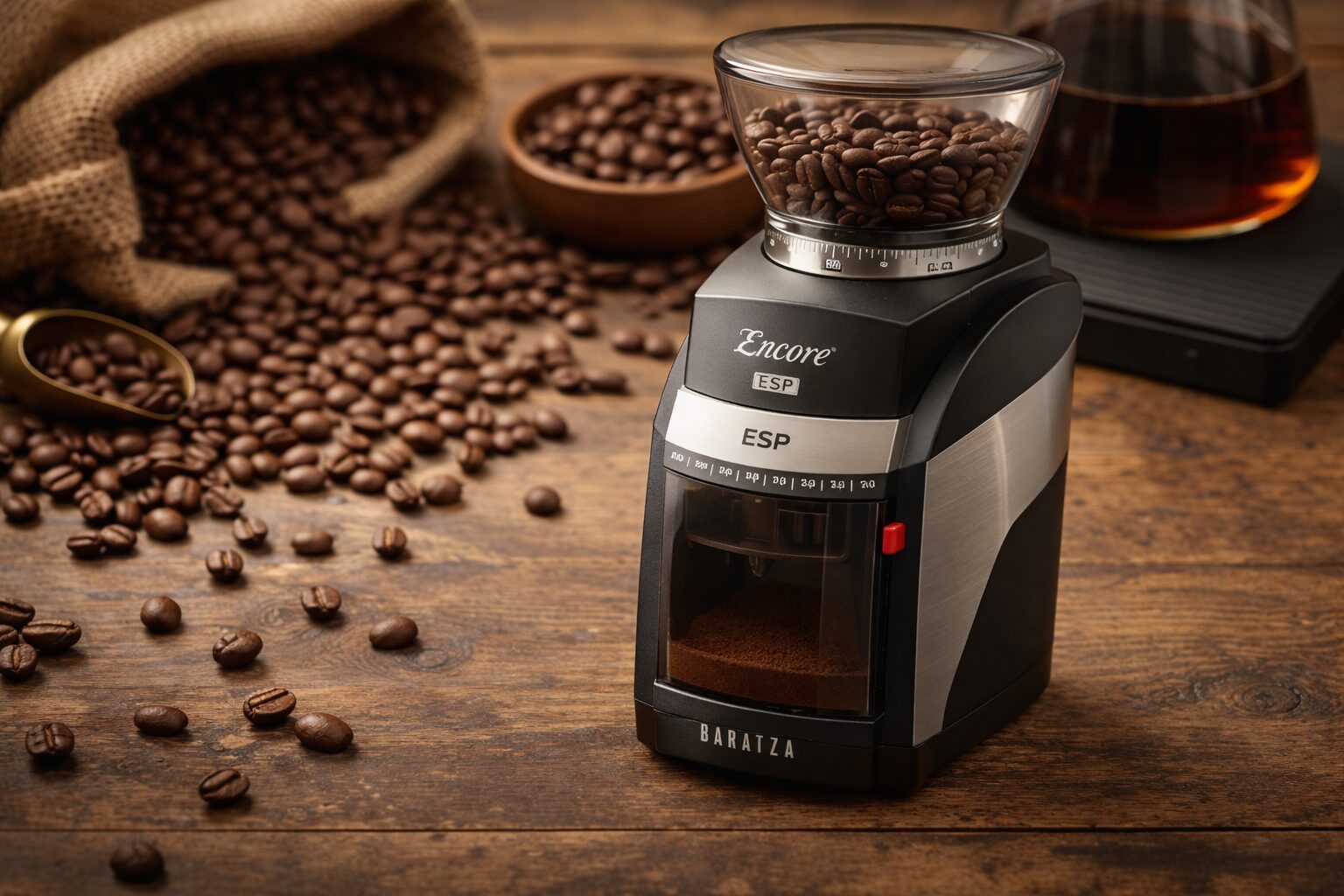
Baratza Encore ESP — Example grinder
A fine, small-step espresso range on settings 1 to 20 and a filter range above, so it suits either machine.
Affiliate disclosure: Amazon links may earn CoffeeGearHub a commission at no additional cost to you. Prices and availability can change.
The Current Gaggia Model: Classic Pro E24
Searches for the Gaggia Classic Pro still lead to years of reviews, but the current model sold in North America is the Gaggia Classic Pro E24. It is more than a new label. Gaggia updated the machine with a lead-free brass boiler, a revised brass group, a 58 mm stainless-steel portafilter, a three-way solenoid valve, and a commercial-style two-hole steam wand, and positions the brass boiler as an improvement in heat retention, temperature stability, and steaming.
This comparison uses the current E24 specifications wherever they matter. Older Classic Pro stock may still appear for sale, so check the model name on the listing. The core character of the machine is unchanged: a traditional, durable, single-boiler espresso machine with a large owner community and wide availability of parts and accessories.
Bambino Plus vs Gaggia Classic Pro E24: Side by Side
The table summarizes the differences that matter most day to day. Specifications come from Breville and Gaggia documentation; both machines brew at a standard espresso pressure and need a separate grinder.
| Feature | Breville Bambino Plus | Gaggia Classic Pro E24 |
|---|---|---|
| Heating | ThermoJet, ready in about 3 seconds | Brass boiler; allow warm-up time |
| Portafilter | 54 mm stainless | 58 mm stainless |
| Pre-infusion | Low-pressure pre-infusion built in | Not automatic |
| Shot control | One- and two-shot volumetric buttons | Manual rocker switches |
| Milk | Automatic or manual steam wand | Manual commercial-style wand |
| Three-way solenoid | No | Yes |
| Best fit | Speed, compact size, easy milk drinks | Traditional platform, hands-on learning |
Daily Workflow: The Biggest Difference
The Breville Bambino Plus is built around speed. Breville’s ThermoJet heating system reaches brewing temperature in about three seconds, so you can turn it on and pull a shot almost immediately. One- and two-shot volumetric buttons stop the shot for you once they are programmed, and low-pressure pre-infusion gently wets the coffee before full pressure. You still grind, dose, and tamp, but the waiting and much of the guesswork are gone.
That makes it a natural fit for busy mornings and small kitchens. If you are also considering Breville’s all-in-one with a built-in grinder, our Bambino Plus vs Barista Express comparison covers that choice, and our Bambino Plus review goes deeper on this machine.
The Gaggia Classic Pro E24 asks you to work like a traditional espresso user. Its brass boiler holds heat well, but it is not instant: for consistent shots, give the machine, group, and portafilter time to heat through. Simple rocker switches start and stop the pump and switch to steam, so you decide when each shot begins and ends, ideally by weighing the output.
Some owners enjoy that rhythm, and it teaches you more about how espresso works. Others find it slower on busy mornings. Our Gaggia Classic Pro E24 review covers its history, steaming, and long-term ownership in more detail.
54 mm vs 58 mm Portafilter: What It Changes
The Bambino Plus uses Breville’s 54 mm portafilter; the Gaggia uses a 58 mm portafilter, the size common across prosumer and commercial espresso machines. Diameter alone does not make one machine produce better espresso. What it changes is the accessory ecosystem: with 58 mm, there is a very wide choice of precision baskets, tampers, and distribution tools, and they will carry over if you later upgrade to another 58 mm machine.
The 54 mm system is also mature, with plenty of compatible tampers and baskets, and the Bambino Plus includes both pressurized and standard baskets, which helps while you learn. If you already own 58 mm tools or plan to move up to a prosumer machine, the Gaggia has an advantage. For a first machine, the daily workflow usually matters more than portafilter size.
Espresso Control and Consistency
With fresh coffee and a capable grinder, both machines can make balanced, sweet espresso; the grinder and technique matter more than the choice between them. The difference is how much the machine helps. The Bambino Plus’s pre-infusion and volumetric buttons reduce variability for beginners, though weighing your dose and shot is still the best way to dial in, rather than trusting the buttons alone.
The Gaggia leaves more to you. You control the start and end of each shot, and you manage temperature by timing your workflow around the boiler. That takes a little more practice, but it also makes the machine feel like a platform you can learn on and, for those who want to, modify. Gaggia positions the E24’s brass boiler as an improvement in temperature stability over earlier Classic models. Our guide to dialing in espresso applies to both machines.
Milk Drinks: Automatic Help vs Manual Skill
The Bambino Plus’s automatic steam wand is the clearest convenience advantage in this comparison. You choose a milk temperature and a foam level, place the pitcher, and the wand textures the milk and stops on its own. You can also switch to manual steaming when you want to practice. For a household that wants lattes and cappuccinos from day one, this removes the hardest part of the learning curve.
Automatic texturing is consistent rather than adjustable in fine detail, so people focused on latte art may eventually prefer manual control. For most milk-drink lovers, though, it is a real daily benefit.


The Gaggia Classic Pro E24 uses a commercial-style manual steam wand with a two-hole tip. It gives you direct control over aeration, the swirling vortex, and the final temperature, which is what you need for silky microfoam and latte art. It will not texture milk for you, and like other single-boiler machines, it switches between brewing and steaming rather than doing both at once.
That makes it better for someone who wants to learn traditional steaming and less convenient for someone who just wants repeatable milk drinks with little practice. Our how to steam milk guide walks through the technique.
The Grinder Both Machines Need
Neither machine includes a grinder, so a fair comparison includes one in the budget. For standard, non-pressurized baskets, you need a grinder that can grind fine enough for espresso and adjust in small, repeatable steps. A filter-oriented grinder that jumps too far between settings will make either machine frustrating, even when the machine is working perfectly.
The Baratza Encore ESP is one example that suits either machine: its first 20 settings are spread finely across the espresso range, and the rest cover filter brewing. Our best coffee grinders for espresso guide and do you need a grinder for espresso explain the options before you finalize the budget.
Which Is Easier for a Beginner?
For most beginners, the Bambino Plus is easier: fast heat-up, automatic milk, and volumetric shots mean fewer things to manage at once. The Gaggia suits beginners who specifically want to learn the traditional way and enjoy the process. If a fast morning start, easy milk drinks, and a small footprint are your priorities, the Bambino Plus is the better fit. If you want to learn manual steaming, build around industry-standard 58 mm accessories, and keep the same machine as your skills grow, the Gaggia is the better fit.
It helps to be honest about how you will use the machine on an ordinary weekday. If you make two milk drinks before work, the Bambino Plus’s speed and automatic wand will matter every single morning. If you brew on weekends, enjoy tinkering, and like the idea of learning a craft, the Gaggia’s extra involvement becomes part of the appeal rather than a cost. Many people who start on either machine go on to make excellent espresso; the difference is mostly in how the learning feels.
Budgeting for the Whole Setup
Comparing the two machines on their own can be misleading, because neither is a complete espresso setup. Both need an espresso-capable grinder, and both benefit from a few inexpensive tools: a digital scale with 0.1 g resolution and a timer to weigh dose and shot, a tamper that fits the portafilter, a milk pitcher, and descaling solution. The Bambino Plus includes a tamper and pitcher in the box; with the Gaggia, many owners also choose to upgrade the basket and tamper over time.
Plan the budget as a system rather than a single purchase. A more modest machine paired with a good grinder will make better espresso than an expensive machine paired with a weak one. For the Gaggia in particular, the 58 mm accessory market makes upgrades easy, which is part of its appeal but can add cost. For the Bambino Plus, most owners need little beyond a grinder and a scale to get excellent results.
Common Buying Mistakes
The most common mistake is buying the machine first and the grinder as an afterthought; for real espresso, the grinder is often the limiting factor. The second is treating the older Classic Pro and the current E24 as identical, when the E24 has meaningful hardware changes, especially the brass boiler and updated group and portafilter. The third is assuming that a 58 mm portafilter automatically means better espresso, when it mainly affects accessories and workflow.
Two quieter mistakes catch people later. One is underestimating milk workflow: if you make milk drinks every day, the difference between automatic texturing and manual steaming affects you more often than any spec-sheet comparison. The other is comparing warm-up claims in isolation. Fast heating helps only if the rest of your routine is quick too, while a traditional boiler machine rewards a different, more deliberate rhythm.
Maintenance and Ownership
Neither machine is maintenance-free, but both are straightforward if you follow the manual and use suitable water. On the Bambino Plus, purge and wipe the steam wand after each milk drink, rinse the portafilter and baskets after brewing, and descale according to Breville’s instructions and your water hardness. The machine prompts some cleaning tasks, which helps keep the routine on track.
On the Gaggia, rinse the group and portafilter after brewing and purge and wipe the steam wand after use. Its three-way solenoid valve supports backflushing for group cleaning; follow Gaggia’s instructions for the products and schedule. Descaling is a manual task, so water quality matters. Neither machine has a fixed lifespan: longevity depends on water, cleaning, and parts, and the Gaggia’s large parts ecosystem is an advantage for repairs. Our espresso machine maintenance guide covers schedules for both.
Who Should Buy Which?
Choose the Breville Bambino Plus if you want to brew moments after switching on, make a lot of milk drinks and value automatic texturing, like the help of volumetric shot buttons while still learning portafilter espresso, or have limited counter space. It suits people who want convenience without moving all the way to a super-automatic machine.
Choose the Gaggia Classic Pro E24 if you want a 58 mm platform from the start, enjoy a traditional boiler routine, want to learn manual milk steaming, or value durable, repairable hardware with a large community behind it. It suits people who are comfortable managing more of the process and see espresso as a skill to develop.
Our Recommendation
The Bambino Plus is the more forgiving machine. It heats quickly, textures milk for you when you want it to, and still teaches the fundamentals of grinding, dosing, and tamping, which makes it the better choice for most beginners. The Gaggia Classic Pro E24 is the more traditional platform, with a brass boiler, a 58 mm portafilter, and a manual steam wand, and it suits buyers who want to take part in more of the espresso process. Neither replaces the need for a capable grinder. If you are still unsure, our best espresso machines for beginners guide compares more options.
Pick the Espresso Workflow You Want
The Bambino Plus is the easier routine; the Gaggia Classic Pro E24 is the traditional, hands-on platform.
As an Amazon Associate, CoffeeGearHub earns from qualifying purchases.
Editorial bottom line: Choose the Bambino Plus for speed and easy milk drinks, or the Gaggia Classic Pro E24 for a traditional 58 mm platform and manual steaming. Either way, put a capable espresso grinder in the budget.
Frequently Asked Questions
Is the Breville Bambino Plus good for beginners?
Yes. It heats in seconds and can texture milk automatically while keeping a traditional portafilter workflow, so beginners can learn grinding, dosing, and tamping without also having to master manual steaming right away.
Is the Gaggia Classic Pro E24 hard to use?
It is more hands-on than the Bambino Plus, not complicated. You manage a traditional boiler warm-up, start and stop shots with rocker switches, and steam milk manually. The controls are simple, but more of the process is up to you.
Do both machines need a separate grinder?
Yes. Neither has a built-in grinder. For standard, non-pressurized baskets, you need a burr grinder with fine, repeatable espresso adjustment, such as the Baratza Encore ESP. Our espresso grinder guide covers options.
Which machine is easier for milk drinks?
The Bambino Plus. Its steam wand can texture milk automatically at a choice of temperatures and foam levels. The Gaggia Classic Pro E24 has a manual commercial-style wand that takes practice but gives more control.
What is the difference between 54 mm and 58 mm portafilters?
The Bambino Plus uses Breville’s 54 mm size; the Gaggia uses a 58 mm size common on prosumer and commercial machines. The 58 mm size gives access to a wider range of baskets and tampers, but it does not by itself make better espresso.
Is the Gaggia Classic Pro still sold?
The current version is the Gaggia Classic Pro E24, an update to the Classic line with a lead-free brass boiler and revised group and portafilter. Check the model name on the listing, since older Classic Pro stock may still be sold.
Sources and Further Reading
Specifications come from Breville’s published documentation for the Bambino Plus and Gaggia’s published documentation for the Classic Pro E24, along with Baratza documentation for the Encore ESP. Brewing guidance follows the Specialty Coffee Association’s brewing standards and common espresso practice. CoffeeGearHub did not test these machines hands-on; the comparison relies on published specifications and independent reviews.
CoffeeGearHub product shortlist
Continue with related products on CoffeeGearHub
Review product categories and current verified merchant offers on CoffeeGearHub before leaving the site.