Last Updated: February 2026 | ~28 min read
Fix Sour, Bitter, Channeling & Inconsistent Shots
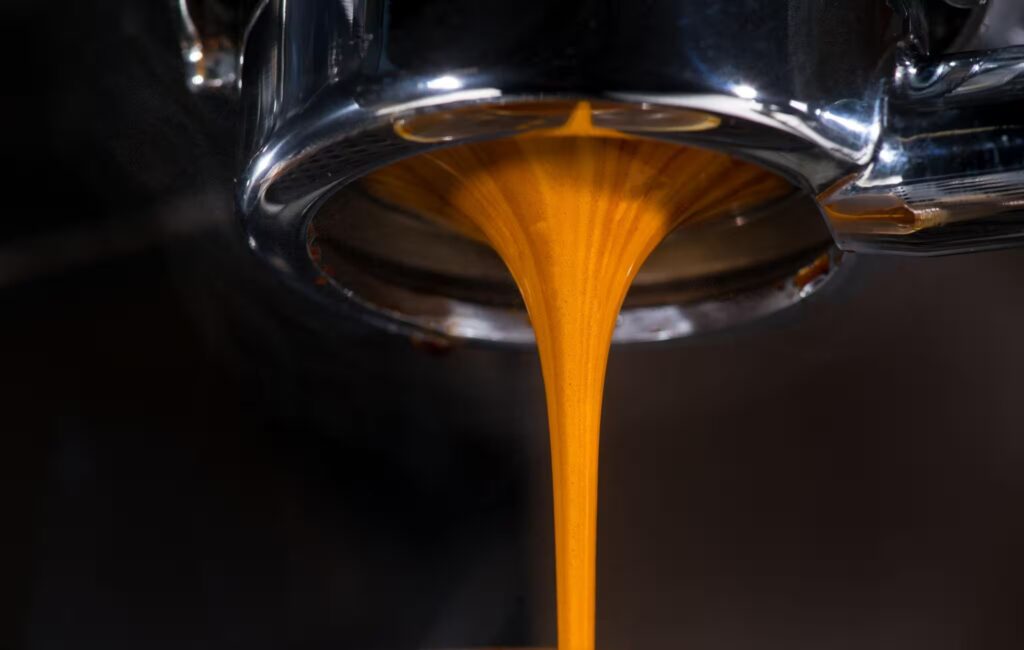
Espresso isn’t random. If a shot tastes sour, bitter, watery, harsh, or keeps changing from one pull to the next, the cause is almost always one of a few things: grind size, brew ratio, puck prep, temperature, water, or machine cleanliness.
This guide is designed to feel like a barista trainer standing next to you. You’ll learn how to identify what’s wrong by taste + visuals + time + yield—and what to adjust first so you stop chasing your tail.
New to dialing in? Start here (our foundational authority guide): How to Dial In Coffee at Home (Drip, Pour-Over, Espresso).
Key Takeaways (Read This First)
- Sour usually means under-extracted → grind finer or increase yield slightly.
- Bitter/dry usually means over-extracted → grind coarser or reduce yield.
- Sour + bitter together is often channeling → fix puck prep before changing the recipe.
- Time is a clue, not a goal. Yield (grams out) and taste matter more.
- Make one change at a time—almost always grind first.
Extraction Science in Plain English
Think of extraction like a timeline. As water passes through coffee, it pulls different compounds at different stages:
- Early stage: acids + aromatics (can taste sharp if the shot ends too soon)
- Middle stage: sugars + sweetness + body (where “good espresso” usually lives)
- Late stage: bitter/drying compounds (if you push too far)
Your job is to land in the balanced middle—sweet, structured, and full-bodied—without veering too early (sour) or too late (bitter/dry).
The practical spectrum
- Under-extracted: lemony sour, thin body, fast flow
- Balanced: sweet, viscous, clear flavor, stable crema
- Over-extracted: harsh bitterness, dry finish, slow/stalling flow
The biggest controls (in order): grind, ratio, puck prep, temperature, then water chemistry.
Quick Diagnosis Matrix: Flavor + Visuals → Cause → Fix
| What you notice | What it usually means | Most likely cause | First fix to try |
|---|---|---|---|
| Sharp sour/lemon, thin body, finishes <20s | Under-extraction | Grind too coarse / low resistance | Grind finer (small step), keep yield the same |
| Ashy bitter, dry mouthfeel, stalls or >40s | Over-extraction | Grind too fine / too much resistance | Grind coarser, keep yield the same |
| Watery/weak, little crema, bland | Low strength (and often under-extraction) | Underdose, coarse grind, poor puck prep | Check dose for your basket + grind finer |
| Sour + bitter together, spraying, uneven streams | Channeling (uneven extraction) | Clumps, uneven distribution, tilted tamp | WDT + level tamp before changing grind |
| Fast shot even with a “fine” grind | Micro-channeling or grinder inconsistency | Uneven particle distribution, retention, stale grounds | Purge grinder, improve prep, consider grinder upgrade |
Baseline Protocol: Eliminate 80% of Variables
Before troubleshooting, lock in a baseline so you’re not changing five things at once.
- Dose: use your basket’s “happy range” (commonly 18–20g for many 58mm baskets)
- Ratio: start at 1:2 (example: 18g in → 36g out)
- Time: aim for roughly 25–35 seconds (but taste decides)
- Temperature: ~200–202°F is a solid starting point (darker roasts often taste better slightly cooler)
- Pressure: if you can control it, stable “classic espresso” pressure is typically around 9 bar
Tools that make troubleshooting dramatically easier: a 0.1g scale with timer, a WDT tool, and (optional) a bottomless portafilter for visual feedback.
If you want the full dial-in workflow with examples, follow: How to Dial In Coffee at Home.
Sour Espresso: Under-Extraction (How to Fix It Without Guessing)
Sour espresso is the most common issue for home baristas—especially with light to medium roasts. Most of the time, it’s simply not extracted enough.
How sour shots usually taste
- lemon/vinegar sharpness (not “pleasant fruit”)
- thin, watery body
- salty or metallic edge
- short finish
Step-by-step fixes (in the right order)
- Grind finer in small increments and keep your ratio the same.
- Target a slightly longer extraction (often landing around the high 20s to low 30s seconds for many setups).
- If it’s still sour but texture is improving, increase yield slightly (example: 18g in → 38–40g out).
- If your machine supports it, raise brew temperature slightly (a couple degrees can help).
- Check beans: espresso often performs best when rested 7–21 days off roast. Very fresh beans can be gassy and taste sharp.
Need a reference point for “how fine is fine”? Use: Coffee Grind Size Chart.
Bitter or Harsh Espresso: Over-Extraction (The Clean Fix)
Bitterness in espresso is normal in small amounts—coffee is naturally bitter. The issue is when bitterness becomes dry, harsh, or ashy and overwhelms everything else.
How over-extraction usually feels
- drying finish (mouth-puckering)
- ashy, burnt, or “hollow” bitterness
- slow, choking flow or late sputtering
Step-by-step fixes
- Grind coarser a small step and keep ratio the same.
- If it’s still too bitter, reduce yield slightly (example: 18g in → 32–34g out, ~1:1.8).
- If your machine runs hot, lower brew temperature a couple degrees.
- Confirm cleanliness: stale oils in baskets and group heads can create “mystery bitterness.” (Link below.)
Clean gear matters more than most people think: Coffee Equipment Maintenance Hub.
Channeling: Why You Taste Sour + Bitter in the Same Shot
If your espresso tastes sour and bitter at the same time, that’s usually not a “recipe” problem—it’s an evenness problem.
Channeling happens when water finds weak paths through the puck. Some parts extract too quickly (sour), while other parts over-extract (bitter). The cup becomes confused and inconsistent.
Common channeling signs
- spraying or “jets” from a bottomless portafilter
- uneven streams or sudden blonding early
- fast shot even when you think the grind is fine
- repeatability problems (two shots taste totally different)
Fix channeling before changing your recipe
- Use WDT (stir grounds with thin needles to break clumps and even density).
- Tap the portafilter gently to settle grounds.
- Tamp level (parallel to the basket) and keep it consistent.
- Keep the basket and shower screen clean so flow stays even.
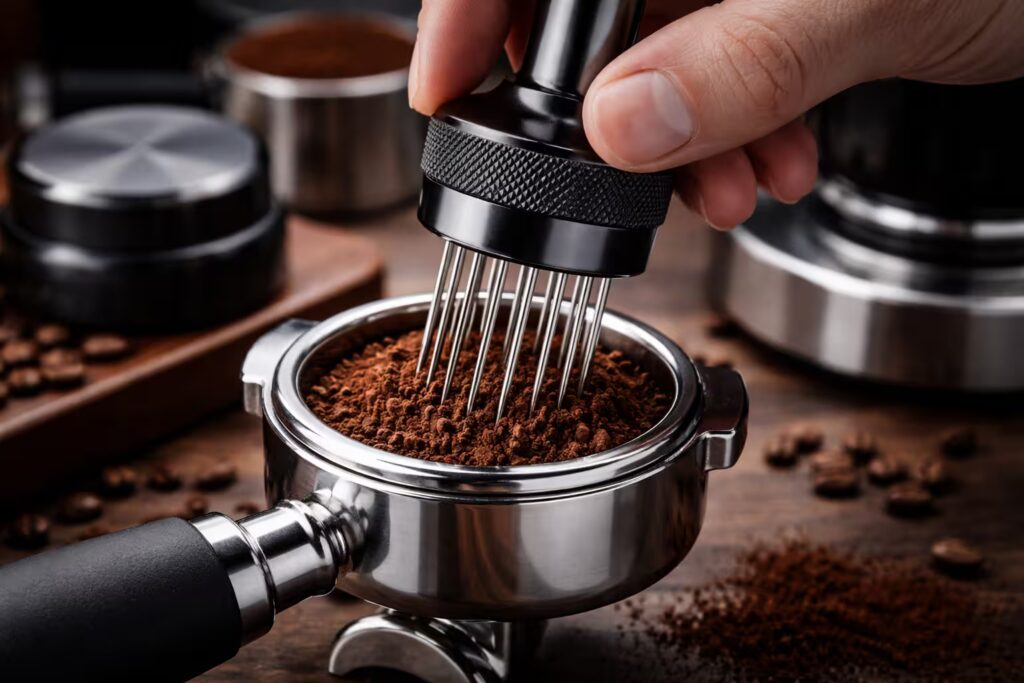
Recommended WDT Tool (Best “Consistency Upgrade”)
If you only add one espresso tool, make it a WDT tool. It’s the fastest way to reduce clumps, improve puck density, and cut down on channeling—especially with home grinders.
Comparison Tables: What Actually Improves Espresso (And What’s Optional)
Some upgrades improve espresso dramatically. Others are mostly convenience. Use the tables below to prioritize spending (and fixes) intelligently.
Tool impact hierarchy (most people should follow this order)
| Tool / Upgrade | Impact on Taste & Consistency | Why it matters | When to buy |
|---|---|---|---|
| Espresso-capable grinder | Very High | Controls particle distribution and extraction precision | If dialing in feels impossible or inconsistent |
| 0.1g scale + timer | High | Locks ratio and makes results repeatable | Immediately (cheap, huge benefit) |
| WDT tool | High | Reduces clumps and channeling | Immediately (low cost) |
| Bottomless portafilter | Medium (diagnostic) | Shows channeling visually so you can fix prep | If you want faster feedback |
| Calibrated/level tamper | Medium | Helps tamp consistently (less tilt) | If tamping feels inconsistent |
| Refractometer | Low (for most people) | Measures extraction; useful for nerd-level optimization | Only if you love measuring |
When you should change grind vs ratio vs temperature
| If your shot is… | Adjust this first | Then consider |
|---|---|---|
| Too fast (<20s) and sour | Grind finer | Increase yield slightly only after grind is close |
| Too slow (>40s) and bitter/dry | Grind coarser | Reduce yield if bitterness persists |
| Sour + bitter in same cup | Puck prep (WDT + level tamp) | Then grind, then ratio |
| Flavor “close” but not quite | Small ratio adjustment | Temperature tweak (±2°F) |
Water Chemistry & Maintenance (The Two “Hidden” Variables)
If your espresso never tastes right—even when the shot time and ratio are reasonable—look at water and cleanliness. These are the variables that can make great beans taste dull, harsh, or muddy.
Water basics (what matters most)
- Water that’s too soft can taste flat and lifeless.
- Water that’s too hard can emphasize harshness and bitterness (and scale your machine).
- Alkalinity influences perceived acidity and “roundness.”
Get the practical version here: Coffee Water Quality Guide.
Maintenance that directly affects taste
- Rinse and wipe the group area regularly.
- Clean baskets and portafilter to avoid rancid oils.
- Backflush (for machines that support it) based on your use frequency.
- Keep grinders clean; old grounds in the chute can create stale flavors.
Use our maintenance hub as your schedule: Coffee Equipment Maintenance Hub.
Master Workflow: A Repeatable, Data-Driven Dial-In
This is the simplest “pro” workflow that works across machines:
- Pick a baseline (dose + ratio) and write it down.
- Pull a shot and record dose, yield, time (and temperature if you can).
- Taste and diagnose using the matrix above.
- Adjust grind only until you’re close.
- Once close, fine-tune with ratio (slightly longer/shorter yield).
- Use temperature last for small corrections (±2°F).
Want the complete beginner-to-advanced dial-in system? Go here next: How to Dial In Coffee at Home.
FAQs
Why is my espresso sour even at 30 seconds?
If time looks “right” but taste is still sharp, channeling is a common culprit. Fix puck prep first (WDT + level tamp), then revisit grind and yield.
Why does my espresso taste both sour and bitter?
That’s classic uneven extraction (channeling). Some water paths under-extract while others over-extract. Improve distribution and tamp level before changing the recipe.
Do I have to hit 30 seconds exactly?
No. Think in ranges. Many great shots land anywhere from ~20–40 seconds depending on roast level, basket, machine, and desired flavor. Use taste and yield to decide.
What’s the #1 upgrade for better espresso at home?
For most people: an espresso-capable grinder (and a scale). After that, a WDT tool is the highest ROI accessory for consistency.
Should I change grind size or ratio first?
Almost always grind first. Keep dose and yield fixed while you dial the grind. Once it’s close, you fine-tune flavor with small ratio changes (slightly longer or shorter yield).
What’s a good starting espresso ratio for most beans?
A reliable baseline is 1:2 (example: 18g in → 36g out).
If it’s sour: try 1:2.2 (a little more yield)
If it’s bitter/dry: try 1:1.8 (a little less yield)
Do I need a bottomless portafilter to diagnose problems?
No, but it speeds up learning. A bottomless portafilter makes channeling visible, which helps you fix puck prep faster. Taste alone can still get you there—it just takes longer.
How fresh should espresso beans be?
Most beans taste best for espresso when rested about 7–21 days off roast. Very fresh coffee can taste sharp/gassy and can be harder to extract evenly.
Can water quality actually change espresso taste that much?
Yes. Water affects extraction and perception of acidity/bitterness. Extremely soft water can taste flat; very hard water can taste harsh and cause scale. If your espresso never tastes “right,” water is worth investigating.
Why is my shot fast even when my grind is “fine”?
Usually one of these:
Channeling from clumps/uneven prep
Dose too low for the basket
Grinder inconsistency (wide particle distribution)
Try WDT + correct dose + purge old grounds first.
Next Steps
If you want espresso to become predictable, build a simple system: weigh dose and yield, keep prep consistent, adjust grind first, and use ratio and temperature as refinements.
Next read: How to Dial In Coffee at Home • and keep this open as your troubleshooting reference.