Last Updated: February 28, 2026 • 18–24 min read
Moka pots are simple pressure brewers—and that’s exactly why small mistakes (heat, grind size, gasket wear) can swing your cup from rich and chocolatey to bitter, burnt, or weak. This step-by-step troubleshooting guide helps you quickly diagnose what’s wrong, fix it on the spot, and prevent it from happening again. You’ll also get gear upgrades that actually matter (grinders, replacement gaskets, and stainless moka pots), plus a quick-reference table and a Rank Math FAQ section.
Affiliate disclosure: CoffeeGearHub may earn commissions from qualifying purchases (at no extra cost to you).
Table of Contents
Tip: If you’re still dialing in your grind, start here: How to Dial In Coffee at Home (Drip, Pour-Over, Espresso)—the same logic applies to moka.
How a Moka Pot Works (and Why Problems Happen)
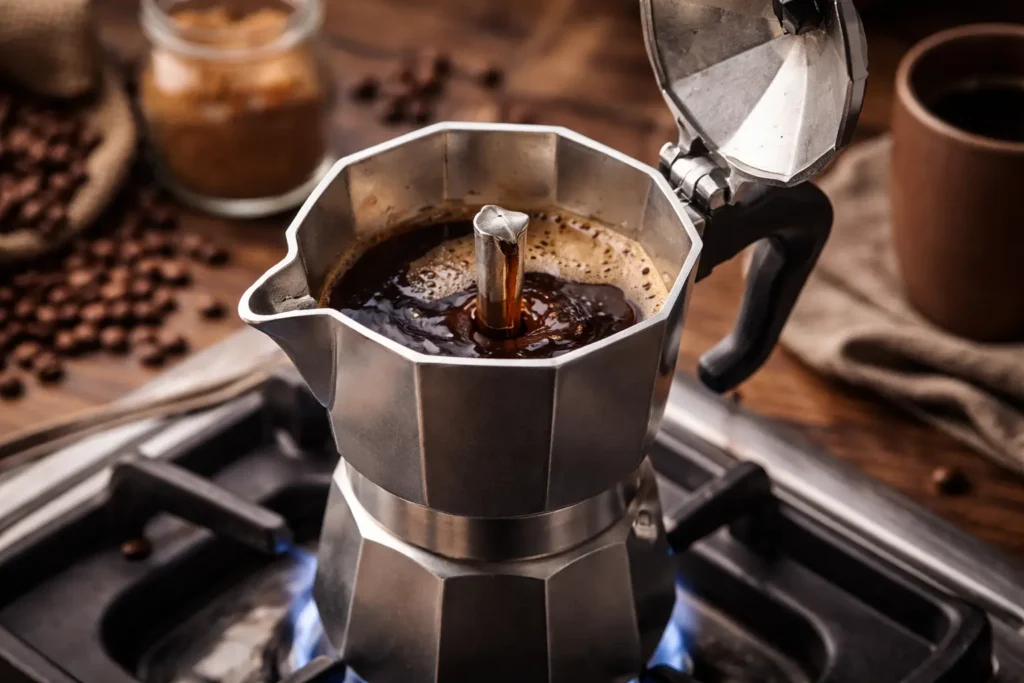
A moka pot has three main parts: the bottom chamber (water), the funnel basket (coffee), and the top chamber (finished brew). As the water heats, steam pressure builds and pushes hot water up through the coffee bed and into the top chamber.
That sounds straightforward—until you realize the moka pot doesn’t actively “control” much. There’s no pump, no PID temperature stability, and no pressure regulation beyond the safety valve. Your brew quality depends on:
- Heat input (how fast pressure rises)
- Grind size (how easily water passes through)
- Coffee dose (basket fill and distribution)
- Water level (must stay below the valve)
- Seal quality (gasket condition + alignment)
- Timing (when you stop the brew)
Most moka issues are not mysterious. They’re usually one of these patterns:
Over-extraction (bitter/burnt)
Usually too much heat, too fine a grind, or you’re letting the last sputtering phase run too long.
Under-extraction (weak/sour)
Usually too coarse a grind, under-filled basket, too little heat (stalling), or stale coffee.
Mechanical issues (leaks, no flow, steam at the valve) are typically seal or blockage problems—usually a worn gasket, coffee residue on the rim, a clogged filter, or an espresso-fine grind that chokes the basket.
Quick Diagnosis: What Your Symptoms Mean
If you only read one part of this guide, read this. The moka pot is giving you “signals.” Match the symptom to the likely cause and you can fix it in one brew cycle.
| Symptom | Most Likely Cause | Fast Fix |
|---|---|---|
| Bitter / burnt | Heat too high; brew runs too long | Lower heat; stop early; cool base |
| Weak / watery | Grind too coarse; basket under-filled | Go finer; fill basket fully (no tamp) |
| No coffee comes out | Choked basket; clogged filter; valve blockage | Go coarser; clean parts; check valve |
| Sputtering / spraying | Heat too high; end phase running too long | Lower heat; stop when stream turns pale |
| Leaking from middle | Worn gasket; dirty rim; misalignment | Clean rim; replace gasket; tighten evenly |
| Metallic taste | New aluminum; residue; hard water scale | Rinse well; season; use filtered water |
Fix Bitter or Burnt Moka Pot Coffee
What it tastes like: harsh, ashy, burnt, overly dry, aggressive. If your moka coffee makes you wince or leaves a lingering char, you’re almost always over-extracting the later part of the brew.
The real reason moka coffee goes bitter
Moka brewing has phases. Early flow is usually balanced. As the bottom chamber empties, the temperature rises and the brew transitions into a “steamier” phase. That late stage can over-extract quickly, especially on high heat. If you let that phase gush into the top chamber, you’re essentially adding a bitter concentrate on top of your good coffee.
- Heat too high (most common) → fast pressure rise + hotter brew + more bitter tail end
- Grind too fine → slower flow + more extraction + more bitterness
- Brewing too long → you’re collecting the harsh sputtering phase
- Very dark roast + aggressive heat → amplified bitterness
Fix it in one brew
- Lower heat to medium once the pot warms. You want a steady, controlled stream—not a violent surge.
- Stop the brew early: remove from heat when the stream turns pale/blond and the pot starts to “hiss.”
- Cool the base under cold tap water for 3–5 seconds to halt extraction (especially helpful on electric coils).
- Adjust grind slightly coarser if your stream is slow and the coffee tastes aggressive.
Grind target: medium-fine—finer than drip, coarser than espresso. If you’re unsure, use the same starting point you’d use for AeroPress or a short pour-over and tweak from there.
Need help dialing grind? See: Best Coffee Grinders for Moka Pot (Dial-In Guide + Picks).

Fix Weak or Watery Moka Pot Coffee
What it tastes like: thin, tea-like, hollow, sometimes sour. Weak moka coffee is almost always under-extraction—or a low dose problem.
Common causes (ranked)
- Grind too coarse → water passes too quickly and doesn’t pick up enough soluble compounds.
- Basket not filled → less resistance and lower extraction. (Moka baskets are designed to be filled.)
- Stale coffee → dull flavor no matter what you do.
- Heat too low → weak pressure rise + slow, uneven brew (can also stall).
Fix it in one brew
- Go a step finer until the cup gains body and sweetness.
- Fill the basket fully, level it with your finger, and do not tamp. Tamping can choke the brew and trigger valve issues.
- Use fresh beans and store correctly. If you’re buying, this helps: The Ultimate Coffee Bean Buying Guide.
- Use medium heat. Too low can stall or create a “sad drizzle.”
Pro tip: If you love moka but want a smoother, less intense cup, you can dilute your moka concentrate with hot water (like an Americano). Fix the extraction first, then dilute to taste.
No Coffee Comes Out (Blockages & Choking)
If the moka pot heats but nothing reaches the top chamber, treat it as a flow restriction problem. Most of the time, the coffee bed is choked (too fine, too packed) or the filter system is clogged with oils and fines.
Likely causes
- Grind too fine (espresso-like)
- Coffee tamped or overpacked
- Clogged filter plate/screen
- Blocked safety valve (rare but serious)
- Not enough water (below minimum)
Fix checklist
- Let it cool fully before opening
- Disassemble and rinse all parts thoroughly
- Clean the filter plate holes (soft brush/toothpick)
- Go coarser and do not tamp
- Fill water to just below the safety valve
If this happens repeatedly, you likely need a grinder with tighter particle consistency. Blade grinders create lots of fines that choke the basket and add bitterness. A burr grinder is the single best moka upgrade (see picks below in Recommended Gear).
Sputtering, Spraying, or “Exploding” Brew
Sputtering means your moka pot is in the late phase of brewing where steam begins to push through. Some bubbling at the very end is normal, but violent spurting typically indicates too much heat or a choke-and-release flow pattern (often caused by a grind that’s too fine).
Why it happens
- Heat too high → pressure spikes and drives a turbulent stream
- Grind too fine → water struggles through, then surges
- Overfilled basket (or tamped) → resistance too high
- Brewing too long → you’re collecting the steam-heavy tail end
Fix it
- Use medium heat and avoid high heat “rushing.”
- Stop brewing as soon as the stream turns blond/pale.
- Cool the base under cold water to stop extraction.
- If sputtering happens early, go slightly coarser and re-check basket fill (no tamp).
What you want to see: a steady, controlled stream that looks like warm honey—especially early and mid-brew. The “foam” you see sometimes is not espresso crema; it’s mostly emulsified oils + turbulence.
Leaks from the Middle (Gasket, Rim, Threads)
If you see steam or coffee escaping from the seam where the top and bottom chambers join, your moka pot isn’t sealing properly. This is both a flavor issue (loss of pressure = poor extraction) and a safety issue (steam escaping unpredictably).
Most common causes
- Worn or hardened gasket (rubber dries out over time)
- Coffee grounds on the rim preventing a seal
- Basket not seated correctly (misalignment)
- Cross-threading or damaged threads (more common on older aluminum pots)
Fix it fast
- Clean and dry the rim and gasket area
- Replace the gasket (cheap, easy, high-impact)
- Tighten firmly and evenly (snug, not gorilla-tight)
If you brew often, keep a spare gasket on hand. You’ll find affiliate options in the gear section below.
Metallic Taste, Soapiness, or “Off” Flavors
Metallic taste is common with new aluminum moka pots, or when cleaning habits leave residue. The good news: it’s fixable—and often preventable.
Causes
- New aluminum pot needs a few brews to season
- Soap residue (especially in aluminum models)
- Hard water scale changes flavor and flow over time
- Old oils stuck in the filter plate/gasket area
Fix
- For new aluminum pots: brew 2–3 cycles with water + coffee and discard
- Rinse thoroughly and dry completely after use
- Use filtered water if your tap water is hard
- Deep clean occasionally (see Maintenance)
Want a lower-maintenance option? Consider stainless moka pots, which tend to be less reactive and easier to keep tasting “neutral.” See the stainless picks below.
Sour Coffee (Under-Extraction)
Sour moka coffee is usually under-extracted—water didn’t pull enough sweetness and solubles from the grounds. People often confuse “strong” with “extracted.” You can have a concentrated cup that is still under-extracted and sour.
What causes sour moka coffee?
- Grind too coarse (water passes through without doing enough work)
- Heat too low (slow, uneven extraction or stalling)
- Light roast brewed like dark roast (light roasts often need more extraction finesse)
- Stale coffee (dull acidity can present as “sharp” or “sour”)
Fix
- Go slightly finer (small changes matter)
- Use medium heat (avoid “barely simmering”)
- Start with hot water in the base (advanced technique; see below)
If you’re experimenting with different beans, you’ll love: Arabica vs Robusta (Flavor, Caffeine, Crema & Best Uses). Robusta-heavy blends often taste less acidic and can feel “stronger” in moka—sometimes too strong if over-extracted.
Muddy Cup, Grit, or Grounds in the Upper Chamber
If you’re getting grit in the cup or grounds in the top chamber, the filter system is failing somewhere. Sometimes it’s a simple gasket replacement; other times it’s grind-related fines slipping through.
Causes
- Damaged or warped filter plate (holes enlarged, dents, poor fit)
- Worn gasket causing misalignment and bypass
- Very fine grind (fines migrate)
- Blade grinder fines (inconsistent particle sizes)
Fix
- Replace gasket + filter plate as a set (often sold together)
- Go a touch coarser, especially if using dark roast
- Switch to a burr grinder (consistency reduces fines)
Safety Valve Steam: What It Means (and What to Do)
If steam releases from the safety valve, the moka pot is telling you pressure is rising beyond normal brewing levels. This usually means something is blocked (choked coffee bed, clogged filter). The valve is doing its job—don’t ignore it.
What to do immediately
- Turn off heat.
- Let the pot cool completely before opening.
- Disassemble and clean the filter plate, basket, and valve area.
- On the next brew: go coarser and do not tamp.
If valve steam happens repeatedly despite a coarser grind and clean parts, consider replacing the gasket/filter set and double-checking that your basket isn’t deformed.
Advanced Dial-In: The 3 Moves That Make Moka Taste Smoother
Once you’ve solved the “big” problems, these refinements can dramatically improve sweetness and reduce bitterness—without changing your beans.
1) Start with hot water (reduces harshness)
Starting with hot water in the bottom chamber reduces the time the coffee spends heating while dry and reduces the chance of scorching at the beginning. It also helps you reach brewing pressure more smoothly.
- Heat water separately (kettle) to hot—not necessarily boiling.
- Fill the base to just below the valve.
- Assemble carefully (use a towel; it’ll be hot).
2) “Stop early” and skip the bitter tail
Most bitterness arrives in the final phase. When the stream lightens and the pot starts to hiss, stop the brew. Many moka fans intentionally collect only the best middle portion.
3) Control heat once flow begins
Once you see the first coffee emerge, your job is to keep it controlled. If the stream speeds up dramatically, lower heat. If it stalls and sputters early, you may be too fine or too low on heat.
If you enjoy dial-in style guides, you’ll also like: Espresso Troubleshooting Guide (same principles—different pressure range).
Cleaning & Maintenance (Prevent Problems Before They Start)
Good moka coffee depends on clean flow paths and a reliable seal. Oils and fines build up in the filter plate, around the gasket, and in the threads—exactly where they can cause bitterness, leaks, choking, or off flavors.
After every brew
- Disassemble and rinse all parts with warm water.
- Wipe the rim and gasket area clean (grounds here cause leaks).
- Dry completely before storing to prevent odors and corrosion.
Weekly (or every 10–15 brews)
- Remove the gasket and filter plate and rinse behind them.
- Brush the filter holes gently to remove oils and fines.
Monthly deep clean (as needed)
If flavors are drifting bitter or “old,” do a deeper clean. One safe approach is soaking parts (not the gasket) in hot water with a small amount of baking soda, then rinsing thoroughly. Avoid harsh chemicals. If you use a mild vinegar solution occasionally for scale, rinse extremely well and don’t overdo it.
Troubleshooting Quick Reference Table
| Problem | Likely Cause | Best Fix |
|---|---|---|
| Bitter / burnt | High heat, late phase over-extraction | Lower heat, stop early, cool base |
| Weak / watery | Coarse grind, under-filled basket | Go finer, fill basket fully (no tamp) |
| No flow | Choked bed or clogged filter | Go coarser, clean screen/plate, check valve |
| Sputtering / spraying | Too much heat or choke-and-surge | Medium heat, coarser grind, stop early |
| Leaks | Worn gasket or dirty rim | Clean rim, replace gasket, tighten evenly |
| Metallic/off taste | New pot, residue, scale | Season, rinse well, filtered water, deep clean |
Recommended Gear Upgrades (Grinders, Gaskets, Stainless Moka Pots)
If you troubleshoot moka issues often, these upgrades save time and improve results. I’m prioritizing gear that fixes the most common failure points: grind consistency, seal integrity, and material/maintenance.
1) Burr Grinders (Biggest Upgrade for Better Moka)
Most bitterness, sputtering, and “no-flow” problems trace back to inconsistent grounds and excess fines. A burr grinder gives you repeatable particle size so you can dial in once and then just brew.

Pick: Best Value Burr Grinder for Moka
Why it helps: consistent medium-fine grinding reduces fines (less bitterness) and prevents choking (better flow). Ideal if you want “set and repeat” moka brews.
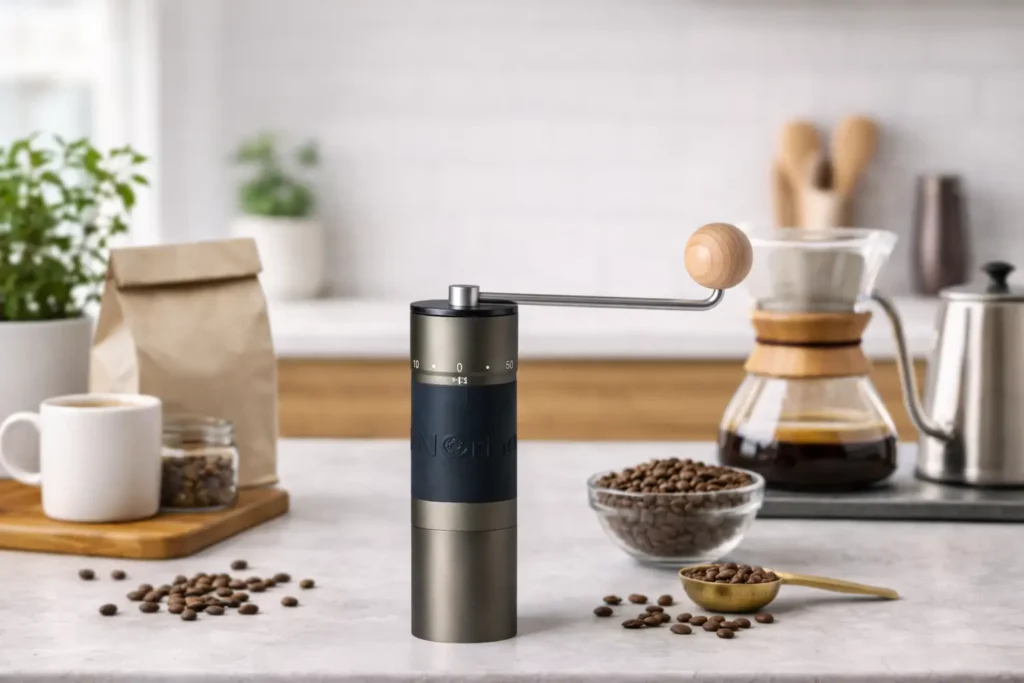
Pick: Best Compact Grinder for Small Kitchens
Why it helps: moka needs repeatable medium-fine. A compact burr grinder keeps you consistent without taking over your counter.

Pick: Best Manual Burr Grinder (Budget-Friendly)
Why it helps: more consistent than blade grinders and great for travel. Manual grinding also makes it easier to avoid “espresso-fine” choking.
For a full grinder comparison (including best grind settings and what to avoid), see: Best Coffee Grinders for Moka Pot.
2) Replacement Gaskets + Filter Plates (Fix Leaks & Off Taste)
If your moka pot is leaking, tasting off, or sending grounds into the top chamber, a gasket + filter plate replacement set is often the quickest fix. If your gasket feels stiff, cracked, or doesn’t sit flush, replace it.
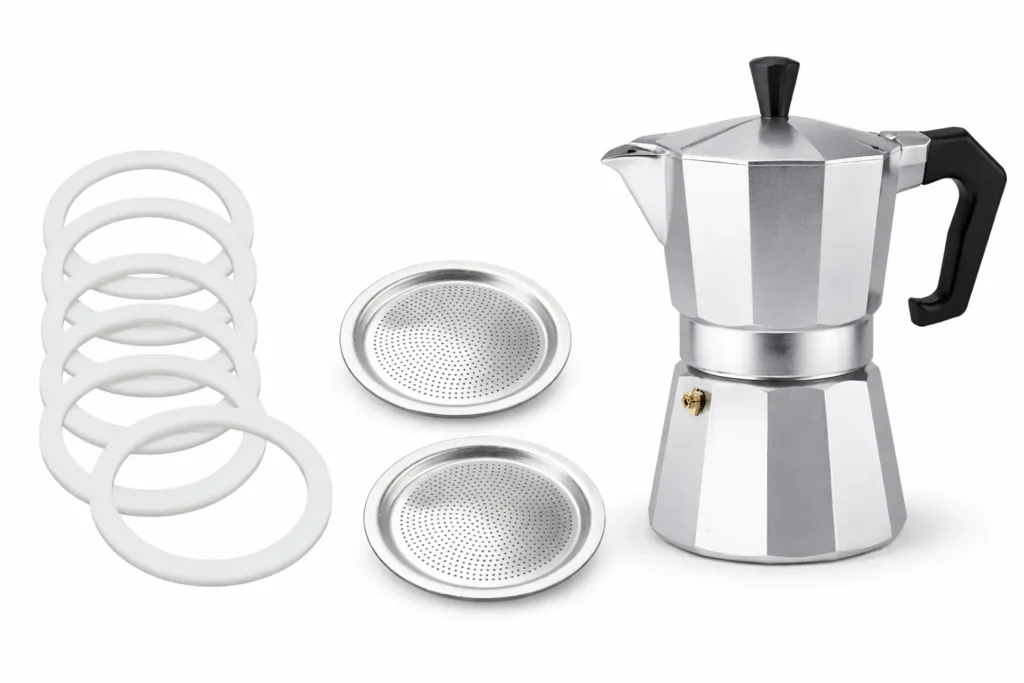
Pick: Gasket + Filter Plate Replacement Set
Best for: leaks from the middle seam, grounds in the cup, weak pressure, or old/rubbery flavors.
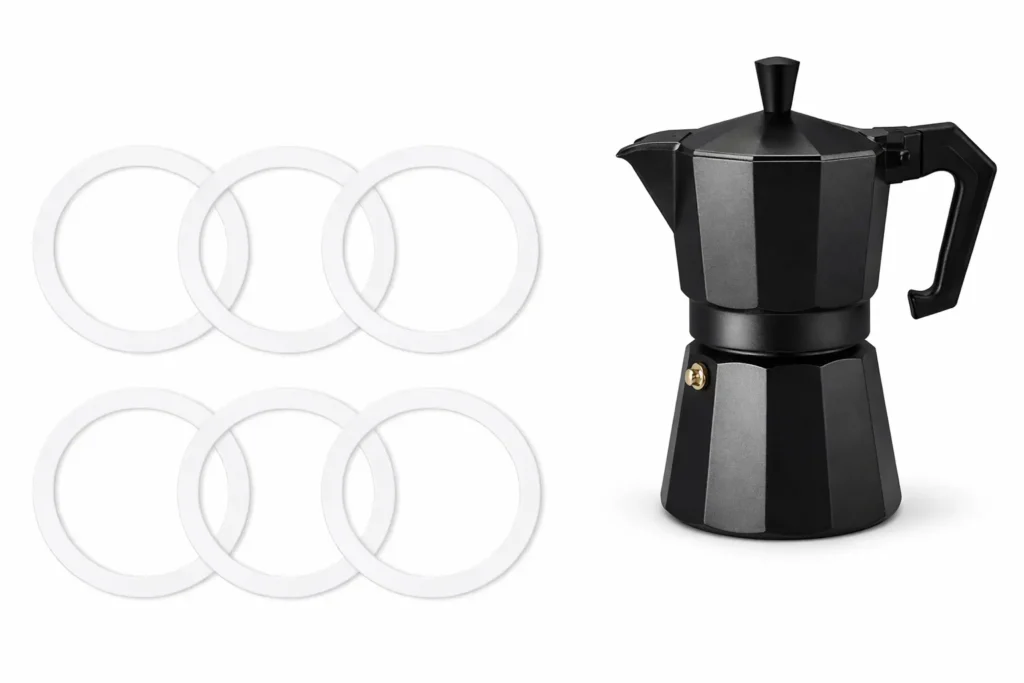
Optional: Silicone Gasket Upgrade
Best for: durability and easier cleaning. Great if you brew frequently and want fewer leaks over time.
3) Stainless Steel Moka Pots (Lower Maintenance + Cleaner Taste)
If you’re tired of metallic notes, want induction compatibility, or just prefer stainless durability, a stainless moka pot can be a worthwhile upgrade. It won’t automatically fix technique issues, but it can reduce maintenance headaches and help keep flavors cleaner.
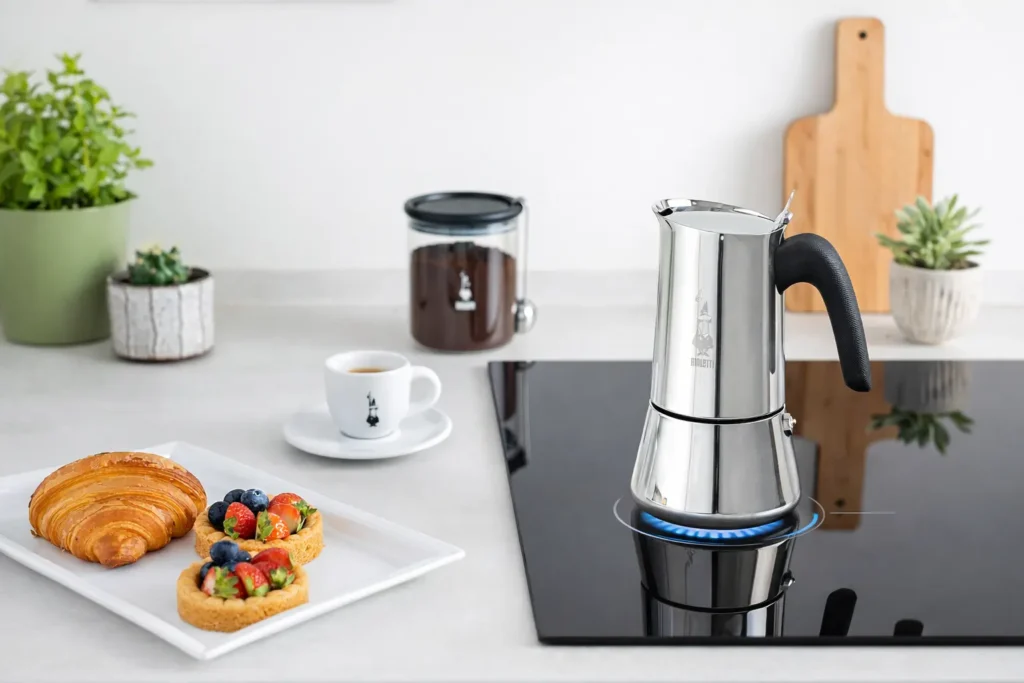
Pick: Stainless Moka Pot (Everyday Upgrade)
Best for: cleaner taste, durability, and easier upkeep. Some models work on induction.
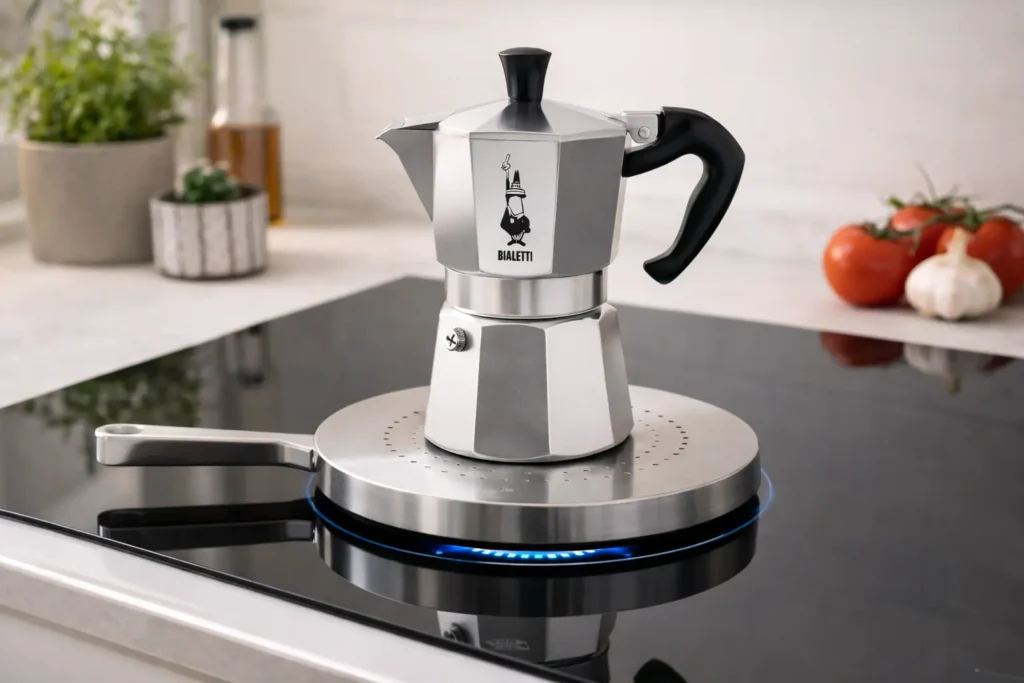
Optional: Induction Adapter Plate
Best for: using an aluminum moka pot on induction cooktops. Also helps stabilize heat on some stoves.
FAQs (Rank Math)
Why does my moka pot coffee taste bitter?
Bitterness usually comes from too much heat, a grind that’s too fine, or letting the sputtering ‘tail end’ run too long. Use medium heat, stop the brew when the stream turns pale, and cool the base under water to halt extraction. For grind help, see /best-coffee-grinders-for-moka-pot/.
What grind size should I use for a moka pot?
Aim for medium-fine: finer than drip, coarser than espresso. If the brew is weak, go slightly finer; if it’s bitter or stalls/sputters early, go slightly coarser. A burr grinder makes this far easier to repeat.
Should I tamp coffee in a moka pot basket?
No. Do not tamp. Fill the basket to the top, level it, and keep the bed loose. Tamping can choke flow and may trigger valve steam or harsh sputtering.
Why is my moka pot leaking from the middle?
Leaks usually mean the gasket is worn/hardened, the rim is dirty, or parts are misaligned. Clean the rim, ensure the basket sits correctly, and replace the gasket (often sold with the filter plate).
Why does my moka pot sputter or spray coffee everywhere?
Sputtering is typically too much heat or a choke-and-surge flow caused by an overly fine grind. Lower heat, adjust grind slightly coarser, and stop the brew once the stream turns blond/pale.
Why is no coffee coming out of my moka pot?
Most often: grind too fine, coffee packed/tamped, or clogged filter plate. Let the pot cool, clean all parts thoroughly (including filter holes), go coarser, and refill water to just below the safety valve.
Is it okay if steam comes from the safety valve?
Steam from the valve indicates excess pressure—usually a blockage. Turn off heat, let it cool fully, clean the filter and basket, and brew again with a coarser grind and no tamp.
How do I stop my moka pot coffee from tasting metallic?
New aluminum pots can taste metallic at first. Season by brewing and discarding 2–3 cycles, rinse well, avoid soap residue (especially in aluminum), and use filtered water if you have hard water.
How often should I replace a moka pot gasket?
If you brew frequently, replacing yearly is a good baseline. Replace sooner if you notice leaks, a hardened/cracked gasket, weak pressure, or grounds in the top chamber.
Should I start with cold water or hot water in the base?
Hot water starts can reduce harshness by shortening heat-up time and helping a smoother pressure rise. Use a towel to assemble safely and still stop the brew early to avoid collecting the bitter tail end.
Next Reads
Note: Replace placeholder URLs and slugs with your site’s final URLs. Replace Amazon ASIN placeholders and affiliate tag.