
Best Coffee for Keurig: K-Cup Picks for Every Taste (2026)
Editorial standards: manufacturer specifications, published documentation, practical workflow, maintenance, cost, and product limitations are separated where relevant. CoffeeGearHub does not claim hands-on testing where it has not occurred.
At a glance
What this guide covers
Compare K-Cup coffees by roast level, flavor profile, caffeine, value, freshness, and the brew settings that help each style taste better.
Editorial analysis
Roast, freshness, and brew volume matter more than brand recognition
Keurig coffee often tastes weak because a large cup size pushes more water through a small amount of coffee. A darker roast can increase perceived strength, but freshness and brew volume matter just as much. The best choice is the coffee that fits both your flavor preference and the way you actually use the brewer.
This guide uses published product descriptions, roast information, and practical brewing principles. CoffeeGearHub does not claim hands-on testing where it has not occurred, and product formulations or pack sizes can change.
The 30-Second Answer
Choose a medium roast for balanced everyday coffee, a dark or extra-bold K-Cup for maximum perceived strength, and a high-caffeine product only when caffeine—not roast intensity—is the priority. For the best freshness and lowest cost per cup, use recently roasted coffee in a compatible reusable filter.
Whatever coffee you choose, begin with a smaller cup size and use Strong Brew when available.
Compare current options
K-Cup options to compare
Product configurations, pack sizes, compatibility, sellers, and prices change. Verify the exact listing before purchasing.
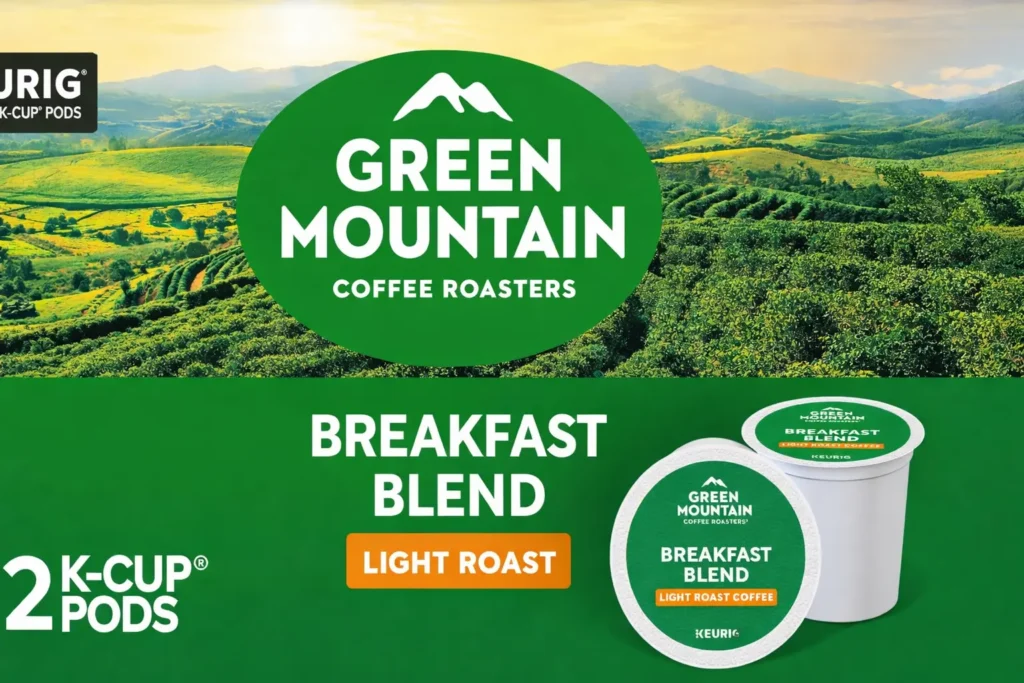 Green Mountain Breakfast BlendA lighter, approachable everyday option for drinkers who prefer a mild cup.Check current price →
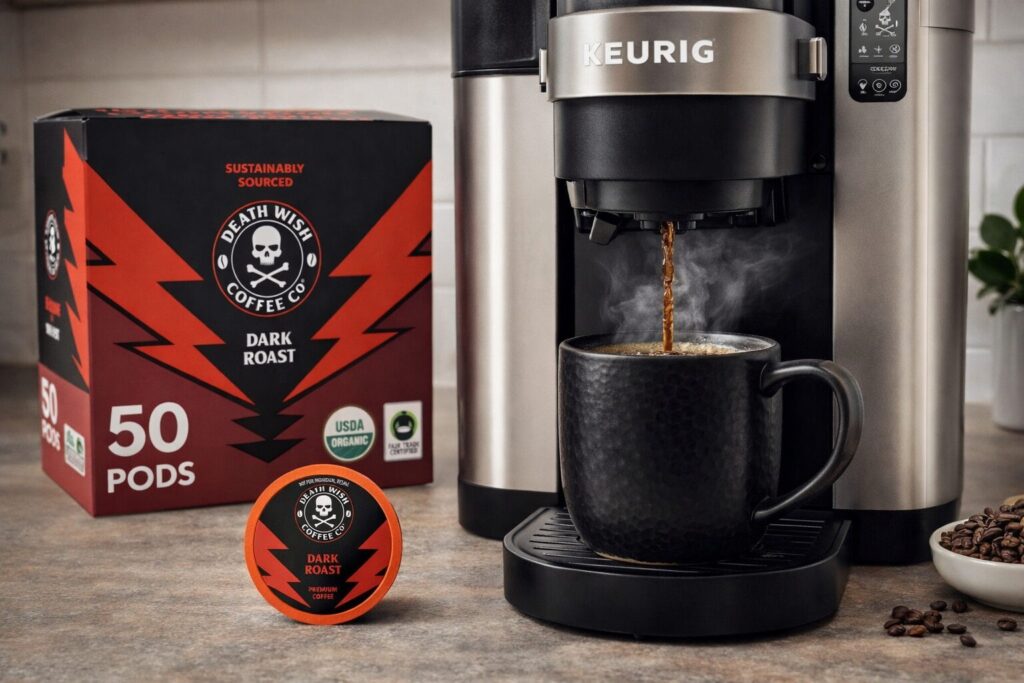 Death Wish Coffee K-CupsA high-caffeine option for buyers prioritizing intensity and caffeine.Check current price →
Affiliate disclosure: These Amazon links may earn CoffeeGearHub a commission at no additional cost to you. As an Amazon Associate, we earn from qualifying purchases. Prices and availability can change.
What “Best Coffee for Keurig” Actually Means
The best Keurig coffee is the one that stays flavorful during a short, fast brew cycle. Roast, coffee dose, freshness, and cup size matter more than branding. A balanced medium roast is the safest everyday choice, while a dark or extra-bold pod is better when intensity is the priority.
K-Cup labels mix several ideas that are easy to confuse. Dark roast describes roast development, “extra bold” usually indicates more coffee in the pod, and high-caffeine products describe stimulant content. A coffee can be dark without being highly caffeinated, or highly caffeinated without tasting especially dark.
Begin with the drink you want: balanced, strong, flavored, decaf, or high caffeine. Then match the roast and pod format to that goal and use the smallest cup size that produces the volume you need.
Dark Roast Works Best for Maximum Perceived Strength
Dark-roast pods emphasize bittersweet, smoky, and roasted flavors that remain noticeable after rapid brewing. They are a practical choice for people who add milk or sweetener because their flavor is less likely to disappear in the finished drink.
Roast level does not automatically mean more caffeine. Dark coffee often tastes stronger because of roast flavor, while caffeine depends on the coffee species, blend, dose, and serving size. Choose a high-caffeine pod only when caffeine is the actual goal.
An extra-bold dark pod can combine more coffee with a developed roast, but cup size still matters. Brewing twelve ounces through a small pod dilutes even an assertive blend. Start at six or eight ounces before judging the coffee.
Medium Roast Is the Safest Everyday Choice
Medium roasts balance sweetness, acidity, and roast character, making them forgiving across common Keurig settings. They work well black and usually remain smooth with a modest amount of milk or cream.
Breakfast blends and classic house blends often sit in this range, though brand labels are not standardized. Look at tasting notes as well as the roast name. Cocoa, caramel, and nut descriptions usually indicate an approachable cup; citrus and floral notes suggest a brighter profile.
For a mixed household, medium roast is the most useful baseline. Once you know whether it tastes too light or too roasted, move one step lighter or darker rather than buying a large variety pack blindly.
Light Roast Needs Smaller Cup Sizes and Freshness
Light-roast coffee preserves more origin character and can show fruit, floral, or citrus notes. Keurig’s short contact time can leave these coffees tasting thin or sharp, so use a small cup size and Strong Brew when available.
Freshness matters because delicate aromas fade quickly. Check the best-by date, buy a quantity you can use promptly, and keep pods sealed away from heat and sunlight. A large bargain box is poor value if the final third tastes flat.
If a light-roast pod remains weak, a reusable filter with freshly ground coffee offers more control over dose and grind. That route adds cleanup but can produce a clearer, more aromatic cup.
Freshness Matters More Than Brand Name
Ground coffee loses aroma faster than whole beans, even inside a sealed pod. Individual K-Cups protect coffee from air and moisture, but they cannot preserve it indefinitely. Newer inventory and intact seals are more valuable than a famous label stored poorly.
Buy from a seller with steady turnover, inspect boxes for damage, and avoid storing pods above the brewer where heat and steam collect. Keep them in a cool, dry cabinet and rotate older boxes forward.
Reusable filters offer the freshest option when beans are ground immediately before brewing. The tradeoff is a more hands-on routine and the need to control grind, dose, and cleaning.
Pod Format vs Reusable Filter
Sealed K-Cups deliver speed, consistent dosing, and minimal cleanup. They are ideal when convenience and predictable flavor matter most. The downside is higher cost per cup and less control over coffee freshness or dose.
A reusable filter accepts almost any suitable ground coffee and lowers packaging waste. It also makes stronger brewing easier because you can select fresh coffee and fill to the basket’s safe limit. Compatibility and grind consistency become your responsibility.
Neither format wins for everyone. Use sealed pods for effortless mornings, a reusable filter for experimentation and economy, or keep both options available for different situations.
Flavored and Decaf Pods Need Different Expectations
Flavored pods add aroma with natural or artificial flavoring, so the coffee base may taste lighter than the scent suggests. Brew them small and keep the pod holder clean because residual oils can carry flavor into the next cup.
Decaf quality depends on the coffee and processing method, not only the lack of caffeine. Medium and medium-dark decaf pods usually survive the short Keurig cycle better than delicate light roasts.
Buy small boxes before committing. Vanilla, caramel, seasonal blends, and decaf profiles are personal choices, and variety packs are useful only when every included flavor is appealing.
Cost Per Cup Is the Long-Term Expense
Recurring Cost: Compare the Cup, Not Only the Box
A low box price can hide a small pod count, while premium and high-caffeine products often cost more per serving. Divide the current package price by the number of pods and compare that figure with the ground-coffee dose you would use in a reusable filter.
Availability and discounts depend on the product and account. As an Amazon Associate, CoffeeGearHub earns from qualifying purchases and eligible program actions.
Buying larger packs can reduce cost only when you enjoy the coffee enough to finish it while fresh. A smaller box is often the better first purchase for a new roast or flavored product.
Subscription discounts can help with a proven favorite, but check the current price at each shipment. Coffee promotions and pack configurations change frequently, so yesterday’s best value may not remain the best.
Storage, Rotation, and Daily Use
Keep pods in their original box or a closed organizer in a cool, dry place. Avoid refrigerator storage; repeated temperature changes can create condensation, and coffee readily absorbs surrounding odors.
Rotate stock by using the earliest date first. Do not mix loose pods without retaining roast and date information, especially when several people share the brewer.
Clean the pod holder and exit needle periodically. Coffee residue and restricted flow can make a good pod taste bitter, weak, or stale, so maintenance belongs in any coffee comparison.
Keurig Coffee Comparison
| Coffee style | Best for |
|---|---|
| Medium roast | Balanced everyday drinking |
| Dark or extra-bold | Strong flavor and milk-based drinks |
| Light roast | Bright flavors at smaller cup sizes |
| High-caffeine blend | Caffeine priority, not necessarily darker taste |
| Flavored coffee | Dessert-like aroma and variety |
| Fresh grounds in reusable filter | Control, freshness, and lower recurring cost |
Roast names and pod formulations vary by brand. Check the current package for ingredients, caffeine claims, and serving details.
Sealed K-Cups vs Fresh Grounds: Convenience vs Control
Sealed pods are designed for repeatability. The dose, grind, and filter are fixed, so changing cup size is the main adjustment available to the user. That simplicity is valuable when several people use the same brewer.
Fresh grounds in a reusable filter introduce more variables, but they also let you correct weak coffee. You can use recently roasted beans, a medium grind, and a fuller safe dose while keeping the brew volume modest.
Choose based on the routine you will actually maintain. Fresh coffee is not an advantage if the grinder and filter make mornings frustrating, while convenience is not a bargain if every pod tastes too thin.
Who Should Buy Which Coffee?
Choose medium roast if you want a dependable black coffee or a household crowd-pleaser. Choose dark or extra-bold when the cup must remain assertive with cream, milk, or a larger serving.
Choose light roast when brightness and origin character matter, but brew it small. Choose a clearly labeled high-caffeine blend only when stimulant level is the priority, and follow the manufacturer’s serving guidance.
Choose fresh grounds in a compatible reusable filter when you value control, freshness, and lower cost more than one-step convenience. A mixed setup—pods for speed and fresh grounds for weekends—is often the most practical answer.
Editorial bottom line: There is no universal best K-Cup. A fresh medium roast is the safest starting point, a dark or extra-bold pod is the clearest route to stronger flavor, and a reusable filter is the best route to control and economy. Cup size and brewer cleanliness still determine whether any of them taste good.
As an Amazon Associate, CoffeeGearHub earns from qualifying purchases.
Prices, pack sizes, roast labels, and seller listings can change.
Frequently Asked Questions
Which K-Cup roast tastes strongest?
Dark and extra-bold pods usually create the strongest perceived flavor. Brew six or eight ounces for better concentration.
Does dark roast have more caffeine?
Not necessarily. Caffeine depends on coffee type, blend, dose, and serving size. Check explicit caffeine claims rather than inferring from roast color.
What is the best everyday Keurig coffee?
A balanced medium roast is the most forgiving starting point for black coffee and common add-ins.
Are expensive K-Cups always fresher?
No. Packaging integrity, inventory turnover, and storage matter more than price alone.
Can fresh ground coffee be used in a Keurig?
Yes, with a reusable filter that is compatible with the exact brewer model and needle layout.
Sources and Further Reading
Primary references: Keurig for brewer, pod, and accessory information; Keurig Support for settings and maintenance; and the Specialty Coffee Association for coffee freshness and brewing resources.
Continue Learning
Related Keurig guides
Brewing and maintenance
In this guide
- The 30-Second Answer
- What “Best Coffee for Keurig” Actually Means
- Dark Roast for Maximum Strength
- Medium Roast for Everyday Coffee
- Light Roast Needs Smaller Cups
- Freshness Matters More Than Brand
- Pod Format vs Reusable Filter
- Flavored and Decaf Pods
- Cost Per Cup Is the Long-Term Expense
- Storage, Rotation, and Daily Use
- Keurig Coffee Comparison
- Sealed K-Cups vs Fresh Grounds
- Who Should Buy Which Coffee?
- Frequently Asked Questions
- Sources and Further Reading
- Continue Learning