
Best Coffee Brewing Methods for Beginners
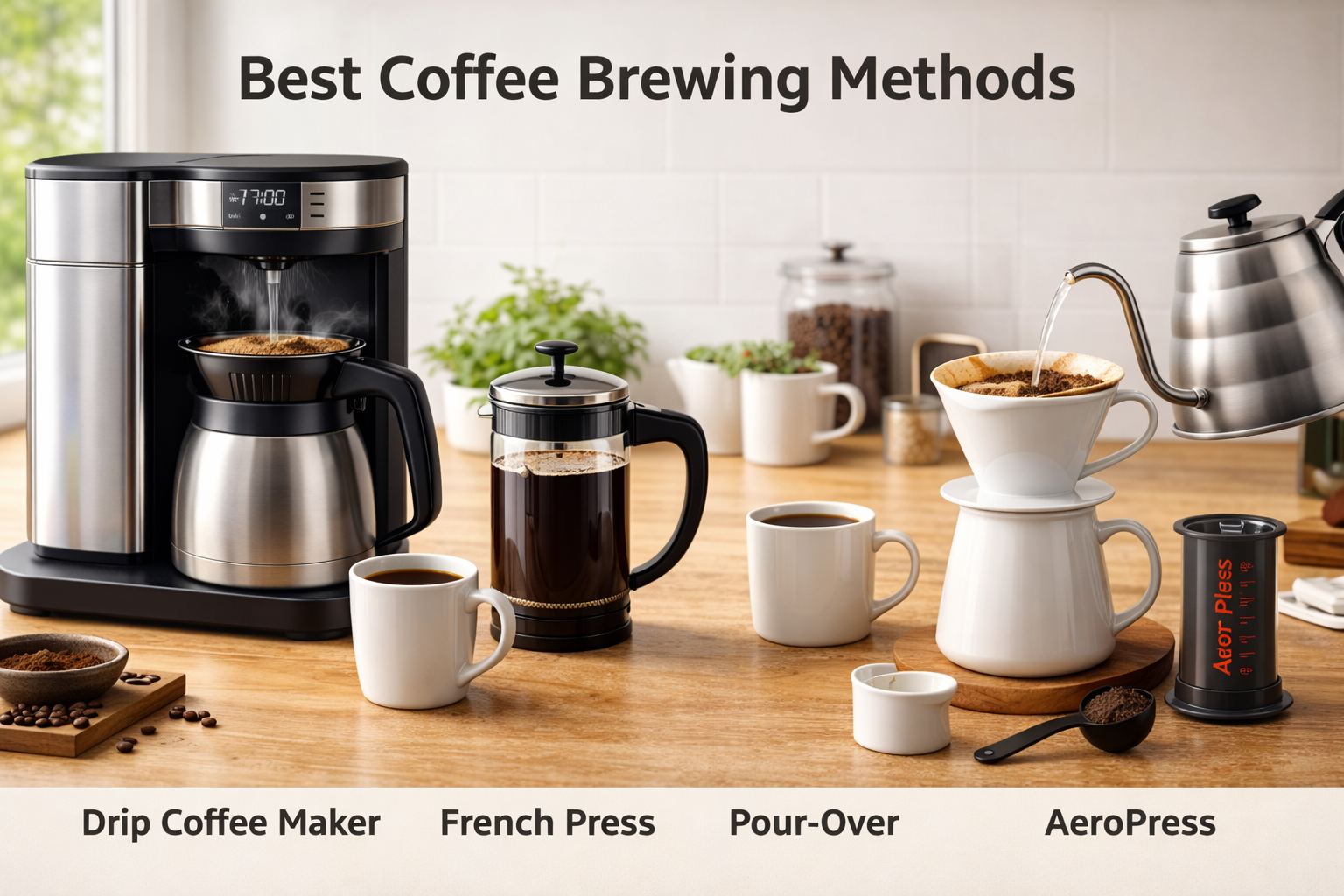
Editorial standards: this guide compares beginner brewing methods by learning curve, cleanup, cost, repeatability, batch size, and flavor control. Product examples are included as reference points rather than universal winners, and prices and availability can change.
At a glance
Start with the workflow you will actually repeat
Automatic drip is the easiest everyday path for larger batches, AeroPress is the most forgiving manual brewer, French press favors body and simplicity, and pour-over rewards more hands-on control.
Editorial analysis
The easiest method is the one with the fewest variables you dislike managing
Beginners often over-focus on which brewer can make the best coffee. A better first decision is whether you want automatic brewing, hands-on pouring, immersion, or a compact single-cup workflow.
Grind consistency, fresh coffee, water quality, and a repeatable ratio affect every method. Those fundamentals transfer even if you change brewers later.
The 30-Second Answer
For the simplest daily routine, start with an automatic drip brewer. Choose AeroPress if you want a compact manual method that is forgiving while you learn. Choose French press for a heavier cup with minimal technique, and pour-over if you actively want more control over the brewing process.
Compare current options
Start with these representative choices
These three brewers frame the main beginner workflows before you compare every method in detail.

Bonavita 8-Cup — Automatic Starting Point
A straightforward batch-brewing reference for beginners who want repeatability without manual pouring.
Best starting point if: it represents the low-friction automatic workflow for households brewing more than one cup at a time.
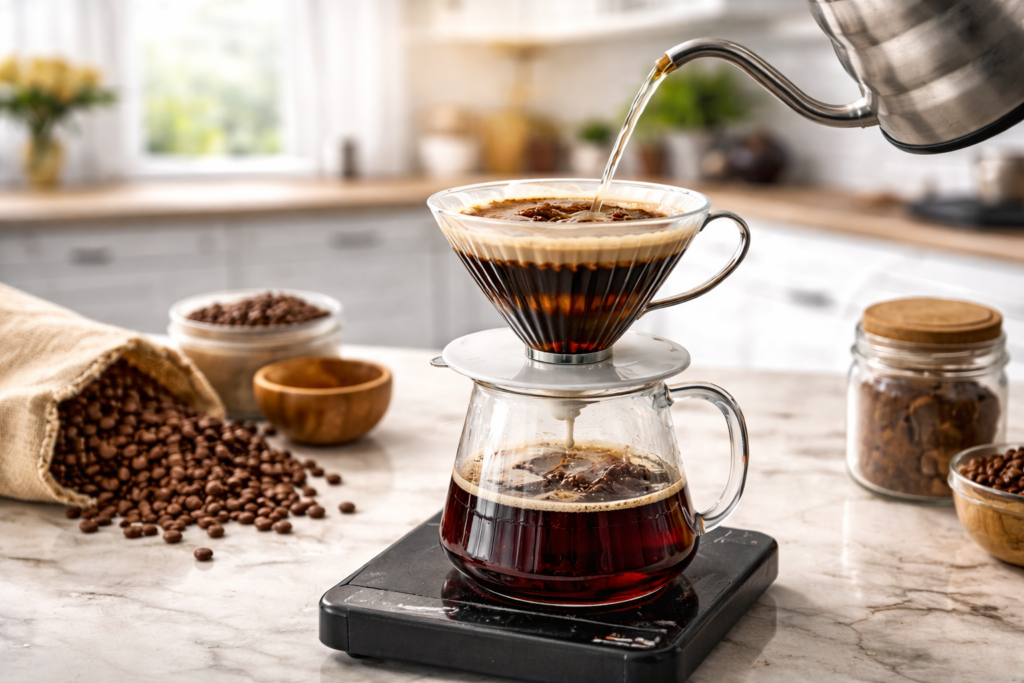
Hario V60 — Hands-On Flavor Control
A low-cost cone brewer that makes pouring technique and flow rate part of the recipe.
Best starting point if: it is the clearest reference if learning manual control is part of the appeal.
Affiliate disclosure: Amazon links may earn CoffeeGearHub a commission at no additional cost to you. Prices, sellers, bundles, and availability can change.
Drip Coffee Maker (Best Overall for Most Beginners)
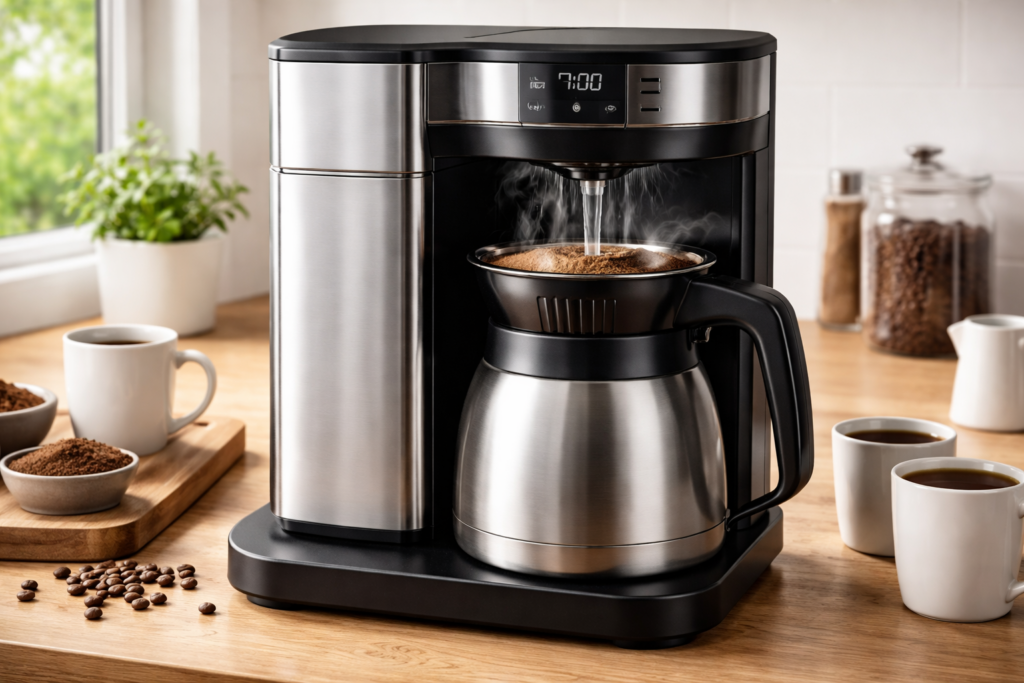
Drip coffee makers are the easiest and most reliable way to start your home coffee brewing journey. They handle water temperature, brew time, and flow rate automatically—three variables that can trip up beginners using manual methods.
When paired with freshly ground coffee, modern automatic coffee makers can produce consistently excellent results with almost no effort. The key is choosing a machine that maintains proper brewing temperature (195-205°F) and provides even water distribution.
Beginner shortcut: Drip coffee gets noticeably better when you pair a good grinder with the right beans. If your coffee tastes flat or harsh, it’s often the roast level or bean freshness—not the machine. Use the Coffee Bean Buying Guide to pick a roast style that fits your flavor goals (balanced, bold, or bright).
Why Drip Coffee Makers Excel for Beginners
Modern drip coffee makers eliminate the guesswork from the brewing process. Unlike manual methods that require you to monitor temperature, timing, and pouring technique, a quality drip machine automates these critical variables. This means you can focus on learning about coffee beans, roast levels, and grind sizes without worrying about brewing mechanics.
The best drip machines feature thermal carafes that maintain coffee temperature without burning it, programmable timers for morning convenience, and SCAA certification ensuring they meet strict brewing standards.
- Very low learning curve—add water and coffee, press start
- Ideal for brewing multiple cups (4-12 cups typical)
- Consistent results day after day
- Programmable options for wake-up coffee
- Thermal carafes keep coffee hot without burning
- SCAA-certified models ensure proper brewing temperature
What to Look for in a Beginner Drip Machine
- Temperature control: Maintains 195-205°F brewing temperature
- Shower head design: Ensures even water distribution over grounds
- Thermal carafe: Keeps coffee hot without a hot plate that burns coffee
- Simple controls: Minimal buttons and settings reduce confusion
- Brew pause feature: Allows you to pour a cup mid-brew
🏆 Recommended Beginner Pick: Bonavita 8-Cup One-Touch
The Bonavita 8-Cup One-Touch Coffee Maker is simple, fast, and brews at the right temperature without complicated settings. SCAA-certified for quality, this machine features a powerful heater that maintains optimal brewing temperature throughout the entire cycle.
Key Features:
- SCAA-certified brewing performance
- Pre-infusion mode wets grounds for better extraction
- Thermal carafe keeps coffee hot for hours
- Single button operation
- Brews full pot in 6 minutes
💰 Budget-Friendly Alternative: Cuisinart DCC-3200P1
If the Bonavita exceeds your budget, the Cuisinart DCC-3200P1 Perfectemp offers excellent value with programmable features and consistent brewing.
Key Features:
- 14-cup capacity for larger households
- Brew strength control (regular or bold)
- 24-hour programmability
- Self-clean function
- Affordable entry point
💡 Pro Tip: Pair your drip machine with a quality burr grinder. Pre-ground coffee loses flavor within days, while whole beans stay fresh for weeks.
Related: Best Coffee Makers for Everyday Brewing
French Press (Best for Bold, Full-Bodied Coffee)
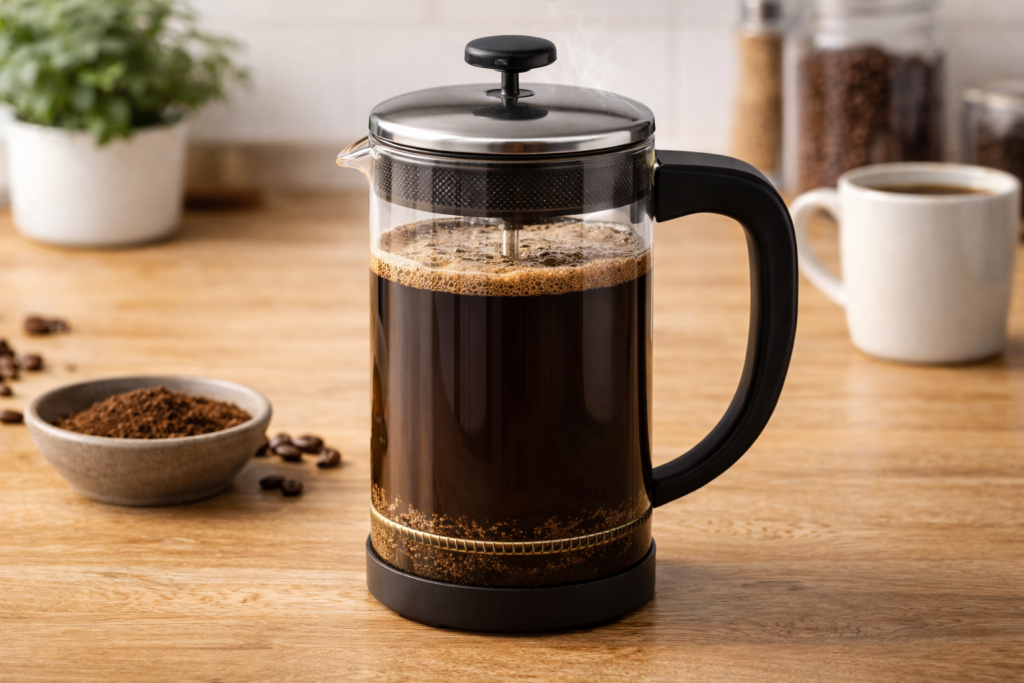
The French press is one of the simplest manual coffee brewing methods available. Coffee grounds steep fully in hot water, producing a rich, full-bodied cup with minimal effort and maximum flavor.
Because it uses immersion brewing, the French press is forgiving of timing and grind size mistakes—perfect for beginners still learning the basics. The metal mesh filter allows coffee oils and fine particles to pass through, creating a heavier body and more robust flavor profile.
Understanding French Press Brewing
French press brewing works through total immersion—coffee grounds sit in hot water for 4 minutes, extracting flavors, oils, and sediment. This method produces coffee with more body and texture than drip or pour-over methods because the metal filter doesn’t remove the natural oils that paper filters trap.
The key to great French press coffee is using a coarse grind (similar to breadcrumbs), following a consistent 4-minute steep time, and choosing beans that emphasize body and sweetness. Medium to medium-dark roasts tend to shine here—see the Coffee Bean Buying Guide for French press–friendly bean styles and what to look for on the bag.
- Low startup cost—quality models under $60
- Very forgiving brew process—hard to mess up
- No paper filters required—saves money and reduces waste
- Produces coffee with more oils and body
- Works without electricity—perfect for camping
- Easy to scale up or down
- Cleanup takes less than 2 minutes
French Press Brewing Recipe for Beginners
- Heat water to 200°F (or let boiling water sit 30 seconds)
- Add coarse ground coffee: Use 1:15 ratio (30g coffee to 450g water for a 3-cup press)
- Pour water over grounds and start timer
- Stir gently at 1 minute to ensure even extraction
- Place lid on at 4 minutes and press slowly
- Pour immediately to prevent over-extraction
🏆 Recommended Beginner Pick: Bodum Chambord French Press
The Bodum Chambord French Press (34 oz) is durable, easy to use, and produces consistently bold coffee. The classic design features a stainless steel frame, borosilicate glass carafe, and 3-part stainless steel plunger.
Key Features:
- Heat-resistant borosilicate glass
- Stainless steel frame prevents breakage
- 3-part plunger system for smooth pressing
- Dishwasher safe (disassemble first)
- Makes 8 cups (34 oz)
⭐ Premium Upgrade: Espro P7 French Press
For those ready to invest more, the Espro P7 features a double micro-filter that virtually eliminates sediment while preserving coffee oils for exceptional clarity and flavor.
Key Features:
- Double micro-filter removes 9x more sediment
- Vacuum-insulated stainless steel keeps coffee hot 60+ minutes
- No bitter grit in your cup
- Virtually unbreakable construction
Related: Coffee Grind Size Explained
Pour-Over Coffee (Best for Flavor Control)
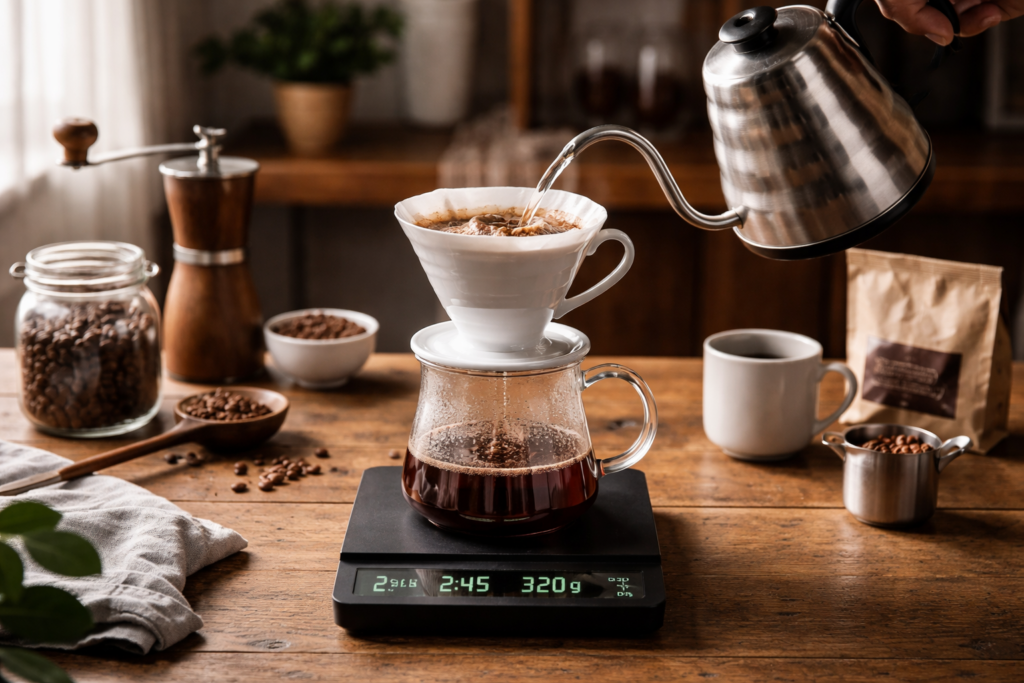
Pour-over coffee gives you more control over extraction, resulting in clean, nuanced flavors. While it’s more hands-on than a drip machine, it’s easy to learn with a simple pouring routine and produces exceptional coffee quality.
The pour-over method allows you to control water flow, saturation, and agitation—variables that significantly impact flavor. This hands-on approach helps you understand how brewing variables affect taste.
Why Pour-Over Produces Superior Flavor
Pour-over brewing excels because you control the most critical variable: water flow. By manually pouring water in a circular motion, you ensure even saturation of coffee grounds. This precision extraction produces coffee with remarkable clarity, allowing you to taste subtle flavor notes that other methods obscure.
The paper filter removes oils and fine particles, resulting in a clean cup that highlights the coffee’s origin characteristics. Pour-over is where lighter roasts and origin flavors really shine—use the Coffee Bean Buying Guide to choose beans that emphasize clarity, acidity, and aroma (instead of heavy roast flavors).
Beginner Pour-Over Technique
- Rinse filter with hot water to remove paper taste and preheat brewer
- Add 20g medium-fine coffee (similar to table salt)
- Bloom: Pour 40g water, wait 30 seconds for degassing
- First pour: Add water to 120g in circular motion (30 seconds)
- Second pour: Add water to 220g (30 seconds)
- Final pour: Add water to 320g total
- Total brew time: 2:30-3:30 minutes
- Excellent clarity and aroma
- Low equipment cost
- Easy to adjust strength and taste
- Highlights subtle flavor notes
- Minimal cleanup required
- Perfect for single servings
- Portable and travel-friendly
🏆 Recommended Beginner Pick: Hario V60 Plastic Dripper
The Hario V60 Plastic Dripper (Size 02) offers excellent heat retention and clean flavor, making it ideal for beginners. The spiral ribs and large drainage hole give you control over flow rate.
Key Features:
- 60-degree cone angle for optimal extraction
- Spiral ribs promote air flow and even extraction
- Durable polypropylene construction
- Brews 1-4 cups
- Works with standard #2 cone filters
🎯 Alternative: Kalita Wave 185
The Kalita Wave 185 features a flat-bottom design that’s more forgiving than the V60, making it excellent for beginners who want consistency without precision pouring.
Key Features:
- Flat-bottom design for even extraction
- Three drainage holes prevent stalling
- More forgiving than cone drippers
- Stainless steel construction
☕ Essential Accessory: Gooseneck Kettle
Pour-over requires precise water control. The Fellow Stagg EKG Electric Kettle offers temperature control and a precision spout for perfect pours every time.
Key Features:
- Variable temperature control (135-212°F)
- Hold mode maintains target temperature for 60 minutes
- Precision pour spout for controlled flow
- Fast heating capability
- Built-in brew stopwatch
Budget Alternative: Hario Buono Stovetop Kettle offers the same gooseneck precision without electric features.
Related: How Water Quality Affects Coffee Flavor
AeroPress (Most Forgiving Manual Method)
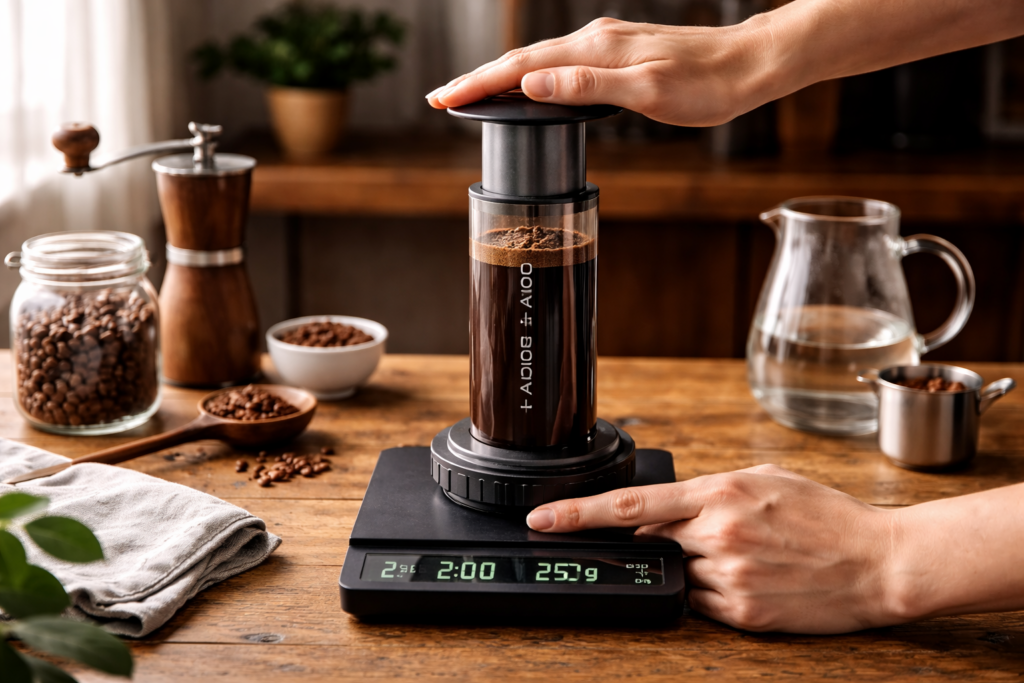
The AeroPress is one of the most beginner-friendly manual coffee brewers available. It’s fast, flexible, and produces smooth coffee with very little bitterness—ideal for those new to home brewing.
Using air pressure to push water through coffee grounds, the AeroPress combines the best aspects of immersion and pressure brewing. The short brew time (1-2 minutes) and forgiving nature make it nearly impossible to brew truly bad coffee.
Why the AeroPress Is Perfect for Beginners
The AeroPress succeeds where other methods intimidate beginners: it’s fast, forgiving, and versatile. You can use it inverted or standard, vary brew time from 1-3 minutes, and adjust pressure—each variation produces different but consistently good results.
The short contact time between water and coffee prevents over-extraction, meaning you’re far less likely to brew bitter coffee. Even if you miss your target brew time by 30 seconds, the coffee will still taste good.
AeroPress Beginner Recipe
- Set up AeroPress: Place filter in cap, rinse, attach to chamber
- Add 17g medium-fine coffee to chamber
- Pour 220g water at 200°F directly onto grounds
- Stir 10 times to ensure full saturation
- Insert plunger and pull back slightly to create vacuum
- Wait until 1:30 total then press gently for 30 seconds
- Dilute with hot water if desired for a longer coffee
- Extremely forgiving—hard to brew bad coffee
- Quick cleanup (under 1 minute)
- Great for single-cup brewing
- Produces smooth, low-acidity coffee
- Portable and durable (perfect for travel)
- Multiple brewing methods (standard, inverted, cold brew)
- Easy to experiment with recipes
🏆 Recommended Beginner Pick: AeroPress Original
The AeroPress Original Coffee Maker is compact, affordable, and nearly impossible to mess up. It includes everything you need to start brewing immediately.
What’s Included:
- AeroPress chamber and plunger
- 350 micro-filters (1+ year supply)
- Filter cap and holder
- Stirrer and scoop
- Funnel for easy loading
- Makes 1-3 cups per brew
- BPA-free plastic construction
📊 Helpful Accessory: Digital Scale
Precision matters with AeroPress. The Hario V60 Drip Scale provides accurate measurements and a built-in timer for consistent results.
Key Features:
- 0.1g precision for accurate dosing
- Built-in timer
- Auto-off prevents battery drain
- Fits AeroPress perfectly
Moka Pot (Best for Espresso-Style Coffee)
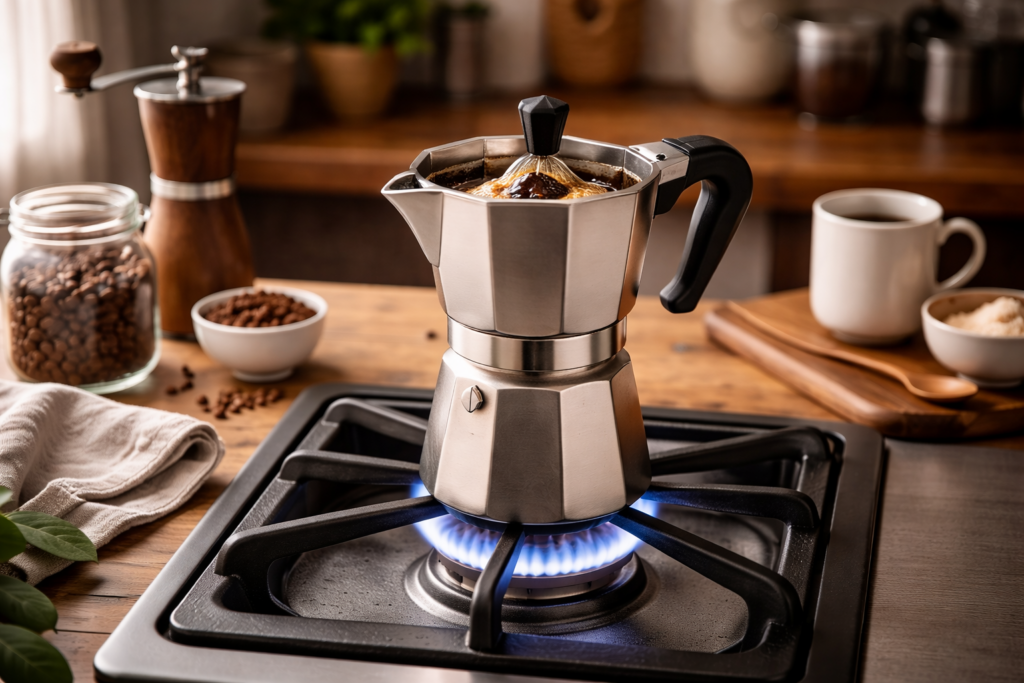
The Moka pot uses steam pressure to brew coffee, producing a bold, concentrated cup at a fraction of the cost of an espresso machine. It’s perfect for making coffee drinks like lattes and cappuccinos at home.
Understanding Moka Pot Brewing
Moka pots work through steam pressure. Water in the bottom chamber heats until steam pressure forces it upward through coffee grounds into the top chamber. The result is strong, concentrated coffee with about 1/3 the pressure of true espresso machines.
- Produces concentrated, espresso-like coffee
- Works on any stovetop (gas, electric, induction models available)
- Affordable and accessible
- No electricity required
- Perfect for milk-based drinks
- Durable—lasts decades with proper care
🏆 Recommended Pick: Bialetti Moka Express
The Bialetti Moka Express 6-Cup is the original and most trusted Moka pot, used in Italian households for generations.
Key Features:
- Classic octagonal aluminum design
- Brews 6 espresso-sized cups (10 oz total)
- Works on gas and electric stovetops
- Easy to clean and maintain
- Iconic Italian design
Comparison: Which Brewing Method Is Best for You?
Here’s a comprehensive comparison to help you choose the best coffee brewing method for your needs:
| Brewing Method | Ease of Use | Flavor Control | Best For |
|---|---|---|---|
| Drip Coffee Maker | Very Easy | Low | Daily convenience & families |
| French Press | Easy | Medium | Bold coffee lovers |
| Pour-Over | Moderate | High | Flavor-focused beginners |
| AeroPress | Easy | High | Single-cup brewing & travel |
| Moka Pot | Moderate | Medium | Strong coffee & milk drinks |
Coffee Brewing Fundamentals: What Really Matters
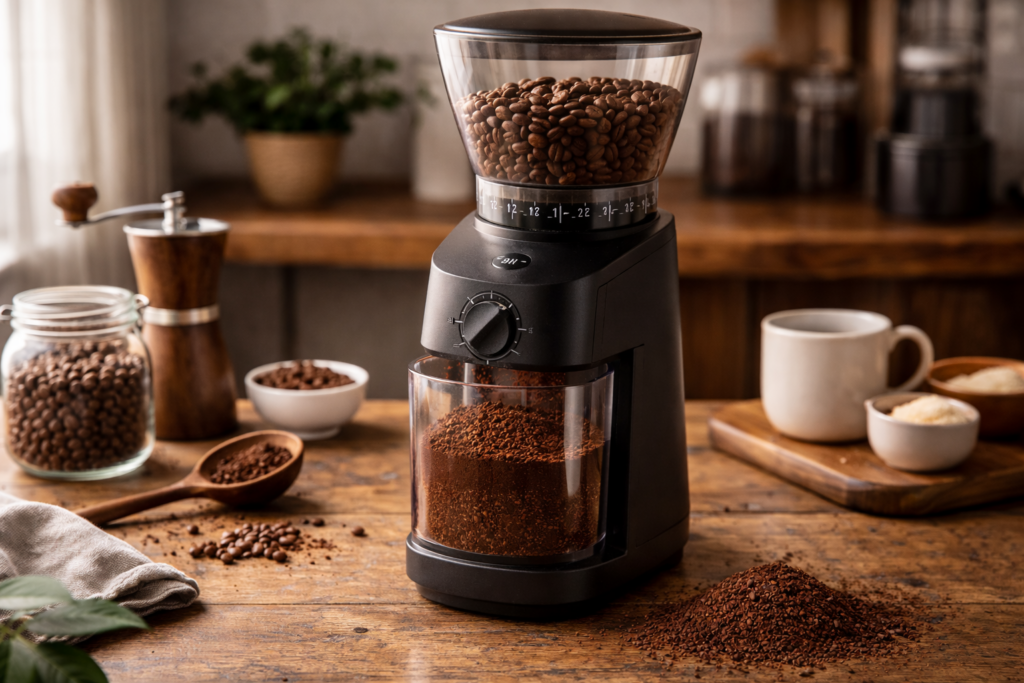
If you want a noticeable jump in coffee quality, focus on three fundamentals before upgrading your brewer:
1. Grind Size and Consistency
The wrong grind can make coffee taste sour, bitter, watery, or harsh. Each brewing method requires a specific coffee grind size:
- Coarse (breadcrumb size): French press, cold brew
- Medium-coarse: Percolator, drip coffee
- Medium (sand-like): Pour-over, AeroPress, siphon
- Medium-fine: Moka pot, cone-shaped pour-over
- Fine (table salt): Espresso
A burr grinder produces consistent particle size, which is critical for even extraction. Blade grinders create uneven grounds—some too fine (over-extracted and bitter), some too coarse (under-extracted and sour).
☕ Essential Upgrade: Burr Coffee Grinder
The Baratza Encore Conical Burr Grinder is the gold standard entry-level grinder, offering 40 grind settings and exceptional consistency.
Key Features:
- 40 grind settings from coarse to fine
- Conical burrs for consistent particle size
- Front-mounted pulse button
- Grinds directly into portafilter, bag, or bin
- Repairable and upgradeable
Budget Alternative: Hario Skerton Pro Manual Grinder offers good consistency for manual brewing methods without electricity.
2. Coffee Freshness
Bean tip: Roast level and origin can change how your coffee tastes in different brewers. If you want a quick way to buy beans that fit your method (drip vs pour-over vs French press), use the Coffee Bean Buying Guide.
Coffee freshness dramatically impacts flavor. Coffee begins losing flavor within 15 minutes of grinding, which is why pre-ground coffee never matches freshly ground beans.
Whole bean coffee remains fresh for 2–4 weeks after roasting when stored properly. Look for bags with a roast date (not just “best by”) and buy from local roasters when possible. If you want a simple way to pick beans that will taste good across drip, pour-over, and French press, use the Coffee Bean Buying Guide—it breaks down roast level, origin, and what “fresh” actually means.
- Optimal freshness window: 4-14 days after roasting
- Good freshness window: 2-4 weeks after roasting
- Declining quality: 4-8 weeks after roasting
- Stale: 2+ months after roasting
📦 Storage Solution: Coffee Canister
The Fellow Atmos Vacuum Canister removes air from the container to keep beans fresh longer.
Key Features:
- Integrated vacuum pump removes air
- Airtight silicone seal
- Holds 16 oz (450g) of beans
- Date tracking dial on lid
- Stainless steel or glass construction
3. Water Quality
Coffee is 98% water—water quality dramatically affects final flavor. Chlorine, minerals, and impurities in tap water can ruin otherwise perfect coffee.
The ideal water for coffee has moderate mineral content (50-175 ppm total dissolved solids) and is free from chlorine and off-flavors.
- Best water: Filtered tap water or third-wave water packets
- Good water: Bottled spring water with moderate mineral content
- Avoid: Distilled water, heavily chlorinated tap water, very hard water
💧 Water Solution: Filter Pitcher
The Brita UltraMax Water Dispenser removes chlorine and impurities while leaving beneficial minerals for coffee extraction.
Key Features:
- Removes chlorine, mercury, and copper
- Retains beneficial minerals
- 18-cup capacity
- Filter lasts 40 gallons (2 months)
Next step: Best Coffee Grinders for Home Brewing
Coffee Brewing Variables: Ratio, Temperature, and Time
Understanding these three variables will improve your coffee brewing technique more than buying expensive equipment:
Coffee-to-Water Ratio
Start with the “golden ratio” of 1:16 (1 gram of coffee to 16 grams of water). This produces balanced coffee that’s neither weak nor overpowering.
- Stronger coffee: 1:15 ratio
- Standard coffee: 1:16 ratio
- Lighter coffee: 1:17 ratio
Example: For 350g of water (about 12 oz), use 22g of coffee (1:16 ratio).
Water Temperature
Ideal brewing temperature is 195-205°F (90-96°C). Too hot extracts bitter compounds; too cool produces sour, weak coffee.
- Light roasts: 200-205°F (higher temp extracts more flavor)
- Medium roasts: 195-200°F (balanced extraction)
- Dark roasts: 190-195°F (lower temp prevents bitterness)
Brew Time
Each method has an optimal contact time between water and coffee:
- Espresso: 20-30 seconds
- AeroPress: 1-2 minutes
- Pour-over: 2:30-4 minutes
- Drip coffee: 4-6 minutes
- French press: 4 minutes
- Cold brew: 12-24 hours
Final Thoughts
The best coffee brewing method for beginners is the one you’ll actually enjoy using every day. Start simple, focus on good beans and proper grind size, and build confidence before upgrading equipment.
Remember: great coffee comes from fresh beans, proper grind size, good water, and correct brewing technique—not from expensive equipment. Once you choose a brewing method, the fastest way to level up is picking beans that suit that method (and your taste). Use the Coffee Bean Buying Guide as your shortcut.
Ready to start? Start Here: Home Coffee Brewing for Beginners
FAQs
What is the easiest coffee brewing method for complete beginners?
Is pour-over coffee too difficult for beginners?
Do beginners really need a coffee grinder?
Which brewing method makes the strongest coffee?
How much should I spend on my first coffee brewing equipment?
What’s the difference between light, medium, and dark roast coffee?
How do I fix bitter coffee?
How do I fix sour coffee?
Should I buy whole bean or pre-ground coffee as a beginner?
How long do coffee beans stay fresh?
What coffee beans are best for each brewing method?
Do expensive beans matter for beginners?
Affiliate Disclosure: This article contains Amazon affiliate links. We may earn a small commission from qualifying purchases at no additional cost to you. These commissions help support our content creation and ongoing research. We recommend products based on published specifications, independent expert and community evidence, availability, and fit for the use case described.
Related Articles
- Best Coffee Grinders for Home Brewing
- Coffee Grind Size Explained: Complete Guide
- How Water Quality Affects Coffee Flavor
- Coffee Bean Buying Guide: What to Look For
- Start Here: Home Coffee Brewing for Beginners
Related CoffeeGearHub guide: siphon coffee maker guide
Reference check
Sources and Verification
Brewer specifications, certifications, included accessories, and product availability can change. Confirm the exact current model and manufacturer instructions before purchase or use.
CoffeeGearHub product shortlist
Compare CoffeeGearHub product pages
Use these core beginner-setup pages to compare specifications and current verified merchant offers.
Continue Learning
Build brewing fundamentals
In this guide
- The 30-Second Answer
- Drip Coffee Maker (Best Overall for Most Beginners)
- French Press (Best for Bold, Full-Bodied Coffee)
- Pour-Over Coffee (Best for Flavor Control)
- AeroPress (Most Forgiving Manual Method)
- Moka Pot (Best for Espresso-Style Coffee)
- Comparison: Which Brewing Method Is Best for You?
- Coffee Brewing Fundamentals: What Really Matters
- Coffee Brewing Variables: Ratio, Temperature, and Time
- Final Thoughts
- FAQs
- Sources and Verification
- Continue Learning