
Last Updated: April 2026 • 18–22 min read • Complete Home Roasting Guide: Why Freshness Matters + Roast Science + Beginner Workflow + 3 Roasters Compared + Green Bean Sourcing + Storage + Costs + Safety + FAQs
Affiliate disclosure: Some links on this page are affiliate links. CoffeeGearHub may earn a commission if you buy through them, at no additional cost to you.
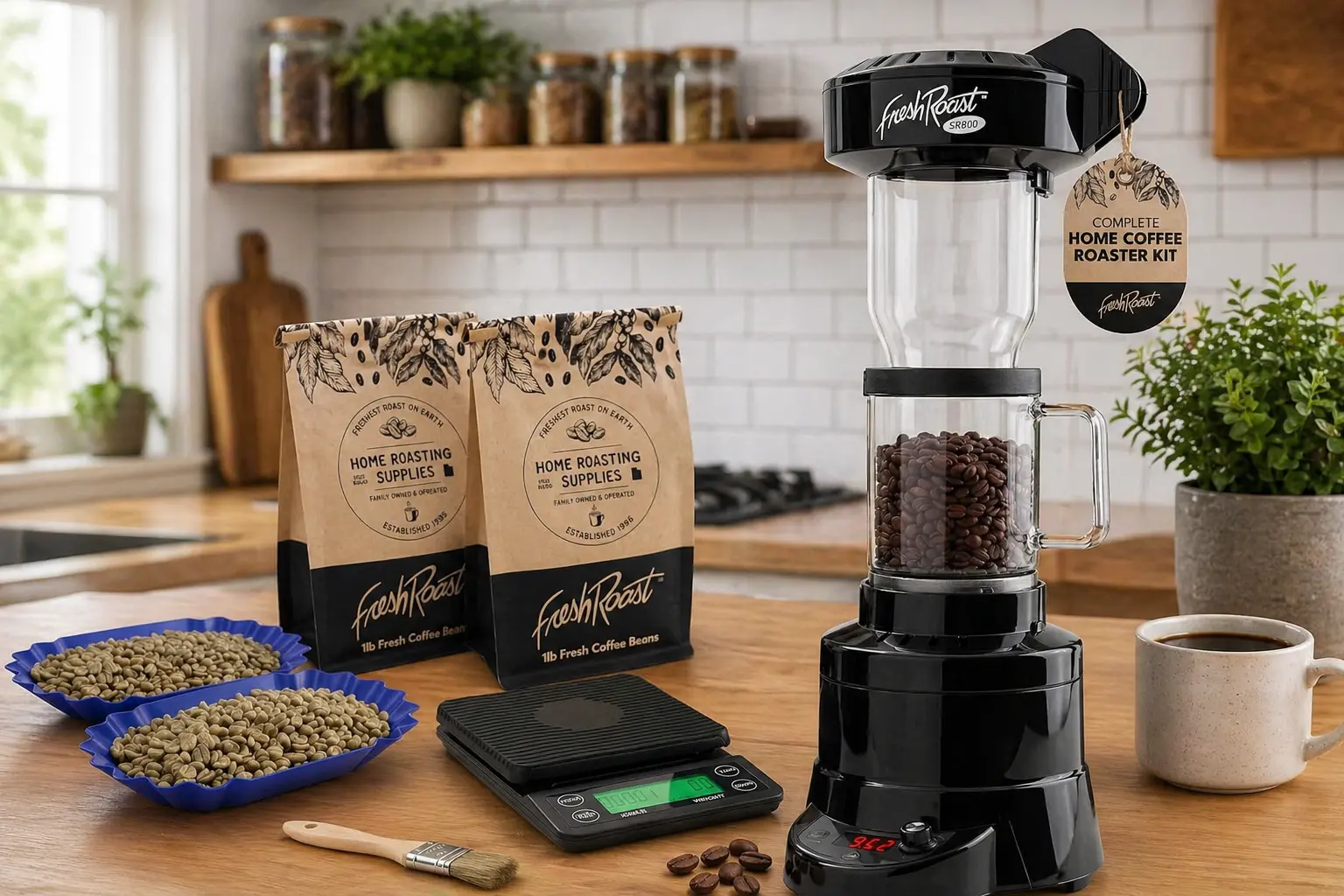
If you have already upgraded your espresso machine, dialled in your grinder, and bought a gooseneck kettle but the coffee in your cup still tastes flat, the issue almost certainly is not your equipment — it is the beans. Specifically, how fresh they are and how they were roasted. Roasted coffee is perishable, and most grocery-store coffee reaches the shelf weeks or months past roast date. Even direct-from-roaster online orders typically arrive 5–10 days after roasting. Home coffee roasting compresses that timeline to hours.
This guide covers the full home roasting layer: why freshness matters, what happens chemically during the roast, a beginner-friendly workflow from green beans to first cup, the three most popular home coffee roasters compared side by side (the Fresh Roast SR540, the Fresh Roast SR800, and the Behmor 2000AB Plus), where to buy green coffee beans, how to store coffee correctly, real cost considerations, ventilation and safety guidance, and a full FAQ. If you are new to specialty coffee, start with our Coffee Gear Hierarchy guide for how beans, grinder, and brewer rank in flavour impact, then return here for the deeper roasting science.
✍️ Editorial note: This guide is researched and written by the editors at CoffeeGearHub.com using published roasting science, SCA roast development standards, manufacturer specifications, and established specialty-coffee community knowledge. All product links are affiliate links — we may earn a commission at no cost to you. Affiliate Disclosure: CoffeeGearHub.com participates in the Amazon Services LLC Associates Program. As an Amazon Associate, we earn from qualifying purchases. Product details, availability, and pricing change frequently — always verify current information on the retailer’s product page.
🛒 Ready to start home roasting? Jump straight to our top picks.
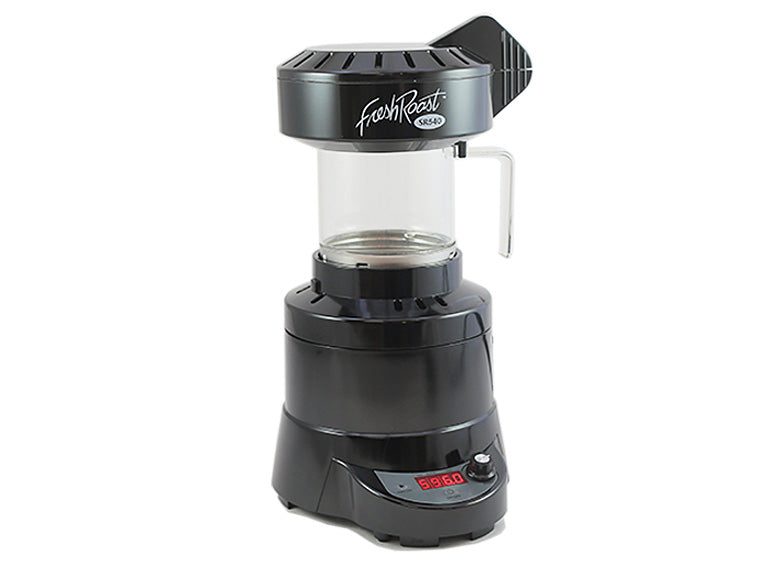
Fresh Roast SR540
Best entry-level roaster
Fresh Roast SR800
Best overall home roaster
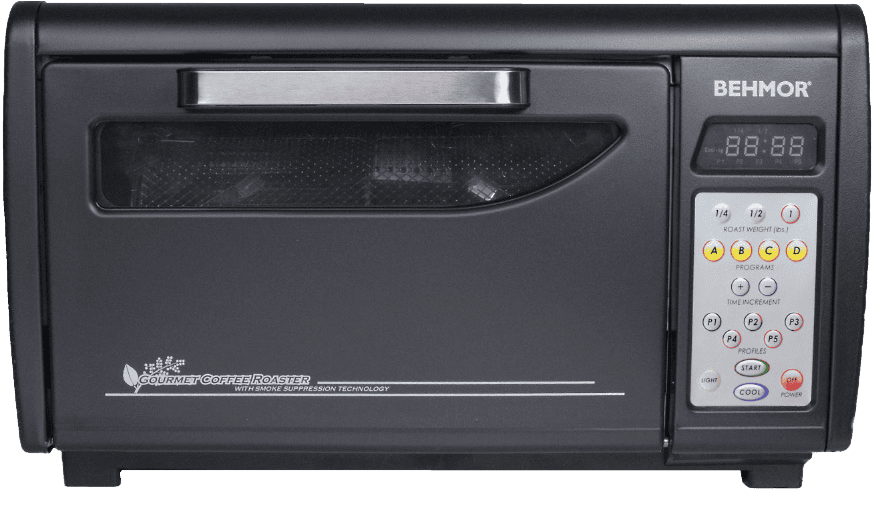
Behmor 2000AB Plus
Best larger-batch drum
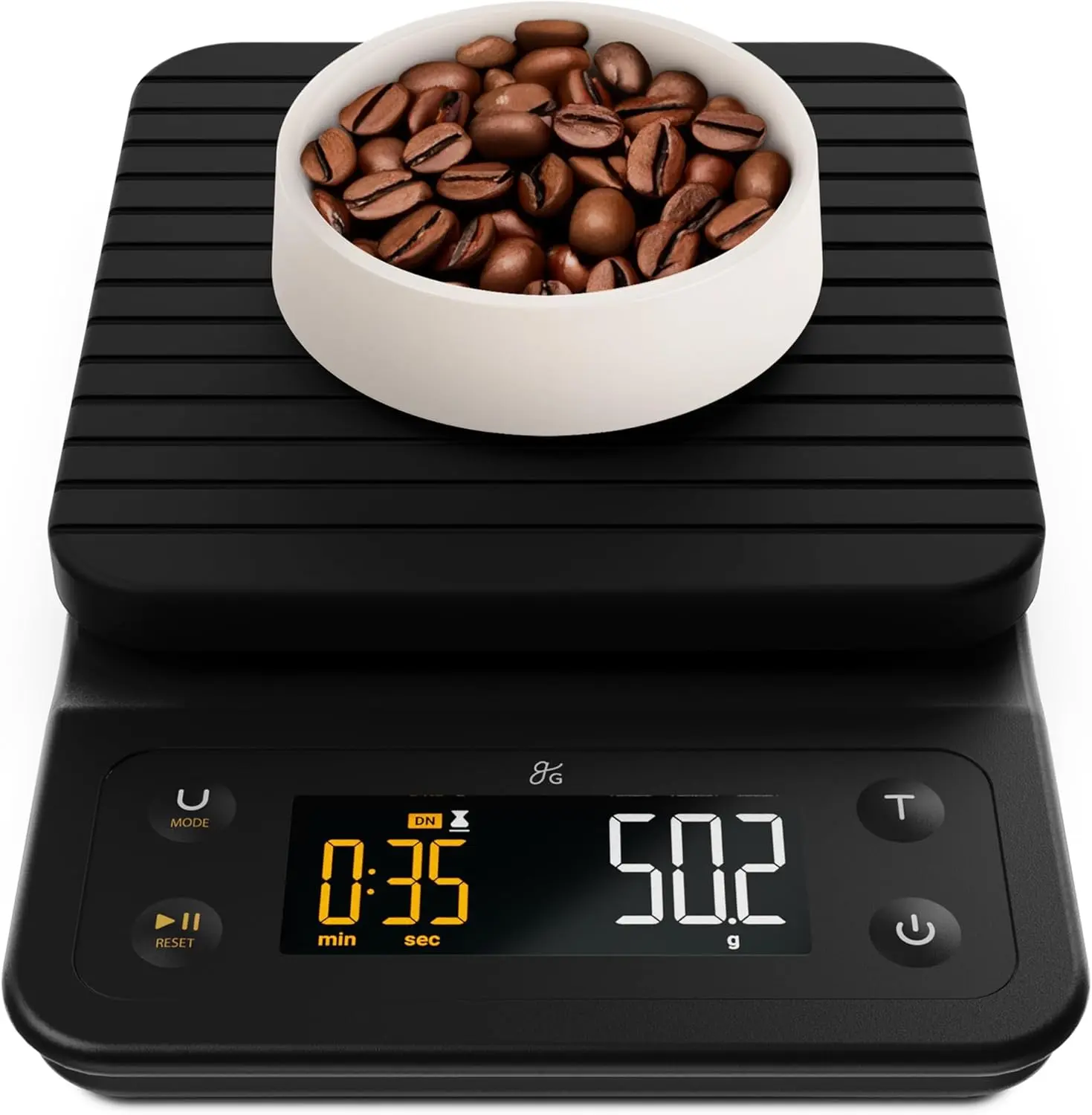
Coffee Scale
Essential for batch consistency
As an Amazon Associate, CoffeeGearHub earns from qualifying purchases. See full roaster comparison →
Is Home Coffee Roasting Worth It? The 60-Second Answer
Yes — home coffee roasting is worth it if you drink coffee daily, value peak freshness, want to experiment with origins and roast levels, and don’t mind a short learning curve. Green coffee beans typically cost less than retail roasted coffee, and roasting at home compresses the roast-to-cup timeline from weeks down to hours. The trade-offs are real: smoke, ventilation needs, an upfront equipment cost, and the time to learn the process. For occasional drinkers or apartment dwellers without good ventilation, buying from a quality local roaster is usually the better path.
- Freshness: roast today, brew this week — vs grocery beans that may be 2–6 months old
- Cost: green coffee is typically cheaper per pound than retail roasted; bulk discounts compound the savings
- Variety: direct access to single origins, microlots, and unusual processing methods
- Control: dial roast level for your brew method — light for filter, medium-dark for espresso
- Learning curve: first 5–10 batches will be inconsistent — consistency comes with a roast log
- Ventilation: roast near a window, under a vent hood, in a garage, or outdoors — smoke is non-negotiable
Jump to What You Need
☕ Wondering if it’s worth the effort
Read Why Freshness Matters and The Coffee Gear Hierarchy — then decide using the Who Should Try It section.
🔥 Ready to start roasting
Jump to the Beginner Workflow — green bean to first cup in nine steps, including first crack and second crack reference.
🛒 Choosing your first roaster
Go to Best Home Coffee Roasters — Fresh Roast SR540, SR800, and Behmor 2000AB Plus compared side by side.
🌱 Buying green coffee beans
Jump to Where to Buy Green Coffee — recommended suppliers and the best origins for first-time home roasters.
Table of Contents
The Coffee Gear Hierarchy — Why Beans Matter Most
At CoffeeGearHub we use a simple framework called the Coffee Gear Hierarchy to help readers prioritise upgrades. Every variable that lands in your cup originates somewhere in this stack, and the impact of each tier on flavour is dramatically uneven. Most home baristas spend the bulk of their budget on Tier 3 — the brewer — while ignoring Tier 1, the beans themselves. Home roasting flips that order, giving you direct control over the most flavour-impactful variable in the chain.
| Tier | What it controls | Flavour impact | Where home roasting lives |
|---|---|---|---|
| Tier 1 — Coffee | Origin, processing method, roast level, freshness | Largest impact — sets the ceiling for every variable below | ✅ Direct control via home roasting |
| Tier 2 — Grinder | Particle-size consistency and grind precision | Major impact — uniformity drives extraction balance | Independent upgrade |
| Tier 3 — Brewing equipment | Espresso machine, dripper, French press, AeroPress | Moderate impact when Tiers 1 and 2 are correct; minimal when they aren’t | Independent upgrade |
The takeaway: a $3,000 espresso machine running stale grocery-store beans will produce a worse cup than a $40 AeroPress running coffee roasted yesterday. Home coffee roasting is one of the most direct upgrades available to a home barista because it targets Tier 1 directly.
Why Coffee Freshness Matters — and When Beans Taste Best
Roasted coffee is perishable. Once beans leave the roaster they begin degassing carbon dioxide and oxidising, which gradually mutes the aromatic compounds that make specialty coffee taste like specialty coffee. The window in which a bean tastes its best is shorter and more specific than most coffee drinkers realise.
| Days post-roast | Best use | What to expect in the cup |
|---|---|---|
| 0–2 days | Rest period | Often too gassy — uneven extraction, especially for espresso |
| 3–7 days ✓ Filter peak | Pour-over, drip, AeroPress | Bright, aromatic, balanced — the filter coffee sweet spot |
| 7–21 days ✓ Espresso peak | Espresso, milk drinks | Sugars settle; crema, body, and balance improve |
| 21–30 days | Decline phase | Aroma fades; acidity dulls; sweetness flattens |
| 30+ days | Stale | Flat, papery, cardboard-like notes — no recipe change recovers it |
Here is the catch: by the time most grocery-store coffee reaches the shelf, it is weeks or months past roast date — if a roast date is even printed on the bag at all. Even direct-from-roaster online orders typically arrive 5–10 days post-roast. Roasting at home compresses that timeline to hours: you decide when the beans are roasted, how dark they go, and when they enter the cup.
What Is Home Coffee Roasting? (Beginner Explanation)
Home coffee roasting is the process of heating green (unroasted) coffee beans until they undergo the chemical and physical transformations that produce drinkable roasted coffee. A typical home roast takes 8–20 minutes depending on the equipment, batch size, and target roast level. The two dominant home roasting methods are fluid-bed (air) roasting, which uses hot air to suspend and roast the beans, and drum roasting, which tumbles beans against a heated drum.
With home roasting you control five things that retail roasted coffee never gives you direct access to:
- Roast level — light, medium, medium-dark, or dark
- Flavour development — emphasising acidity, sweetness, or body
- Bean origin and processing — single origins, microlots, naturals, anaerobics
- Batch timing — roast only what you will drink in the next 1–3 weeks
- Cost per pound — green coffee typically costs less than retail roasted coffee
First Crack, Second Crack, and Roast Levels
Roasting is a sequence of overlapping chemical and physical reactions that build flavour. Understanding the phases — and especially the two audible “cracks” that mark major transitions — is the foundation of repeatable home roasting. When you know what is happening in the bean, every adjustment becomes deliberate rather than guesswork.
- Drying phase (yellowing): moisture evaporates; beans turn from green to pale yellow over the first 3–5 minutes
- Maillard reaction: amino acids and sugars react, forming hundreds of aroma compounds
- Caramelisation: sugars brown and deepen, building sweetness and body
- First crack: a popcorn-like popping sound around 196–205 °C (385–401 °F) as steam ruptures the bean — the start of light roast territory
- Development phase: the window between first and second crack where you choose between light, medium, or medium-dark
- Second crack: a quieter, snappier crackle around 224–230 °C (435–446 °F) — oils migrate to the surface; this is dark roast territory
Common Home Roast Levels at a Glance
| Roast level | Drop point | Flavour profile | Best brew method |
|---|---|---|---|
| Light (Cinnamon / City) | Just after first crack | Bright acidity, fruit, floral, tea-like | Pour-over, AeroPress, Chemex |
| Medium (City+ / Full City) ✓ Most versatile | ~30–60 sec after first crack | Balanced, caramel sweetness, mild acidity | Drip, pour-over, espresso |
| Medium-Dark (Full City+ / Vienna) | Just before second crack | Heavier body, chocolate, smoky-sweet | Espresso, milk drinks |
| Dark (French / Italian) | Into second crack | Bold, smoky, low acidity, oily surface | Strong espresso, dark blends |
🔬 Why “drop point” matters more than total roast time: two batches roasted to identical total times can taste completely different if one was dropped at the start of first crack and the other 90 seconds later. The development phase between first and second crack is where Maillard sweetness, perceived acidity, and body are determined. Track time-to-first-crack and development time separately in your roast log — these two numbers, more than any other variables, determine the cup. The widely cited specialty coffee guidance is to aim for development time at 20–25% of total roast time for most filter-friendly profiles.
How to Roast Coffee Beans at Home (Step-by-Step Beginner Guide)
This is the workflow CoffeeGearHub recommends for first-time home roasters using a fluid-bed or drum roaster. It produces consistent, repeatable results from the very first batch when followed in order. Change one variable per roast, log everything, and let the data — not memory — guide your next adjustment.
- Source quality green coffee beans from a reputable supplier (Sweet Maria’s, Burman Coffee Traders, Bodhi Leaf, Happy Mug). Start with washed-process beans from Colombia, Brazil, or Guatemala — they are forgiving and easy to roast consistently.
- Choose a roasting method — fluid-bed (air) roaster for clean, bright cups; drum roaster for fuller body; stovetop popper for low-cost experimentation.
- Weigh your batch using a digital scale. Most home roasters perform best at 80–90% of their rated maximum capacity — see the roaster comparison below for specific batch sizes.
- Preheat the roaster per the manufacturer’s instructions before charging the beans.
- Charge the beans and start the roast log: record start time, fan setting, heat setting, and ambient temperature. The bean colour will progress from green to yellow to tan to brown.
- Listen for first crack and note the time. From here, you decide your drop point: light (just after first crack), medium (30–60 sec after), medium-dark (just before second crack), or dark (into second crack).
- Cool the beans rapidly when you reach your drop point. Most home roasters have a built-in cool cycle; otherwise transfer beans to a metal colander and stir vigorously to stop development.
- Degas and rest: store with the lid loose for 12–24 hours so CO2 can escape, then seal. Rest 2–4 days before brewing filter coffee, 7–14 days for espresso.
- Brew, taste, and log results. Adjust a single variable on the next roast — tweaking grind time, batch size, or fan/heat curve based on what the cup tells you.
Pro tip: a simple roast log (date, bean, weight in/out, time to first crack, total time, fan/heat settings, and tasting notes) is the fastest path to consistency. Spreadsheet, notebook, or roast-tracking app — whichever you’ll actually update.
Best Home Coffee Roasters Compared (Beginner to Larger Batches)
Disclosure: CoffeeGearHub may earn a commission on qualifying purchases through affiliate links on this page, at no cost to you. Our recommendations are editorially independent. CoffeeGearHub.com participates in the Amazon Services LLC Associates Program. As an Amazon Associate, we earn from qualifying purchases. Product details, availability, and pricing change frequently — always verify current information on the retailer’s product page.
The right home coffee roaster depends on three things: batch size (how much coffee you drink per week), level of control (presets vs full manual), and how much smoke you can vent. Below are the three most-recommended home roasters at the entry, mid, and larger-batch tiers — the same models the specialty home-roasting community has converged on over the past decade.
Home Coffee Roaster Comparison at a Glance
| Roaster | Type | Max batch | Control style | Best use case |
|---|---|---|---|---|
| Fresh Roast SR540 | Air (fluid-bed) | ~4 oz / ~113g | 9 heat × 9 fan, manual | Entry-level, single drinker |
| Fresh Roast SR800 ✓ Best overall | Air (fluid-bed) | 6–8 oz / 170–227g | 9 heat × 9 fan, manual | Daily home roaster, mod-friendly |
| Behmor 2000AB Plus | Drum | 1 lb / 454g | 5 presets + manual tweaks | Larger batches, indoor smoke management |
🌱 Best Entry-Level: Fresh Roast SR540
Best for: first-time home roasters, single-cup drinkers, and anyone testing the hobby before committing to a larger machine.
The Fresh Roast SR540 is the easiest on-ramp to home coffee roasting. It is a fluid-bed (hot air) roaster with the same 9-level heat × 9-level fan control logic as its bigger sibling the SR800, so the muscle memory transfers cleanly if you upgrade later. Roasts run roughly 7–10 minutes including cool, the chamber is small enough to hide on a kitchen shelf, and the controls are forgiving for new roasters. The smaller chamber means you will roast more often — fine for a 1–2 cup-per-day household, limiting if you brew for a family.
- Capacity: approximately 4 oz / 113g of green coffee beans
- Controls: 9 heat levels and 9 fan-speed levels, plus built-in timer
- Skill transfer: identical control logic to SR800 — easy upgrade path
Disclosure: CoffeeGearHub may earn from qualifying purchases.
🏆 Best Overall: Fresh Roast SR800
Best for: daily home roasters and intermediates who want a meaningful batch size with full manual control.
The Fresh Roast SR800 is the CoffeeGearHub recommended all-around home coffee roaster. It hits the sweet spot of price, capacity, and manual control: 6–8 oz batches (220–250g is the consistently reported sweet spot for cleanest results), 1750W of heat, 9-level heat and 9-level fan independently adjustable mid-roast, and a footprint compact enough to live on the counter. The SR800 is also the most aftermarket-friendly home roaster on the market — extension tubes, PID temperature controllers, and roast-logging integrations are all widely available if you want to grow into the hobby.
- Capacity: 6–8 oz washed coffees; reduce to 6 oz max for naturals or high-chaff beans
- Power: 120V, 1750W with 9 heat × 9 fan independent control
- Roast time: 8–15 minutes plus cool cycle
- Upgrade path: extension tubes and PID controllers widely available — long-term hobby investment
Disclosure: CoffeeGearHub may earn from qualifying purchases.
🔥 Best Larger-Batch Drum: Behmor 2000AB Plus
Best for: households drinking lots of coffee, hobbyists who prefer drum-roast body, and anyone roasting in a kitchen where smoke management matters.
The Behmor 2000AB Plus is the home roaster of choice when batch size and indoor smoke management are priorities. It is a drum roaster with thermostatically controlled quartz roasting elements; Behmor lists 1630W total rated power, a steel mesh roasting drum with selectable ¼ lb / ½ lb / 1 lb capacity, five preset roast profiles (P1–P5) tuned for different bean densities, and a dual-speed motor (16 / 32 RPM). The standout feature is its patented smoke-suppression system — combined with the lighted interior viewing window and on-board safety shutoff, it makes indoor roasting more practical than with most fluid-bed alternatives. The drum geometry and slower thermal ramp also produce a fuller, rounder cup that espresso drinkers often prefer.
- Capacity: selectable ¼ lb, ½ lb, or 1 lb (up to 454g) — largest in this comparison
- Heating: thermostatically controlled quartz roasting elements; Behmor lists 1630W total rated power with dual-speed drum (16 / 32 RPM)
- Smoke suppression: patented system + lighted interior viewing window — the most kitchen-friendly home roaster
- Profiles: 5 presets (P1 fastest → P5 slowest) tuned for hard, soft, and island bean densities; manual time tweaks during roast
Disclosure: CoffeeGearHub may earn from qualifying purchases.
⚖️ Every roaster above requires precise batch weights for repeatable results. A digital coffee scale with 0.1g resolution lets you measure green-bean charges, track roast loss (typically 12–20% by weight), and reproduce a winning batch exactly the next time. The single highest-leverage accessory in the home roasting kit.
As an Amazon Associate, CoffeeGearHub earns from qualifying purchases.
Where to Buy Green Coffee Beans
A great roaster will not fix mediocre green coffee. The single biggest variable inside Tier 1 of the Coffee Gear Hierarchy is the bean itself — its origin, processing method, density, and freshness as a raw agricultural product. The good news: green coffee is shelf-stable for 6–12 months when stored correctly, so you can buy in bulk from specialty suppliers without worrying about it ageing the way roasted coffee does.
- Sweet Maria’s — extensive cupping notes, roast profiles, and beginner-friendly sample packs; the standard reference for new home roasters
- Burman Coffee Traders — wide origin selection, sample packs, and bulk pricing on 5+ lb orders
- Bodhi Leaf Coffee Traders — strong specialty single-origin and microlot offerings
- Happy Mug Coffee — affordable per-pound pricing and small-batch sample boxes
Where to start: washed-process beans from Colombia, Brazil, or Guatemala. They are forgiving — a wide window of acceptable roast profiles, predictable behaviour through first crack, and cup characteristics that reward small adjustments rather than punishing them. Save naturals, anaerobics, African washed lots, and high-altitude SHB beans for after your roast curve is repeatable. Order a 4-bean sample pack rather than committing to 5 lb of a single origin on day one.
How to Store Green and Roasted Coffee
| Coffee state | Storage method | Shelf life | Key rule |
|---|---|---|---|
| Green coffee beans | Breathable bag (jute or GrainPro), cool dry dark place | 6–12 months | Do not use airtight — green coffee needs to breathe |
| Just-roasted (first 12–24 hr) | One-way valve bag or jar with lid loose | — | Vent CO2; do not seal completely |
| Roasted, daily use | Airtight opaque container at room temperature | 2–4 weeks peak | Skip the fridge — humidity and odours hurt flavour |
| Roasted, long-term | Vacuum-sealed single-dose portions in freezer | 3–6 months | Thaw fully sealed before grinding to prevent condensation |
Home Coffee Roasting Cost Considerations
True cost-per-cup depends on your roaster, bean choice, and how much coffee you drink. We do not list specific roaster prices on this page because Amazon pricing changes frequently — always check the current price on the retailer’s product page. The variables that drive total cost are predictable, however, and worth modelling before buying.
- Roaster purchase: entry-level air roasters (SR540) are the lowest barrier; drum roasters (Behmor) cost more upfront but handle larger batches
- Green coffee per pound: typically lower than retail roasted specialty coffee, with bulk discounts on 5+ lb orders
- Roast loss: beans lose 12–20% of weight during roasting (mostly water) — factor this into your per-pound finished cost
- Energy use: most home roasters draw 1000–1750W for 10–20 minutes per batch — a small line item on the electricity bill
- Accessories: digital scale, cooling tray, valve storage bags, and optional roast-logging apps
For households drinking 1+ pound of coffee per week, home roasting often pays back the equipment cost within a year. For lighter drinkers (under half a pound per week), the math is closer to break-even and the case for home roasting becomes about freshness and craft rather than savings.
Safety, Ventilation, and Setup Tips
- Ventilate: roast next to an open window, under a vented range hood, in a garage, or outdoors when weather permits — non-negotiable
- Plan for smoke: light and medium roasts produce modest smoke; dark roasts produce significantly more
- Never leave a hot roaster unattended — keep a metal lid or fire extinguisher accessible
- Heat-safe surface: use a stone, metal, or tile surface; keep flammable items at least 18″ away
- Empty the chaff collector between batches to reduce fire risk — chaff is highly flammable
- Cool fully before cleaning and follow the manufacturer’s cleaning schedule for chambers, drums, and filters
Who Should Try Home Coffee Roasting?
Home roasting is not for everyone. The technology and ingredient access make it easier than at any point in the past, but it still demands ventilation, time, and a willingness to iterate. The honest filter: if any two of the criteria below apply, home roasting will likely reward the investment. If none do, buying from a quality local specialty roaster will deliver better coffee with less hassle.
- Daily coffee drinkers consuming 1+ pound per week
- Espresso enthusiasts who want fresh beans on demand for dialling in shots
- Specialty coffee fans curious about origin, processing, and roast development
- DIYers who enjoy hands-on, iterative hobbies with measurable results
- Cost-conscious drinkers looking to lower long-run cost per pound
- Anyone with reliable ventilation — kitchen vent hood, garage, or accessible window
Final Takeaway
Home coffee roasting is one of the most direct upgrades available to a home barista because it targets Tier 1 of the Coffee Gear Hierarchy — the beans themselves — instead of stacking another piece of brewing equipment on top of stale coffee. The science is approachable, the equipment is mature, and the green coffee market is more accessible than at any point in the past. If you want maximum freshness, more origin variety, and a hands-on hobby with measurable rewards, the Fresh Roast SR540 is a low-risk on-ramp, the Fresh Roast SR800 is the strongest all-around pick for daily home roasters, and the Behmor 2000AB Plus is the right choice for larger batches and integrated smoke suppression. Build the roast log, change one variable per batch, and within a month you will have a locked recipe per origin that consistently outperforms anything sitting on a grocery shelf.
FAQs: Home Coffee Roasting
Is home coffee roasting worth it?
Home coffee roasting is worth it if you drink coffee daily, value peak freshness, want to experiment with origins and roast levels, and don’t mind a short learning curve. Green coffee beans are typically less expensive than retail roasted coffee, and roasting at home compresses the roast-to-cup timeline from weeks to hours. For occasional drinkers or anyone unable to manage smoke and ventilation, buying from a quality local roaster is usually the better choice.
How long does it take to roast coffee at home?
Most home coffee roasts take 8–15 minutes for the roast itself plus a 3–5 minute cool cycle. Fluid-bed (air) roasters like the Fresh Roast SR540 and SR800 finish in 8–12 minutes; drum roasters like the Behmor 2000AB Plus take 18–22 minutes total when roasting larger batches up to one pound.
How long should home-roasted coffee rest before brewing?
Rest home-roasted beans 2–4 days for pour-over and filter brewing, and 7–14 days for espresso. The first 12–24 hours after roasting produces heavy CO2 release — keep the storage container loosely sealed during this window so the bag does not balloon. Once degassing slows, seal the container fully.
What’s the difference between air roasters and drum roasters?
Air (fluid-bed) roasters use hot air to suspend and roast the beans — they are fast, produce a brighter, cleaner cup, and excel at smaller batches. Drum roasters tumble beans against a heated drum — they roast more slowly, develop more body and a fuller mouthfeel, and handle larger batches up to one pound. Many home roasters eventually own one of each.
Is home coffee roasting cheaper than buying roasted beans?
Often yes, on a per-pound basis. Green coffee beans typically cost less than retail specialty roasted coffee, and bulk discounts on five-pound or larger orders compound the savings. Households drinking one pound or more per week often recover the cost of an entry-level home roaster within a year. Total cost depends on your roaster, bean choice, energy use, and weekly consumption.
How much smoke does home coffee roasting produce?
Light and medium roasts produce modest smoke that is usually manageable near an open window or under a vent hood. Dark roasts produce significantly more smoke. The Behmor 2000AB Plus uses patented smoke-suppression technology that reduces visible smoke compared with most air roasters but does not eliminate it entirely. Always roast in a well-ventilated area.
What is first crack and second crack in coffee roasting?
First crack is a popcorn-like popping sound that occurs around 196–205 °C (385–401 °F) as steam ruptures the bean — it marks the start of light roast territory. Second crack is a quieter, snappier crackle around 224–230 °C (435–446 °F) where oils migrate to the surface — it marks the start of dark roast territory. The window between first and second crack is the development phase where you decide between light, medium, or medium-dark roast levels.
Can I roast coffee on the stovetop?
Yes — a heavy skillet or stovetop popcorn popper can roast small batches and is a low-risk way to test the hobby before buying a dedicated machine. Expect uneven results, more smoke, more chaff cleanup, and more attention required compared to a fluid-bed or drum roaster. Stovetop roasting is a good entry experiment, not a long-term solution.
Continue Learning
💡 New to Amazon? Try Prime free for fast shipping on picks like these.
HOME ROASTING GUIDES
Roaster picked — now ready to dial in your daily brew? Our complete AeroPress brew guide covers every variable that affects the cup, the three-phase dial-in system, and seven full recipes — the natural next stop once your home-roasted beans are resting in the jar.
☕
Written by the CoffeeGearHub Editorial Team
CoffeeGearHub is an editorial coffee resource. Our guides are researched using published roasting science, SCA roast development standards, manufacturer specifications, and established specialty-coffee community knowledge. We review and update our pillar content regularly. About CoffeeGearHub →
Sources & methodology
This guide is research-based. CoffeeGearHub does not claim in-house product testing unless explicitly documented. Key references used for specifications, safety guidance, and coffee science include: