
Last Updated: April 2026 • 24–28 min read • Complete Behmor 2000AB Plus Review: Specs + Drum Build + P/A/B Control System + 5 Roast Profiles + Origin Recipes + Troubleshooting + Head-to-Head Comparisons + Cleaning Guide + FAQ
Affiliate disclosure: Some links on this page are affiliate links. CoffeeGearHub may earn a commission if you buy through them, at no additional cost to you.
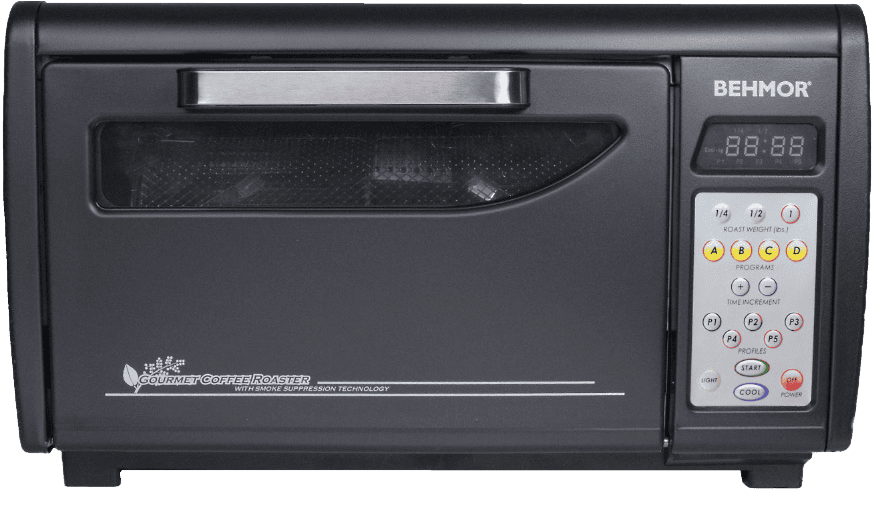
The Behmor 2000AB Plus occupies a category of exactly one: it is one of the better-known home drum roasters built around integrated smoke-suppression technology, and it has held that position for years. That feature can make smoke management easier for home roasting, but it does not replace ventilation, clearance, or supervision. The Behmor supports batches up to 1 lb (454g) when used according to the manufacturer’s loading and safety instructions. The 2000AB Plus is a drum-style roaster powered by a 1630W heating system using thermostatically controlled quartz roasting elements, with a rotating drum basket that tumbles beans through the heat for 16–22 minutes before an automatic cool cycle. The control system — five presets (P1–P5), two heat curves (A/B), and a +/− timer — is simpler and more approachable than the 9-level independent controls of a Fresh Roast SR800, and for most households roasting weekly, that simplicity is a feature rather than a limitation.
This is the complete CoffeeGearHub review and roast profile reference for the Behmor 2000AB Plus: full specifications, drum build quality, the P1–P5 and A/B control system, a step-by-step first roast walkthrough, five named roast profiles (City through Full City+, plus a natural-process-specific profile), origin-specific recipes for Ethiopia, Colombia, Brazil, and Sumatra, troubleshooting for the seven most common Behmor issues, a head-to-head comparison against the Fresh Roast SR800, SR540, and Aillio Bullet R1, a cleaning schedule, and a complete FAQ. If you are still deciding whether home roasting is right for you at all, start with our complete home coffee roasting guide, then return here for the full Behmor review.
✍️ Editorial note: This review is researched and written by the editors at CoffeeGearHub.com using hands-on roasting sessions on the Behmor 2000AB Plus, the published Behmor owner’s manual and support documentation, manufacturer specifications, real-world roast logs from the Home-Barista forum and Sweet Maria’s community boards, and SCA roast development standards. All product links are affiliate links — we may earn a commission at no cost to you. Affiliate Disclosure: CoffeeGearHub.com participates in the Amazon Services LLC Associates Program. As an Amazon Associate, we earn from qualifying purchases. Product details, availability, and pricing change frequently — always verify current information on the retailer’s product page.
🛒 Quick picks: Behmor 2000AB Plus + the essentials most owners add first
Behmor 2000AB Plus
Best for larger-batch drum roasting
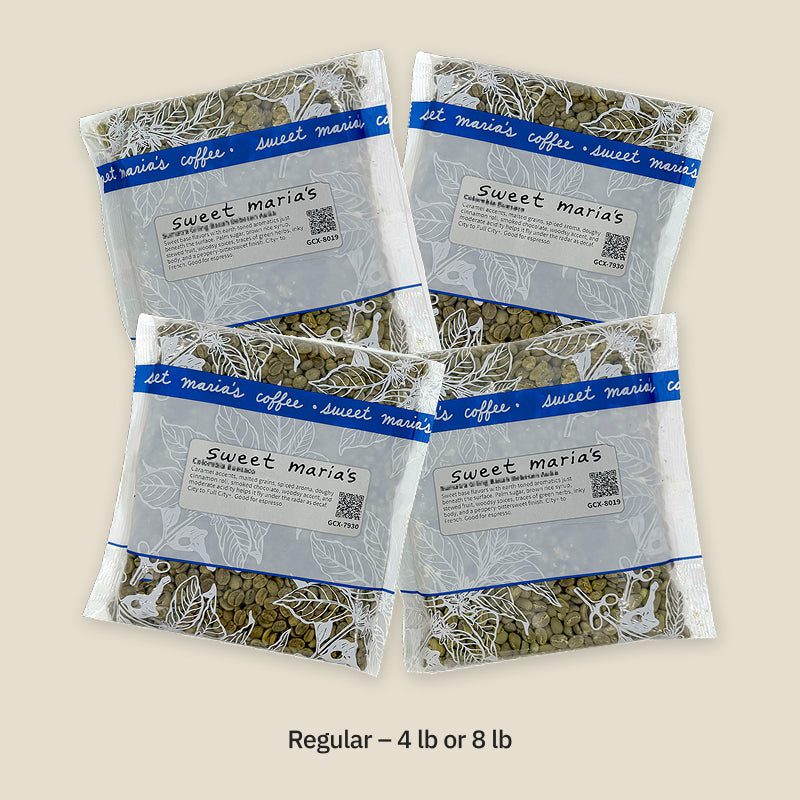
Green Coffee Sampler
Multi-origin 5 lb starter pack
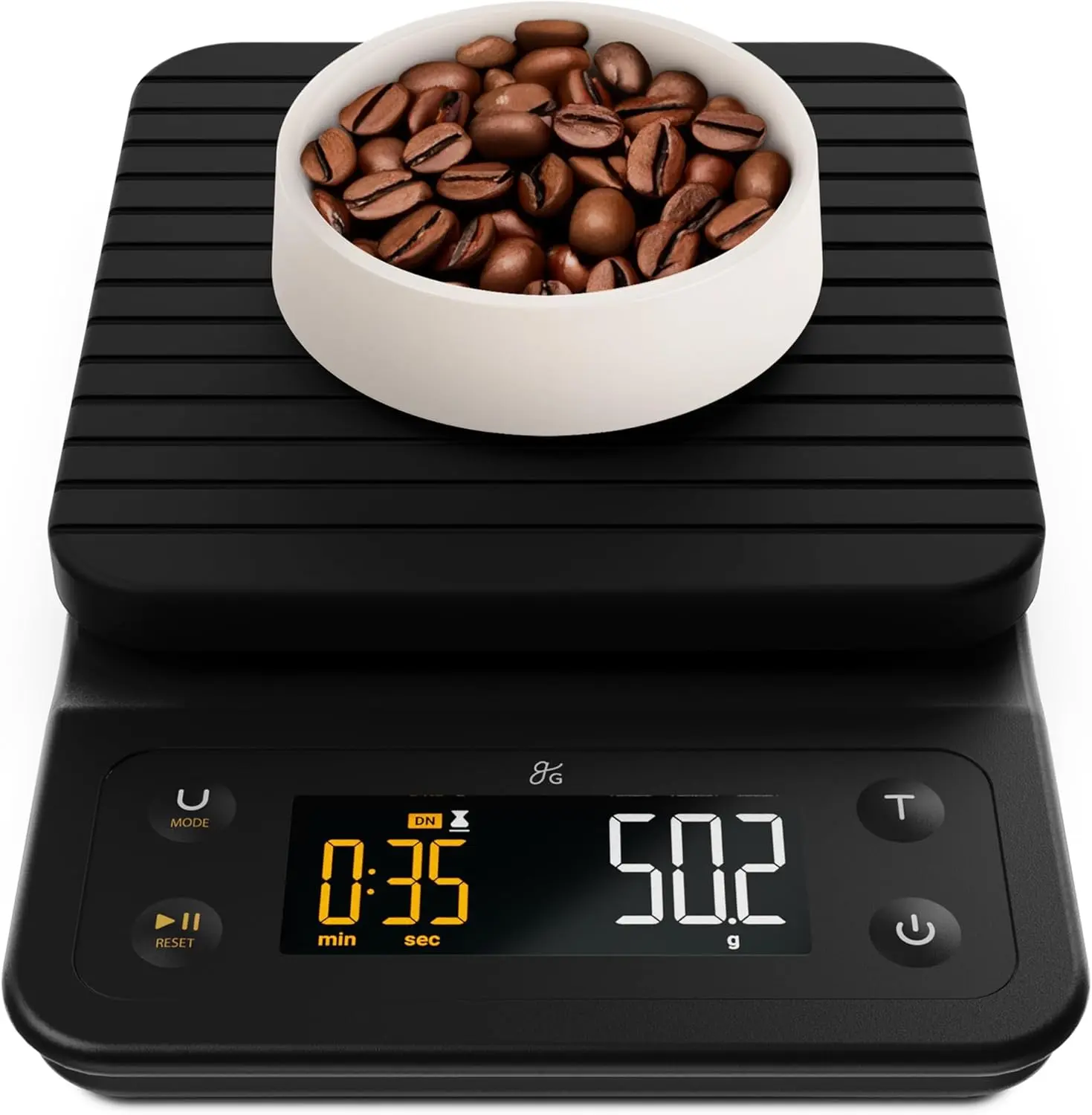
Coffee Scale
0.1g precision — batch consistency
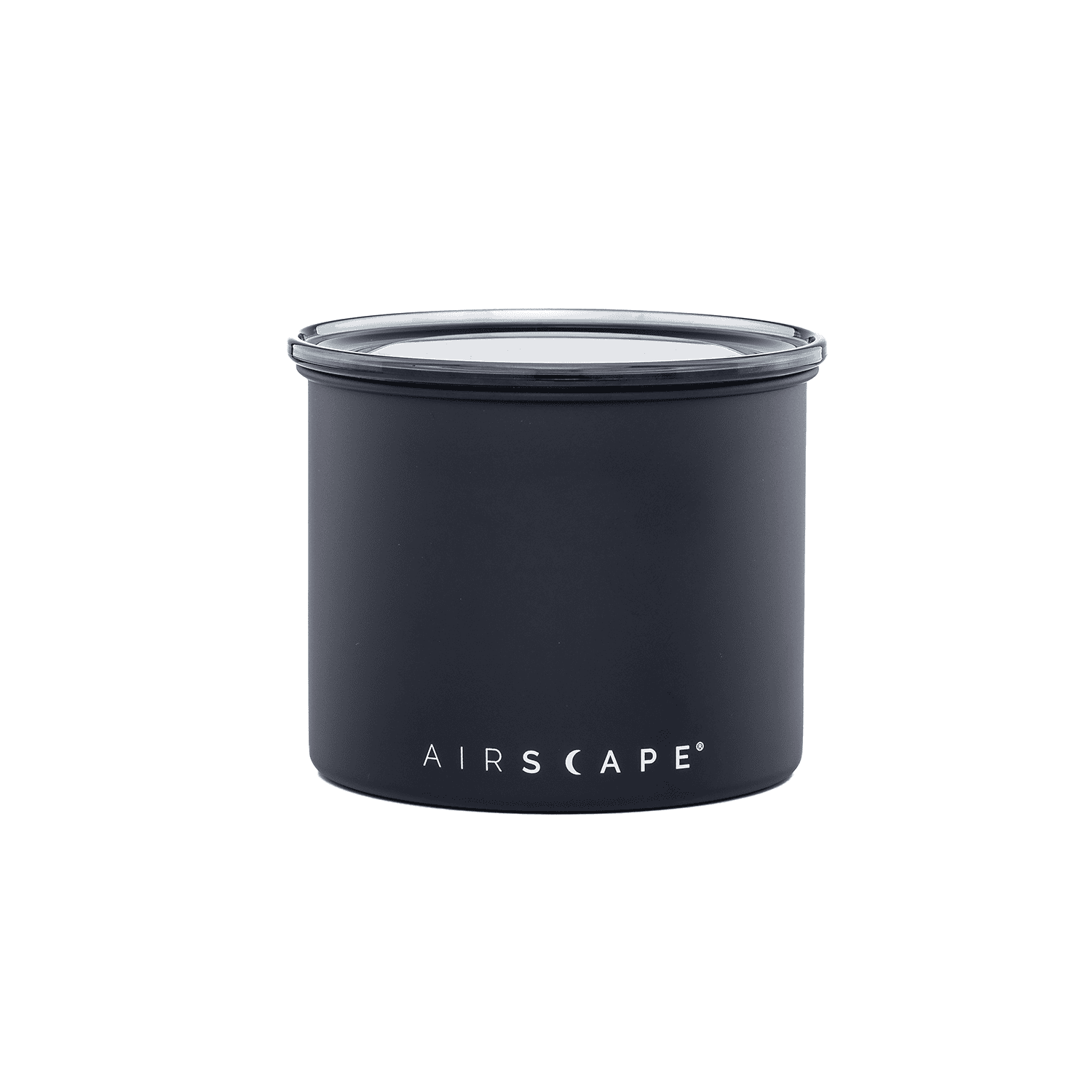
Degassing Canister
Airscape / Fellow Atmos — 500g size
As an Amazon Associate, CoffeeGearHub earns from qualifying purchases. Jump to the verdict →
Behmor 2000AB Plus Review — The 60-Second Verdict
The Behmor 2000AB Plus is a home drum roaster designed with integrated smoke-suppression technology, but it still requires ventilation, clearance and active supervision — and for the household that roasts 1 lb per week indoors, that makes it the best choice on the market. Its patented smoke suppression burns off a meaningful portion of roasting smoke before it leaves the chamber, its 1 lb capacity produces enough roasted coffee for a week of daily brewing in a 2–4 person household, and its preset-driven control system (P1–P5, A/B heat curves, and +/− timer adjustment) is approachable enough for a first-time roaster yet flexible enough to dial in a Colombia or Brazil across multiple roast levels. The drum action produces a different flavour profile than fluid-bed roasters — often denser, more balanced, and less forward on the high-end brightness that makes pour-over pop, but more suitable for espresso blends and everyday drinking coffee. The trade-offs are real: roast times are 16–22 minutes (roughly twice an SR800’s), profile control is less granular, and the viewing window is less open and visually direct than the SR800’s full glass roasting chamber. But for its specific use case — larger-batch, smoke-managed drum roasting — nothing at this price comes close.
- Best for: home roasters who want larger drum batches, integrated smoke management, and a preset-driven workflow while still providing proper ventilation and clearance
- Not for: pour-over purists who want maximum brightness, roasters who want granular fan/heat control (see Fresh Roast SR800), or batch sizes above 1 lb
- Capacity: 1 lb / 454g maximum — minimum 0.25 lb / 113g — sweet spot 12 oz–1 lb
- Power: 120V, 1630W total rated power with thermostatically controlled quartz roasting elements — P1–P5 presets with A/B heat curves
- Roast time: 16–22 minutes plus an 8–10 minute automatic cool cycle
- Smoke suppression: yes — patented catalytic system; the only home roaster in this price tier with this feature
Jump to What You Need
📋 Just deciding
Read the 60-Second Verdict and Pros and Cons — then compare it with the SR800 review if you are still between the two.
🔥 New to the Behmor
Jump to Your First Roast — a full P1/B walkthrough from loading to resting.
📊 Roast profiles
Go straight to Five Named Roast Profiles or Origin-Specific Recipes for Ethiopia, Colombia, Brazil, and Sumatra.
🔧 Something went wrong
Jump to Troubleshooting — thermal shutoff, smoke spillover, and uneven roast colour all covered.
Table of Contents
Behmor 2000AB Plus Specifications — Full Tech Sheet (2026)
The Behmor 2000AB Plus is a drum-style home coffee roaster manufactured by Behmor Inc. It succeeds the original Behmor 1600 and the Behmor 2000AB with improved smoke suppression, a USB firmware port, and refined safety shutoffs. Below are the verified manufacturer specifications:
| Specification | Behmor 2000AB Plus |
|---|---|
| Roaster type | Drum (rotating tumbler) |
| Maximum capacity | 1 lb / 454g green coffee beans |
| Minimum batch size | 0.25 lb / 113g (below this, beans slide rather than tumble) |
| Sweet-spot batch (CGH testing) | 12 oz–1 lb / 340–454g washed; 10–12 oz / 283–340g naturals |
| Heating element | 1630W total rated power — thermostatically controlled quartz roasting elements |
| Voltage | 120V AC, 60Hz — North America only |
| Roast presets | P1 (1 lb), P2 (0.5 lb), P3 (0.25 lb), P4 (1 lb / slow curve), P5 (programmable) |
| Heat curves | A (slower ramp) and B (faster ramp) within each preset |
| Timer adjustment | +/− buttons, 30-second increments — range varies by preset |
| Roast time | 16–22 minutes plus 8–10 minute automatic cool cycle |
| Roasting chamber | Stainless steel drum with perforated basket — no window |
| Chaff collector | Yes — internal pull-out tray below drum |
| Smoke suppression | Yes — patented catalytic converter and recirculating airflow |
| Cool cycle | Automatic — drum continues without heat for 8–10 minutes |
| Display | LCD countdown timer with preset and mode indicators |
| Firmware connection | Reprogrammable firmware via wired connection |
| Dimensions | 17″W × 12″D × 10.25″H — larger footprint than fluid-bed roasters |
| Weight | 18 lbs |
| Warranty | 1-year limited warranty |
| Aftermarket support | Limited — replacement drums, chaff trays, and catalyst screens available |
A practical note on power: Behmor lists the 2000AB Plus at 1630W total rated power. Because a rotating drum and a fluid-bed roaster transfer heat differently, wattage alone should not be used to predict roast speed.
What’s in the Box
The Behmor 2000AB Plus ships fully assembled and ready to roast. Behmor lists a 12-month limited warranty for the roaster; the current manual lists separate shorter coverage for the roasting drum and chaff tray. Confirm current terms at purchase.
- Behmor 2000AB Plus base unit with dual quartz heating elements, drive motor, and control panel
- Rotating drum basket (stainless steel perforated cylinder)
- Chaff collection tray (pull-out, below drum)
- Catalyst screen assembly (smoke suppression)
- Owner’s manual and quick-start guide
- Power cord (120V North America only)
What is not in the box and most owners buy before or shortly after: a digital scale (non-negotiable for consistent batches), an airtight degassing-valve storage container sized for 454g, a soft cleaning brush for the drum and chaff tray, and a roast log notebook or app. Unlike the Fresh Roast SR800, the Behmor has no upgrade ecosystem — there is no extension tube or thermocouple to add later. What you buy is the complete machine.
Build Quality, Drum Design, and Footprint
At 17 inches wide by 12 inches deep and 10.25 inches tall, the Behmor 2000AB Plus has a significantly larger footprint than any fluid-bed roaster — roughly the size of a countertop toaster oven, which is essentially what it is in mechanical terms. It needs a clear 18-inch clearance above and around the unit for the venting system to function, so plan for that vertical space before committing to a counter location. The exterior is a brushed stainless and dark plastic combination that reads as genuinely kitchen-appropriate — unusual in a category where most roasters are clearly “hobby gear on a counter”.
The drum itself is a perforated stainless steel cylinder approximately 6 inches in diameter and 8 inches long. It loads from the front — the door swings open, you pull the drum basket out by a hinged handle, pour in your weighed beans, slide it back, and latch the door.
The drive mechanism turns the drum at a slow, consistent speed throughout the roast, and the tumbling action is what differentiates drum-roasted coffee from fluid-bed coffee: beans contact the drum walls for even heat transfer, and the motion is gentle rather than the vigorous agitation of a hot-air roaster. The result, in cup, is typically a denser, more uniform roast with less chaff disruption and — for many origins — a more integrated sweetness.
- Materials: brushed stainless steel exterior, stainless drum basket, hard plastic control panel, quartz heating elements
- Footprint: 17″W × 12″D × 10.25″H — requires 18″ clearance above and around the unit; larger than a fluid-bed roaster
- Weight: 18 lbs — stays in place during roasting
- Visibility: a lighted viewing window supports visual monitoring alongside time, aroma, and sound
- Serviceability: drum baskets, chaff trays, and catalyst screens sold separately through Behmor and third-party retailers
- Warranty: 1-year limited warranty for the roaster; confirm current component terms in the manufacturer documentation
The single most important build note for new Behmor owners: the drum must be properly seated on the drive shaft before every roast. If the drum is not fully engaged, it will not turn, and you will produce an extremely uneven, potentially scorched batch before realizing what happened. The manual covers the seating procedure — follow it every time until it is automatic.
How the Behmor 2000AB Plus P1–P5 and A/B Controls Work
The Behmor’s control system is fundamentally different from a 9×9 fan-and-heat system like the Fresh Roast SR800. Rather than dialling in individual heat and fan levels, you select a preset profile (P1–P5) that sets the total roast time and the power distribution curve, then choose a heat ramp (A or B) that determines how aggressively the elements come on at the start, then optionally add or remove time with the +/− buttons. The result is a semi-automated roast where your main active decision is when to press STOP to initiate the cool cycle.
| Control | Options | What it does | When to use |
|---|---|---|---|
| P1 | Preset 1 | Standard profile for 1 lb (454g) batches — the most commonly used setting | All 12 oz–1 lb washed batches; your default |
| P2 | Preset 2 | Standard profile for 0.5 lb (227g) batches | Half-pound batches; less common |
| P3 | Preset 3 | Standard profile for 0.25 lb (113g) batches | Quarter-pound batches or experimentation |
| P4 | Preset 4 | Slow-start 1 lb profile — lower initial heat then ramp up | Naturals, high-altitude dense beans, large-screen coffees |
| P5 | Programmable | User-saved custom profile | Repeating a specific time/curve combination you have dialled in |
| A | Heat curve A | Slower, more gradual heat ramp at the start of the roast | Natural-process beans, high-altitude dense beans, P4 pairing |
| B | Heat curve B | Faster initial heat ramp — elements at full power sooner | Washed coffees, standard Latin American origins; your default |
| +/− | 30-second steps | Adds or removes time from the countdown in 30-second increments | Add 2–4 minutes to default P1/B time before every roast |
The most important operational insight for the Behmor is this: the preset timer is a maximum, not a target. You are always free to press STOP early to initiate the cool cycle at your desired roast level. Think of the preset as giving you a safe roasting window, and your job is to listen for first crack, judge development by aroma, and press STOP when you are ready. Adding 2–4 extra minutes to the default timer with the + button ensures you have the buffer to make that decision without the machine shutting off before you intended.
🎯 The beginner cheat code: P1/B + 3 minutes. Select P1, press B, then press + six times to add 3 minutes. Load 12 oz–1 lb of a washed Latin American coffee, press START, and stand by the machine from minute 10 onward. When you hear first crack — a rapid popcorn-like popping through the door vents — note the time and press STOP 60–90 seconds later. That single workflow produces a City+ roast on virtually any washed coffee and is the right foundation for your first five batches.
How to Roast Coffee on the Behmor 2000AB Plus: Your First Roast
The most common first-roast mistake on the Behmor is not adding enough time to the preset before starting. The factory default P1 timer is calibrated conservatively — most 1 lb batches need 16–20 minutes of roast time to reach first crack and a useful development window. Start with a forgiving washed Latin American — Colombia Huila, Brazil Cerrado, Guatemala Antigua — at 12 oz–1 lb. Avoid natural-process Ethiopia or Yemeni for your first three roasts; save those for when you know what first crack sounds and smells like on your specific machine.
- Set up: place the Behmor on a stable, heat-resistant surface with at least 18 inches (46 cm) of clearance above and around the unit. Provide active ventilation appropriate to the space; smoke suppression reduces smoke but does not eliminate it. Have a digital scale, notepad, and timer ready.
- Weigh: 340–454g (12 oz–1 lb) of washed-process green coffee beans. Colombia Huila and Brazil Cerrado are the most forgiving first-roast origins on the Behmor — broad roast windows, forgiving density, clean chaff.
- Load the drum: open the Behmor door, pull the drum basket forward by its handle, tip in your weighed beans, slide the drum back onto the drive shaft until it clicks into engagement, and close the door firmly until the latch catches.
- Select preset: press POWER. Press P1. Press B (faster ramp — appropriate for washed coffees). Press + six times to add 3 minutes to the countdown. Your timer should now show approximately 16–17 minutes.
- Start the roast: press START. The drum begins turning, the heating elements come on (you will see the interior glow orange through the door vent slots), and the smoke-suppression fan starts. The Behmor is running — note your start time.
- Drying phase (0:00–8:00): the first 8 minutes are largely inactive — beans turn from green to yellow as moisture leaves. You will smell warm grain transitioning to something more toasty. Check the door is fully latched. Do not open the door during roasting.
- Maillard phase (8:00–12:00): the aroma shifts from grain to caramel to brown sugar. Colour development is happening inside the drum. Stay close — first crack can arrive anywhere from 12 to 16 minutes depending on your batch weight, bean density, and ambient temperature.
- First crack (typically 12:00–16:00): you will hear rapid popping through the door vent slots — louder and more resonant than on a fluid-bed roaster because the drum amplifies the sound. Note the exact minute first crack starts. This is your development clock.
- Development phase: City — press STOP at the end of first crack. City+ — press STOP 60–90 seconds into development. Full City — press STOP as the cracking fades and just before second crack. Full City+ — press STOP at the first pop of second crack.
- Cool cycle: after you press STOP (or when the timer reaches zero), the Behmor automatically enters cool mode — the drum continues turning without heat for 8–10 minutes. Do not open the door during the cool cycle. When the cycle ends and the door release activates, remove the drum, tip beans into a colander, and stir to finish cooling.
- Rest and brew: transfer to a degassing-valve canister. Rest 24 hours minimum, 3–5 days for filter coffee, 7–14 days for espresso. Drum-roasted beans at City+ often taste flat or grassy on day 1 and begin to open up dramatically at day 3–4.
Roast-profile note: The profiles in this guide are research-based starting points compiled from manufacturer controls and established home-roasting practice. They are not presented as CoffeeGearHub laboratory test results. Bean density, processing, batch size, ambient temperature and line voltage can materially change roast behavior.
Five Behmor 2000AB Plus Roast Profiles: City Through Full City+
The five profiles below are the CoffeeGearHub working set for the Behmor 2000AB Plus at a 12 oz–1 lb (340–454g) batch of washed-process coffee, using the P1/B preset as the baseline. Times are reference points — your batch weight, bean density, ambient temperature, and line voltage will shift first crack by up to 2–3 minutes. Always trust your ears and nose over the timer.
Profile 1 — Light-Medium Filter Roast (City)
Best for: pour-over, AeroPress, and drip brewing of single-origin washed coffees where you want brightness and origin character. Not the Behmor’s strongest profile — fluid-bed roasters produce cleaner City roasts — but achievable and enjoyable, especially on Colombia and Kenya.
| Phase | Preset | Timer target | Cue / action |
|---|---|---|---|
| Setup | P1 / B | Add 2 min (+4 presses) | Batch: 12–14 oz washed. Add 2 min buffer. |
| Drying | Running | 0:00–8:00 | Green → yellow → tan. Grain aroma. |
| Maillard | Running | 8:00–12:00 | Tan → light brown. Caramel aroma builds. |
| First crack | Running | ~12:00–14:00 | Rapid popping through door vents — note the minute. |
| DROP | Press STOP | End of first crack | Press STOP when popping slows — City roast. |
| Cool | Auto cool | 8–10 min | Drum turns without heat. Do not open door. |
Profile 2 — Balanced All-Purpose (City+)
Best for: the daily driver — the sweet spot for most Behmor owners roasting for filter and espresso alike. Colombia, Brazil, and Guatemala all shine at City+ on the drum.
| Phase | Preset | Timer target | Cue / action |
|---|---|---|---|
| Setup | P1 / B | Add 3 min (+6 presses) | Batch: 14 oz–1 lb washed. |
| Drying | Running | 0:00–8:00 | Green → yellow → tan. Grain aroma. |
| Maillard | Running | 8:00–13:00 | Caramel and brown sugar aroma. |
| First crack | Running | ~13:00–15:00 | First crack starts — note the minute. |
| Development | Running | +60–90 seconds | Hold for 60–90 seconds of development. |
| DROP | Press STOP | ~90s into development | City+ — caramel-cocoa balance. |
| Cool | Auto cool | 8–10 min | Do not open door during cool cycle. |
Profile 3 — Espresso-Friendly (Full City)
Best for: espresso, milk drinks, and French press. Full City is the Behmor’s home territory — the drum action produces rich, rounded body at this roast level that is difficult to achieve on a fluid-bed roaster.
| Phase | Preset | Timer target | Cue / action |
|---|---|---|---|
| Setup | P1 / B | Add 4 min (+8 presses) | Batch: 14 oz–1 lb washed. |
| Drying | Running | 0:00–8:00 | Drying phase. |
| Maillard | Running | 8:00–14:00 | Deep caramel — chocolate aroma emerging. |
| First crack | Running | ~14:00–16:00 | First crack starts. |
| Development | Running | +2:00–3:00 | Ride 2–3 minutes past first crack. Cracking fades. |
| DROP | Press STOP | Just before 2nd crack | Full City — rich body, matte bean surface. |
| Cool | Auto cool | 8–10 min | Do not open door. |
Profile 4 — Dark Italian-Style (Full City+)
Best for: traditional Italian and French-style espresso, dark French press, milk drinks where you want surface oils and a bittersweet chocolatey body. The Behmor handles dark roasting more safely than fluid-bed roasters — the drum provides thermal buffer that prevents the rapid temperature runaway that catches SR800 owners off guard at second crack.
| Phase | Preset | Timer target | Cue / action |
|---|---|---|---|
| Setup | P1 / A | Add 4 min (+8 presses) | Use A curve — slower ramp to control dark development. |
| Drying | Running | 0:00–9:00 | Slower drying with A curve. |
| Maillard | Running | 9:00–15:00 | Deep chocolate and dark caramel aroma. |
| First crack | Running | ~15:00–17:00 | First crack — note time. Ride through entirely. |
| Development | Running | +3:00–4:00 | Listen for second crack — first isolated pops. |
| DROP | Press STOP | At first 2nd-crack pops | Full City+ — surface oils, dark chocolate. |
| Cool | Auto cool | 8–10 min | Do not open door. Dark roasts need full cool cycle. |
Profile 5 — Natural and Honey Process (Slow Development)
Best for: Ethiopian naturals, Brazilian pulped naturals, Yemeni, and any coffee with higher residual moisture from processing. The P4/A combination uses a slower initial heat curve that handles the extra moisture and chaff of natural-process coffees without scorching or producing an uneven drum distribution.
| Phase | Preset | Timer target | Cue / action |
|---|---|---|---|
| Setup | P4 / A | Add 2 min (+4 presses) | Batch: max 12 oz (340g) naturals — they produce more chaff. |
| Drying | Running | 0:00–10:00 | Extended drying — naturals need more time to dry evenly. |
| Maillard | Running | 10:00–15:00 | Blueberry, tropical, and fermented fruit aromas emerge. |
| First crack | Running | ~15:00–18:00 | First crack — often quieter and spread over longer period on naturals. |
| DROP | Press STOP | 60–90s into development | City+ — blueberry and dark berry for Ethiopia naturals. |
| Cool | Auto cool | 8–10 min | Do not open door. Empty chaff tray after this roast. |
Origin-Specific Recipes — Ethiopia, Colombia, Brazil, Sumatra
Bean density, processing method, screen size, and moisture content all affect how a coffee behaves in the Behmor drum. The four origin recipes below are starting points — first crack time is your primary calibration variable. Refine development time first (±30 seconds), then Maillard length (±1 preset time minute via +/− buttons) across subsequent batches.
Ethiopia (Yirgacheffe / Sidama — washed or natural)
Dense, small-screen beans with high acidity and — in the natural-process version — significant chaff. Washed Ethiopia shines at City to City+ on the Behmor; naturals are better at City+ for blueberry character.
- Batch: washed 14 oz–1 lb; natural max 12 oz — naturals produce substantially more chaff
- Preset: washed → Profile 1 or 2 (P1/B). Natural → Profile 5 (P4/A)
- First crack: ~13:00–16:00 — slightly later than Colombia due to bean density
- Drop at: washed — end of first crack for floral/citrus; natural — 60–90s into development for blueberry and dark berry
- After roast: rest 4–5 days minimum — Ethiopia naturals on a drum are especially rewarding after a full week’s rest
Colombia (Huila / Nariño — washed)
The Behmor’s most forgiving origin — large, even screen size, predictable moisture, and a wide roast window from City to Full City. The definitive beginner roast on this machine.
- Batch: 14 oz–1 lb (400–454g)
- Preset: Profile 2 or 3 (P1/B) — City+ for filter, Full City for espresso and milk drinks
- First crack: ~13:00–15:00 — clear, sustained rolling crack
- Drop at: 90 seconds into development for caramel-cocoa-citrus balance; 3 minutes for Full City espresso
- Notes: Colombia at Full City on the Behmor drum is one of the best value-per-dollar espresso bases in home roasting
Brazil (Cerrado / Sul de Minas — natural or pulped natural)
Low-altitude, lower-density beans that develop sweetness with extended Maillard time. The Behmor’s slower heat ramp is actually a natural fit for Brazil — the extended Maillard window produces the deep chocolate and nut character that makes Brazilian coffees so popular in espresso blends.
- Batch: 12–14 oz (340–400g) — natural Brazils produce moderate chaff, cap below 1 lb
- Preset: Profile 3 (P1/B for Full City) or Profile 5 (P4/A for slower Maillard development)
- First crack: ~12:00–14:00 — quieter than washed origins; listen carefully
- Drop at: just before second crack for Full City espresso; 90s into development for City+ filter
- Notes: Brazil + Colombia at Full City is a classic Behmor espresso blend — roast each separately and blend post-roast at 60/40 Brazil/Colombia for a milk-drink workhorse
Sumatra (Mandheling — wet-hulled)
Wet-hulled Sumatran beans arrive with uneven moisture content and irregular shapes — the drum handles them significantly better than a fluid-bed roaster, which can stall on their heavy moisture load. Best at darker roasts where the syrupy, earthy, cedar character emerges.
- Batch: 12–14 oz (340–400g)
- Preset: Profile 3 or 4 (P4/A) — the slow heat curve handles the uneven moisture better than P1/B
- First crack: ~15:00–18:00 — irregular; wet-hulled beans have a spread, rolling first crack over 2–3 minutes rather than a tight window
- Drop at: at the start of second crack for cedar, dark chocolate, and herbal notes; Sumatra at Full City+ is where the drum truly shines
- Notes: colour development will look uneven through the roast — some beans lighter, some darker — this is normal for wet-hulled processing and evens out after resting
Behmor 2000AB Plus Smoke Suppression — What It Does and Its Real Limits
The Behmor’s smoke suppression system is its defining feature and deserves a clear, honest explanation rather than the vague marketing language it sometimes receives. The system uses two mechanisms working together: a catalytic converter — a ceramic substrate coated in a platinum-group catalyst — that oxidizes organic smoke compounds at high temperature, and a recirculating airflow path that draws roasting exhaust through the catalyst before exhausting it to the room. The catalyst is effective at light-to-medium roast levels where smoke volume is low and the compounds are relatively straightforward to oxidize.
What it does well: at City and City+ roast levels, the Behmor produces noticeably less visible smoke than any fluid-bed roaster at comparable roast levels. The aroma is present — you will know you are roasting coffee — but the acrid, eye-stinging smoke of a dark roast on an SR800 without ventilation simply does not occur at light-to-medium levels on the Behmor.
What it does not do: it does not eliminate all smoke at dark roast levels. Full City+ and Vienna roasts generate enough volatile organic compounds and oil vapour to partially overwhelm the catalyst — you will see smoke at these levels and should crack a window. The smoke suppression buys you more indoor-roasting headroom than any other home roaster, but it is not a substitute for ventilation on dark roasts.
🔧 Keep the catalyst clean. A clogged or chaff-coated catalyst screen is the single most common cause of smoke suppression failure and thermal shutoffs on the Behmor. Clean it every 3–5 roasts: remove the screen, brush off chaff with a soft dry brush, and inspect for brown buildup. A clean catalyst operates at significantly higher efficiency than a neglected one — owners who complain that the Behmor “doesn’t suppress smoke” are almost always roasting through a clogged screen.
Behmor 2000AB Plus Troubleshooting: The Top 7 Issues, Fixed
| Issue | Cause | Fix |
|---|---|---|
| Thermal shutoff mid-roast | Internal temperature sensor triggered — most common cause is back-to-back roasting without cooling time | Allow 30+ minutes between batches. Clean catalyst screen. Ensure room temperature below 85°F and adequate air circulation around the unit. |
| Drum not turning | Drum not fully seated on drive shaft | Open door, remove drum, re-seat until it clicks into engagement on the shaft. Run a 30-second test before loading beans. |
| Timer expires before first crack | Insufficient time added before starting | Always press + at least 4–6 times (2–3 minutes) after selecting P1/B. First crack on a 1 lb batch typically needs 12–17 minutes. |
| Smoke coming from door seals | Catalyst screen clogged with chaff or oil buildup | Clean or replace the catalyst screen. Temporary fix: crack a window and reduce roast to City or City+ — darker roasts exceed catalyst capacity even when clean. |
| Uneven roast colour | Batch too small for even drum tumbling | Increase batch to minimum 10 oz (283g). Below this, beans pool at the drum floor rather than tumbling. Use P2 or P3 for small batches, not P1. |
| First crack hard to hear | The Behmor drum dampens first crack sound compared to fluid-bed roasters | Keep the room quiet from minute 10 onward. First crack sounds like a quieter, deeper popping through the door vents. Alternatively, track aroma shift — the transition from caramel to chocolate-spice signals the first crack window. |
| Cool cycle not releasing door | Cool cycle still running — door release is thermal, not timer-based | Wait for the cycle to complete fully. Never force the door open mid-cool — the internal temperature is still high enough to continue roasting and can trigger a scorch. The door releases when the internal sensor reaches a safe temperature. |
Behmor 2000AB Plus vs Fresh Roast SR800 vs SR540 vs Aillio Bullet: Head-to-Head Comparison
| Spec | Behmor 2000AB Plus | Fresh Roast SR800 | Fresh Roast SR540 | Aillio Bullet R1 |
|---|---|---|---|---|
| Type | Drum | Fluid-bed | Fluid-bed | Induction drum |
| Max capacity | 1 lb / 454g | 8 oz / 227g | 4 oz / 113g | 2.2 lb / 1000g |
| Heater | 1630W total power / quartz elements | 1750W | ~1400W | Induction |
| Profile control | 5 presets + A/B + +/− | 9-level heat × 9-level fan | 9-level heat × 9-level fan | Continuous PID |
| Smoke suppression | Yes — patented | No | No | No |
| Roast time | 16–22 min | 8–15 min | 7–10 min | 10–15 min |
| Visibility | Lighted viewing window | Full glass | Full glass | No window |
| Aftermarket | Limited | Largest (SR800) | Moderate | Strong |
| Warranty | 1-year | 1-year | 1-year | 2-year |
| Price tier | Mid | Mid | Entry | Premium |
| Best for | Larger drum batches, integrated smoke management | Daily roasters, profile work, upgrade path | 1–2 cup households | Pro-grade, small commercial |
| Check price | Behmor on Amazon → | SR800 review → | SR540 on Amazon → | — |
Behmor vs Fresh Roast SR800: these two roasters serve meaningfully different use cases and it is not a straightforward “which is better” comparison. The SR800 wins on control granularity, roast speed, aftermarket upgrades, and glass-chamber visibility. The Behmor wins on batch size, smoke suppression, and the forgiving drum-roasting experience that suits set-and-monitor users. Many experienced home roasters own both — the SR800 for experimental single-origin profile work, the Behmor for weekly 1 lb household batches. Read our full Fresh Roast SR800 review for the complete comparison.
Behmor vs SR540: the SR540 is a 4 oz fluid-bed roaster at a significantly lower price — essentially a different product category. The Behmor costs more and delivers 4× the batch capacity, smoke suppression, and drum flavour. Only choose the SR540 over the Behmor if you are roasting 1–2 cups per day for a single person and price is the deciding factor.
Behmor vs Aillio Bullet R1: the Bullet is a 1 kg induction drum roaster with continuous PID control and industrial-grade thermal mass — roughly four to five times the Behmor’s price. The Bullet is the “forever roaster” for home roasters who have outgrown everything else; the Behmor is the right indoor drum roaster for the years before that upgrade makes sense.
Behmor 2000AB Plus Cleaning Schedule and Maintenance Guide
The Behmor requires more regular maintenance than fluid-bed roasters because chaff, oils, and smoke residue accumulate in three distinct areas: the drum basket, the chaff tray, and the catalyst screen. Neglecting any of the three — especially the catalyst — causes a cascade of problems including smoke spillover, thermal shutoffs, and eventually reduced catalyst efficiency that is permanent. The schedule below is the minimum; heavy roasters (more than one batch per week) should clean after every session.
| Component | Frequency | Method | Why it matters |
|---|---|---|---|
| Chaff tray | Every roast | Pull out, empty into bin, wipe with dry cloth | Full chaff tray restricts airflow and can ignite at dark roast temperatures |
| Drum basket | Every 3–5 roasts | Brush with soft dry brush; remove large chaff pieces by hand | Chaff stuck in the drum perforations causes uneven tumbling and hot spots |
| Interior walls | Every 3–5 roasts | Wipe with dry cloth only — never use water inside the chamber | Oil buildup on the walls adds bitterness to subsequent roasts |
| Catalyst screen | Every 3–5 roasts | Remove, brush with soft dry brush, inspect for damage or heavy coating | Clogged catalyst is the #1 cause of smoke spillover and thermal shutoffs |
| Burn-off cycle | Monthly | Run Behmor empty on P1/B for 2–3 minutes to burn off accumulated oils | Keeps interior clean between physical wipe-downs |
| Exterior | As needed | Damp cloth on stainless exterior — avoid control panel | Appearance maintenance only |
One thing never to do: do not use water, soap, or cleaning sprays inside the roasting chamber. The heating elements, catalyst, and drum basket are all dry-service components — any moisture residue will cause element failure or catalyst degradation. Dry brushing and dry wiping are the only interior cleaning methods.
Where to Buy the Behmor 2000AB Plus
The Behmor 2000AB Plus is available on Amazon and through specialty coffee equipment retailers including Sweet Maria’s and Home Roasting Supplies. Amazon is the most convenient option for most buyers — Prime shipping and a straightforward return process make it the default choice. Sweet Maria’s often bundles the Behmor with green coffee starter packs, which is worth checking if you do not yet have a green coffee source.
🏆 CGH Editor’s Pick — Behmor 2000AB Plus
The Behmor 2000AB Plus is the roaster we recommend to anyone who asks “what’s a larger-batch home drum roaster with built-in smoke management?” — and the one that can make smoke management easier for home roasters who can still provide adequate ventilation and clearance. 1 lb capacity, patented smoke suppression, and a forgiving preset-driven control system.
Disclosure: CoffeeGearHub earns from qualifying Amazon purchases at no extra cost to you.
Recommended Behmor 2000AB Plus Accessories
⚖️ Essential — Digital Coffee Scale (0.1g Resolution)
Weigh your green beans before every roast and your roasted beans after every roast. The difference — expressed as a percentage — is your roast development indicator: 13–15% weight loss for City, 15–17% for City+, 17–19% for Full City. On the Behmor, consistent batch weight is the most powerful variable you control — a 50g swing between batches shifts first crack by up to 2 minutes and changes the preset calibration significantly.
Disclosure: CoffeeGearHub may earn from qualifying purchases.
☕ Essential — Degassing Valve Storage Canister (500g)
The Behmor’s 1 lb batch output needs a 500g-capacity airtight container with a one-way CO₂ valve — standard airtight containers trap off-gassing pressure and cause off-flavours. The Airscape and Fellow Atmos are the two most popular choices among Behmor owners. Drum-roasted beans typically rest longer before peak flavour — allow 4–5 days for filter and 10–14 days for espresso from a Full City drum roast. The canister handles that rest period safely.
Disclosure: CoffeeGearHub may earn from qualifying purchases.
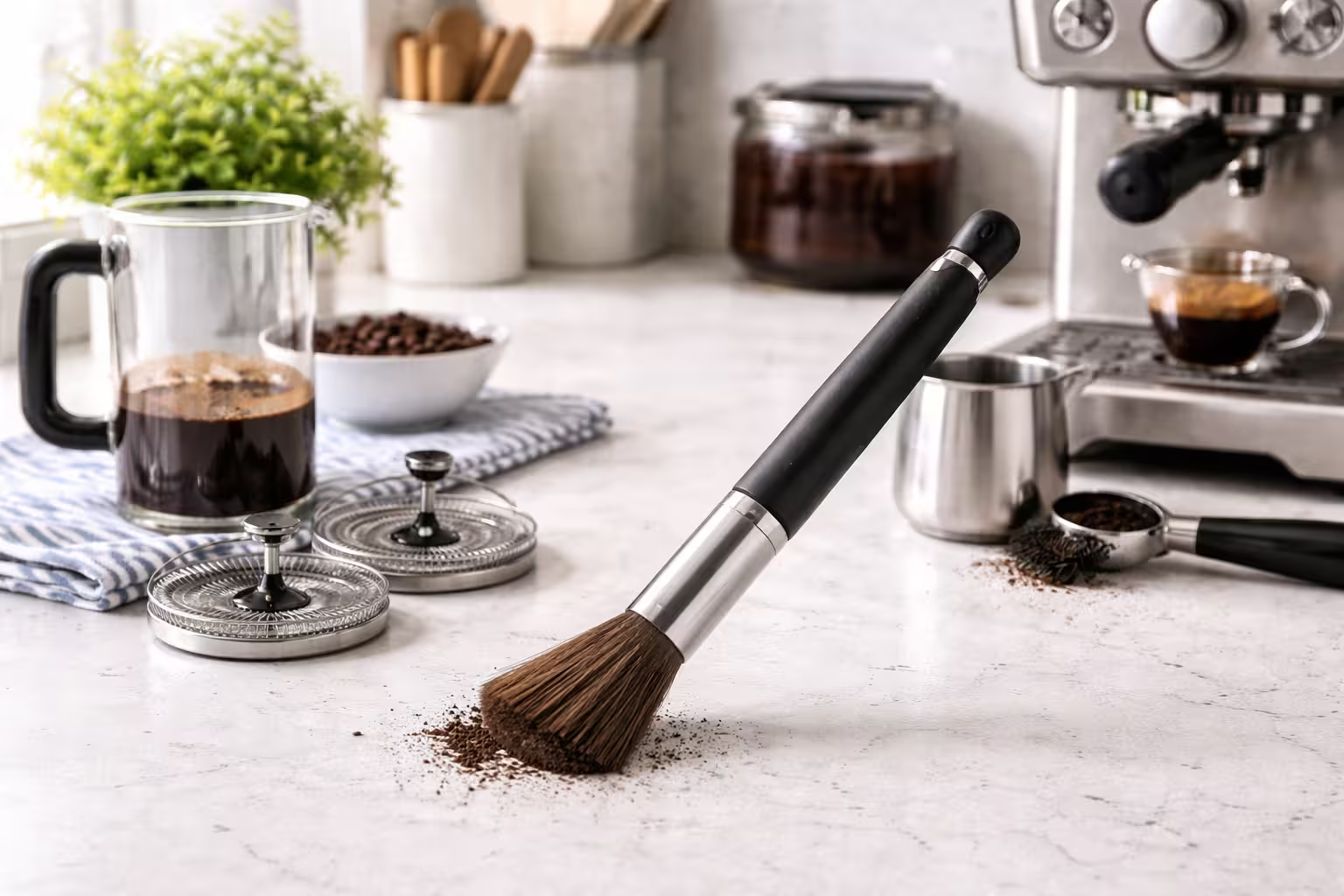
🖌️ Recommended — Soft Bristle Cleaning Brush
A dedicated soft-bristle brush for cleaning the drum basket perforations and catalyst screen is the Behmor maintenance item most new owners overlook and most experienced owners consider indispensable. Look for a long-handle brush with soft natural or nylon bristles — something in the detail-cleaning or pastry-brush category works well. A bottle brush with a flexible head is another popular choice for reaching the drum’s interior perforations. Do not use metal brushes — they damage the drum coating.
Disclosure: CoffeeGearHub may earn from qualifying purchases.
- Roast log notebook or app: on the Behmor, first-crack time relative to preset is your main calibration data point — record it every roast. Download our free roast log template →
- Green coffee starter sampler — check green coffee options on Amazon →: a 5 lb multi-origin sampler lets you taste how the Behmor handles different origins before committing to a 10–25 lb order from a green coffee wholesaler
- Colander or cooling tray: although the Behmor’s cool cycle does most of the work, transferring beans to a stainless colander and stirring for 60 seconds after the cycle ends speeds final cooling and stops any residual development
Behmor 2000AB Plus Pros and Cons
✅ Pros
- Integrated smoke suppression helps reduce visible smoke, but does not replace ventilation or clearance requirements
- 1 lb (454g) batch capacity — twice the SR800, four times the SR540
- Drum roasting action produces denser, more rounded flavour — particularly strong for espresso and blends
- 1-year limited warranty for the roaster; confirm current component terms before purchase
- Approachable control system — P1/B + 3 minutes is a genuinely complete beginner workflow
- Forgiving dark roasting — drum thermal mass buffers the rapid temperature runaway that trips up fluid-bed dark roasters
- Kitchen-appropriate aesthetics — brushed stainless looks at home on a counter
- Reprogrammable firmware via a wired connection
⚠️ Cons
- Slow roast times — 16–22 minutes plus 8–10 minute cool cycle; you cannot rush it
- No glass window — monitoring is entirely by timer, aroma, and first-crack sound
- Limited profile control — P/A/B preset system is less granular than 9-level fan/heat
- Thermal shutoff sensitivity — back-to-back roasting without 30+ minute cooling causes automatic shutdown
- Larger footprint than most fluid-bed roasters — plan counter and clearance space carefully
- Smoke suppression partially fails at Full City+ and darker — still needs ventilation for dark roasts
- No aftermarket upgrade path — no extension tube, thermocouple, or Artisan integration
- First crack harder to hear — drum dampens the audible cue that fluid-bed roasters amplify
FAQs: Behmor 2000AB Plus
Is the Behmor 2000AB Plus worth it?
Yes — for households roasting larger batches indoors with appropriate ventilation and clearance, the Behmor 2000AB Plus is the best-value home drum roaster on the market. Its patented smoke suppression is a genuine differentiator: its combination of 1 lb capacity and smoke suppression is unusual in its price class. If you have strong ventilation and want granular fan-and-heat control, the Fresh Roast SR800 is the better choice. u003ca href=u0022#u0022 target=u0022_blanku0022 rel=u0022nofollow sponsored noopener noreferreru0022u003eCheck the current Behmor 2000AB Plus price on Amazon →u003c/au003e
How much coffee can the Behmor 2000AB Plus roast per batch?
The Behmor 2000AB Plus has a maximum capacity of 1 lb (454g) of green coffee beans per batch. The minimum recommended batch is 0.25 lb (113g) — under that, beans slide along the drum floor rather than tumbling, resulting in uneven roasts. The practical sweet spot for the most even roasts is 12 oz–1 lb (340–454g) of washed-process coffees. u003ca href=u0022#u0022 target=u0022_blanku0022 rel=u0022nofollow sponsored noopener noreferreru0022u003eSee the Behmor 2000AB Plus on Amazon →u003c/au003e
What is the difference between the Behmor 2000AB and the 2000AB Plus?
The Behmor 2000AB Plus is the current production model and adds a multi-speed motor, faster controller, audible safety advisory, universal control-board architecture, and reprogrammable firmware via a wired connection. If you are buying new, you will receive the Plus model — the 2000AB is no longer in production. Used 2000AB units are not upgradeable to Plus spec. u003ca href=u0022#u0022 target=u0022_blanku0022 rel=u0022nofollow sponsored noopener noreferreru0022u003eCheck the Behmor 2000AB Plus on Amazon →u003c/au003e
What does P1, P2, P3, P4, P5 mean on the Behmor 2000AB Plus?
The P1–P5 presets are factory-programmed roast time profiles: P1 is calibrated for 1 lb (454g) batches, P2 for 0.5 lb (227g) batches, P3 for 0.25 lb (113g) batches, P4 for 1 lb batches with a slower initial heat curve (better for naturals and large screen coffees), and P5 is a user-programmable preset. Within each preset, pressing A selects a slower heat ramp and pressing B selects a faster heat ramp. For most beginners roasting 12 oz–1 lb of washed coffee, P1/B is the standard starting point. u003ca href=u0022#u0022 target=u0022_blanku0022 rel=u0022nofollow sponsored noopener noreferreru0022u003eSee the Behmor 2000AB Plus on Amazon →u003c/au003e
Does the Behmor 2000AB Plus really suppress smoke?
Yes — the Behmor 2000AB Plus uses a catalytic converter and a dedicated recirculating airflow path that burns off a significant portion of smoke before it exits the roaster. In practice, light to medium roasts on the Behmor produce minimal visible smoke and manageable aroma indoors. Full City+ and darker roasts produce more smoke as oils vaporize — cracking a window is advisable for any roast darker than Full City, but the Behmor remains substantially cleaner than any other home roaster at the same roast level. Keep the catalyst screen clean for maximum efficiency. u003ca href=u0022#u0022 target=u0022_blanku0022 rel=u0022nofollow sponsored noopener noreferreru0022u003eCheck the Behmor 2000AB Plus on Amazon →u003c/au003e
Why does my Behmor 2000AB Plus keep stopping mid-roast?
The Behmor 2000AB Plus has a built-in thermal safety shutoff that activates when the internal temperature exceeds safe limits — most commonly caused by: (1) back-to-back roasts without adequate cooling time between batches (allow 30+ minutes); (2) ambient room temperature above 85°F; (3) a dirty or blocked catalyst screen that restricts airflow and traps heat; or (4) roasting in a confined space with poor air circulation. Clean the chaff tray and catalyst screen after every 3–5 roasts and always allow the roaster to return to room temperature between sessions. u003ca href=u0022#u0022 target=u0022_blanku0022 rel=u0022nofollow sponsored noopener noreferreru0022u003eSee the Behmor 2000AB Plus on Amazon →u003c/au003e
What are the best Behmor 2000AB Plus settings for a beginner?
The best beginner setting on the Behmor 2000AB Plus is P1/B with 16–18 minutes on the timer, roasting 340–454g (12 oz–1 lb) of a washed Latin American coffee such as Colombia Huila or Brazil Cerrado. Press + four to six times after selecting P1/B to add 2–3 minutes of buffer. Listen for first crack at 12–15 minutes, then press STOP 60–90 seconds later for a City+ roast. Always start with P1/B — the A profile is slower and better suited to naturals and high-altitude dense beans once you have five or more roasts logged. u003ca href=u0022#u0022 target=u0022_blanku0022 rel=u0022nofollow sponsored noopener noreferreru0022u003eGet the Behmor 2000AB Plus on Amazon →u003c/au003e
How do I clean the Behmor 2000AB Plus?
Clean the Behmor 2000AB Plus after every 3–5 roasts: remove and empty the chaff tray, brush the drum basket clean of chaff with a soft dry brush, wipe the interior walls with a dry cloth (never wet), and inspect the catalyst screen for chaff buildup — a clogged catalyst is the most common cause of thermal shutoffs and smoke spillover. Once per month, run the Behmor empty for 2–3 minutes on P1/B to burn off any accumulated oils. Do not use water or cleaning products inside the roasting chamber. u003ca href=u0022#u0022 target=u0022_blanku0022 rel=u0022nofollow sponsored noopener noreferreru0022u003eSee soft cleaning brushes on Amazon →u003c/au003e
Behmor 2000AB Plus vs Fresh Roast SR800 — which should I buy?
Buy the Behmor 2000AB Plus if: you want larger indoor batches and can provide adequate ventilation and clearance, you want 1 lb batches, or you prefer a set-and-monitor workflow with fewer manual adjustments. Buy the Fresh Roast SR800 if: you have ventilation or roast outdoors, you want granular 9-level fan and heat control for detailed profile work, or you plan to add a thermocouple and Artisan logging. Many serious home roasters eventually own both — one for quick weekday 1 lb batches (Behmor) and one for experimental single-origin work (SR800). u003ca href=u0022/fresh-roast-sr800-full-review-and-roast-profiles-2026-is-it-the-best-home-coffee-roaster/u0022u003eRead our full Fresh Roast SR800 review →u003c/au003e
Continue Learning
💡 New to Amazon? Try Prime free for fast shipping on picks like these.
HOME ROASTING GUIDES
Behmor dialled in — ready to compare it against fluid-bed roasting? Our complete Fresh Roast SR800 review covers the same five-profile workflow on the leading 9×9 fan-and-heat air roaster — the natural comparison for anyone deciding between drum and fluid-bed for their setup.
☕
Written by the CoffeeGearHub Editorial Team
CoffeeGearHub is an editorial coffee resource. Our guides are researched using manufacturer specifications, appliance-care best practices, and manufacturer documentation, appliance-care guidance, and established home-roasting references. We review and update our pillar content regularly. About CoffeeGearHub →
Sources & methodology
This guide is research-based. CoffeeGearHub does not claim in-house product testing unless explicitly documented. Key references used for specifications, safety guidance, and coffee science include: