
Best Moka Pots: Complete Buyer’s Guide
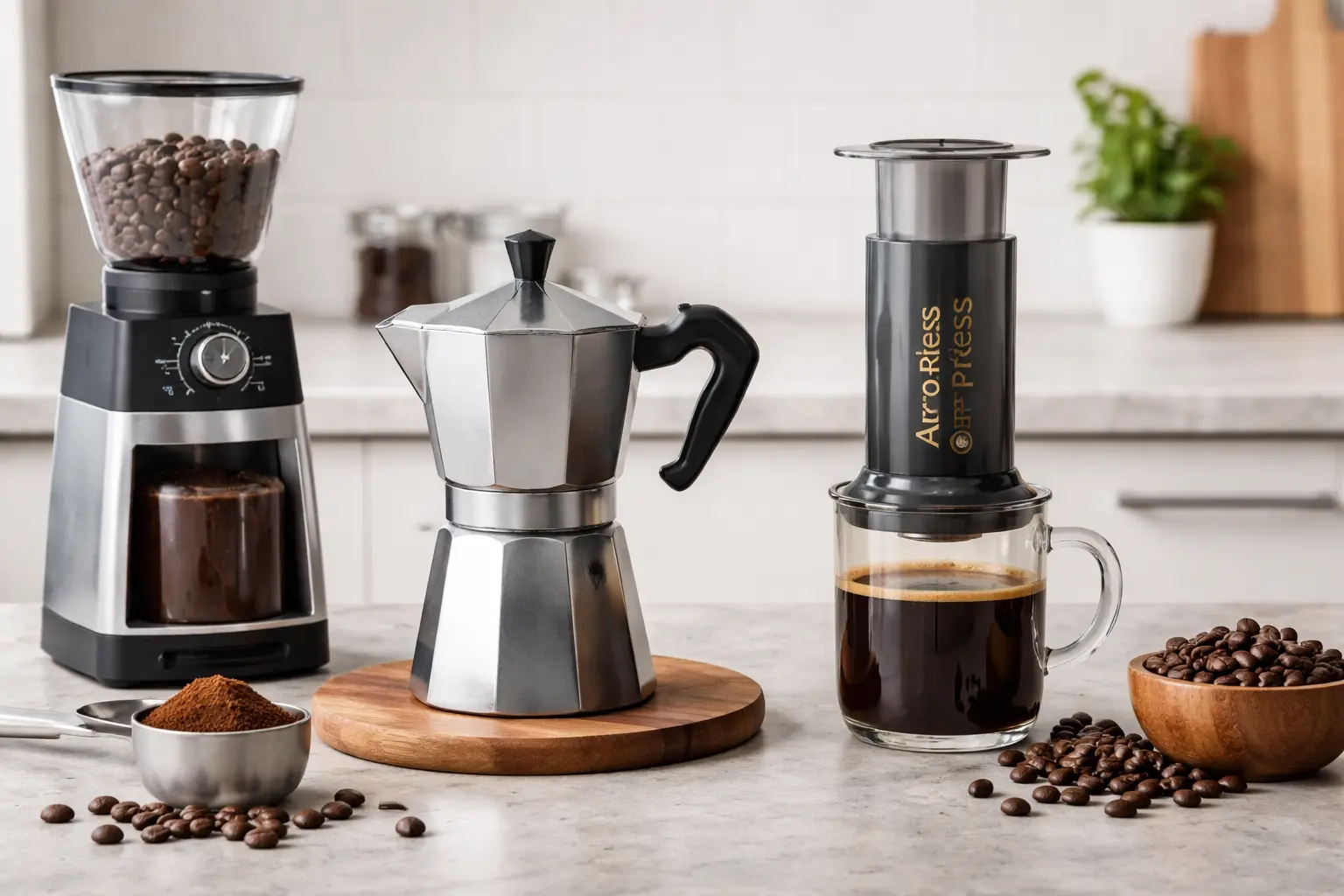
Editorial standards: this guide compares moka pots by material, capacity, stovetop compatibility, replacement-part availability, workflow, and value. Product recommendations are based on published specifications and use-case fit unless hands-on testing is explicitly stated.
At a glance
What this guide covers
This guide explains how to choose moka pot size and material, what changes between aluminum and stainless steel, how induction compatibility works, and which ownership details matter after the first few brews.
Editorial analysis
Size and stovetop compatibility matter more than feature lists
Moka pots are simple brewers, so the biggest purchasing mistakes usually involve buying the wrong nominal cup size or a model that does not work well with the household’s stove.
After compatibility, prioritize a comfortable handle, replaceable gasket and filter parts, and a size that matches the amount you actually drink. Larger is not automatically better because moka pots are generally designed to brew near their intended capacity.
The 30-Second Answer
Choose a moka pot by serving size, stovetop compatibility, material, and availability of replacement gaskets and filters. Match the nominal cup size to your real drinking volume rather than assuming moka-pot ‘cups’ equal standard mugs.
Compare current options
Start with these representative choices
These two moka pots cover the most important first decision: classic aluminum on a conventional stove versus stainless steel for induction compatibility.
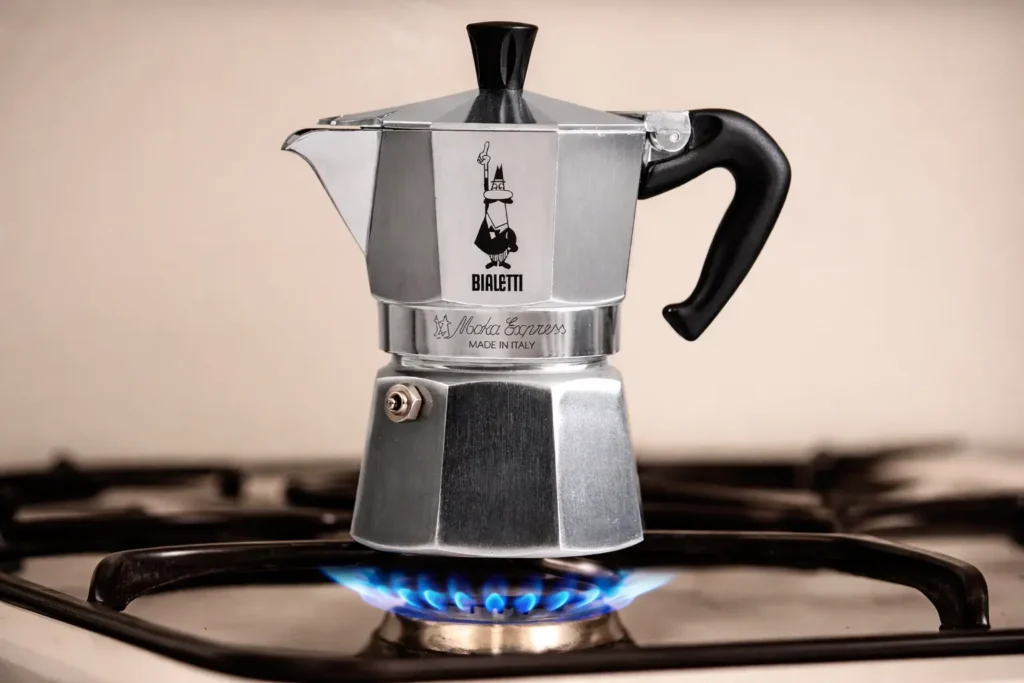
Classic Aluminum — Bialetti Moka Express
The benchmark moka-pot workflow: fast heat transfer, widespread replacement parts, and the familiar octagonal aluminum design.
Start here if: you use gas, electric, or ceramic heat and want the conventional moka experience.
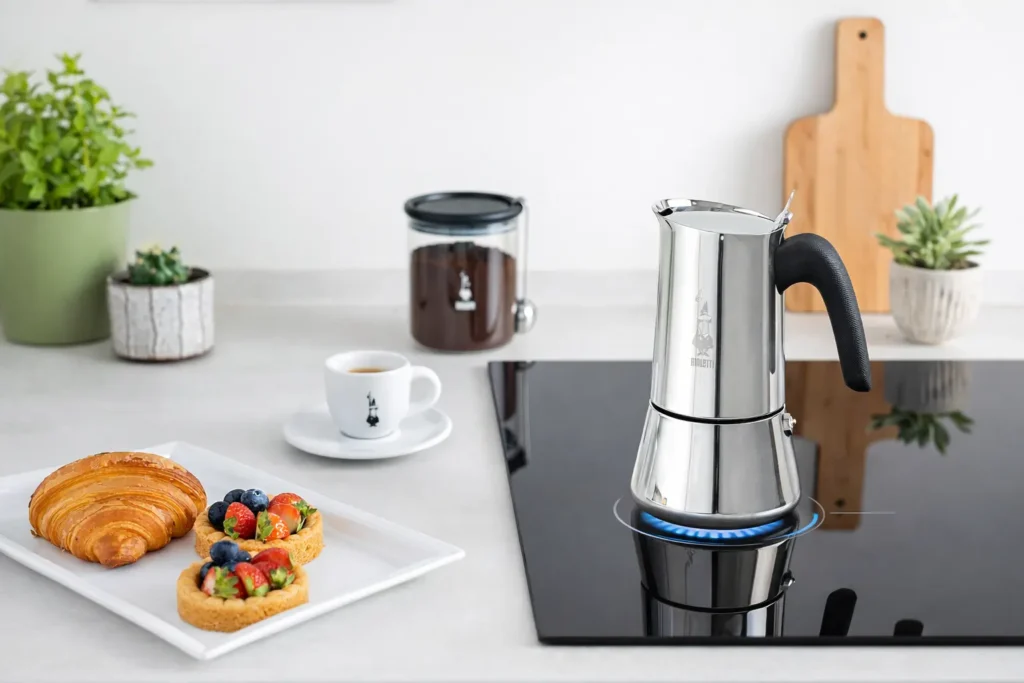
Induction-Ready Stainless — Bialetti Venus
The Venus trades aluminum for stainless steel and is the more practical starting point for induction kitchens.
Start here if: induction compatibility and easier stainless-steel cleanup matter most.
Affiliate disclosure: Amazon links may earn CoffeeGearHub a commission at no additional cost to you. Prices, sizes, sellers, and availability can change.
Quick Picks: Best Moka Pots by Use Case
If you want a strong shortlist first, these are the best moka pots for most home brewers:
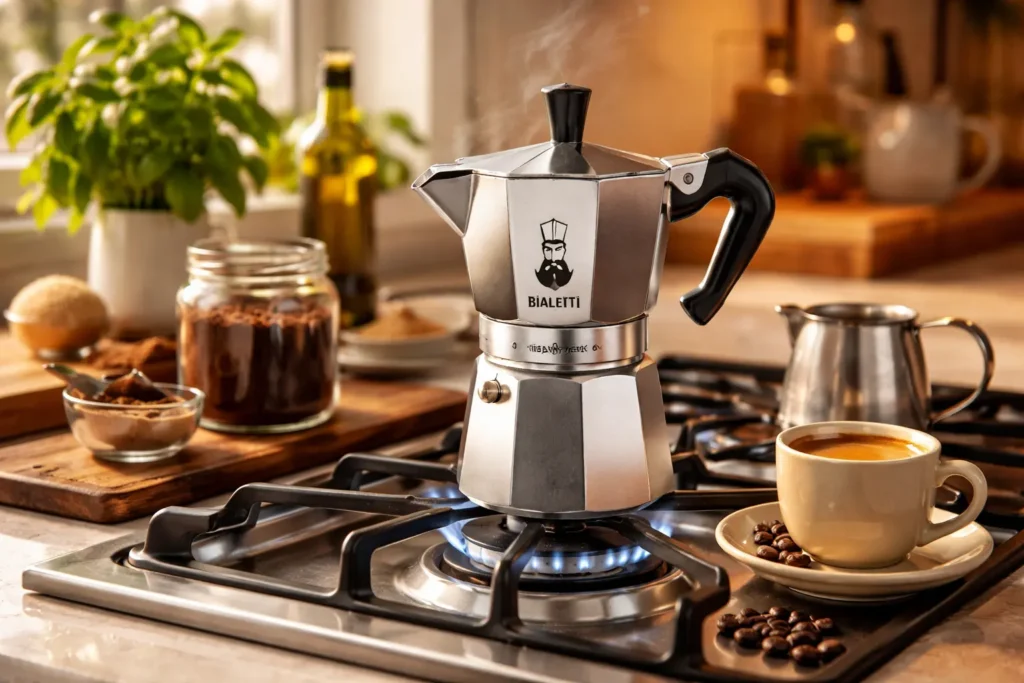
Best Overall: Bialetti Moka Express
The classic aluminum moka pot with the most proven track record. Great flavor, easy parts availability, and excellent value in the 3–6 cup sizes.
Not induction compatible unless you use an adapter plate.
Disclosure: CoffeeGearHub may earn from qualifying purchases.
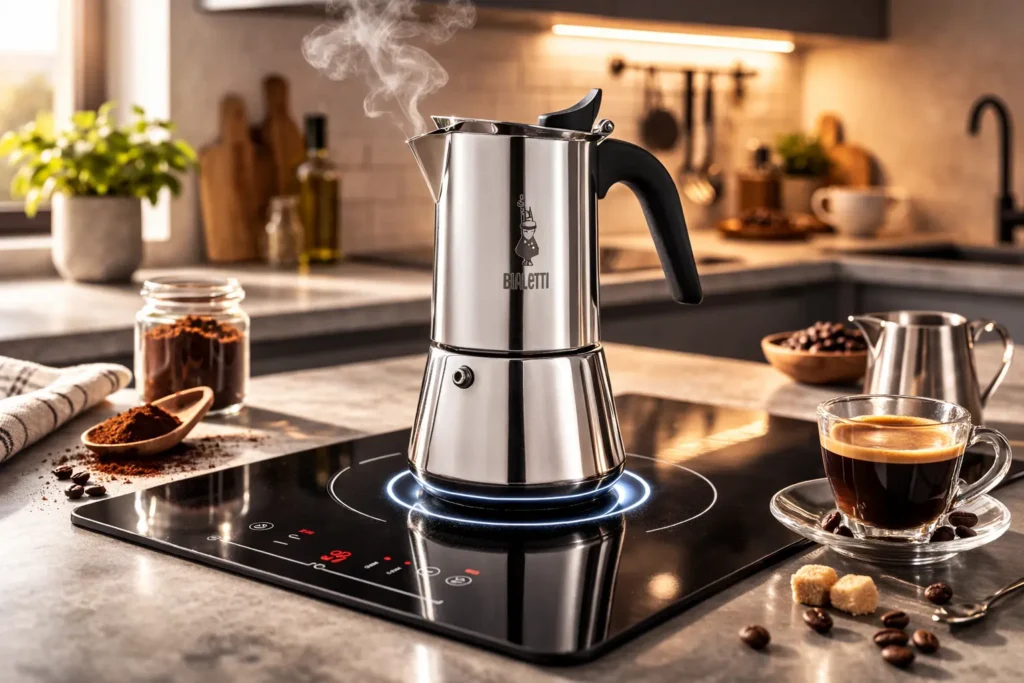
Best for Induction: Bialetti Venus
Stainless steel body and induction-ready base. Slightly smoother cup profile and easier cleaning compared to aluminum.
Best in 4–6 cup sizes for most households.
Disclosure: CoffeeGearHub may earn from qualifying purchases.
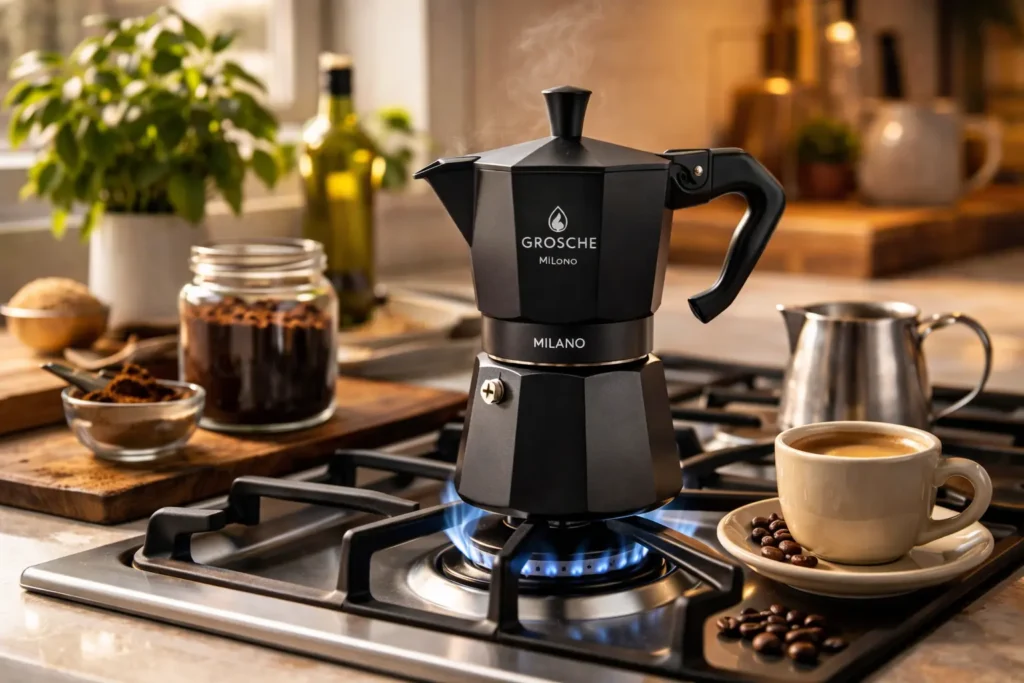
Most Durable: GROSCHE Milano
Thicker build than many budget moka pots. A great option if your moka pot lives on the stove every day and you want sturdier construction.
Disclosure: CoffeeGearHub may earn from qualifying purchases.
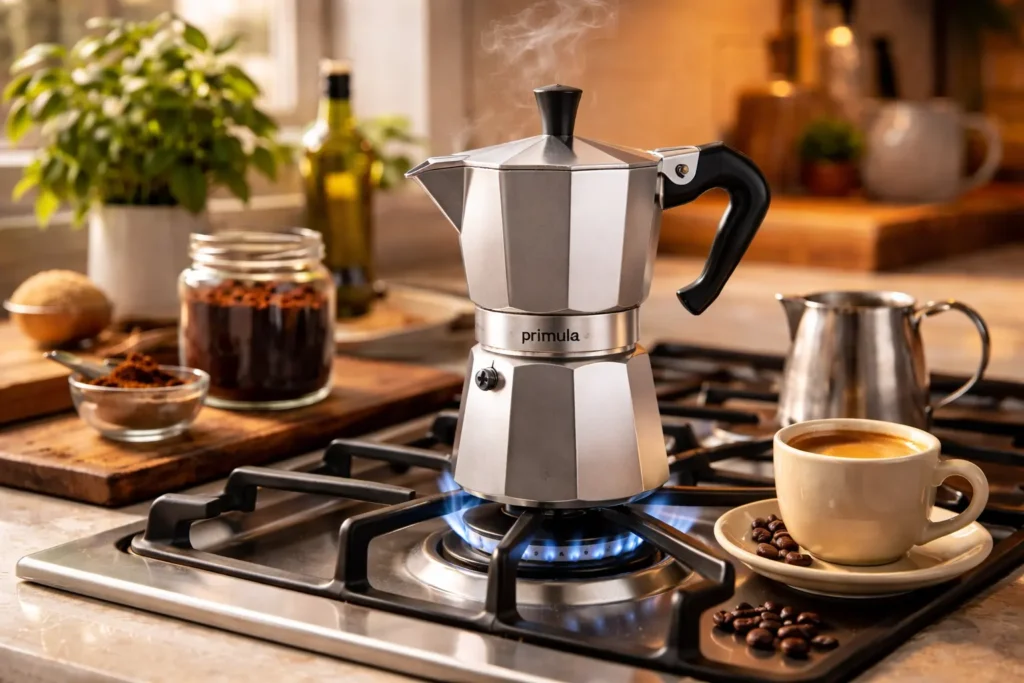
Best Budget: Primula Aluminum Stovetop
An inexpensive way to try moka brewing. It can make great coffee — but consistency depends more on your technique and grind quality.
Disclosure: CoffeeGearHub may earn from qualifying purchases.
🔬 Recommended starting point: For most people, the sweet spot is a 6-cup moka pot. Pair it with the KINGrinder K6 and medium-low heat, and you’ll get café-style milk drinks at home consistently.
How a Moka Pot Works (Pressure + Temperature)
A moka pot has three chambers: the boiler, the coffee basket, and the upper collection chamber. As the boiler heats, steam pressure pushes hot water up through the grounds. This is why moka tastes espresso-like — it’s concentrated — but it’s not true espresso because pressure is much lower than 9 bars.
💡 Extraction science, simplified: Your best moka brews happen when temperature rises steadily, flow stays smooth, and you stop before the harsh, gassy sputter phase. Medium-low heat + stopping early = sweeter coffee.
How to Choose a Moka Pot (Complete Checklist)
1) Material: Aluminum vs Stainless Steel
| Feature | Aluminum | Stainless Steel |
|---|---|---|
| Heat transfer | Fast (easy to overheat) | Slower (more forgiving) |
| Induction | No (needs adapter plate) | Yes (if induction base) |
| Cleaning | Rinse-only recommended | Easier; less reactive |
| Durability | Good, can dent | Very high |
| Flavor tendency | Traditional, punchy | Slightly smoother |
Pick aluminum if you want the classic moka experience and brew on gas or electric. Pick stainless if you have induction or want maximum durability and easier cleanup.
2) Induction Compatibility
Induction requires a magnetic base. If you already own an aluminum moka pot, an induction adapter plate can work, but a true induction moka pot is more consistent if you brew daily.
Disclosure: CoffeeGearHub may earn from qualifying purchases.
3) Build Quality
- Threads: Smooth threads help you seal consistently and reduce side leaks.
- Basket fit: A snug fit improves extraction and reduces channeling.
- Handle: Heat-resistant handles matter on gas stoves.
- Safety valve: Keep it unobstructed; always fill water below it.
4) Size (Moka “Cups” Are Small)
Moka “cups” are usually around 2 oz / 60 ml. A 6-cup pot often yields roughly 10–12 oz of concentrated coffee depending on how early you stop the brew. Always brew at full capacity for your pot size — partially filling the basket produces weak, inconsistent results.
Best Moka Pots (Top Picks + Who They’re For)
Bialetti Moka Express — Best Overall
Best for: Classic moka flavor, strong resale value, and easy replacement parts.
Pros
- Benchmark design
- Fast heat transfer
- Parts widely available
Cons
- Not induction-ready
- Aluminum needs rinse-only cleaning
Disclosure: CoffeeGearHub may earn from qualifying purchases.
Bialetti Venus — Best for Induction
Best for: Induction kitchens and buyers who want stainless durability and easier cleaning.
Pros
- Induction compatible
- Durable stainless build
- Simple cleanup
Cons
- Slower heat-up
- Still bitter if you let it sputter
Disclosure: CoffeeGearHub may earn from qualifying purchases.
GROSCHE Milano — Durable Value
Best for: Daily brewers who want a sturdier build without premium pricing.
Disclosure: CoffeeGearHub may earn from qualifying purchases.
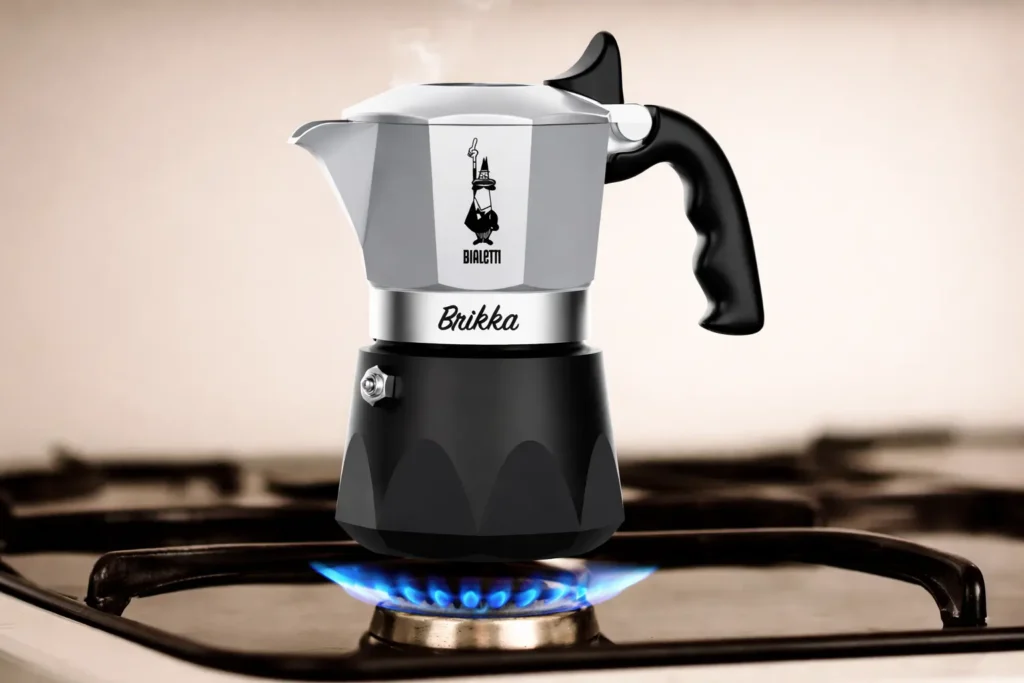
Bialetti Brikka — Most Espresso-Like
Best for: People who want a more intense, foamier cup for milk drinks. The Brikka’s pressure-valve lid traps additional steam to produce a thicker, crema-like layer — not true espresso crema, but noticeably richer than a standard moka pot.
Disclosure: CoffeeGearHub may earn from qualifying purchases.
Moka Pot Size Guide (Exactly What to Buy)
| Moka Size | Best For | Typical Use |
|---|---|---|
| 1–2 cup | Solo short serving | Milk drinks, small servings |
| 3 cup | One strong drinker | 1 mug when diluted, 1–2 milk drinks |
| 4 cup | Flex size | Good daily option for most households |
| 6 cup | Most versatile | 2 milk drinks or 1–2 strong cups |
| 9–12 cup | Multiple people | Entertaining, iced coffee batches |
💡 Tip: Moka pots brew best when used at their intended capacity. Avoid buying too large and under-filling — a partially filled basket produces weak, sour results because water flows through with too little resistance.
Best Coffee & Grind Size for Moka Pot
Moka pots reward grind consistency. Too fine can choke the pot or taste harsh. Too coarse often tastes weak and sour.
- Grind target: Medium-fine (finer than drip, coarser than espresso — table salt texture).
- Roast: Medium or medium-dark for easiest sweetness; light roasts need tighter heat control.
- Basket fill: Fill to the top and level — no tamping.
- Water: Filtered water improves flavor and reduces mineral buildup over time.
For moka-specific settings and taste adjustments, see the Moka Pot Grind Size Guide. For a complete grind size reference across all brew methods, see the Coffee Grind Size Guide.
How to Brew a Moka Pot (Sweet, Not Bitter)
This method focuses on reducing bitterness by controlling heat and stopping the brew at the right moment.
- Preheat water — hot but not boiling. Fill the boiler to just below the safety valve.
- Add coffee to the basket. Level gently. Do not tamp.
- Assemble firmly — use a towel if the base is hot from preheated water.
- Brew on medium-low heat with the lid open so you can monitor the stream.
- Stop early: remove from heat when the stream turns pale or begins gurgling aggressively.
- Cool the base under cold running water for a few seconds to stop extraction.
- Stir the top chamber before serving for even strength throughout the cup.
For a complete step-by-step guide with diagrams and heat settings by stove type, see How to Use a Moka Pot.
Milk Drinks & Recipes (Moka Pot “Café Menu”)
Moka Latte (Hot)
- 1 part moka coffee
- 2–3 parts steamed or frothed milk
Cappuccino-Style
- 1 part moka coffee
- 1–1.5 parts milk
- Top with thick foam
Iced Moka Americano
- Pour moka coffee over a full glass of ice
- Add cold water to taste (start 1:1 ratio)
Troubleshooting — Fix Every Common Problem
| Symptom | Most likely cause | Fix — in this order |
|---|---|---|
| Bitter / burnt | Heat too high / brewed past gurgling | Lower heat → stop earlier → grind slightly coarser |
| No flow / chokes | Grind too fine / filter plate clogged / basket tamped | Grind coarser → clean filter holes → level only (no tamp) |
| Leaks from side seam | Worn gasket / loose assembly / cross-threading | Tighten firmly → replace gasket → check threads and reassemble |
| Weak / watery | Grind too coarse / basket under-filled | Go slightly finer → fill basket fully level |
| Metallic taste | Oil buildup / worn rubber gasket / hard water | Deep clean filter plate → replace gasket (silicone) → use filtered water |
Cleaning, Maintenance & Parts
- Rinse with warm water after each brew and dry completely — never leave moisture trapped inside.
- Deep-clean the filter plate and basket with a soft brush when flavor drops off.
- Replace gaskets when cracked, flattened, or when leaks appear at the side seam. Silicone gaskets last longer than rubber and hold fewer odors.
Disclosure: CoffeeGearHub may earn from qualifying purchases.
Safety Tips & Common Myths
- Fill water below the safety valve at all times and keep the valve unobstructed.
- Never tamp like espresso — moka relies on steam pressure, not pump pressure.
- Never brew on high heat — medium-low tastes better and is safer.
- Never leave a moka pot on a hot burner unattended after brewing — the pot will continue pushing steam through spent grounds.
Recommended Gear for Moka Pot
Grinders
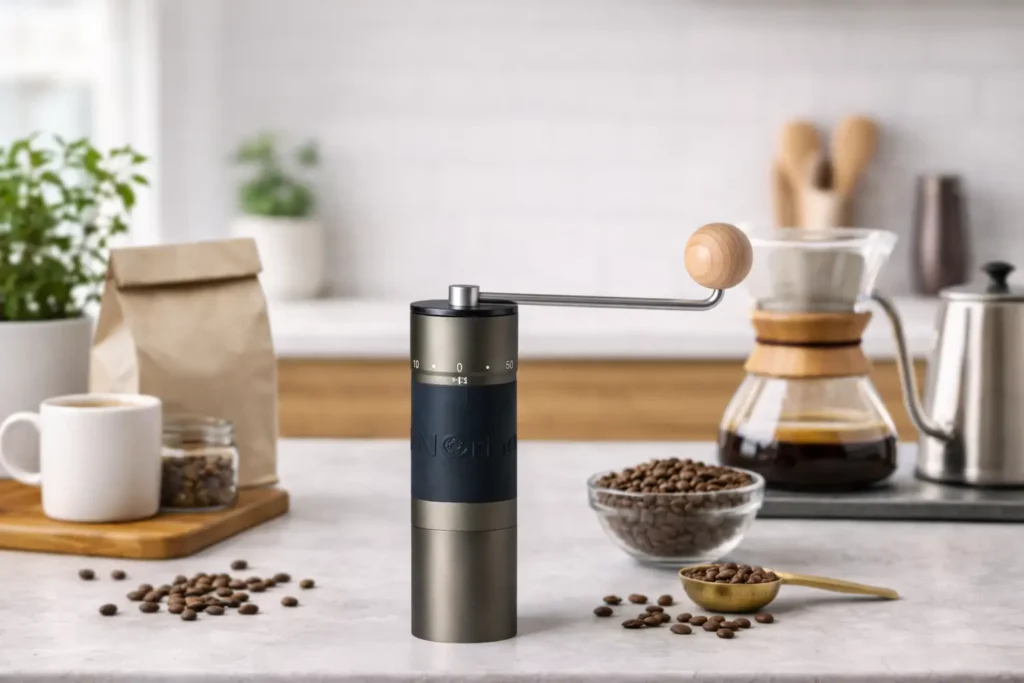
Best Overall: KINGrinder K6
Why it’s the top pick: Numbered click adjustment makes dialing in moka medium-fine simple and repeatable. Near-zero retention. Covers every brew method you’ll want to try.
Disclosure: CoffeeGearHub may earn from qualifying purchases.
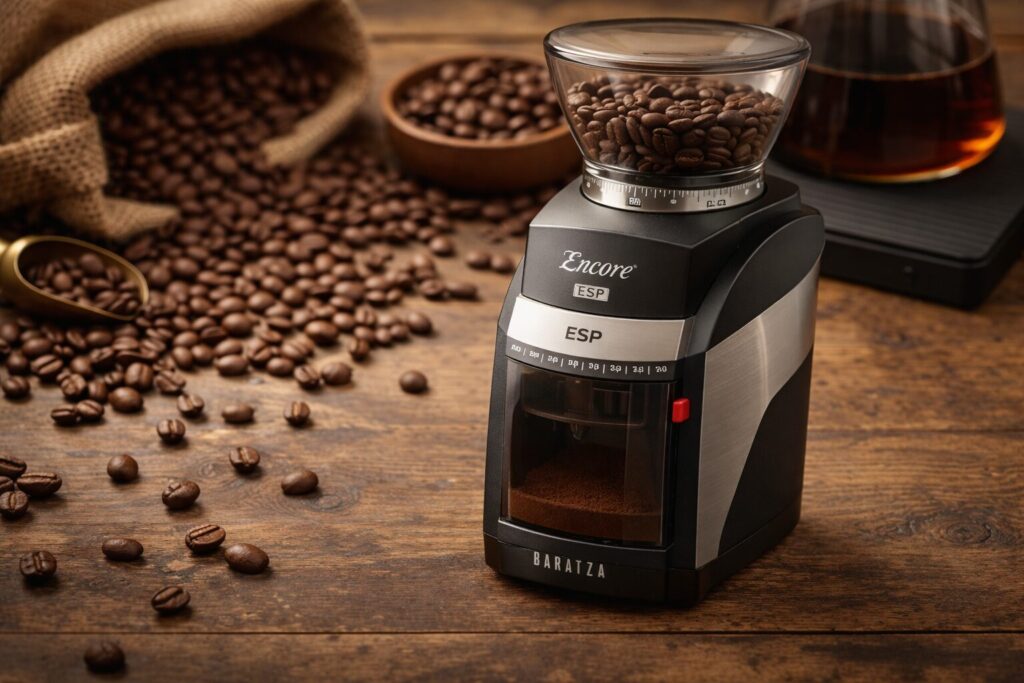
Electric Option: Baratza Encore ESP
Why it’s worth it: A strong electric option if you want hands-free grinding. Wide range covers moka now and espresso later if you add a machine.
Disclosure: CoffeeGearHub may earn from qualifying purchases.
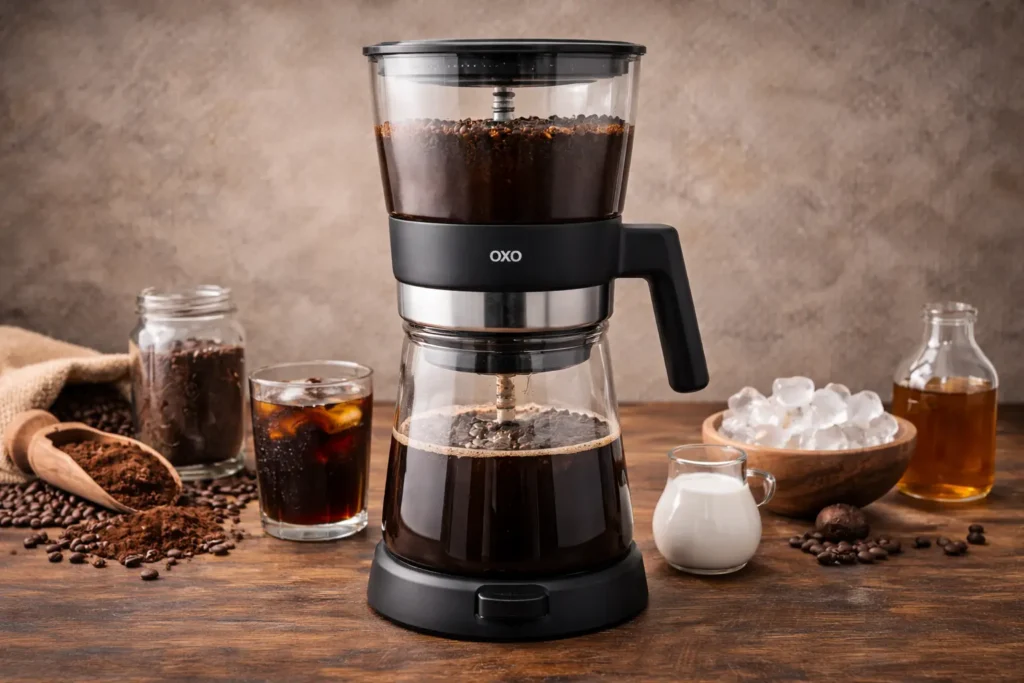
Budget Electric: OXO Brew Conical Burr
Why it’s worth it: Simple, consistent enough for moka, and a significant upgrade over blade grinding at an accessible price.
Disclosure: CoffeeGearHub may earn from qualifying purchases.
Milk Frothers
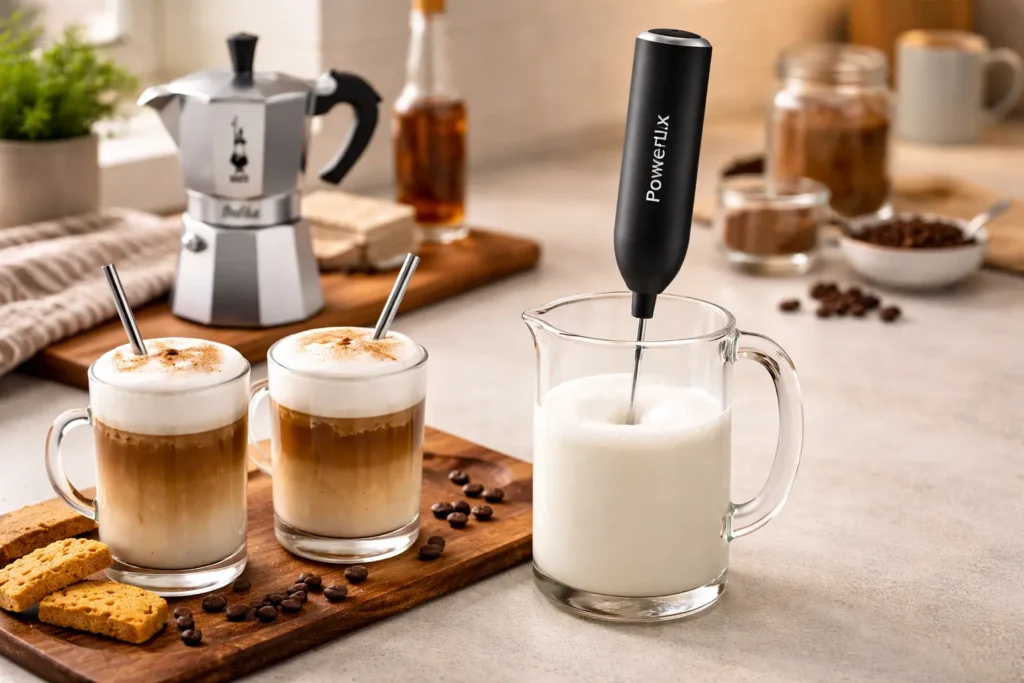
Budget: PowerLix Handheld Frother
Why it’s worth it: Cheapest way to get foam for cappuccino-style drinks and iced milk coffees.
Disclosure: CoffeeGearHub may earn from qualifying purchases.
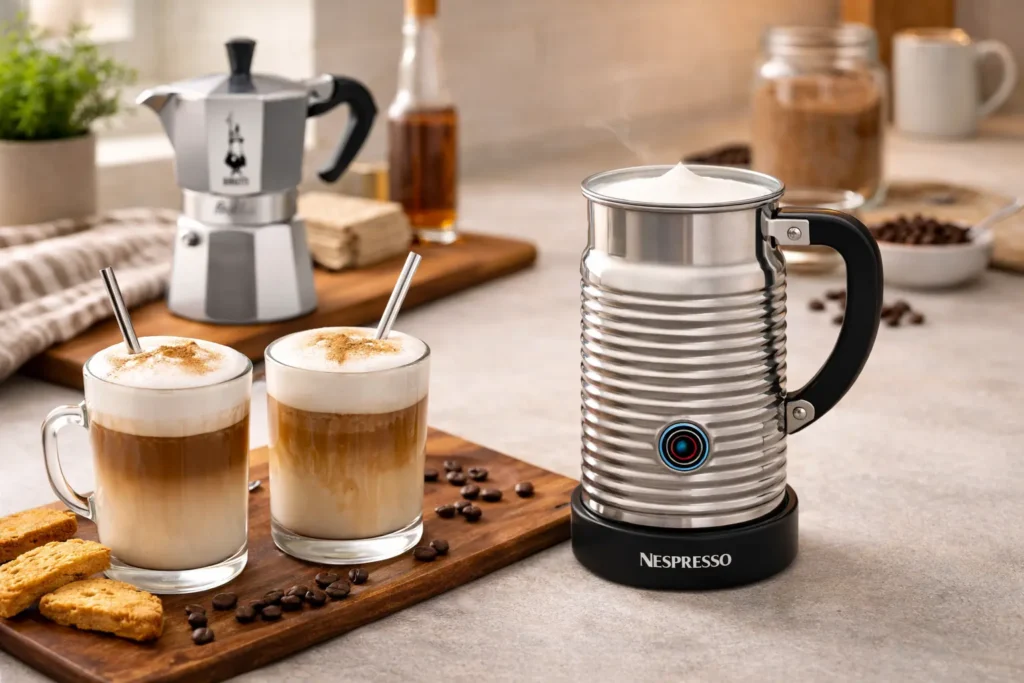
Easy Upgrade: Nespresso Aeroccino 3/4
Why it’s worth it: One-button hot or cold foam with consistent texture — perfect for daily lattes without any technique required.
Disclosure: CoffeeGearHub may earn from qualifying purchases.
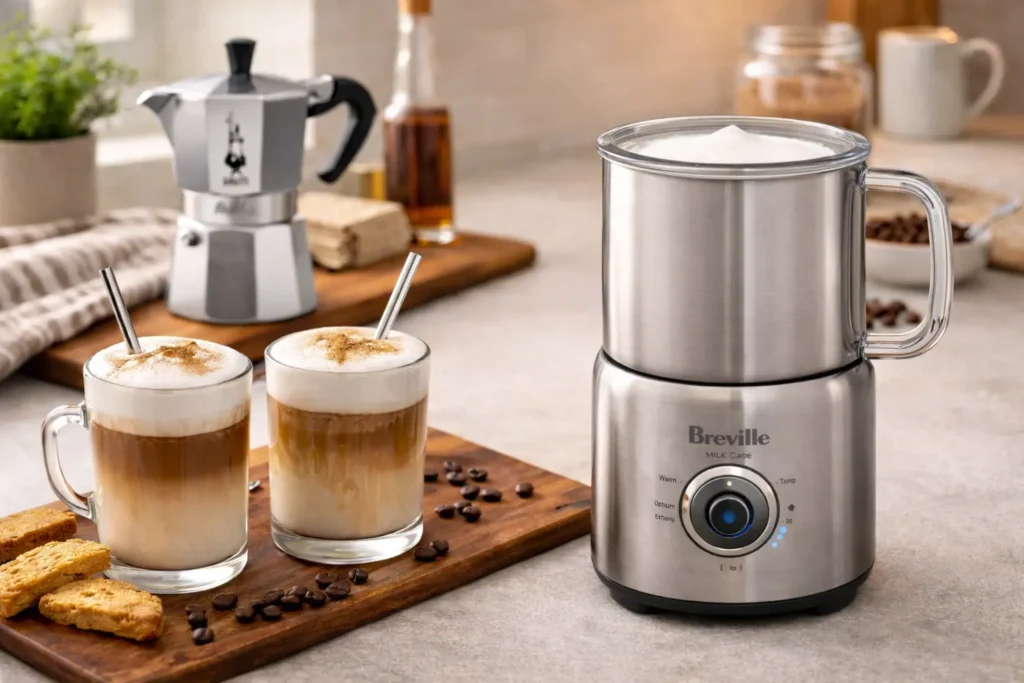
Premium: Breville Milk Cafe
Why it’s worth it: Better temperature control and capacity for smoother microfoam and multiple drinks per session.
Disclosure: CoffeeGearHub may earn from qualifying purchases.
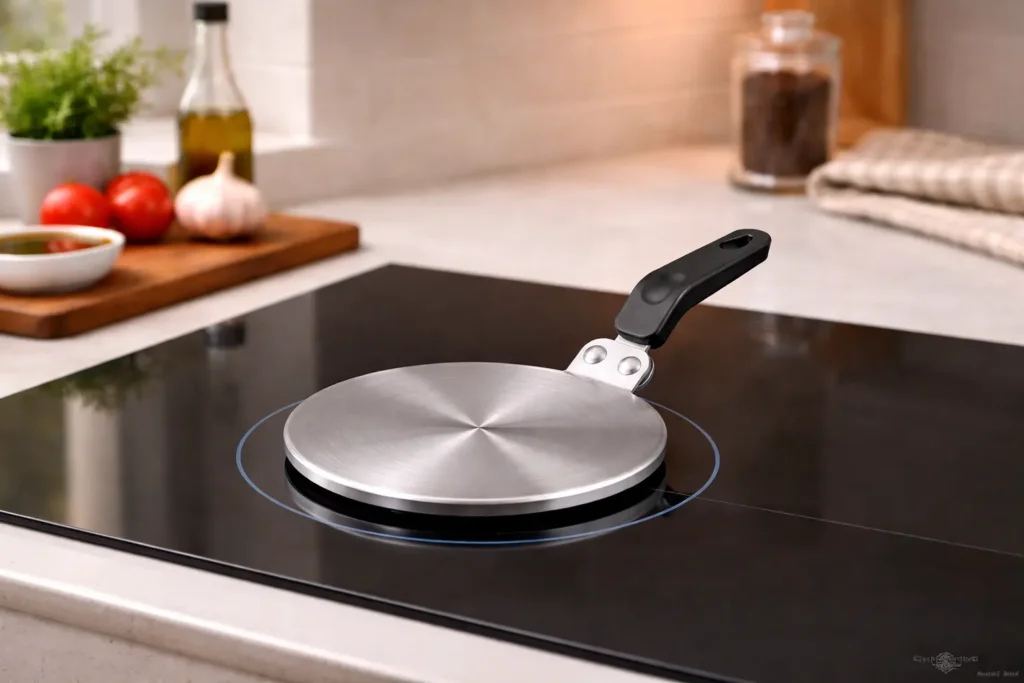
Induction Plates (If Your Moka Pot Isn’t Induction-Compatible)
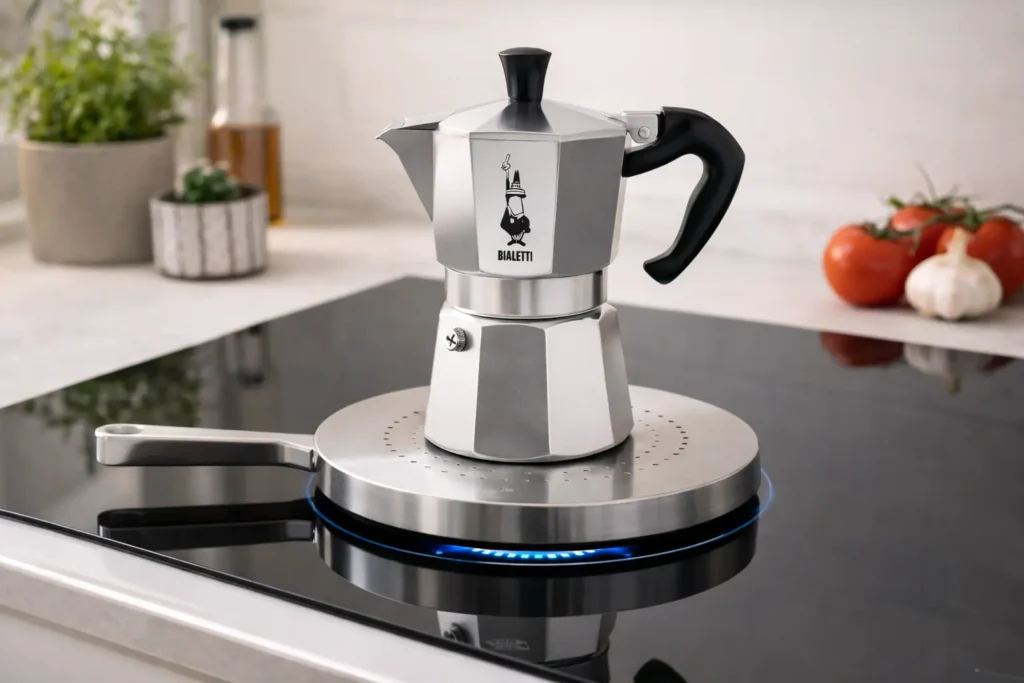
Budget: Induction Adapter Disc
Why it’s worth it: Low-cost fix to use aluminum moka pots on induction hobs.
Disclosure: CoffeeGearHub may earn from qualifying purchases.
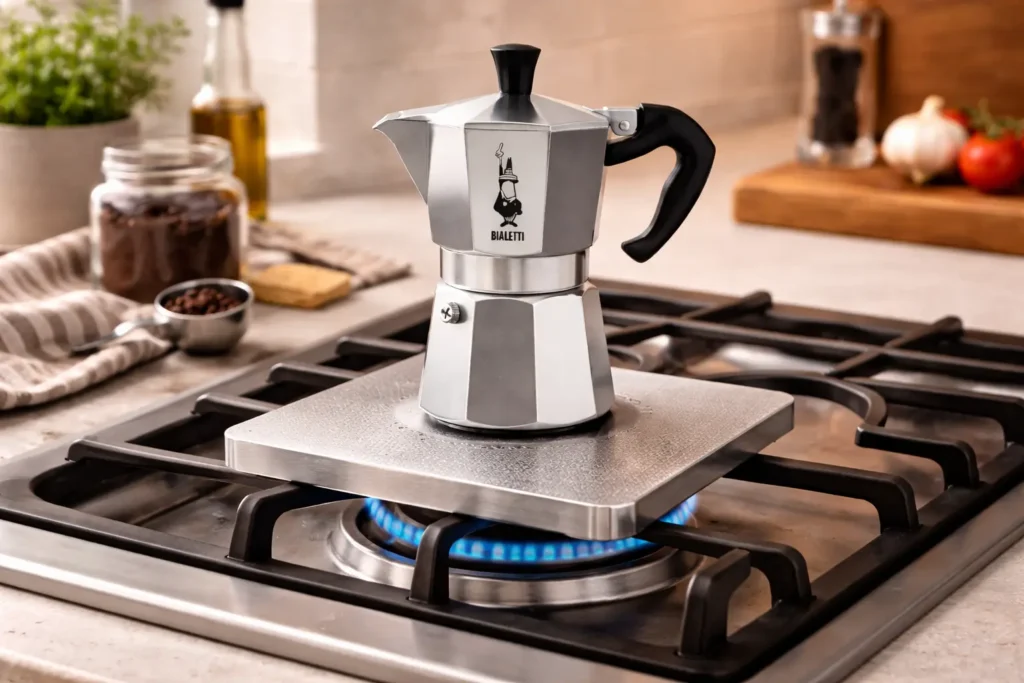
Best Stability: Thick Heat Diffuser Plate
Why it’s worth it: More thermal mass means fewer temperature swings, less scorching, and a smoother extraction — especially helpful on gas stoves.
Disclosure: CoffeeGearHub may earn from qualifying purchases.
Alternative: Induction-Native Moka Pot
Why it’s worth it: Often more consistent than adapter plates for daily induction brewing — no intermediate heat transfer step.
Disclosure: CoffeeGearHub may earn from qualifying purchases.
FAQs
Is moka pot coffee the same as espresso?
No. Moka pots brew at lower pressure (around 1–2 bar). You get concentrated coffee, but not true espresso crema or 9-bar extraction. The result is stronger and more intense than drip coffee, but distinct from espresso in both pressure and flavor profile.
What grind size is best for moka pot?
Medium-fine — finer than drip, coarser than espresso. Visually, aim for the texture of table salt. If the pot chokes or tastes harsh, go coarser. If the coffee tastes weak or sour, go slightly finer.
Should I tamp moka pot coffee?
No. Level the grounds gently with your finger or a straight edge without tamping. Tamping increases resistance in the coffee bed, which causes pressure spikes, over-extraction, and bitter cups.
Why does my moka pot taste bitter?
Usually overheating and over-extracting at the end of the brew. Use preheated water, brew on medium-low heat, and remove from heat when the stream turns pale or begins to sputter aggressively. Run the base under cold water to stop extraction immediately.
Can I use a moka pot on induction?
Only if the base is induction-compatible. Most aluminum moka pots are not ferromagnetic and require an induction adapter disc. Stainless steel models like the Bialetti Venus or Bialetti Moka Induction are purpose-built for induction and are the most reliable option for daily induction brewing.
What is the best moka pot size for one person?
A 3-cup moka pot is ideal for one strong drinker — it yields roughly 120ml of concentrated coffee, enough for one mug when slightly diluted or one to two milk drinks. A 1-cup or 2-cup is suitable for a single short serving.
Why is my moka pot not producing coffee?
The most common causes are grind too fine (blocking flow), clogged filter plate holes, or a compromised gasket seal. Go slightly coarser, clean the filter plate holes with a soft brush, and inspect or replace the gasket if steam is escaping at the side seam.
How do I keep my moka pot from sputtering?
Use medium-low heat and remove the pot from heat when the stream turns from dark to pale. Cooling the base under running water for a few seconds stops extraction immediately. Early, aggressive sputtering usually means heat is too high or the grind is too fine.
Can I wash an aluminum moka pot with soap?
Most experienced moka users avoid soap on aluminum to preserve the seasoned interior patina that builds over time and helps reduce metallic off-flavors. Rinse with warm water and dry completely after each brew. Stainless steel models are easier to clean and more soap-tolerant.
How often should I replace the gasket?
Replace when the gasket is cracked, flattened, or steam begins leaking at the side seam. For daily use that is typically every 6–12 months. Silicone gaskets tend to last longer and hold fewer odors than standard rubber replacements.
What coffee roast is best for moka pot?
Medium to medium-dark roast is easiest to brew sweet and balanced. Dark roasts work well in milk drinks but can turn bitter quickly if overheated. Light roasts are possible but require tighter heat control and a slightly finer grind to reach full sweetness.
How do I make moka pot coffee less bitter?
Use preheated water, brew on medium-low heat, grind slightly coarser, and stop the brew early — before the aggressive sputtering phase. A heat diffuser plate can also help by smoothing the heat ramp and reducing the risk of scorching.
CoffeeGearHub product shortlist
Compare moka pot brewing gear
Browse CoffeeGearHub equipment and grinder categories before opening merchant offers.
Continue Learning
Moka pot technique
In this guide
- The 30-Second Answer
- Quick Picks: Best Moka Pots by Use Case
- How a Moka Pot Works (Pressure + Temperature)
- How to Choose a Moka Pot (Complete Checklist)
- Best Moka Pots (Top Picks + Who They’re For)
- Moka Pot Size Guide (Exactly What to Buy)
- Best Coffee Grind Size for Moka Pot
- How to Brew a Moka Pot (Sweet, Not Bitter)
- Milk Drinks Recipes (Moka Pot “Café Menu”)
- Troubleshooting — Fix Every Common Problem
- Cleaning, Maintenance Parts
- Safety Tips Common Myths
- Continue Learning