Last Updated: February 2026 • 22–30 min read
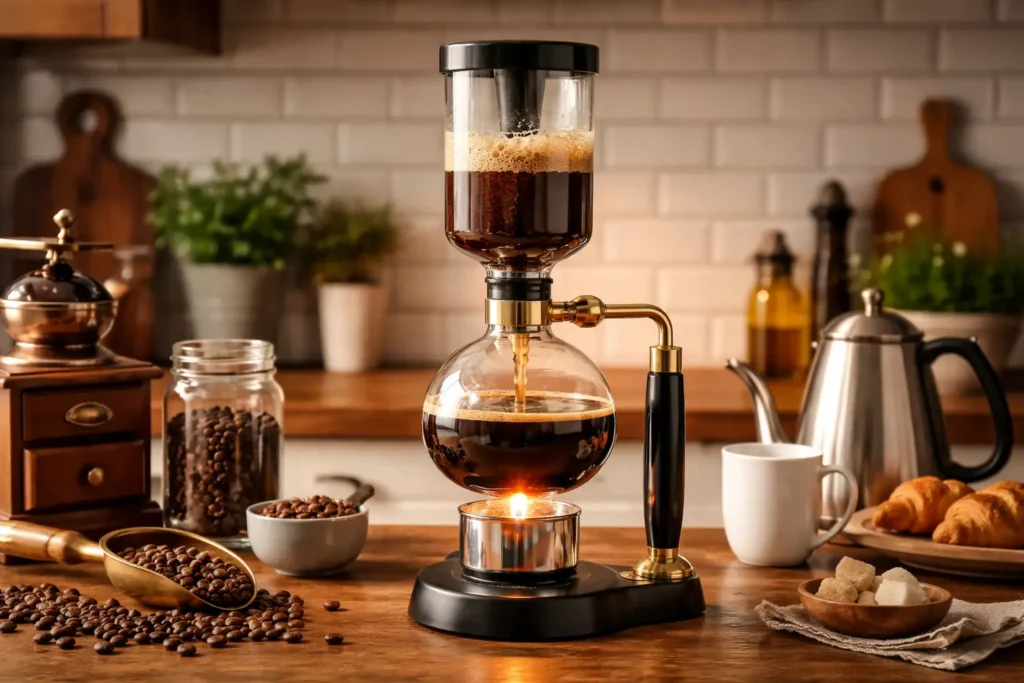
Siphon coffee makers (vacuum brewers) aren’t just coffee theater—they can produce an unusually clean, sweet cup with huge aroma and impressive flavor separation. This guide breaks down the best siphon coffee makers to buy, the extraction science behind vacuum brewing, and exactly how to brew (and troubleshoot) like a pro at home.
Disclosure: As an Amazon Associate, we may earn from qualifying purchases. Some links may be sponsored/affiliate links at no extra cost to you.
A quick siphon story (and why people fall in love with vac pot coffee)
The first time I watched siphon coffee brewed in a café, it didn’t feel like “making coffee.” It felt like a ritual. The barista set two glass chambers onto a stand, lit a flame underneath, and the whole brewer came to life—water rising like it had a mission, coffee blooming in the upper globe, and then the best part: the drawdown, where the brewed coffee gets pulled back down through the filter with a quiet, satisfying whoosh.
But the real reason siphon brewing sticks with you isn’t the visuals—it’s the taste. The cup is often cleaner than French press, sweet like immersion, and more aromatic than most pour-overs. When everything is dialed in, siphon coffee can make a single-origin taste almost “higher resolution.” That’s the promise of a great siphon coffee maker—and exactly what this guide helps you achieve.
⚡ Quick Takeaways
- Best Overall: Hario Technica — reliable seal, consistent drawdown, easiest parts replacement.
- Best Value: Yama Glass — excellent cups with a smaller budget (great if you can stovetop brew).
- Best Electric: KitchenAid Siphon Brewer — siphon profile with fewer heat-management variables.
- Best Minimalist: Bodum PEBO — smaller footprint, simpler setup, strong daily-driver potential.
- Dial-in focus: Medium-fine grind + controlled steep + proper drawdown = sweet, clean cups.
- Watch drawdown: Too slow = bitter; too fast = thin. Drawdown speed is your “truth serum.”
What is a siphon coffee maker (vacuum brewer)?
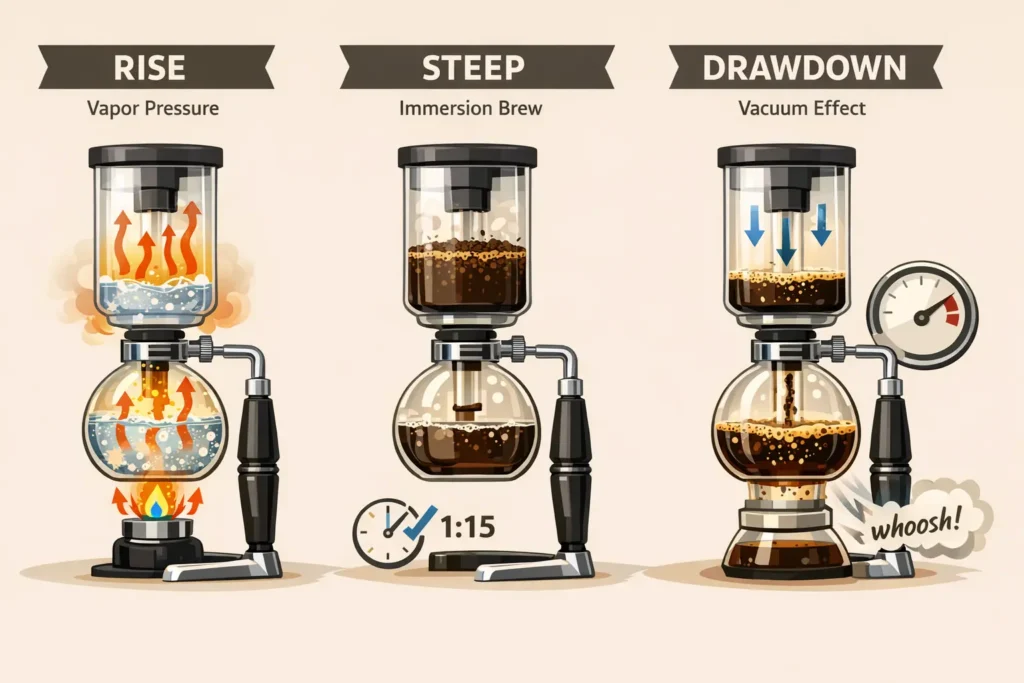
A siphon coffee maker—also called a vacuum coffee brewer or vac pot—uses two chambers, a filter (cloth, paper, or metal), and heat to brew through a cycle of vapor pressure and vacuum drawdown. It’s immersion brewing and filter brewing rolled into one: you steep coffee grounds in hot water in the upper chamber, then brewed coffee gets pulled back down through the filter into the lower chamber.
Why siphon coffee tastes different
Siphon brewing is famous for producing a cup that lands in a sweet spot: clean like a pour-over, but with roundness and sweetness similar to immersion. Because the brew is filtered during drawdown, you get less sediment than French press, and because the coffee spends time fully immersed, you often get more even extraction than a rushed pour-over.
| Method | Body | Clarity | Aromatics | Consistency | Best for |
|---|---|---|---|---|---|
| Siphon (Vac Pot) | Medium | High | Very High | High (once dialed) | Light/medium roasts, aroma-forward cups |
| Pour-over | Low–Medium | Very High | High | Medium | Tea-like clarity, delicate profiles |
| French press | High | Low | Medium | High | Bold cups, heavy body |
| Auto drip | Medium | Medium | Medium | High | Convenience, daily volume |
Best siphon coffee makers (Top Picks for 2026)
These are the siphon brewers I’d point a friend toward depending on their kitchen setup and patience level. The goal here is simple: help you buy once, avoid frustrating “why won’t this rise?” moments, and get to the part that matters—the cup.
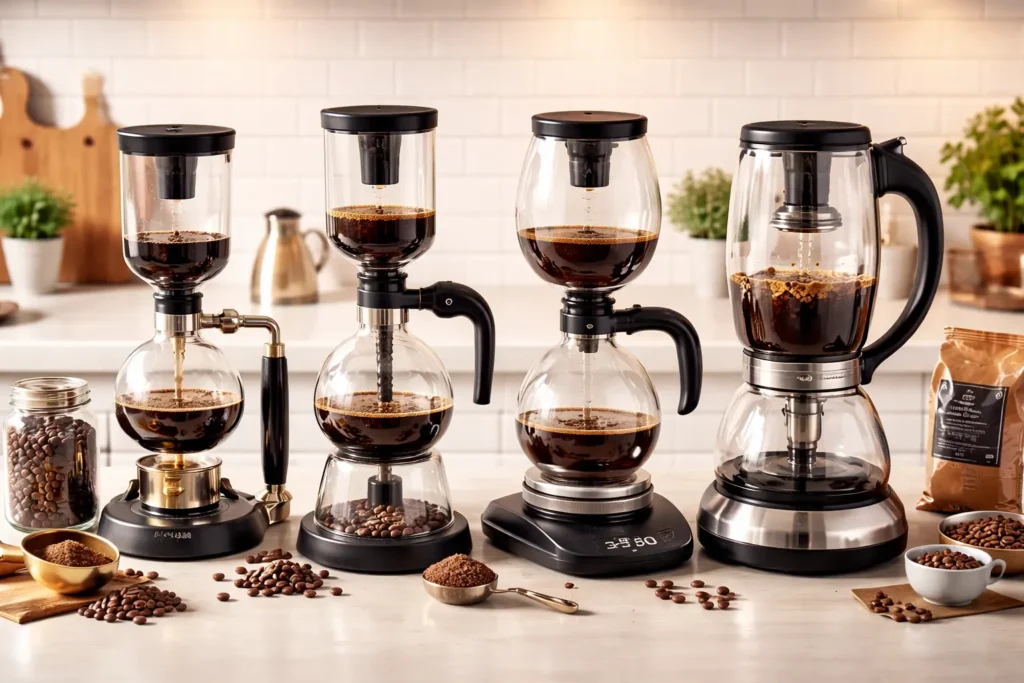
3–5 Cup
Stovetop Siphon
Siphon Brewer
Vacuum Brewer
Full reviews (what it’s actually like to live with each siphon brewer)
🏆 Hario Technica (3–5 Cup) — Best Overall
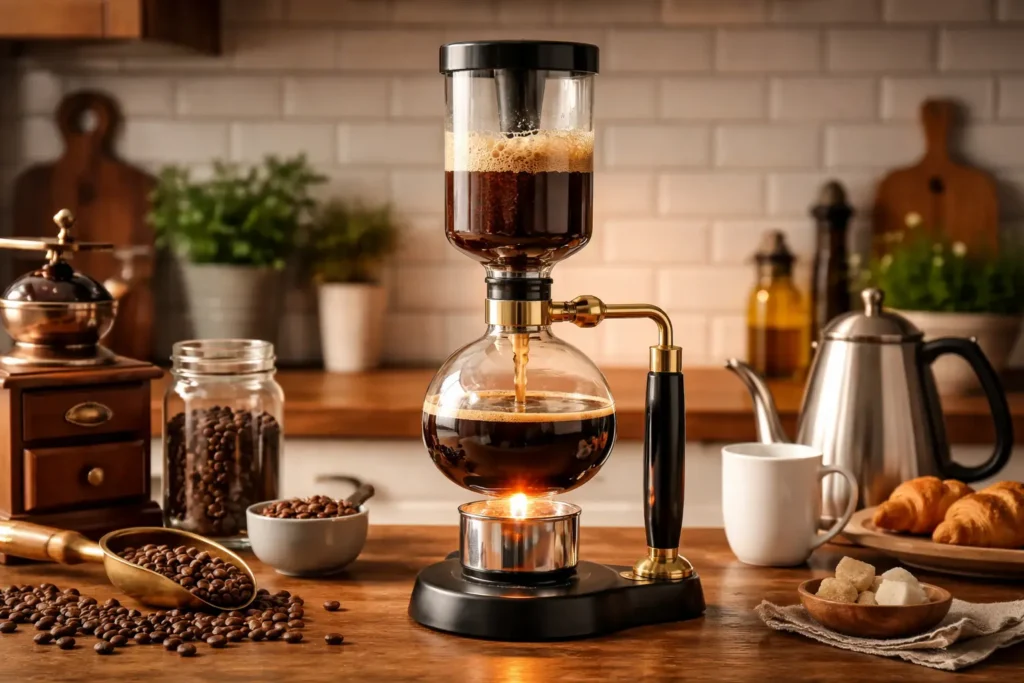
Affiliate link — we may earn a commission at no extra cost to you.
Why this is worth it: the tighter seal + more predictable drawdown saves you from the two biggest beginner pain points—water not rising and drawdown stalling—so you get to “great cups” faster.
Here’s the honest truth about the Hario Technica: it’s the siphon brewer that makes you feel like you’re good at siphon coffee sooner. Not because it “cheats,” but because the fundamentals—seal, glass quality, filter fit—are simply more predictable. When you’re learning vacuum brewing, that predictability matters.
In day-to-day use, the Technica is a rhythm brewer. Once you find a grind that gives you a 20–35 second drawdown, you’ll start seeing repeatable cups: clean finish, clear aromatics, and a sweetness that’s hard to get from many drip machines. If you brew light or medium roasts (Ethiopia, Kenya, washed Colombia, bright Central American coffees), this is where siphon coffee feels like it’s playing to its strengths.
Who it’s for
- Home brewers who want a reliable siphon that won’t punish them for small mistakes.
- Anyone who values parts availability (filters, gaskets, accessories) long-term.
- People who love aroma-forward cups and want more separation than French press.
What we like (real-world)
- Consistent gasket seal = less “why won’t it rise?” frustration.
- Clean drawdown when dialed—great clarity without feeling watery.
- Easy maintenance loop: rinse right away, store cloth filter properly, repeat.
- Excellent learning platform for understanding extraction variables.
Watch-outs
- Cloth filters need care (rinsing + periodic replacement) to avoid stale flavors.
- Glass is strong but not invincible—treat assembly like lab glassware, not cookware.
Bottom line: If you want a siphon coffee maker that’s easier to master and easier to keep running for years, the Hario Technica is the safest “best overall” bet.
💰 Yama Glass Stovetop Siphon — Best Value
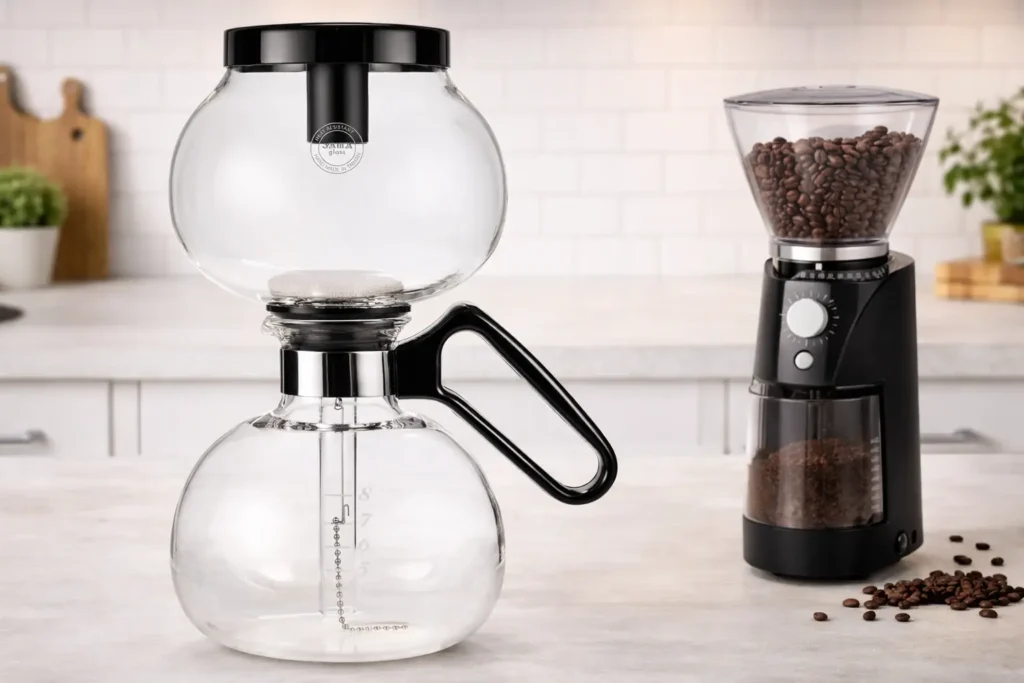
Why pick Yama? You get real vacuum-brewer cup quality with less upfront cost—perfect if you’re still deciding whether siphon is your “forever” method.
Best comparison logic: if you’re unsure you’ll brew weekly, Yama is the lower-risk way to test siphon without sacrificing cup quality.
The Yama Glass siphon is the one I recommend when someone says, “I want to try siphon brewing… but I’m not ready to go full coffee scientist.” It’s a value pick, not a compromise pick. Once you nail your grind and heat routine, Yama can produce cups that are shockingly close to higher-priced siphons.
Where Yama shines is in practicality: stovetop compatibility (especially with gas) can make the entire setup feel less fussy. Instead of a separate burner, you can keep your routine contained to your normal cooking space. That means you’re more likely to brew with it regularly—which matters, because siphon gets more fun the more familiar it becomes.
Who it’s for
- First-time siphon buyers who want a lower cost of entry.
- People with a gas stovetop and a preference for fewer moving parts.
- Anyone willing to learn one key habit: watch drawdown, then adjust grind.
What we like
- Excellent price-to-performance (the cup quality ceiling is high).
- Stovetop potential simplifies setup (depending on your model/cooktop).
- Great “training wheels” for understanding vacuum brewing mechanics.
Watch-outs
- Seal sensitivity can be slightly less forgiving than Hario—take 10 seconds to seat everything properly.
- Replacement parts can be less universal than Hario, so confirm availability before buying.
Bottom line: If you want siphon coffee without a premium price tag, Yama is the smartest value play—especially if your stovetop setup is compatible.
✨ Bodum PEBO Vacuum Brewer — Best Minimalist

Why pick PEBO? You keep the vacuum-brewed “clean sweetness” while skipping the full stand-and-burner aesthetic.
Best comparison logic: if you want siphon-style flavor but hate counter clutter, PEBO is the easiest “leave it out” option.
The Bodum PEBO is siphon brewing for people who want the flavor but don’t want their kitchen to look like a science fair. It’s cleaner visually, typically simpler to store, and can feel more “daily-driver” than the classic stand-mounted siphon style.
In the cup, PEBO tends to be especially satisfying with medium roasts: chocolaty, caramel-forward, nutty profiles—coffees that taste “complete” without requiring extreme clarity. If your taste leans toward comfort and sweetness more than ultra-bright florals, this is a very happy place to land.
Who it’s for
- Smaller kitchens and minimalist counters.
- Brewers who want vacuum-style cups without managing a full siphon stand setup.
- People who brew medium roasts most days and want “clean + sweet + easy.”
What we like
- Compact footprint and simpler storage.
- Approachable routine—less “setup ceremony,” more “make coffee.”
- Great for balanced coffees where sweetness matters more than maximum clarity.
Watch-outs
- Not the top pick if you chase ultra-light roasts and want maximum floral separation.
- Like all vacuum brewers, it still rewards a good burr grinder and consistent ratio.
Bottom line: The PEBO is the “beautiful and practical” siphon-style brewer—perfect if you want vacuum-brewed sweetness without a stand-mounted rig.
⚡ Tiger Siphonysta Brewing Machine — Best Electric
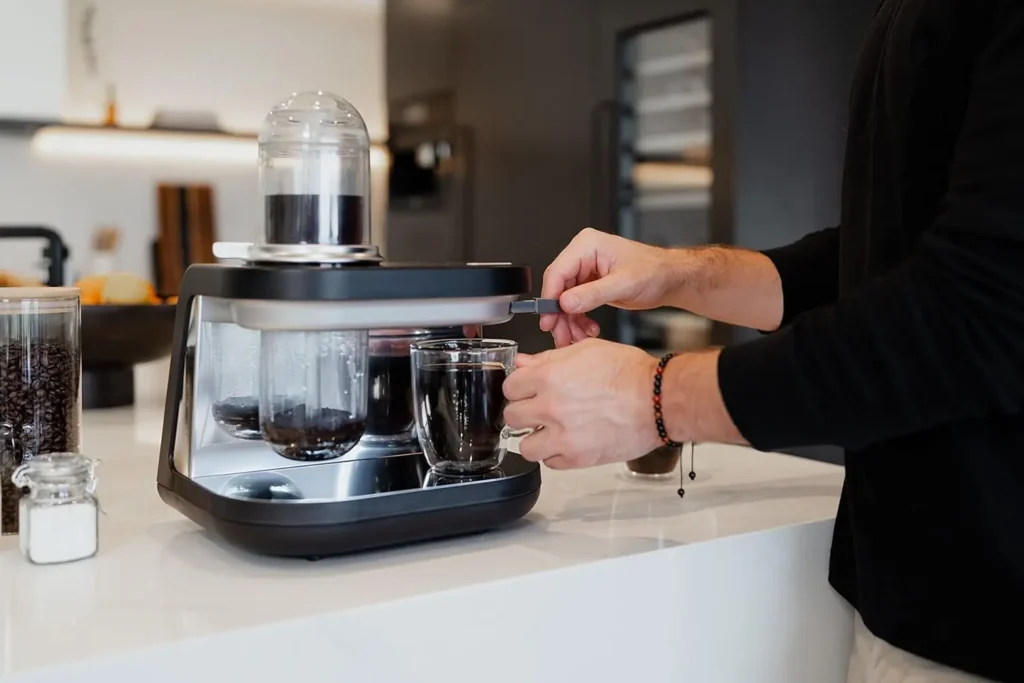
Why go electric? It removes the toughest siphon variable (heat control), so your results improve faster and stay consistent.
Best comparison logic: if you want siphon taste but not siphon “babysitting,” electric is the sanity saver.
An electric siphon brewer is the shortcut that still feels “legit.” With the Tiger Siphonysta Brewing Coffee Maker, you’re not adjusting flame height or guessing when to pull heat. The machine controls temperature curves and timing automatically, which means your focus shifts away from heat management and toward what actually shapes flavor—grind size, ratio, steep time, and drawdown behavior.
Where traditional siphons feel artisanal, the Siphonysta feels engineered. It keeps the clarity and aromatic structure siphon brewing is known for, but adds programmable consistency that removes much of the trial-and-error. That makes it especially appealing if you want repeatable, café-level cups without managing burners or manually timing every phase.
This is the pick for people who want siphon coffee as a precision-driven daily routine—not just a ritual brewing experience. You lose some of the old-school drama, but you gain something arguably more important: reliable sweetness, stable extraction, and fewer unpredictable cups.
Who it’s for
- Upgraders who already care about brew variables and want automation without sacrificing quality.
- Tech-forward brewers who appreciate programmable extraction control.
- Anyone who loves siphon flavor but prefers stainless steel durability and electric stability over open flame setups.
What we like
- Programmable heating removes the biggest learning curve in siphon brewing.
- Consistent temperature control improves sweetness and clarity.
- Premium stainless-steel-enhanced design feels substantial and long-lasting.
- Delivers a refined, aromatic cup that still tastes authentically siphon.
Watch-outs
- Higher price than many glass siphons.
- Less “hands-on theater” compared to manual burner models.
- Single-serve orientation may not suit large-batch brewing.
Bottom line: If your #1 goal is repeatable precision with premium build quality, the Tiger Siphonysta is the strongest high-end electric siphon choice. It keeps the essence of vacuum brewing while dramatically reducing the guesswork.
Roaster pick for siphon
Siphon brewing is incredibly sensitive to freshness and roast quality. If you’ve ever had a siphon cup that tasted oddly flat, there’s a good chance it wasn’t the brewer—it was stale coffee or a roast profile that didn’t match the method.
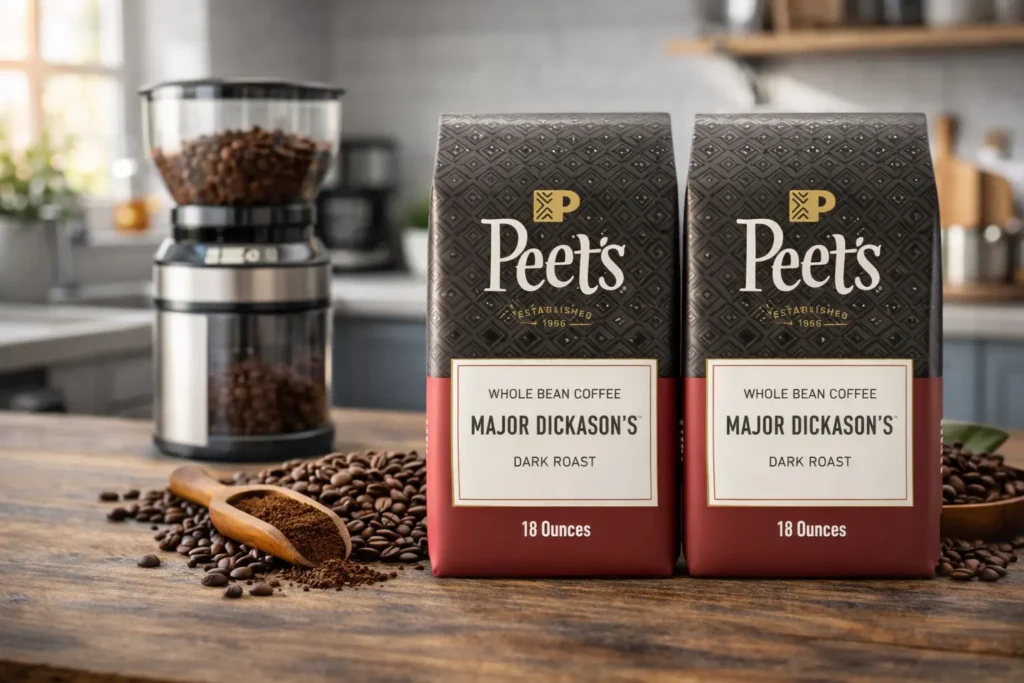
Peet’s Coffee (Roaster Pick for Siphon)
If you like siphon coffee with deep sweetness and a structured finish, a Peet’s-style profile can shine—especially when you want richness without drowning the cup in sediment.
- Best for: medium-to-dark cups (chocolate, caramel, toasted nut)
- Why it works: siphon stays clean while preserving sweetness and aroma
- Dial-in tip: shorten steep time a touch to avoid bitterness on darker roasts
Why this beats “any random beans”: siphon amplifies aroma and exposes defects—better roast consistency usually means fewer harsh, flat, or papery cups.
Comparison table: which siphon brewer fits your life?
If you’re stuck between two models, match them to your real routine: time, heat source, parts availability, and how often you’ll actually brew.
| Brewer | Best For | Heat Source | Skill Level | Cup Profile | Parts Support |
|---|---|---|---|---|---|
| Hario Technica | Enthusiasts, most households | Butane / alcohol | Intermediate | Clean, sweet, aromatic | Excellent |
| Yama Glass | Budget-first, stovetop friendly | Stovetop / burner | Beginner–Intermediate | Clean with a touch more body | Good |
| Bodum PEBO | Small kitchens, simple routine | Stovetop | Beginner–Intermediate | Balanced, sweet, approachable | Good |
| KitchenAid Electric | Repeatable daily use | Electric base | Beginner | Consistent, clean, aromatic | Very Good |
Siphon extraction science (why the method can taste “clean + sweet”)
If you want consistently great siphon coffee, here’s the mindset shift: siphon brewing isn’t “mystical.” It’s just a very visible way to manage the same extraction variables that control every other method—temperature, time, agitation, grind size, and filtration. The reason siphon feels special is because you can see the brew phase and see the drawdown.
1) Vapor pressure + vacuum drawdown = built-in brew cycle
In a siphon, water rises into the upper chamber because heating the lower chamber increases pressure. When you remove heat, the vapor cools and condenses, creating a partial vacuum that pulls brewed coffee back down through the filter. That drawdown is doing double duty: it’s a filtering step and it’s a final extraction control step. If drawdown is too slow, more compounds extract (often bitterness and dryness). If it’s too fast, you risk under-extraction (thin, sour, hollow cups).
2) Immersion extraction: why siphon can taste sweeter than pour-over
Immersion brewing tends to extract more evenly because all grounds are exposed to water at similar concentration over time. In pourover, parts of the bed can see “fresh” water while other parts see concentrated water—creating uneven extraction if your technique isn’t consistent. In siphon, once coffee is added, the water and grounds share the same environment. That makes it easier to achieve a cup that feels sweet, rounded, and balanced, especially when your ratio and steep time are consistent.
3) Filtration: cloth vs paper vs metal changes clarity, body, and aroma
Filters don’t just change “sediment.” They change perceived sweetness, body, and aromatics—because oils and fine particles carry flavor.
| Filter | Clarity | Body | Aroma Feel | Best For |
|---|---|---|---|---|
| Cloth | High | Medium | Rich + clean | “Classic siphon” balance |
| Paper | Highest | Low–Medium | Bright + crisp | Very light roasts, tea-like cups |
| Metal mesh | Medium | High | Bold + heavy | French-press fans |
4) The drawdown “tells you everything”
If you only remember one siphon rule, make it this: drawdown behavior is your feedback loop. It reflects grind distribution, filter condition, and extraction dynamics.
- Ideal drawdown: ~20–35 seconds (often a sweet spot for clarity + sweetness).
- Too slow (45s+): likely too fine / too many fines / filter clogging → bitter, drying finish.
- Too fast (<15–20s): likely too coarse / under-extracted → thin, sour, hollow cup.
5) Water chemistry matters more than you think
Siphon coffee’s clarity makes water issues obvious. If your cup tastes flat, chalky, or strangely bitter even with fresh coffee, water mineral balance can be the culprit. In plain terms: you want enough minerals to extract sweetness, but not so much hardness that the cup tastes dull. If you’re serious about siphon brewing, your “next level” upgrade is often better water, not a new brewer.
Siphon coffee recipe (step-by-step, repeatable)
This is a dependable baseline siphon recipe you can scale for any vacuum brewer. Start here, then dial grind and steep time based on drawdown and taste.
Recipe at a glance
Coffee: 36g
Water: 540ml
Ratio: 1:15
Water temp: 90–93°C (194–200°F)
Steep: 60–90 sec
Grind: medium-fine
Filter: cloth (pre-soaked)
Drawdown target: 20–35 sec
Total time: ~5–7 min
- Prep your filter. Soak the cloth filter in hot water for 2–3 minutes (reduces fabric taste and improves flow). Seat it properly—this prevents cloudy cups and drawdown stalls.
- Preheat your water. Heat water in a kettle first, then add it to the lower chamber. This shortens brew time and improves consistency.
- Start heating the lower chamber. Apply heat and place the upper chamber on top loosely at first. Seal fully once water is ready to rise.
- Watch the rise. Water will move into the upper chamber. A small amount remaining below is normal.
- Add coffee + stir gently. Add grounds, then stir 5–10 seconds to fully wet everything. Start timer.
- Steep (60–90 seconds). Keep heat modest—avoid a raging boil in the upper chamber.
- Stir once mid-steep. A gentle stir at ~45 seconds improves even extraction (don’t whip air in).
- Remove heat to trigger drawdown. No heat = vacuum forms. You can wrap a cool damp cloth around the lower chamber to speed drawdown.
- Target drawdown 20–35 seconds. If it stalls, you’re too fine or clogged. If it rips through, you’re too coarse.
- Serve immediately. Siphon coffee is amazing slightly cooled—give it 1–2 minutes in the cup before tasting.
Troubleshooting: taste → cause → fix
Most siphon problems reduce to four variables: grind, steep time, temperature, and drawdown speed. Fix those and the method becomes surprisingly consistent.
| Symptom | Likely cause | Fix |
|---|---|---|
| Bitter / dry finish | Over-extraction (steep too long or drawdown too slow) | Shorten steep 15s; coarsen grind; speed drawdown with cool cloth |
| Sour / thin | Under-extraction (too coarse or too short) | Fine grind slightly; extend steep 15s; confirm 90–93°C water |
| Cloudy / gritty | Filter seating issue or worn filter | Re-seat filter + chain; replace cloth if old |
| Water won’t rise | Seal not tight or heat too low | Check gasket; increase heat; preheat water first |
| Drawdown stalls | Too fine or clogged filter | Coarsen 1–2 steps; rinse filter; reduce fines (better grinder) |
Internal linking strategy map (Coffee Gear Hub)
Use these anchors to strengthen topical authority and help Rank Math connect this guide to your brewing cluster.
| Where to link from (this page) | Anchor text | Internal URL |
|---|---|---|
| Grind & drawdown sections | grind size explained | /grind-size-explained/ |
| Recipe + dial-in notes | How to Dial In Coffee at Home | /how-to-dial-in-coffee-at-home/ |
| Water chemistry section | water quality for better coffee | /water-quality-for-better-coffee/ |
| Accessories (grinders) | best burr grinders | /best-burr-grinders/ |
| Freshness / storage | best coffee storage containers | /best-coffee-storage-containers/ |
| Care & maintenance | coffee equipment maintenance | /coffee-equipment-maintenance-care/ |
FAQs
What is the best siphon coffee maker for beginners?
If you want the smoothest learning curve with reliable parts support, the Hario Technica is the best place to start. If you prefer fewer heat variables, an electric siphon brewer like the KitchenAid can be even easier. If price is the main factor, Yama Glass is a strong value option once you dial grind and drawdown.
Is siphon coffee better than pour-over?
It depends on what you value. Siphon coffee often tastes sweeter and more aromatic because of immersion extraction, while pour-over often produces the most transparent clarity. If you love aroma and sweetness, siphon can feel “bigger.” If you prefer tea-like delicacy, pour-over may win.
What grind size should I use for siphon coffee?
Use a medium-fine grind—finer than drip, coarser than espresso. Your best indicator is drawdown speed: aim for roughly 20–35 seconds. If drawdown stalls, go coarser; if it finishes too fast and tastes thin, go finer.
Why won’t my siphon coffee maker rise?
The most common causes are an imperfect seal between chambers, heat that’s too low, or not enough water volume for the brewer size. Make sure the gasket is seated properly, increase heat, and brew near the brewer’s intended capacity.
Why is my siphon coffee bitter?
Bitterness usually means over-extraction: steep time too long, water too hot (hard boiling), or drawdown too slow due to a grind that’s too fine or a clogged filter. Reduce steep time, lower heat intensity, coarsen slightly, and ensure your filter is clean.
How often should I replace a cloth filter?
A good rule is every 2–3 months with regular use, sooner if it develops persistent odors or drawdown slows. Rinse immediately after brewing and store it clean to avoid stale flavors.
Can I use a siphon coffee maker on an induction cooktop?
Most traditional glass siphons aren’t induction-compatible. If you have induction, use a separate butane burner (safely) or choose an electric siphon brewer with its own heating base.
What coffee beans work best for siphon brewing?
Light to medium roasts with floral, fruity, or caramel-forward notes often shine in siphon because the method highlights aroma and clarity. Dark roasts can work, but the method can also expose harsh roast flavors if the coffee is very dark or stale.
How do I clean a siphon coffee maker?
Rinse both chambers after each brew. Rinse the cloth filter immediately in warm water (avoid soap on cloth filters). Weekly, wash the lower chamber with mild dish soap. Replace cloth filters periodically to prevent stale oil flavors.
What’s the ideal siphon coffee ratio?
Start at 1:15 (coffee:water) and adjust. If the cup tastes thin, increase coffee slightly (1:14). If it tastes heavy or bitter, reduce coffee slightly (1:16) and check drawdown speed.
Next reads
If you want better siphon coffee fast, these guides will move the needle more than buying another brewer.
|
Dial In Like a Pro
Use a repeatable process to fix sour/bitter cups and improve sweetness.
Read: How to Dial In Coffee →
|
Grind Size (with chart)
Get drawdown under control (the #1 siphon variable).
Read: Grind Size Explained →
|
Water Quality
Unlock sweetness and clarity with better mineral balance.
Read: Water Quality Guide →
|