
V60 vs Kalita Wave vs Chemex Filters: Taste, Flow & Brew Behavior
Editorial standards: this guide compares brewer-specific paper geometry, flow resistance, cup behavior, and recipe implications. Reusable-filter material is covered separately.
At a glance
What this guide covers
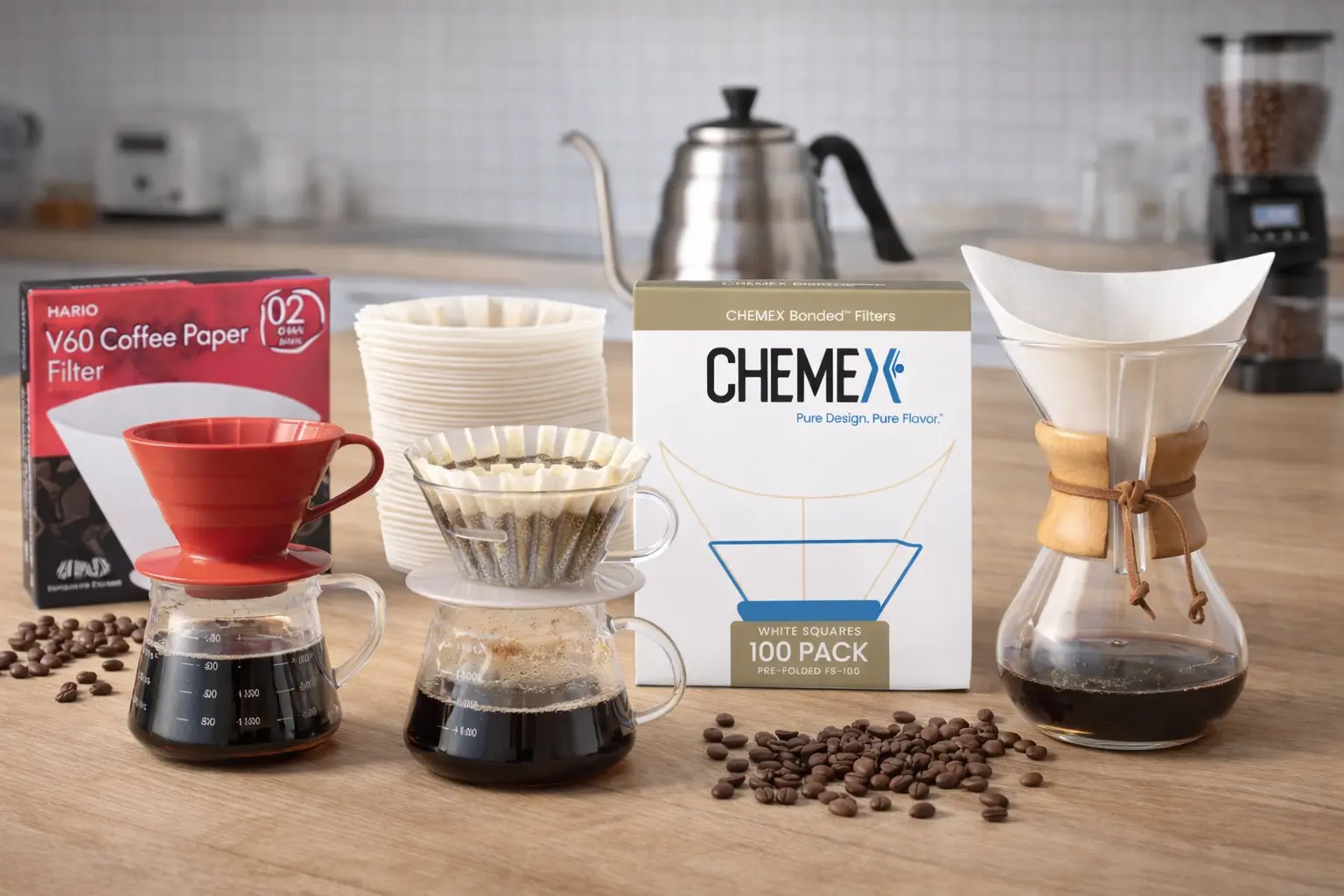
V60, Kalita Wave, and Chemex paper filters are not interchangeable. Their geometry and thickness change how water moves through the coffee bed, what reaches the cup, and how the recipe needs to be dialed in.
Editorial analysis
The paper and brewer form one hydraulic system
Comparing these filters makes sense only in the context of their intended brewers. Cone paper, wave paper, and thick bonded paper each create a different resistance profile, so the same grind and recipe should not be expected to transfer unchanged.
Filter Geometry Changes More Than Just Paper Shape
V60, Kalita Wave, and Chemex filters are designed around three different brewer geometries. The paper supports the coffee bed, controls how quickly liquid reaches the brewer outlets, and determines how much oil and fine material reaches the cup. That makes filter design part of the extraction system rather than a disposable accessory.
The V60 uses a cone filter with relatively open flow. The Kalita Wave uses a flat-bottom fluted paper that works with three small outlets. Chemex bonded paper is much thicker and creates substantially more resistance while removing more oil and fine sediment.
V60 vs Kalita Wave vs Chemex Filters at a Glance
| Filter system | Shape | Relative resistance | Typical cup tendency | Recipe implication |
|---|---|---|---|---|
| V60 | Cone | Low to moderate | High clarity and flavor separation | Often starts medium-fine; pouring has large influence |
| Kalita Wave | Flat bottom / fluted | Moderate | Balanced sweetness and body | Often starts slightly coarser than V60 |
| Chemex | Large cone / bonded paper | Highest | Very clean, light-bodied, low sediment | Usually needs a coarser grind, especially for larger batches |
Compare the three paper systems
V60, Kalita Wave, and Chemex filters
These are the brewer-specific paper formats discussed throughout the guide. They are grouped here so the comparison can stay focused on flow, cup character, and recipe implications.
 Hario V60 02 FiltersCone paper with relatively open flow and broad third-party availability.View on Amazon →
  Kalita Wave 185 FiltersFlat-bottom wave paper designed to work with the brewer’s three-outlet base.View on Amazon →
  Chemex Bonded FiltersThick proprietary paper that creates the highest resistance and cleanest cup of the three.View on Amazon →
Affiliate disclosure: These links may earn CoffeeGearHub a commission at no additional cost to you. As an Amazon Associate, we earn from qualifying purchases.
V60 Paper: Open Flow and High Recipe Sensitivity
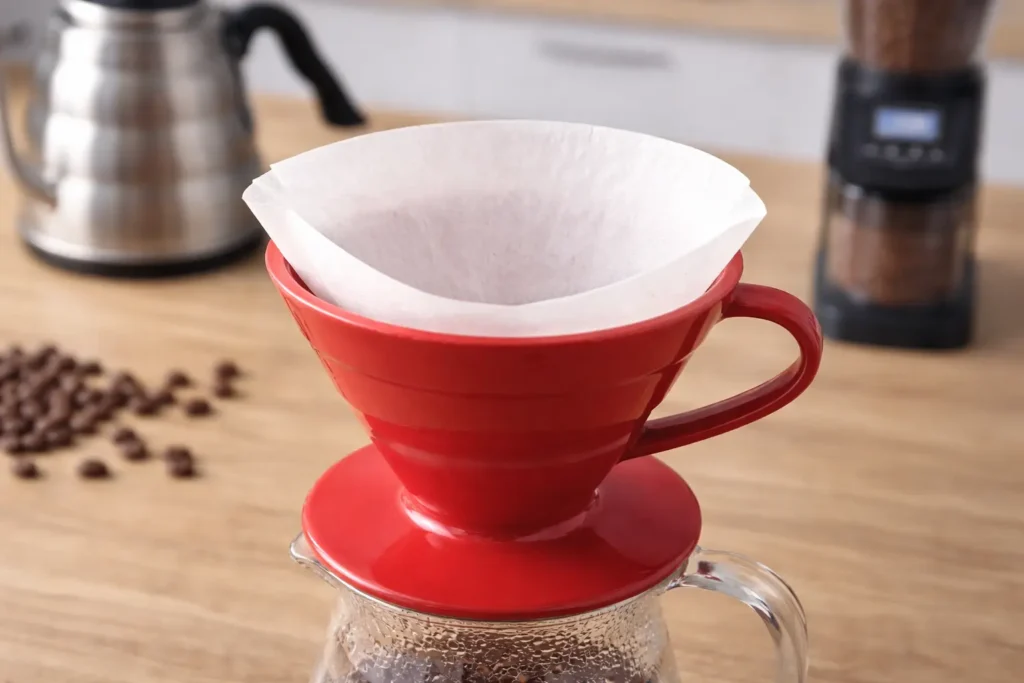
V60 paper follows the brewer’s steep cone and large central opening. Because the brewer adds little fixed resistance, paper flow and grind size matter a great deal. A faster V60 paper can shorten drawdown enough to make the same recipe taste sharper, while a slower paper can create a stalled or drying brew without any grinder change.
This is why V60 users often notice differences between standard Hario paper and faster specialty papers such as abaca-based options. Those differences are useful, but they mean grinder settings should be treated as filter-specific rather than universally transferable.
Kalita Wave Paper: The Filter Helps Define the Flat Bed
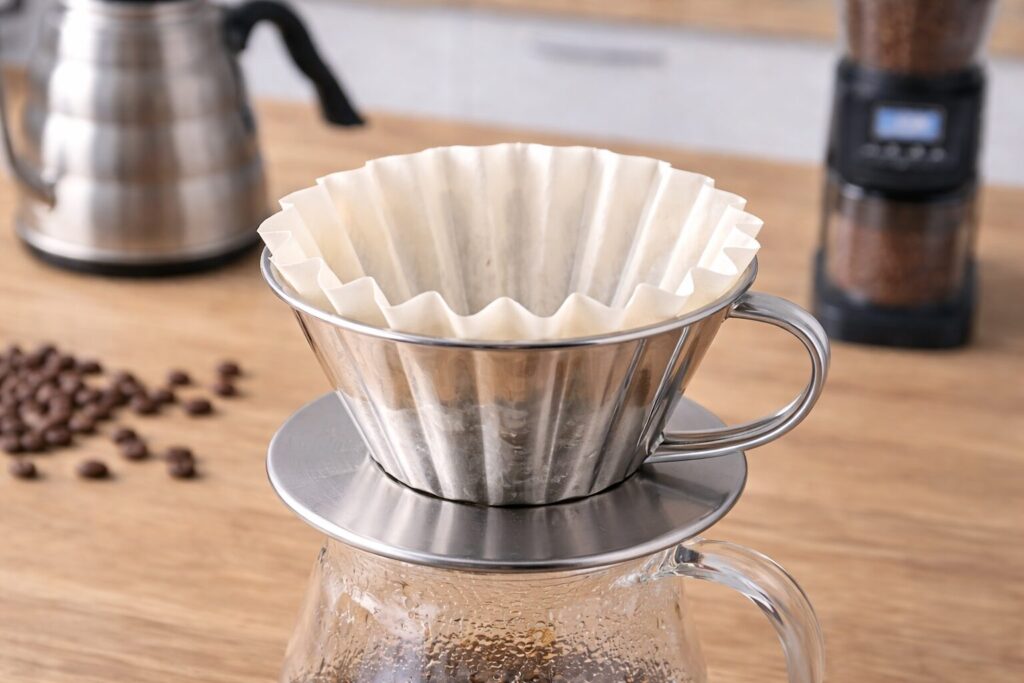
Kalita Wave paper is not just a flat-bottom version of cone paper. The vertical waves reduce the amount of paper touching the brewer wall, helping preserve air space and encouraging water to move toward the three outlets at the base. The paper therefore works together with the brewer geometry to create the Wave’s characteristic resistance.
Size matters: Wave 155 and 185 filters correspond to different brewer sizes and are not intended to be interchangeable. A crushed or poorly seated filter can change flow dramatically by blocking the bottom outlets or collapsing the wave structure.
Chemex Bonded Paper: Thick Filtration Is the Point
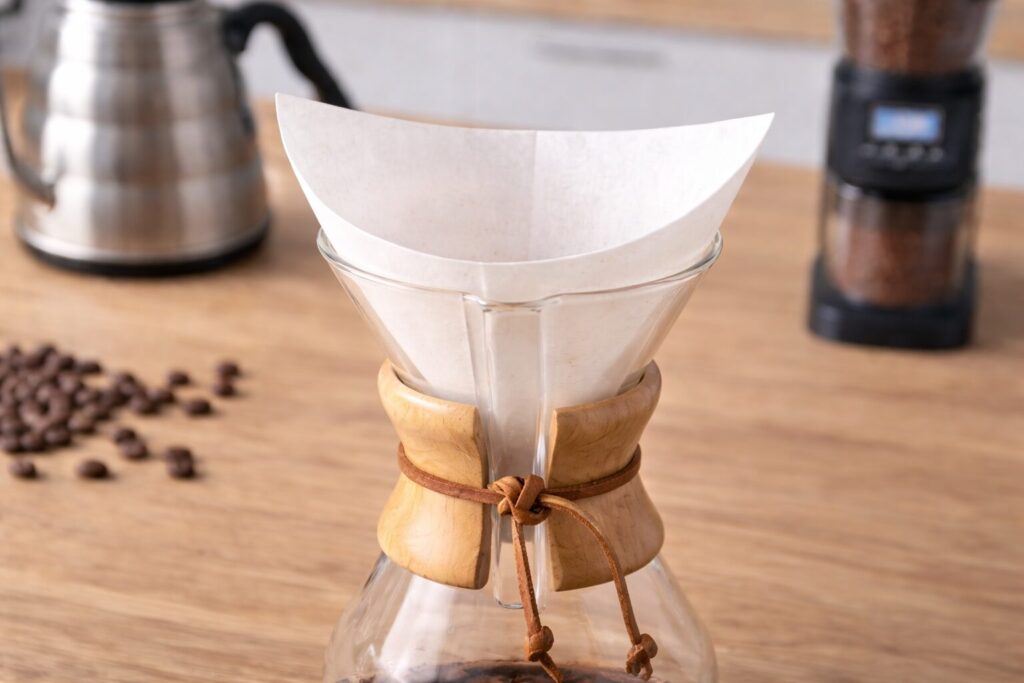
Chemex paper is significantly thicker than typical pour-over paper. That extra material creates more hydraulic resistance and removes more suspended oil and fine particles, which is why a Chemex cup often tastes unusually clean and light in body.
The thicker filter also makes recipe transfer less straightforward. A grind that works in a V60 can choke a Chemex, particularly when the dose is larger. The filter must also be positioned so the thicker multi-layer side does not block the pouring spout and prevent air from escaping.
How the Three Filter Systems Tend to Change the Cup
| Cup factor | V60 paper | Kalita Wave paper | Chemex bonded paper |
|---|---|---|---|
| Clarity | High | Medium to high | Very high |
| Body | Light to medium | Medium | Light |
| Flavor separation | High when dialed in | Balanced and integrated | Very clean, sometimes more delicate |
| Sediment | Very low | Very low | Extremely low |
These are tendencies produced by filter and brewer design working together. Roast, water chemistry, grinder quality, and recipe still have enough influence to blur the differences.
The Same Grinder Setting Should Not Be Expected to Work in All Three
The V60’s open drainage often supports a finer grind. The Kalita Wave adds more resistance, so it may need a modest move coarser. Chemex bonded paper adds enough resistance that larger batches commonly require a clearly coarser setting.
| Brewer/filter | Starting grind | What to do if drawdown stalls |
|---|---|---|
| V60 | Medium-fine | Move slightly coarser or reduce agitation |
| Kalita Wave | Medium | Check filter seating and outlets, then move coarser |
| Chemex | Medium-coarse | Move coarser and verify the filter is not blocking the spout |
Paper Brand and Manufacturing Variation Can Change Flow
Two filters with the same nominal shape can behave differently because fiber source, thickness, pore structure, seam construction, and manufacturing location all affect hydraulic resistance. This is most obvious in V60 brewing, where changing paper brand can alter drawdown enough to require a new grinder setting.
That does not mean one paper is universally better. A faster filter can be useful with a grinder that produces many fines or with a coffee that tends to stall. A slower paper can add useful resistance when a recipe drains too quickly. The important part is to treat the paper as a recipe variable rather than assuming every cone or wave filter is identical.
| Paper behavior | Likely brew effect | Useful response |
|---|---|---|
| Faster-than-usual flow | Shorter contact time, potentially sharper cup | Try slightly finer grind or gentler pour changes one at a time |
| Slower-than-usual flow | Longer contact time, potentially drying finish | Try slightly coarser grind or reduce agitation |
| Inconsistent flow between filters | Recipe becomes difficult to repeat | Use one paper brand/batch while dialing in |
Filter Seating and Folding Can Create Problems That Look Like Grind Problems
A filter that is folded, crushed, or seated incorrectly can restrict air and water movement enough to change the brew dramatically. In a V60, the paper should sit cleanly against the cone without a collapsed seam. In a Kalita Wave, preserving the fluted shape helps prevent the paper from sealing against the brewer wall and blocking flow. In a Chemex, the thicker multilayer side should be positioned so the pouring spout remains open as an air channel.
When a brew suddenly stalls despite using the same grinder setting and coffee, inspect the filter before changing the recipe. A mis-seated filter is a mechanical problem; grinding coarser may mask it without actually solving it.
Coffee Style Changes Which Filter Tendency Is Most Noticeable
Light, aromatic coffees often make the differences between these paper systems easiest to taste. The V60 can emphasize separation and acidity, while Chemex paper can push even farther toward a very clean, delicate presentation. Kalita Wave paper tends to keep more perceived roundness and sweetness in the cup.
With medium and darker roasts, differences in body and roast character may matter more than delicate aroma separation. A Chemex can soften body substantially, while a Kalita Wave can preserve a fuller impression without introducing the sediment associated with metal filtration. The V60 remains flexible because grind and pouring can move the cup in either direction.
| Coffee style | V60 paper | Kalita Wave paper | Chemex paper |
|---|---|---|---|
| Light / floral | High clarity and separation | Balanced sweetness with good clarity | Maximum cleanliness, very light body |
| Medium roast | Flexible and expressive | Rounded, repeatable profile | Smooth and clean |
| Darker roast | Can show roast intensity clearly | Often preserves more body | Reduces oils and heavy texture most strongly |
Filter Resistance Changes How Grind, Agitation, and Batch Size Interact
Filter resistance never acts alone. A larger dose creates a deeper bed. More agitation moves fines toward the paper. A finer grind increases resistance. When all three occur inside a slow paper system, drawdown can become excessive even if each variable would be reasonable on its own.
This is why a Chemex generally tolerates less aggressive grinding than a V60 for the same dose. It is also why a Kalita Wave can stall when a high-fines grinder, heavy agitation, and a full 185-size dose are combined. Recipe design should account for the total resistance of the system rather than looking at paper thickness in isolation.
A Simple Filter Test Can Separate Paper Effects From Recipe Effects
To compare two papers fairly, keep the brewer, coffee, dose, water, temperature, grinder setting, and pouring pattern identical. Change only the filter. Record drawdown and taste. If the paper clearly changes flow, make one grind adjustment and repeat.
That process is especially useful for V60 users comparing standard and faster specialty papers. It prevents a common mistake: changing paper, grind, and pouring at the same time and then attributing the new flavor to the wrong variable.
Rinsing Matters Most When the Paper Is Thick or Aromatic
Rinsing removes loose paper flavor and preheats the brewer. Standard V60 and Kalita papers usually need enough hot water to wet the full filter. Chemex paper benefits from a more generous rinse because there is more paper mass to heat and more surface area that can contribute a papery note if used dry.
Discard rinse water before adding coffee. If switching paper brands, keep the rinse routine consistent so it does not become another uncontrolled variable.
Paper Storage Can Affect Flavor Before Brewing Starts
Paper is porous, so it can absorb kitchen odors and humidity during storage. Filters kept beside spices, scented cleaning products, or an open coffee-bean bag can pick up aromas that show up in a delicate brew. This matters most with light-roast coffee, where subtle off-flavors are easier to notice.
Keep filters dry, enclosed, and away from strong smells. Kalita Wave papers also benefit from storage that prevents the flutes from being crushed, while Chemex papers are easier to use when the folds remain clean and flat. Proper storage does not improve extraction directly, but it removes avoidable flavor contamination and helps the filter seat consistently.
Cost and Storage Affect the Real Ownership Experience
V60 paper is the easiest of the three systems to source from multiple brands. Kalita Wave paper is more specialized and size-specific. Chemex paper is proprietary and usually costs more per brew. If a particular paper is difficult to find locally, that supply friction matters more than a small difference in brewer purchase price.
| System | Availability | Storage concern | Ownership note |
|---|---|---|---|
| V60 | Very broad | Keep dry and odor-free | Multiple brands make recipe experimentation easy |
| Kalita Wave | Good online, variable locally | Protect waves from crushing | Buy the correct 155 or 185 size |
| Chemex | Broad but proprietary | Bulky; keep dry and flat enough to fold cleanly | Higher recurring cost is part of the Chemex system |
This Comparison Is About Paper Geometry, Not Reusable Filters
Metal and cloth filters change the cup in a different way because they allow more oils or fine particles through. If the decision is paper versus reusable material, use the dedicated Paper vs Metal vs Cloth comparison. This guide is specifically about how the three major paper-filter systems behave inside their intended brewers.
One more practical point: when replacing a familiar filter with a new brand or paper type, treat the first few brews as a fresh dial-in rather than judging the paper from one cup. Small changes in resistance can look like a coffee problem until the grinder and pouring are recalibrated.
Choose the Filter System Together With the Brewer
Choose V60 paper when you want a widely available cone system with high recipe flexibility. Choose Kalita Wave paper when you prefer a flat-bottom brewer that builds more consistency into the workflow. Choose Chemex bonded paper when very clean filtration and larger-batch serving are worth the higher resistance and recurring filter cost.
The filter should not be chosen independently of the brewer. In all three systems, paper shape and brewer geometry are designed to function together.
FAQs: V60 vs Kalita Wave vs Chemex Filters
Are V60 filters interchangeable with Kalita or Chemex?
No. Each system requires its own filter shape and thickness. Using the wrong filter can cause poor fit, clogging, overflow, or inconsistent extraction. V60 uses a cone shape, Kalita Wave uses a flat-bottom fluted shape, and Chemex uses a thick bonded square or circle filter — none of these are interchangeable.
Which pour-over filter is best for beginners?
Kalita Wave is usually the easiest starting point because the flat-bottom design with wave flutes promotes even extraction and reduces channeling. It produces consistent, sweet cups with less sensitivity to pour pattern and technique compared to V60.
Do Chemex filters remove caffeine?
No. Chemex filters primarily remove oils and fine particles — not caffeine. Caffeine content in your cup depends on dose, brew ratio, and extraction time, not filter thickness.
Are bleached paper filters safe?
Yes. Oxygen-bleached (chlorine-free) paper filters are food-safe and widely used across all three systems. Rinsing the filter with hot water before brewing removes any residual paper taste and preheats the brewer.
Should I rinse paper filters before brewing?
Yes, always. Rinse with hot water to remove paper taste, preheat your dripper and server, and discard the rinse water before adding coffee. This improves clarity and produces a more consistent starting temperature.
Which pour-over filter highlights fruity or floral coffee best?
V60 filters tend to highlight brighter acidity and aromatics most effectively, making them the popular match for fruity or floral light roasts from origins like Ethiopia and Kenya. The faster flow and thinner paper preserve delicate aromatic compounds that slower, thicker filters can mute.
Can I use the same grind size for V60, Kalita Wave, and Chemex?
Not ideally. Each filter has a different flow rate that requires a corresponding grind adjustment. V60 typically works best at medium-fine, Kalita Wave at medium, and Chemex at medium-coarse. Using too fine a grind in a Chemex will stall the drawdown and produce bitter, over-extracted coffee.
How long do paper filters last in storage?
Paper filters do not have a strict expiration date, but they can absorb odors and moisture over time. Store them sealed in a dry cabinet away from spices, cleaning products, or other strong smells. Filters stored properly can last for years without quality loss.
Should I use a reusable metal filter instead of paper?
It depends on your preference for body and clarity. Metal filters allow more oils and micro-fines to pass through, producing a heavier-bodied cup. Paper filters produce a cleaner, brighter cup. If you find paper-filtered coffee too thin, a metal filter is worth trying. If you want maximum clarity, stick with paper.
Which filter is best for medium-dark or dark roast coffee?
Chemex filters are typically the best match for medium-dark to dark roasts because the thick bonded paper removes more of the oils that can amplify bitterness at darker roast levels. Kalita Wave is a solid second choice. V60’s faster flow and thinner paper tends to emphasize roasty bitterness in darker roasts more than the other two.
CoffeeGearHub shortlist
Compare the brewer pages behind the filters
Continue Learning
In this guide
- Filter Geometry Changes More Than Just Paper Shape
- V60 vs Kalita Wave vs Chemex Filters at a Glance
- V60 Paper: Open Flow and High Recipe Sensitivity
- Kalita Wave Paper: The Filter Helps Define the Flat Bed
- Chemex Bonded Paper: Thick Filtration Is the Point
- How the Three Filter Systems Tend to Change the Cup
- The Same Grinder Setting Should Not Be Expected to Work in All Three
- Paper Brand and Manufacturing Variation Can Change Flow
- Filter Seating and Folding Can Create Problems That Look Like Grind Problems
- Coffee Style Changes Which Filter Tendency Is Most Noticeable
- Filter Resistance Changes How Grind, Agitation, and Batch Size Interact
- A Simple Filter Test Can Separate Paper Effects From Recipe Effects
- Rinsing Matters Most When the Paper Is Thick or Aromatic
- Paper Storage Can Affect Flavor Before Brewing Starts
- Cost and Storage Affect the Real Ownership Experience
- This Comparison Is About Paper Geometry, Not Reusable Filters
- Choose the Filter System Together With the Brewer
- FAQs: V60 vs Kalita Wave vs Chemex Filters