Coffee Brewing Guides
Coffee brewing methods play a major role in determining how coffee tastes, smells, and feels in the cup. Different brewing techniques use varying levels of pressure, immersion time, filtration, and water flow to extract flavors from coffee grounds. These variables influence the body, clarity, acidity, and strength of the final brew, meaning the same coffee beans can produce very different results depending on the brewing method used.
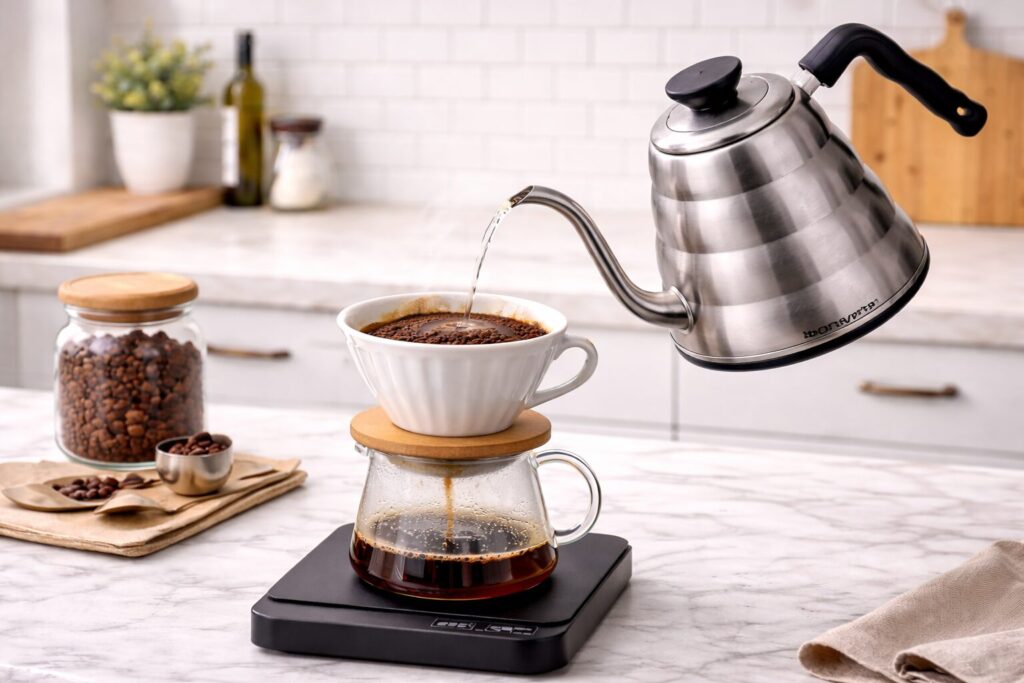
Some brewing methods rely on full immersion, where coffee grounds steep directly in water for a set period of time. Examples include French press and cold brew, which typically produce a rich, full-bodied cup. Other methods use pour-over filtration, such as V60 or Chemex, where hot water is poured slowly over coffee grounds and filtered through paper or metal filters. These methods often highlight clarity, brightness, and subtle flavor notes.
There are also brewing techniques that use pressure or concentrated extraction, such as espresso or moka pot brewing. These methods push water through finely ground coffee to create a stronger, more concentrated coffee with deeper flavors and heavier body.
Choosing the right brewing method often depends on personal taste preferences, available equipment, and how much control you want over the brewing process. Some brewers prioritize convenience and consistency, while others allow for more hands-on control over variables like pour rate, bloom time, and brew ratio.
In this section of CoffeeGearHub, you’ll find detailed guides covering popular brewing methods including pour-over, French press, AeroPress, drip coffee makers, moka pots, and cold brew. Each guide explains how the method works, what grind size to use, recommended brew ratios, and tips for improving extraction.
Whether you’re exploring manual brewing for the first time or refining your home coffee routine, understanding different coffee brewing methods can help you discover new flavors and consistently brew better coffee at home.