Last Updated: February 28, 2026 • 28–38 min read
Moka Pot vs AeroPress is less about which is “better” and more about what you want from coffee day-to-day. A moka pot is a stovetop pressure brewer that naturally produces bold, concentrated coffee that shines in milk drinks. AeroPress is a fast, forgiving immersion brewer that excels at smooth, clean flavor and portable brewing. In this cornerstone guide, we’ll compare flavor, extraction mechanics, grind strategy, brew recipes, troubleshooting, durability, and cost of ownership — then recommend best-selling options on Amazon and the accessories that actually improve results.
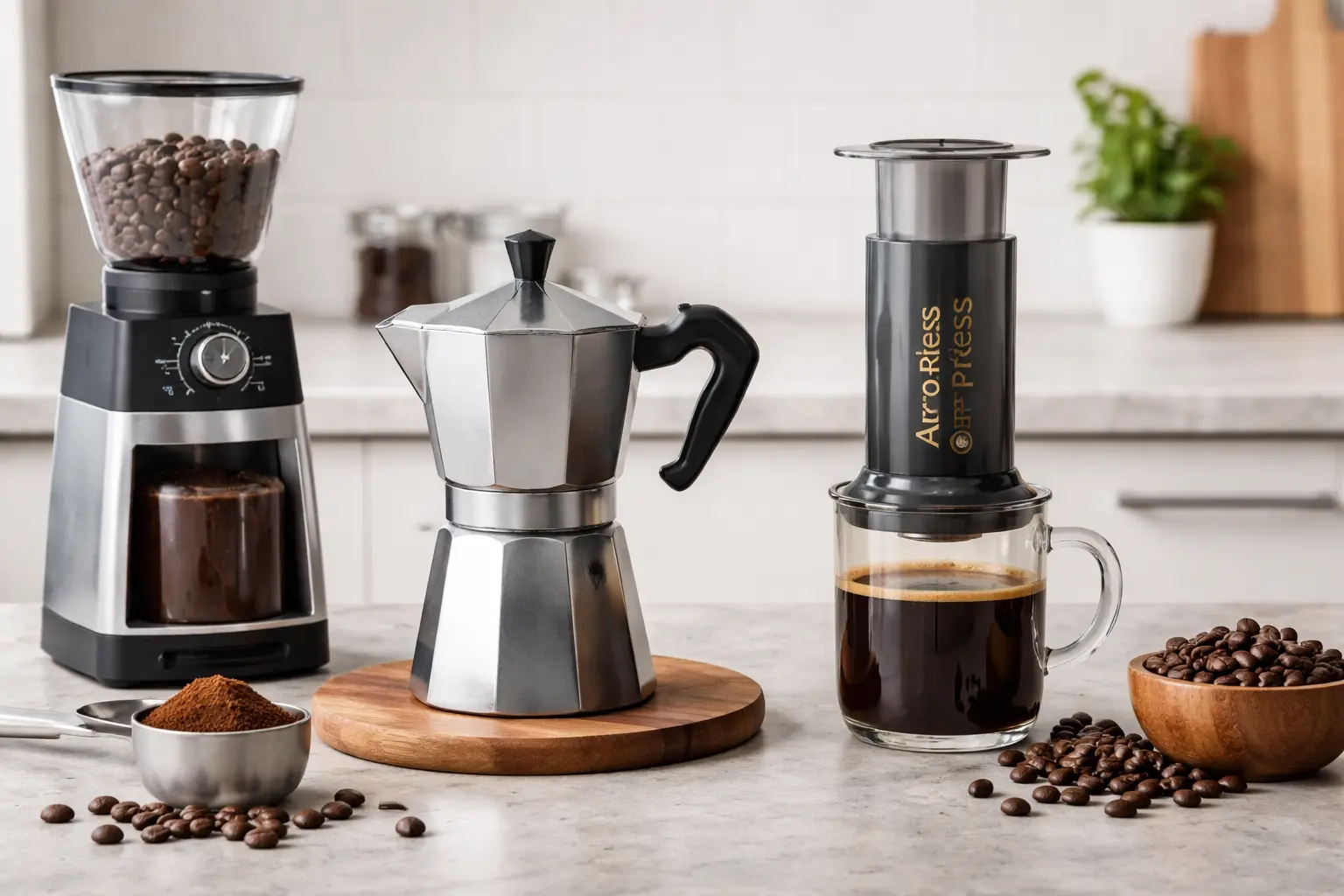
Quick Verdict (Choose in 30 Seconds)
Pick a Moka Pot if…
- You want bold, espresso-style intensity without an espresso machine
- You drink lattes/cappuccino-style drinks at home
- You enjoy stovetop brewing and don’t mind a little technique
- You like heavier body and darker chocolate/roasty flavors
Pick an AeroPress if…
- You want smooth, low-bitterness coffee with clean flavor
- You want fast brewing + easiest cleanup
- You travel, camp, or brew at work
- You want a forgiving brewer that works with many recipes
At-a-Glance Comparison Table
| Category | Moka Pot | AeroPress |
|---|---|---|
| Best flavor style | Bold, heavy, concentrated | Smooth, clean, balanced |
| Body | Thick / textured | Medium (paper), fuller with metal filter |
| Bitterness risk | Higher if overheated | Low (forgiving) |
| Roast preference | Medium–dark shines | Light–medium shines (but flexible) |
| Brew time | 5–8 minutes | 2–3 minutes |
| Cleanup | Moderate | Fast (puck eject) |
| Portability | Needs heat source | Excellent |
| Milk drinks | Excellent base | Works, but lighter body |
Important: grinder quality and freshness of beans impact results more than the brewer choice. If you’re struggling with bitterness or flat flavor, a burr grinder upgrade can be a bigger “taste jump” than switching brewers. (Internal: How to Dial In Coffee at Home)
What Is a Moka Pot (and Why It Tastes “Espresso-Like”)

A moka pot is a stovetop brewer that uses steam pressure (roughly 1–2 bars) to push hot water up through coffee grounds into an upper chamber. It doesn’t reach espresso pressure (typically ~9 bars), but it does create a more concentrated cup than drip or pour-over — with heavier body and a roast-forward profile that pairs exceptionally well with milk.
Moka pot extraction: the “sweet spot” and the danger zone
Moka pots have a rising temperature curve. Early flow is often sweeter and smoother; late flow can become harsh if the pot runs too hot or sputters aggressively. The goal is steady flow on moderate heat — and ending the brew before it turns sharp.
Moka pot baseline recipe (repeatable starting point)
- Grind: medium-fine (slightly coarser than espresso)
- Basket: fill fully, level, do not tamp
- Water: fill to just below the safety valve
- Heat: medium to medium-low (avoid blasting high heat)
- Stop: when flow turns pale/blonde or starts to sputter hard
How to make moka pot coffee smoother (3 high-impact tweaks)
- Lower the heat: slower, steadier flow reduces bitterness.
- Go slightly coarser: reduces harshness when you’re over-extracting.
- Stop earlier: late-stage sputtering is where many harsh notes appear.
If you’re consistently battling bitterness, it’s usually not “bad beans” — it’s too much heat, too fine a grind, or brewing too long. For a universal troubleshooting flowchart, link: How to Dial In Coffee at Home.
Best Moka Pots on Amazon
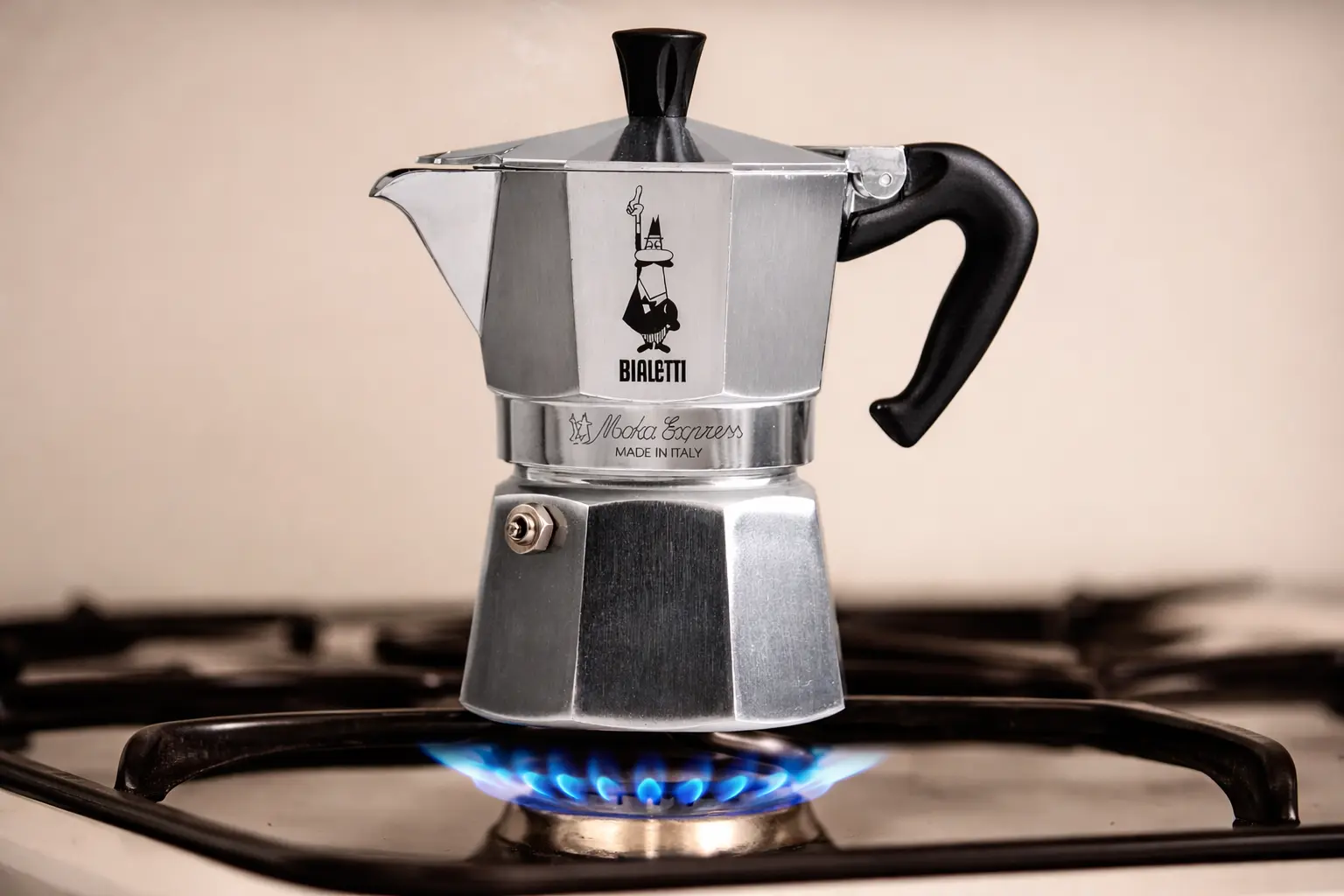
Bialetti Moka Express
Why people buy it: iconic stovetop moka flavor, strong value, widely available sizes.
- Classic aluminum build
- Bold, traditional cup
- Great for milk drinks
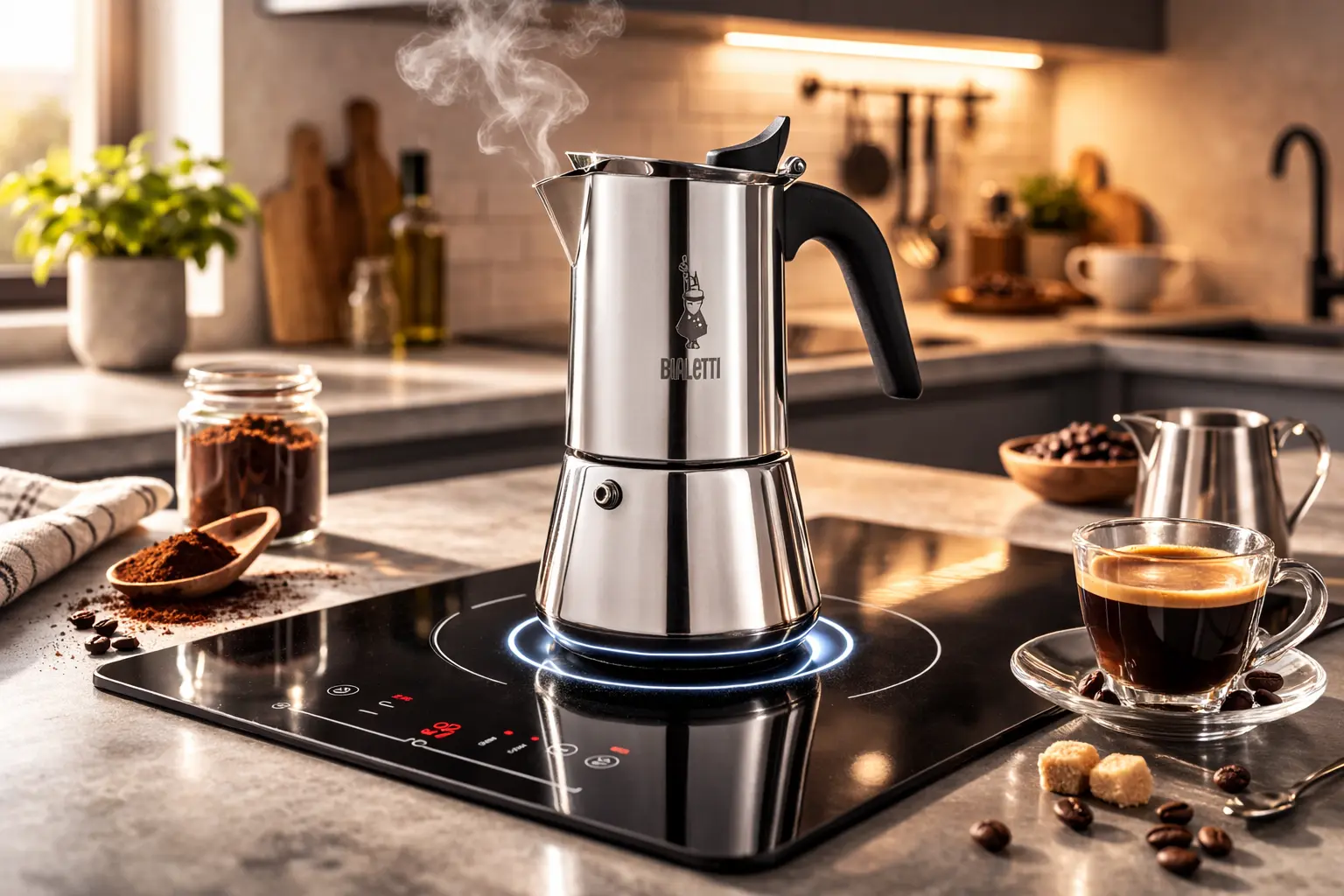
Bialetti Venus (Induction)
Why people buy it: stainless durability + induction compatibility without adapter plates.
- Induction ready
- Stainless steel body
- Easy care and long lifespan
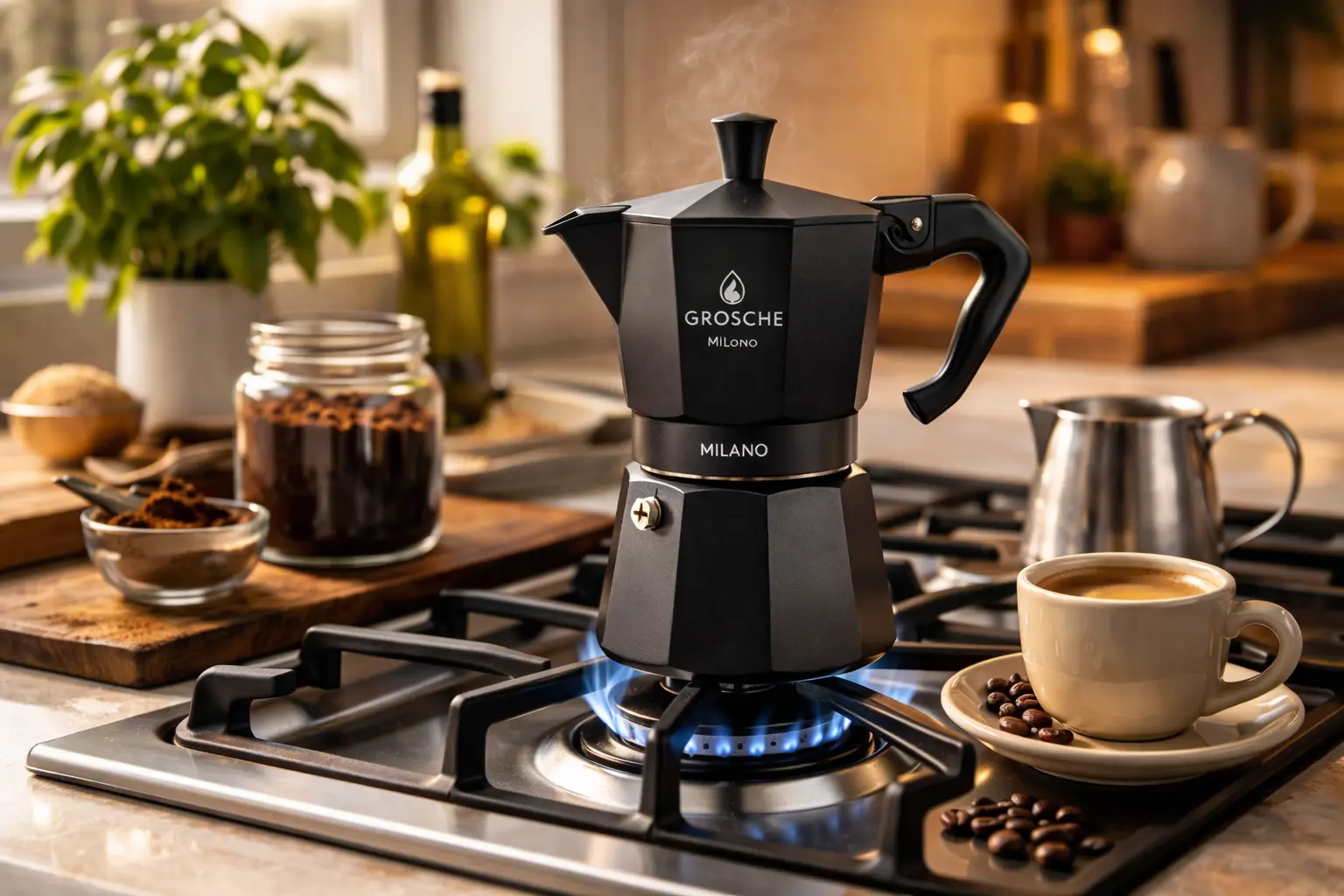
GROSCHE Milano
Why people buy it: strong starter value while still delivering real moka intensity.
- Budget-friendly
- Reliable results
- Often multiple colors
Best “with it” accessories for moka pot (high ROI upgrades)
- Burr grinder: consistency reduces bitterness and improves sweetness (Internal: Best Grinders for Moka Pot)
- Induction adapter plate: if you have induction and an aluminum pot
- Milk frother: biggest upgrade for moka lattes and cappuccino-style drinks
- Scale: repeatability; your best friend for dialing in
What Is an AeroPress (and Why It’s So Consistent)
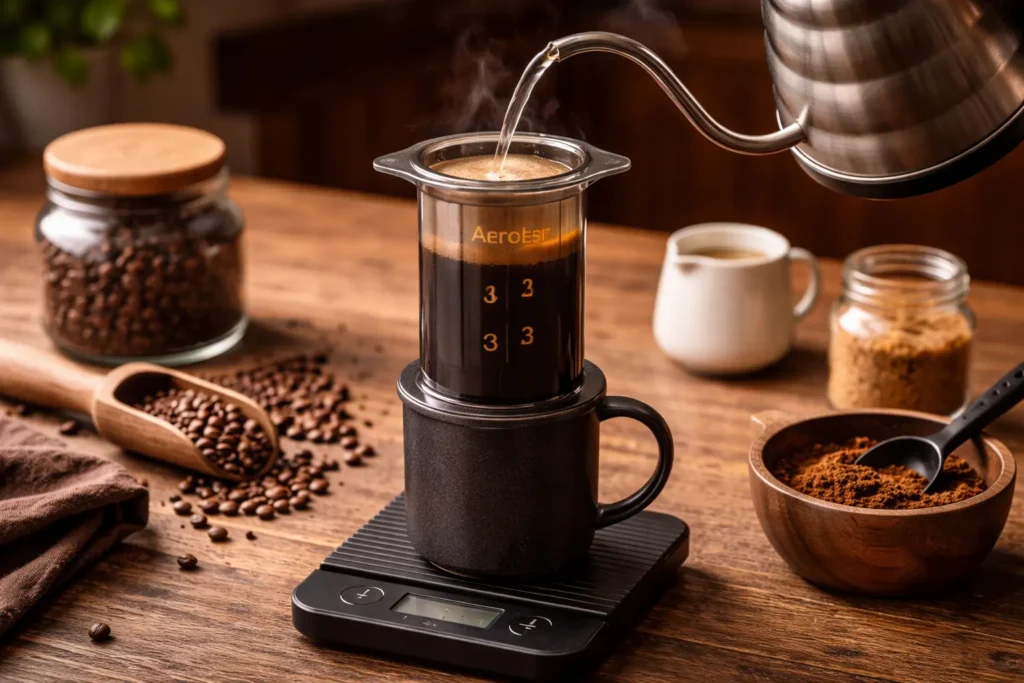
The AeroPress is a manual immersion brewer that finishes with gentle pressure filtration. You steep coffee and water in a chamber, then press through a filter. Because immersion extraction is naturally even and you control water temperature directly, AeroPress is famously forgiving — producing smooth cups with low bitterness even when your timing or grind isn’t perfect.
AeroPress baseline recipe (clean, sweet daily cup)
- Coffee: 15g
- Water: 230g
- Grind: medium
- Temp: ~90–96°C / 194–205°F
- Steep: 60–90 seconds
- Press: 20–30 seconds (gentle)
AeroPress “concentrate” recipe (better for milk)
- Coffee: 18g
- Water: 90–120g
- Grind: medium-fine
- Steep: 60 seconds
- Press: 20–30 seconds
- Then: dilute for Americano or add milk
Paper vs metal filters (taste impact)
Paper filter yields a cleaner cup with more clarity and less oil. Metal filter increases body and can feel closer to moka-style texture, especially with slightly finer grind. If you love “heavier” coffee, metal filters are a smart add-on.
Best AeroPress Models on Amazon
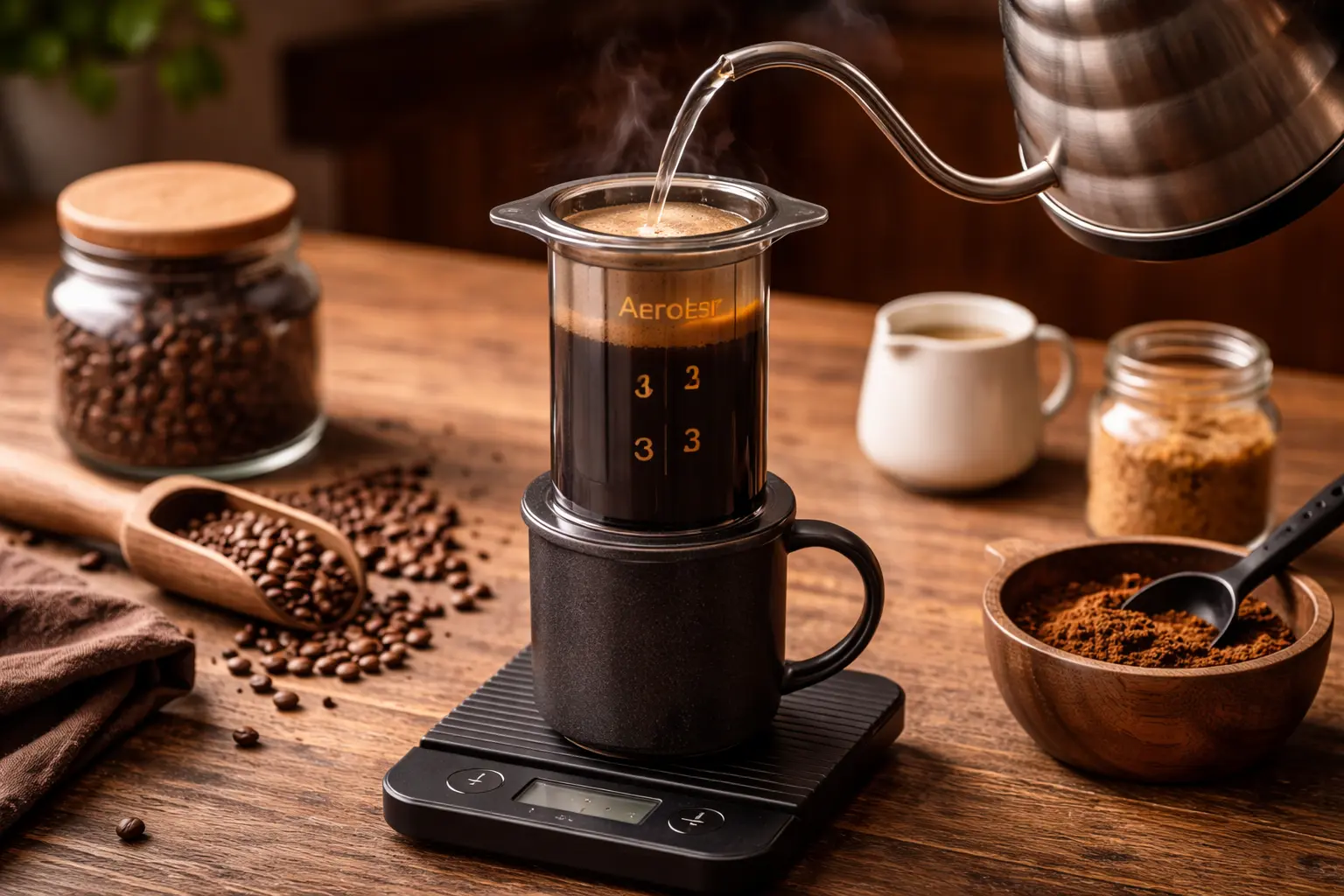
AeroPress Original
Why people buy it: simplest workflow + consistently smooth results.
- Fast brewing
- Very forgiving
- Easy cleanup
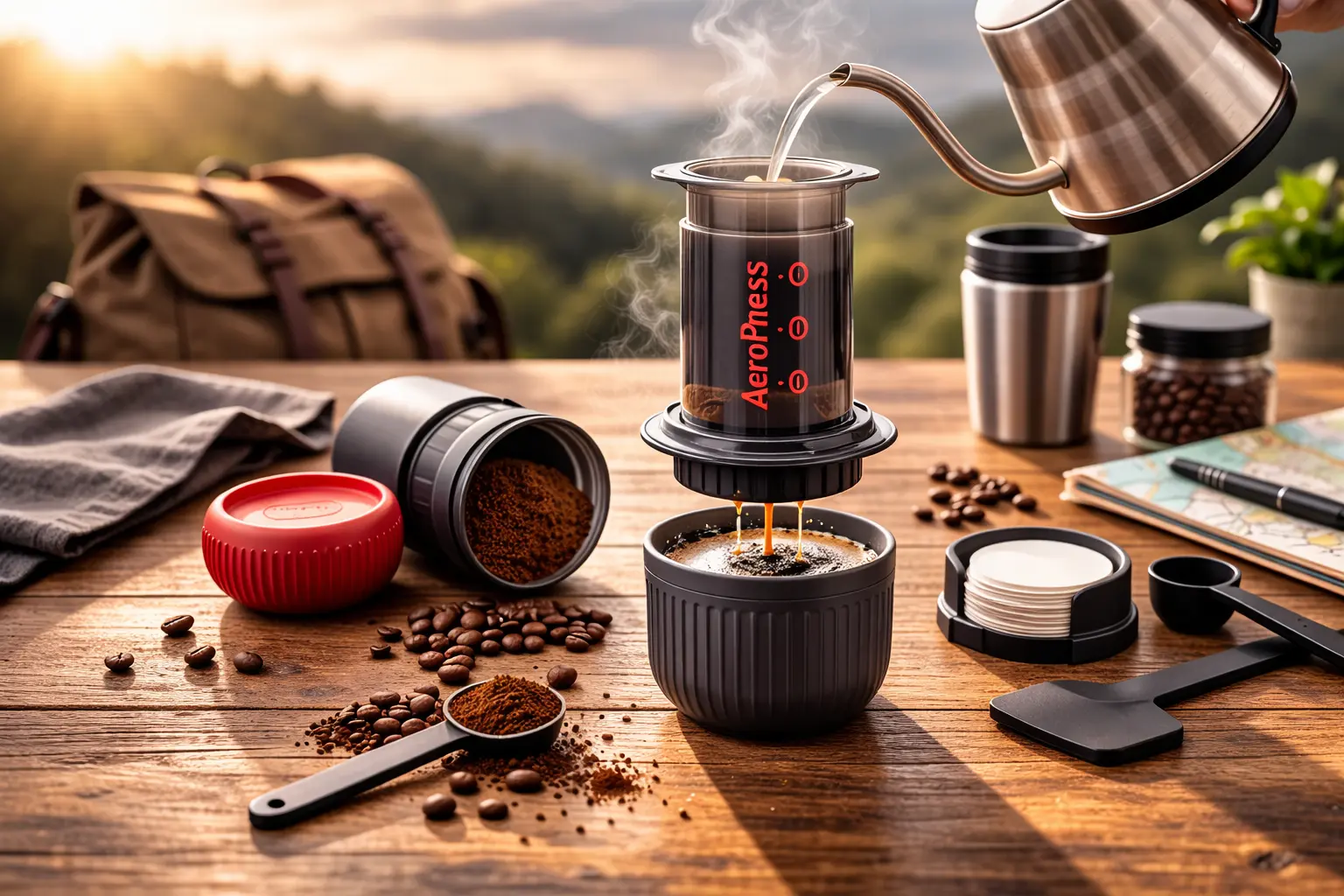
AeroPress Go
Why people buy it: travel/office brewing with a compact carry kit.
- Portable and durable
- Great with hotel kettles
- Consistent anywhere
Best “with it” accessories for AeroPress (what actually improves taste)
- Scale: repeatability and faster dialing in
- Metal filter: more body and texture
- Travel kettle or compact kettle: makes AeroPress a complete travel system
- Burr grinder: biggest upgrade for clarity and sweetness
Extraction Science: Pressure vs Immersion (Why They Taste Different)
Moka pot combines rising temperature with steam pressure pushing water through a compact bed of coffee. This tends to increase body and perceived intensity, but it also amplifies roastiness and bitterness if the brew runs too hot or too long.
AeroPress is primarily immersion extraction, followed by pressure filtration. Immersion is naturally even and forgiving, while paper filtration reduces fines and oils that can taste harsh. This is why AeroPress often tastes smoother and “cleaner” with the same beans.
Strength vs caffeine: what’s actually happening
Moka coffee tastes stronger because it’s more concentrated. But caffeine depends largely on dose and how much you drink. If you use similar grams of coffee and drink similar volumes, caffeine can be comparable. Perceived strength is mostly about concentration and body.
Flavor: Which One Matches Your Taste Preferences?
If you love bold & chocolatey
Choose moka pot with medium-dark roasts. Expect heavier body and a punchy finish that stands up to milk. If bitterness shows up, lower the heat and stop earlier.
If you love smooth & clean
Choose AeroPress, especially with paper filters. It’s excellent for light-to-medium roasts and tends to highlight sweetness and clarity with less bitterness.
Troubleshooting: Fix Bitter, Sour, Weak, or Harsh Coffee
If your moka pot tastes bitter or burnt
- Lower heat (most common fix)
- Grind slightly coarser
- Stop brewing earlier (avoid aggressive sputtering)
- Use fresher beans; old beans can taste hollow and harsh
If your moka pot tastes weak or sour
- Grind slightly finer (but never espresso-fine)
- Ensure basket is fully filled and level
- Check gasket and seal (leaks reduce pressure and extraction)
If your AeroPress tastes bitter
- Reduce steep time
- Lower water temperature
- Grind slightly coarser
If your AeroPress tastes weak or sour
- Grind slightly finer
- Increase steep time to 90–120 seconds
- Use a slightly tighter ratio (more coffee or less water)
For a full “any brew method” dial-in system, link: How to Dial In Coffee at Home.
Which Should You Buy? A Practical Decision Guide
| Your priority | Buy this | Why |
|---|---|---|
| Milk drinks & bold flavor | Moka pot | Natural concentration + heavier body |
| Fast weekday coffee | AeroPress | Quick workflow + easy cleanup |
| Travel / camping / office | AeroPress | Portable, durable, only needs hot water |
| Traditional stovetop ritual | Moka pot | Classic method with strong identity |
| Light roast clarity | AeroPress | Cleaner cup + controllable temperature |
| Induction cooktop | Induction moka pot (stainless) | No adapter plate needed |
Next Reads
| Next Read | Why it matters |
|---|---|
| How to Dial In Coffee at Home | Your universal grind + ratio framework |
| Best Grinders for Moka Pot | Grind consistency is the biggest taste lever |
| Best Coffee Beans for Moka Pot | Beans that shine with moka intensity |
| Arabica vs Robusta | Species differences that change strength and bitterness |
| Best AeroPress Recipes | Dial recipes for clarity, strength, and travel |
FAQs
Is moka pot coffee stronger than AeroPress?
Moka pot coffee usually tastes stronger because it’s naturally more concentrated and heavier-bodied. Caffeine depends mainly on dose and what you drink. AeroPress can match strength with a tighter ratio, but it typically tastes smoother.
Can AeroPress make espresso?
Not true espresso. AeroPress can make concentrate-style coffee, but it doesn’t reach espresso pressure. It can still work as a strong base for milk with the right recipe.
Which is better for beginners?
AeroPress is usually better for beginners because it’s forgiving and consistent. Moka pot can be fantastic but is more sensitive to heat and timing.
Which is better for milk drinks?
Moka pot is generally better for milk drinks because it produces a bolder, more concentrated brew that holds up in milk.
What grind size should I use for moka pot vs AeroPress?
For moka pot, start medium-fine and never tamp. For AeroPress, start medium and adjust finer for more strength/body or coarser for more clarity.
Is moka pot safe on induction?
Only if the moka pot is induction-compatible stainless steel, or if you use an induction adapter plate. Aluminum moka pots are typically not induction-ready.
What’s the easiest way to reduce moka pot bitterness?
Lower the heat, grind slightly coarser, and stop brewing earlier before aggressive sputtering. These three changes solve most bitterness issues.
What’s the best AeroPress setup for travel?
AeroPress Go plus a compact grinder and access to hot water (hotel kettle or travel kettle). A small scale helps consistency if you brew daily on the road.
Should I use paper or metal filters in AeroPress?
Paper filters produce a cleaner cup with more clarity. Metal filters increase body and texture. Choose paper for smoothness and metal for heavier mouthfeel.
Which method is cheaper long-term?
Both are inexpensive. Moka pots may need occasional gasket replacement; AeroPress uses paper filters (unless you use metal). Grinder and beans usually dominate the long-term cost and taste outcomes.