
Last updated: February 2026 • 18–22 min read
Quick takeaway: “Dialing in” just means making small, repeatable tweaks until your coffee tastes balanced. The fastest path is to change one variable at a time—start with grind size, then adjust ratio, and only then tweak time/temperature. This guide gives you a method-by-method playbook for drip, pour-over, and espresso.
Jump to:
Key Takeaways
- Change one variable at a time (grind → ratio → time/temperature).
- Sour = under-extracted (usually grind finer). Bitter = over-extracted (usually grind coarser).
- Use a scale so your “fixes” actually stick.
- Drip & pour-over: start around 1:16. Espresso: start around 1:2 in ~25–30 seconds.
Quick Wins (Gear)
These three upgrades make your “one-variable-at-a-time” changes stick.
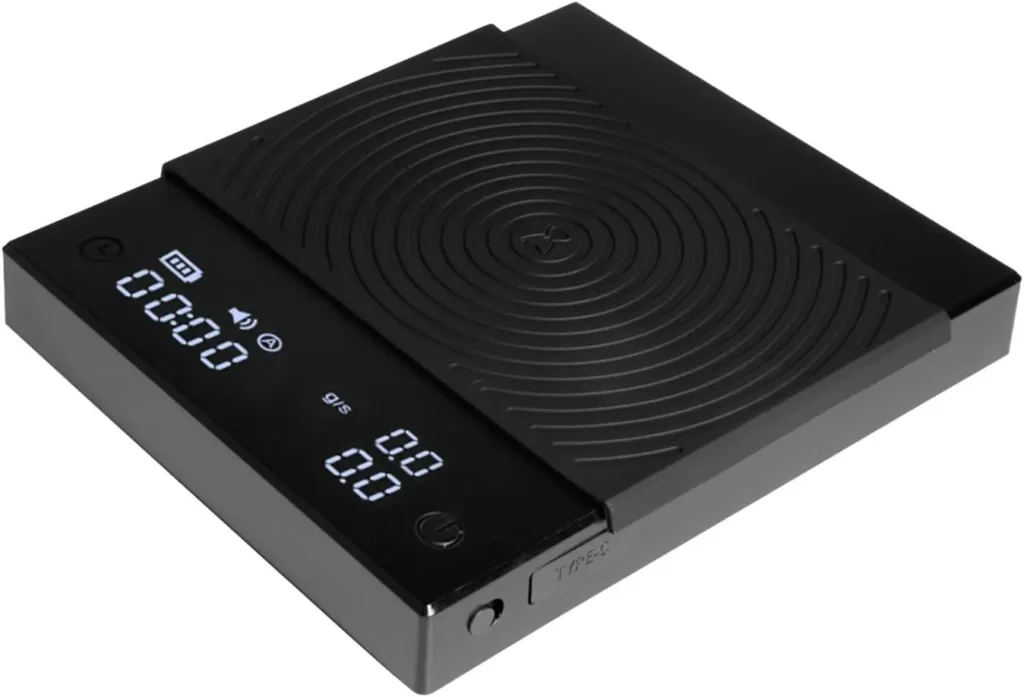
Digital coffee scale
Repeatable ratios for drip + pour-over.

Burr grinder
Even particles = sweeter, cleaner cups.
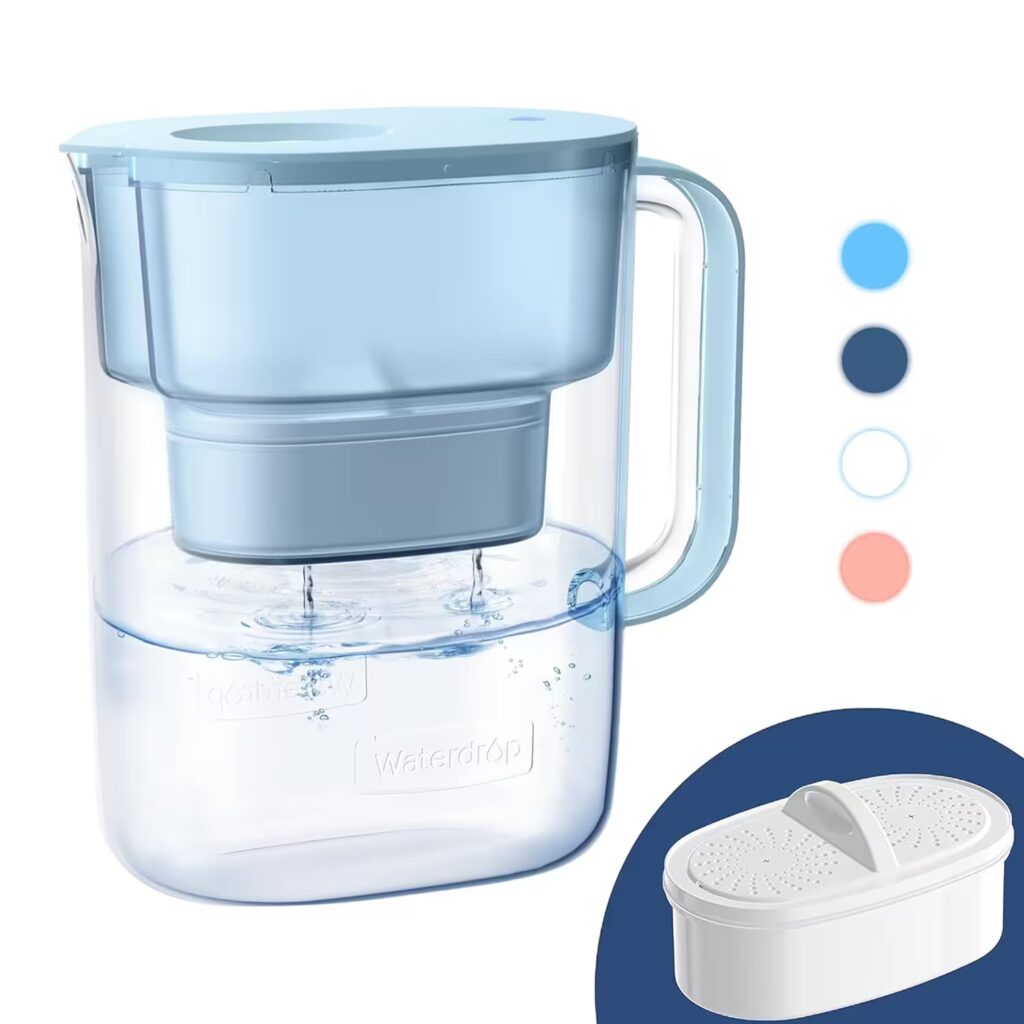
Filtered water
Less harshness, more clarity.
As an Amazon Associate, we may earn from qualifying purchases. Price may vary.
Dialing In Coffee: The Simple Method That Works
Most people “dial in” by guessing—changing grind, ratio, and brew time all at once—then wondering why the next cup is worse. Instead, use this order. It’s fast, repeatable, and works across drip, pour-over, and espresso.
1) Lock in your baseline
- Use the same beans for 3–5 brews.
- Use the same water (filtered if possible).
- Weigh coffee + water (skip scoops).
2) Change grind first
Grind is “flavor control.” If coffee tastes sharp/sour, go finer. If it’s bitter/dry, go coarser. Make small moves and keep everything else the same.
3) Adjust ratio second
Ratio controls strength. If it’s too weak, use slightly more coffee. If it’s too strong, use slightly less. (Fix extraction with grind first.)
Helpful references: Drip Coffee Ratio (Simple Chart + Fixes) and Grind Size Guide + Chart.
Dial In Drip Coffee (Automatic Coffee Makers)
Drip machines don’t give you much control mid-brew, so your wins come from ratio, grind, and freshness. Start here and you’ll fix 90% of “bad drip coffee” fast.
Best starting recipe (drip)
- Ratio: 1:16 (example: 60g coffee per 960g water)
- Grind: medium (a touch finer if the cup tastes sharp/sour)
- Batch size: brew at least 500g water when possible (tiny batches can taste uneven)
Drip fixes that actually work
| Problem | Likely cause | Do this next |
|---|---|---|
| Weak / watery | Too little coffee or too coarse | Move 1:16 → 1:15.5 or grind slightly finer |
| Bitter / harsh | Too fine or too dark a roast | Grind slightly coarser, keep 1:16 |
| Sour / sharp | Under-extraction | Grind finer first (don’t “fix” sour with more coffee) |
| Flat / dull | Stale beans or dirty brewer | Use fresher beans; clean basket/carafe |
If you want a plug-and-play recipe, keep this open: Drip Coffee Ratio (Simple Chart + Fixes). If the cup is inconsistent day to day, read Common Drip Coffee Mistakes.
Recommended gear to make drip dial-in easier (click images)
Tip: after pasting, click each image → Replace to swap in your real product image. Images + buttons already link out (edit links anytime).
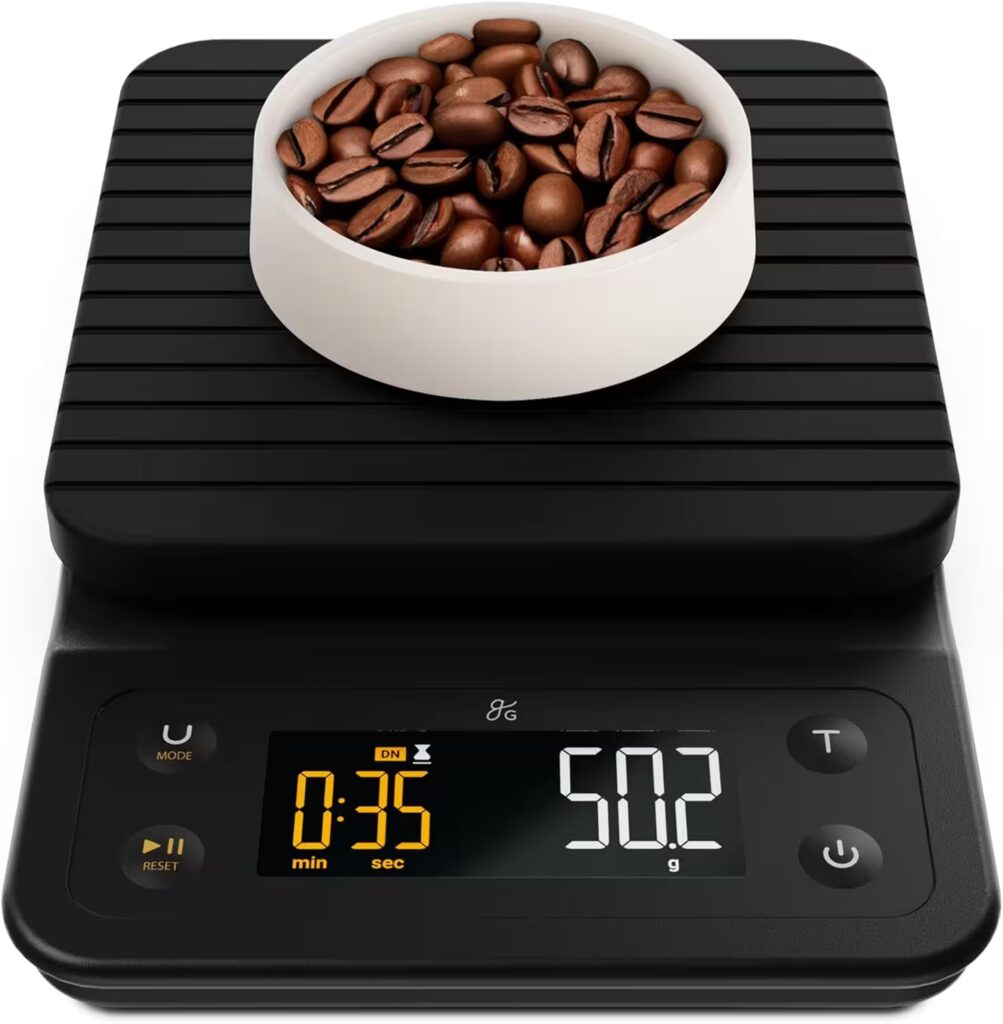
Digital scale
Repeatable ratios = consistent cups.
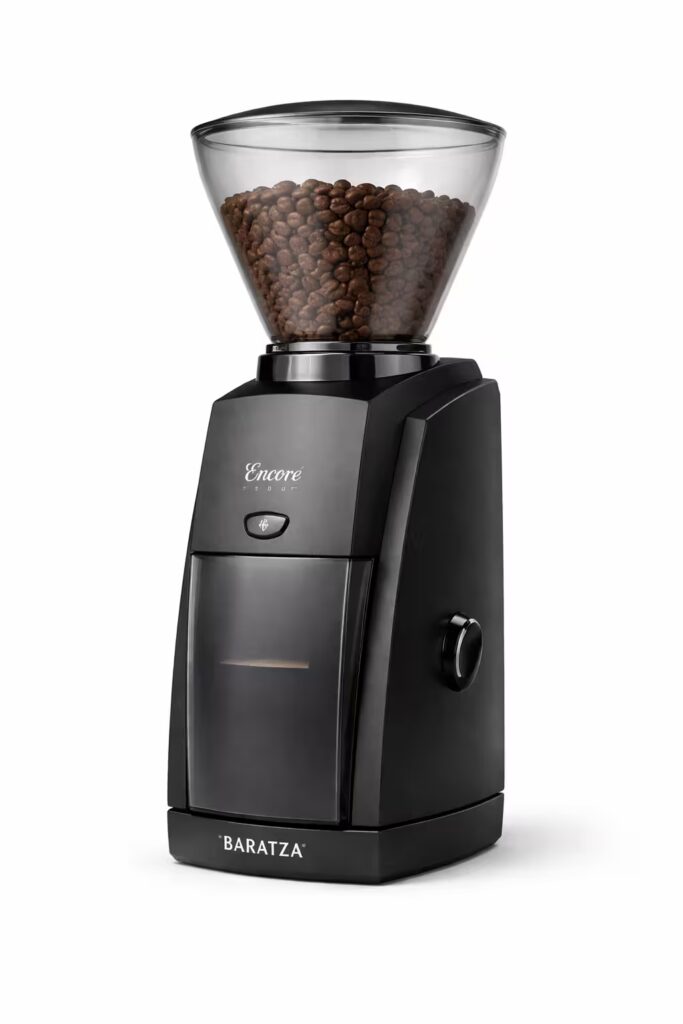
Burr grinder
Helps fix sour/harsh cups fast.
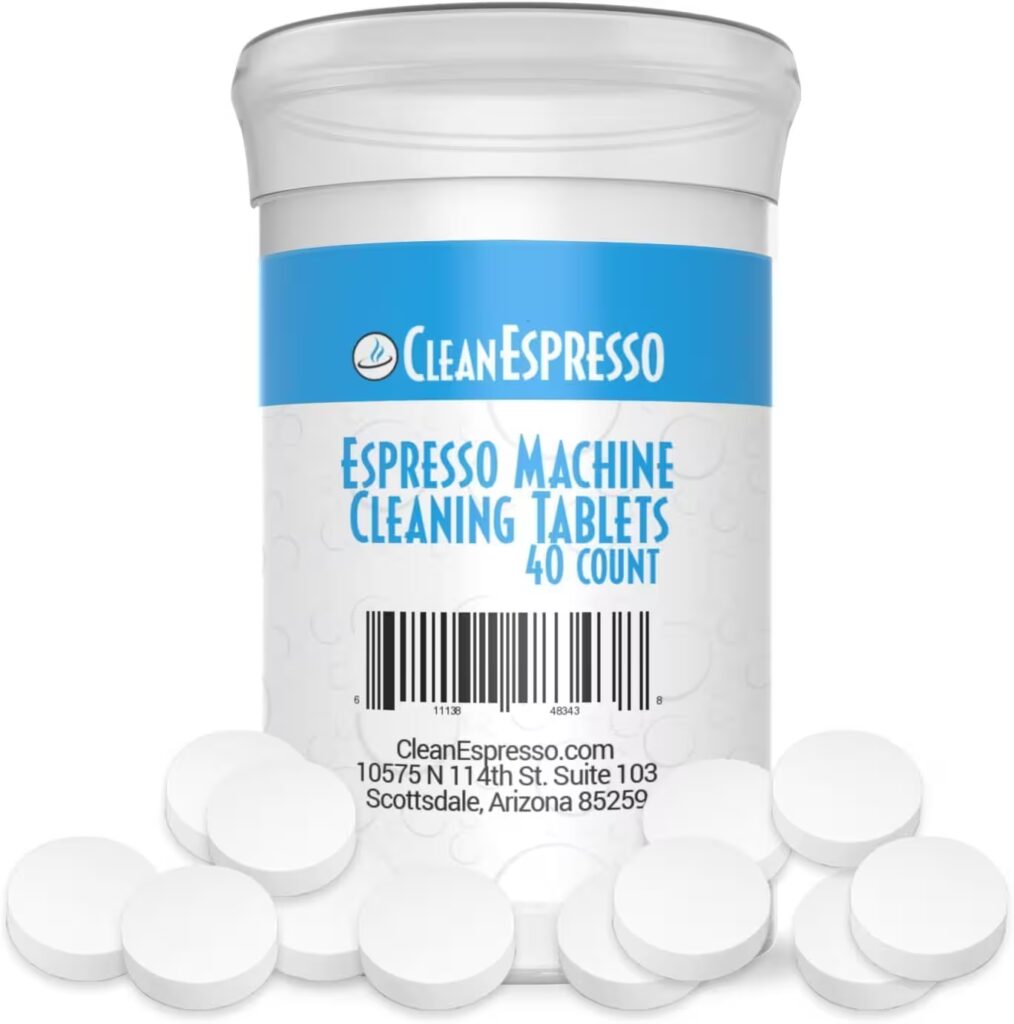
Cleaner / descaler
Fixes dull cups from oils + buildup.
As an Amazon Associate, we may earn from qualifying purchases. Price may vary.
Dial In Pour-Over (V60, Kalita, Chemex)
Pour-over gives you more control—and that’s both the fun part and the frustrating part. Your big levers are grind size, pour structure, and drawdown time.
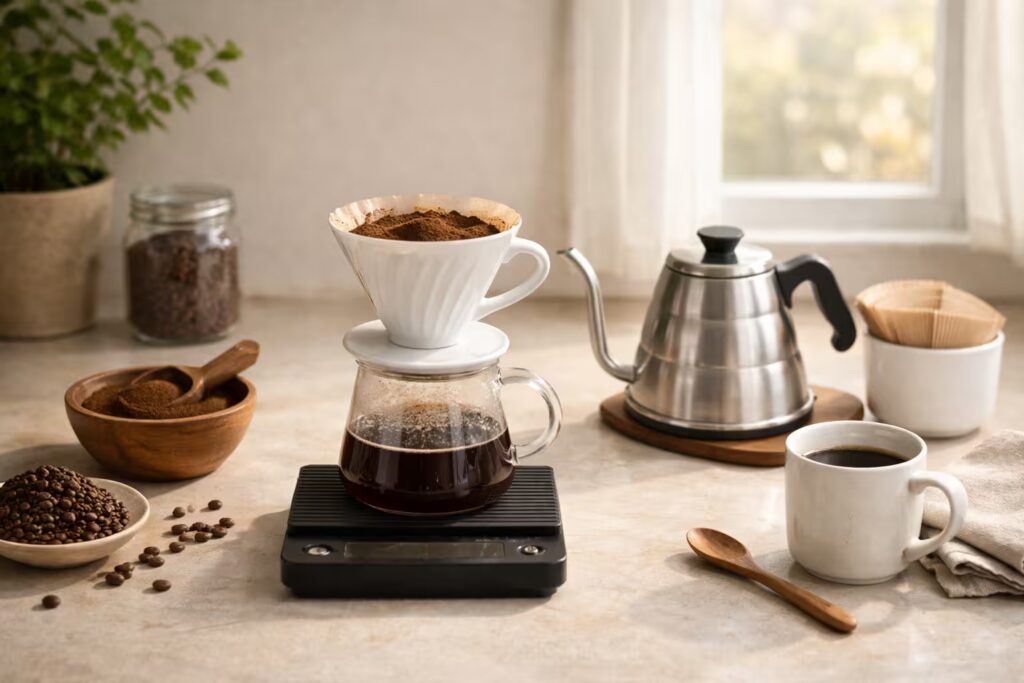
Best starting recipe (pour-over)
- Ratio: 1:16
- Water temp: just off boil for medium roasts (slightly cooler for dark roasts)
- Grind: medium-fine (adjust based on taste and drawdown)
- Target time: ~2:30–3:30 (varies by dripper and filter)
Recommended pour-over gear (click images)
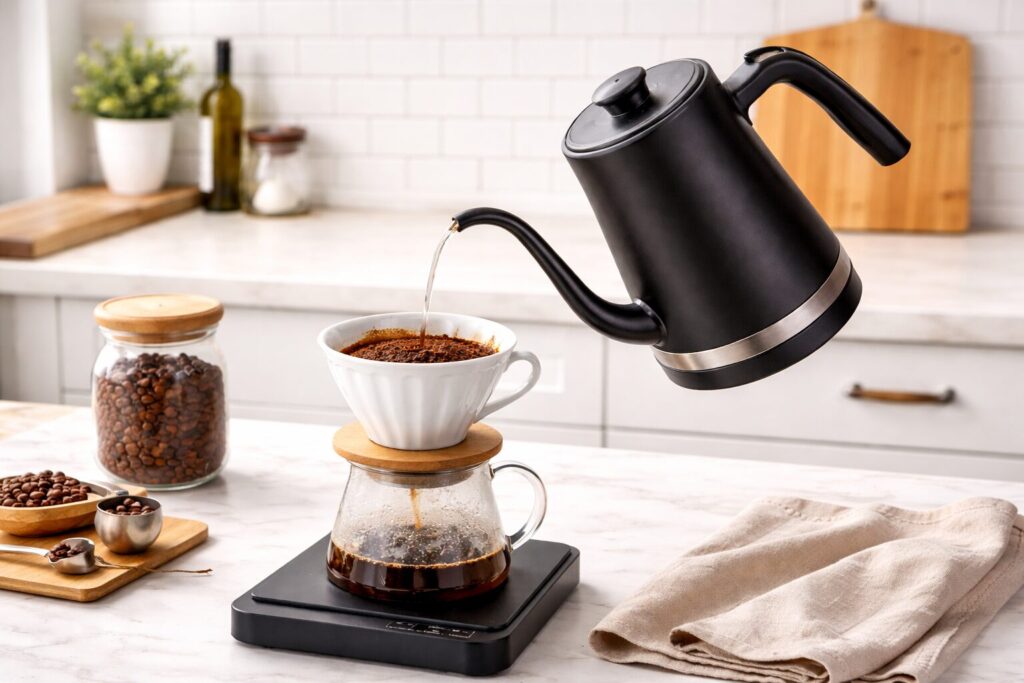
Gooseneck kettle
Steadier pours = fewer channels.
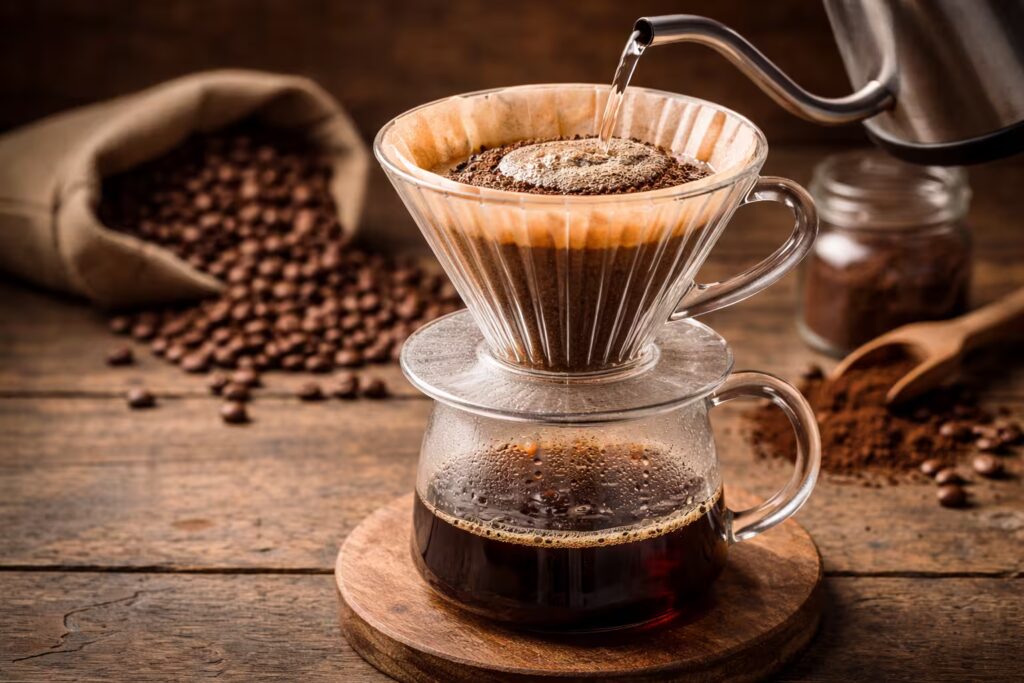
Pour-over dripper
Consistency makes dial-in predictable.
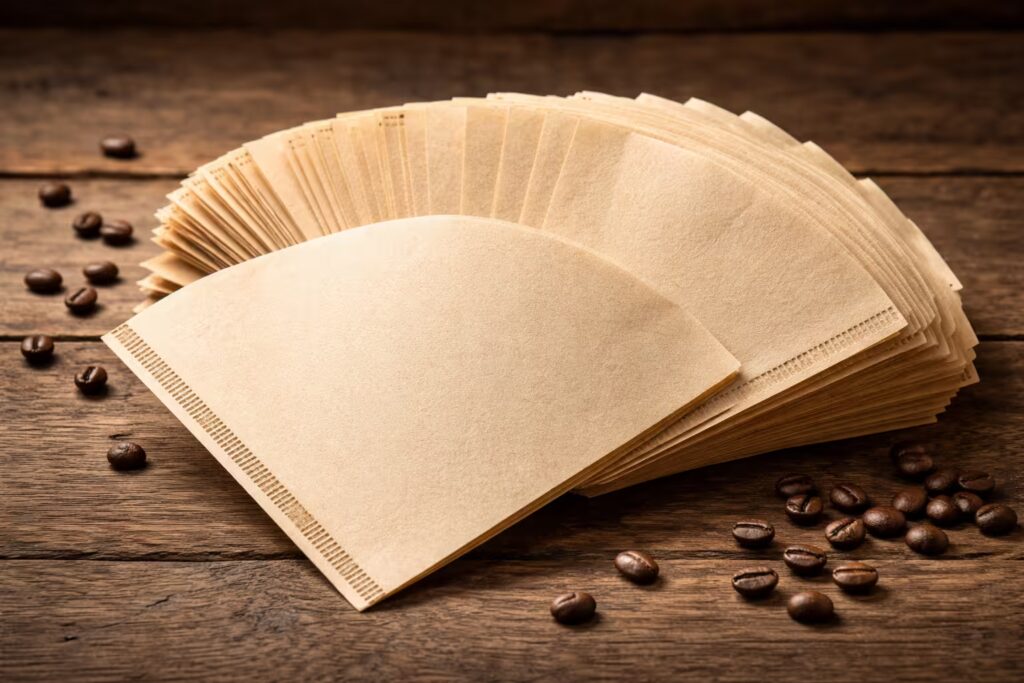
Paper filters
Flow rate + clarity can change a lot.
As an Amazon Associate, we may earn from qualifying purchases. Price may vary.
How to tell if your pour-over is too fast or too slow
| What you see | What it usually means | Fix |
|---|---|---|
| Fast drawdown, coffee tastes sharp | Too coarse / under-extraction | Grind finer (small step) |
| Slow drawdown, muddy bed | Too fine / over-extraction | Grind coarser; pour more gently |
| Channeling / uneven bed | Pour too aggressively | Slow the pour; keep slurry level steady |
For a deeper troubleshooting flow, use: Pour-Over Troubleshooting.
Dial In Espresso (Beginner-Friendly Workflow)
Espresso is just more sensitive to small changes. The good news: once you learn the pattern, dialing in becomes fast and predictable.
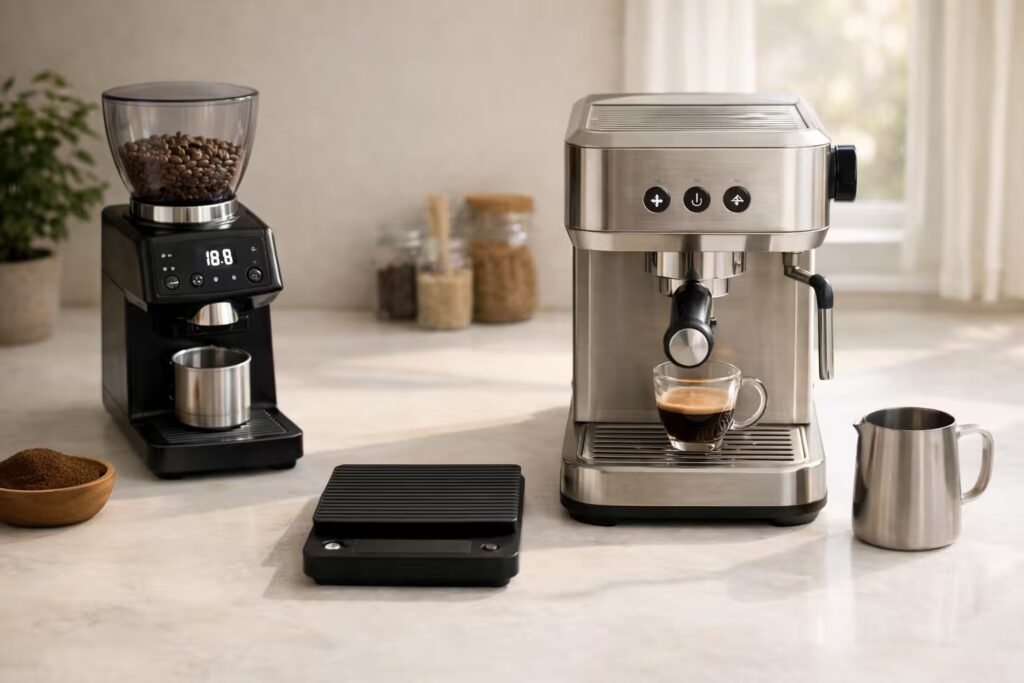
Baseline espresso target (start here)
- Dose: follow your basket size (common: 18g)
- Yield: ~1:2 ratio (example: 18g in → 36g out)
- Time: ~25–30 seconds (from first drip for beginners is fine)
Espresso prep tools (click images)
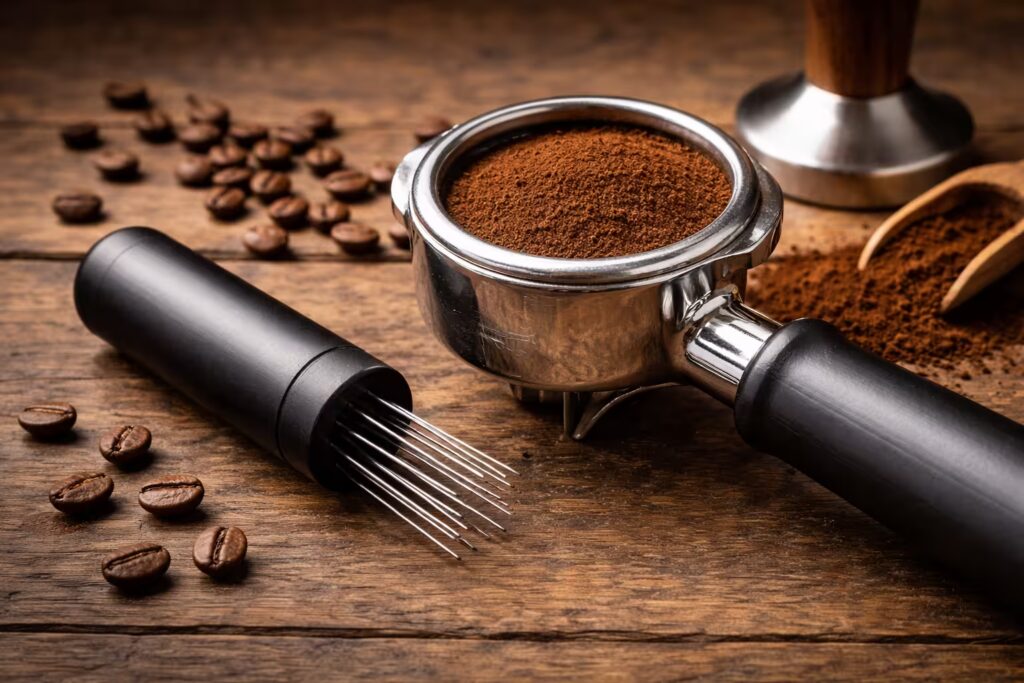
WDT tool
Reduces clumps and channeling.
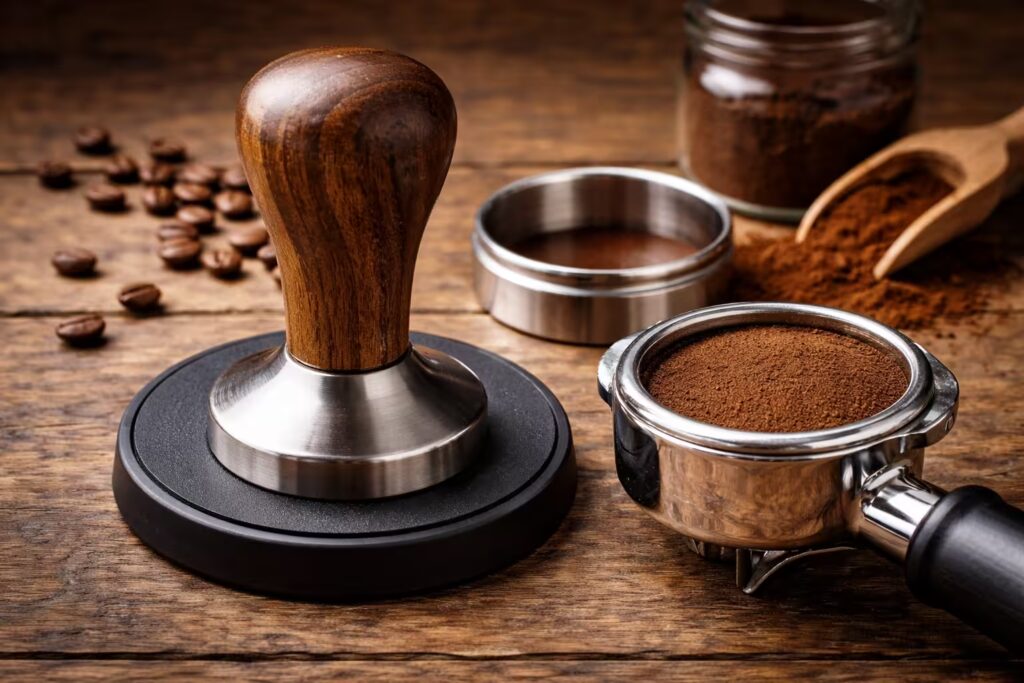
Level tamper
More consistent puck = fewer spurts.
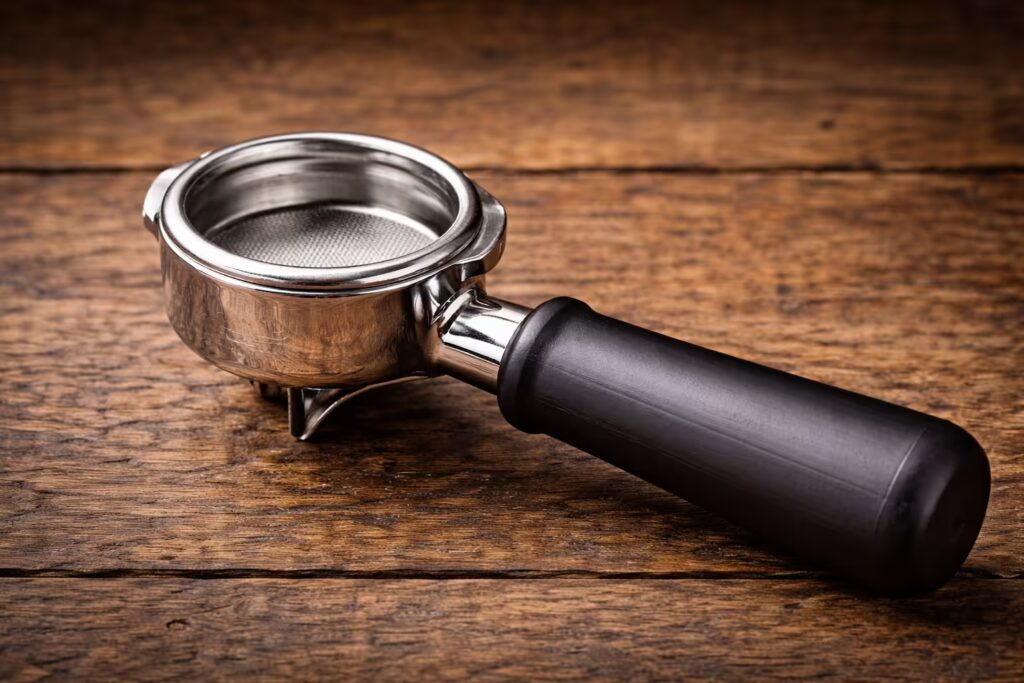
Bottomless portafilter
Shows channeling so you can fix it.
As an Amazon Associate, we may earn from qualifying purchases. Price may vary.
Espresso fixes (simple rules)
| Taste / shot behavior | What it means | Fix |
|---|---|---|
| Shot runs fast & tastes sour | Under-extracted | Grind finer (small step) |
| Shot drips slowly & tastes bitter | Over-extracted | Grind coarser (small step) |
| Channeling / spurting | Uneven puck prep | Improve distribution; tamp level |
If you’re choosing gear for espresso specifically, this helps: Manual vs Automatic Espresso Machines.
Fix Coffee by Taste (Sour, Bitter, Weak, Harsh)
This is the quickest way to diagnose most cups. Use the taste first—then make one small change.
| Tastes like… | Usually means… | Fix order |
|---|---|---|
| Sour / sharp / thin | Under-extraction | Grind finer → keep ratio → adjust time |
| Bitter / dry / harsh | Over-extraction | Grind coarser → keep ratio → lower temp (if possible) |
| Weak / watery | Too low strength | Increase coffee dose slightly (ratio) → then grind |
| Flat / dull | Stale beans / poor water | Fresher beans → better water → clean gear |
Two pages that pair perfectly with this: Water Quality for Better Coffee and Coffee Equipment Maintenance.
FAQs
What does ‘dialing in coffee’ mean?
Dialing in means making small, repeatable adjustments—usually starting with grind size—until your coffee tastes balanced. The key is changing one variable at a time so you learn what actually improves the cup.
Should I change grind size or coffee ratio first?
Change grind size first to fix sour or bitter flavors (extraction). Change ratio second to adjust strength (weak or too strong). Keeping this order prevents chasing your tail.
Why does my coffee taste sour?
Sour coffee is usually under-extracted—most often from a grind that’s too coarse, water that’s too cool, or a brew that ran too fast. Start by grinding slightly finer.
Why does my coffee taste bitter or harsh?
Bitter coffee is usually over-extracted—often from a grind that’s too fine, a brew that ran too long, or very dark roasts. Start by grinding slightly coarser.
What’s the best starting ratio for drip and pour-over?
A great starting point is 1:16 (1 gram coffee to 16 grams water). Adjust slightly stronger (1:15–1:15.5) if coffee is weak, or slightly weaker (1:16.5–1:17) if it’s too strong.
What’s the best starting recipe for espresso?
Start around a 1:2 ratio (example: 18g in, 36g out) in roughly 25–30 seconds. If it runs fast and tastes sour, grind finer. If it runs slow and tastes bitter, grind coarser.
Do I need a scale to dial in coffee?
A scale is the easiest way to get repeatable results. Without one, you can still improve coffee, but it’s harder to know what changed from cup to cup.
What’s the fastest way to improve coffee at home?
Use fresh whole beans, grind right before brewing, weigh coffee and water, and make one small adjustment at a time. A burr grinder and a scale are the two most impactful upgrades for consistency.
Next Steps
Pick the path that matches what you brew most often. These are the best supporting guides to keep improving fast.