
Espresso Machine Types Explained
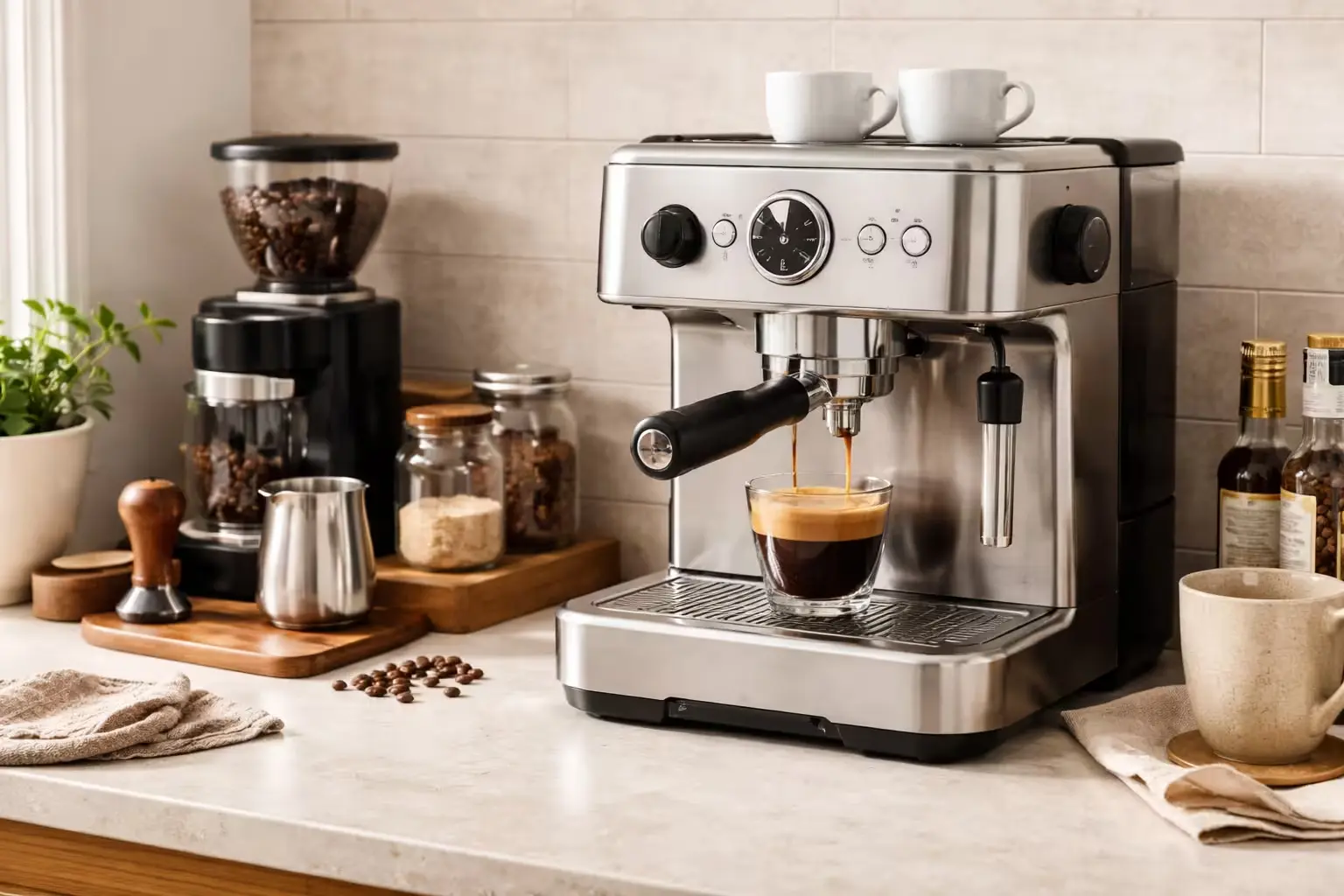
Editorial standards: this guide separates machine categories by what the user and machine actually do, then uses current manufacturer examples to illustrate those workflows. CoffeeGearHub does not claim hands-on testing where it has not occurred.
At a glance
What this guide covers
Five espresso-machine workflows—manual lever, semi-automatic, volumetric automatic, assisted/all-in-one, and super-automatic—plus the boiler, pump, temperature, grinder, and flow-control systems that change how each type behaves.
Editorial analysis
“Automatic” is the most confusing word in espresso
A portafilter machine with automatic volumetric shot stopping is not the same thing as a super-automatic bean-to-cup machine. Keeping those categories separate makes machine comparisons much more useful.
The 30-Second Answer
Manual lever machines make you create or directly control brewing pressure. Semi-automatic machines use an electric pump but leave puck preparation and shot stopping largely to you. Volumetric automatic machines are still portafilter machines but can stop a shot at a programmed volume. Assisted/all-in-one machines add integrated grinders, guided dosing, tamping or milk automation while keeping a portafilter. Super-automatic bean-to-cup machines move grinding, dosing, puck formation and brewing inside the machine.
Espresso Machine Types at a Glance
| Type | Who creates pressure? | Who prepares the puck? | Who stops the shot? | Typical grinder setup |
|---|---|---|---|---|
| Manual lever | User through lever mechanism | User | User | Separate grinder |
| Semi-automatic | Electric pump | User | User or simple timed/programmed control depending on model | Usually separate; sometimes integrated |
| Volumetric automatic | Electric pump | User | Machine at programmed volume | Separate or integrated |
| Assisted/all-in-one portafilter | Electric pump | User with varying machine assistance | User or programmed control | Often integrated |
| Super-automatic bean-to-cup | Internal pump/brew unit | Machine | Machine | Built in |
These categories describe workflow. Heating systems, pumps, PID control and flow control sit underneath those categories and can vary widely inside the same machine type.
1. Manual Lever Espresso Machines
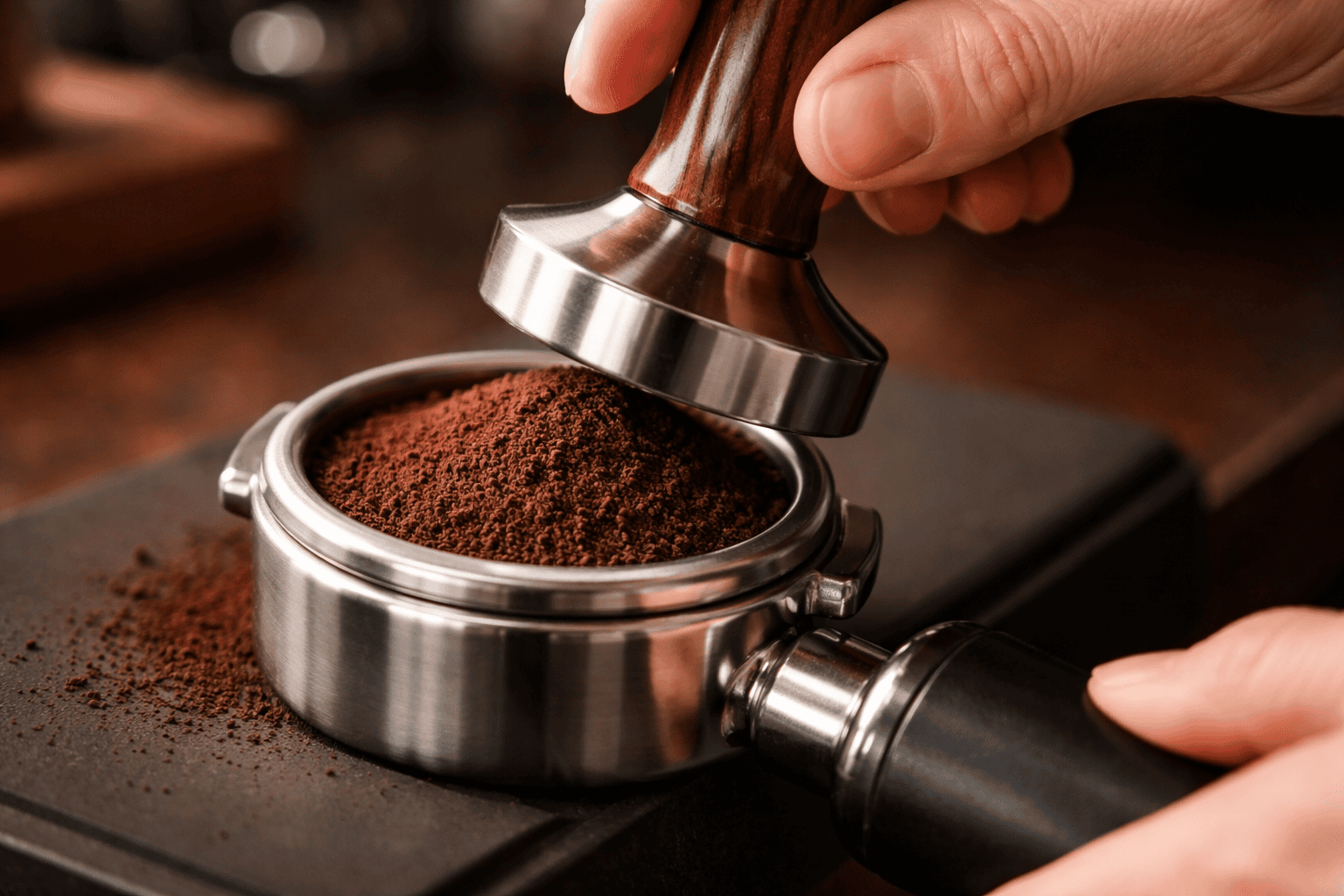
A manual lever machine puts the pressure curve in the user’s hands. Some lever designs have their own heated boiler; others, such as travel-oriented manual brewers, require externally heated water. In either case, the defining feature is that the user supplies or directly manages the force that drives water through the coffee puck.
This category makes sense for people who enjoy tactile control and are willing to learn how lever force, pre-infusion and grind setting interact. It is less convenient when several people want fast, repeatable drinks without technique.
What you gain
- Direct control over pre-infusion and pressure on many designs.
- Simple, visible mechanics on fully manual models.
- Strong portability potential when the brewer does not contain a large boiler or pump.
What you give up
- More physical work and a steeper technique curve.
- No built-in grinder on most machines.
- Milk steaming may require a completely separate device on non-boiler lever machines.
Affiliate disclosure: Some product links in this guide are affiliate links. CoffeeGearHub may earn a commission from qualifying purchases at no additional cost to you. Pricing, availability, bundles, and model revisions can change, so verify the exact listing before buying.
Current example: Flair’s 58-series shows the modern manual-lever approach: the brewer controls the extraction rather than relying on an electric brew pump. Check the current Flair 58 Amazon listing →
2. Semi-Automatic Espresso Machines
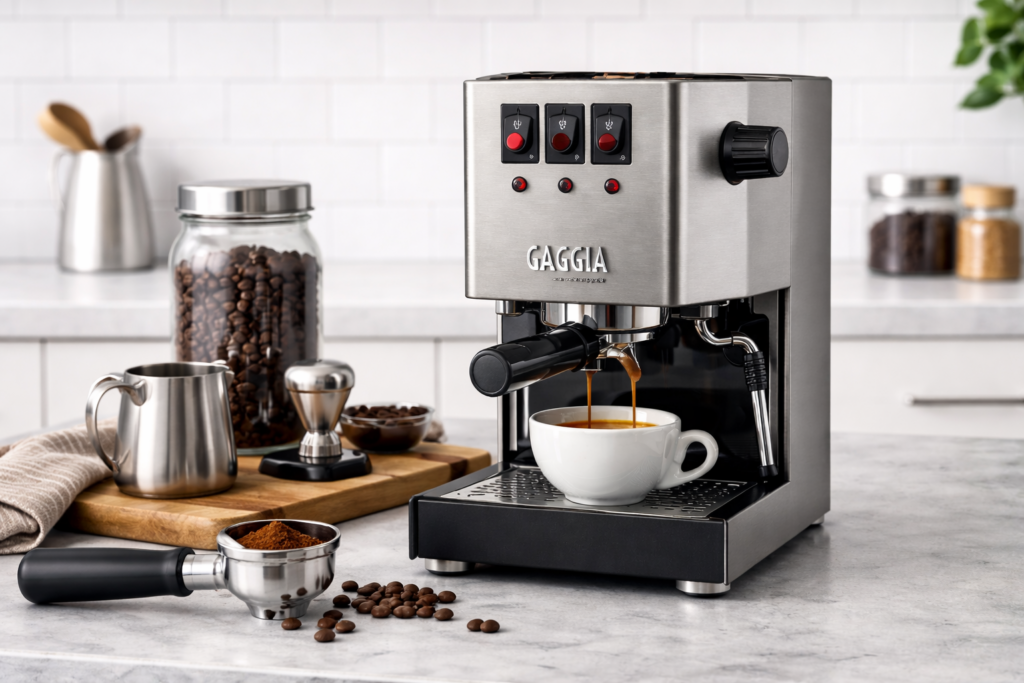
Semi-automatic is the core home-barista category. The machine uses an electric pump to create brewing pressure, but the user still grinds coffee, doses the basket, distributes, tamps, locks in the portafilter and manages the extraction.
Some semi-automatics stop only when you stop them. Others include one- and two-shot buttons that can be programmed. Marketing language sometimes calls the latter “automatic,” even though the puck-preparation workflow remains semi-automatic. That is why looking at the workflow is more reliable than relying on a single product label.
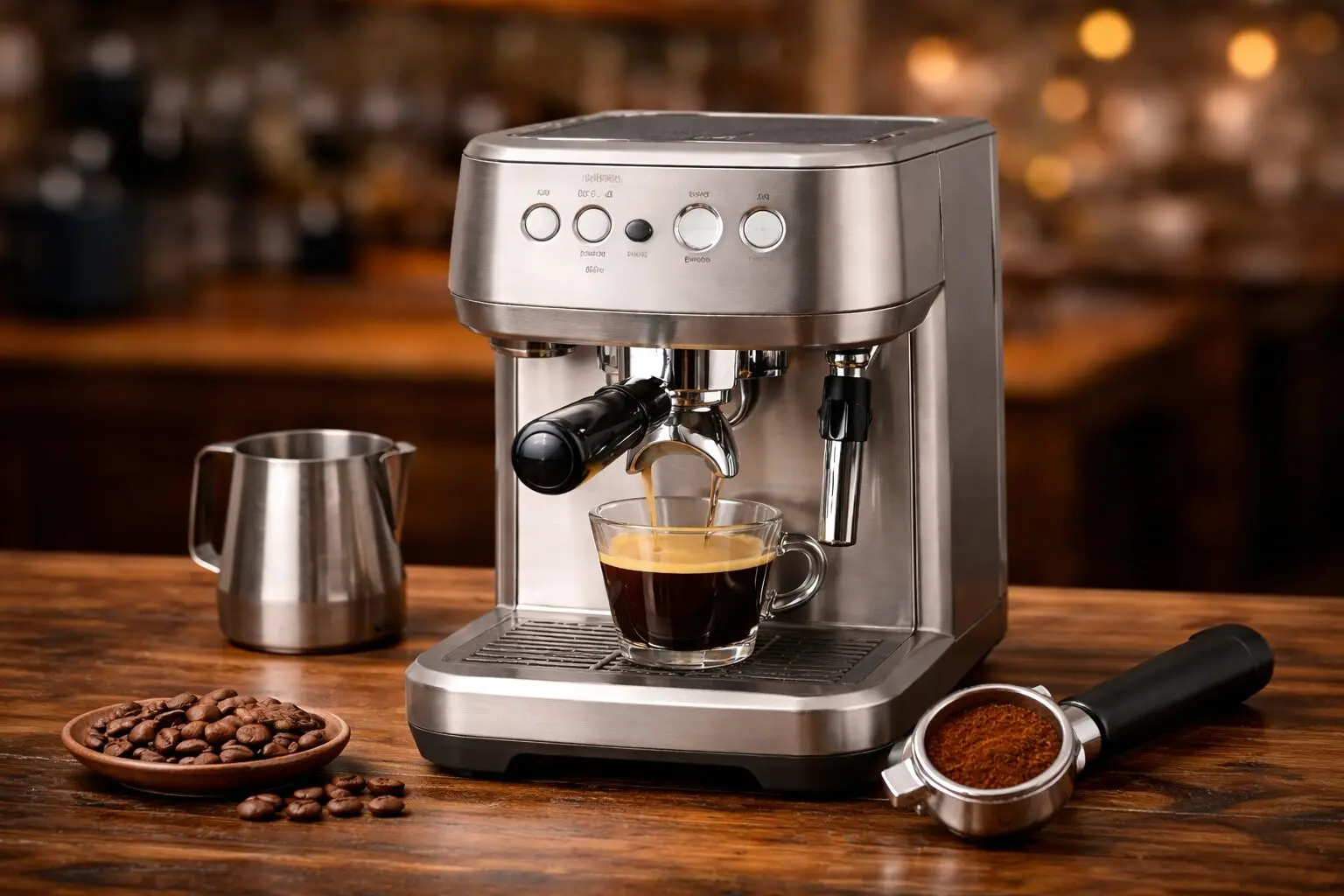
Current compact example: Breville Bambino Plus
The Bambino Plus combines a traditional 54 mm portafilter workflow with fast ThermoJet heating, low-pressure pre-infusion, 9-bar extraction, volumetric buttons and automatic/manual milk texturing. It is still a portafilter machine: the user prepares the coffee puck.
Current traditional example: Gaggia Classic Pro E24
The current North American Classic is the Classic Pro E24. It uses a 58 mm stainless-steel portafilter, lead-free brass boiler and group, three-way solenoid valve and commercial-style steam wand. It is a more traditional semi-automatic workflow than the Bambino Plus.
Check the current Gaggia Classic Amazon listing →
Gaggia model names and revisions can vary by market and merchant listing. Confirm that the product page specifies the E24 generation and the configuration described here before purchasing.
Choose by workflow
Two common home starting points
If you are deciding between learning espresso technique and minimizing preparation, these are the two ends of the mainstream home spectrum.
3. Volumetric Automatic Portafilter Machines
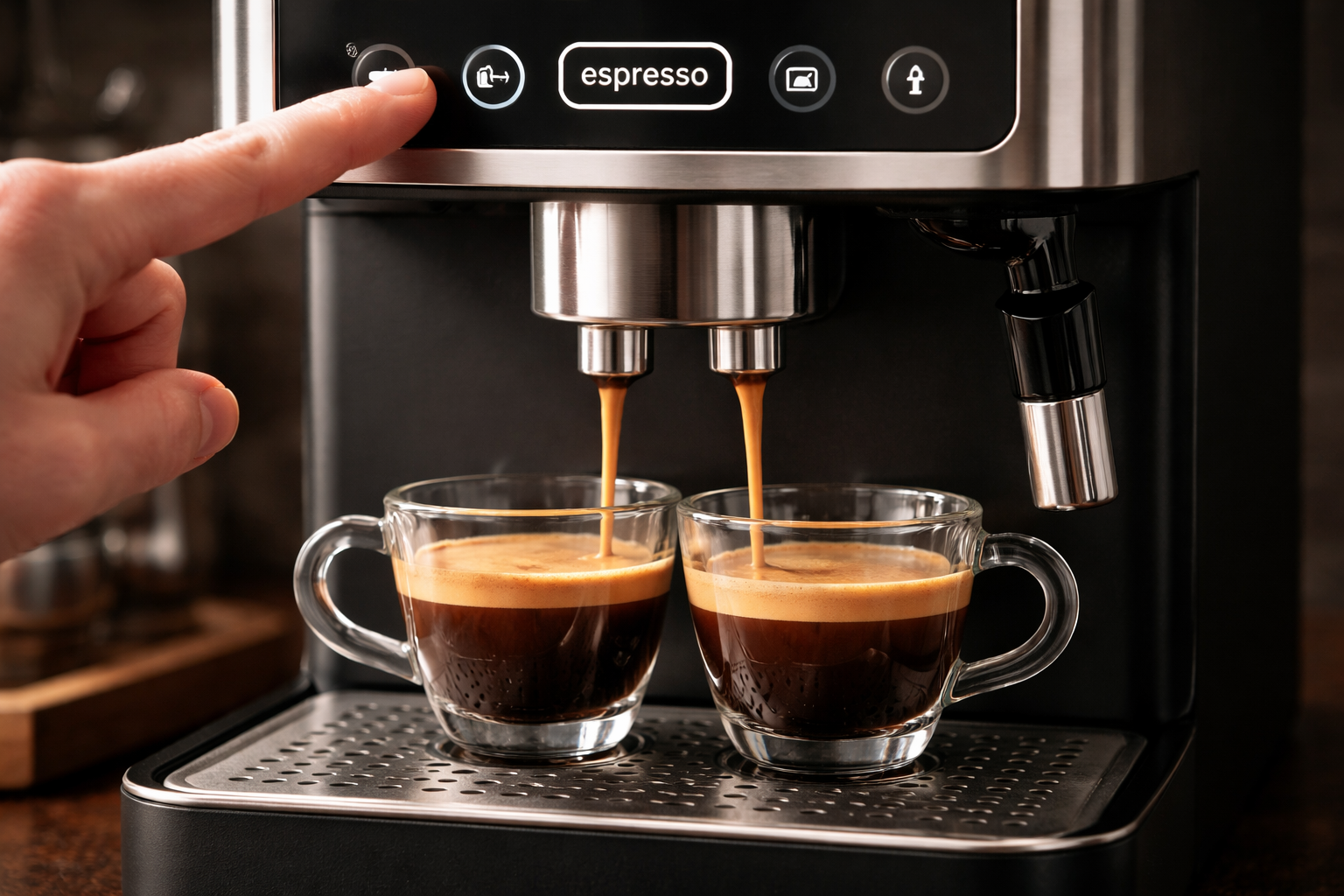
In traditional espresso-machine terminology, an “automatic” machine can simply mean that the machine stops water flow at a programmed beverage volume. The user still grinds, doses, distributes, tamps and locks in a portafilter.
This distinction matters because automatic shot stopping is not the same as super-automatic bean-to-cup preparation. Many commercial machines and some home machines add volumetric dosing without changing the basic barista workflow.
For home buyers, the practical benefit is repeatability and the ability to start a shot while preparing milk or another part of the drink. The trade-off is that volumetric programming does not replace weighing dose and yield when you are dialing in a new coffee.
4. Assisted and All-in-One Portafilter Machines
This is the category that marketing names make especially confusing. Machines such as the Breville Barista Express, Barista Touch, Barista Touch Impress and Oracle family may integrate a grinder and automate some combination of dosing, tamping, shot guidance and milk texturing. Yet coffee still goes into a portafilter that the user handles.
That makes them better understood as assisted semi-automatic or automatic portafilter systems, not as true super-automatics.
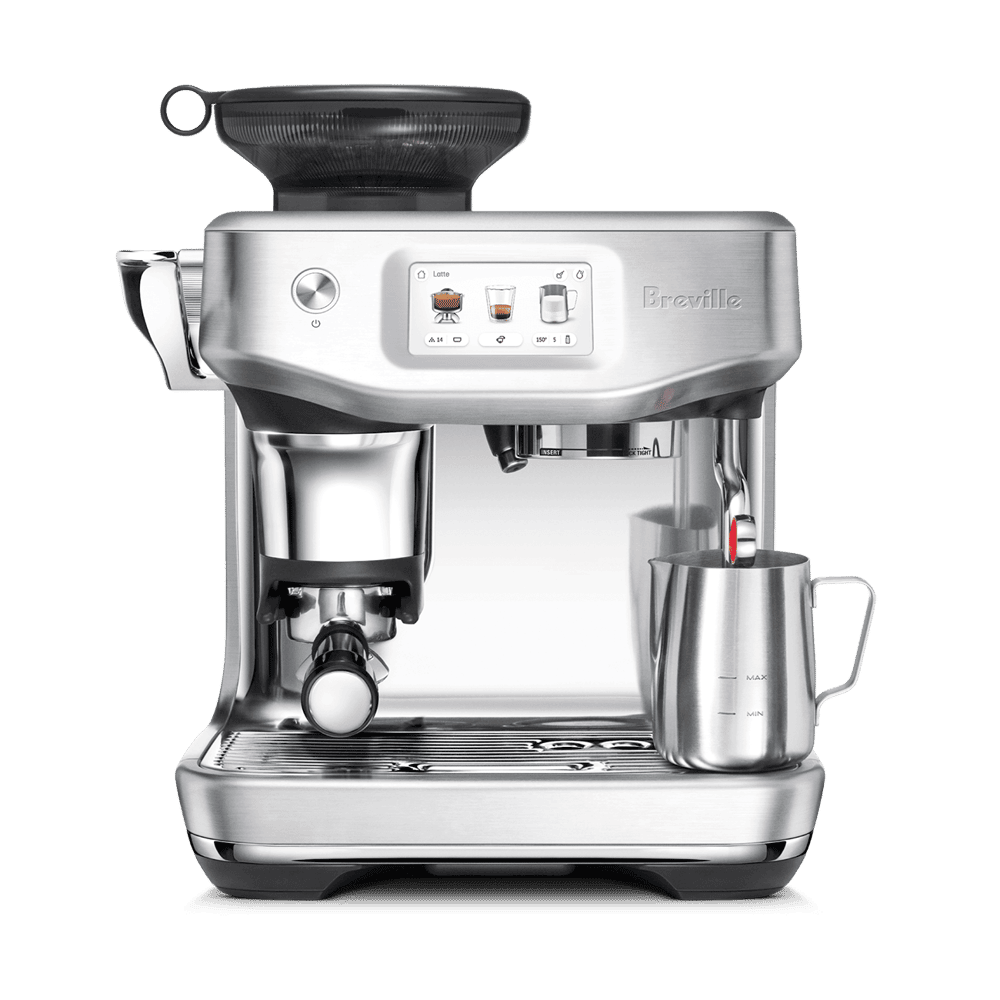
Current assisted example: Barista Touch Impress
Breville’s current Barista Touch Impress combines an integrated Baratza-burr grinder, assisted 22-pound tamping, dose correction, touchscreen guidance, ThermoJet heating and Auto MilQ milk texturing. Despite the automation, the user still works with a portafilter and coffee puck.
This type suits someone who wants to learn recognizable espresso workflow while removing some of the repetitive technique variables.
For a more manual integrated-grinder workflow, see the Breville Barista Express product guide.
5. Super-Automatic Bean-to-Cup Machines
A super-automatic changes the workflow more dramatically. Beans go into a hopper, an internal grinder prepares a dose, an internal brew unit forms and extracts the puck, and the spent puck moves into a dreg container. Many current machines also automate milk frothing and stored drink recipes.
The user still makes decisions—beans, grinder setting, coffee strength, temperature, beverage volume and milk parameters—but does not normally handle a portafilter or tamp coffee manually.
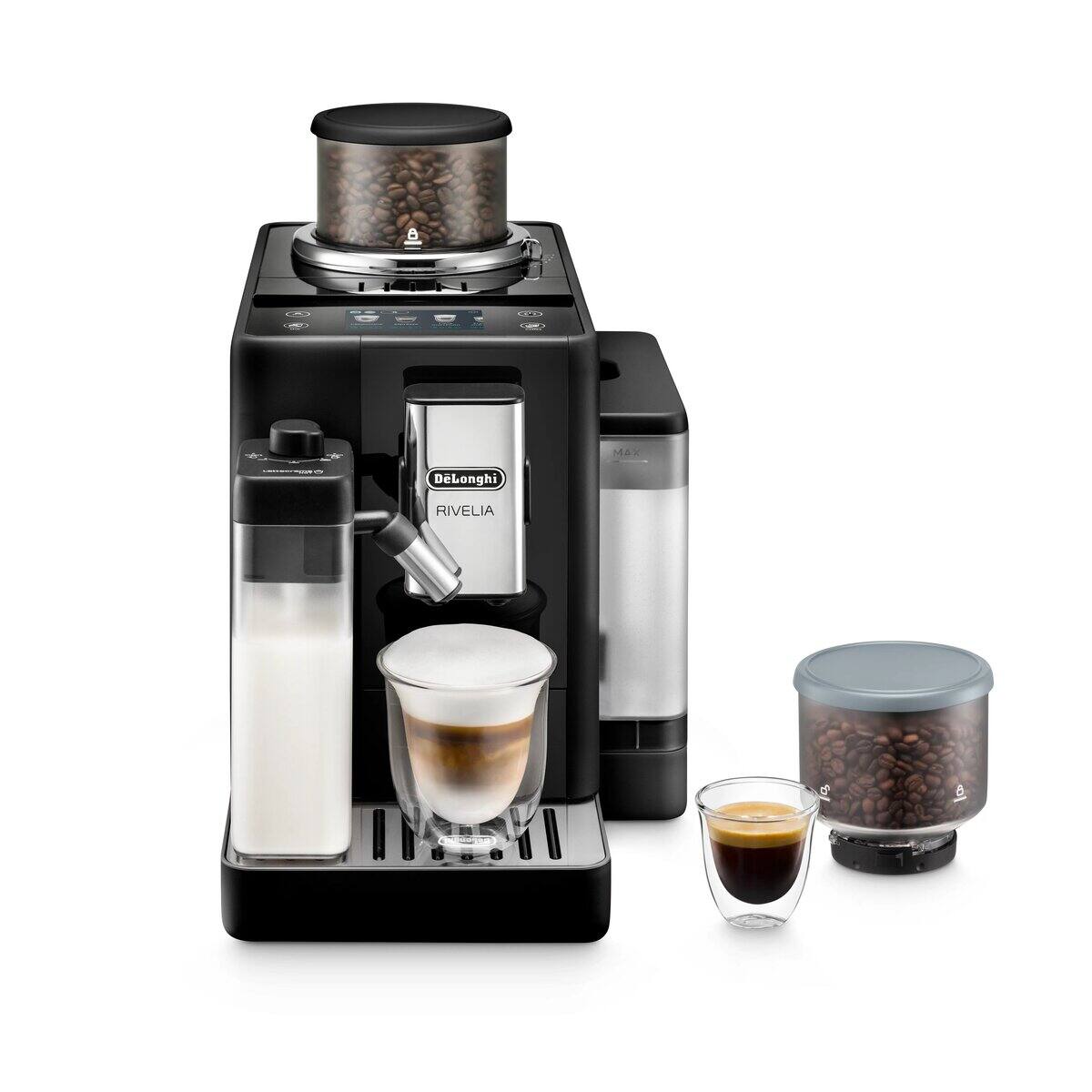
Current bean-to-cup example: De’Longhi Rivelia
Rivelia is a current fully automatic example with an integrated burr grinder, interchangeable bean hoppers, one-touch drinks, and automated milk preparation on LatteCrema versions. The machine manages grinding, dosing, brewing, and much of the cleanup workflow internally.
This category fits households that prioritize repeatable drinks and low preparation effort over learning portafilter technique.
Older but still widely discussed super-automatic examples include the Philips 3200 LatteGo and De’Longhi Dinamica Plus. For current availability, compare the Philips 3200 Amazon listing and De’Longhi Dinamica Plus Amazon listing; model generations, bundles, and stock can vary.
Where Capsule Machines Fit
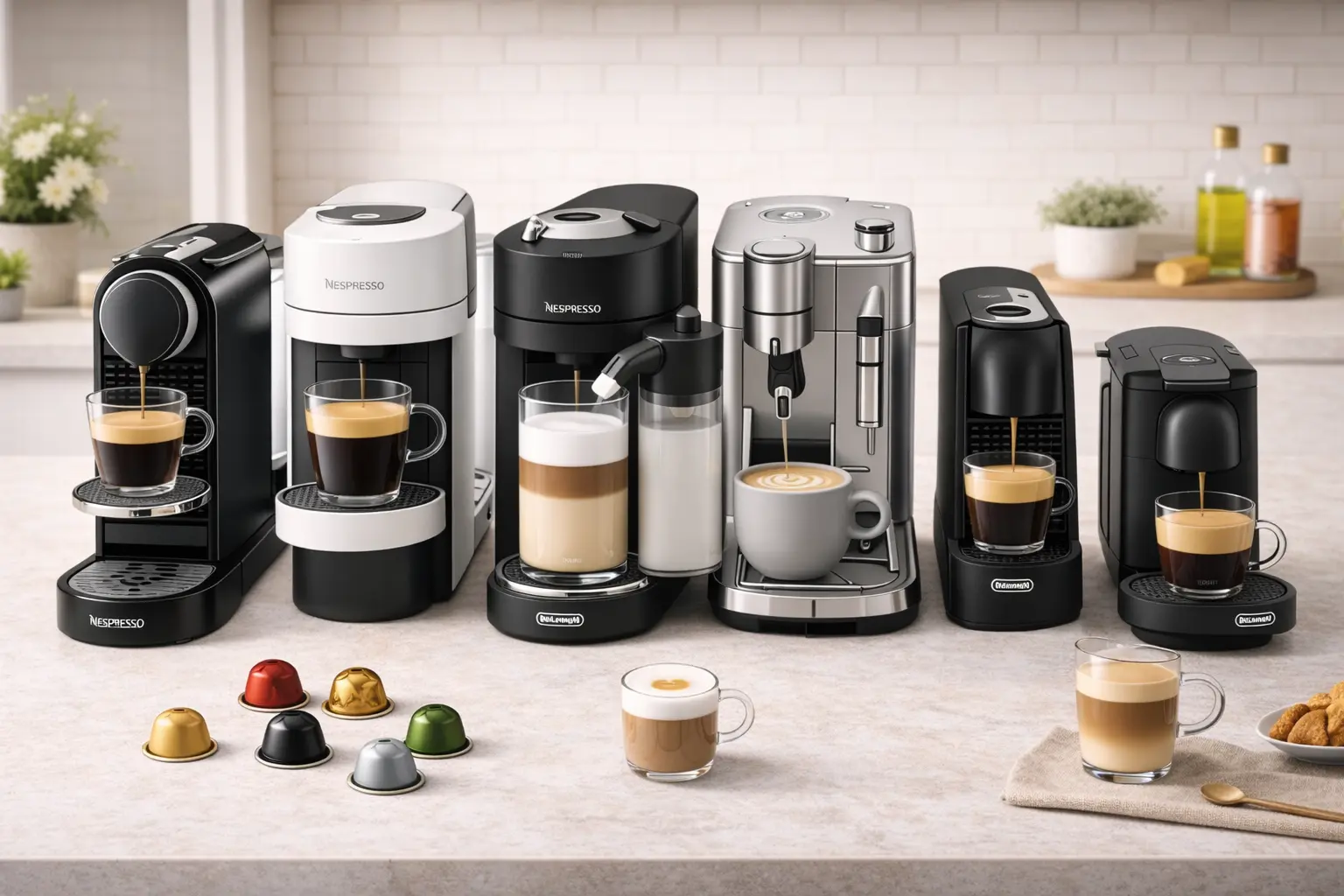
Capsule systems such as Nespresso or illy iperEspresso are sometimes grouped with automatic espresso machines because they are convenient and highly repeatable. Mechanically and in coffee preparation, however, they are a separate category: the dose and grind are sealed inside a capsule rather than prepared by a grinder and brew group.
If capsule convenience is the goal, compare capsule ecosystems, drink sizes, milk options, pod cost and recycling rather than trying to map them onto the same grinder-and-portafilter framework. CoffeeGearHub’s catalog includes the illy Y3.3 iperEspresso Machine as one example.
Heating Systems: Thermoblock, Single Boiler, Heat Exchanger and Dual Boiler
Machine type tells you who does the work. Heating system tells you how the machine manages brew water and steam.
| Heating system | How it works | Main workflow effect |
|---|---|---|
| Thermoblock / fast flow-through heater | Water heats as it moves through a compact heater | Fast startup; thermal behavior depends heavily on implementation |
| Single boiler | One boiler serves brew and steam temperatures | Usually brew and steam sequentially, with a temperature transition between modes |
| Heat exchanger (HX) | One steam-temperature boiler with a separate heat-exchange path for brew water | Can brew and steam at the same time; temperature management depends on design |
| Dual boiler | Separate brew and steam boilers/heating circuits | Independent brew-temperature control and simultaneous steaming |
Do not assume dual boiler always means better coffee. It mainly solves workflow and thermal-control problems for users who need stable brew temperature and frequent milk steaming. A well-designed fast-heating semi-automatic may be a better fit for one or two drinks at a time.
Pump Types: Vibratory, Rotary and No Pump
Most home semi-automatic machines use a vibratory pump. Rotary pumps appear more often in larger prosumer and commercial-style machines. Manual lever machines may use no electric brew pump at all.
| Pressure system | Typical use | What the buyer should care about |
|---|---|---|
| Vibratory pump | Common home semi-automatic machines | Compact and proven; makes characteristic pump noise |
| Rotary pump | Higher-end prosumer/commercial-style machines | Quieter, often supports plumb-in designs, larger and more expensive |
| Manual lever | Lever machines | User controls force/pressure directly or through spring-lever mechanics |
| Internal super-auto brew system | Bean-to-cup machines | Pressure system is integrated with the internal brew unit; user does not manage a portafilter |
PID, Pre-Infusion, Pressure Profiling and Flow Control
PID temperature control
A PID controller modulates heater output around a temperature target more precisely than a simple on/off thermostat. It helps temperature management, especially when changing roast levels or recipes, but it does not compensate for a poor grinder or inconsistent puck preparation.
Pre-infusion
Pre-infusion wets the coffee puck at lower flow or pressure before full extraction. The goal is to encourage even saturation before the main pressure phase. Some machines automate it; lever and flow-control machines may let the user shape it more directly.
Pressure profiling
Pressure profiling changes brew pressure during the shot. Manual lever machines naturally make this possible because the user controls force. Some pump machines add electronic or mechanical profiling.
Flow control
Flow control changes the rate of water entering the puck. Pressure and flow are related, but they are not identical variables. Flow-control systems let experienced users shape how quickly the puck saturates and how extraction develops.
For a deeper explanation, see Flow Control Espresso Machines: Are They Worth It?.
The Grinder Changes Which Machine Type Makes Sense
A separate-grinder semi-automatic setup lets you upgrade grinder and machine independently. That flexibility is one reason enthusiasts often prefer portafilter systems.
An all-in-one assisted machine reduces countertop clutter and simplifies setup, but the grinder is tied to the machine. A super-automatic goes further: grinder, brew unit and machine controls are one integrated system.
If espresso quality is the priority, do not spend the entire budget on the machine while leaving too little for grind control. See Best Coffee Grinders for Espresso and Do You Need a Grinder for Espresso?.
Which Espresso Machine Type Fits You?
| Your priority | Start with | Why |
|---|---|---|
| Learn puck preparation and dialing in | Semi-automatic | Exposes the variables that teach espresso technique |
| Control pressure by hand | Manual lever | Pressure is part of the user’s technique |
| Portafilter workflow with fewer repetitive steps | Assisted/all-in-one | Integrated grinder, dosing or milk assistance reduces friction |
| Multiple household users want easy drinks | Super-automatic | Most preparation happens inside the machine |
| Fast startup and small footprint | Compact fast-heating semi-auto | Avoids the warm-up and footprint of larger boiler machines |
| Frequent milk drinks with precise brew temperature | Dual-boiler semi-auto or capable assisted machine | Independent heating circuits improve brew/steam workflow |
| Pod convenience | Capsule system | Eliminates grinding and puck preparation entirely |
Maintenance Differences by Machine Type
| Type | Routine maintenance emphasis |
|---|---|
| Manual lever | Clean basket, piston/seals or brew chamber according to design; descale heated models as required |
| Semi-auto / automatic portafilter | Portafilter, group, steam wand, drip tray; backflush only where the machine supports it; descale according to water and manual |
| Assisted all-in-one | Everything above plus integrated grinder/dosing path and any automated milk hardware |
| Super-automatic | Dreg bin, drip tray, brew group where removable, internal cleaning cycles, grinder path, milk system and descaling |
| Capsule | Pod chamber, drip tray, milk device if included and scale control |
Automation changes where the work happens; it does not remove maintenance. See Espresso Machine Maintenance Schedule.
How CoffeeGearHub Verified This Guide
This explainer is based on manufacturer-published specifications, product documentation, current model information, and CoffeeGearHub’s editorial comparison of real-world workflow: who grinds, who prepares the puck, how pressure is created, and who stops the shot. We do not describe a machine as hands-on tested unless that testing is explicitly documented.
Espresso-machine naming is not standardized across every manufacturer, so this guide classifies machines by what they actually ask the user to do rather than by marketing labels alone. Before buying, confirm the exact model generation, included accessories, electrical requirements, and current merchant terms. See How We Research Coffee Gear and our Product Review Policy.
Common Buying Mistakes
1. Treating “automatic” as one universal category
A volumetric portafilter machine and a bean-to-cup super-automatic can both be marketed as automatic while requiring completely different user involvement.
2. Choosing boiler architecture before choosing workflow
A dual boiler is impressive, but it may be unnecessary if you make one straight espresso each morning. Start with how you brew, then decide whether the heating system solves a real constraint.
3. Ignoring the grinder
A separate semi-automatic needs an espresso-capable grinder. A machine with a built-in grinder trades upgrade flexibility for convenience. A super-automatic locks the grinder and brew unit into one system.
4. Assuming more control guarantees better espresso
More variables create a higher level of user control, not guaranteed quality. Good results still require coffee, grind, water, recipe and consistent technique.
5. Underestimating milk workflow
If your household mostly drinks lattes, the steam system may affect daily satisfaction more than pressure profiling or pump type.
FAQs
What are the main types of espresso machines?
What is the difference between semi-automatic and automatic espresso machines?
What is a super-automatic espresso machine?
Do semi-automatic espresso machines need a separate grinder?
What is the difference between single boiler, heat exchanger and dual boiler?
What does PID do?
What is flow control?
Which espresso machine type is easiest for beginners?
CoffeeGearHub espresso paths
Compare examples without leaving the learning path
Use these verified product and buying-guide pages to see how the categories translate into real equipment.
Continue Learning
In this guide