Last Updated: March 2026 • 45–55 min read • Cornerstone Guide: Espresso Dial-In System + Shot Parameters + Troubleshooting + Puck Prep

How to dial in espresso is the skill that separates home baristas who pull consistently excellent shots from those who pull the same inconsistent, unpredictable shots week after week from the same machine and beans. It is not a difficult skill — it is a systematic one. The process has a fixed logic: shot time is controlled by grind size; extraction character is corrected by temperature; strength is adjusted by dose and yield. Work through these in order, change one variable at a time, and write down every result. Most home brewers who apply this system correctly produce their first genuinely balanced shot within 5–10 attempts. Most home brewers who do not apply it never find consistency regardless of how long they have owned their machine. This complete CoffeeGearHub guide covers everything you need to dial in espresso from scratch: what the target parameters mean and why they exist, the full seven-step dial-in system, the complete variable hierarchy, puck preparation technique, how to read your shots, how to maintain your dial-in across new bags of beans, and the full troubleshooting matrix for every common espresso problem.
✍️ Editorial note: This guide is researched and written by the editors at CoffeeGearHub.com using published brewing science, SCA brewing standards, and established specialty-coffee community knowledge. All product links are affiliate links — we may earn a commission at no cost to you. Affiliate Disclosure: CoffeeGearHub.com participates in the Amazon Services LLC Associates Program. As an Amazon Associate, we earn from qualifying purchases.
The 30-Second Answer
Dialling in espresso means adjusting your variables systematically until your shot runs 25–30 seconds at a 1:2 ratio and tastes balanced. The correct order is always: grind size first, then temperature, then dose and yield. Never change more than one variable between shots. Write everything down. The process takes 5–20 shots with a new bag of beans — and significantly fewer once you have done it consistently for a few weeks. The grinder is the single most critical piece of equipment; a grinder that cannot produce fine enough, consistent enough particles cannot be dialled in regardless of technique.
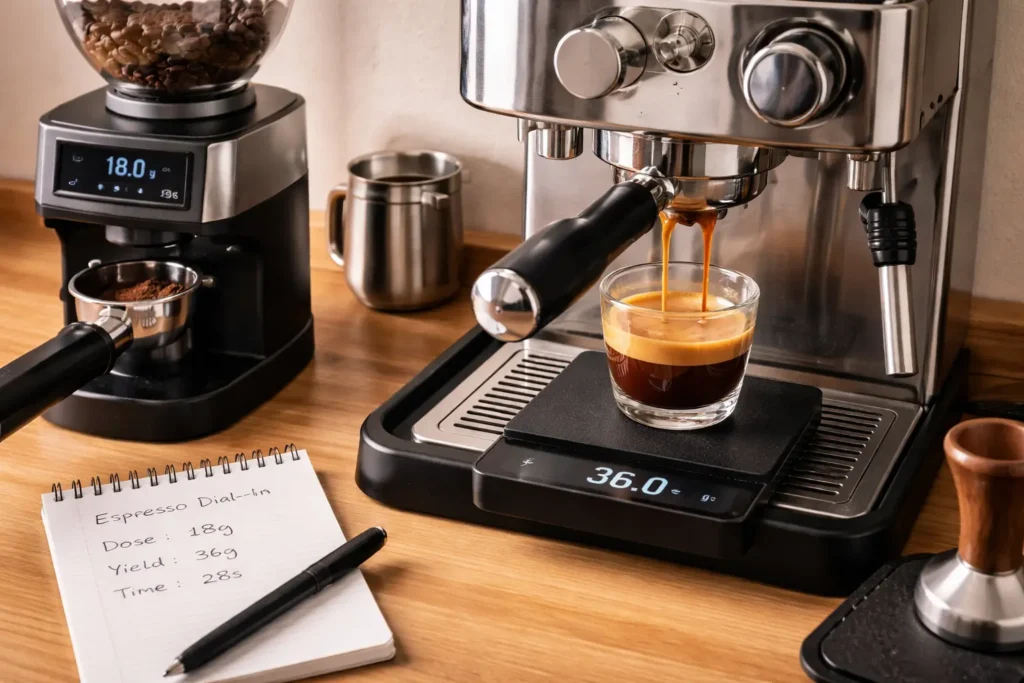
- Target parameters: 18g dose in / 36g out / 25–30 seconds / 91°C (medium roast)
- Primary control: Grind size — finer slows the shot; coarser speeds it up
- Secondary control: Temperature — higher extracts more sweetness; lower reduces bitterness
- Tertiary controls: Dose and yield — adjusting intensity and strength after extraction is balanced
- The rule: One variable per shot. Always. Write it down.
Who This Guide Is For — Jump to What You Need
☕ Complete Beginner
Start with What Is Dialling In and Target Parameters — understand the goal before executing the system.
⚡ Ready to Pull Shots
Go straight to the 7-Step Dial-In System and the Variable Hierarchy for the full sequence.
🔧 Fixing a Specific Problem
Jump directly to the Troubleshooting Matrix — every symptom mapped to causes and fixes in order.
🔬 Puck Prep and Technique
See Puck Preparation for distribution, tamping, and WDT technique that reduces channeling and improves consistency.
Table of Contents
- What dialling in actually means
- Target parameters: the numbers and why they exist
- What you need before you start
- The variable hierarchy: what to adjust and in what order
- The 7-step dial-in system
- Reading your shots: time, yield, and taste
- Grind adjustment: the primary control
- Temperature adjustment: the secondary control
What Dialling In Actually Means
Dialling in espresso is the systematic process of adjusting your brewing variables until your shot extracts within the target time window and tastes balanced. It is called “dialling in” because it resembles tuning a dial — you start somewhere, observe the result, move in one direction, observe again, and repeat until you land in the sweet spot. The sweet spot is not arbitrary. It exists because espresso extraction happens in a specific sequence: acids extract first and fastest, then sweetness and body, then harsh bitter compounds last. The target extraction window — approximately 25–30 seconds at a 1:2 dose-to-yield ratio — is the time range where a well-calibrated setup extracts fully through the sweetness phase without significantly entering the harsh bitter phase.
Dialling in is not something you do once. It is a recurring practice because the variables that determine how a shot extracts change constantly: roast date, bean density, ambient humidity, grinder burr temperature, and even seasonal lot changes in the same coffee all shift the extraction behaviour of the same setting over time. An experienced home barista re-dials in every new bag of beans and checks the dial periodically within a bag as the beans age. The process becomes faster with experience — a beginner might need 15 shots; an intermediate barista typically needs 3–5. But the underlying principle never changes: observe, adjust one variable, observe again.
🔬 Why espresso requires dialling in when drip and pour over don’t: Drip and pour over are gravity-fed methods with 4–6 minutes of gentle contact time. Small grind variations produce small flavour changes — the method is self-correcting to a degree. Espresso forces water through a compact puck at 9 bar of pressure in 25–35 seconds. At this pressure, a grind setting that is 10–20 microns too fine chokes the machine entirely; 10–20 microns too coarse produces a watery, under-extracted shot in under 15 seconds. The precision window is narrow enough that it must be found deliberately and held deliberately. This is the fundamental reason espresso rewards a systematic dial-in approach and punishes random adjustment.
Target Parameters: The Numbers and Why They Exist
Every target parameter in espresso dial-in has a physical reason for existing. Understanding the reason makes it far easier to diagnose problems — instead of memorising rules, you understand the mechanism and can work backwards from any symptom to its cause.
| Parameter | Standard starting point | Why this number | What changing it does |
|---|---|---|---|
| Dose (coffee in) | 18g for a standard double | 18g fills a standard 58mm double basket to the correct headspace below the shower screen; enough coffee for a 1:2 yield at proper extraction | More dose = more puck resistance = slower shot; less dose = less resistance = faster shot; also affects strength and body independently of extraction |
| Yield (espresso out) | 36g (1:2 ratio — double the dose) | The 1:2 ratio produces a balanced espresso at correct extraction — enough dissolved solids for body without the harsh bitter compounds that extract at higher yields | Higher yield = more dilute, lighter body, potentially sweeter; lower yield (ristretto) = more intense, sweeter, heavier — but more sensitive to over-extraction at fine grind |
| Shot time | 25–30 seconds from pump start to stop | This is the time window where extraction reaches the sweetness and body phase without significantly entering the harsh bitter phase for a 1:2 yield from an 18g dose | Too fast = under-extraction (sour, thin); too slow = over-extraction (bitter, harsh); time is a consequence of grind and puck prep, not a target you hit by stopping the pump manually |
| Brew temperature | 91°C for medium roast | 91°C extracts the full flavour spectrum of medium roast beans without accelerating bitter compound extraction; lighter roasts need more heat (93–96°C), darker roasts less (88–91°C) | Higher temperature extracts more — useful for light roasts that need more energy to dissolve; lower temperature reduces bitter compound extraction — useful for dark roasts |
| Pump pressure | 9 bar (not adjustable on most machines) | 9 bar is the industry standard established to emulsify coffee oils into the shot and produce crema while extracting in the 25–35 second window | Not adjustable on most home machines; some prosumer machines allow pressure profiling — outside the scope of beginner dial-in |
⚠️ Shot time is a consequence, not a target. One of the most common beginner errors is stopping the pump at exactly 28 seconds regardless of how much espresso has been produced. If your shot runs too fast but you stop the pump at 28 seconds, you have a very short yield from a fast extraction — not a 28-second shot. What matters is the combination: 36g yield in 25–30 seconds from an 18g dose. Always weigh yield on a scale. Stopping by time alone without weighing produces inconsistent results that are impossible to diagnose systematically.
What You Need Before You Start Dialling In
Attempting to dial in espresso without the right tools produces frustrating inconsistency — you cannot identify what changed if you cannot measure what you did. Three tools are non-negotiable. Everything else is an upgrade that makes the process more efficient.
| Tool | Required? | Why it matters | What to use |
|---|---|---|---|
| Digital scale (0.1g precision) | ✅ Non-negotiable | Dose variation of 1g changes shot time by 3–5 seconds at espresso fineness — you cannot diagnose grind changes if dose is inconsistent; yield variation makes ratio tracking impossible | Any kitchen scale accurate to 0.1g; dedicated espresso scales with built-in timers are more convenient but not required |
| Shot timer | ✅ Non-negotiable | Shot time is the primary diagnostic signal — you cannot know if your grind adjustment moved the shot toward or away from the target window without timing every shot | Phone timer is completely adequate; press start when the pump starts, stop when you stop the pump |
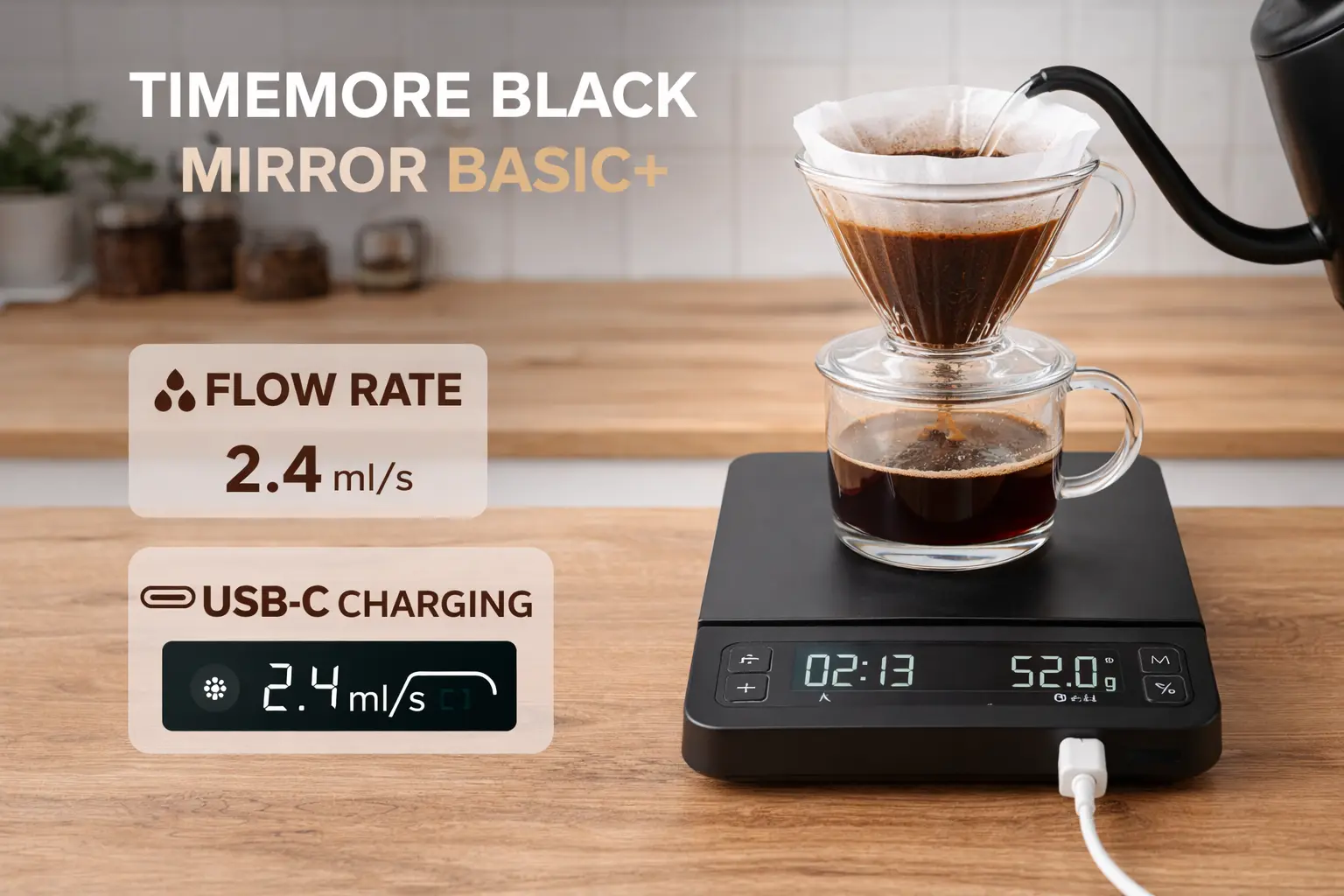
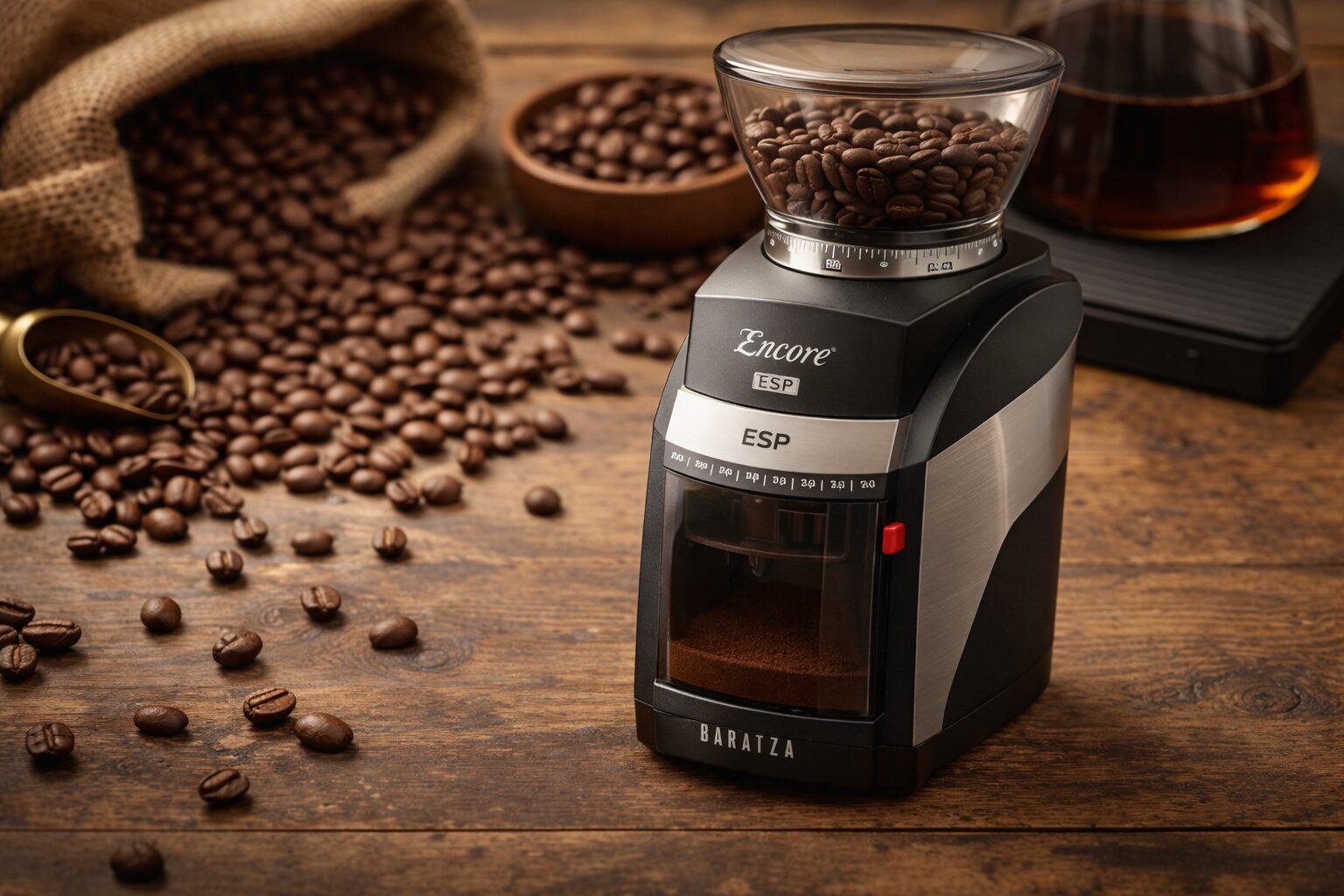
| Dedicated espresso grinder | ✅ Non-negotiable | A grinder without fine enough adjustment range cannot land in the espresso extraction window; a grinder with inconsistent output produces shots that vary between pulls at the same setting — both make systematic dial-in impossible | Breville Smart Grinder Pro (dedicated espresso, 60 settings) or Baratza Virtuoso+ (non-pressurised baskets); see gear picks below |
| Notepad or dial-in log | ✅ Non-negotiable | Without a written record of grinder setting, dose, yield, time, and taste for every shot, you are repeating work rather than building toward a solution | A simple notebook beside the machine; a notes app; any format that you will actually use consistently |
| Fresh beans (7–21 days post-roast) | ✅ Non-negotiable | Beans outside this window either over-gas (under 7 days — CO2 disrupts extraction) or stale (over 30 days — flat, hollow cups regardless of dial-in) | Any roast-dated medium to medium-dark espresso blend; Intelligentsia Black Cat Classic or Lavazza Super Crema are reliable starting points |
| Tamper (correct diameter) | ✅ Non-negotiable | An undersized tamper leaves a gap between tamper and basket wall — water channels around the puck edge; inconsistent tamping produces inconsistent puck resistance shot-to-shot | 54mm for Breville Bambino/Barista Express; 58mm for Gaggia Classic Pro/Rancilio Silvia — check your machine’s basket diameter |
| WDT distribution tool | 💡 Strongly recommended | Clumping grounds create dense and sparse zones in the puck — the primary cause of channeling; a WDT tool eliminates most channeling by breaking up clumps before tamping | Purpose-built WDT tools or improvised with thin wire; see puck prep section below |
| Naked / bottomless portafilter | 💡 Useful for diagnosis | Removes the spout, allowing you to see the extraction pattern directly — channeling shows as an off-centre stream or spray; even extraction shows as a centred, symmetric flow | Optional diagnostic tool; most beginners don’t need it if their puck prep is consistent |
The Variable Hierarchy: What to Adjust and in What Order
The most damaging espresso dial-in mistake is changing multiple variables simultaneously. When you adjust grind size, dose, and temperature between two shots, you have no way to know which change improved or worsened the result. The one-variable-per-shot rule is not a guideline — it is the mechanism that makes systematic dial-in possible. The hierarchy below defines the correct order of operations: work down the list, resolve each level before moving to the next.
1
Grind Size — The Primary Control
Grind size is the dial that directly controls puck resistance, which directly controls how fast water flows through under pressure, which directly controls shot time. Finer grind = more resistance = slower shot. Coarser grind = less resistance = faster shot. Every other variable operates within the shot time that grind size creates. Get your shot into the 25–30 second window by grind adjustment alone before touching anything else. Adjusting dose or temperature before grind is dialled in produces confounding results that are impossible to interpret cleanly.
When to adjust: Shot running under 20 seconds → grind finer. Shot running over 40 seconds or choking → grind coarser. Adjust 1–2 steps at a time on a dedicated espresso grinder; each step is significant at espresso fineness.
2
Temperature — The Secondary Control
Once your shot is in the timing window, temperature determines the extraction character for a given grind and dose. Higher temperature increases extraction rate — more total compounds dissolved per unit time, which is beneficial for light, dense roasts that need extra energy to reach the sweetness phase. Lower temperature reduces extraction rate — useful for dark, porous roasts where bitter compounds dissolve rapidly at standard temperatures. Only adjust temperature after grind has landed you in the 25–30 second window. Temperature adjustments outside the timing window compound with timing problems and produce unreadable results.
When to adjust: In timing window but sour → raise 1°C. In timing window but bitter → lower 1°C. Standard starting points: 91°C for medium roast; 93–96°C for light roast; 88–91°C for dark roast.
3
Dose — Strength and Puck Resistance Adjustment
Dose is the weight of dry coffee going into the portafilter basket. Changing dose has two simultaneous effects: it changes the extraction strength (more coffee = more intense cup) and it changes puck resistance (more coffee = slower shot, because there is more material for water to pass through). This dual effect is why dose should be fixed during grind dial-in — changing dose while adjusting grind makes shot time changes ambiguous. Lock dose at 18g and keep it there until grind and temperature are resolved. Then use dose to fine-tune strength only.
When to adjust: Shot balanced but weak → increase dose 0.5g (and expect to adjust grind slightly to maintain timing). Shot balanced but too intense → reduce dose 0.5g.
4
Yield — Ratio and Intensity Adjustment
Yield is the weight of liquid espresso produced. The ratio between dose and yield (1:2 standard) determines the concentration of dissolved coffee solids in the cup — a higher yield produces a more dilute, lighter, sometimes sweeter cup; a lower yield produces a more concentrated, intense, heavier cup (ristretto). Like dose, yield adjustments should only be made after grind and temperature are optimised — adjusting yield during grind dial-in changes the extraction time benchmark and makes shot comparisons invalid.
When to adjust: Shot balanced but too intense → extend yield to 38–40g, keeping dose fixed. Shot balanced but too sweet/dilute → reduce yield to 30–32g. Each of these creates a different espresso style, not just a strength adjustment.
The 7-Step Dial-In System
Follow this sequence exactly when dialling in a new grinder, a new bag of beans, or after any significant setup change. Do not skip steps. Do not change more than one variable between shots. Every step has a specific purpose in the diagnostic chain.
1
Establish your baseline — warm up, purge, prepare
Turn on your machine and allow it to reach full operating temperature — at least 20 minutes for machines without a PID; thermoblock machines need 10 minutes. Run a blank shot (water through the group head without coffee) to flush any residue from the previous session and stabilise the group head temperature. Cold group heads act as a heat sink that drops brew temperature by several degrees, making the first shot unrepresentative of steady-state extraction. Purge 2–3g of beans through your grinder to clear stale retained grounds from the previous session before grinding your dial-in dose.
2
Set your fixed parameters
Set your dose: 18g (weighed precisely on your scale). Set your yield target: 36g out (1:2 ratio). Set your temperature: 91°C for medium roast; adjust for roast level if known. Set your grinder to the manufacturer’s starting espresso position — or, if this is a new bag of a familiar coffee, start from your last successful grinder setting. Write all of these down before pulling a single shot. These are your fixed parameters for the entire grind phase. Nothing changes except grinder setting between shots in this phase.
3
Pull your diagnostic first shot — record everything
Weigh 18g of beans. Grind into the portafilter basket or a dosing cup. Distribute the grounds evenly (see puck prep section). Tamp level with consistent pressure. Lock the portafilter into the group head. Place your scale and a preheated cup under the spout. Zero the scale. Start your timer. Start the pump. Stop the pump when the scale reads 36g. Record: the grinder setting, the total time, and your immediate taste impression. This is your diagnostic shot — do not adjust anything until you have recorded the result.
4
Diagnose by shot time first — not by taste
Before tasting anything, read your shot time. If the shot ran under 20 seconds: grind 2 steps finer. If it ran over 40 seconds or the machine choked: grind 2 steps coarser. If it ran 20–24 seconds: grind 1 step finer. If it ran 31–40 seconds: grind 1 step coarser. If it ran 25–30 seconds: proceed to taste diagnosis in the next step. You are diagnosing by shot time first because a shot outside the timing window cannot tell you whether the flavour problem is grind, temperature, or something else — the timing issue must be resolved before flavour diagnosis is meaningful.
5
Adjust grind until in the timing window — one step at a time
Pull shots adjusting only the grinder setting — one or two steps at a time — until the shot consistently runs 25–30 seconds at 36g yield from 18g dose. Every shot in this phase should have identical dose (18g), identical yield target (36g), identical temperature, and identical puck prep. Only the grinder setting changes between shots. This phase typically takes 3–8 shots. When you find a setting that produces 25–30 seconds, pull it twice at the same setting to confirm repeatability — one shot within the window could be a fluke; two consecutive shots confirms the setting.
6
Taste and refine with temperature — one degree at a time
You are now in the timing window. Taste the shot without sugar or milk. Identify the dominant character: is it balanced (sweet, with controlled bitterness, clean finish)? Sour or sharp? Bitter or harsh? Flat and weak? If sour despite correct timing: raise temperature by 1°C and re-pull at the same grind setting. If bitter despite correct timing: lower temperature by 1°C and re-pull. If flat or hollow: check bean freshness — this symptom is almost never a temperature problem and is almost always stale beans. If balanced: move to step 7.
7
Log and lock — then fine-tune dose and yield if needed
When your shot tastes balanced, write down every parameter in full: grinder setting (exact number), dose weight, yield weight, shot time, temperature, date, bean name, and roast date. This is your locked recipe. Reproduce it identically going forward. Optionally: if the shot is balanced but too weak for your preference, increase dose by 0.5g (and note that grind may need a minor coarsen to maintain timing). If balanced but too intense, extend yield to 38g. These are optional finishing adjustments — the shot is already good at this point. The lock is what transforms dial-in from a session activity to a daily brewing capability.
Reading Your Shots: Time, Yield, Appearance, and Taste
Every espresso shot gives you information across four simultaneous signals: timing, yield, visual appearance, and taste. Reading all four together is faster than relying on any one alone. This is the reference matrix for interpreting shots during dial-in.
| Signal | What you observe | What it tells you | Adjustment |
|---|---|---|---|
| Shot time under 20s | Yield reaches 36g very quickly — coffee flows almost immediately and drains fast | Grind too coarse; puck resistance too low | Grind 2 steps finer |
| Shot time 20–24s | Slightly fast — visually looks like a reasonable shot but time is short | Grind slightly too coarse | Grind 1 step finer |
| Shot time 25–30s ✓ | Coffee flows after a few seconds, builds to steady stream, slows toward end of yield | Correct grind for this dose and yield — in the target window | Proceed to taste diagnosis |
| Shot time 31–40s | Slightly slow — flow is steady but laboured; shot takes noticeably long to reach yield | Grind slightly too fine | Grind 1 step coarser |
| Shot time over 40s | Very slow flow; machine sounds strained; yield barely moves after initial trickle | Grind too fine; excessive puck resistance | Grind 2 steps coarser |
| Machine chokes — no flow | Pump running but no espresso flowing; machine may make louder sounds | Grind far too fine; or dose too high; or tamp too hard at fine grind | Grind 4+ steps coarser immediately; do not force the machine repeatedly |
| Crema pale blond, disappears in seconds | Thin, light-coloured foam layer that collapses almost immediately | Under-extraction (grind too coarse) or stale beans | Check shot time first; if in window, check roast date |
| Crema dark brown or black, very dense | Very dark, almost opaque foam; cup looks black at surface | Over-extraction (grind too fine or temperature too high) | Check shot time; if in window, lower temperature 1°C |
| Crema golden, persists 30–90 seconds ✓ | Reddish-gold, even foam that merges and holds for at least 30 seconds | Correct extraction; fresh beans; balanced dial-in | No change needed at this signal |
| Taste: sour or sharp, thin body | Acidic, hollow, no sweetness, weak aftertaste | Under-extraction — not enough sweet/body compounds extracted | If timing off: grind finer. If timing correct: raise temperature 1°C |
| Taste: bitter, harsh, dry finish | Aggressive bitterness, drying sensation on back of palate, dark aftertaste | Over-extraction — too many bitter compounds extracted | If timing off: grind coarser. If timing correct: lower temperature 1°C |
| Taste: balanced — sweet with controlled bitterness ✓ | Sweetness present, bitterness in background not dominant, full body, clean lingering finish | Correct extraction — this is the target | Log and lock the setting |
| Taste: sour AND bitter simultaneously | Sharp sourness combined with harsh bitterness — two opposing negative notes | Channeling — uneven extraction producing over-extracted channel + under-extracted bypass | Improve puck prep (WDT + level tamp); do not change grind until channeling is resolved |
Grind Adjustment: The Primary Control in Detail
Grind adjustment is where most espresso dial-in time is spent and where most beginner frustration comes from. Understanding how to adjust — how much, how to interpret the result, and when you have gone too far — makes this phase faster and more intuitive.
How Much to Adjust at a Time
On a dedicated espresso grinder with 60 settings (Breville Smart Grinder Pro) or 54 settings (Baratza Virtuoso+), each step at the espresso-fine end of the range changes shot time by 2–5 seconds. Adjust 2 steps when the shot is clearly outside the window (under 20 or over 40 seconds); adjust 1 step when you are close but not yet in the window (20–24 or 31–40 seconds). Larger adjustments when far off, smaller adjustments when dialling in precisely. After each adjustment, pull a full shot — do not grind a small test amount to “check” the setting; shot time is the only reliable measurement and it requires a full pull to read.
Grinder Retention and Purging
Most grinders retain some ground coffee in the chute and burr chamber between doses. This retained coffee has two problems: it is older than your fresh dose (stale grounds contaminate the fresh dose) and it was ground at the previous setting (when you change settings, the first grams out of the grinder are still at the old setting). This is why purging before each dial-in session is non-negotiable. After any grinder setting change during dial-in, grind and discard 2–3g of beans at the new setting before pulling your next dial-in shot. This flushes the retained grounds from the previous setting and ensures your dose is entirely fresh.
When the Grinder Has No More Room
If your shot runs fast even at the finest grinder setting, your grinder cannot grind fine enough for your portafilter type. With a pressurised (double-wall) basket, this is less common — the basket itself creates back-pressure that compensates for coarser grind. With a non-pressurised (single-wall) basket, it indicates the grinder is not espresso-capable at the precision required — an upgrade is needed. Before concluding the grinder is the problem, confirm: dose is at least 17g; tamping pressure is sufficient and level; puck prep is even. These can all produce the same symptom as an insufficiently fine grinder.
🔬 Why grind adjustment affects shot time but also changes taste independently of time: A finer grind produces more surface area from the same mass of coffee — more contact surface for water under pressure to extract from. This means at the same shot time window, a finer grind extracts slightly more total dissolved solids than a coarser grind (which achieves the same timing through higher puck resistance). Within the 25–30 second window, you can use grind as a fine-tuning tool for body and extraction completeness, not just as a timing control. Very fine within the window → fuller body, more intensity. Very coarse within the window → lighter body, more brightness. This is advanced technique; beginners should focus on landing in the window consistently before exploring within-window grind effects.
Temperature Adjustment: The Secondary Control
Temperature is the most under-used control in home espresso. Many beginners adjust grind and dose endlessly trying to fix sourness or bitterness that could be corrected in two shots by a 1–2°C temperature change. Temperature’s role in espresso is specific: it does not control shot time the way grind does (within the normal range); it controls the extraction rate of each compound category at a given grind and dose. Use temperature only after grind has placed your shot in the 25–30 second window.
| Roast level | Starting temperature | If sour in window → | If bitter in window → | Why |
|---|---|---|---|---|
| Light roast | 93–96°C | Raise 1°C (up to 96°C max) | Lower 1°C | Light roast beans are dense and less soluble — higher temperature needed to dissolve sweet compounds; sourness indicates under-extraction despite correct timing |
| Medium-light roast | 92–94°C | Raise 1°C | Lower 1°C | Balance between density and solubility; moderate temperature range |
| Medium roast | 91°C | Raise 1°C | Lower 1°C | The most forgiving temperature range; 91°C is the standard starting point for most espresso guidance |
| Medium-dark roast | 89–91°C | Raise 1°C | Lower 1°C | More soluble than medium; slightly lower temperature reduces over-extraction of roasting-derived bitter compounds |
| Dark roast | 88–90°C | Raise 1°C (cautiously) | Lower 1°C | Dark roast beans are highly porous and soluble; high temperature extracts bitter compounds very rapidly; start low and raise only if sour |
⚠️ Temperature only works as a dial-in tool on machines with PID temperature control. Machines without a PID (most entry-level machines) have fixed brew temperature — you cannot adjust it. If your machine has no temperature adjustment, focus all your dial-in effort on grind, dose, and yield. The temperature your machine produces is fixed; work around it by choosing a roast level that suits that temperature range (typically medium to medium-dark for most fixed-temperature entry machines, which typically run around 91–93°C). Upgrading to a PID-equipped machine like the Breville Barista Express opens temperature as a dial-in variable.
Dose and Yield: The Tertiary Controls
Dose and yield adjustments are the finishing controls used after your shot is balanced. They let you customise the style and strength of your espresso without disrupting the extraction balance you have achieved through grind and temperature. Understanding the effect of each ratio variant helps you use them intentionally.
| Recipe style | Dose | Yield | Ratio | Target time | Cup character | Best for |
|---|---|---|---|---|---|---|
| Ristretto | 18g | 27g | 1:1.5 | 18–24s | Very concentrated, syrupy, sweet, heavy body — maximum sweetness, minimal bitterness | Milk drinks (cappuccino base), drinkers who love intensity |
| Standard double ✓ | 18g | 36g | 1:2 | 25–30s | Balanced — sweetness, controlled bitterness, full body, clean finish | Default starting point; the specialty coffee standard for a double espresso |
| Extended double | 18g | 40–44g | 1:2.2–2.4 | 30–36s | Lighter body, more brightness, slightly reduced intensity — sometimes sweeter | Light roast single origins; drinkers who find standard doubles too intense |
| Lungo | 18g | 54–72g | 1:3–1:4 | 35–50s | Lighter, more transparent, lower intensity — approaches Americano character | Drinkers who want a longer espresso-style drink without adding water |
Puck Preparation: Distribution, WDT, and Tamping
Puck preparation is the step between grinding and pulling the shot — how you distribute and compress the coffee grounds in the portafilter basket. It is the variable that most influences whether channeling occurs. Even a perfectly dialled grind setting produces an inconsistent shot if the puck has uneven density zones that redirect water pressure to the path of least resistance. Getting puck prep right is what converts “occasionally good shots” into “consistently good shots” at a fixed grind setting.
Step 1: Distribution
After grinding into the basket (or transferring from a dosing cup), the grounds rarely land evenly — clumps and mounds create high-density and low-density zones. Before tamping, level and distribute the grounds to eliminate these zones. The simplest method: tap the portafilter lightly on a flat surface and use a finger to sweep excess grounds level with the basket rim. The better method: use a WDT (Weiss Distribution Technique) tool — a thin wire or needle tool stirred through the grounds in a circular motion before any settling. WDT breaks up clumps and homogenises density across the full basket surface. It takes 15 seconds and eliminates a significant proportion of channeling events.
Step 2: Tamping
Tamping compresses the distributed grounds into a uniform puck. Place the portafilter on a flat, stable surface. Hold the tamper with your thumb and first two fingers. Keep your wrist straight and your elbow at 90° to ensure the tamper face is parallel to the basket rim. Apply approximately 15–20kg of downward pressure — consistent, level, without any lateral movement. The goal is a flat, uniform puck surface with no tilt. A tilted tamp creates a thick side and thin side in the puck: water flows through the thin side faster, producing channeling even with perfect distribution. Calibrate your tamp pressure once using a bathroom scale — place the tamper on the scale and press until you see 15–20kg, then memorise what that feels like.
Step 3: Lock In and Pre-Infuse
Lock the portafilter firmly into the group head — it should feel solid and level. If your machine has pre-infusion (a brief low-pressure phase before full pump pressure), activate it: pre-infusion wets the puck gently before full extraction begins, reducing channeling from CO2-rich fresh beans and improving saturation evenness. Most mid-range machines include 3–5 seconds of pre-infusion. Do not knock the portafilter with the tamper handle after tamping — this cracks the puck surface and introduces channeling channels before the shot even starts.
Dial-In Parameters by Roast Level: Complete Reference
Each roast level has a different density, moisture content, and solubility profile — meaning the same grinder setting, temperature, and timing that produces a balanced medium roast shot will not produce a balanced light or dark roast shot. Use this table as your starting parameter set for each roast level. All times assume a 1:2 ratio (18g in / 36g out) on a standard home semi-automatic machine.
| Roast level | Starting temp | Target time | Pre-infusion | Grind direction vs medium | Crema character | Common problems |
|---|---|---|---|---|---|---|
| Light roast ☀️ | 93–96°C | 28–35s | 6–8 seconds — essential | Significantly finer — light beans are denser and less soluble | Lighter golden, thinner, shorter-lived — normal for light roast; not a sign of under-extraction | Very easy to under-extract (sourness); machine temp often insufficient on entry machines; always extend pre-infusion |
| Medium-light roast | 92–94°C | 27–33s | 5–7 seconds | Finer than medium | Good golden crema with decent persistence | Similar to light roast; still easy to under-extract at entry machine temperatures |
| Medium roast 🌤 | 91°C | 25–30s | 3–5 seconds | Baseline — the reference against which all other roasts adjust | Rich golden crema; good persistence | The most forgiving roast level; suitable for all home machine types |
| Medium-dark roast | 89–91°C | 24–28s | 3–4 seconds | Slightly coarser — more soluble than medium | Darker golden crema; slightly heavier | Easy to over-extract with too-fine grind or too-high temp; watch for harsh dark notes |
| Dark roast 🌑 | 88–90°C | 22–26s | 2–3 seconds (minimal) | Coarser — highly soluble; extracts very fast at fine settings | Very dark crema, dense; can appear almost black at over-extraction | Very easy to over-extract to harshness; use lower temp, coarser grind, shorter yield than medium |
Dialling In a New Bag of Beans
Opening a new bag of beans is the most common trigger for re-dialling in. Even if you are buying the same coffee from the same roaster, variation between roast batches, crop seasons, and roast dates means your previous grinder setting is a starting point, not a guarantee. The good news is that re-dialling in with a familiar coffee on a familiar machine is significantly faster than the initial dial-in.
Same Coffee, New Roast Date
- Start from your logged previous grinder setting for this coffee
- Purge 3–5g before first shot to clear old retained grounds
- Pull a shot at the previous setting and time it
- If within 2 seconds of previous target: taste and confirm — you may already be dialled in
- If outside the window: adjust 1 step in the required direction and re-pull
- Typical re-dial time: 2–4 shots
New Coffee, Unknown Setting
- Check roast level — use the roast level parameter table above as a starting temperature and approximate grind direction
- Start from the middle of the manufacturer’s recommended espresso range and pull a diagnostic shot
- Time the shot — use timing to navigate toward the window before tasting
- Adjust grind in 2-step increments until in the window, then 1-step refinements
- Once in timing window: taste and temperature-correct if needed
- Typical dial-in: 5–12 shots for a genuinely new coffee
Why Beans from the Same Roaster Still Need Re-Dial
- Roast date variation: beans 8 days off-roast have different CO2 and moisture than beans 18 days off-roast
- Crop season variation: green coffee from different harvest years has different bean density
- Roast batch variation: small roasters produce slight roast-to-roast variation even with the same green coffee and profile
- Ambient conditions: seasonal humidity changes affect how coffee behaves at the same grind setting
The Dial-In Log: What to Record and Why
A dial-in log is the difference between espresso that improves over time and espresso that cycles through the same problems repeatedly. Without a written record, you are relying on memory for grinder settings, temperatures, and taste notes — and memory is not accurate enough for espresso precision. A log that takes 30 seconds to fill in per shot produces a reference document that makes every future dial-in faster.
| What to record | Why it matters | Example entry |
|---|---|---|
| Date | Lets you track bean age from roast date; seasonal ambient changes affect extraction | 2026-03-15 |
| Bean name + roast date | Allows you to reference back when reordering the same coffee; shows age-within-bag effects over time | Intelligentsia Black Cat Classic / Roasted 2026-03-01 |
| Grinder setting | The primary control; exact setting number allows immediate return to any previous result | Breville Smart Grinder Pro setting 12 |
| Dose weight | Dose variation contaminates timing data; confirms each shot is directly comparable | 18.1g |
| Yield weight | Ratio tracking; confirms you are stopping at the same point each shot | 36.3g |
| Shot time | Primary diagnostic signal; shows whether grind change moved shot in correct direction | 27 seconds |
| Temperature | Required to reproduce any good shot; shows whether temperature change improved or worsened result | 91°C |
| Tasting notes | The reason for all of the above; captures whether the shot was balanced, sour, bitter, or off; what specifically tasted good | Balanced — dark chocolate leading, mild citrus brightness, clean finish. Slightly too intense. |
| Next adjustment | Pre-committing to a specific next change prevents “feels like I should change everything” reactive adjusting | Extend yield to 38g next shot — keep grind same |
Gear Picks: Grinder and Scale for Dialling In
Dialling in espresso is only possible with equipment capable of the required precision. A grinder without sufficient adjustment resolution cannot land in the espresso window. A scale inaccurate to less than 0.5g produces inconsistent dose data that makes shot-to-shot comparison unreliable. These are the picks that make systematic dial-in achievable from day one.
Disclosure: CoffeeGearHub may earn a commission on qualifying purchases through affiliate links on this page, at no cost to you. Our recommendations are editorially independent.
Recommended Espresso Grinder: Breville Smart Grinder Pro
The Breville Smart Grinder Pro is the CoffeeGearHub recommended dedicated espresso grinder for beginners — and it is the grinder that makes systematic dial-in most immediately accessible at the entry price point. The 60 grind settings are designed specifically for espresso micro-adjustment: each adjacent step in the espresso range changes shot time by 2–5 seconds, giving you real, readable feedback from every grind adjustment. The portafilter cradle holds the portafilter directly under the chute for zero-transfer dosing, the LCD timer allows repeatable dosing without weighing every grind, and the settings are numbered and reproducible — the two requirements for reliable dial-in logging. For any beginner who wants to implement the dial-in system in this guide, the Smart Grinder Pro is the grinder that makes every step of the process clean and readable.
- Settings: 60 — dedicated espresso micro-adjustment range; clear numbered positions
- Portafilter cradle: direct dosing into portafilter; 54mm and 58mm compatible
- Timer: LCD dose timer for repeatable output without weighing every shot
- Works with: both pressurised and non-pressurised baskets
- Best for: beginners learning systematic espresso dial-in; any espresso machine type
Disclosure: CoffeeGearHub may earn from qualifying purchases.
Best Step-Up Grinder for Dial-In Precision: Baratza Virtuoso+
The Baratza Virtuoso+ is the correct grinder for any beginner with a non-pressurised (single-wall) portafilter basket who wants tighter shot-to-shot consistency during dial-in. Its DC motor maintains more consistent grinding speed than AC motor grinders — motor speed variation changes particle size at a fixed setting, which introduces noise into your dial-in data that is impossible to separate from grind setting effects. The Virtuoso+’s 54 settings include a fine enough range for non-pressurised baskets, and the digital dose timer provides repeatable output. For drinkers dialling in on machines like the Gaggia Classic Pro or Rancilio Silvia — both non-pressurised by default — the Virtuoso+ produces the consistency that systematic dial-in requires.
- Settings: 54 — covers the full espresso range for non-pressurised baskets
- Motor: DC — more consistent grind speed than AC motors; less shot-to-shot variation
- Timer: Digital dose timer — repeatable dosing session-to-session
- Works with: both pressurised and non-pressurised baskets; optimal for non-pressurised
- Best for: serious beginners with non-pressurised basket machines; anyone who wants tighter dial-in consistency
Disclosure: CoffeeGearHub may earn from qualifying purchases.
Troubleshooting Matrix: Every Common Espresso Dial-In Problem
Identify your symptom. Check the most likely cause. Apply fixes in the order listed — one per shot. If a fix resolves the symptom, stop and log the new setting. If it doesn’t, move to the next fix.
| Symptom | Most likely cause | Fix — in order |
|---|---|---|
| Shot runs under 20 seconds | Grind too coarse; insufficient dose; no tamp | Grind 2 steps finer → confirm 18g dose weighed → confirm level tamp with consistent pressure |
| Shot runs over 40 seconds or chokes | Grind too fine; dose too high; uneven distribution creating dense zones | Grind 2 steps coarser → confirm dose not over 18.5g → check distribution for clumps; use WDT tool |
| Machine chokes — pump runs, no flow | Grind far too fine; or dose too high for basket with fine grind | Grind 4+ steps coarser immediately — do not force repeated choked shots → confirm dose is not over 18g → re-pull at new setting |
| Sour taste, shot time correct (25–30s) | Brew temperature too low for roast level; or beans too fresh (under 7 days) | Raise temperature 1°C → rest beans further if under 7 days post-roast → extend yield to 38g keeping dose fixed |
| Bitter taste, shot time correct (25–30s) | Brew temperature too high; stale beans; or dark roast at standard parameters | Lower temperature 1°C → check roast date (discard if 60+ days) → for dark roast: target 88–90°C and 22–26 second window |
| Sour AND bitter simultaneously | Channeling — uneven extraction producing simultaneous over and under-extraction in different zones of the puck | Improve distribution (WDT tool before tamping) → ensure tamp is level → grind 1 step finer to increase puck density → consider naked portafilter to see channeling directly |
| Flat, hollow, no sweetness or aroma | Stale beans — aromatic compounds depleted beyond the window where dial-in can help | Check roast date — if 45+ days, the beans are the problem. Buy fresh roast-dated beans. No dial-in technique fixes stale coffee |
| Shot times vary significantly between pulls at same setting | Grinder retention — stale grounds from previous session contaminating each fresh dose; or dose weight varying | Purge 3g at session start → weigh every dose to 0.1g → check grinder for loose burr alignment (wobble at fine settings) |
| Pale, thin crema that disappears in seconds | Stale beans (CO2 depleted) or grind too coarse (under-extracted shot) | Check shot time — if fast, grind finer; if in window, check roast date → use beans 7–21 days post-roast for peak crema |
| Very dark, almost black crema | Over-extraction — grind too fine or temperature too high | If shot time slow: grind coarser → if time correct: lower temperature 1°C → check if using very dark roast at standard medium parameters |
| Shot tastes fine at home but different each day | Machine not fully warmed up; first shot of day different from steady-state | Allow 20–30 minutes warm-up before first dial-in shot → run a blank flush shot before each session → check for seasonal ambient temperature changes affecting grinder output |
| Good shots become inconsistent mid-bag | Beans ageing past peak within the bag — CO2 depleting, density changing | Re-dial in — adjust grind 1 step coarser (more aged beans extract slightly faster) → consider using beans within 7–21 days post-roast window and buying smaller quantities more frequently |
| Can’t get consistent shot time despite same grinder setting | Dose variation; or grinder retention contaminating each dose; or channeling from inconsistent puck prep | Weigh every dose individually → purge before each session → standardise puck prep (same WDT strokes, same tamp pressure every shot) → check for grinder burr wear if problem is persistent |
| Light roast always under-extracts despite all adjustments | Machine temperature too low for light roast density; or grinder cannot grind fine enough | Raise temperature to maximum machine capability → extend pre-infusion to 8+ seconds → grind to finest usable setting → if still under-extracting: machine temperature is the limiting factor; light roasts require 93–96°C |
Final Takeaway: Espresso Is a System, Not a Guessing Game
Dialling in espresso rewards a systematic approach and punishes guesswork. Every great home barista — every person who consistently pulls shots that taste like what quality espresso is capable of — got there by learning to observe one variable at a time, record the result, and adjust in the correct direction. The learning curve is real: the first sessions are iterative and occasionally frustrating. But the curve is not steep. The same system in this guide that applies to a first shot on a new setup applies to every subsequent bag of beans for as long as you brew espresso. Grind first. Temperature second. Dose and yield third. Write everything down. Re-dial every new bag. The process becomes intuitive faster than most beginners expect — and the day you pull three consecutive balanced shots from a new bag on the third attempt, you will understand what all the iteration was building toward.
FAQs: How to Dial In Espresso
What does dialling in espresso mean?
Dialling in espresso is the systematic process of adjusting your grind size, dose, yield, and temperature until your shot extracts in the target time window (25–30 seconds for a standard 1:2 double) and tastes balanced. Every new bag of beans, every significant change in ambient temperature, and every new grinder setting requires a fresh dial-in. The process is not a one-time event — it is an ongoing calibration practice that becomes faster and more intuitive as you develop espresso palate awareness.
What are the target espresso shot parameters?
The specialty coffee standard for a balanced double espresso is: 18g dose in, 36g espresso out (1:2 yield ratio), 25–30 seconds from pump start to stop, at 91–93°C brew temperature. These are starting parameters, not absolute rules. Light roasts may require 93–96°C and 28–35 seconds. Dark roasts may benefit from 88–91°C and 22–28 seconds. The ratio can range from 1:1.5 (ristretto) to 1:3 (lungo) depending on the result you are pursuing.
Should I adjust grind, dose, or temperature first?
Always adjust grind first. Grind size is the primary control for espresso shot time, which is the primary control for extraction yield. Get your shot running in the 25–30 second window by grind adjustment alone before touching dose or temperature. Once in the timing window, use temperature to correct sourness (raise) or bitterness (lower) that persists despite correct shot time. Use dose and yield adjustments only after grind and temperature are optimised.
Why does my espresso shot always run too fast?
A consistently fast shot (under 20 seconds) means your grind is too coarse — water passes through the puck with insufficient resistance. Grind 2–3 steps finer and re-pull at the same dose. If the shot still runs fast at the finest grind setting, your grinder may not be capable of grinding fine enough for your portafilter type. Also confirm you are tamping with sufficient and level pressure — a weak or tilted tamp reduces puck resistance.
Why does my espresso shot always run too slow or choke?
A consistently slow shot (over 40 seconds) or a choked machine means your grind is too fine — the puck resistance is too high for the pump pressure. Grind 2–3 steps coarser immediately and re-pull. Do not force a choked shot repeatedly. Also check: dose not over 19g, tamp pressure not excessive at fine grind, and distribution even before tamping.
My shot time is correct but it still tastes sour — why?
Sour espresso with correct shot timing indicates under-extraction despite correct flow rate. The most common causes are: brew temperature too low for the roast level (especially for light roasts — raise to 93–96°C), beans too fresh (under 7 days post-roast — retained CO2 causes uneven extraction), or shot yield too short (increase yield to 38–40g, keeping dose fixed). Raise temperature 1°C and re-pull before changing any other variable.
My shot time is correct but it tastes bitter — why?
Bitter espresso with correct shot timing indicates over-extraction despite correct flow rate. The most common causes are: brew temperature too high (lower 1–2°C), beans stale or very darkly roasted (check roast date — discard if 60+ days), or yield too long (reduce from 36g to 32–34g). Lower temperature 1°C and re-pull before changing any other variable.
What is channeling and how do I fix it?
Channeling occurs when water finds a path of least resistance through the coffee puck rather than distributing evenly, producing simultaneous over-extraction through the channel and under-extraction everywhere else. The diagnostic sign is a shot that tastes both sour and bitter at the same time. Channeling is caused by uneven puck preparation — clumps in the grounds, a tilted tamp, or insufficient distribution. Fix by using a WDT distribution tool before tamping, ensuring your tamp is level, and grinding 1 step finer to increase puck density.
Do I need to re-dial-in when I open a new bag of beans?
Yes — always. Even the same coffee from the same roaster will vary slightly between batches, roast dates, and crop seasons. When you open a new bag, start from your last dialled-in grinder setting as a baseline, pull a shot, record the time, and adjust from there. With experience, re-dialling a new bag of a familiar coffee takes 2–4 shots.
How many shots does it take to dial in espresso?
With a new grinder and new beans on a new setup, expect 10–20 shots to find a consistently good dial-in. With a familiar grinder and a new bag of a familiar coffee, expect 3–6 shots. With the same bag as last week, sometimes zero adjustment is needed. The process gets significantly faster as you develop intuition for how your specific grinder responds — experienced home baristas often lock in a new bag in 3 shots or fewer. Every shot you pull teaches you something if you write it down.
Continue Learning
ESPRESSO CLUSTER
New to home espresso altogether? Our Beginner’s Guide to Home Espresso covers everything from choosing your first machine and grinder to pulling your first shot — with the same puck prep technique and shot-pulling method referenced in this guide.
☕
Written by the CoffeeGearHub Editorial Team
CoffeeGearHub is a specialty coffee equipment resource run by home brewers and coffee enthusiasts. Our guides are researched using published brewing science, SCA standards, grinder manufacturer specifications, and established specialty-coffee community knowledge. We review and update our pillar content regularly. About CoffeeGearHub →