
Last Updated: March 16, 2026 • 30–35 min read • Covers: 10 Coffee Picks + Flavor Comparison + Roast Guide + Brew Temperature + Freshness + Grind Size + Troubleshooting + Certifications + FAQ
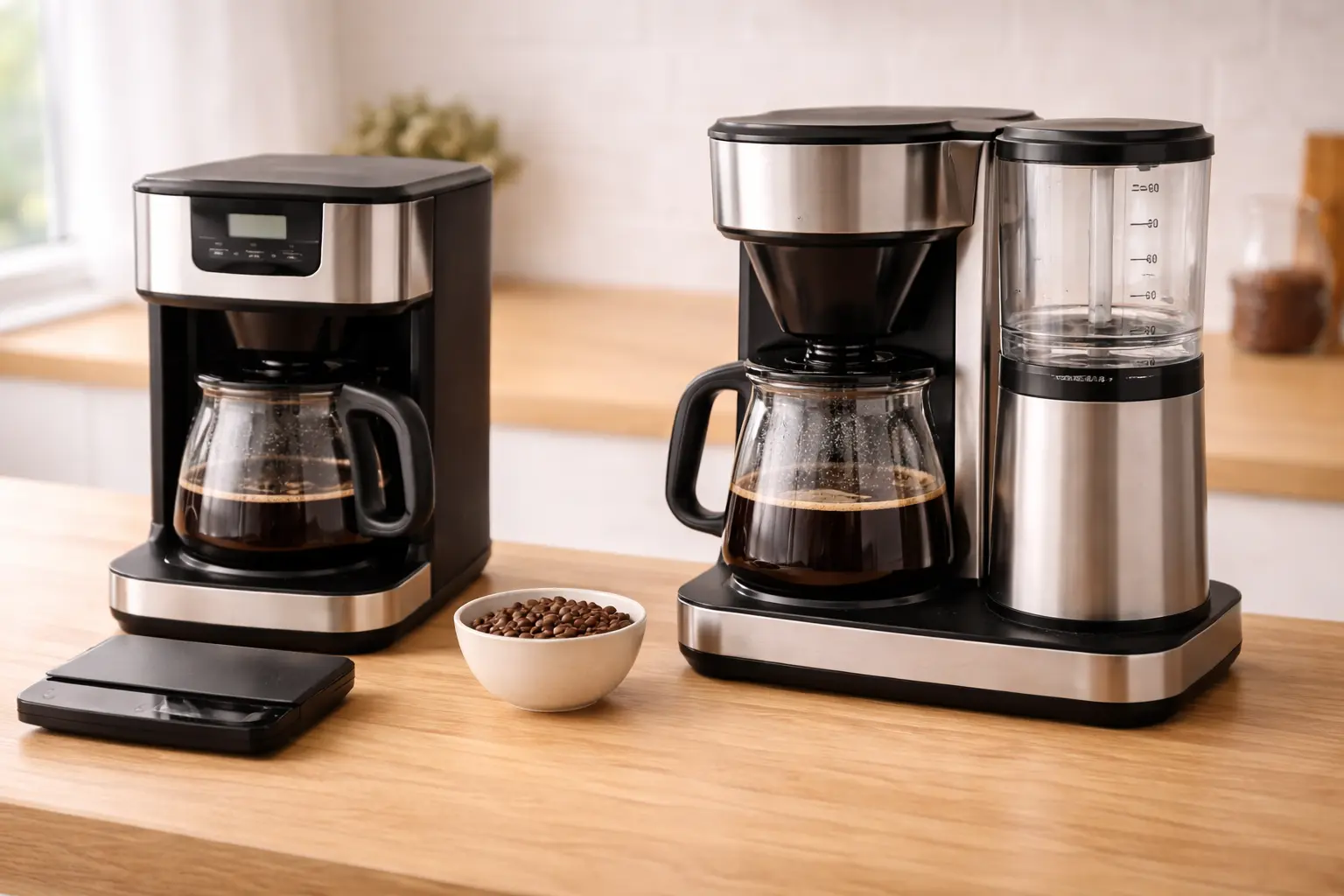
✍️ Editorial note: This guide is designed for home brewers using standard drip coffee makers. It is built to help you choose beans that suit your taste, your machine, and your daily routine — not just to show a random list of products. Product links are affiliate links, which means CoffeeGearHub may earn a commission at no extra cost to you. This does not affect which products we recommend.
The best coffee beans for a drip coffee makers are not necessarily the darkest beans, the strongest beans, or the most expensive beans. They are the beans that extract cleanly in a drip brewer, match the way you actually like your coffee to taste, and stay enjoyable from the first sip to the last cup in the pot.
That matters because drip coffee is more revealing than a lot of people realize. It does not hide stale coffee behind milk texture, and it does not compress flavor the way espresso does. A drip machine gives you a clearer look at the coffee itself — which means roast level, freshness, origin, and bean quality all show up in the cup.
This guide is meant to work as a real pillar page, not a shallow roundup. You will get 10 product recommendations, but you will also get the decision framework that makes those recommendations useful: what roast level works best for drip coffee, when to choose blends over single-origin beans, how grind size and water affect flavor, what your machine’s brew temperature is doing to your coffee, and which coffees make the most sense for different kinds of drinkers. There is also a troubleshooting matrix at the bottom for fixing specific problems in your cup.
The 30-Second Answer
If you want the safest starting point for better drip coffee, buy a medium roast whole bean coffee. That is the category most likely to give you balance, sweetness, clean extraction, and a lower chance of bitterness or sourness.
- Best overall: Lavazza Super Crema (Mid-Range)
- Best light roast: Kicking Horse Smart Ass (Mid-Range)
- Best dark roast: Peet’s Major Dickason’s Blend (Budget-Friendly)
- Best single-origin: Volcanica Ethiopian Yirgacheffe (Premium)
- Best low-acid: Lifeboost Medium Roast (Premium)
- Best high-caffeine: Death Wish Coffee (Mid-Range)
- Best budget everyday pick: Caribou Coffee Caribou Blend (Budget-Friendly)
If you do not know what to buy first, start with Lavazza Super Crema. It is the easiest upgrade for most home drip brewers who want smoother, more balanced coffee without overthinking every variable.
Who This Guide Is For
☕ Everyday coffee drinkers
Start with Best Overall and Flavor Comparison.
🍊 Bright coffee fans
Go to Best Light Roast and Best Single-Origin.
🌑 Bold coffee drinkers
Jump to Best Dark Roast and Best High-Caffeine.
🛠️ People fixing brew problems
Read the Buying Guide and Troubleshooting Matrix.
Table of Contents
Top Picks: Best Coffee Beans for Drip Coffee Makers
| Pick | Coffee | Roast | Price Tier | Best For | Our Take |
|---|---|---|---|---|---|
| 🥇 Best Overall | Lavazza Super Crema | Medium | Mid-Range | Most drip coffee drinkers | Smooth, balanced, easiest to recommend |
| 🍊 Best Light Roast | Kicking Horse Smart Ass | Light-medium | Mid-Range | Brighter, fruitier coffee | More lively and aromatic than a standard daily coffee |
| 🌑 Best Dark Roast | Peet’s Major Dickason’s Blend | Dark | Budget-Friendly | Bold coffee lovers | Rich, fuller-bodied classic dark cup |
| 🌍 Best Single-Origin | Volcanica Ethiopian Yirgacheffe | Light | Premium | Distinct origin character | Cleaner and more expressive than any blend |
| ⚡ Best High-Caffeine | Death Wish Coffee | Dark | Mid-Range | Maximum caffeine | Strength-first option for heavy morning coffee drinkers |
| 🫶 Best Low-Acid | Lifeboost Medium Roast | Medium | Premium | Sensitive stomachs, easier drinking | Gentler, certified organic, lower-acid profile |
| ☕ Best Specialty Blend | Stumptown Hair Bender | Medium | Mid-Range | Specialty coffee fans | Layered, interesting, still daily-drinkable |
| 🍬 Best Balanced Specialty Pick | Counter Culture Big Trouble | Medium | Premium | Sweet everyday specialty coffee | Nutty, clean, and approachable |
| 🏪 Best Budget Everyday Pick | Caribou Blend | Medium-dark | Budget-Friendly | Reliable daily brewing | Comfortable, familiar flavor profile |
| 🇮🇹 Best Smooth Italian-Style Pick | Illy Classico | Medium | Mid-Range | Mellow, polished coffee | Soft and refined rather than bright or bold |
Coffee Flavor Comparison Chart
Choosing by flavor preference is usually the fastest way to buy a better coffee. Drip brewing highlights sweetness, acidity, roast depth, and aroma clearly, so your ideal coffee is often less about brand and more about the kind of cup you actually want to drink every day.
| If you want… | Choose this roast/profile | What it usually tastes like in drip coffee | Best pick |
|---|---|---|---|
| Smooth, balanced everyday coffee | Medium roast blend | Round body, mild sweetness, lower bitterness | Lavazza Super Crema |
| Bright, lively coffee | Light to light-medium roast | Citrus, berry, floral notes, brighter acidity | Kicking Horse Smart Ass |
| Bold, classic coffee | Dark roast | Chocolate, toasted notes, deeper finish | Peet’s Major Dickason’s Blend |
| Distinct origin character | Single-origin light roast | Cleaner cup with fruit and floral detail | Volcanica Ethiopian Yirgacheffe |
| Maximum caffeine kick | Dark roast intensity blend | Heavy, earthy, bold finish | Death Wish Coffee |
| Gentle, easy-drinking coffee | Low-acid medium roast | Soft acidity, mild sweetness, smoother feel | Lifeboost Medium Roast |
💡 Quick rule: If your drip coffee often tastes bitter, start with a smoother medium roast. If it tastes flat or boring, move toward a brighter light roast or a more expressive single-origin coffee. If it tastes weak or sour, see the troubleshooting matrix.
Why Coffee Beans Matter So Much in a Drip Coffee Maker
Drip coffee is often treated like the default brew method, but that does not mean it is neutral. In fact, drip brewing is one of the clearest ways to taste the character of a coffee bean because it does not rely on pressure or heavy immersion to shape the cup. Hot water moves through the grounds and extracts what the coffee is willing to give. If the bean is stale, flat, badly matched to your taste, or over-roasted, you will notice.
That is why a good drip coffee bean is usually one that tastes balanced, not exaggerated. Some people do love darker and heavier coffee, and some prefer brighter and fruitier coffee, but the basic principle stays the same: the best coffee for drip brewing is the one that gives you a clean, coherent, satisfying cup rather than just a loud one.
This is also why coffee beans often matter more than the machine upgrade people think they need. A better brewer can improve consistency, but a better bean choice changes the flavor immediately. That said, your machine does contribute one variable that most buyers overlook: brew temperature.
Brew Temperature and Roast Level: What Your Drip Machine Is Actually Doing
🌡️ Why this matters for your bean choice: Most basic drip machines brew at 185–195°F. SCAA-certified brewers maintain 195–205°F — the range coffee professionals consider ideal for clean extraction. This gap matters most with light roasts, which are denser and need higher water temperatures to extract their fruit and floral notes properly. If you own a budget machine and find light roast coffee tasting thin, flat, or overly sharp, the machine’s lower brew temperature is often the reason — not just the beans.
Practical takeaway: If you want to brew the brighter, more expressive coffees in this guide (Ethiopian Yirgacheffe, Kicking Horse Smart Ass), a SCAA-certified drip brewer like the OXO Brew or Technivorm Moccamaster will unlock more of their character. For medium and dark roasts, a standard brewer performs well at any price point.
Best Coffee Beans by Roast Type
Roast level changes the experience of drip coffee more than almost any other buying factor. Light roasts preserve more acidity and origin character. Medium roasts usually deliver the best balance for daily brewing. Dark roasts emphasize body, roast flavor, and a more classic “strong coffee” feel.
Best Medium Roast for Drip Coffee: Lavazza Super Crema
Medium roast is the safest and strongest starting category for most home brewers because it is the easiest to brew well and the easiest to enjoy consistently. It usually gives you sweetness, body, and enough structure without the sharper acidity of lighter coffees or the heavier roast character of darker beans. Most standard drip machines perform at their best with medium roasts.
Best Light Roast for Drip Coffee: Kicking Horse Smart Ass
Light to light-medium roasts are the better choice for people who want more aroma, more fruit, and a livelier cup. In drip coffee makers, these coffees can feel cleaner and more expressive, though they are usually less forgiving than medium roasts if your grind or brewing routine is inconsistent — or if your machine brews below 195°F.
Best Dark Roast for Drip Coffee: Peet’s Major Dickason’s Blend
Dark roasts suit drinkers who want a fuller and more traditional coffee profile. They tend to feel stronger, deeper, and more familiar, especially for people who use milk or cream or simply prefer coffee to feel bold rather than delicate. Dark roasts also extract reliably even at lower machine temperatures.
The Best Coffee Beans for Drip Coffee Makers
The recommendations below are organized like buying guidance, not just a ranking. Each coffee fills a different role, and the most useful recommendation is the one that matches how you actually drink your coffee at home. Each card includes a price-tier label so you can filter by budget before you click.
⭐ COFFEEGEARHUB TOP PICK — BEST OVERALL
BEST FOR: Smooth everyday drip coffee
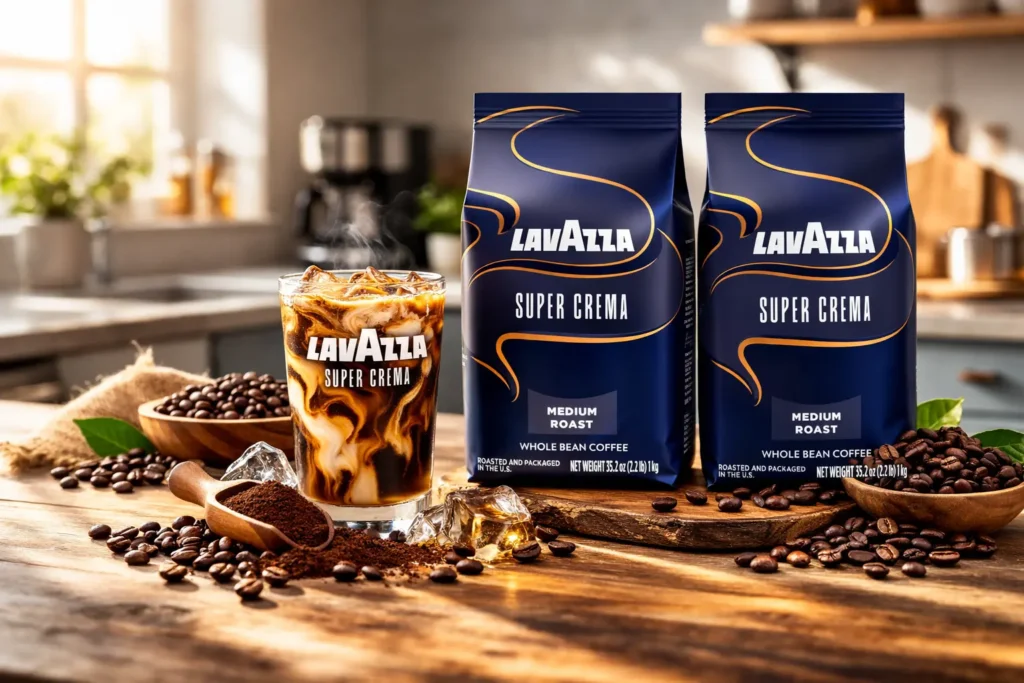
Lavazza Super Crema — Best Overall Coffee Beans for Drip Coffee Makers
Lavazza Super Crema is the easiest recommendation in this guide because it solves the problem most drip coffee drinkers are actually trying to solve: they want a smoother, more balanced cup that tastes like an upgrade right away, without needing a perfect grinder or a hyper-specific taste preference. It is approachable, forgiving, and broad enough in appeal that it works for solo drinkers, couples, and households with mixed coffee preferences.
It is not the brightest coffee here, and that is exactly why it works so well as a first recommendation. Instead of pulling you into very fruity or very dark territory, it sits in the practical middle where most people live: rich enough to feel satisfying, gentle enough to drink daily, and consistent enough to recommend confidently.
| Roast | Medium |
| Flavor Style | Smooth, nutty, lightly sweet |
| Bean Type | Whole bean (Arabica/Robusta blend) |
| Price Tier | Mid-Range |
| Best For | Daily home drip coffee |
Why Buy It
- Smooth and balanced for most drip brewers
- Easy step up from basic supermarket coffee
- Works well as an everyday household coffee
- Forgiving of minor grind inconsistencies
Why Skip It
- Skip if you want very bright, fruit-forward coffee
- Skip if you only enjoy very dark, bold roasts
⚠️ Affiliate disclosure: CoffeeGearHub may earn a commission if you purchase through this link, at no extra cost to you.
BEST FOR: Brighter, more aromatic drip coffee
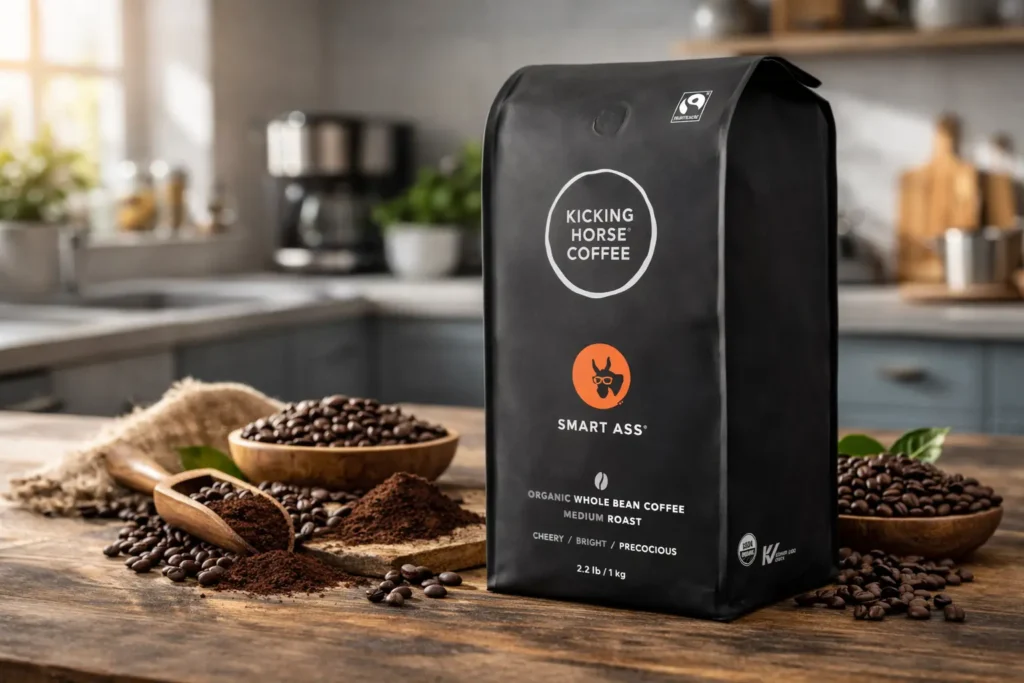
Kicking Horse Smart Ass — Best Light Roast for Drip Coffee
This is the recommendation for readers who find standard medium roasts a little too safe or too muted. It pushes the cup in a brighter direction, making aroma and liveliness more noticeable without becoming so extreme that it stops working as an everyday coffee. It feels more alive than a standard daily blend — closer to what you would get from a specialty café pour-over, but in a drip machine.
Note: If your drip machine brews below 195°F, this coffee may extract a little flat or sharp. It performs best in machines that hit the 195–205°F range. For black coffee drinkers on a good machine, it is one of the most rewarding picks in this guide.
| Roast | Light-medium |
| Flavor Style | Fruit-forward, lively, aromatic |
| Bean Type | Whole bean (Arabica, Fair Trade Certified) |
| Price Tier | Mid-Range |
| Best For | Brighter drip coffee, black coffee drinkers |
Why Buy It
- Brighter and more aromatic than mainstream options
- Good fit for black coffee drinkers
- Fair Trade Certified
- More expressive than a typical daily roast
Why Skip It
- Skip if you prefer dark, low-acid coffee
- Skip if you mainly add milk or cream
- Skip if your machine brews below 195°F
⚠️ Affiliate disclosure: CoffeeGearHub may earn a commission if you purchase through this link, at no extra cost to you.
BEST FOR: Dark roast fans and richer daily coffee
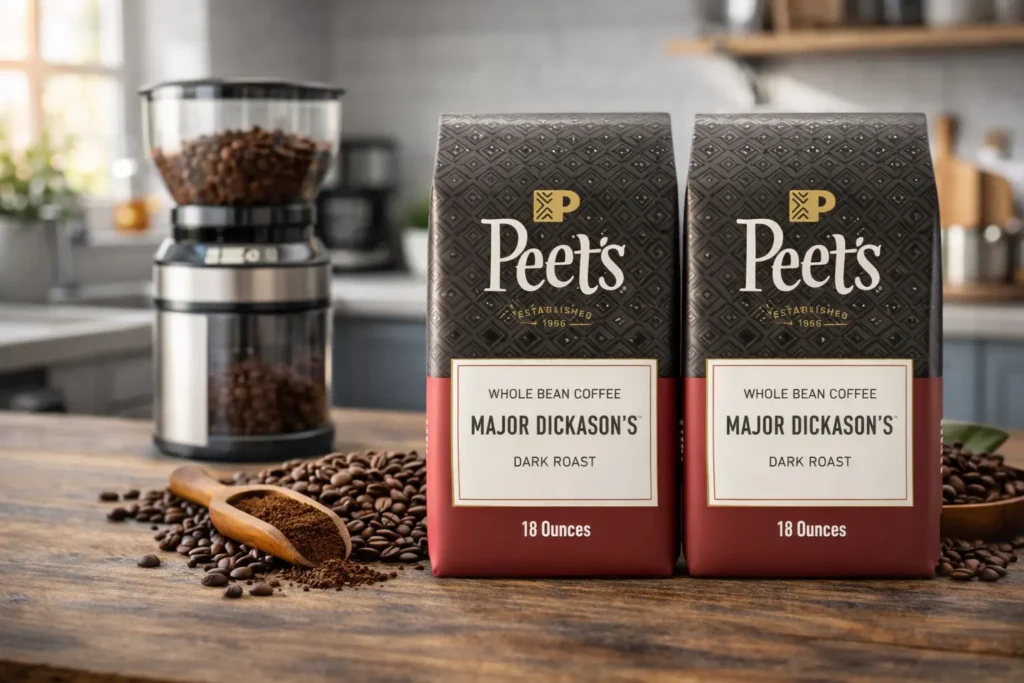
Peet’s Major Dickason’s Blend — Best Dark Roast for Drip Coffee
This is the pick for people who want a more traditional “strong coffee” experience. It is deeper, fuller, and more roast-driven than the medium-roast options in this guide, which makes it a natural fit for drinkers who like coffee to feel more substantial and less delicate. It is also one of the most affordable picks here, making it an easy budget-friendly step up from generic store-brand dark roast.
It makes more sense than a light roast if you regularly add milk or cream, because darker coffees tend to keep more of their flavor presence after additions. It also extracts reliably in any drip machine regardless of brew temperature.
| Roast | Dark |
| Flavor Style | Rich, bold, deeper roast character |
| Bean Type | Whole bean (Arabica blend) |
| Price Tier | Budget-Friendly |
| Best For | Strong drip coffee and milk-friendly cups |
Why Buy It
- Fuller-bodied and traditional dark-roast feel
- Works well with milk or cream
- Budget-Friendly price point
- Consistent quality across bag sizes
Why Skip It
- Skip if you want bright, fruit-forward coffee
- Skip if you prefer softer, smoother medium roasts
⚠️ Affiliate disclosure: CoffeeGearHub may earn a commission if you purchase through this link, at no extra cost to you.
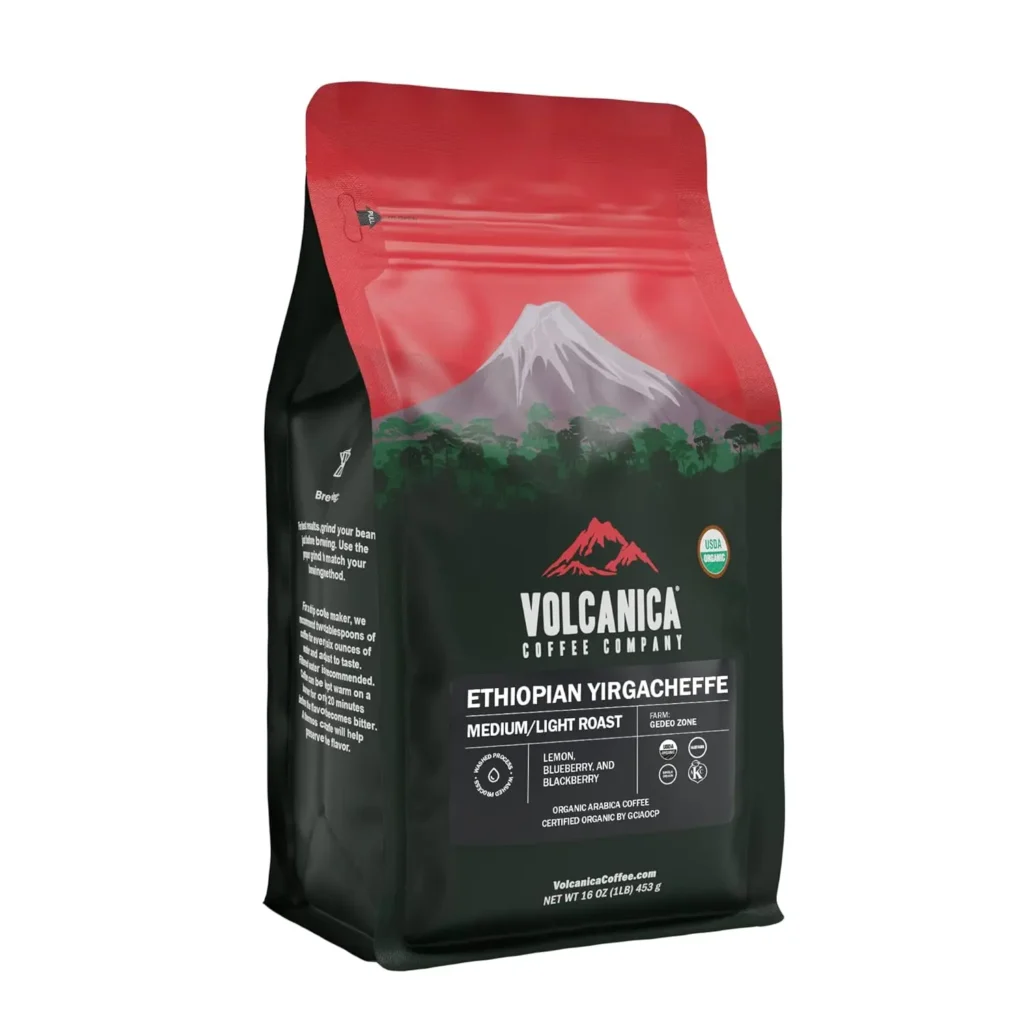
BEST FOR: Distinct origin character and cleaner flavor
Volcanica Ethiopian Yirgacheffe — Best Single-Origin Coffee for Drip Brewers
If you want your coffee to taste less generic and more clearly tied to where it comes from, this is the strongest recommendation in the guide. Ethiopian Yirgacheffe is one of the most distinctive growing regions in the world — the cup typically shows floral, jasmine-like aromatics, bright citrus or berry notes, and a clean finish that no generic blend can replicate. Volcanica’s version arrives freshly roasted and ships quickly, which matters for a light roast this expressive.
This is not the safest recommendation for every household, but it is the most useful one for readers who are ready to explore what great single-origin coffee can do in a drip machine — particularly on a SCAA-certified brewer that hits 195–205°F.
| Roast | Light |
| Flavor Style | Bright, floral, jasmine, citrus, fruit-toned |
| Bean Type | Whole bean (single-origin Arabica, Rainforest Alliance) |
| Price Tier | Premium |
| Best For | More expressive origin character |
Why Buy It
- More distinctive and memorable than any blend
- Excellent for black coffee drinkers
- Freshly roasted and shipped by Volcanica
- Rainforest Alliance certified
Why Skip It
- Skip if you prefer a safer, neutral daily cup
- Skip if you dislike brighter or fruitier coffee
- Skip if your machine brews below 195°F
⚠️ Affiliate disclosure: CoffeeGearHub may earn a commission if you purchase through this link, at no extra cost to you.
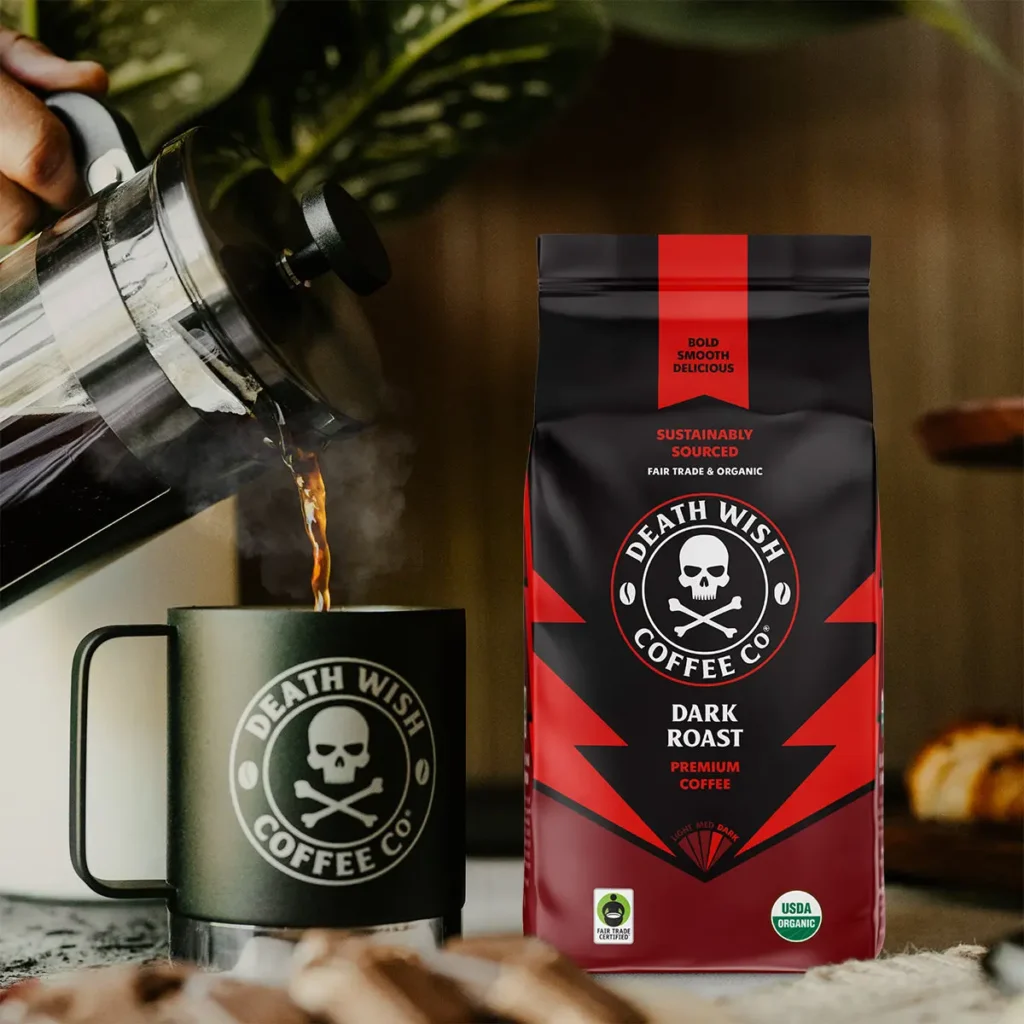
BEST FOR: Maximum caffeine and bold morning coffee
Death Wish Coffee — Best High-Caffeine Coffee for Drip Machines
This is the coffee for buyers who prioritize intensity first. The main reason to buy it is not subtlety — it is impact. Death Wish uses a blend of Robusta and Arabica beans and roasts them dark, which produces a notably higher caffeine concentration than most standard coffees. If your typical complaint about coffee is that it feels weak, too mellow, or too easy to forget, this is the pick designed to move in the opposite direction.
It is USDA Organic and Fair Trade Certified, which is worth noting for buyers who care about sourcing but also want maximum strength. It works best for strong-coffee drinkers who want a darker, heavier-feeling cup and who care about caffeine just as much as flavor.
| Roast | Dark |
| Flavor Style | Bold, earthy, intense |
| Bean Type | Whole bean (Arabica/Robusta, USDA Organic, Fair Trade) |
| Price Tier | Mid-Range |
| Best For | Strength-first coffee drinkers |
Why Buy It
- High-impact morning coffee
- USDA Organic and Fair Trade Certified
- Notably higher caffeine than standard coffee
- Consistent dark, forceful profile
Why Skip It
- Skip if you want nuance or balance first
- Skip if you mainly drink smoother medium roasts
⚠️ Affiliate disclosure: CoffeeGearHub may earn a commission if you purchase through this link, at no extra cost to you.
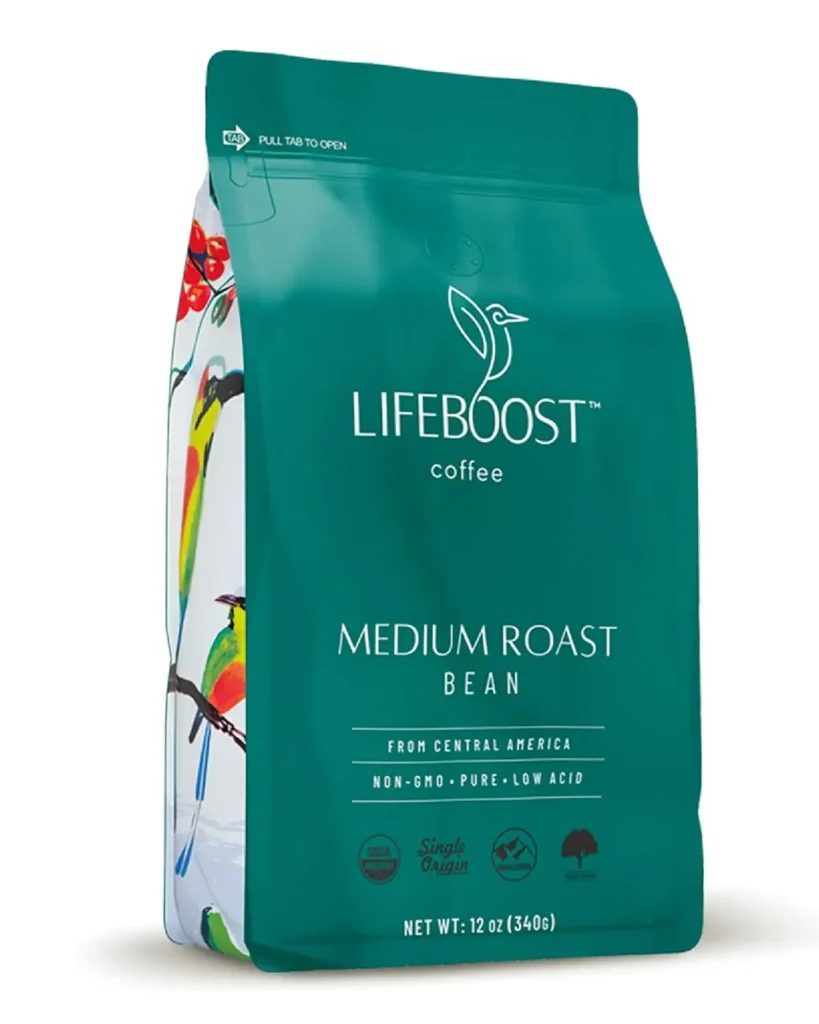
BEST FOR: Easier, gentler daily drinking
Lifeboost Medium Roast — Best Low-Acid Coffee for Drip Brewing
This is the best fit for readers who find some coffees too sharp, too bright, or too harsh on the stomach. Lifeboost grows its beans at high altitude in Nicaragua, single-origin and shade-grown, and markets the coffee specifically toward drinkers with acid sensitivity. The result is a softer, calmer cup that emphasizes drinkability over drama. It is USDA Organic certified and third-party tested for mycotoxins — a claim the brand leads with heavily.
It is the most expensive pick in this guide by a meaningful margin, so it makes the most sense when low-acid and organic certification are genuine buying criteria rather than nice-to-haves.
| Roast | Medium |
| Flavor Style | Smooth, mild sweetness, softer acidity |
| Bean Type | Whole bean (single-origin Arabica, USDA Organic, shade-grown) |
| Price Tier | Premium |
| Best For | Easy-drinking drip coffee, acid-sensitive drinkers |
Why Buy It
- Smoother, lower-acid feel in the cup
- USDA Organic certified, shade-grown
- Third-party tested for mycotoxins
- Good fit for sensitive drinkers
Why Skip It
- Most expensive pick in this guide
- Skip if you want brighter or more complex flavor
- Skip if you prefer dark, bold coffee
⚠️ Affiliate disclosure: CoffeeGearHub may earn a commission if you purchase through this link, at no extra cost to you.
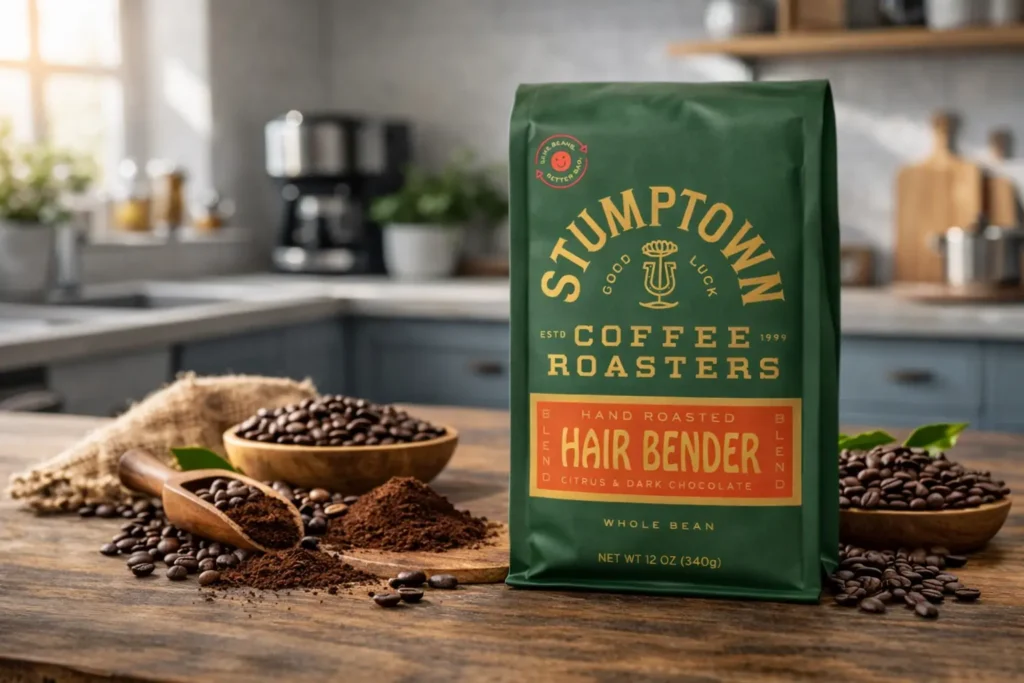
BEST FOR: Specialty coffee fans who still want balance
Stumptown Hair Bender — Best Specialty Blend for Drip Coffee
This is a strong option for readers who want a more layered and interesting coffee than a typical grocery-store blend, but who still want something daily-drinkable. Hair Bender draws from multiple origins and changes seasonally as sourcing allows, which makes it more interesting than a fixed-formula commodity blend. It feels more deliberate and characterful without becoming fussy or difficult.
Stumptown works directly with many of its farm partners — they are one of the original direct-trade focused roasters in the U.S. — which means bean quality tends to be higher than a mainstream bag at the same price.
| Roast | Medium |
| Flavor Style | Layered, sweet, slightly lively |
| Bean Type | Whole bean (multi-origin Arabica, direct trade) |
| Price Tier | Mid-Range |
| Best For | Upgrading daily coffee without going extreme |
Why Buy It
- Clear upgrade from basic daily coffee
- Direct-trade sourcing, higher bean quality
- More layered without losing drinkability
- Good entry point into specialty coffee
Why Skip It
- Skip if you want the cheapest everyday option
- Skip if you only like very dark coffee
⚠️ Affiliate disclosure: CoffeeGearHub may earn a commission if you purchase through this link, at no extra cost to you.
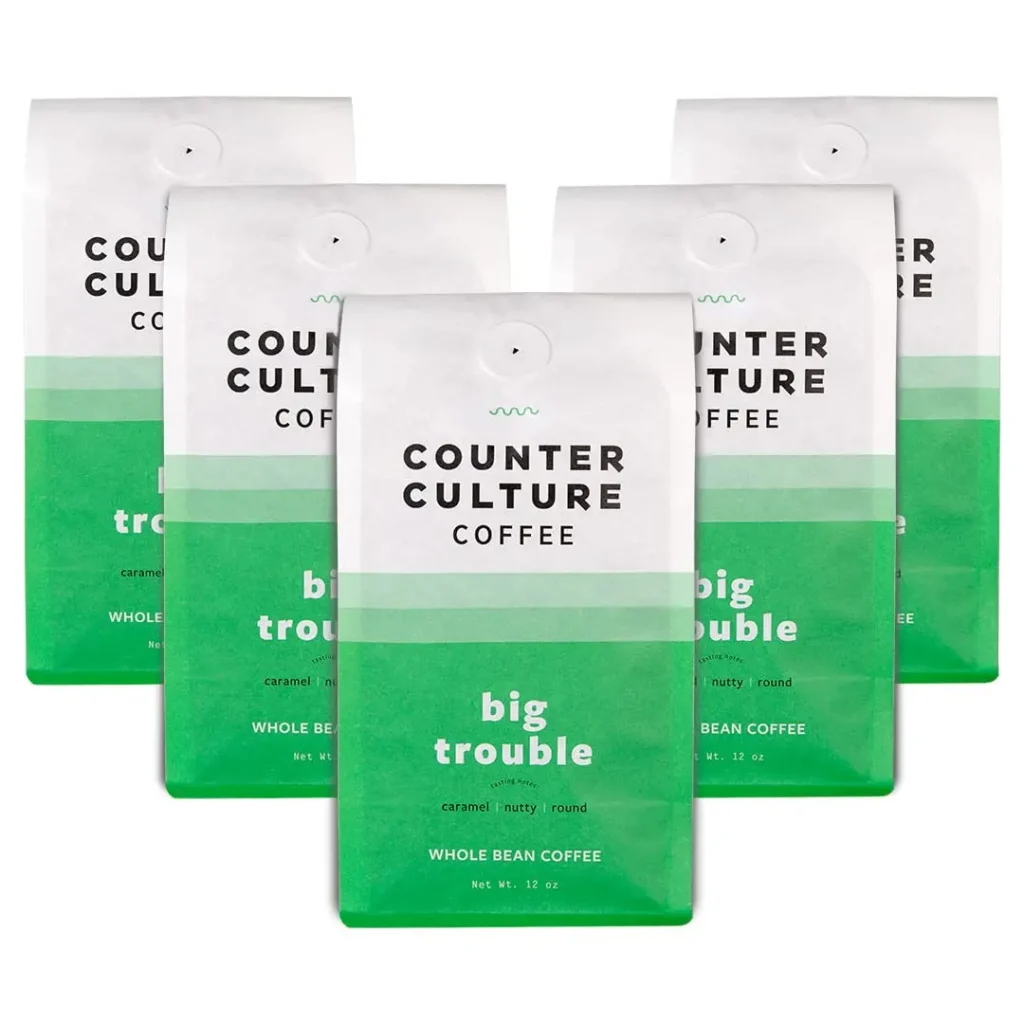
BEST FOR: Sweet, balanced specialty coffee
Counter Culture Big Trouble — Best Balanced Specialty Everyday Pick
This is one of the best “bridge” coffees in the whole guide. It gives you a more intentional and cleaner cup than many mainstream bags, but it still feels easy rather than demanding. Counter Culture is one of the most respected specialty roasters in the U.S., and Big Trouble is their deliberately approachable everyday blend — sweet, nutty, and clean enough to drink daily without thinking about it too hard.
It makes more sense than a brighter single-origin if your goal is still everyday comfort, just at a better level. Counter Culture also publishes detailed sourcing and sustainability information for all their coffees, which makes it easier to understand what you are buying.
| Roast | Medium |
| Flavor Style | Sweet, nutty, clean |
| Bean Type | Whole bean (multi-origin Arabica, direct trade) |
| Price Tier | Premium |
| Best For | Balanced specialty daily drinking |
Why Buy It
- Balanced, sweet, approachable specialty cup
- Transparent sourcing and sustainability info
- Good fit for daily use at a high quality level
Why Skip It
- Skip if you want more dramatic origin character
- Skip if you prefer very dark coffee
⚠️ Affiliate disclosure: CoffeeGearHub may earn a commission if you purchase through this link, at no extra cost to you.
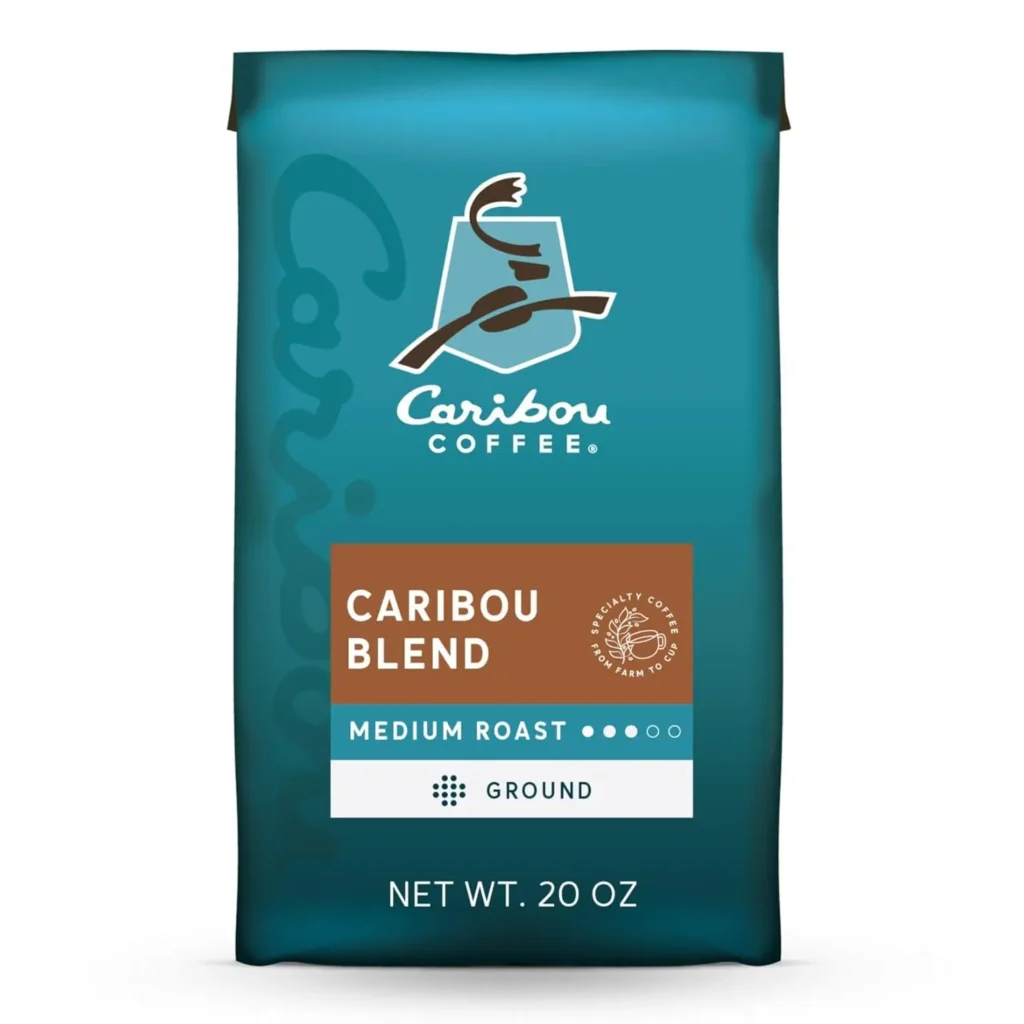
BEST FOR: Reliable, familiar daily home coffee on a budget
Caribou Coffee Caribou Blend — Best Budget Everyday Grocery Pick
Some buyers are not looking for a “coffee journey.” They are looking for a dependable bag that makes a good pot every morning and does not require too much thought. That is exactly where Caribou Blend fits: it is practical, familiar, and well-suited to people who want a straightforward daily coffee without drifting into either specialty brightness or heavy dark-roast intensity.
It is widely available, which means you are less likely to run out and wait for a specialty shipment. For a household that goes through a lot of coffee and wants consistent, comfortable results, it is the most cost-effective whole bean recommendation in this guide.
| Roast | Medium-dark |
| Flavor Style | Comfortable, familiar, slightly richer |
| Bean Type | Whole bean (Arabica blend, Rainforest Alliance certified) |
| Price Tier | Budget-Friendly |
| Best For | Practical daily home coffee |
Why Buy It
- Lowest price-per-ounce among the whole bean picks
- Familiar, dependable daily profile
- Rainforest Alliance certified
- Widely available, easy to restock
Why Skip It
- Skip if you want a more distinctive cup
- Skip if you prefer brighter specialty-style coffees
⚠️ Affiliate disclosure: CoffeeGearHub may earn a commission if you purchase through this link, at no extra cost to you.
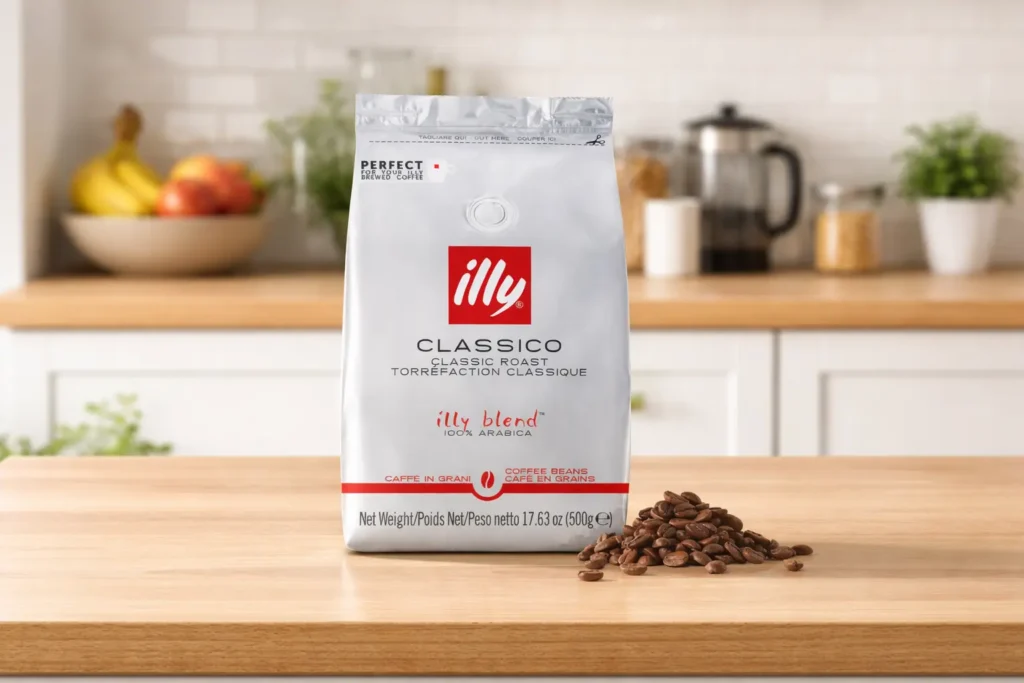
BEST FOR: Mellow, polished, easy-drinking coffee
Illy Classico — Best Smooth Italian-Style Coffee for Drip Brewers
This is the pick for readers who want a softer and more polished cup rather than something dramatic. Illy blends 9 Arabica origins into a consistent, signature profile that emphasizes smoothness and refinement rather than brightness or boldness. The pressurized tin packaging also helps preserve freshness longer than a standard bag — a useful feature if you are not brewing through coffee quickly.
It tends to make sense for people who care most about a mellow feel and a coffee that tastes refined rather than bright, edgy, or aggressively bold.
| Roast | Medium |
| Flavor Style | Soft, mellow, polished, mild caramel |
| Bean Type | Whole bean (9-origin Arabica blend) |
| Price Tier | Mid-Range |
| Best For | A smooth, approachable daily cup |
Why Buy It
- Smooth, polished daily profile
- Pressurized tin extends shelf life
- Very approachable, no sharp edges
- Good fit for mellow-coffee fans
Why Skip It
- Skip if you want brighter or more adventurous coffee
- Skip if you prefer dark, forceful roasts
⚠️ Affiliate disclosure: CoffeeGearHub may earn a commission if you purchase through this link, at no extra cost to you.
How to Choose Coffee Beans for Drip Coffee Makers
The biggest mistake most buyers make is looking for one universal “best coffee” instead of choosing the coffee that best matches their taste and routine. The better way to buy for a drip machine is to start with the variables that matter most: roast level, bean freshness, whole bean versus pre-ground, blend versus single-origin, and whether you own a burr grinder.
Start With Roast Level, Not Brand Hype
Roast level changes flavor more directly than most packaging language ever will. If you want the broadest chance of success, start with medium roast. If you want brighter and more aromatic coffee, try light roast. If you want darker, heavier, more traditional coffee, dark roast is the better match. Brand names and marketing claims matter far less than roast level and freshness.
Whole Bean Usually Beats Pre-Ground
Whole beans preserve aroma and flavor better because coffee begins losing volatile aromatics quickly after grinding. That means fresh-ground beans give your drip coffee a noticeably higher ceiling. If you want the easiest upgrade after buying better beans, grinding fresh right before brewing is the single most impactful habit change you can make — more so than any machine upgrade.
Blend vs. Single-Origin
Blends are usually the safer daily choice because they are designed for balance and consistency. Single-origin coffees are more likely to taste distinctive and place-specific. They can be excellent, but they are also less neutral and often more polarizing. If you are buying coffee for a household with mixed preferences, a quality blend is almost always the better call.
Grinder Pairing: What to Use With Your Drip Machine
Buying whole bean coffee only pays off if you have a decent grinder. For drip brewing — where you are typically making 4–12 cups at a time — an electric burr grinder is the most practical choice. Blade grinders chop unevenly and produce a mix of fine and coarse particles that extract at different rates, which is one of the most common causes of bitter or muddy drip coffee.
You do not need an expensive grinder. A mid-range electric burr grinder with a dedicated drip setting is enough to see a real improvement. If you also use an AeroPress or pour-over method for single-serve brewing, a quality manual burr grinder can serve double duty — see our Best Coffee Grinders for Home Use and Best Grinders for Drip Coffee guides for specific recommendations at each price point.
Coffee Certifications: What They Mean and When They Matter
Several coffees in this guide carry certifications. Here is what the most common ones actually mean:
| Certification | What It Means | Which Picks Carry It |
|---|---|---|
| USDA Organic | Grown without synthetic pesticides or fertilizers, certified by a USDA-accredited agency | Lifeboost Medium Roast, Death Wish Coffee |
| Fair Trade Certified | Ensures farmers receive a minimum floor price and meet labor standards; funds community development | Kicking Horse Smart Ass, Death Wish Coffee |
| Rainforest Alliance | Broader sustainability certification covering environmental, social, and economic criteria on farms | Volcanica Ethiopian Yirgacheffe, Caribou Blend |
| Direct Trade | Not a formal certification — means the roaster works directly with farms, often above Fair Trade minimums; associated with higher bean quality | Stumptown Hair Bender, Counter Culture Big Trouble |
| SCA Specialty Grade | Scored 80+ out of 100 by a Specialty Coffee Association-trained taster; indicates higher bean quality and fewer defects | Volcanica, Counter Culture, Stumptown (all typically meet this threshold) |
💡 Practical note: If organic and fair-trade sourcing matter to you, Lifeboost and Death Wish both carry USDA Organic and Fair Trade certifications and are easily available on Amazon. If you care more about cup quality and roaster-to-farm relationships, Stumptown and Counter Culture are stronger choices, even without formal certifications on every lot.
Freshness, Storage, and Grind: The Hidden Half of Better Drip Coffee
A better bag of coffee is only part of the result. What you do with it once it arrives in your kitchen matters just as much — and freshness is the variable most home brewers underestimate.
How to Read a Coffee Bag
Look for a roast date printed on the bag, not a best-by date. The roast date tells you how long ago the coffee was roasted; the best-by date is often set 12–18 months out and tells you almost nothing useful about freshness. Most coffees taste best between 3 and 21 days after the roast date. Within the first day or two after roasting, CO₂ is still off-gassing heavily and the coffee can taste a little flat. After three to four weeks, aromatics start fading noticeably for most roasts — with light roasts losing their brightness fastest.
How to Store Coffee Beans
- Use an airtight, opaque container stored at room temperature, away from heat, light, and moisture. A dedicated coffee canister with a one-way valve is ideal.
- Do not store beans in the fridge. The fridge introduces moisture and can cause beans to absorb food odors, which shows up in the cup.
- Freezing is acceptable only for unopened, sealed bags you will not use for several weeks. Once you open a bag and start brewing from it, keep it at room temperature and finish it within two to three weeks.
- Buy in smaller quantities more often rather than large bags less often. A fresh 12-oz bag used in two weeks will always beat a 2-lb bag that sits open for six weeks.
Grind Size for Drip Coffee
For most drip coffee makers, use a medium grind — roughly the texture of coarse beach sand. This is the correct baseline for standard flat-bottom and cone-filter drip machines. If your coffee tastes bitter, go slightly coarser. If it tastes weak or a little sour, go slightly finer. That single adjustment fixes a surprising number of drip coffee problems before you ever need to buy a different bag.
For more detail, see Coffee Grind Sizes: Full Chart + Method Guide.
Water Quality Still Matters
Coffee is approximately 98% water, so poor-tasting water will flatten even a very good bag of beans. If your tap water tastes harsh, chlorinated, or unpleasant on its own, your coffee will usually inherit that problem. Filtered water — even a basic Brita-style filter — is often enough to improve consistency and help the bean’s profile come through more clearly.
If you are buying a specialty light roast specifically for its floral or fruit character and your coffee still tastes flat, water quality and brew temperature are the two most common overlooked culprits.
Brewing Tips for Better Drip Coffee
- Use fresh beans: freshness changes aroma and flavor faster than most people expect. Buy within the roast date window when possible.
- Grind to medium: that is the right baseline for most drip coffee makers. Adjust coarser for bitterness, finer for weakness.
- Use a sensible coffee-to-water ratio: around 1:15 to 1:17 (grams of coffee to grams of water) is a strong starting point. See Coffee Brew Ratio Guide for full detail.
- Use filtered water: especially important if your tap water tastes off or heavily chlorinated.
- Keep the machine clean: stale oils and scale buildup dull otherwise good coffee significantly. See How to Clean and Descale a Drip Coffee Maker.
- Match the bean to your taste: do not buy a light roast if you know you prefer deep, bold coffee. Start from flavor preference, not brand recognition.
For more help improving your setup, see How to Brew Better Drip Coffee at Home and Drip Coffee vs. Pour Over: Which Brew Method Is Right for You.
If you also brew AeroPress or pour-over for single-serve cups using some of the lighter beans in this guide, see AeroPress Grind Size Guide and Best Coffee Beans for AeroPress for pairing guidance across methods.
Drip Coffee Troubleshooting: Fix Your Cup Before You Buy New Beans
Before blaming the beans, check the table below. Most drip coffee problems come from grind size, ratio, or machine cleanliness — not the bag itself. Fixing these variables first often solves the problem without buying anything new.
| Symptom | Most Likely Cause | Fix |
|---|---|---|
| Bitter, harsh cup | Grind too fine, over-extracted, or dark roast over-brewed | Go one step coarser on grind; reduce brew time if programmable; try a medium roast if switching from dark |
| Weak, watery cup | Grind too coarse, under-dosed, or stale beans | Go one step finer; increase coffee dose (target 1:15 ratio); buy fresher beans |
| Sour, sharp cup | Under-extracted — grind too coarse or brew temperature too low | Go slightly finer; check machine age (older machines often brew below 195°F); consider SCAA-certified brewer for light roasts |
| Flat, lifeless cup | Stale beans or pre-ground too long ago | Buy fresher beans with a visible roast date; switch to grinding whole beans fresh per batch |
| Oily residue or muddy taste | Very dark roast oils building up or grinder not flushed between roast types | Clean brewer and carafe thoroughly; run a flush brew cycle with clean water; descale if it has been a while |
| Inconsistent results day to day | Inconsistent grind setting or eyeballed measuring | Use a kitchen scale to measure coffee dose; confirm grind setting is locked in each new bag |
| Coffee tastes like nothing in particular | Beans too old, wrong roast for your taste, or water quality issue | Buy a more expressive roast (try a single-origin light roast); use filtered water; check roast date |
💡 Rule of thumb: Fix grind and ratio before switching beans. Fix beans before upgrading the machine. Fix water last. In that order, you will solve most home drip coffee problems without spending more than you need to.
The Practical Takeaway
If you strip away the marketing, the main lesson is simple: the best coffee beans for a drip coffee maker are the ones that match your taste while brewing cleanly and consistently at a medium grind, using fresh whole beans and filtered water. For most people, that means starting with a balanced medium roast and moving outward from there only once they know whether they want brighter, darker, smoother, or more expressive coffee.
If you are ready to go further, upgrade your grinder before your machine, look for beans with a visible roast date, and use the troubleshooting matrix above to diagnose problems by variable rather than buying a new bag out of frustration. That systematic approach produces better coffee faster and more cheaply than any single product purchase.
FAQs: Best Coffee Beans for Drip Coffee Makers
What coffee beans are best for drip coffee makers?
For most home brewers, medium roast whole bean coffee is the best starting point for drip coffee makers because it balances sweetness, body, and acidity while extracting evenly.
Should I use whole beans or pre-ground coffee for drip coffee?
Whole beans are usually the better option for drip coffee because they preserve aromatics longer. Grinding fresh just before brewing improves flavor and aroma noticeably.
What grind size should I use for drip coffee?
Use a medium grind for most drip coffee makers, roughly the texture of coarse sand. If coffee tastes bitter, go slightly coarser. If it tastes weak or sour, go slightly finer.
Are dark roast beans good for drip coffee makers?
Yes. Dark roast beans work well in drip coffee makers if you prefer bold, chocolatey, lower-acid coffee. They are especially popular with milk or cream and extract reliably even in machines that brew below 195°F.
How fresh should coffee beans be for drip coffee?
For the best flavor, use beans within 3 to 21 days of the roast date. Look for the roast date printed on the bag. Beans older than four to six weeks begin losing aromatics noticeably, especially for lighter roasts.
Are medium roast beans best for drip coffee?
Medium roast beans are the best starting point for most drip coffee drinkers because they usually balance sweetness, body, and acidity well and extract cleanly at a standard medium grind on any machine.
What is the difference between single-origin and blended coffee for drip brewers?
Blends are usually more balanced and consistent, which makes them a strong choice for everyday drip coffee. Single-origin coffees tend to show more distinctive place-based flavor character and can be excellent, but are less neutral and more sensitive to brew temperature and grind consistency.
Can I use flavored coffee beans in a drip coffee maker?
Yes, but flavored beans can leave more residue in grinders and brewers. For the cleanest cup and easiest maintenance, many home brewers prefer non-flavored whole beans.
Does water quality affect drip coffee flavor?
Yes. Since coffee is approximately 98% water, poor-tasting water can flatten or distort flavor. Filtered water often improves consistency and cup quality, and is especially important when brewing expressive light roasts.
What type of coffee works best with milk in a drip coffee maker?
Dark roasts and fuller-bodied medium-dark coffees usually work best with milk or cream because their flavor remains more noticeable after additions. Light roasts and single-origin coffees can lose their defining character when milk is added.
Continue Learning
DRIP COFFEE CLUSTER
GRINDER GUIDES
AEROPRESS & BREWING FUNDAMENTALS
Still trying to improve your daily pot? The fastest next win is usually fixing grind size and brew ratio. CoffeeGearHub’s grind and ratio guides help you troubleshoot bitter, sour, weak, or flat drip coffee without guessing — and without buying new beans first.
☕
Written by the CoffeeGearHub Editorial Team
CoffeeGearHub is a specialty coffee equipment resource built for home brewers who want better coffee without unnecessary complication. Our pillar buying guides combine practical brewing knowledge, coffee fundamentals, and gear recommendations so readers can make smarter decisions at home. We update core guides regularly and connect them to related brewing, grinder, and maintenance content across the site. About CoffeeGearHub →