Last Updated: March 17, 2026 • 20–26 min read • Pillar Guide: Brewing Technique + Grind Science + Troubleshooting

✍️ Editorial note: This guide is researched and written by the editors at CoffeeGearHub.com using published brewing science, moka pot extraction principles, and established specialty-coffee community knowledge. Recommendations reflect research consensus rather than in-house lab testing. All product links are affiliate links — we may earn a commission at no cost to you.
The 30-Second Answer
To brew perfect moka pot coffee: fill the base with pre-boiled water to just below the safety valve, load the basket level-full with medium-fine ground coffee (never tamp), assemble firmly, and brew on medium-low heat with the lid open. Remove from heat when the stream turns pale and just begins to sputter. Total brew time: 4–8 minutes depending on pot size. Stir before serving.
- Water temperature: Pre-boiled — pour hot water into the base, never start cold
- Grind target: Medium-fine — fine sand / table salt texture, between drip and espresso
- Heat: Medium-low — the single biggest technique variable after grind
- When to stop: Before aggressive gurgling — the pale sputtering phase is over-extraction
Who This Guide Is For — Jump to What You Need
☕ First-time moka brewer
Start at What You Need and follow the Step-by-Step Guide.
🔬 Want to understand the science
Read Grind Guide, Heat & Timing, and Reading the Brew.
🔧 Fixing a bad cup
Jump straight to the Troubleshooting Matrix or Common Mistakes.
🛒 Need to buy a moka pot
See Top Moka Pot Picks and the Comparison Table.
Table of Contents
Top Moka Pot Picks
The moka pot market is dominated by a handful of proven designs that have been refined over decades. The differences that matter most are size (how many cups), material (aluminum vs stainless), and whether you have an induction stove. Every pick below brews excellent coffee when technique is dialed in.
Best Classic Aluminum Moka Pots

Bialetti Moka Express — 3-Cup
Material: Aluminum • Stove: Gas, electric, ceramic • Yield: ~120ml (3 espresso-size cups). The icon. Invented in 1933 and still the world’s best-selling moka pot for good reason — reliable, consistent, and forgiving. Perfect for 1–2 people.
Best for: beginners + 1–2 person households
Bialetti Moka Express — 6-Cup
Material: Aluminum • Stove: Gas, electric, ceramic • Yield: ~240ml (6 espresso-size cups). The go-to size for households of 2–4, entertaining, or anyone who wants to brew milk drinks and have enough for the whole cup. Same iconic octagonal design.
Best for: 2–4 person households + moka lattes
Bialetti Brikka — 4-Cup
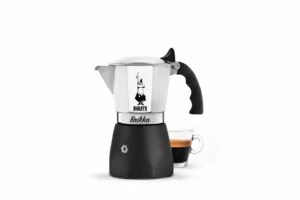
Material: Aluminum • Feature: Crema-valve lid • Stove: Gas, electric, ceramic. The Brikka’s unique pressure valve traps steam to produce a thicker, crema-like layer on the finished cup — closer to espresso texture. A meaningful step up for black moka enthusiasts.
Best for: crema lovers + black moka enthusiasts
Best Stainless Steel & Induction-Compatible Picks

Bialetti Moka Induction (Stainless)
Material: Stainless steel • Stove: All hobs including induction • Sizes: 2, 4, 6-cup. Bialetti’s induction-ready redesign keeps the iconic octagonal silhouette in a stainless body with a ferromagnetic base. Durable, easy to clean, dishwasher-safe lid.
Best for: induction stove users + stainless durability
Bialetti Venus — 6-Cup (Stainless)
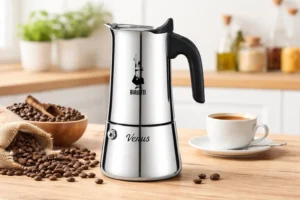
Material: Stainless steel • Stove: All hobs including induction • Style: Rounded, elegant profile. The Venus has a slightly more rounded design than the Moka Induction and is a popular pick for those who want clean aesthetics alongside induction compatibility.
Best for: induction users who want a classic round shape
Comparison Table: All Picks at a Glance
Use this table to match moka pot size, material, and induction compatibility to your household and stove type. Prices change frequently — the table uses a stable price tier instead of static prices.
| Moka Pot | Size | Material | Induction? | Best for | Price tier |
|---|---|---|---|---|---|
| Bialetti Moka Express 3-cup | 3-cup (~120ml) | Aluminum | No | Beginners, 1–2 people | $ |
| Bialetti Moka Express 6-cup | 6-cup (~240ml) | Aluminum | No | 2–4 people, milk drinks | $ |
| Bialetti Brikka 4-cup | 4-cup (~160ml) | Aluminum | No | Crema lovers, black moka | $$ |
| Bialetti Moka Induction | 2, 4, 6-cup | Stainless | Yes | Induction stoves | $$ |
| Bialetti Venus 6-cup | 6-cup (~240ml) | Stainless | Yes | Induction + elegant aesthetic | $$ |
What You Need to Brew Moka Pot Coffee
Moka pot brewing requires minimal gear — one of its great strengths. Here’s exactly what you need before your first brew:
- A moka pot — sized to your household. A 3-cup is the best starting size for most people.
- Whole bean or pre-ground coffee — medium to medium-dark roast. Whole bean gives you grind control; pre-ground labeled “moka” or “espresso” grind also works.
- A kettle — for pre-boiling water before it goes into the base. This is optional but strongly recommended.
- A burr grinder — if using whole bean. Blade grinders produce uneven particles that make consistent moka nearly impossible. See the grinder recommendation below.
- A kitchen scale — optional, but makes grind-to-taste dialing far more repeatable. Even a basic $10 scale transforms your moka consistency.
- Filtered water — tap water with heavy mineral content or chlorine can noticeably affect flavor. Filtered is always better.
🔬 What you don’t need: a tamper, a scale for every brew once dialed in, or a thermometer. Moka is the most low-tech excellent home brewer available — that’s part of its appeal.
Step-by-Step: How to Brew Moka Pot Coffee
Follow these seven steps precisely — especially on your first few brews — until the technique becomes muscle memory. The most common errors (bitterness, sputtering) trace directly back to steps 2, 4, and 6.
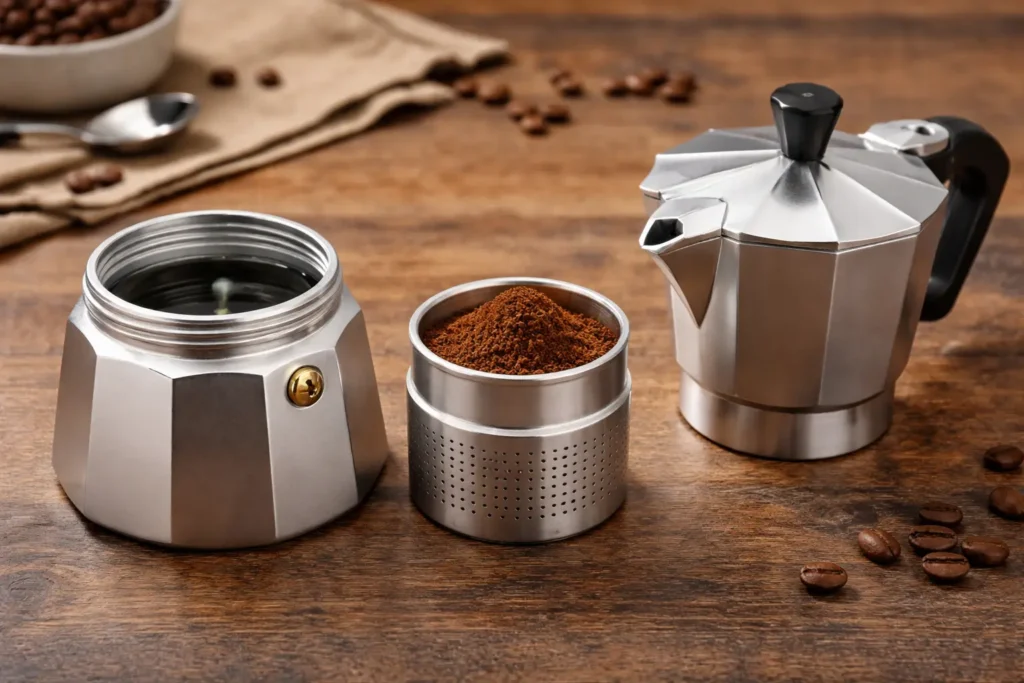
- Pre-heat your water. Bring water to a boil in a kettle, then pour it into the moka pot’s lower chamber. Fill to just below the bottom of the pressure safety valve — typically a small metal rivet visible inside the base. Never cover the valve. Pre-heated water is the single best technique change for reducing bitterness: starting with cold water means the coffee grounds heat up slowly on the stovetop before extraction starts, increasing bitter compound extraction during that long heat-up window.
- Load the filter basket with ground coffee. Grind your coffee to a medium-fine texture (see the Grind Guide below). Fill the basket fully — mounded slightly above the rim — then level with your finger or a flat edge. Do not tamp or press down. The basket should be full but the surface should be flat and loose. Tamping is the most common cause of pressure spikes and harsh cups in moka pots.
- Assemble the moka pot. Seat the loaded basket into the base chamber — use a cloth or oven mitt, as the base will be hot from the pre-heated water. Screw the top spout section onto the base firmly. Hold the base body to tighten, not the handle, to get a good even seal. A loose assembly causes steam to escape from the sides rather than pushing through the coffee bed.
- Place on medium-low heat with the lid open. Set the moka pot on the burner at medium-low heat. On gas, the flame should not extend beyond the outer edge of the base — a flame climbing the sides heats the upper chamber and scorches coffee before it’s served. Open the lid so you can watch and hear the brew. Medium-low is non-negotiable: high heat is the second most common cause of bitter moka after grind-too-fine.
- Watch for the coffee to emerge. After 3–6 minutes (depending on pot size and stove type), you’ll hear a low hiss and see dark, rich coffee begin to flow from the central spout column into the upper chamber. This early dark stream is the sweetest, most concentrated portion of the entire brew. The color should be deep brown, almost like a slow pour of motor oil. Keep heat steady — don’t increase it to speed things up.
- Remove from heat before the gurgling phase. Watch the stream color. When it shifts from dark brown to pale tan or blonde — or when you hear the steady hiss transition to an aggressive, sputtering gurgle — remove the pot from heat immediately. The sputtering phase is not the finish line; it’s the over-extraction warning. The late-stage water pushing through spent grounds is bitter and hollow. Stopping early, while a small amount of water remains in the base, produces a significantly cleaner cup.
- Stir, pour, and serve immediately. Give the coffee in the upper chamber a quick stir with a spoon — the first-run (more concentrated) and later-run (lighter) portions benefit from homogenizing before serving. Pour into pre-warmed cups immediately. Don’t leave the moka pot on the stove on residual heat; coffee oxidizes and turns bitter within minutes. If you’re making a milk drink, froth your milk now and combine.
💡 Cold-water “rescue” trick: If you remove the pot but coffee is still bubbling aggressively in the top chamber, run the base under cold water for 10 seconds. This rapidly reduces pressure and stops further extraction — useful when you’ve gone slightly too long.
Best Grind Size for Moka Pot — Dial-In Guide
Grind is the variable that affects moka pot results more than any other single factor — more than water temperature, heat setting, or brand of coffee. Get it right and even a modest bean tastes clean and balanced. Get it wrong and no technique fix will save you.
The target zone: between drip coffee and espresso. Visually, think fine sand or table salt — particles that are clearly defined, not powdery, and hold together very slightly when pressed between your fingers without clumping. This is coarser than what a true espresso machine requires (where grind resistance is the primary pressure source), but finer than what a pour-over or drip machine uses.
Why this range matters: a moka pot uses steam pressure to push water through the coffee bed. The grind controls how much resistance that bed provides. Too fine, and resistance is too high — water channels unevenly, pressure spikes, and the cup turns bitter and harsh. Too coarse, and resistance is too low — water races through before flavor compounds dissolve, producing a thin, sour, hollow cup.
Dialing in your grind: start at medium-fine (table salt texture) on your first brew. If it tastes bitter or the brew sputters early and aggressively, go one step coarser. If it tastes sour, thin, or hollow, go one step finer. Change only grind between brews — keep everything else fixed. It typically takes 2–4 brews to land in the sweet spot for a new coffee.
| Grind size | Visual reference | What happens | Adjustment |
|---|---|---|---|
| Too coarse | Sea salt / coarse sand | Sour, thin, hollow — under-extracted | Go finer by 1–2 steps |
| ✦ Target: Medium-fine | Table salt / fine sand | Sweet, balanced, full body | This is your baseline |
| Too fine | Powder / espresso-fine | Bitter, sputtering, harsh — over-extracted | Go coarser, never tamp |
🔬 Roast adjustments: Dark roasts extract more readily — start 1–2 steps coarser than your medium-roast baseline. Light roasts resist extraction — go 1–2 steps finer and use steady medium-low heat to compensate. Adjust from your established medium-roast baseline, not from zero.
Coffee-to-Water Ratio by Pot Size
Moka pots are sized by “cups” — but these are espresso-size cups (~40ml), not the mugs most people picture. The critical rule: always fill the basket completely for your pot’s size. Never half-fill a basket — water rushes through unevenly, under-extracts, and produces a flat, sour result. If you want less coffee, use a smaller pot, not a half-filled one.
| Pot size | Coffee (basket) | Water in base | Yield (approx.) | Notes |
|---|---|---|---|---|
| 1-cup | 5–7g | 50–60ml | ~40ml | Fill basket fully; great for one short serving |
| 2-cup | 10–12g | 90–100ml | ~80ml | One standard serving or two short cups |
| 3-cup | 15–18g | 130–150ml | ~120ml | Most common starting size; best beginner choice |
| 6-cup | 28–32g | 280–300ml | ~240ml | Two full servings; slight finer grind may help evenness |
| 9-cup | 42–48g | 430–460ml | ~360ml | Longer heat-up; use lower heat to avoid scorching |
| 12-cup | 55–65g | 560–600ml | ~480ml | Stop significantly before sputtering; stir well before serving |
Note: These are approximate starting points. Actual basket capacity varies by brand and model — always weigh your specific pot’s basket before relying on these figures as exact targets.
Heat, Timing, and Stove Settings
Heat is the second most impactful moka variable after grind — and the one most home brewers get wrong. The instinct is to use higher heat to speed the brew; the result is consistently bitter, harsh coffee and a sputtering, uncontrolled extraction.
Gas stoves: set to the lowest flame that produces a stable, consistent burn. Ensure the flame does not lick up the sides of the pot — if visible flame touches the upper chamber, move the pot to a smaller burner or use a diffuser ring. Total brew time on gas is typically 4–6 minutes for a 3-cup.
Electric coil stoves: medium-low on the dial. These heat more slowly and retain heat longer — once the stove is warm, the pot heats faster than expected. Watch the brew more carefully and be ready to remove quickly when the stream turns pale.
Ceramic / glass-top stoves: use medium-low and pre-heat the element for 30 seconds before placing the pot. Ceramic is slower to respond than gas when you need to cut heat — position a cold, wet kitchen towel nearby so you can run the base under cold water to stop extraction instantly if needed.
Induction stoves: require a stainless or ferromagnetic-base moka pot (see the picks above). Set power to 40–50% and be prepared for a faster, more aggressive heat response. Start at the lower end and increase slowly if the brew stalls.
| Stove type | Recommended setting | Typical 3-cup brew time | Key watch-out |
|---|---|---|---|
| Gas | Low-medium flame (no side lick) | 4–6 min | Flame climbing the sides of the pot |
| Electric coil | Medium-low dial | 5–8 min | Slow to cool; remove promptly |
| Ceramic / glass-top | Medium-low dial | 5–7 min | Residual heat after removal |
| Induction | 40–50% power (stainless pot required) | 3–5 min | Faster heat response; watch closely |
How to Read the Brew — When to Stop
Knowing when to pull the moka pot off heat is the most nuanced skill in stovetop brewing. Unlike an automatic drip machine, moka requires you to read and respond to what’s happening in real time. Here’s how to interpret each phase:
Phase 1 — The hiss (2–5 minutes in): You’ll hear a quiet, sustained hiss as steam begins building pressure in the base. Nothing is flowing yet. This is normal. Don’t increase heat.
Phase 2 — The dark stream (the sweet spot): A steady, dark brown stream of coffee emerges from the central spout column and begins filling the upper chamber. The color should be deep, rich brown — almost chocolate-dark. This is the ideal extraction phase. The coffee emerging now contains the highest concentration of desirable flavor compounds. Keep heat steady and lid open to observe.
Phase 3 — The color shift (act now): Watch the stream. The moment it shifts from deep brown to tan, blonde, or pale — the concentration has dropped sharply. The water passing through now is thin, bitter, and hollow. This is your signal: remove from heat immediately.
Phase 4 — The gurgle (too late): A sputtering, aggressive burbling sound as residual steam pushes the last bitter, over-extracted water through spent grounds. If you hear this before removing the pot, you’ve gone too long. The cup will taste noticeably more bitter. Next brew, remove 15–20 seconds earlier.
💡 Rule of thumb: Stop on color, not on sound. The pale stream is the most reliable visual cue — by the time you hear aggressive gurgling, you’ve already passed the ideal stopping point.
Common Moka Pot Mistakes to Avoid
These eight mistakes account for the overwhelming majority of disappointing moka cups. Each one is easy to fix once identified.
- Starting with cold water in the base. Cold water means grounds heat up slowly on the stove before extraction starts — a recipe for bitter, over-extracted cups. Pre-boil in a kettle. This change alone dramatically improves most people’s moka.
- Tamping the basket. Tamping creates too much resistance. Pressure builds unevenly, water channels through weak spots, and the cup is bitter and harsh. Fill level and leave it.
- Using heat that’s too high. High heat rushes the extraction phase, forces more bitter compounds into the cup, and causes early sputtering. Medium-low is the correct setting — always.
- Brewing through the gurgling phase. The sputtering at the end of a moka brew is over-extraction noise. Remove the pot at the first sign of pale stream or audible gurgling — don’t wait for it to finish.
- Partially filling the basket. A half-full basket means water rushes through the available grounds unevenly and under-extracts. Always fill to full capacity for the pot size.
- Using a blade grinder. Blade grinders produce wildly inconsistent particle sizes — some too fine, some too coarse. The result is simultaneous over- and under-extraction, producing cups that taste both bitter and sour. A burr grinder is the fix.
- Not cleaning the pot regularly. Old coffee oils build up in the gasket, basket, and spout, contributing rancid off-flavors to every subsequent brew. Rinse with warm water after every use and inspect the gasket monthly.
- Leaving coffee on residual heat after brewing. A moka pot sitting on a warm burner continues to push hot steam through the spent grounds — scorching the coffee in the upper chamber. Remove immediately and pour promptly.
How to Clean a Moka Pot
A clean moka pot brews better coffee and lasts longer. The cleaning process is simple but must be done consistently — and done correctly, especially for aluminum models.
- Let it cool completely before disassembling. Attempting to unscrew a hot moka pot risks burns and can warp the rubber gasket. Wait 10–15 minutes after brewing, or run the base under cold water to speed cooling.
- Disassemble fully. Unscrew the base from the top, remove the filter basket, and pull out the rubber gasket and metal filter plate. Each component should be rinsed separately.
- Rinse with warm water — no soap on aluminum. Soap strips the seasoned patina that naturally develops inside an aluminum moka pot over time. This patina helps reduce metallic off-flavors. For stainless steel pots, mild dish soap is fine. Use a soft brush or cloth — never abrasive scouring pads.
- Clear the spout. The central spout channel is a common spot for coffee residue and oil buildup. Push a soft, thin brush or pipe cleaner through it occasionally to keep the channel clear.
- Air-dry all parts completely before reassembling. Moisture trapped inside an assembled moka pot can degrade the gasket and leave a musty flavor. Stand the disassembled pieces upright to dry, or use a dry towel.
- Inspect and replace the gasket annually (or when it hardens). The rubber gasket is the part most subject to wear. When it feels stiff, cracked, or begins to leak during brewing, replace it. Replacement gaskets for most Bialetti models are inexpensive and available on Amazon.
🔬 New pot “seasoning” tip: When you first get an aluminum moka pot, run 2–3 “sacrificial” brews using inexpensive coffee and discard the results. This builds up the protective patina inside the chambers and removes any metallic taste from the new aluminum. By the third brew, cups taste noticeably cleaner.
Grinder Recommendation for Moka Pot
If you’re using whole bean coffee — and you should be, for grind control and freshness — a burr grinder is non-negotiable. Blade grinders produce particles of wildly varying sizes. The fine particles over-extract and the coarse particles under-extract simultaneously, producing cups that taste simultaneously bitter and sour and are impossible to dial in.
The KINGrinder K6 is the recommended hand grinder for moka pot at CoffeeGearHub. Its click-based adjustment system makes 1–2 click changes easy and repeatable. The consistent steel burrs produce a narrow particle distribution in the fine-sand range that moka needs, with near-zero grind retention between brews. Start around 2–3 full rotations from fully closed and adjust by 2–4 clicks at a time until cups are sweet and balanced.
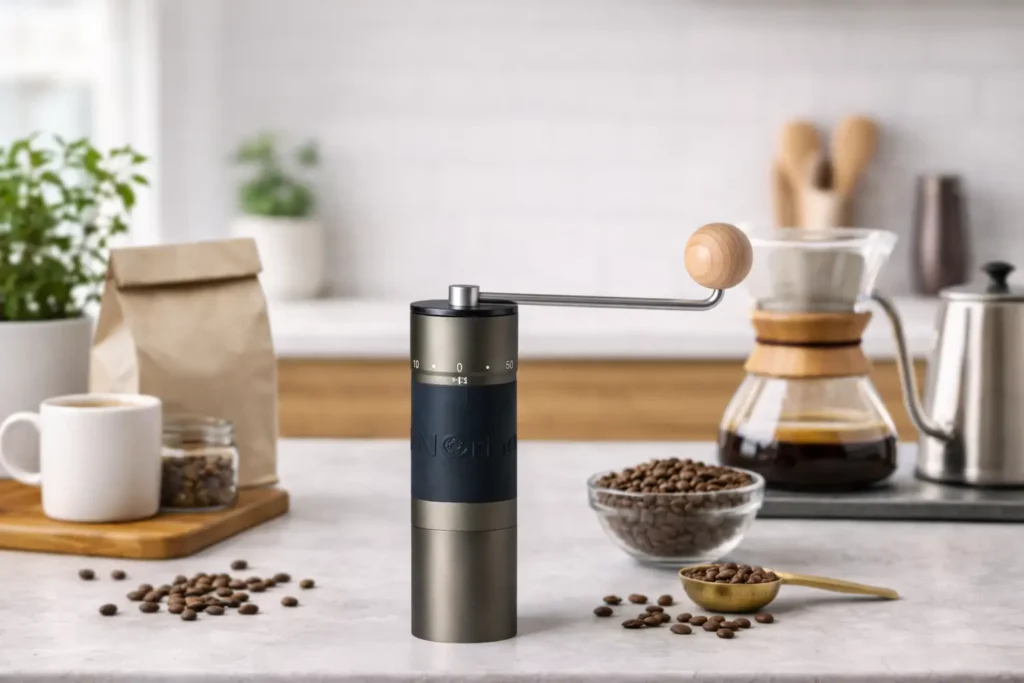
KINGrinder K6 — Best Hand Grinder for Moka Pot
The K6’s precise click-based adjustment system and consistent steel burrs make it ideal for moka’s fine-sand grind zone. Adjust by 2–4 clicks between brews when dialing in — the narrow adjustment increments make it easy to zero in on your sweet spot and stay there brew after brew.
- Click-based adjustments — easy, repeatable moka dial-in
- Near-zero retention — no stale grounds between brews
- Portable — works for travel moka setups and camping
Disclosure: CoffeeGearHub may earn from qualifying purchases.
Troubleshooting: Bitter, Sour, Weak, Sputtering
Moka has a narrower extraction window than drip or AeroPress. When something tastes off, the cause is almost always one of the items below. Work through grind first — it’s the highest-leverage fix — then heat and timing.
| Symptom | Most likely cause(s) | Fix — in this order |
|---|---|---|
| Bitter + harsh | Grind too fine / heat too high / brewed past gurgling | Coarsen grind → lower heat to medium-low → remove before sputtering phase |
| Sour + hollow | Grind too coarse / basket under-filled / stale coffee | Go finer by 1–2 steps → fill basket fully → use fresher beans |
| Weak + watery | Grind too coarse / stale beans / basket partially filled | Finer grind → fresher beans → always fill basket completely |
| Burnt / ashy aftertaste | Very dark roast + aggressive heat, or left on stove after brewing | Lower heat → remove immediately when stream turns pale → try medium roast |
| Both bitter AND sour | Inconsistent particle size (blade grinder) | Upgrade to a burr grinder — see recommendation above |
| Sputtering early in the brew | Grind too fine / coffee tamped / heat too high | Coarsen grind → never tamp → reduce heat → check gasket condition |
| Metallic taste | New aluminum pot / dirty pot / minerals in water | Run 2–3 seasoning brews → clean thoroughly → use filtered water |
| Leaking from the sides | Loose assembly / worn or cracked gasket | Tighten the pot firmly → inspect gasket → replace gasket if stiff or cracked |
FAQs: How to Use a Moka Pot
How long does it take to brew coffee in a moka pot?
A moka pot typically takes 4–8 minutes from placing on the heat to removing before gurgling. The smaller the pot, the faster the brew. A 3-cup moka runs about 4–5 minutes on medium-low; a 9-cup can take 7–9 minutes.
How much coffee do I use in a moka pot?
Fill the filter basket level and full — typically 5–7g for a 1-cup, 15–18g for a 3-cup, and 28–32g for a 6-cup. Never partially fill the basket; always use the full capacity for the size you have.
Should I use hot or cold water in a moka pot?
Pre-heated water is strongly recommended. Cold water means the grounds heat up slowly on the stove before extraction starts, increasing bitterness risk. Boil water first in a kettle, then pour it into the base.
What heat level should I use for a moka pot?
Medium-low is ideal. The flame or element should heat the base gently, producing a slow and controlled flow. High heat rushes extraction, amplifying bitterness and increasing pressure risks.
Do I need to tamp coffee in a moka pot basket?
No. Never tamp. Fill the basket, level gently, and leave it. Tamping increases flow resistance, creates over-pressure inside the pot, and leads to bitter, harsh cups — and can stress the gasket and safety valve over time.
Why is my moka pot coffee bitter?
The three most common causes are: grind too fine, heat too high, or brewing too long into the sputtering/gurgling phase. Fix by coarsening the grind one step, lowering heat to medium-low, and removing from heat earlier — before aggressive gurgling starts.
Why is my moka pot sputtering or spitting?
Early or violent sputtering usually means the grind is too fine, the coffee was tamped, or heat is too high. Some sputtering at the very end of a brew is normal — but if it starts aggressively early, remove from heat and coarsen your grind on the next brew.
Can I use a moka pot on an induction stove?
Standard aluminum moka pots (like the Bialetti Moka Express) are not induction-compatible. You need a stainless steel moka pot with a ferromagnetic base, such as the Bialetti Moka Induction or Bialetti Venus. Alternatively, an induction disc adapter can make an aluminum pot work.
How do I clean a moka pot?
Rinse with warm water after every use — no soap on aluminum pots, as soap strips the seasoned patina that reduces bitterness over time. Disassemble fully (unscrew base, remove basket and gasket) and air-dry all parts before reassembly. Periodically check and replace the rubber gasket when it feels stiff or cracked.
How do I know when moka pot coffee is done?
The brew is done when the coffee stream shifts from dark to pale or when you hear a transition from a steady hiss to an aggressive gurgle. Remove from heat at that point. Waiting for the gurgling phase to finish over-extracts the coffee and increases bitterness.
Can I use pre-ground coffee in a moka pot?
Yes. If using pre-ground, choose a medium-fine grind sold as ‘moka’ or ‘espresso’ ground — but not espresso-fine. Many Italian brands (Lavazza, illy, Kimbo) offer pre-ground coffee sized specifically for stovetop moka.
Is moka pot coffee stronger than regular coffee?
Yes — moka coffee is significantly more concentrated than drip. A typical moka brew runs around 2–4x the concentration of drip coffee, similar to a strong espresso-style shot. Many people drink it in smaller servings (40–80ml) or use it as a base for milk drinks.
Continue Learning
MOKA POT CLUSTER
☕
Written by the CoffeeGearHub Editorial Team
CoffeeGearHub is a specialty coffee equipment resource run by home brewers and coffee enthusiasts. Our guides are researched using published brewing science, manufacturer specifications, and established specialty-coffee community knowledge. We review and update our pillar content regularly. About CoffeeGearHub →