A great espresso machine can’t fix a bad grind. For espresso, the grinder matters more than almost anything else because espresso extraction is fast, unforgiving, and highly sensitive to tiny grind changes.
This guide breaks down the best burr grinders for espresso at different budgets—electric and manual—plus the practical details that actually determine whether a grinder will feel easy (or frustrating) to live with: adjustment precision, consistency, retention, workflow, and how well it supports dialing in.
Note on transparency: CoffeeGearHub recommendations are based on manufacturer specifications, design intent, well-documented performance characteristics, and consistent patterns from verified user feedback—not marketing claims. Learn more on our How We Review & Recommend page.

Quick Picks: Best Espresso Burr Grinders (At a Glance)
If you want the fastest answer, start here. Then read the “How to Choose” section to confirm the right fit for your machine and routine.
| Category | Top Pick | Why It’s a Fit | Amazon |
|---|---|---|---|
| Best Budget Espresso Grinder | Baratza Encore ESP | Espresso-focused micro adjustments; strong value for entry setups. :contentReference[oaicite:0]{index=0} | Check price |
| Best Step-Up for Dialing In | Baratza Sette 270 | Macro + stepless micro adjustment; time-based dosing workflow. :contentReference[oaicite:1]{index=1} | Check price |
| Best Quiet, Stepless Espresso Grinder | Eureka Mignon Notte (Manuale) | Stepless adjustment + flat burrs; excellent espresso focus. :contentReference[oaicite:2]{index=2} | Check price |
| Best Manual for Espresso | 1Zpresso J-Max | Very fine click resolution suited for espresso dialing. :contentReference[oaicite:3]{index=3} | Check price |
Already own a pour-over setup? Your espresso grinder can still support filter coffee depending on adjustment range, but espresso grinders are optimized for fine grinding. If you’re primarily brewing V60/Chemex/Kalita, see V60 vs Chemex vs Kalita Wave.
What Makes a Burr Grinder “Espresso-Capable”
Many grinders can grind “fine,” but espresso needs something stricter: repeatable, controllable fine grinding with small enough adjustment steps to land the shot where you want it.
1) Adjustment Precision (This is the big one)
Espresso flow changes dramatically with tiny grind shifts. A grinder that jumps too far between settings makes dialing in feel like guesswork. Espresso-friendly grinders use either:
- Stepless adjustment (near-infinite positions, common on prosumer grinders)
- Very small stepped increments designed specifically for espresso (micro-steps)
Example: the Baratza Encore ESP is known for espresso-oriented micro adjustments compared to common general-purpose home grinders. :contentReference[oaicite:4]{index=4}
2) Grind Consistency + Low “Fines Chaos”
Espresso is sensitive to uneven particles. Too many fines can choke the shot or create harsh bitterness; too many boulders can cause thin, sour shots. Better burr alignment and burr geometry generally improves repeatability.
If you’re still learning extraction basics, read Grind Size Explained—it will make dialing in espresso far easier.
3) Workflow: Dosing, Retention, and Static
Two grinders can taste similar but feel completely different to use. Consider:
- Retention: how much coffee stays inside between uses (affects freshness and dose accuracy)
- Clumping: can require extra distribution (WDT) to avoid channeling
- Dosing style: timed dosing vs single-dose workflow
Practical tip: if you’re grinding espresso daily, a grinder that’s easy to dial and repeat saves you more frustration than almost any accessory upgrade.
Comparison Table: Espresso Grinder Decision Factors
| Factor | Why It Matters | Best For |
|---|---|---|
| Stepless or micro-stepped adjustment | Lets you “land” the shot time/flow without overshooting | Anyone pulling espresso regularly |
| Consistent burr set | Reduces channeling and improves repeatability | Flavored milk drinks AND straight espresso |
| Retention & dosing workflow | Freshness + repeatable dose + less waste | Single-dosers and morning routine users |
| Noise + footprint | Daily usability (especially apartments) | Shared spaces |
Best Burr Grinders for Espresso: Detailed Picks
Below are espresso-capable grinders chosen for practical home use—especially for beginners who want to improve without getting buried in complexity.
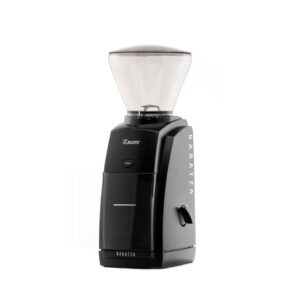
1) Baratza Encore ESP — Best Budget Espresso Burr Grinder
Best for: First espresso setup, pressurized baskets, entry-level non-pressurized baskets (with practice)
Why it’s here: Espresso-oriented micro adjustments and strong value for home users. :contentReference[oaicite:5]{index=5}

The Encore ESP is popular because it targets a real gap: many “first grinders” are fine for drip and pour-over but lack the fine control espresso needs. A key advantage often cited is its espresso-friendly micro-step adjustment and overall suitability compared with typical entry-level alternatives. :contentReference[oaicite:6]{index=6}
What to expect in real use
- Dialing in: Easier than general-purpose grinders because changes are smaller and more espresso-relevant.
- Workflow: A straightforward hopper grinder—great if you want “set it and go.”
- Who it may not fit: People who want quiet operation or extremely refined single-dosing workflow.
Tip: Pairing an espresso grinder with the right technique matters—distribution and tamping can make or break your results. If you’re new, see our Beginner Espresso Guide.
2) Baratza Sette 270 — Best for Fast Dialing + Timed Dosing
Best for: People who pull espresso often and want fast iteration
Why it’s here: Macro adjustments plus stepless micro tuning allows precise dialing in.

The Sette 270 is well-known for its dual adjustment system: you use the stepped macro range to get close, then fine-tune with a stepless micro ring. This approach is designed specifically to make espresso dialing in smoother. :contentReference[oaicite:8]{index=8}
Why people choose it
- Espresso-first design: Built around espresso workflow rather than being a “do everything” grinder.
- Quick adjustments: Easier to make small changes without losing your baseline.
- Timed dosing: Helpful if you want repeatable dose timing (especially when learning).
Trade-offs: The Sette line is often described as louder than some competitors, and like many espresso grinders, you’ll still benefit from good puck prep.
3) Eureka Mignon Notte (Manuale) — Best Stepless Espresso Grinder for the Money
Best for: People who want stepless espresso dialing + a more “prosumer” feel
Why it’s here: Flat burrs and stepless micrometric adjustment are espresso-friendly and widely praised in this price tier. :contentReference[oaicite:9]{index=9}
The Notte (often called “Manuale” in some markets) is a common recommendation for home espresso because its stepless adjustment makes it easy to make tiny changes until your shot time and taste land where you want. Sources describing the Notte emphasize its espresso-focused burr set and stepless adjustment system. :contentReference[oaicite:10]{index=10}
What this changes for your espresso
- Micro control: You can nudge the grind without “jumping past” your ideal shot.
- Repeatability: Easier to keep your espresso stable as beans age.
- Upgrade path: Eureka’s Mignon line has multiple variants; the Notte is often viewed as a strong baseline. :contentReference[oaicite:11]{index=11}
4) 1Zpresso J-Max — Best Manual Burr Grinder for Espresso
Best for: Espresso on a budget, travel espresso, quiet kitchens
Why it’s here: Espresso-suitable fine adjustment resolution (tight click steps) for dialing in. :contentReference[oaicite:12]{index=12}

Manual grinders can produce excellent espresso, but only if adjustments are fine enough. 1Zpresso’s published grind-setting references show very small click movement for espresso-oriented models like the J-Max series.
Who manual espresso grinding is actually for
- You pull 1–2 shots at a time (manual grinding scales poorly for big volumes).
- You value quiet and portability.
- You don’t mind the extra effort in exchange for high value-per-dollar.
Electric vs Manual Espresso Grinders
| Feature | Electric Burr Grinder | Manual Burr Grinder |
|---|---|---|
| Speed & convenience | Fast, consistent workflow | Slower (effort required) |
| Noise | Varies (often moderate) | Very quiet |
| Value per dollar | Good–excellent | Often excellent |
| Best for | Daily espresso routines | 1–2 shots, travel, small kitchens |
If you’re building your first espresso setup, an electric grinder usually reduces friction and speeds learning. But a well-chosen manual grinder can be a strong entry point if your budget is tight and your shot volume is low.
How to Choose the Right Espresso Grinder (Simple Decision Framework)
Choose a budget espresso grinder if:
- You’re using a beginner espresso machine (especially with a pressurized basket at first)
- You want espresso capability without a big investment
- You’re willing to refine technique as you go
Choose a stepless or prosumer-style grinder if:
- You want tiny adjustments and a smoother dialing experience
- You plan to use non-pressurized baskets and care about shot quality improvements
- You expect espresso to become a regular routine
Choose a manual espresso grinder if:
- You pull 1–2 shots and want quiet, portable grinding
- You want strong grind quality at lower cost
- You don’t mind the effort trade-off
Frequently Asked Questions
Do I really need an espresso-specific burr grinder?
Yes. Espresso requires very fine, repeatable grinding with small adjustment steps. Many general coffee grinders can grind fine but lack the precision needed to dial in espresso consistently, especially when using non-pressurized baskets.
What makes a burr grinder suitable for espresso?
An espresso-capable burr grinder offers precise grind adjustments, consistent particle size, and stable burr alignment. Stepless adjustment or very small stepped increments are especially important for dialing in espresso shots accurately.
Can a single grinder handle both espresso and pour-over coffee?
Some grinders can handle both, but espresso grinders are optimized for fine control. Switching frequently between espresso and filter settings can make it harder to return to the exact grind size. Many users eventually prefer separate grinders for espresso and filter brewing.
Are manual burr grinders good enough for espresso?
Yes, some manual burr grinders are well-suited for espresso if they offer very fine adjustment steps. Manual grinders work best for low-volume use, such as pulling one or two shots at a time, and are popular for their portability and quiet operation.
Do conical or flat burrs work better for espresso?
Both conical and flat burrs can produce excellent espresso. Burr alignment, grind consistency, and adjustment precision matter more than burr shape alone. Well-designed grinders in either category can perform reliably for home espresso.
Why is grind consistency so important for espresso?
Espresso extraction happens quickly and under pressure. Inconsistent grind size can cause channeling, leading to sour, bitter, or unbalanced shots. Consistent grinding helps water flow evenly through the coffee puck, improving flavor and repeatability
Is a more expensive espresso grinder always better?
Not necessarily. The best grinder depends on your espresso machine, brewing habits, and expectations. Many entry-level espresso grinders offer excellent results for home use without the cost or complexity of higher-end models.
What is the biggest mistake beginners make when choosing an espresso grinder?
A common mistake is choosing a grinder designed for drip or general coffee brewing and expecting it to perform well for espresso. Espresso requires finer adjustments and higher consistency than most general-purpose grinders provide
Affiliate note: Some links may be affiliate links. If you purchase through them, CoffeeGearHub may earn a commission at no extra cost to you. See our Affiliate Disclosure.
Final Takeaway
The “best” burr grinder for espresso is the one that matches your routine and your tolerance for dialing in. If you want the simplest path into espresso, start with a grinder designed for espresso adjustment—not a general-purpose coffee grinder.
If you’re building your setup step-by-step, keep this order in mind: grinder first, then machine upgrades, then accessories. Your espresso quality will improve faster that way.
You may also find these helpful: