
Best Burr Coffee Grinders for Home Use (2026 Buying Guide)
Editorial standards: this guide compares burr grinders by consistency, adjustment range, workflow, brew-method coverage, and value. Product recommendations are based on published specifications and use-case fit unless hands-on testing is explicitly stated.
At a glance
What this guide covers
This guide helps home brewers compare burr grinders across manual and electric formats, different budgets, and brew-method needs without treating every grinder as equally suited to espresso, filter coffee, or both.
Editorial analysis
The best grinder is the one that matches your brew range
A grinder can be excellent for filter coffee and still be a poor espresso choice if its adjustment steps are too large or its burr geometry is not designed for very fine tuning.
Prioritize the brew methods you actually use, then compare consistency, adjustment precision, workflow, retention, and noise. Paying for features you will not use rarely improves the cup.
The 30-Second Answer
Start with brew-method fit, then compare burr quality, adjustment range, consistency, and workflow. For most home brewers, a good burr grinder is a bigger flavor upgrade than adding more brewing gadgets.
Featured grinders: all nine picks in this guide
This buying guide is broader than a typical CoffeeGearHub recommendation article, so the usual two-product representative module is intentionally expanded here. These nine grinders cover the important home-use categories in the guide: everyday electric, budget electric, manual, filter-focused, and dedicated espresso.
Everyday electric grinders
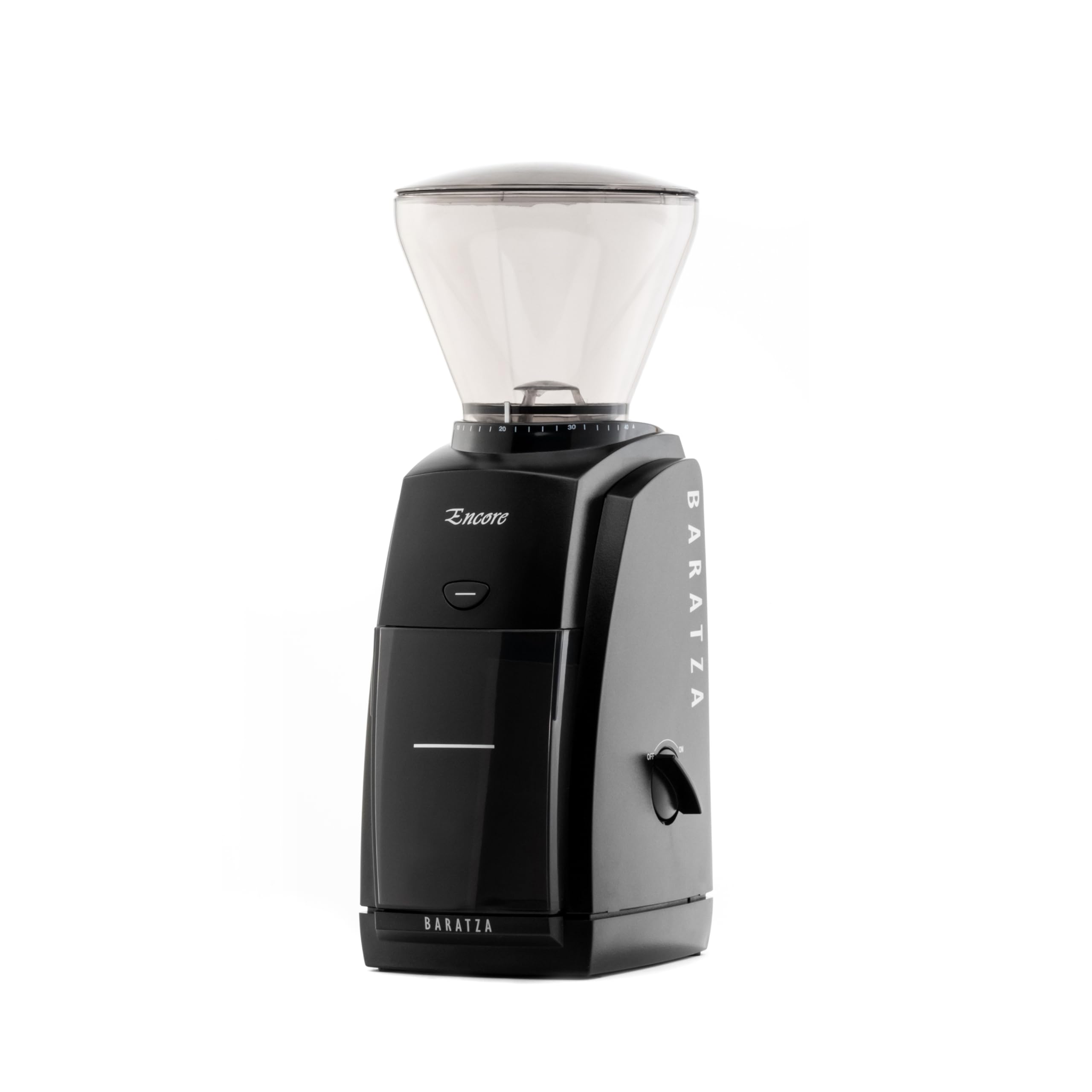
Baratza Encore ESP
Best for: the widest range of home brewers. Its 40-step adjustment system covers drip, pour-over, AeroPress, and entry-level espresso, making it the most flexible electric choice in this guide.
Trade-off: dedicated espresso users may eventually want finer adjustment control. Read the full Encore ESP review →
Baratza Virtuoso+
Best for: serious filter-coffee users who want a familiar Baratza workflow plus timed dosing. It is a natural step up for pour-over and drip brewing.
Trade-off: the premium over the Encore ESP makes more sense for filter-focused users than for espresso shoppers.
OXO Brew Conical Burr
Best for: simple everyday grinding with a low-learning-curve workflow. It suits drip and other filter methods well when convenience matters more than very fine adjustment.
Trade-off: 15 grind settings provide less dialing precision than the more enthusiast-oriented grinders here.
Budget and manual grinders
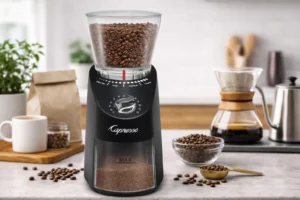
Capresso Infinity
Best for: shoppers who want the lowest-cost practical electric burr option for drip and French press. It is a meaningful step up from blade grinding without requiring a larger investment.
Trade-off: slower workflow and less adjustment precision than Baratza’s entry-level models.
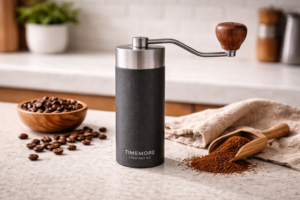
Timemore Chestnut C3
Best for: value, portability, and quiet grinding. It works especially well for pour-over and AeroPress users who would rather spend their budget on burr quality than a motor.
Trade-off: hand grinding becomes tedious for larger daily batches.
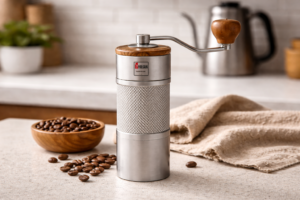
1Zpresso JX
Best for: users who want more manual-grinder precision across AeroPress, pour-over, and moka pot. The larger burr set makes it faster than many compact hand grinders.
Trade-off: manual effort remains the price of getting strong grind quality without paying for an electric motor.
Specialist and enthusiast grinders
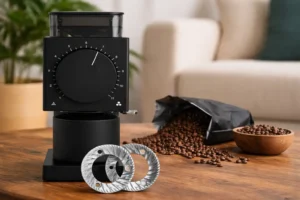
Fellow Ode Gen 2
Best for: filter-coffee enthusiasts who prioritize clarity, low retention, and a refined countertop workflow. Its 64mm flat burrs make it the filter specialist of this list.
Trade-off: it is intentionally not an espresso grinder.
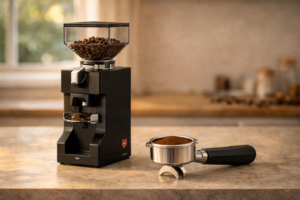
Eureka Mignon Silenzio
Best for: dedicated home espresso. The stepless micrometric adjustment and 50mm flat burr set make this the strongest espresso-specific choice in the guide.
Trade-off: its specialization makes less sense if most of your brewing is drip, French press, or pour-over.
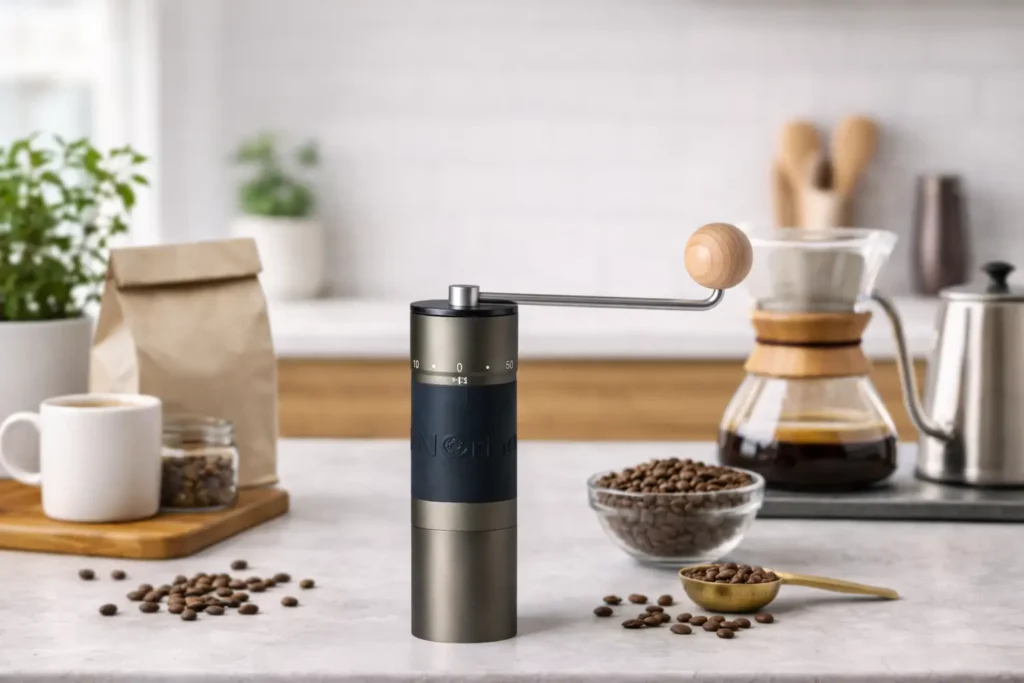
KINGrinder K6
Best for: AeroPress, moka pot, and pour-over users who want a durable hand grinder with a practical click-based adjustment system.
Trade-off: like the other manual options, it favors value and control over high-volume convenience.
Affiliate disclosure: Product links above may earn CoffeeGearHub a commission at no additional cost to you. As an Amazon Associate, we earn from qualifying purchases. Prices and availability can change.
Comparison Table: All Picks at a Glance
Use this table to quickly match grinder type, burr design, and price tier to your brewing situation. Price tiers are relative indicators — $ = budget, $$ = mid-range, $$$ = upper mid-range, $$$$ = premium. Check Amazon for current pricing.
| Grinder | Type | Burr | Settings | Best for | Espresso? | Price tier |
|---|---|---|---|---|---|---|
| Baratza Encore ESP | Electric conical | 40mm M2 steel | 40 (1–20 espresso) | Most home users | Entry-level ✓ | $$ |
| Baratza Virtuoso+ | Electric conical | 40mm pro steel | 40 + timer | Pour-over upgrade | No | $$$ |
| OXO Brew Conical | Electric conical | Stainless | 15 | Ease of use | No | $$ |
| Capresso Infinity | Electric conical | Conical steel | 16 | Budget electric | No | $ |
| Fellow Ode Gen 2 | Electric flat | 64mm steel | 31 stepped | Filter enthusiasts | No | $$$$ |
| Timemore C3 | Manual conical | 38mm steel | Stepped | Value + portable | No | $ |
| 1Zpresso JX | Manual conical | 48mm steel | External click | Precision manual | Light only | $$ |
| KINGrinder K6 | Manual conical | Conical steel | Click dial | AeroPress + moka | No | $ |
| Eureka Mignon Silenzio | Electric flat | 50mm steel | Stepless | Home espresso | Yes ✓ | $$$ |
Choose Your Grinder by Situation
Different brewing situations reward different grinder choices. Use this table to shortcut directly to the right pick based on how you actually brew — with quick “best pick” and “runner-up” shortcuts.
| Your situation | What you need | Best pick | Runner-up | Avoid |
|---|---|---|---|---|
| First burr grinder, daily drip/pour-over | Reliable, easy, wide range | Baratza Encore ESP | OXO Brew Conical | Blade grinders |
| Serious pour-over, want dose consistency | Upgraded burrs + timer | Baratza Virtuoso+ | Fellow Ode Gen 2 | 15-setting grinders |
| Easiest possible operation | One-touch, minimal setup | OXO Brew Conical | Baratza Encore ESP | Manual grinders |
| Filter coffee enthusiast, best grind quality | Flat burr, near-zero retention | Fellow Ode Gen 2 | Baratza Virtuoso+ | Blade or cheap burr |
| Tight budget, electric | Most affordable burr grinder | Capresso Infinity | Timemore C3 (manual) | Blade grinders |
| Travel, portability, quiet kitchen | Compact, silent, affordable | Timemore C3 | KINGrinder K6 | Any electric |
| AeroPress / moka power user | Precision clicks, fast grinding | 1Zpresso JX | KINGrinder K6 | Stepped-only manuals |
| Home espresso machine | Stepless, flat burr, tight retention | Eureka Mignon Silenzio | Baratza Encore ESP (entry level) | Filter-only grinders |
💡 Pro tip: If espresso is your goal, do not start with a filter grinder and “upgrade later.” The adjustment range and stepless precision espresso requires are built-in design features — they can’t be added to a filter grinder after the fact.
Why Burr Grinders Matter: Extraction Science
A burr grinder is the single most impactful equipment upgrade a home brewer can make — more impactful than the coffee maker, more impactful than water temperature, often more impactful than the coffee itself. Here’s the science behind why.
When water passes through coffee grounds, it dissolves soluble compounds — acids, sugars, and aromatics — in a process called extraction. The rate of extraction depends on two things: temperature and surface area. The more surface area is exposed, the faster extraction happens. Particle size directly controls surface area, which is why grind consistency is everything.
Blade grinders chop beans randomly, producing a chaotic mix of coarse boulders and fine powder. When water hits this mixture, it simultaneously over-extracts the fines (harsh, bitter, astringent) and under-extracts the larger chunks (sour, weak, hollow) — in the same cup. The result is a confused, imbalanced brew that no amount of technique can fix.
Burr grinders crush beans between two precision-machined burrs set at a fixed gap. Every particle that exits is roughly the same size. Water extracts evenly, at the same rate, across the entire bed of grounds. The result is clarity, sweetness, and balance — what great coffee actually tastes like.
🔬 Extraction science in plain terms: Burr grinders produce a much narrower spread of particle sizes than blade grinders, which leave a mix of coarse chunks and fine powder. That consistency gap is what separates a clean, sweet cup from a bitter, muddy one — regardless of what beans you use or how expensive your coffee maker is.
Flat Burrs vs Conical Burrs: What’s the Difference?
All burr grinders fall into one of two design categories. Understanding the difference helps you match the right tool to your brewing style — and avoid overpaying for a design feature you don’t need.
Conical burrs use a cone-shaped inner burr rotating inside a ring-shaped outer burr. The beans feed by gravity and are crushed as they travel down the cone. Conical burrs operate at lower RPM, generate less heat, and are quieter than flat burrs. They produce a bimodal particle distribution — a mix of slightly larger and smaller particles — which many brewers find produces a fuller, rounder cup character in filter methods. Most home grinders use conical burrs because they’re efficient, reliable, and excellent across a wide range of grind sizes.
Flat burrs use two parallel ring-shaped burrs spinning face-to-face. Coffee is centrifuged outward through the gap between them. Flat burrs produce more uniform particle sizes with less bimodal spread — which is why they’re preferred for espresso, where consistency is critical. They generate more heat and noise than conical burrs at equivalent RPM, and at the home level they tend to be found in premium filter grinders (Fellow Ode) and dedicated espresso grinders (Eureka Mignon).
| Feature | Conical Burrs | Flat Burrs |
|---|---|---|
| Design | Cone + ring | Two parallel rings |
| Heat generation | Low | Moderate |
| Noise | Quieter | Louder |
| Particle uniformity | Good — bimodal distribution | Excellent — more uniform |
| Best for | Drip, pour-over, French press, moka | Espresso + filter enthusiasts |
| Common in | Most home grinders | Prosumer + espresso grinders |
🔬 Quick guide: For drip, pour-over, French press, and moka — conical burrs are excellent and the right default choice. For espresso or if you’re chasing the last 5% of filter coffee performance — flat burrs are worth the premium.
Electric vs Manual Burr Grinders
The electric vs manual decision is primarily about convenience and budget, not grind quality. At the same price point, manual grinders almost always have better burrs than electric models — because you’re not paying for a motor. A manual grinder typically has higher-quality steel burrs than an electric grinder at the same price. The trade-off is 1–2 minutes of hand cranking per dose.
| Feature | Electric Burr | Manual Burr |
|---|---|---|
| Convenience | High — push and go | Lower — 1–2 min grinding |
| Noise | Moderate | Very low (near silent) |
| Portability | Low | High — fits in a bag |
| Burr quality at same price | Lower (paying for motor) | Higher |
| Grind quality | Excellent | Excellent |
| Best for | Daily convenience, high volume | Travel, budget, quiet brewing |
🔬 Bottom line: If you brew 1–2 cups daily and value the ritual, manual is outstanding value. If you brew multiple cups, have guests often, or just want one push-button step in your morning routine, electric is worth the premium.
Best Grind Size for Every Brew Method: Dial-In Guide
Grind size is the most powerful variable in home coffee brewing — more impactful than brew time or water temperature in most situations. Get it right and even a modest grinder produces outstanding results. Get it wrong and no amount of technique saves you. Use this table as your starting point when dialing in a new grinder or switching brew methods.
How to read the adjustment columns: these are starting points based on typical grinder behavior, not absolutes. Beans vary — a darker roast extracts more easily and needs a coarser grind; a lighter roast resists extraction and needs a finer one. Start here, taste, and adjust one step at a time.
| Brew method | Grind size | Texture reference | Baratza Encore | 1Zpresso JX (rotations) | KINGrinder K6 (rotations) |
|---|---|---|---|---|---|
| Cold brew | Extra coarse | Raw sugar crystals | 38–40 | 4.5–5.0 | 4.5–5.0 |
| French press | Coarse | Coarse sea salt | 28–32 | 3.5–4.5 | 3.5–4.5 |
| Chemex | Medium-coarse | Rough sand | 22–26 | 3.0–3.5 | 3.0–3.5 |
| Drip coffee maker | Medium | Regular sand | 18–22 | 2.5–3.0 | 2.5–3.0 |
| Pour-over (V60, Kalita) | Medium-fine | Fine sand | 15–20 | 2.0–2.5 | 2.0–2.5 |
| AeroPress (standard) | Medium-fine | Fine sand | 12–18 | 2.0–2.5 | 2.0–2.5 |
| Moka pot | Fine | Table salt | 5–8 | 1.0–1.5 | 2–3 rotations from closed |
| Espresso | Extra fine | Powdered sugar | Not capable | Not recommended | Not recommended |
💡 Dialing in tip: Change only grind size between brews — keep everything else fixed. If your coffee tastes sour or thin, go finer. If it tastes bitter or harsh, go coarser. Adjust 1–2 settings at a time until sweetness “pops” and the finish is clean. For more detail on AeroPress dialing, see our AeroPress grind size guide.
Burr Grinder Maintenance & Cleaning Schedule
A clean grinder is a consistent grinder. Coffee oils accumulate on burrs and grinding surfaces over time, turning rancid and contaminating fresh batches. Regular maintenance protects grind quality and significantly extends grinder lifespan.
| Frequency | Task |
|---|---|
| After every use | Wipe the grounds catch with a dry cloth; empty remaining grounds |
| Every 1–2 weeks | Brush out the burr chamber with a stiff grinder brush |
| Monthly | Full disassembly, burr removal, and brush clean of all surfaces |
| Every 3 months | Run grinder cleaning tablets (Urnex Grindz) through the grinder |
| Annually | Inspect burr sharpness — replace if grind times increase or consistency drops |
Brush cleaning is the safest and most recommended method — a stiff-bristled grinder brush removes loose grounds and surface oil without introducing moisture. Grinder cleaning tablets (Urnex Grindz) are food-safe, absorb oils effectively, and are appropriate quarterly for most electric grinders. Rice is sometimes suggested online as a DIY alternative but is not recommended — rice grains can chip or dull burr edges, particularly on precision burr sets, and it can void warranties on premium grinders.
Common Burr Grinder Buying Mistakes to Avoid
Buying a blade grinder to save money. A cheap blade grinder consistently produces worse coffee than an entry-level burr grinder. The flavor gap is immediate and significant — and the savings disappear quickly when you consider the beans you’ll waste on under- and over-extracted cups you can’t fix.
Assuming all burr grinders work for espresso. Most home burr grinders do not have the adjustment range or step precision espresso demands. Trying to pull shots with a filter grinder results in under-extracted, weak, sour espresso that no technique can rescue. Budget specifically for an espresso-capable grinder from the start if that’s your goal.
Buying based on motor wattage or RPM. Higher wattage doesn’t mean better coffee. Slower motors (lower RPM) actually generate less heat — which is why Baratza’s DC motor design produces excellent results at relatively modest wattage. Burr quality, burr size, and adjustment precision matter far more than motor specs.
Overspending on features you won’t use. A built-in scale is a valuable feature — if you’ll actually use it. If you want consistent morning coffee without a workflow, the Encore’s simplicity is a genuine advantage over more complex machines.
Ignoring grind retention. High-retention grinders waste coffee and deliver yesterday’s grounds into today’s dose. For espresso dialing, retention under 0.5g is important. For filter brewing, it matters less but is still worth considering when comparing mid-range options.
Troubleshooting: Grind Problems and How to Fix Them
Most grind-related problems have a clear, fixable cause. Start with grind size first — it’s the most impactful single adjustment — then work through heat and dose variables. Change only one thing between test brews.
| Taste symptom | Most likely cause | Fix (in order) |
|---|---|---|
| Bitter + harsh | Grind too fine / over-extraction | Go coarser → check water temp → reduce brew time |
| Sour + thin | Grind too coarse / under-extraction | Go finer → increase water temp → extend brew time |
| Weak + watery | Too coarse / stale coffee / low dose | Go finer → fresher beans → increase dose |
| Flat + lifeless | Stale beans / dirty grinder | Fresher beans → clean burrs → check grinder retention |
| Sour AND bitter simultaneously | Inconsistent particle size (blade grinder) | Upgrade to a burr grinder — see picks above |
| Inconsistent results cup to cup | High retention / grinder needs cleaning | Brush out chamber → single-dose workflow → check burr wear |
FAQs: Best Burr Coffee Grinders
Are burr grinders worth the extra cost?
Yes, for most home brewers. Even an entry-level burr grinder produces significantly more consistent grounds than a blade grinder, which directly improves flavor clarity and repeatability. The difference is immediately noticeable in the cup.
What is the best burr grinder for beginners?
The Baratza Encore ESP is the most recommended beginner burr grinder. It’s reliable, easy to use, covers drip, pour-over, and AeroPress well, adds an espresso-capable adjustment range, and Baratza’s customer support and parts availability are excellent — making it a long-term investment, not just a starter purchase.
Can one burr grinder handle all brew methods?
A grinder with a wide adjustment range can cover drip, pour-over, French press, and AeroPress well. However, espresso requires very fine, precise adjustment that most entry-level and mid-range burr grinders cannot deliver. Budget separately for espresso if that’s your goal.
Do manual burr grinders make better coffee than electric?
Both can produce excellent coffee. The quality difference isn’t electric vs manual — it’s burr quality, which at the same price point often favors manual grinders since you’re not paying for a motor. At the same price, a manual grinder typically has better burrs than an electric one.
What grind size should I use for pour-over?
Pour-over typically calls for a medium-fine to medium grind — similar in texture to fine sand. On the Baratza Encore, settings 15–20 are a good starting point. On the 1Zpresso JX, aim for 2.0–2.5 rotations from zero. Adjust based on brew time: if your pour-over drains too slowly, go coarser; too fast, go finer.
How often should I clean my burr grinder?
For daily home use, a quick brush-out every 1–2 weeks and a full burr cleaning monthly is a good routine. Grinder cleaning tablets like Urnex Grindz help remove coffee oils every 3 months. Avoid using rice — it can damage burr edges on premium grinders.
What is the difference between flat burrs and conical burrs?
Flat burrs use two parallel ring-shaped burrs and produce highly uniform particle sizes, popular for espresso. Conical burrs use a cone-shaped center burr and are standard in most home grinders — they’re quieter, generate less heat, and handle a wide range of grind sizes well from French press to pour-over.
Is the Baratza Encore good for espresso?
Not the original Encore. It does not grind fine enough and lacks the micro-adjustment precision espresso requires, so shots come out under-extracted and weak. The Encore ESP adds a finer, espresso-tuned adjustment range that works for entry-level espresso, and the Eureka Mignon Silenzio is the stronger choice for dedicated home espresso.
How long do burr grinders last?
A quality burr grinder used for home brewing should last 5–10 years or more with proper maintenance. Baratza grinders are especially known for longevity — the company sells replacement parts individually and offers a repair program, making them unusually repairable compared to most consumer appliances.
What is grind retention and why does it matter?
Retention is the amount of ground coffee that stays inside the grinder after grinding is complete. High retention means stale grounds from a previous session mix with your fresh dose. For espresso dialing, retention under 0.5g is important. For filter brewing, it matters less but is still worth considering in higher-end purchases.
Should I buy an electric or manual burr grinder?
Electric grinders are best for daily convenience and high volume. Manual grinders offer excellent grind quality at lower cost and are ideal for travel, quiet mornings, or smaller brewing amounts. At the same price point, manual grinders usually have better burrs since you’re not paying for a motor.
What is the best budget burr grinder?
For electric, the Capresso Infinity is the most affordable burr option, and the Baratza Encore ESP is the best-value step up. For manual, the Timemore Chestnut C3 delivers exceptional grind quality and competes with electric grinders costing two to three times as much.
CoffeeGearHub product shortlist
Compare coffee grinders on CoffeeGearHub
Review current grinder pages and verified merchant offers in the CoffeeGearHub catalog.
Continue Learning
In this guide
- The 30-Second Answer
- Featured grinders: all nine picks
- Comparison Table: All Picks at a Glance
- Choose Your Grinder by Situation
- Why Burr Grinders Matter: Extraction Science
- Flat Burrs vs Conical Burrs: What’s the Difference?
- Electric vs Manual Burr Grinders
- Best Grind Size for Every Brew Method: Dial-In Guide
- Burr Grinder Maintenance Cleaning Schedule
- Common Burr Grinder Buying Mistakes to Avoid
- Troubleshooting: Grind Problems and How to Fix Them
- FAQs: Best Burr Coffee Grinders
- Continue Learning