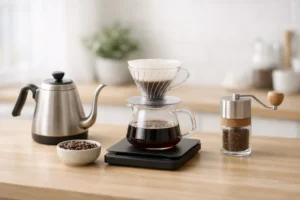
Finding the “best espresso beans” can feel weirdly complicated—especially at home. One bag tastes syrupy and sweet, another pulls sharp and sour, and a third sprays your kitchen like a geyser because your grinder sneezed. The truth: espresso is brutally honest. It magnifies everything in the coffee—roast style, freshness, processing, and even how you store the bag on your counter.
This guide is built for home espresso, not café bulk brewing. That means we’re prioritizing beans that are forgiving to dial in, taste great with common home machines (Breville, Gaggia, De’Longhi, Rancilio, Lelit, etc.), and work well across popular drink styles (straight shots, milk drinks, Americanos, iced).
Choosing the right espresso beans is only part of the equation. To get café-quality results at home, your beans need to match your equipment, grind size, and brewing method. If you’re still building your setup, our Best Espresso Machines for Beginners guide walks through the most reliable home machines for consistent espresso extraction.
Affiliate note: Coffee Gear Hub may earn commissions from qualifying purchases. Prices and availability can change.
Key Takeaways (Read This First)
- Choose roast level based on your drink: medium to medium-dark is easiest for milk drinks; medium/light is best for fruity modern espresso (but harder to dial in).
- Freshness matters, but “too fresh” can be a thing: most espresso is easiest around 7–21 days after roast.
- “Espresso beans” are just coffee beans: what you want is a roast + flavor profile that performs well under pressure.
- For beginners: start with a chocolate/caramel/nutty blend (medium-dark), then experiment with fruit-forward single origins.
- Storage is a flavor upgrade: keep beans cool, dark, sealed; freeze in small portions if you won’t finish in 2–3 weeks.

Quick Picks: Best Espresso Beans for Home Espresso
Below are reliable, widely loved options that tend to work well on home machines. Pick a flavor direction, then use the dialing-in section later in this article to nail the shot.
| Pick | Best For | Flavor Profile | Roast | Why It Works at Home |
|---|---|---|---|---|
| Lavazza Super Crema | Beginner-friendly espresso + milk drinks | Sweet, hazelnut, crema-forward | Medium | Forgiving extraction, consistent in many grinders |
| Illy Classico | Smooth, classic Italian-style espresso | Balanced, caramel, mild cocoa | Medium | Low bitterness, easy to drink straight |
| La Colombe Nizza | Chocolatey shots + lattes | Chocolate, brown sugar, smooth | Medium-dark | Built for espresso; shines in milk |
| Stumptown Hair Bender | Modern espresso with complexity | Citrus + dark chocolate balance | Medium | Great “bridge” between traditional + modern |
| Intelligentsia Black Cat | Fruity-sweet espresso lovers | Sweet, layered, lively acidity | Medium | High-quality blend that rewards careful dialing |
| Death Wish Espresso Roast | Bold flavor + high caffeine | Dark, intense, smoky/chocolate | Dark | Strong taste for milk drinks (less nuanced) |
Tip: If you mostly drink cappuccinos and lattes, start with a medium-dark bean (chocolate/nut/caramel). If you love straight espresso or cortados and want clarity, try a medium roast. If you want bright fruit notes, explore light-to-medium espresso—but expect a steeper learning curve.
How to Choose Espresso Beans for Home (So You Don’t Waste Bags)
“Espresso beans” aren’t a special species. They’re simply beans roasted and blended (or selected) to taste good under espresso extraction. Espresso uses high pressure and a tight brew ratio, so the bean choice matters more than it does for drip or French press.
1) Roast Level: The #1 Decision
Roast level influences how easy a coffee is to extract and what flavors you’ll get.
- Light roast: bright, floral, citrus/berry notes. Harder to extract (often needs finer grind, higher temp, longer shot time, sometimes lower ratio like 1:2.5). Can taste sour if under-extracted.
- Medium roast: balanced sweetness + some acidity, more “coffee” and chocolate notes. Usually the sweet spot for home users.
- Medium-dark: chocolate, caramel, roasted nut, lower acidity. Very forgiving and excellent in milk.
- Dark roast: smoky, bittersweet, heavy body. Easiest to extract but can turn ashy/bitter fast. Great if you like classic bold espresso or want strong flavor in large milk drinks.
| Roast Level | Best Drink Styles | Dial-In Difficulty | Common “Problem” Flavor | Fix |
|---|---|---|---|---|
| Light | straight espresso, americano | Hard | Sour, thin | Grind finer, raise temp, extend time, consider longer ratio |
| Medium | everything | Medium | Flat, dull | Adjust ratio, grind, or temp; use fresher beans |
| Medium-dark | milk drinks, cappuccino | Easy | Bitter, dry | Grind slightly coarser, reduce time, lower temp |
| Dark | lattes, iced drinks | Easiest | Ashy, smoky bitterness | Shorten shot, lower temp, pull at 1:1.5–1:2 |

2) Blend vs Single Origin (Which Is Better?)
Neither is “better”—they’re different experiences.
- Espresso blends are designed to taste balanced and consistent. Roasters often blend components for sweetness, body, crema, and a predictable flavor arc from first sip to finish. For most home users, blends are easier and more rewarding.
- Single origins highlight a region/farm/process. They can be stunning—think strawberry, jasmine, peach, sparkling citrus—but they may demand tighter technique and dialing.
Rule of thumb: If you want a daily driver that’s easy and delicious in milk, pick a blend. If you love exploring flavor notes and don’t mind dialing in, try single-origin espresso roasts.
3) Processing Method (Washed, Natural, Honey)
Processing changes how the bean tastes and how it behaves in espresso:
- Washed: clean, crisp, clear flavors. Often higher clarity and brighter acidity.
- Natural: fruit-forward, jammy, sometimes “funky.” Can taste like berries or tropical fruit, with heavier sweetness. Can be trickier (channelling risk if roast is light).
- Honey: in-between; sweet and rounded with moderate clarity.
4) Freshness Window (The Hidden Key)
Freshly roasted coffee releases CO₂. Too much CO₂ can make espresso unstable (bubbly crema, fast channeling, inconsistent shots). Too little CO₂ (old beans) can make espresso flat and thin.
Sweet spot for most home espresso: 7–21 days post-roast. Some darker roasts are best sooner (5–14 days). Some lighter roasts improve later (10–30 days). If your bag doesn’t list a roast date, you’re guessing—and guessing rarely helps espresso.
Top Espresso Bean Picks (With “Who It’s For”)
These aren’t the only good beans on earth—just dependable options that tend to be easy to buy, easy to dial in, and satisfying on typical home espresso machines.
1) Lavazza Super Crema — Best Beginner-Friendly “Everyday Espresso”
If you want a classic, crema-forward shot with a smooth finish—especially for cappuccinos and lattes—Super Crema is a popular starting point. It usually leans sweet and nutty and tends to be forgiving in grind adjustments. It’s a solid “learn espresso” bag that won’t punish small technique mistakes.
- Best for: beginners, milk drinks, daily espresso routine
- Flavor direction: nutty sweetness, mild cocoa, low drama
- Dial-in tip: start at a 1:2 ratio (e.g., 18g in → 36g out) and adjust grind for 25–30 seconds

2) Illy Classico — Best Smooth, Balanced Espresso (Low Bitterness)
If you want an espresso that’s easy to drink straight—without sharp acidity or heavy smoke—Illy Classico is known for being smooth and balanced. It’s a “comfort espresso” that works especially well for Americanos and simple straight shots.
- Best for: straight shots, Americanos, smooth flavor fans
- Flavor direction: gentle caramel/chocolate balance
- Dial-in tip: keep temperature moderate and avoid over-long shots that add dryness
3) La Colombe Nizza — Best for Milk Drinks (Chocolatey + Crowd-Pleasing)
If your goal is a latte that tastes like dessert without added syrup, chocolate-leaning espresso is your friend. Nizza is often recommended for home espresso because it pulls a sweet, rounded shot that stays present through milk. This makes it a strong pick for cappuccinos, lattes, and iced milk drinks.
- Best for: lattes, cappuccinos, mocha-style flavor lovers
- Flavor direction: chocolate/brown sugar vibes
- Dial-in tip: if it tastes dry, shorten the shot or lower brew temp slightly
4) Stumptown Hair Bender — Best “One Bag Does Everything” Modern Blend
Hair Bender is the kind of coffee that helps people understand why espresso can be interesting: it can be sweet and chocolaty and have a bright, lively top note. If you’re upgrading from supermarket coffee into specialty, this is a popular middle ground that works both straight and in milk.
- Best for: versatility, espresso + milk drinks, exploring flavor
- Flavor direction: dark chocolate with citrus lift
- Dial-in tip: small ratio changes (1:1.8 to 1:2.2) can dramatically shift sweetness vs brightness
5) Intelligentsia Black Cat — Best for Sweet, Layered “Café-Style” Espresso
Black Cat is a classic specialty espresso blend that’s often praised for layered sweetness and a lively shot structure. It can be an “aha” bag—if you enjoy the process of dialing in and want espresso that tastes like it came from a coffee bar rather than a gas station.
- Best for: espresso enthusiasts, balanced complexity, café-style shots
- Flavor direction: sweet, dynamic, sometimes fruit + cocoa interplay
- Dial-in tip: keep puck prep consistent; this coffee can reveal channeling quickly
6) Death Wish Espresso Roast — Best Bold “I Want It Strong” Option
Not everyone wants fruity nuance. Some people want a dark, punchy espresso that tastes intense even in a big iced latte. If that’s you, a bold espresso roast can work. The tradeoff is less complexity and a higher chance of smoky/ashy notes if over-extracted.
- Best for: bold flavor, large milk drinks, high-caffeine preference
- Flavor direction: deep roast, bittersweet chocolate, smoky edge
- Dial-in tip: pull slightly shorter (or cooler) to avoid harshness
Comparison Table: Which Espresso Beans Match Your Drink?
Use this table to pick beans based on what you actually drink at home.
| If you mostly drink… | Roast Range | Flavor Notes to Look For | Blend or Single Origin? | Why |
|---|---|---|---|---|
| Lattes / Cappuccinos | Medium-dark | Chocolate, caramel, nutty | Blend | Sweetness and body cut through milk |
| Straight espresso | Medium | Cocoa + fruit balance, sweetness | Blend or single origin | More clarity without harsh roast notes |
| Americanos | Medium | Balanced, smooth, low bitterness | Blend | Clean dilution without bitterness |
| Iced lattes | Medium-dark to dark | Chocolate, roasty sweetness | Blend | Cold dulls flavor; bold espresso stays present |
| “Fruity modern espresso” | Light to medium | Berry, citrus, floral, stone fruit | Single origin | Origin character shines most at lighter roasts |
Dialing In Espresso Beans at Home (So Any Bag Tastes Better)
The “best” beans still need a reasonable recipe. Here’s a beginner-friendly approach that works with most medium and medium-dark espresso coffees.
Start Here: A Simple Baseline Recipe
- Dose: 18g (use what fits your basket—14g, 18g, or 20g are common)
- Yield: 36g espresso (a 1:2 ratio)
- Time: 25–30 seconds (from pump on to final yield)
- Temperature: default machine temp (or ~93°C/200°F if adjustable)
Pull a shot, taste it, then adjust using the “flavor map” below.

Espresso Taste Troubleshooting
| What it tastes like | Most likely cause | Best fix (do one change at a time) |
|---|---|---|
| Sour / sharp / lemony (unpleasant) | Under-extracted | Grind finer OR increase yield slightly OR raise temp |
| Bitter / ashy / drying | Over-extracted | Grind coarser OR reduce yield OR lower temp |
| Watery / thin | Too fast / channeling / low dose | Grind finer, improve puck prep, verify dose |
| Harsh but also sour | Channeling | WDT distribution, level tamp, ensure even basket fill |
| Looks good but tastes “flat” | Old beans or low quality | Use fresher roast-date beans; adjust ratio for sweetness |
Puck Prep Matters More Than You Think
Home espresso problems are often distribution problems, not bean problems. If you get spurting or sudden blonding (pale watery flow early), focus on consistency:
- Weigh dose (a cheap scale is a bigger upgrade than “better beans”).
- Break up clumps (WDT tool or gentle distribution).
- Level and tamp the same way every time.
- Keep your workflow repeatable so adjustments make sense.

What “Espresso Roast” Actually Means (And Why It Can Confuse Buyers)
Many brands label a bag “espresso roast” to communicate “this coffee tastes good as espresso.” But the roast level could be medium, medium-dark, or dark depending on the roaster’s style. Some specialty roasters even label light-to-medium coffees as espresso when the goal is a bright, modern profile.
Roast level also affects grind size, extraction time, and pressure requirements. If your shots taste sour or bitter, the issue may be grind consistency rather than the beans themselves—our Coffee Grind Size Explained guide shows how grind adjustments impact espresso flavor and crema.
So don’t buy based on the word “espresso” alone. Buy based on (1) roast level, (2) flavor notes you enjoy, (3) roast date, and (4) whether you drink milk drinks or straight espresso.
How to Store Espresso Beans at Home (Freshness = Better Shots)
Espresso beans go stale faster than people expect—not because they’re “bad,” but because aromatic compounds fade. If your espresso suddenly tastes dull, storage is often the reason.
Best Storage Rules
- Keep beans sealed (original bag with one-way valve is fine if resealed well).
- Store cool + dark (avoid heat from the espresso machine).
- Don’t keep opening a huge bag for a month—oxygen exposure adds up.
- Freezing can be great if done right: portion into small airtight bags/containers, freeze once, and don’t repeatedly thaw/refreeze.
Quick method: If you buy 2lb bags, split into 4–6 smaller portions. Keep one portion out, freeze the rest. Your shots stay more consistent across the bag.

Buying Guide: What to Look for When Shopping Espresso Beans Online
1) Roast Date (or “Best By” Doesn’t Count)
For espresso, roast date is your compass. “Best by” dates can be months away and tell you almost nothing about peak flavor. If you can, choose sellers that show roasted-on dates or have fast inventory turnover.
2) Bag Size: Smaller Often Wins
If you’re still learning to dial in, smaller bags can save money. You’ll finish the coffee while it’s still flavorful, and you won’t get stuck with a bag that’s “fine” but not exciting. Once you find a favorite, larger bags can be cost-effective—just portion and freeze.
3) Flavor Notes That Match Your Preferences
Ignore fancy descriptions if they don’t match what you enjoy. Here’s the shortcut:
- Chocolate / caramel / nuts: classic espresso + milk drinks (easy)
- Stone fruit / citrus / floral: modern espresso, brighter shots (harder)
- Smoky / dark cocoa / roast: traditional bold espresso (easiest, least nuanced)
FAQs
Are espresso beans different from coffee beans?
No. Espresso beans are regular coffee beans. “Espresso” usually refers to a roast style and flavor profile designed to taste good when brewed under pressure.
Should I buy whole bean or pre-ground espresso?
Whole bean is strongly recommended. Espresso is extremely sensitive to grind size, and pre-ground rarely matches your machine, basket, and humidity. If you must buy pre-ground, use a pressurized basket and expect less clarity and less control.
What roast is best for lattes?
Usually medium-dark. It tends to deliver chocolate/caramel sweetness and enough intensity to cut through milk without tasting overly sour or thin.
Why do my beans say “espresso” but my shots taste bitter?
Bitterness is often from over-extraction (too fine, too long, too hot) or from a very dark roast pulled like a longer modern shot. Try grinding slightly coarser, lowering temperature if possible, or reducing yield/time.
How long do espresso beans stay fresh?
For peak espresso flavor, aim to finish beans within 2–4 weeks after opening (depending on storage). Many coffees can remain “drinkable” longer, but espresso quality usually drops sooner than drip.
Final Recommendation: Which Bag Should You Start With?
If you want the safest choice for home espresso, start with a medium to medium-dark blend with chocolate/nut/caramel notes. It’s easier to dial in, forgiving across grinders, and shines in milk drinks. Once you can consistently pull a sweet, balanced shot, branch into brighter medium roasts or fruit-forward single origins for more complexity.
My simplest “buy this first” pick: a forgiving, classic blend like Lavazza Super Crema (or any similarly flavored medium/medium-dark espresso blend with a clear roast date). Then try a modern specialty blend like Stumptown Hair Bender if you want more character.