Last Updated: March 1, 2026 • 18–26 min read
Making café-level lattes at home isn’t just about coffee—milk texture is the difference-maker. The right frother helps you create glossy microfoam (not dry bubbles), balance sweetness through proper heating, and build a silky body that integrates with espresso, moka pot coffee, or AeroPress concentrate. In this pillar guide, you’ll get practical recommendations, microfoam science, non-dairy performance tips, and a buyer-intent product shortlist—plus a Rank Math FAQ block you can paste into WordPress.
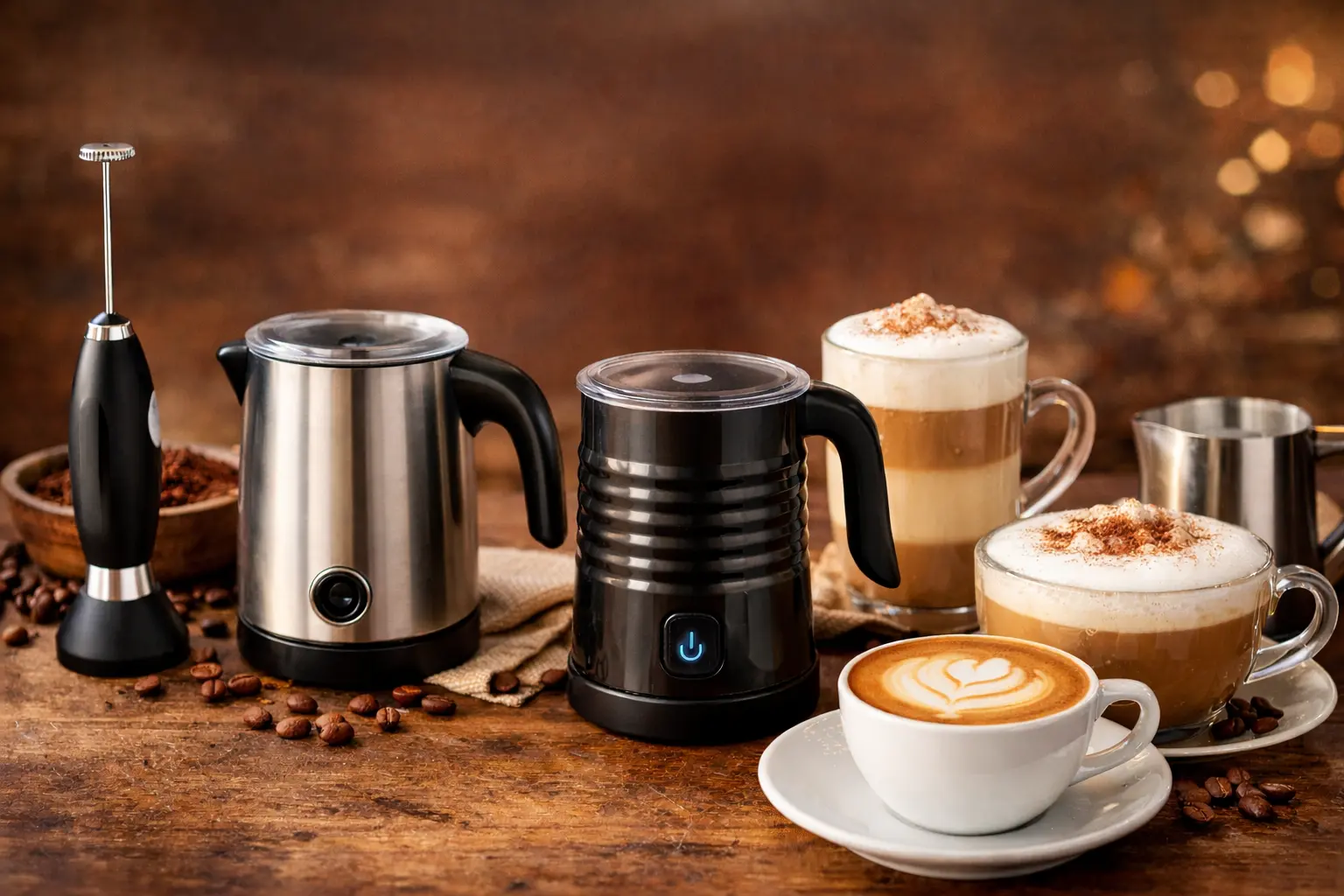
Quick Picks (Best Milk Frothers for Lattes)
- Best Overall Electric: Breville Milk Café
- Best Value Electric: Instant Milk Frother
- Best for Non-Dairy: Nespresso Aeroccino 4
- Best Handheld Wand: Zulay Milk Boss
- Best Manual Option: French press (dedicated to milk)
- Best “Steam Without Machine”: Bellman Stovetop Steamer
- Best Microfoam Upgrade: Subminimal NanoFoamer
- Best for Latte Art: Espresso machine steam wand (if you own one)
Table of Contents
What Makes a Milk Frother Great for Lattes?
For lattes, you’re not chasing “big foam.” You’re chasing microfoam: tiny, uniform bubbles suspended in heated milk, creating a glossy texture that pours smoothly and integrates with coffee instead of sitting on top. When the foam is right, your latte tastes sweeter, feels silkier, and stays cohesive down to the last sip.
A latte-ready frother should do three things well:
- Control aeration: Add just enough air early, then switch to mixing to refine bubbles.
- Hit the right temperature: Typically 135–150°F (57–65°C) for best sweetness + stability.
- Create stable structure: Especially important for oat/almond milks, where foam can collapse fast.
Microfoam vs. “Bubble Foam” (Fast Checklist)
Microfoam (Latte)
- Glossy, paint-like
- Small uniform bubbles
- Pours smoothly
- Integrates with coffee
Bubble Foam (Not ideal)
- Dry, airy, “meringue”
- Large bubbles
- Sits on top
- Separates quickly
Types of Milk Frothers Explained (And Who They’re For)
Milk frothers fall into four main categories. The “best” depends on how often you make lattes, your milk preference, and whether you want latte art-level texture.
Electric Automatic Frothers
These are the easiest path to consistent results. They usually use a spinning whisk (or magnetic impeller) and built-in heating. The best models offer different foam textures and stable temperature control.
- Best for: daily lattes, moka pot latte drinkers, non-dairy milks, busy mornings
- Tradeoff: higher cost and extra parts to clean
Handheld Wand Frothers
Affordable and portable, but you must heat the milk separately and manage the technique. Handheld wands can make decent latte foam, but it’s easier to accidentally create big bubbles.
- Best for: budget setups, travel, occasional lattes, small kitchens
- Tradeoff: more technique; microfoam quality varies
Steam Wands (Espresso Machines)
Steam wands are the gold standard for microfoam and latte art. They add air and heat simultaneously, and they can achieve truly glossy, pourable milk—when the machine is stable and the user’s technique is solid.
- Best for: espresso lovers, latte art, frequent milk drinks
- Tradeoff: cost + learning curve
Manual Methods (French Press, NanoFoamer, Pump Frothers)
Manual options can surprise you. A dedicated French press can create impressive foam, and newer tools like the NanoFoamer are designed specifically to mimic microfoam texture when paired with properly heated milk.
- Best for: hands-on users, microfoam upgrades without buying a full electric frother
- Tradeoff: you still need a heating method
Microfoam & Extraction Science: Why Milk Texture Changes the Latte
A latte isn’t just coffee + milk. It’s a structured beverage where extraction strength, milk sweetness, and foam bubble size decide whether it tastes thin, harsh, flat, or café-smooth. If your lattes taste “watery” or “bitter,” it’s often a combo problem: the coffee base is underpowered and the milk texture is wrong for integration.
The Three Variables That Make (or Break) Latte Texture
- Milk temperature: Heat unlocks perceived sweetness by changing how you experience lactose and aromatic compounds. Too cold tastes flat; too hot tastes dull and can scald.
- Bubble size: Smaller bubbles create a stable, creamy mouthfeel. Large bubbles feel dry and separate faster, leaving thin milk below.
- Coffee concentration: Lattes need a strong base (espresso, moka, or concentrated AeroPress). Weak coffee becomes “milk-flavored coffee,” not a latte.
Why 135–150°F Is the Sweet Spot
Most café-style milk drinks aim for a final milk temperature around 135–150°F (57–65°C). In that band, milk is hot enough to taste sweet and feel velvety, while still protecting foam stability. Push beyond ~160°F (71°C) and you’re more likely to get “cooked” flavor and weaker foam structure.
Microfoam’s “Paint” Texture Is a Physics Thing
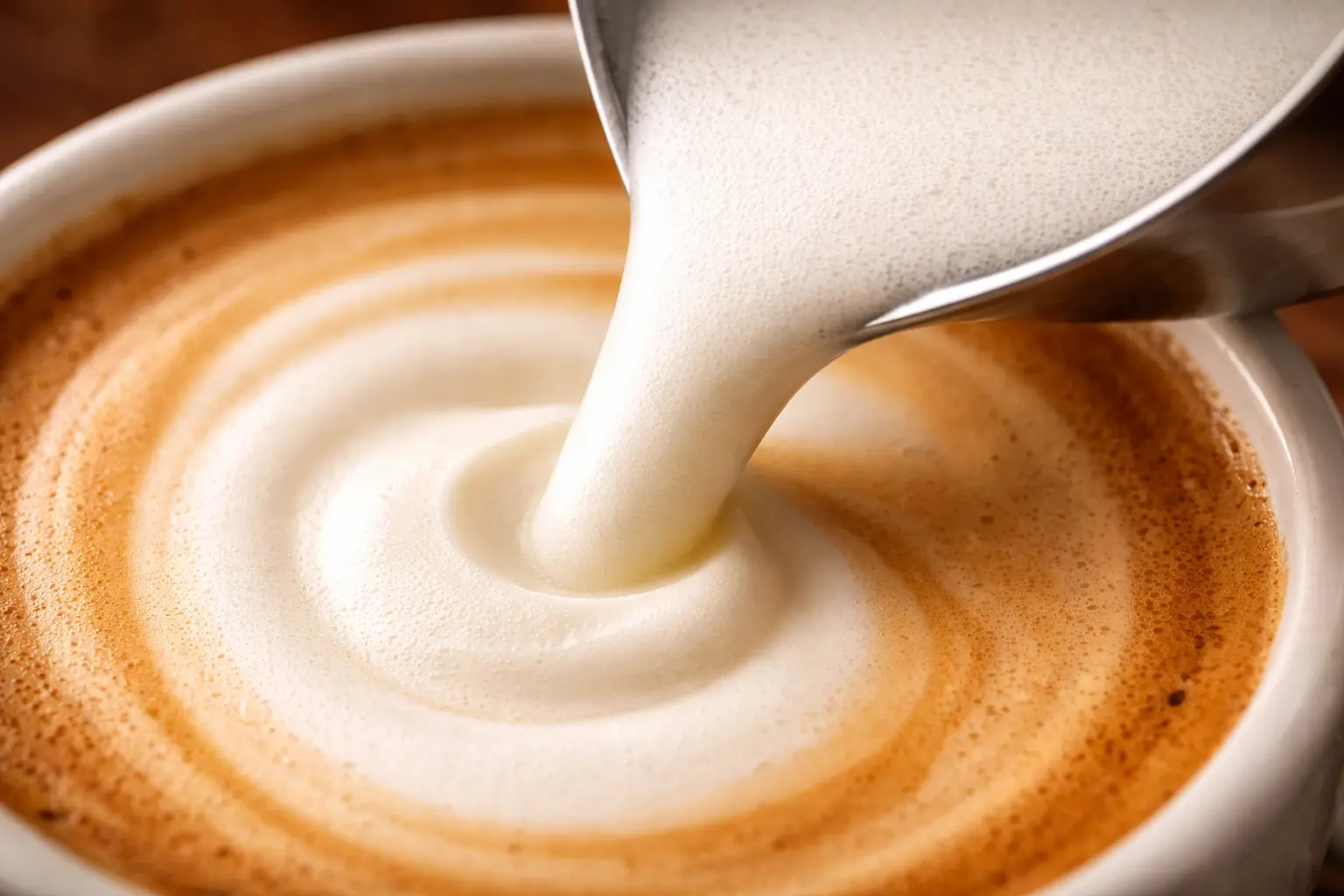
Microfoam works because tiny bubbles behave differently than big ones. Smaller bubbles have less buoyancy and rise slower, so the foam stays integrated. When you swirl the pitcher (or frother cup), you’re redistributing bubbles and creating a uniform emulsion-like structure—think “wet glossy foam,” not “dry airy foam.”
Latte Base Strength: The “Extraction” Piece
If your milk is perfect but your latte still tastes weak, your coffee base is likely under-extracted or under-concentrated. For latte-style drinks, aim for one of these:
- Espresso: classic 1:2 ratio (e.g., 18g in → 36g out) as a starting point
- Moka pot: strong, syrupy brew (avoid sputtering to reduce bitterness)
- AeroPress concentrate: shorter ratio recipe (more coffee, less water)
Related CoffeeGearHub reads: How to Dial In Coffee at Home (Drip, Pour-Over, Espresso) and Moka Pot vs AeroPress.
Best Milk for Latte Frothing (Dairy + Non-Dairy)
Milk choice is a huge lever. Two frothers can perform totally differently depending on fat content, protein structure, and added stabilizers (especially in non-dairy “barista” milks).
Dairy Milk (Most Forgiving)
- Whole milk: richest texture, most latte-art friendly, best mouthfeel
- 2% milk: a great balance of foam + drinkability, slightly lighter body
- Skim milk: can create a lot of foam, but often tastes thin and airy
Non-Dairy Milk (Choose Barista Blends)
For non-dairy lattes, barista editions are worth it. They’re formulated to foam and hold structure (often with fats + stabilizers). If your almond milk collapses immediately, it’s usually the milk—not your frother.
- Oat (barista): closest to dairy texture; best all-around non-dairy for lattes
- Almond (barista): lighter foam, can be less stable; needs gentle aeration
- Soy: can foam well but may split at high heat; keep temps moderate
- Coconut: tasty but variable foam; choose blends made for coffee
How to Froth Milk Like a Café (Any Method)
Regardless of frother type, café-quality results come from a simple workflow: aerate early, then refine and integrate. Your goal is a glossy milk texture that pours like warm paint.
Universal Microfoam Workflow (Works for Wands, NanoFoamer, French Press)
- Heat first: Warm milk to ~140°F (a microwave or small saucepan works). Avoid boiling.
- Aerate briefly: Add air for 2–5 seconds at the surface (just enough to expand volume slightly).
- Texture longer: Submerge the tip and vortex/mix for 10–20 seconds to refine bubbles.
- Tap + swirl: Tap the container to pop big bubbles, then swirl until glossy.
- Pour immediately: Microfoam is time-sensitive—don’t let it sit.
Quick Latte Ratios (Tastes Like a Café)
- Classic latte: 1 part espresso (or moka concentrate) + 3–5 parts steamed microfoam milk
- Stronger “flat white style”: 1 part espresso + 2–3 parts microfoam milk
- Iced latte: chill coffee base, then add cold foam (or lightly frothed cold milk) over ice
Best Electric Milk Frothers for Lattes (Top Picks)
Electric frothers are the easiest way to get consistent latte milk at home. If you make milk drinks multiple times a week, an electric frother typically delivers better value than repeatedly buying café drinks—especially if you pair it with a strong home-brew base.
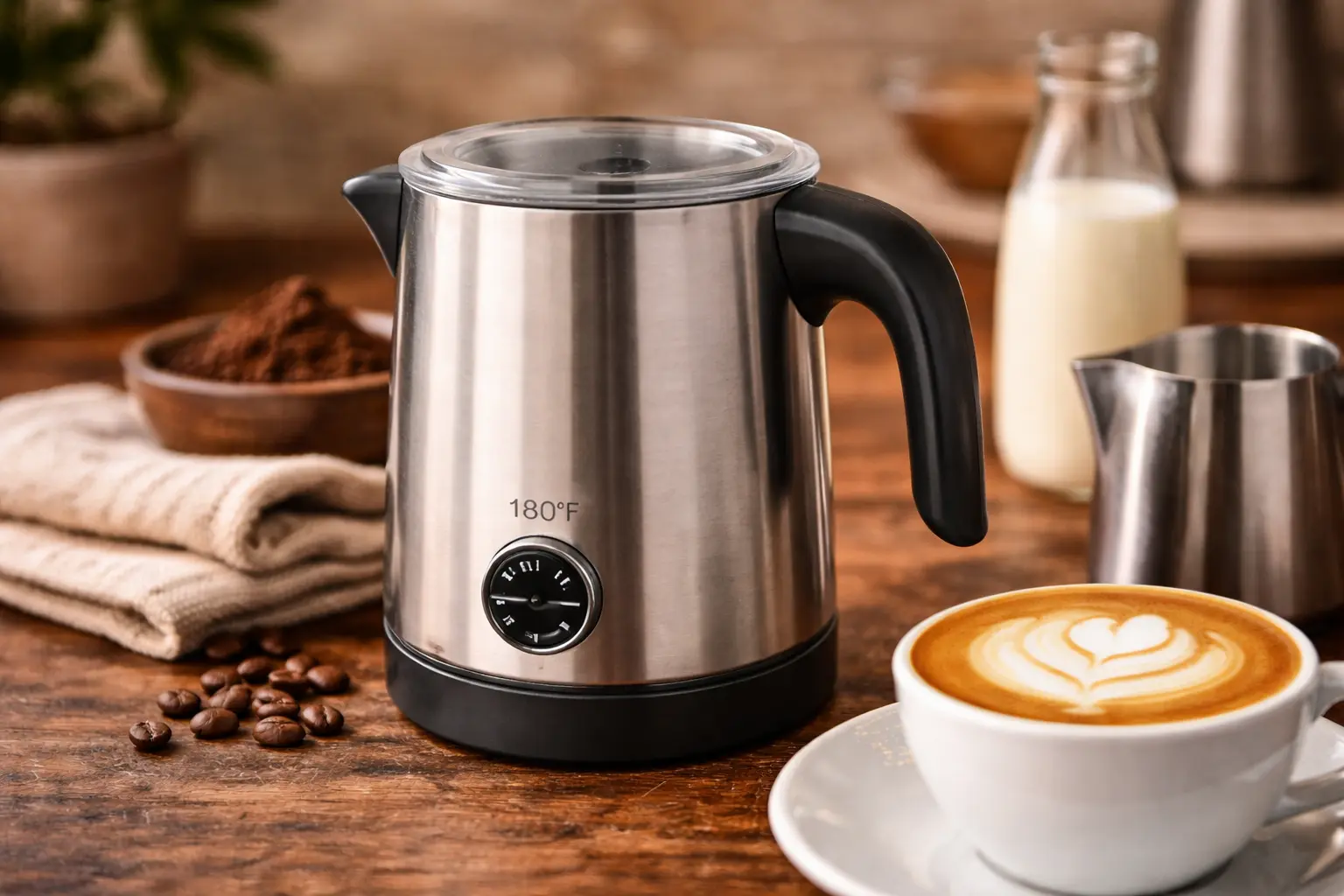
Breville Milk Café (Best Overall Electric for Latte Microfoam)
Why it wins: Induction-style heating and better temperature control make it easier to hit that sweet spot for silky, glossy milk. It’s one of the closest “steam-wand alternatives” for people who want café texture without upgrading to a full espresso machine.
- Best for: daily lattes, silky mouthfeel, oat milk barista blends
- Milk texture: smooth + cohesive (excellent integration)
- Ideal use case: moka pot lattes, AeroPress lattes, espresso setups without a strong wand
Affiliate note: As an Amazon Associate, CoffeeGearHub may earn from qualifying purchases.
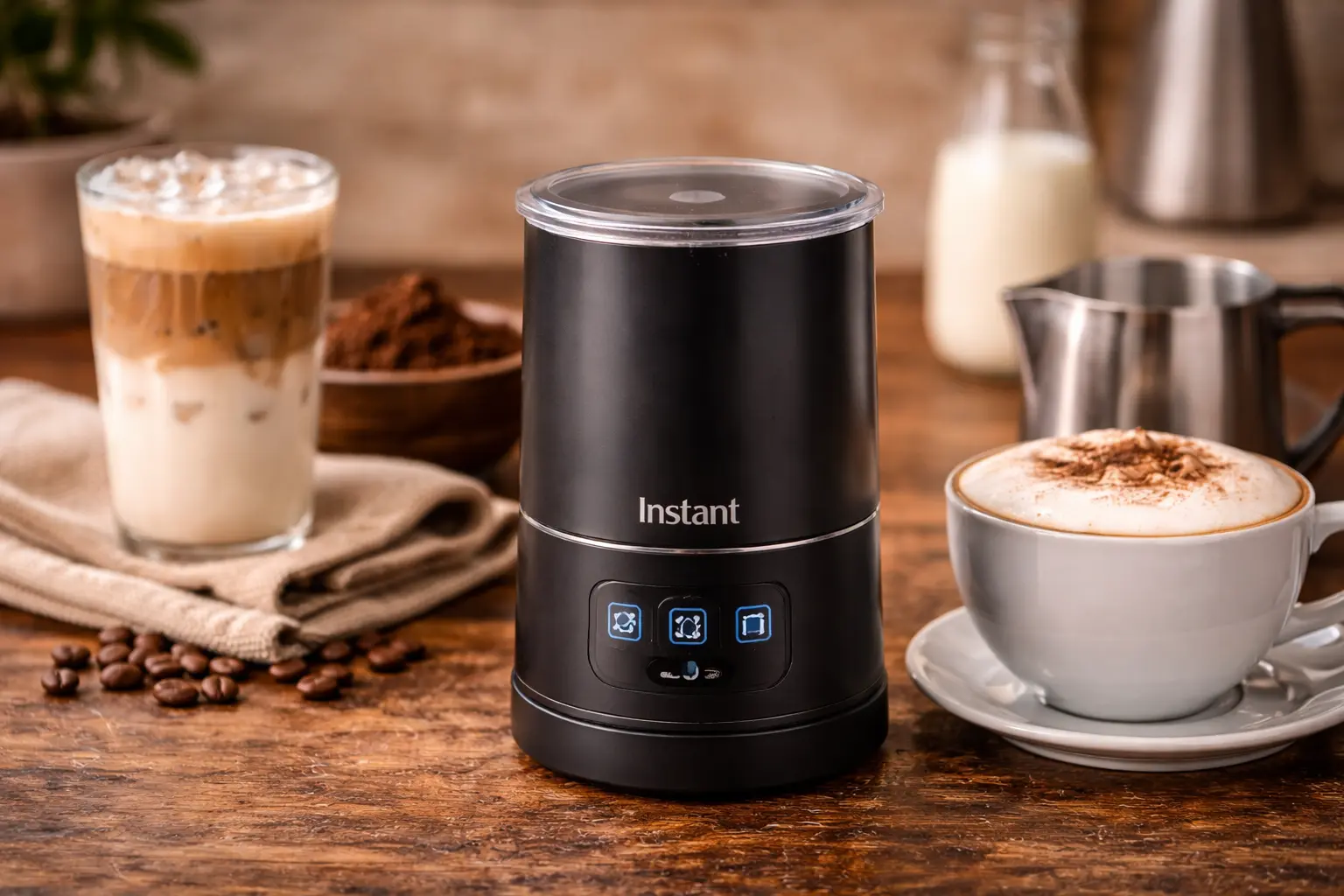
Instant Milk Frother (Best Value for Daily Lattes)
Why it’s a top value: It’s straightforward, consistent, and usually offers hot foam + hot milk settings. If you’re upgrading from a handheld wand, this is often the biggest “quality per dollar” jump.
- Best for: moka pot lattes, iced latte cold foam mode (if available), beginners
- Milk texture: smooth foam (not always latte-art perfect, but excellent for drinking)
- Watch for: capacity limits—don’t overfill
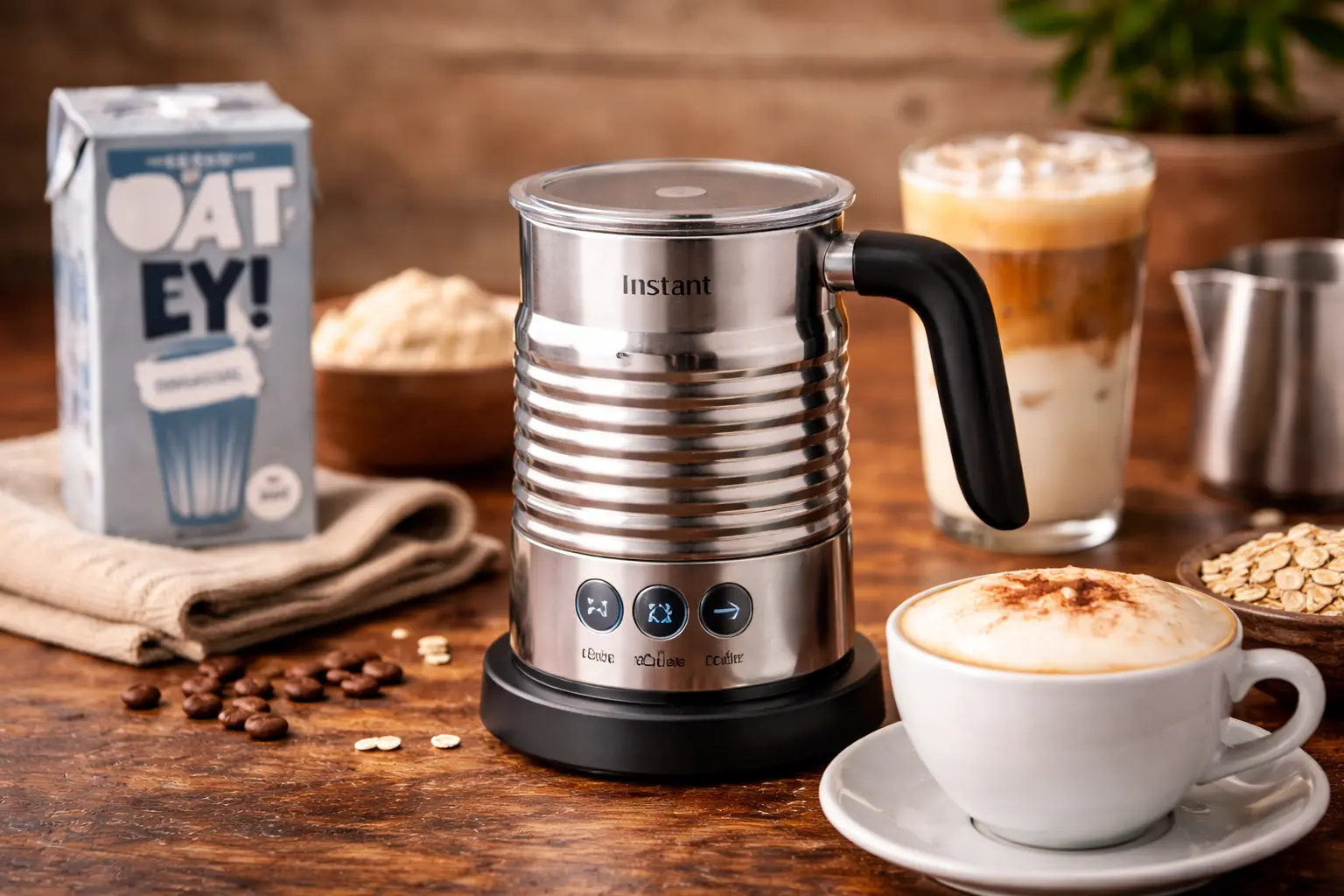
Nespresso Aeroccino 4 (Best for Non-Dairy Lattes)
Why it shines: Many users choose Aeroccino-style frothers specifically for oat and almond milk performance. It’s simple, repeatable, and great for both hot foam and cold foam drinks.
- Best for: oat milk barista blends, almond milk drinks, iced lattes
- Milk texture: stable foam with good consistency (especially for non-dairy)
- Tip: For best results, use barista cartons and avoid overheating
Other strong electric frothers to consider (depending on price/availability): Secura Automatic Milk Frother, Bodum Latteo (manual-ish but easy), and other stainless models with multiple discs. The key is to prioritize temperature control, easy cleaning, and consistent whisk performance over gimmicky presets.
Best Handheld Milk Frothers (Wands) for Lattes
Handheld wands are the budget choice, but they’re also the most technique-dependent. The secret is to heat the milk first, aerate briefly at the surface, then texture below the surface to refine bubbles. If you keep the wand at the surface the whole time, you’ll get “bubble foam.”
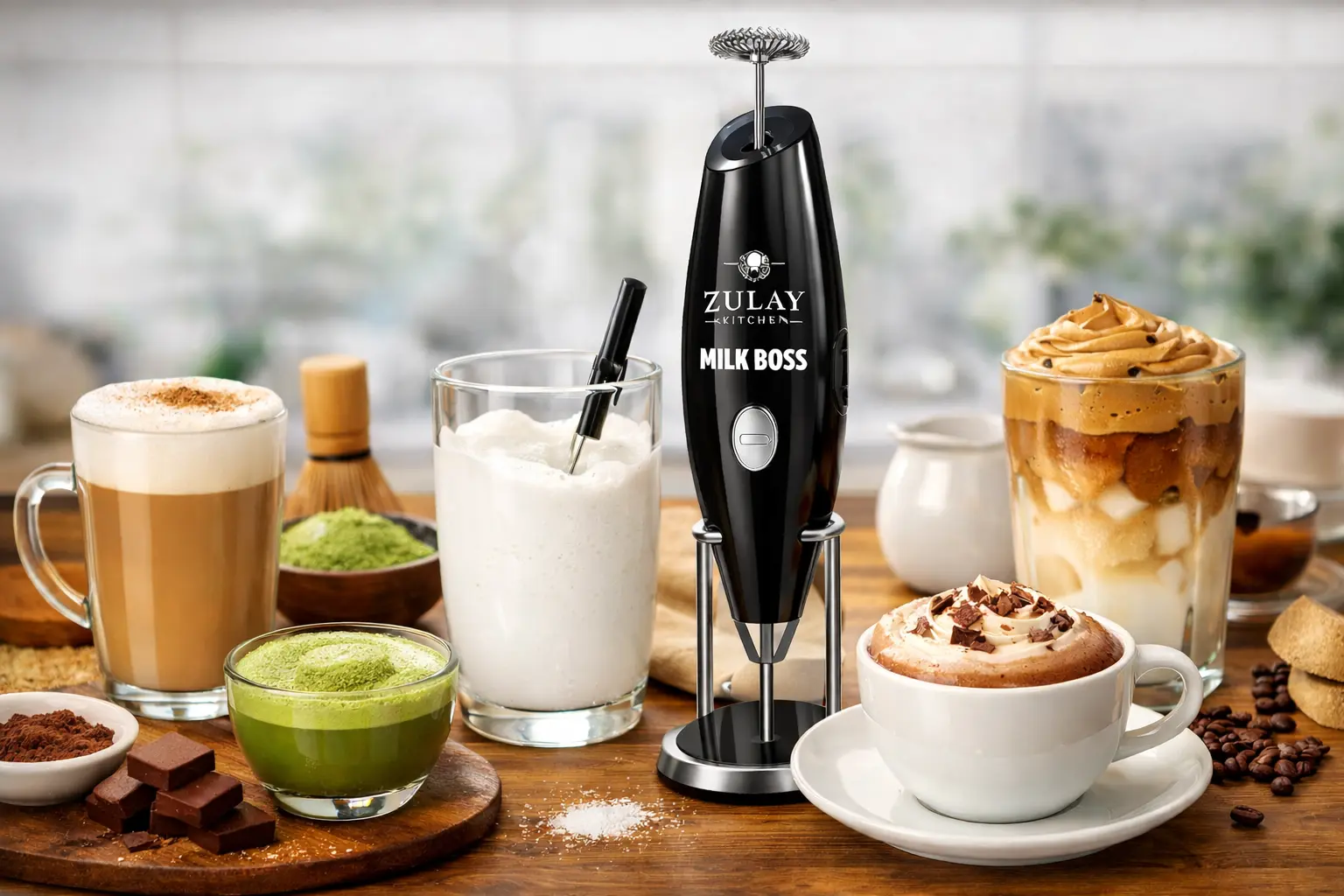
Zulay Milk Boss (Best Budget Wand for Quick Lattes)
Why it’s popular: It’s powerful for the price and fast for single-cup drinks. Pair it with a thermometer (or a consistent microwave routine) and you can get surprisingly good latte milk.
- Best for: moka pot lattes, quick cappuccino-style foam, travel
- Technique tip: 2–3 seconds at the surface, then 10–15 seconds deeper to refine
- Upgrade tip: Use a small stainless pitcher for better vortex control
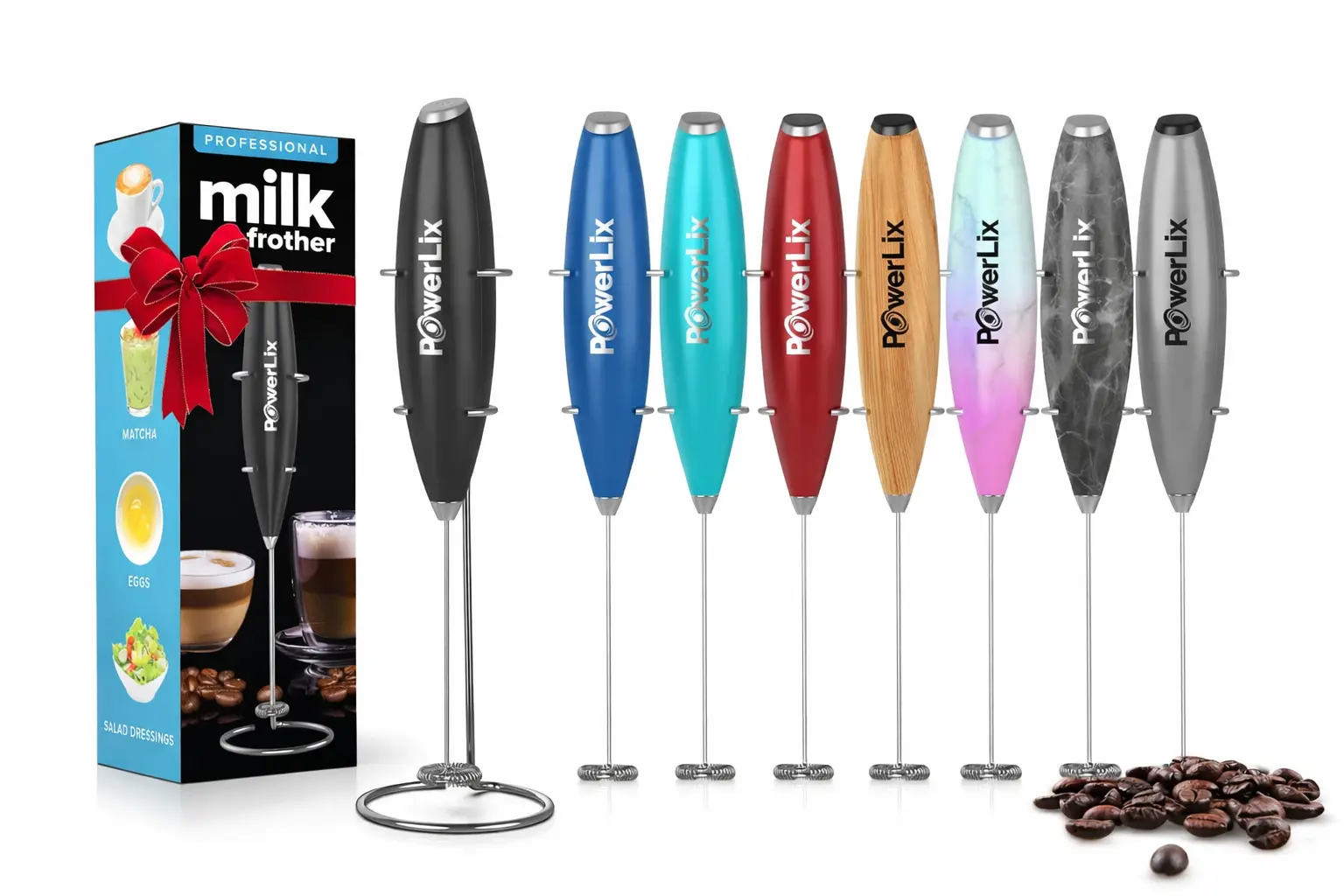
PowerLix Handheld Frother (Great Alternate Wand Pick)
Why it’s worth considering: Similar performance class to other popular wands, typically strong enough for small milk volumes and quick foam. Works best when you’re consistent about temperature and container shape.
- Best for: single mug lattes, quick foam, small kitchens
- Tip: Use 6–10 oz milk in a narrow pitcher for better control
Steam Alternatives: Café-Style Microfoam Without a Full Espresso Machine
If latte art and true microfoam are your top priorities, steam is the most direct path. You can get steam two ways: (1) from an espresso machine’s steam wand, or (2) from a stovetop steam tool like the Bellman. These require more attention and practice, but the results can be the most café-like.
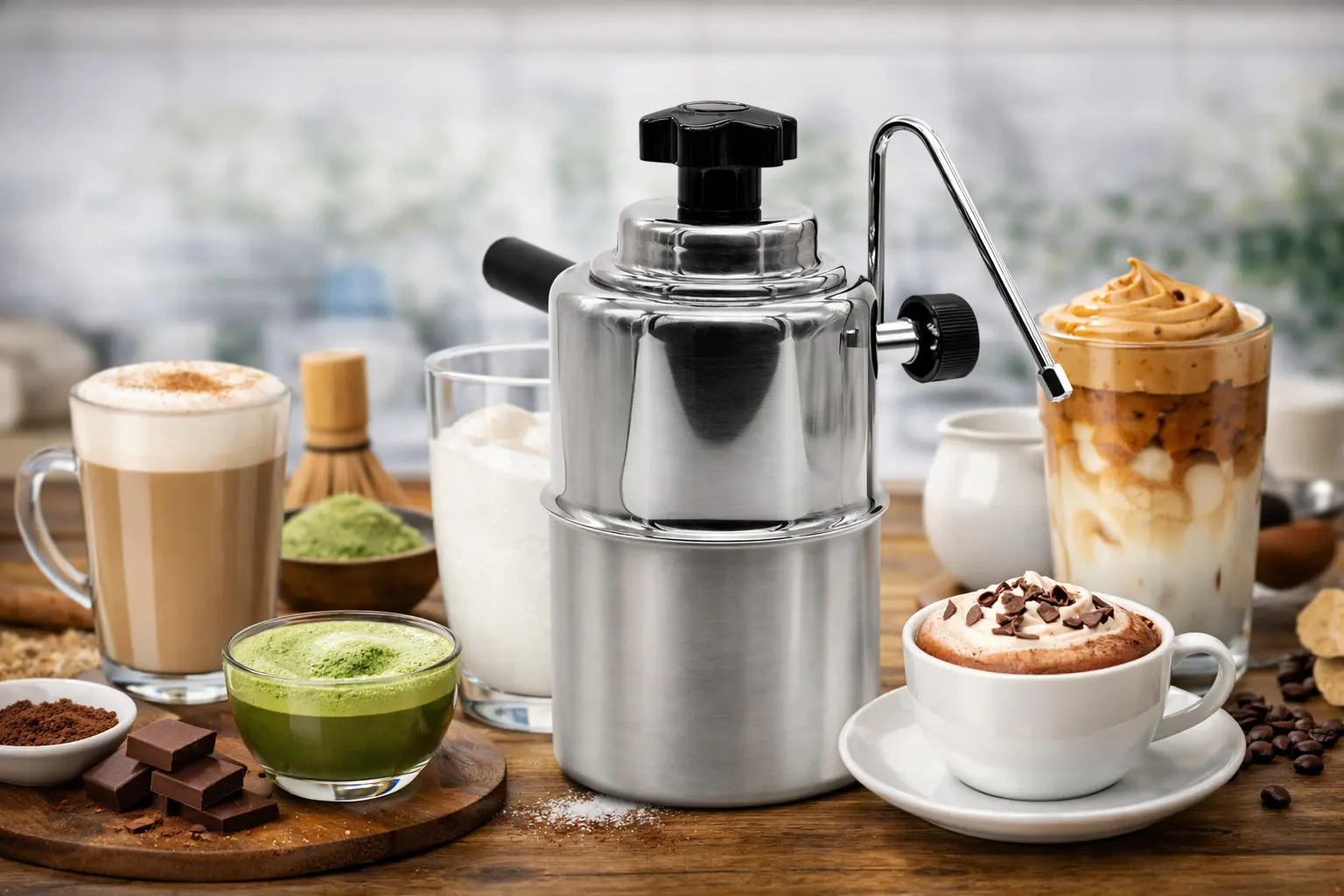
Bellman Stovetop Steamer (Best Steam Alternative)
Why it matters: A Bellman-style steamer can produce real steam pressure for microfoam. If you already make strong moka pot coffee and want café milk texture, this is a serious upgrade without buying an espresso machine.
- Best for: latte art goals, moka pot “café latte” builds, hands-on users
- Learning curve: moderate (steam timing + safety + technique)
- Tip: Start with whole milk and moderate temperature targets
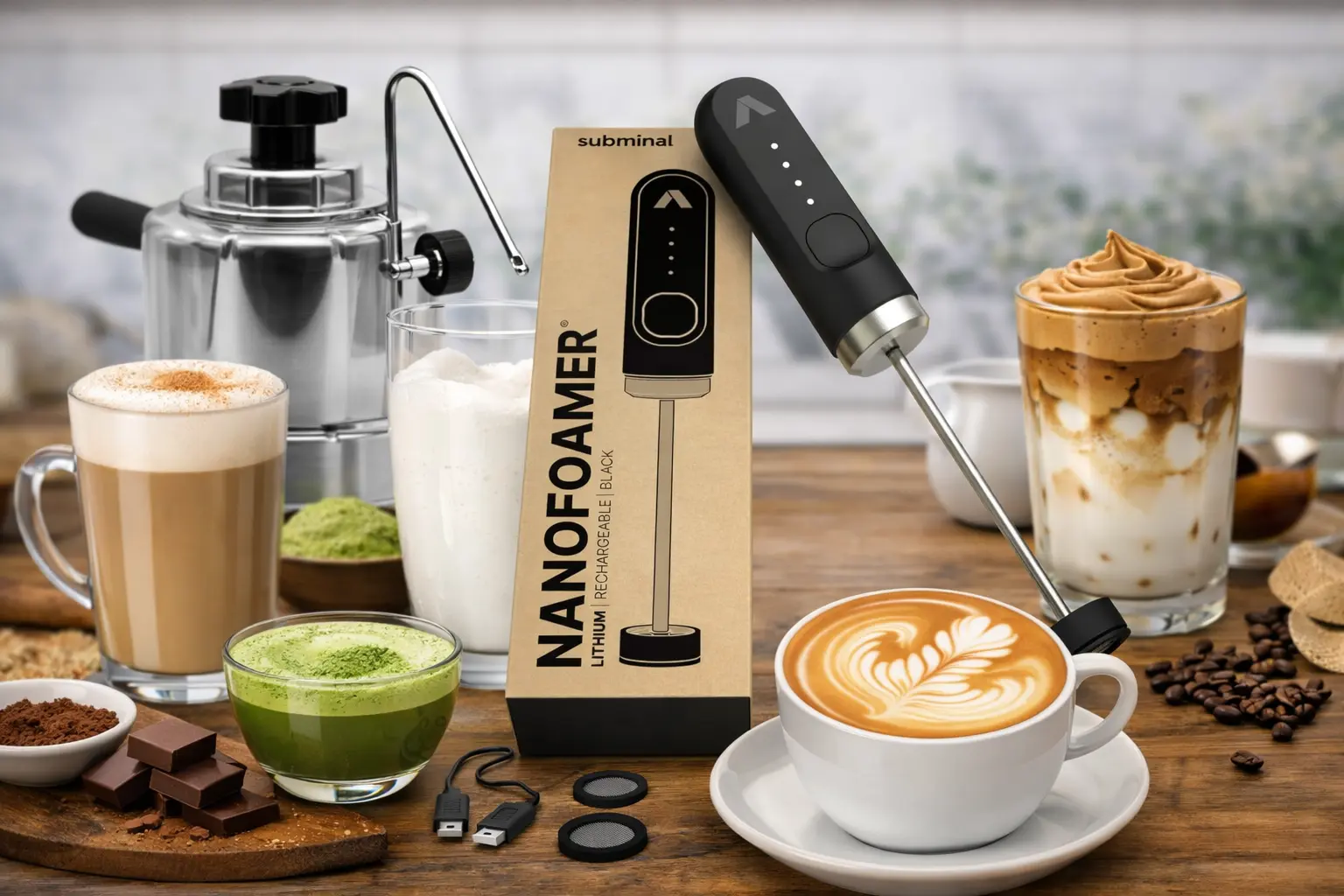
Subminimal NanoFoamer (Best Manual Microfoam Upgrade)
Why it’s different: Unlike basic wands that mainly add air, NanoFoamer-style tools are designed to create finer foam structure when paired with properly heated milk. If you’re chasing a “glossy pour” without a steam wand, this category is worth a look.
- Best for: microfoam-focused users, latte-art practice, premium manual setups
- Tip: Heat milk to ~140°F, then texture to glossy in 15–25 seconds
Best Milk Frother by Brew Method (Moka Pot, AeroPress, Espresso)
Matching your frother to your coffee base matters. A strong latte needs a strong base and milk texture that complements it.
| Brew Method | Recommended Frother Type | Why It Works |
|---|---|---|
| Moka pot | Electric frother (Instant / Breville) or Bellman | Moka is strong but can be sharp—silky microfoam smooths edges and improves sweetness. |
| AeroPress concentrate | Electric frother or NanoFoamer | AeroPress can be tuned for strength; glossy milk makes it latte-like instead of “milky coffee.” |
| Espresso | Steam wand (best) or premium electric | Espresso’s crema and oils integrate best with true microfoam (latte art-friendly). |
Related CoffeeGearHub reads: Moka Pot vs AeroPress, Moka Pot Accessories Guide, and Best Grinders for Moka Pot.
Manual Method Spotlight: Frothing Milk with a French Press
If you want an inexpensive method that can still produce satisfying latte foam, a dedicated French press is a surprisingly strong option. It won’t always produce competition-level microfoam, but it can create a creamy texture that feels far beyond “just warm milk.”
- Step 1: Heat milk to ~140°F (microwave or saucepan).
- Step 2: Pour into French press (don’t exceed half capacity).
- Step 3: Pump plunger 10–20 times (fast but controlled).
- Step 4: Tap + swirl, then pour immediately.
Cleaning & Maintenance (Keep Froth Consistent)
Milk residue is the enemy of performance. It ruins foam, adds off flavors, and shortens equipment life. The fastest way to keep your frother “like new” is to rinse immediately after use.
Electric Frothers
- Rinse right away (warm water) and wipe with a soft sponge.
- Remove whisk/disc and clean separately.
- Avoid abrasive scrubbers that damage nonstick interiors.
- Dry completely (especially the bottom contact points).
Handheld Wands
- Run the wand in a mug of warm water for 5–10 seconds immediately after frothing.
- Wipe shaft clean; avoid immersing the motor housing.
- Replace batteries when power drops (weak motors make big bubbles).
Troubleshooting: Why Your Milk Foam Is Flat (And How to Fix It)
If your lattes keep coming out disappointing, the fix is usually one of these levers: temperature, milk type, technique, or overfilling.
Problem: Big Bubbles / Dry Foam
- Cause: Too much aeration, wand held at surface too long
- Fix: Aerate 2–5 seconds max, then texture deeper to refine bubbles
Problem: Foam Collapses Quickly
- Cause: Milk too hot, or non-dairy milk not formulated for frothing
- Fix: Aim for 135–150°F and use “barista” non-dairy cartons
Problem: Milk Isn’t Sweet / Tastes Flat
- Cause: Milk too cold or coffee base too weak
- Fix: Heat milk properly and strengthen your base (espresso, moka, or AeroPress concentrate)
Recommended Accessories for Better Lattes (Small Upgrades, Big Results)
The “hidden” latte upgrades aren’t always expensive. A small pitcher, a thermometer, and a strong grinder can elevate your drinks faster than chasing another gadget.
- Milk thermometer: hit consistent sweetness (especially manual frothing)
- Stainless frothing pitcher: better swirl + pour control
- Heat diffuser (moka): smoother moka extraction → better latte base
- Burr grinder: stronger, cleaner coffee base (less bitterness)
- Scale: repeatable coffee strength (key for consistent lattes)
- Fresh beans: improve sweetness and reduce harshness
Bottom Line: Which Milk Frother Should You Buy?
If you want the simplest path to consistently good lattes, choose a quality electric frother. If your priority is true microfoam and latte art, consider steam (espresso wand or Bellman). If you want a low-cost option for occasional drinks, a handheld wand is fine—just commit to the technique.
- Best overall electric: Breville Milk Café
- Best value electric: Instant Milk Frother
- Best non-dairy: Aeroccino 4
- Best budget: Zulay Milk Boss
FAQs
What milk frother makes the best lattes at home?
For most people, a quality electric frother is the easiest path to consistent latte milk. If you want the most cafe-like texture without a full espresso machine, the Breville Milk Cafe class is a top pick. If you want latte art microfoam and already have the technique, a steam wand (or a Bellman-style steamer) can outperform most automatic frothers.
Can you make latte art with an electric milk frother?
Some electric frothers can produce pourable microfoam, but true latte art is easiest with a steam wand. If you’re aiming for latte art with an electric frother, focus on models that create glossy, wet foam and swirl the milk until it looks like wet paint before pouring.
What temperature should milk be for a latte?
A great target range is about 135–150°F (57–65°C). This is hot enough to taste sweet and feel velvety, while keeping foam stable. Overheating can flatten the foam and create a cooked flavor.
Why does my milk foam come out dry and bubbly instead of silky?
Dry foam usually means too much aeration or the tool stayed at the surface too long. Aerate briefly (2–5 seconds), then move the whisk/tip deeper to texture and refine the bubbles. Finish with a tap-and-swirl for a glossy finish.
What’s the best milk for frothing lattes?
Whole milk is the most forgiving and latte-art friendly. 2% milk is a great balance. For non-dairy, choose oat milk ‘barista’ blends for the most stable foam and a dairy-like texture.
Is oat milk good for latte frothing?
Yes—especially barista blends. Oat milk tends to foam more consistently than many other non-dairy options and delivers a creamy texture that works well with espresso and moka pot lattes.
What milk frother is best for moka pot lattes?
Moka pot lattes benefit from smooth microfoam that softens edges and improves sweetness. A value electric frother is often the best match, while a premium electric or steam tool is ideal if you want cafe-style texture. For moka basics and tuning, see /moka-pot-accessories/ and /best-grinders-for-moka-pot/.
Do handheld frothers work for lattes?
Yes, but technique matters. Heat milk first, aerate briefly, then texture deeper to refine bubbles. A narrow stainless pitcher makes it easier to create a controlled vortex and more latte-like foam.
Why does my non-dairy foam collapse fast?
Many non-dairy milks aren’t formulated for stable foam. Use barista blends, avoid overheating, and focus on refining bubbles (texture phase). Oat barista is usually the most stable choice.
How do I clean a milk frother to prevent bad taste?
Rinse immediately after use. Clean removable whisks/discs separately, wipe interiors gently, and avoid abrasive scrubbers on nonstick surfaces. For handheld wands, run the whisk in warm water right away and don’t submerge the motor housing.
What’s the best coffee base for lattes if I don’t have an espresso machine?
A moka pot or AeroPress concentrate can make an excellent latte base if brewed strong. For dialing in strength and balance, start with /how-to-dial-in-coffee-at-home/ and compare methods at /moka-pot-vs-aeropress/.