Best Super-Automatic Espresso Machines (2026): 4 Picks for Easy Café Drinks
Editorial standards: manufacturer specifications, published documentation, practical workflow, maintenance, cost, and product limitations are separated where relevant. CoffeeGearHub does not claim hands-on testing where it has not occurred.
At a glance
What this guide to the best super-automatic espresso machines covers
Four current super-automatic espresso machines compared by milk system, grinder and bean flexibility, drink menu, cleaning workload, and size, plus a buying framework for choosing between them.
Editorial analysis
The milk system and the cleaning routine matter more than the drink count
Super-automatic espresso machines grind, dose, tamp, brew, and often froth milk at the press of a button. Spec sheets compete on how many drinks they offer, but most households settle on two or three favorites within a week. What decides whether a super-automatic is pleasant to own is how the milk system is cleaned, how easy it is to change beans, and how much daily maintenance the machine asks for.
This guide focuses on those everyday differences. The four picks cover the most useful directions in the category: the simplest milk cleanup, a De’Longhi option with a fridge-friendly milk carafe, a machine built for switching between two coffees, and a premium Swiss machine with automated cleaning programs.
The 30-Second Answer
For most people, the Philips 3200 LatteGo is the best super-automatic espresso machine to start with: its two-part, tube-free LatteGo milk system is the easiest milk setup in this group to clean, and it covers the core espresso and milk drinks.
Choose the De’Longhi Magnifica Evo if you prefer a milk carafe you can store in the fridge, the De’Longhi Rivelia if your household drinks two different coffees (for example decaf and regular), and the Jura E8 if you want a premium machine with automated cleaning programs and a broader specialty menu.
Compare current options
Start with these representative choices
The Philips 3200 LatteGo is the simplest starting point. The Rivelia is the most flexible step up for households that switch between coffees.
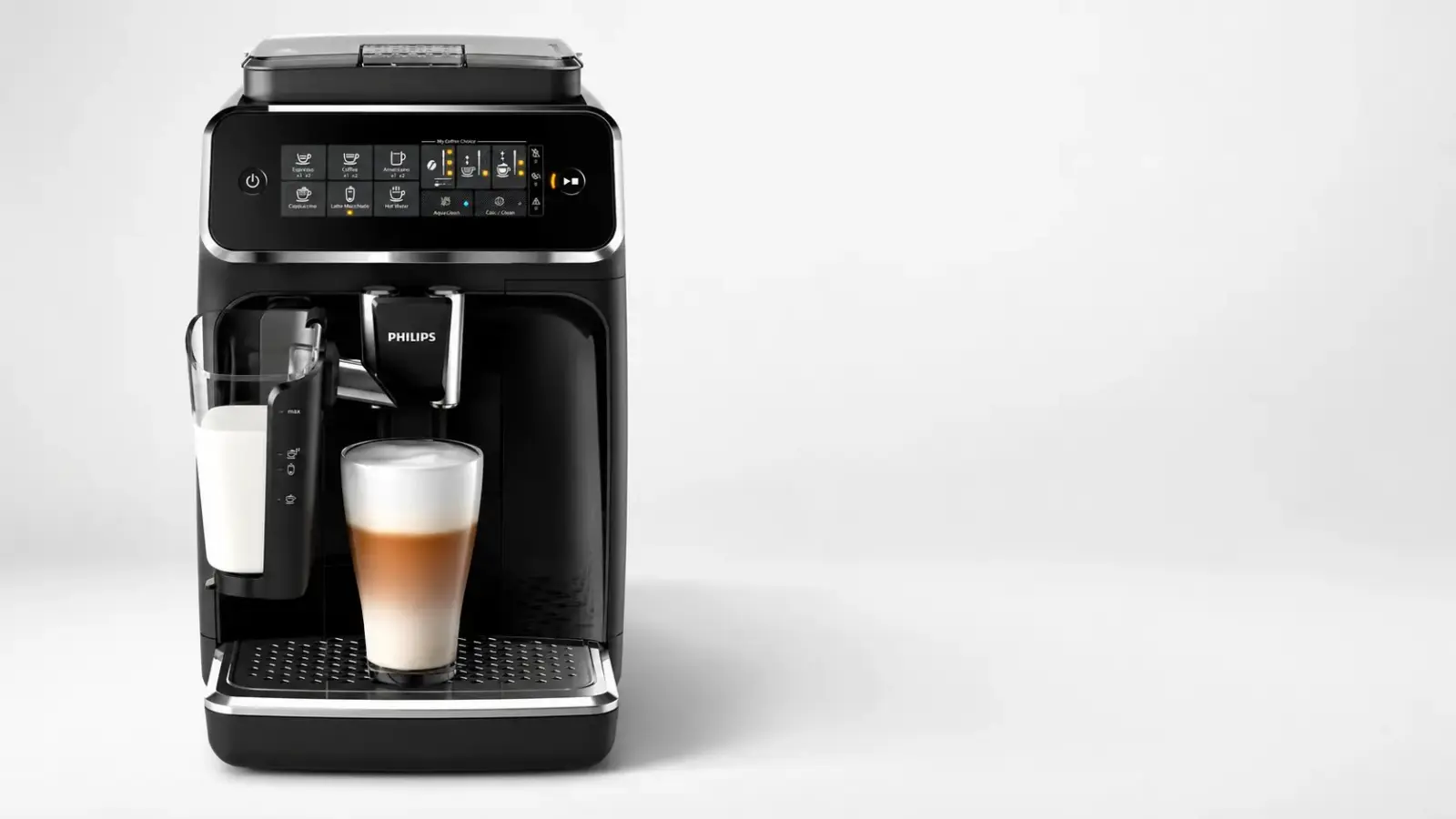
Philips 3200 LatteGo — best for most
Easy-clean, tube-free LatteGo milk system with a ceramic grinder and the core espresso and milk drinks.
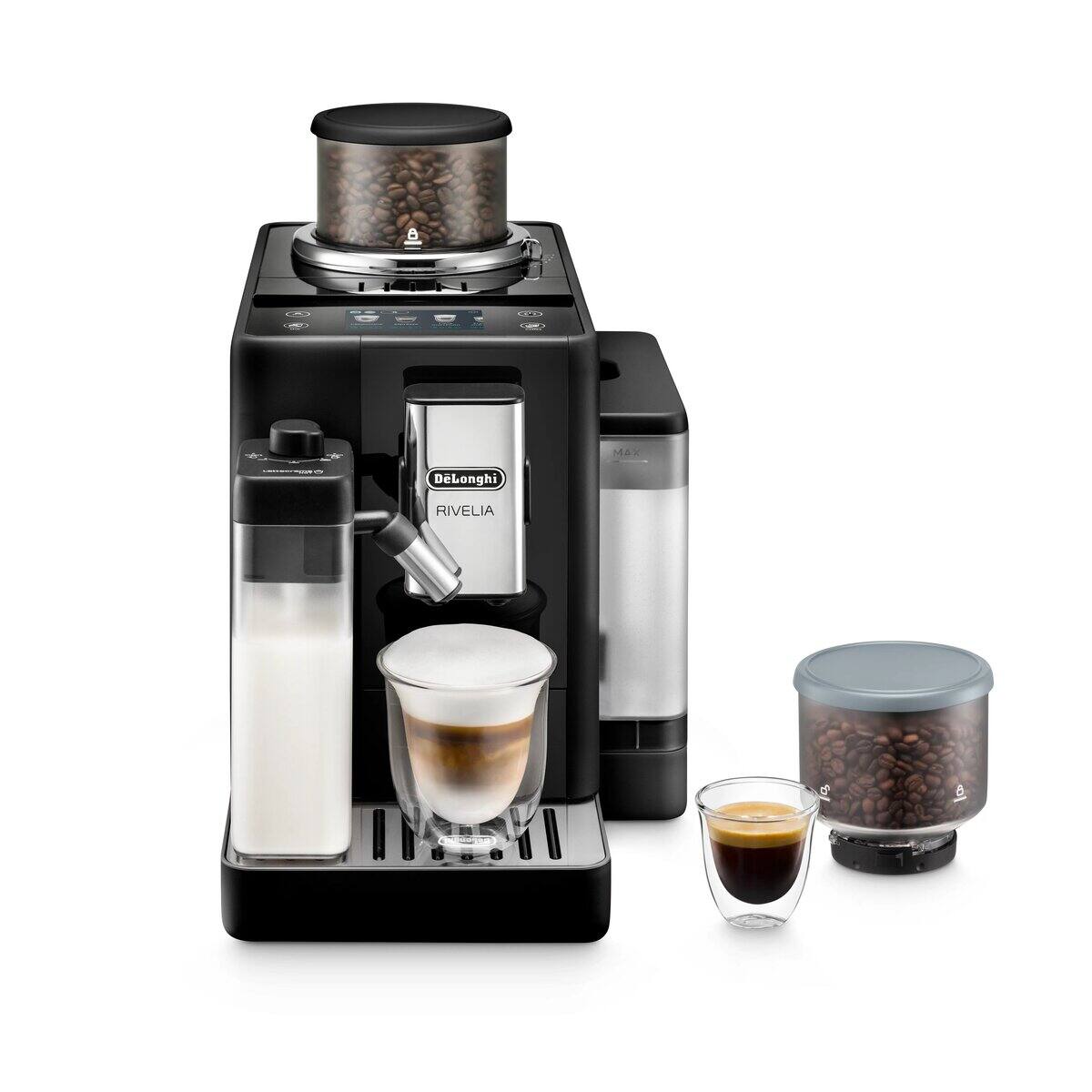
De’Longhi Rivelia — best for two coffees
Two interchangeable bean hoppers, per-bean grind settings, user profiles, and a large touch display.
Affiliate disclosure: Amazon links may earn CoffeeGearHub a commission at no additional cost to you. Prices and availability can change.
Quick Picks: Which Super-Automatic Fits Your Routine?
| Machine | Best for | Milk system | Standout feature |
|---|---|---|---|
| Philips 3200 LatteGo | Most households | LatteGo: 2 parts, no tubes | Fastest milk cleanup |
| De’Longhi Magnifica Evo | Milk-drink fans on a mid-range budget | LatteCrema carafe | Carafe stores in the fridge |
| De’Longhi Rivelia | Two-coffee households | LatteCrema Hot (cold foam with accessory) | Two swappable bean hoppers |
| Jura E8 | Premium, low-effort ownership | Fine foam frother with milk line | Automated cleaning programs |
1. Philips 3200 LatteGo: Best Super-Automatic for Most People
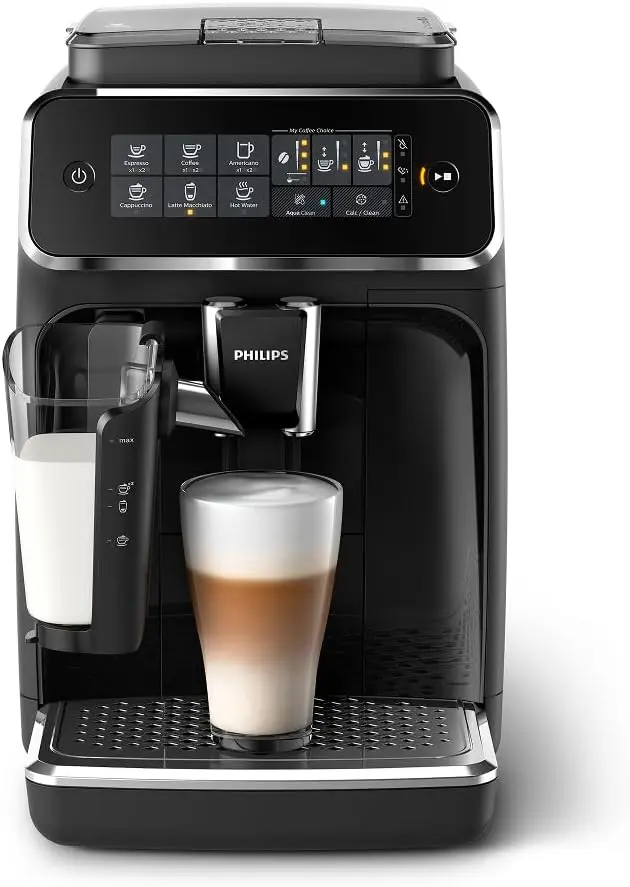
The Philips 3200 LatteGo earns the top spot because it makes the most common super-automatic chore, cleaning the milk system, unusually simple. Philips describes LatteGo as a two-part milk system with no tubes that can be cleaned in as little as 15 seconds. There is no internal milk line to purge or flush.
Philips lists espresso, coffee, americano, cappuccino, latte macchiato, and hot water on the touch display. The grinder is fully ceramic with 12 adjustment steps, the brew group is removable for rinsing, and the AquaClean filter is rated to remove the need for descaling for up to 5,000 cups when replaced as prompted.
Trade-offs: the drink menu is shorter than premium machines, and there are no user profiles or app. Read our full Philips 3200 LatteGo review for the complete picture.
2. De’Longhi Magnifica Evo: Best for Carafe-Style Milk Drinks
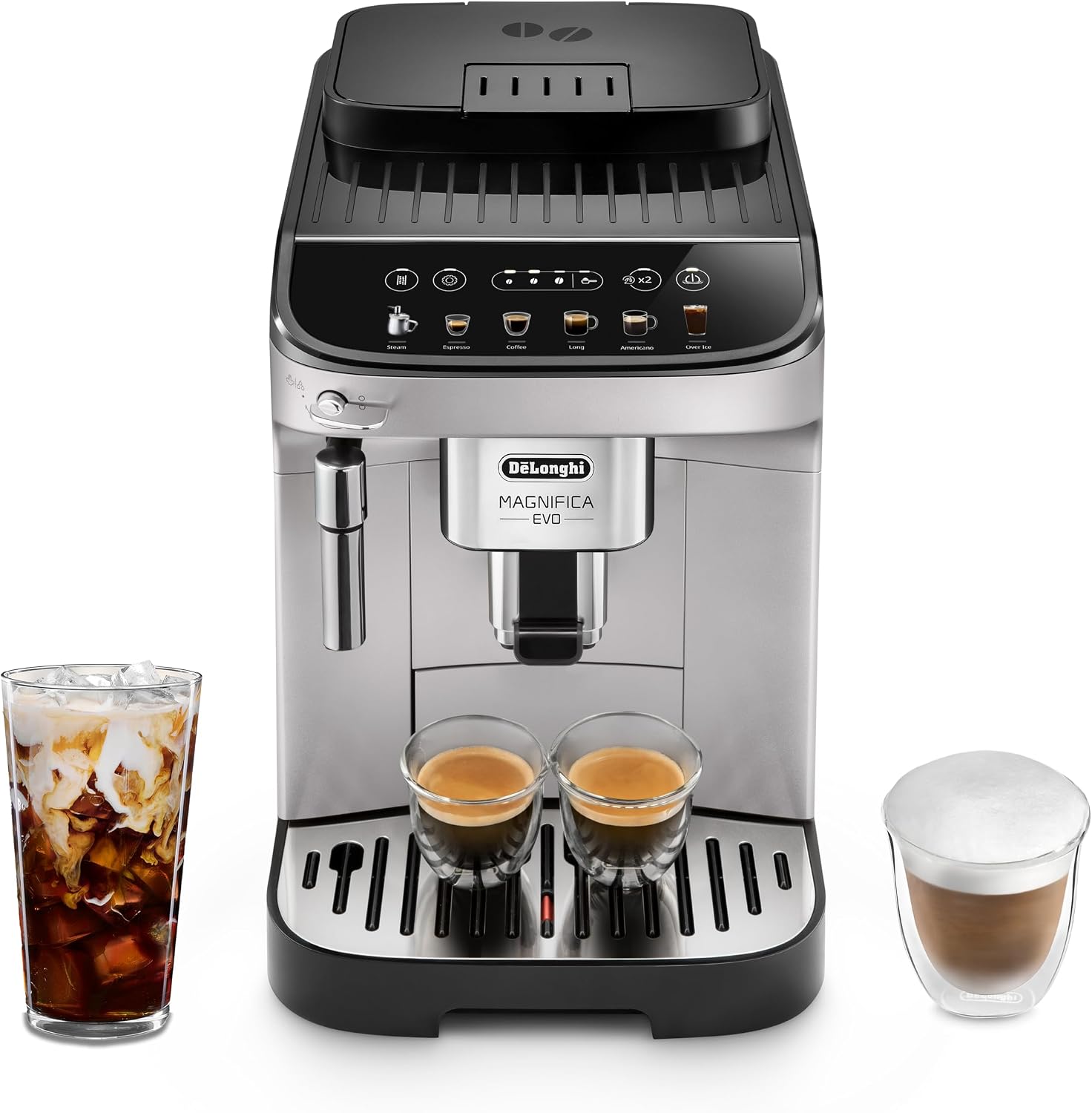
The Magnifica Evo (ECAM29084SB) is De’Longhi’s mid-range route into automatic milk drinks. De’Longhi lists seven one-touch options: espresso, coffee, cappuccino, latte macchiato, iced coffee, hot water, and a customizable “My Latte.” The LatteCrema system froths milk or milk alternatives from a carafe that can be removed and stored in the refrigerator between uses.
The conical burr grinder offers 13 settings, and De’Longhi lists a 60.9-ounce water tank and an 8.8-ounce bean hopper. Removable, dishwasher-safe parts keep the routine manageable. The iced coffee option is a practical bonus for households that drink iced drinks year-round.
Trade-offs: a carafe adds a few more parts to rinse than LatteGo, and the menu is smaller than on the Rivelia or Jura. It is a good fit if you like keeping milk ready in the fridge for several drinks a day.
3. De’Longhi Rivelia: Best for Households That Switch Beans
Most super-automatics hold one coffee at a time, which is awkward when one person drinks decaf or two people prefer different roasts. The Rivelia solves that with De’Longhi’s Bean Switch system: two interchangeable bean hoppers. Its Bean Adapt feature lets you fine-tune grind size, dose, and temperature for each coffee.
De’Longhi announced the U.S. model with 18 one-touch drinks, a 3.5-inch full-touch display, up to four user profiles, and LatteCrema Hot milk frothing. An optional LatteCrema Cool accessory adds cold-foam recipes.
Trade-offs: it is a larger investment than the Philips or Magnifica Evo, and the extra flexibility only pays off if you actually rotate coffees or users. Single-coffee households can save money elsewhere.
4. Jura E8: Best Premium Super-Automatic
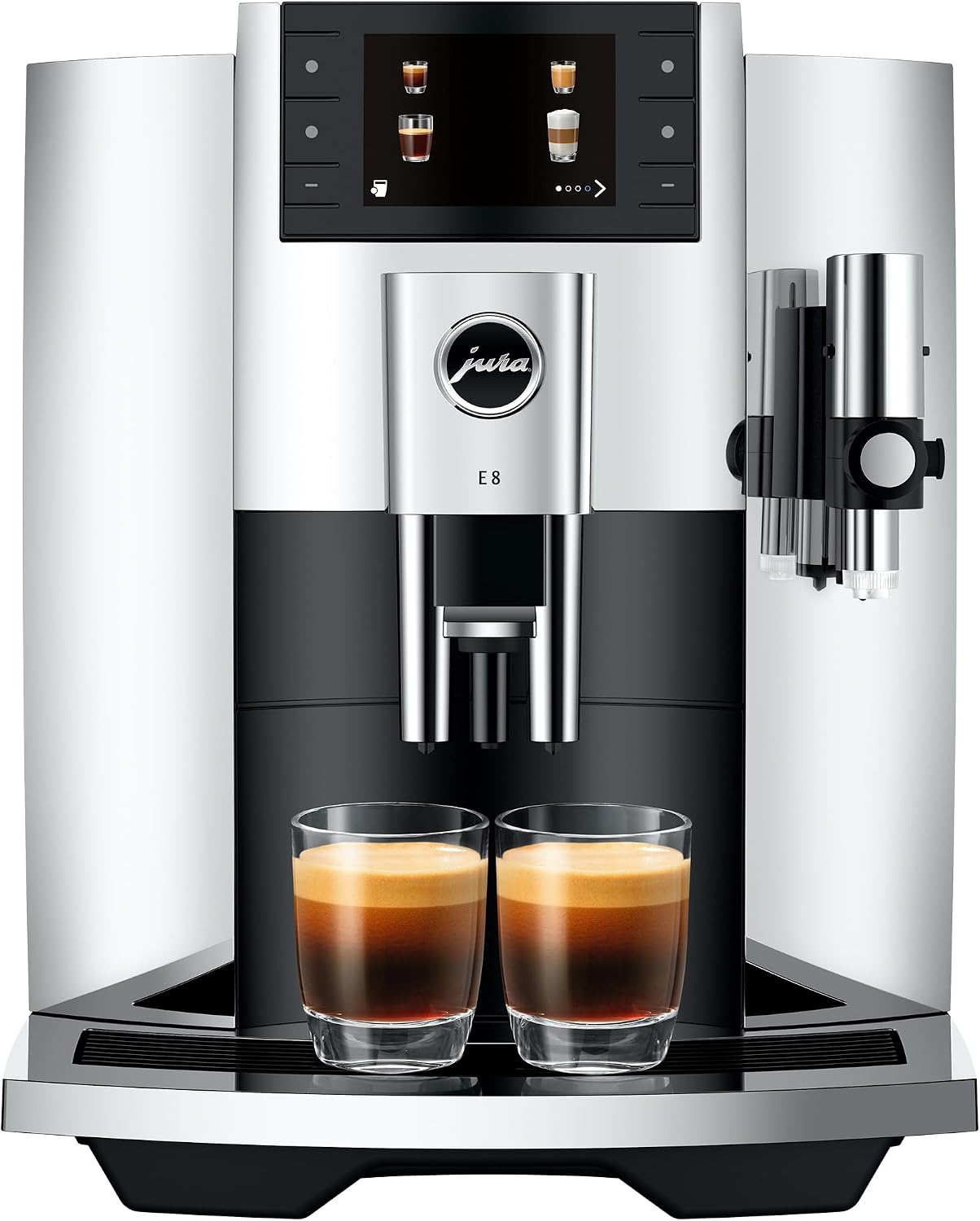
Jura’s E8 is the premium pick for buyers who want a polished, low-effort machine and a broad drink menu. Jura lists 16 specialties, including ristretto, espresso doppio, flat white, cappuccino, and latte macchiato. Its Pulse Extraction Process (P.E.P.) is designed to optimize extraction for short specialties such as ristretto and espresso, and the AromaG3 grinder handles the beans.
Milk runs through Jura’s professional fine foam frother via a milk line, so the milk system relies on Jura’s integrated rinsing and cleaning programs rather than hand-washing a carafe. Jura lists a 64-ounce water tank, a 10-ounce bean container, a 2.8-inch color display, and compatibility with its J.O.E. app.
Trade-offs: it is the most expensive pick, the brew unit is not designed for routine removal like the Philips and De’Longhi machines, and you should follow Jura’s cleaning and filter routines closely. In return, the daily workflow is about as hands-off as super-automatics get.
As an Amazon Associate, CoffeeGearHub earns from qualifying purchases. Model numbers and bundles vary by retailer, so confirm the exact version before buying.
How to Choose a Super-Automatic Espresso Machine
1. Start with the milk system
If you mostly drink lattes and cappuccinos, the milk system shapes daily life more than anything else. Tube-free systems like LatteGo are the quickest to rinse. Carafe systems like LatteCrema store milk in the fridge between drinks. Milk-line frothers like Jura’s rely on automated cleaning programs. Black-coffee drinkers can prioritize grinder quality and drink size instead.
2. Decide how often you change beans
A single hopper means old beans stay in the grinder after you refill with something new. If you regularly switch between decaf and regular, a two-hopper machine like the Rivelia avoids that problem.
3. Be honest about maintenance
All super-automatics need regular cleaning, water filters or descaling, and occasional brew-group care. Machines with removable brew groups let you rinse the brewing unit by hand; others rely on built-in cleaning cycles. Our espresso machine maintenance guide and descaling guide cover the routine.
4. Measure your counter and cabinets
Super-automatics are deep machines, and many need clearance above for the bean hopper and water tank. Check depth and height before buying, not just width.
5. Ignore the drink count beyond your favorites
A machine with 16 or 18 drinks is not automatically better than one with six. Check that your two or three everyday drinks are covered well, and treat the rest as a bonus.
What Daily Ownership of a Super-Automatic Looks Like
Before choosing among the best super-automatic espresso machines, it helps to picture an ordinary week. The one-touch convenience is real, but each machine still asks for a short routine that keeps coffee tasting fresh and the internals healthy.
Every day: refill the water tank with fresh water, empty the drip tray and grounds container when prompted, and rinse the milk system after milk drinks. With LatteGo that means rinsing two parts; with a carafe, rinsing the lid and spout; with a milk-line frother, running the rinse program. Most machines also run a short rinse when they switch on or off, so keep a cup under the spouts.
Every week: on machines with a removable brew group, slide it out and rinse it under running water, then let it air-dry. Wipe the inside of the brewing chamber where coffee dust collects. Check the bean hopper for oily residue if you use darker roasts.
Every month or two: run the manufacturer’s cleaning or degreasing cycle, replace the water filter when the machine asks, and descale when prompted. Following the filter schedule is the easiest way to reduce descaling, and skipping it is the most common cause of avoidable repairs.
None of this takes long, but it is the difference between a machine that tastes good for years and one that slowly drifts toward bitter, flat coffee. If the routine sounds like too much, a capsule machine may be a better fit; see our best Nespresso machines guide.
Choosing Beans for a Super-Automatic Espresso Machine
The beans you use have a bigger effect on a super-automatic than on almost any other brewer, because you cannot compensate with technique. Three habits make a noticeable difference.
Avoid very oily, dark beans. Beans with a shiny, oily surface can stick in the hopper and grinder of a super-automatic and leave residue that turns rancid. Medium and medium-dark roasts with a mostly dry surface flow more reliably and still taste rich in milk drinks. Our best coffee beans for espresso guide covers suitable options.
Buy fresh whole beans in amounts you will use within a few weeks. Stale beans produce thin crema and flat flavor no matter how good the machine is. Keep the hopper only as full as you need, and store the rest in an airtight container; see how to store coffee beans.
Adjust the grind gradually. Most super-automatics only let you change the grind setting while the grinder is running, one step at a time. Make one adjustment, brew two or three drinks, and taste before changing again. Pre-ground coffee can usually go through a bypass chute for an occasional decaf, but whole beans give far better results.
Super-Automatic vs Semi-Automatic: Which Should You Buy?
A super-automatic trades control for convenience. You cannot adjust tamp, dose, or extraction as precisely as on a semi-automatic, and the espresso style is usually softer than a well-dialed shot from a portafilter machine. In exchange, every drink is consistent and takes no skill to make.
If you enjoy the process of making espresso, or want café-style microfoam you control, a semi-automatic such as the Breville Bambino Plus may suit you better; see our Bambino Plus review. Our manual vs automatic espresso machines guide explains the full spectrum.
Super-Automatic Espresso Machine Comparison
| Philips 3200 LatteGo | De’Longhi Magnifica Evo | De’Longhi Rivelia | Jura E8 | |
|---|---|---|---|---|
| One-touch drinks | 6 | 7 | 18 | 16 |
| Milk system | LatteGo (2 parts, no tubes) | LatteCrema carafe | LatteCrema Hot | Fine foam frother |
| Grinder | Ceramic, 12 steps | Conical burr, 13 settings | Bean Adapt per-bean tuning | AromaG3 |
| Bean hoppers | 1 (275 g) | 1 (8.8 oz) | 2 interchangeable | 1 (10 oz) |
| Water tank | 1.8 L | 60.9 oz | See listing | 64 oz |
| User profiles / app | No | No | Up to 4 profiles | J.O.E. app compatible |
| Removable brew unit | Yes | Removable parts | Removable parts | No (automated cleaning) |
Specification note: Figures are from manufacturer product information and announcements. Drink menus and accessories can differ by model number and region.
Editorial bottom line: For most households, the best super-automatic espresso machine is the one whose milk system and cleaning routine you will happily repeat every day. The Philips 3200 LatteGo is the easiest place to start. Step up to the Rivelia for two-coffee flexibility, or the Jura E8 for a premium, highly automated experience.
As an Amazon Associate, CoffeeGearHub earns from qualifying purchases. Prices and availability can change at any time.
Frequently Asked Questions
What is a super-automatic espresso machine?
A super-automatic espresso machine grinds beans, doses, tamps, and brews automatically at the press of a button. Most also froth milk automatically for lattes and cappuccinos.
Are super-automatic espresso machines worth it?
They are worth it if you want consistent espresso and milk drinks with no learning curve and you will keep up with cleaning. If you enjoy hands-on espresso making, a semi-automatic machine offers more control.
Which super-automatic is easiest to clean?
Among these picks, the Philips 3200 LatteGo has the simplest milk cleanup thanks to its two-part, tube-free LatteGo system, which Philips says can be cleaned in as little as 15 seconds.
Can super-automatic machines use decaf and regular beans?
Yes, but with a single hopper you must empty or run through the old beans first. The De’Longhi Rivelia’s two interchangeable hoppers make switching between decaf and regular much easier.
Do super-automatic machines need descaling?
Yes. Using the manufacturer’s water filter can reduce how often, and Philips rates its AquaClean filter for up to 5,000 cups without descaling when replaced as prompted, but every machine needs regular maintenance.
Sources and Further Reading
Specifications and features were checked against manufacturer information: the Philips Series 3200 LatteGo specification sheet, De’Longhi’s Magnifica Evo product page and Rivelia U.S. announcement, and Jura’s E8 product page.
CoffeeGearHub product shortlist
Continue with related products on CoffeeGearHub
Review product categories and current verified merchant offers on CoffeeGearHub before leaving the site.
Continue Learning
Espresso machine guides