
V60 vs Chemex vs Kalita Wave: Which Pour-Over Brewer Fits Your Routine?
Editorial standards: brewer design, published specifications, workflow, filter format, capacity, cost, maintenance, and product limitations are separated where relevant.
At a glance
What this comparison covers
The V60, Chemex, and Kalita Wave can all make excellent pour-over coffee, but they ask different things from the brewer. This guide compares how their geometry and filters affect workflow, cup profile, grinder sensitivity, batch size, ongoing cost, and the amount of technique required.
Editorial analysis
Choose around workflow, not a universal winner
The V60 gives the user the most control and exposes technique most clearly. The Chemex combines thick filtration with larger-batch convenience. The Kalita Wave builds more flow resistance into the brewer and is easier to repeat. The useful question is which design matches your grinder, batch size, flavor preference, and tolerance for active technique.
Start With Brewer Design, Not Brand Preference
The V60, Chemex, and Kalita Wave are all manual pour-over brewers, but they do not create the same brewing environment. Their bed geometry, drainage, and filter design change how easily water moves through the coffee and how much technique the brewer asks from you. That is why the useful comparison begins with mechanics rather than aesthetics.
The V60 uses a steep cone and one large drain opening, which gives the brewer relatively little built-in flow resistance. The Chemex also uses a cone, but its bonded filters are much thicker and slow the system in a different way while removing more oils and fine material. The Kalita Wave uses a flat bed with three smaller drain holes, encouraging more even saturation across the coffee bed and reducing the amount of flow control the user must create with pouring technique alone.
| Design factor | V60 | Chemex | Kalita Wave |
|---|---|---|---|
| Bed shape | Steep 60° cone | Shallower cone | Flat bottom |
| Drainage | One large opening | Conical outlet with thick-filter resistance | Three small holes |
| Filter character | Thin paper | Thick bonded paper | Standard Wave paper |
| What the design emphasizes | User control and clarity | Clean filtration and batch brewing | Even saturation and repeatability |
The brewer does not determine extraction by itself. Grind size, water temperature, dose, ratio, and pouring pattern still do most of the work. What changes is how much the brewer design amplifies mistakes or smooths them out. That distinction matters more in daily use than whether one brewer is more popular.
Hario V60: Maximum Control, With More Technique Attached
The V60 is the most open of the three systems. Its single large drain hole allows water to move quickly when the grind is coarse or the pour is aggressive, but it can also slow dramatically when fines migrate into the filter. That responsiveness is the reason experienced brewers like it: changes in grind, agitation, and pouring pattern are easy to taste. The same responsiveness is also why it can be frustrating when the grinder is inconsistent or the pouring routine changes from brew to brew.
When it is dialed in, the V60 tends to emphasize clarity and separation between flavors. Light and medium roasts can show bright acidity, fruit, floral notes, and distinct sweetness particularly well. The trade-off is that a rough grind distribution or uneven pour can produce a cup that tastes simultaneously sharp and drying because different parts of the coffee bed are extracting at different rates.
| V60 reference point | Typical starting range |
|---|---|
| Ratio | About 1:15 to 1:17 |
| Grind | Medium-fine |
| Water temperature | Roughly 199–205°F / 93–96°C for many light-to-medium roasts |
| Total brew time | Often around 2:30–3:30, used as a diagnostic rather than a rule |
| Best workflow fit | Single-cup or small-batch brewing where the user enjoys adjusting technique |
A practical 20g starting recipe is roughly 300–320g of water, a 40–60g bloom, then two or three controlled pours. If the cup is hollow and the drawdown is very fast, move finer before redesigning the entire recipe. If it is drying and slow, move coarser. The V60 rewards small, deliberate adjustments more than dramatic changes.
Material choice matters less than many buyers expect. Plastic models are inexpensive, durable, and thermally efficient; ceramic, glass, and metal versions mainly change preheating behavior, durability, and aesthetics. For most people, money saved on the brewer itself is better spent on a more consistent grinder.
Chemex: Thick Filtration, Larger Batches, and a Cleaner Cup
The Chemex changes the comparison because the filter is as important as the brewer shape. Chemex bonded filters are substantially thicker than standard pour-over paper, so they retain more oils and fine particles. The result is typically a very clean cup with lower perceived body and a smooth finish. That filtration can also make the brew feel lighter than a V60 or Kalita cup made from the same coffee.
The other defining difference is capacity. A Chemex is both brewer and carafe, and the larger models are comfortable with multi-cup batches. That makes it attractive for households that routinely brew for two or more people. A single-cup Chemex brew is possible, but the system tends to make more sense when the batch is large enough for the filter and vessel geometry to work in their intended range.
| Chemex reference point | Typical starting range |
|---|---|
| Ratio | About 1:15 to 1:16 |
| Grind | Medium to medium-coarse |
| Water temperature | Roughly 199–205°F / 93–96°C |
| Total brew time | Often around 4:00–5:00 for a larger batch |
| Best workflow fit | Multi-cup brewing where clarity and a built-in serving vessel matter |
A common 6-cup starting point is around 42g of coffee to 650g of water, with a thorough filter rinse before brewing. The thick paper itself creates substantial resistance, so an excessively fine grind or heavy agitation can push drawdown far beyond the useful range. If the cup is weak, the better first move may be a slightly finer grind or hotter water rather than simply extending the brew indefinitely.
Filter orientation and rinsing matter more with Chemex than with the other two brewers. The thicker side of the folded filter should face the pouring spout so air can escape, and the filter should be rinsed generously to reduce papery flavor and preheat the glass.
Kalita Wave: A Flatter Bed and a More Forgiving Daily Routine
The Kalita Wave uses a flat-bottom bed and three smaller drain holes. That geometry spreads the coffee more evenly across the base of the brewer and adds flow resistance that the V60 does not provide. In practical terms, the Kalita tends to be less sensitive to small differences in pouring pattern and grind distribution. It still rewards good technique, but it asks less precision from the brewer to produce a balanced cup.
Flavor tends to land between the V60 and Chemex. The Kalita usually has more body than Chemex and somewhat less extreme clarity than a carefully dialed V60. That middle ground is why it works well as a daily brewer: sweetness and balance are relatively easy to achieve across a broad range of coffees without making the user constantly manage flow.
| Kalita reference point | Typical starting range |
|---|---|
| Ratio | About 1:15 to 1:16.5 |
| Grind | Medium |
| Water temperature | Roughly 198–203°F / 92–95°C |
| Total brew time | Often around 2:30–3:30 |
| Best workflow fit | Single or small-batch brewing where consistency matters more than maximum technique control |
A simple 20g-to-320g recipe works well as a starting point: bloom with about 50g, then complete the brew with one or two steady pours. If the brewer stalls, grind coarser before increasing agitation. If the cup is weak despite a normal drawdown, check whether the bloom fully saturated the coffee bed and whether the grinder is producing a large amount of coarse material.
Material choice again changes heat behavior and durability more than extraction style. Ceramic is stable on the counter, stainless steel is difficult to break and travels well, and glass is primarily an aesthetic choice. Preheating matters most with materials that pull heat from the slurry quickly.
Compare the brewers
See the three systems side by side before you buy
These are the three brewers discussed throughout the guide. The images and links below are kept in one place so the editorial comparison can stay focused on workflow, cup profile, capacity, and technique.
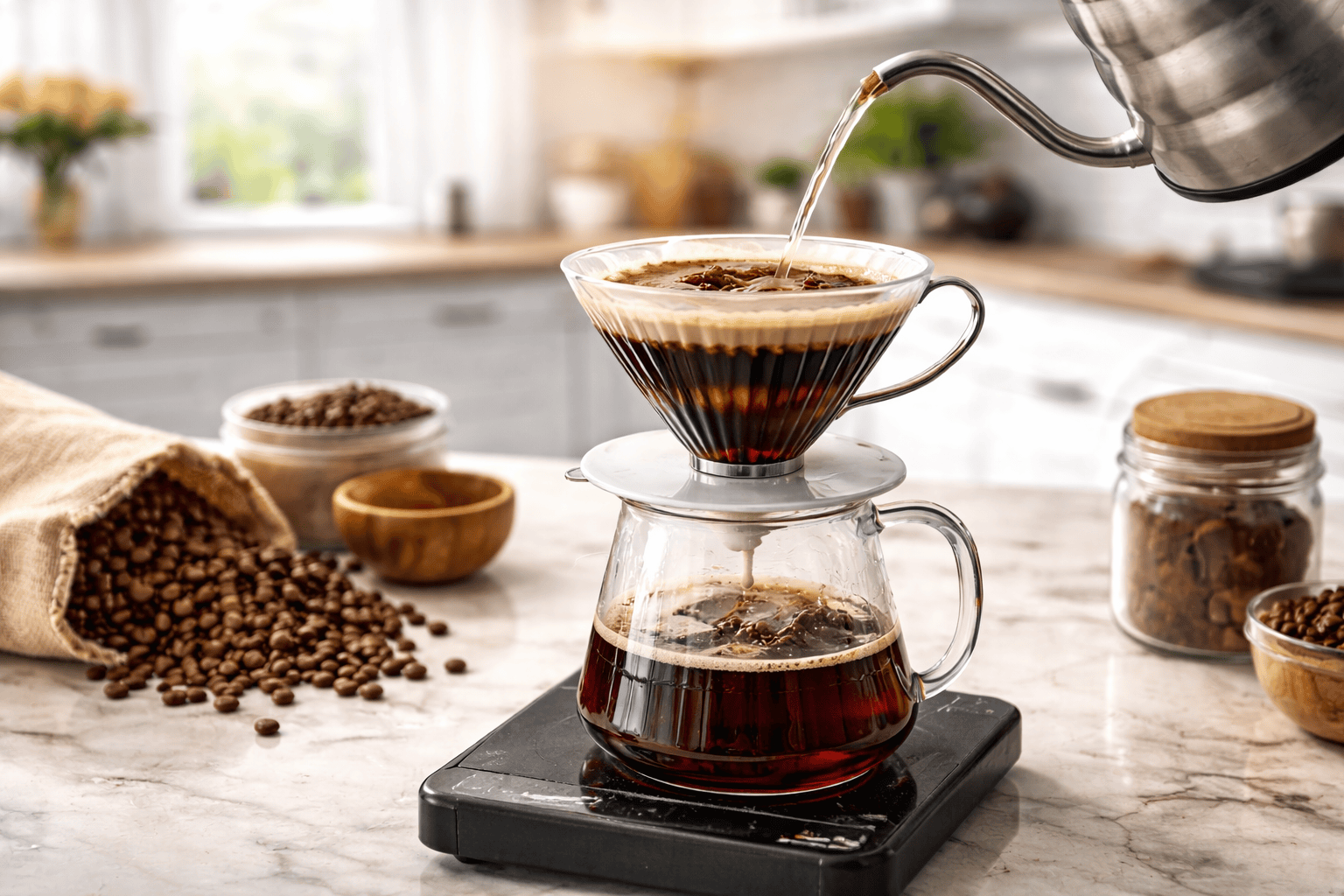 Hario V60High-control cone brewer for drinkers who enjoy dialing in technique and highlighting clarity.View on Amazon →
 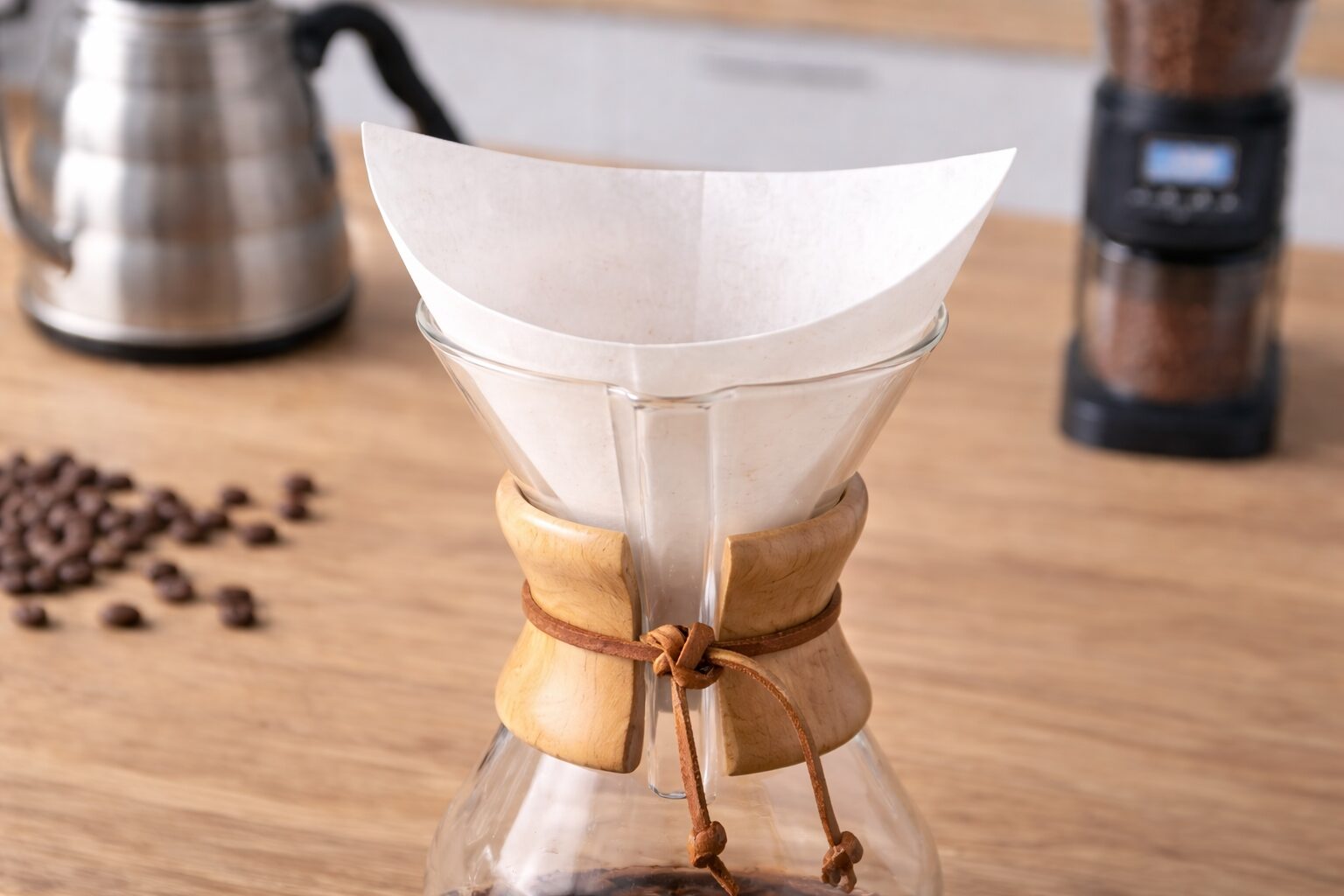 ChemexBrewer-carafe system with thick filters, larger batch capacity, and a notably clean cup.View on Amazon →
 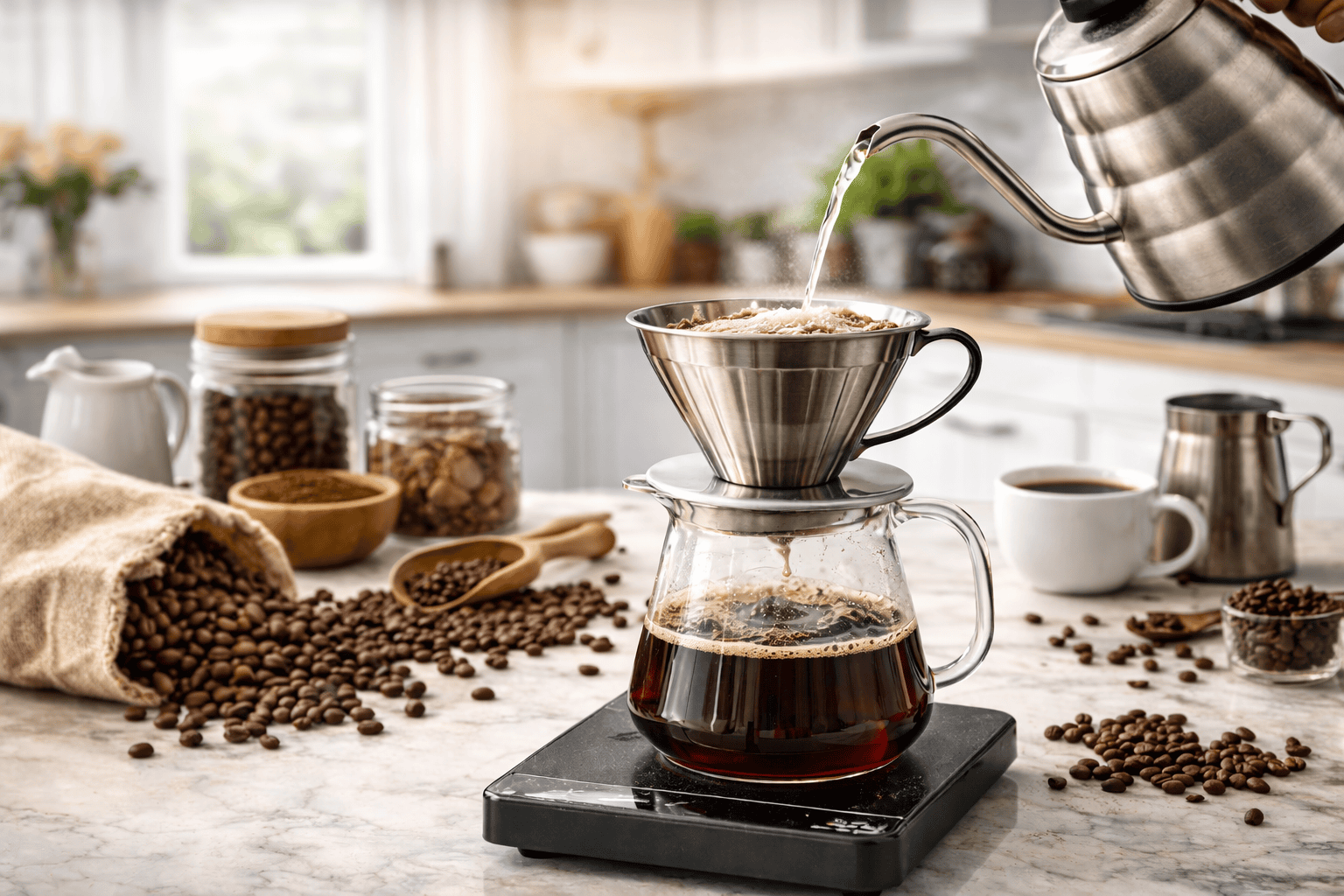 Kalita WaveFlat-bottom brewer designed for even saturation and a more forgiving daily workflow.View on Amazon →
Affiliate disclosure: These links may earn CoffeeGearHub a commission at no additional cost to you. As an Amazon Associate, we earn from qualifying purchases. Prices and availability can change.
The Grinder Changes How Forgiving Each Brewer Feels
Grinder quality matters with all three brewers, but the consequences are not identical. The V60 exposes uneven particle distribution most aggressively because its open drainage gives the user little built-in resistance. The Chemex thick filter damps some flow variation, while the Kalita’s flat bed and smaller outlets provide an additional buffer against small inconsistencies.
| Grinder tier | V60 | Chemex | Kalita Wave |
|---|---|---|---|
| Blade grinder | Highly inconsistent | Often flat or uneven | More usable, but still compromised |
| Entry-level burr grinder | Usable but sensitive | Good starting point | Very workable |
| Mid-range burr grinder | Good to excellent | Excellent | Excellent |
| Quality hand grinder | Excellent | Excellent | Excellent |
This does not mean a beginner must buy an expensive grinder before trying a V60. It means the V60 gives clearer feedback about grinder limitations. If you already own a modest burr grinder and want the easiest route to consistent cups, the Kalita is usually less demanding. If you enjoy dialing in and upgrading the grinder over time, the V60 gives you more room to exploit those improvements.
Cost Is More Than the Brewer Price
The initial brewer cost is only part of ownership. Filter availability, filter price, breakage risk, and whether the brewer already doubles as a carafe all affect long-term cost. The exact retail numbers move over time, so the ranges below should be treated as approximate planning figures rather than current quotes.
| Cost area | V60 | Chemex | Kalita Wave |
|---|---|---|---|
| Basic brewer | About $8–12 for plastic | About $40–50 for common models | About $30–40 |
| Filter availability | Widely available | Widely available | More often specialty / online |
| Relative annual filter cost | Lowest of the three in the source comparison | Moderate | Highest of the three in the source comparison |
| Breakage exposure | Low with plastic | Higher because the brewer is glass | Low to moderate depending on material |
The V60 is the cheapest way into the comparison if you choose plastic. The Chemex costs more up front but includes the serving vessel. The Kalita sits between them on brewer price, though Wave filters can be less convenient to source locally. Those differences matter more over years of daily use than a small one-time price gap.
V60 vs Chemex vs Kalita Wave: Side-by-Side
| Category | V60 | Chemex | Kalita Wave |
|---|---|---|---|
| Typical cup style | Bright, detailed, high clarity | Very clean, smooth, lighter body | Balanced, sweet, moderate body |
| Technique demand | Highest | Moderate | Lowest of the three |
| Grinder sensitivity | High | Moderate | Lower |
| Single-cup workflow | Excellent | Less natural in larger models | Excellent |
| Batch brewing | Possible | Strongest option | Limited by size |
| Filter availability | Easy | Easy | More specialized |
| Durability | Excellent in plastic | Glass requires care | Excellent in metal; good in ceramic |
Match the Brewer to the Routine You Actually Have
The V60 makes the most sense when brewing itself is part of the hobby. It gives the user the greatest freedom to alter flow, agitation, and grind, and it can reveal subtle differences between coffees. That same freedom means it asks for a more consistent grinder and a more repeatable pouring routine.
The Chemex fits a different use case. It is particularly strong when several cups are being brewed at once and when a very clean cup is preferred. The serving vessel is built into the brewer, but the thick filters and glass construction create higher ongoing cost and more breakage risk than a plastic V60.
The Kalita Wave is the most straightforward choice when consistency is the priority. Its flat bed and restricted drainage make it easier to reproduce similar cups without obsessing over every pour. It is especially useful when the grinder is competent but not exceptional, or when the morning routine needs to work without full attention.
None of those descriptions makes one brewer categorically superior. They describe different tolerances for technique, different batch sizes, and different cup preferences. If you mainly brew one cup of light-roast coffee and enjoy dialing in, the V60 is a natural fit. If you regularly serve two to four people and like a very clean profile, the Chemex solves that problem elegantly. If you want a reliable daily manual brewer with fewer variables to manage, the Kalita Wave is easier to live with.
FAQs: V60 vs Chemex vs Kalita Wave
Is the V60 harder to use than the Kalita Wave?
Yes — the V60 is significantly more technique-sensitive. Its single large drain hole means your grind size, pour speed, and pouring pattern directly control extraction. The Kalita Wave’s flat bed and three small holes provide natural flow resistance that smooths out minor inconsistencies.
Which pour-over brewer makes the best tasting coffee?
That depends on your taste preference. The V60 produces the brightest, most complex cups — great for light roast and single-origin. The Chemex makes the cleanest, smoothest coffee with reduced bitterness. The Kalita Wave produces balanced, sweet, reliably good cups across most roasts.
Can you use a Chemex for one cup of coffee?
Technically yes, but the Chemex performs best at larger batch sizes (40g+ coffee). Brewing 20g for a single cup in a 6-cup Chemex often results in under-extraction because the water-to-filter-surface ratio is wrong. Use a smaller brewer for single cups.
Do I need an expensive grinder for pour-over coffee?
It depends on which brewer you choose. The V60 requires a quality burr grinder (Baratza Virtuoso+ or better) because grind inconsistency directly causes channeling and bitter cups. The Kalita Wave works well with entry-level burr grinders. All three reward better grinders — but the Kalita is most forgiving.
Are Kalita Wave filters easy to find?
Kalita Wave filters are less widely available than V60 or Chemex filters. You can find them online easily, but local availability varies — specialty coffee shops carry them more reliably than general grocery stores. Buying in bulk (100-pack) online is the most cost-effective approach.
Which is better for beginners — V60 or Kalita Wave?
The Kalita Wave is significantly better for beginners. Its flat-bed design and three small drain holes restrict flow and minimize channeling, producing consistently good results even when technique isn’t perfect. The V60 requires dialed-in grind quality and controlled pouring to avoid under or over-extraction.
How long does a Chemex last?
The Chemex glass carafe typically lasts 2–5 years with regular use before breakage becomes likely. The wood collar and leather tie may need replacement every 3–5 years ($15–20). Plastic V60s are nearly indestructible by comparison; stainless Kalita Waves are also extremely durable.
Is the V60 worth it for beginners?
Only if you have a quality burr grinder and enjoy the process of dialing in recipes. Without a good grinder, V60 results are inconsistent and frustrating. Beginners are better served starting with a Kalita Wave, then adding a V60 once they’ve built foundational pour-over technique.
What’s the cheapest way to start pour-over coffee?
A plastic Hario V60 02 (~$10) is the lowest-cost entry point, but you’ll still need a scale (~$15–25) and gooseneck kettle (~$25–35). Total minimum setup is around $50–70. A Kalita Wave setup costs $30–40 more but delivers more consistent results for beginners.
Which pour-over brewer is best for light roast coffee?
The Hario V60 is the best choice for light roast and single-origin coffee. Its thin paper filter and high-flow design preserve the bright acidity, floral notes, and complex fruit characteristics that light roasts are known for. The Chemex and Kalita Wave tend to round these flavors out.
CoffeeGearHub shortlist
Compare CoffeeGearHub product pages
Review specifications and current verified merchant offers on CoffeeGearHub before leaving the site.
Continue Learning
Use these guides to build the rest of the pour-over setup and dial in whichever brewer fits your routine.
In this guide
- Start With Brewer Design, Not Brand Preference
- Hario V60: Maximum Control, With More Technique Attached
- Chemex: Thick Filtration, Larger Batches, and a Cleaner Cup
- Kalita Wave: A Flatter Bed and a More Forgiving Daily Routine
- The Grinder Changes How Forgiving Each Brewer Feels
- Cost Is More Than the Brewer Price
- V60 vs Chemex vs Kalita Wave: Side-by-Side
- Match the Brewer to the Routine You Actually Have
- FAQs: V60 vs Chemex vs Kalita Wave