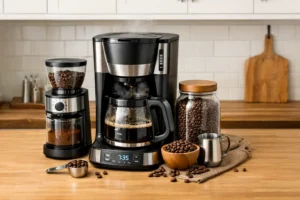
Last Updated: March 2026 • 40–50 min read • Cornerstone Guide: Brew Ratio Science + Dial-In System + Gear Picks
The coffee brew ratio — the amount of coffee relative to water — is the single most controllable variable in brewing. Get it right and every cup is balanced, consistent, and repeatable. Get it wrong and even expensive beans taste weak, bitter, or flat. If you’ve ever wondered why your home coffee never quite tastes like the café version, the coffee-to-water ratio is almost certainly part of the answer. This complete CoffeeGearHub guide explains exactly how brew ratios work, gives you the right ratio for every brewing method, and walks you through a practical dial-in system that works in 2–3 brews.
✍️ Editorial note: This guide is researched and written by the editors at CoffeeGearHub.com using published brewing science, SCA brewing standards, and established specialty-coffee community knowledge. Recommendations reflect research consensus rather than in-house lab testing. All product links are affiliate links — we may earn a commission at no cost to you.
The 30-Second Answer
Start at 1:15 for most brew methods — that’s 1 gram of coffee for every 15 grams of water — and adjust by taste. If the cup is sour or thin, use more coffee (lower the ratio). If it’s bitter or overwhelming, use less coffee (raise the ratio). Keep grind size and temperature fixed while you adjust ratio, and stop when sweetness and body are balanced and the finish is clean. That locked ratio is your recipe for that coffee and method.
- SCA Golden Cup range: 1:15 to 1:18 for most filter methods
- Target flavor: integrated sweetness + acidity + body with no sourness or harsh finish
- Fastest path: adjust ratio in 0.5–1 point steps across 2–3 brews, then fine-tune grind or temperature
Who This Guide Is For — Jump to What You Need
☕ Complete Beginner
Read the Quick Answer, then What Is a Brew Ratio and the Ratio by Method Table.
🔧 Troubleshooter
Jump straight to the Troubleshooting Matrix.
☕ Espresso Brewer
See Espresso Ratios Deep Dive — espresso uses a completely different measurement system.
🔬 Extraction Nerd
Read Extraction Science + Strength vs Extraction.
Table of Contents
- What is a coffee brew ratio
- Why brew ratio matters more than you think
- The brew ratio formula
- Brew ratio calculator chart
- Best ratios by brew method (full table)
- Espresso ratios: deep dive
- Pour over ratios: V60, Chemex, Kalita
- Immersion brewers: French press + AeroPress
- Cold brew ratios
- Extraction science: TDS + yield explained
- Strength vs extraction (critical distinction)
- How roast level changes your ratio
- The CoffeeGearHub dial-in framework
- Testing protocol: dial in 2–3 brews
- Fine-tuning your ratio step by step
- Recipe playbooks with ratio targets
- Volume vs weight: why grams win
- Water quality and freshness
- Troubleshooting matrix
- Essential gear: scales, kettles + grinders
- Quick reference cheat sheet
- FAQs
What Is a Coffee Brew Ratio?
A coffee brew ratio is the relationship between the mass of dry coffee grounds and the mass of water used to brew them. It is expressed as coffee : water — for example, 1:15 means 1 gram of coffee per 15 grams of water.
If you brew with 20g of coffee at a 1:15 ratio, you use 300g of water. At 1:17 with the same dose, you use 340g. That 40g difference — less than two tablespoons — produces a noticeably different cup from the same beans.
Brew ratio is the single most controllable variable in coffee. Grind size, water temperature, and technique all matter — but ratio sets the fundamental concentration of your cup before any of those factors come into play.
Why Brew Ratio Matters More Than You Think
Most brewing problems — weak coffee, overpowering bitterness, a flat or hollow cup — trace back to the wrong ratio before anything else. Home brewers frequently reach for the grind adjustment dial when the real fix is simply more or less coffee in the basket.
| Ratio direction | Example | Effect on cup | Risk |
|---|---|---|---|
| Lower ratio (stronger) | 1:12 | More body, deeper flavour, heavier concentration | Over-extraction if grind too fine |
| Mid range (balanced) | 1:15–1:16 | Sweet + balanced extraction for most methods | Minimal — this is the target zone |
| Higher ratio (lighter) | 1:18 | More clarity, brighter acidity, lighter body | Under-extraction if grind too coarse |
Common mistake: adjusting grind size to fix strength problems. If your coffee is too weak, add more coffee (lower the ratio). If it’s too strong, use less coffee (raise the ratio). Grind size fixes extraction flavor issues — sourness and bitterness — not strength.
The Brew Ratio Formula
All brew ratio maths reduces to one formula. Memorise it and you can calculate any recipe on the fly.
Water (g) = Coffee (g) × Ratio number
Coffee (g) = Water (g) ÷ Ratio number
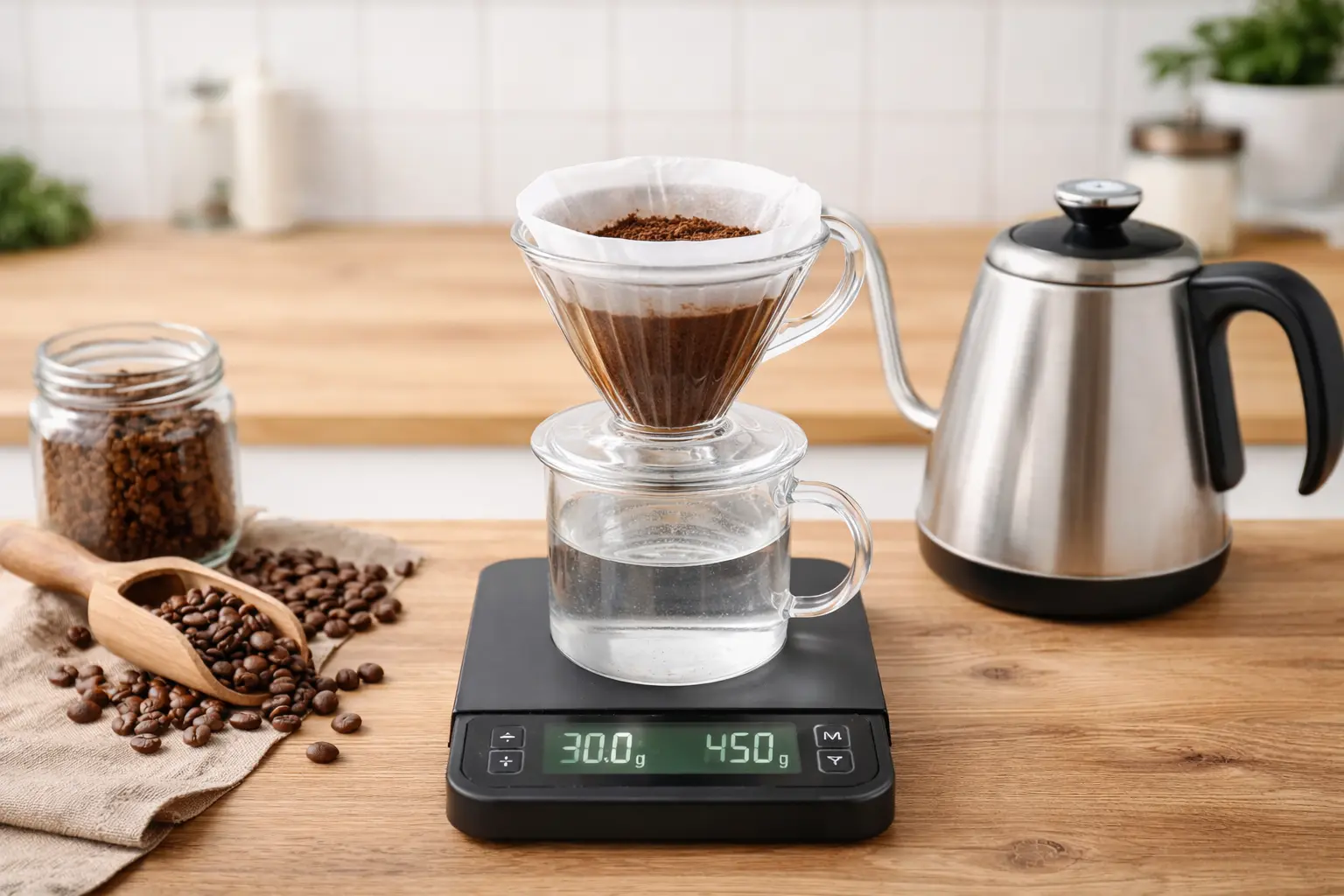
Example 1: You want to brew 400g of pour-over at 1:15. Coffee needed = 400 ÷ 15 = 26.7g (round to 27g). Water = 27 × 15 = 405g.
Example 2: You have 18g of coffee and want to brew at 1:16. Water = 18 × 16 = 288g.
🔬 Units note: Water density is ~1g/ml at brewing temperatures, so grams and millilitres are interchangeable for water. Always tare (zero) your scale before adding water to the brewer.
Brew Ratio Calculator Chart
Use this table to find your water amount instantly. Start at the ratio recommended for your brew method, then adjust up or down based on taste.
| Coffee (g) | 1:13 | 1:14 | 1:15 | 1:16 | 1:17 | 1:18 |
|---|---|---|---|---|---|---|
| 12g | 156g | 168g | 180g | 192g | 204g | 216g |
| 15g | 195g | 210g | 225g | 240g | 255g | 270g |
| 18g | 234g | 252g | 270g | 288g | 306g | 324g |
| 20g | 260g | 280g | 300g | 320g | 340g | 360g |
| 25g | 325g | 350g | 375g | 400g | 425g | 450g |
| 30g | 390g | 420g | 450g | 480g | 510g | 540g |
| 40g | 520g | 560g | 600g | 640g | 680g | 720g |
Best Brew Ratios by Method — Complete Reference Table
These are calibrated starting points based on SCA guidelines and specialty coffee community standards. Adjust by ±1 based on roast level and personal preference.
| Brew method | Recommended range | Sweet spot | Coffee per 300g water | Strength | Key note |
|---|---|---|---|---|---|
| Espresso | 1:1.5 – 1:3 | 1:2 | 18g in → 36g out | Very strong | Measured by yield, not brew water |
| Ristretto | 1:1 – 1:1.5 | 1:1 | 18g in → 18g out | Intense | Syrupy, sweet, short |
| Lungo | 1:3 – 1:5 | 1:3.5 | 18g in → 63g out | Medium-strong | Not the same as an Americano |
| V60 / Pour Over | 1:14 – 1:17 | 1:15 | 20g | Medium | Higher ratio = more clarity |
| Chemex | 1:15 – 1:17 | 1:16 | 19g | Medium-light | Thick filter needs slightly higher ratio |
| AeroPress | 1:6 – 1:17 | 1:10–1:15 | 20–30g | Variable | Most versatile brewer — ratio by recipe style |
| French Press | 1:12 – 1:15 | 1:13 | 23g | Medium-strong | No filter means more body; avoid going too high |
| Drip / Filter | 1:15 – 1:18 | 1:16 | 19g | Medium-light | SCA Golden Cup standard range |
| Moka Pot | Basket-fill method | Fill basket level | ~15g | Strong | Ratio less adjustable — use the valve line |
| Kalita Wave | 1:14 – 1:16 | 1:15 | 20g | Medium | Flat bed promotes even extraction |
| Siphon | 1:13 – 1:16 | 1:14 | 21g | Medium | Full immersion with vacuum draw |
| Cold Brew (concentrate) | 1:4 – 1:6 | 1:5 | 60g | Very strong | Dilute 1:1 before drinking |
| Cold Brew (ready-to-drink) | 1:8 – 1:12 | 1:10 | 30g | Medium | 12–24hr steep; no dilution needed |
| Turkish Coffee | 1:10 – 1:12 | 1:11 | 27g | Strong | Unfiltered; ultra-fine grind required |
Espresso Ratios: The Deep Dive
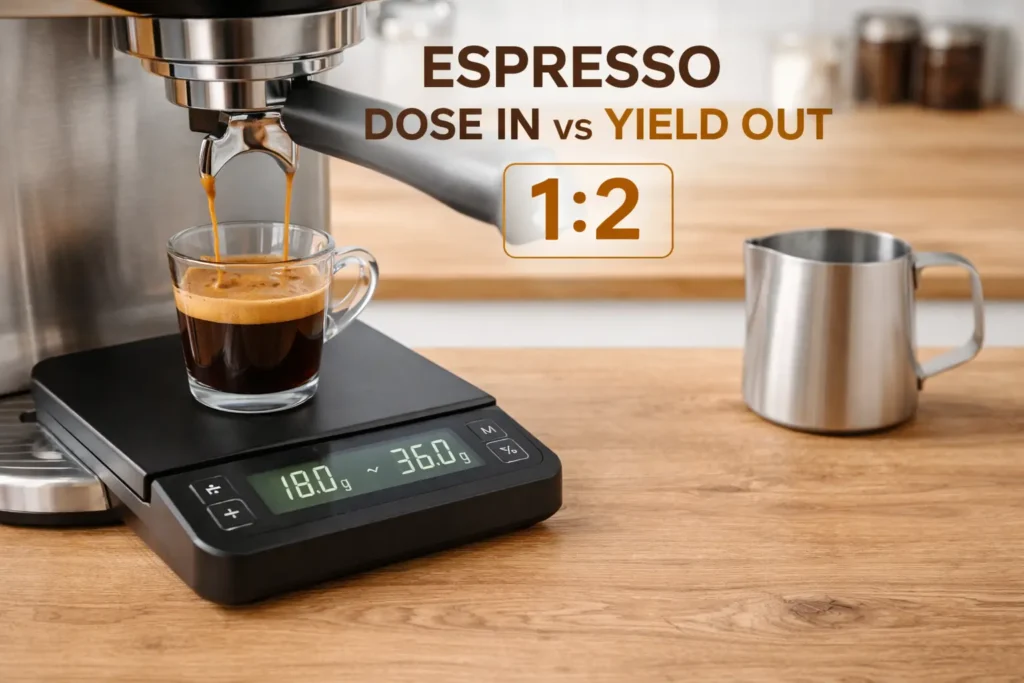
Espresso ratio is measured differently from every other method. Instead of tracking how much water you add, you measure dose in vs. liquid yield out — because a significant portion of brew water is absorbed by the puck and never reaches your cup.
A recipe that says “18g in / 36g out” has a ratio of 1:2 (36 ÷ 18 = 2). The “in” is your dry ground dose; the “out” is the liquid espresso collected in your cup, weighed on a scale placed under the portafilter.
| Style | Ratio | Example dose / yield | Shot time | Flavour character |
|---|---|---|---|---|
| Ristretto | 1:1 – 1:1.5 | 18g → 18g | 15–20s | Syrupy, sweet, low bitterness |
| Standard Espresso ✦ | 1:2 | 18g → 36g | 25–30s | Balanced — the universal baseline |
| Modern specialty trend | 1:2.5 | 18g → 45g | 28–33s | Sweeter, more nuanced, less intense |
| Lungo | 1:3 – 1:3.5 | 18g → 54–63g | 35–45s | Lighter, more aromatic, lower body |
💡 Light roast espresso tip: light roasts are denser and less soluble — they extract more slowly and benefit from a higher ratio (1:2.5–1:3) to reach full sweetness. Dark roasts extract fast; a tighter ratio (1:1.5–1:2) prevents them from running harsh.
Pour Over Ratios: V60, Chemex, Kalita Wave
Pour over methods reward ratio precision more than almost any other format. A 2-gram difference in dose changes the entire character of the cup — especially with high-quality single-origin beans where you’re trying to highlight specific flavour notes.
Hario V60
- Ratio: 1:15 (starting point)
- Example: 15g / 225g water
- Temp: 92–95°C
- Total time: 2:30–3:00
The V60’s fast draw-down suits 1:15 well. Push to 1:16–1:17 to highlight floral and fruit notes in light roasts.
Chemex
- Ratio: 1:16 (starting point)
- Example: 30g / 480g water
- Temp: 92–94°C
- Total time: 3:30–4:30
The Chemex’s thick paper filter absorbs oils and bitter compounds, so you can push to 1:16–1:17 without thinness. Suits medium-coarse grind.
Kalita Wave
- Ratio: 1:15–1:16
- Example: 20g / 300–320g water
- Temp: 92–94°C
- Total time: 3:00–3:30
The Kalita’s flat-bottom design promotes even extraction and is more forgiving than the V60. Grind consistency matters more here than with other methods.
Immersion Brewers: French Press and AeroPress
Immersion brewers steep all the coffee in all the water for the full brew time. This changes how ratio behaves — because every coffee particle is in contact with water from start to finish, the ratio has a more direct and immediate effect on concentration than with flow-through methods.
French Press
- Ratio: 1:12–1:15 (sweet spot: 1:13)
- Example: 30g / 390g water
- Steep time: 4 minutes
- Grind: coarse (sea salt)
No paper filter means more oils and body. Going above 1:15 often produces a watery cup; below 1:12 risks an overextracted sludge. 1:13 balances richness with clarity.
AeroPress
- Standard: 1:15 (15g / 225g)
- Concentrate: 1:6–1:8 then dilute
- Steep time: 1:15–2:30
- Grind: medium-fine (table salt)
The AeroPress is the most ratio-flexible brewer made. Concentrates at 1:6–1:8 work brilliantly over ice or with milk; for a straight cup, 1:15 is the starting baseline. See our AeroPress Grind Size Guide for the full dial-in system.
Cold Brew Ratios: Concentrate vs Ready-to-Drink
Cold brew steeps in cold or room-temperature water for 12–24 hours. Because cold water extracts coffee solubles slowly and inefficiently, you need significantly more coffee than any hot brew method to achieve equivalent strength.
| Style | Ratio | Example | Steep time | How to serve | Effective RTD strength |
|---|---|---|---|---|---|
| Concentrate ✦ | 1:4 – 1:6 | 100g / 500g water | 14–18hr (fridge) | Dilute 1:1 with water or milk | ≈ 1:10 |
| Ready-to-drink (strong) | 1:8 | 60g / 480g water | 16–20hr (fridge) | Drink straight over ice | ≈ 1:8 |
| Ready-to-drink (light) | 1:10 – 1:12 | 40g / 480g water | 18–24hr (fridge) | Drink straight, very refreshing | ≈ 1:10–1:12 |
⚠️ Room temperature cold brew steeps faster. If steeping at 18–21°C rather than in the fridge, aim for the lower end of the time range (12–14 hours) and taste frequently. Over-steeped cold brew develops a harsh, medicinal bitterness that no dilution can fix.
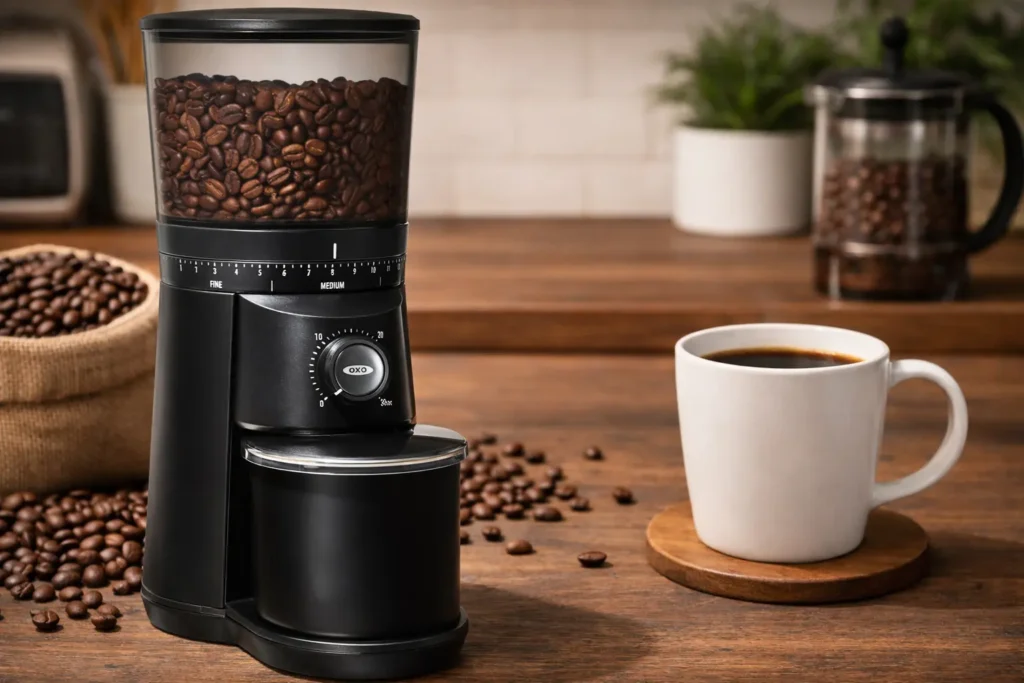
OXO Brew Cold Brew Coffee Maker
The easiest way to hit a consistent cold brew coffee-to-water ratio at home. The OXO’s built-in markings take the guesswork out of measuring, and the rainmaker lid ensures even saturation of grounds at any ratio from 1:5 to 1:12.
- Built-in measurement markings — no separate scale needed for cold brew
- Rainmaker lid distributes water evenly across all grounds
- Makes concentrate or ready-to-drink batches up to 32oz
Disclosure: CoffeeGearHub may earn from qualifying purchases.
Extraction Science: TDS and Yield Explained
The Specialty Coffee Association defines the “Golden Cup Standard” as a brew strength (TDS — Total Dissolved Solids) of 1.15–1.45% for drip coffee, achieved at an extraction yield of 18–22%. Your brew ratio is the primary tool for landing in that window.
Here’s how the maths works: if you use 30g of coffee with 500g of water (1:16.7) and achieve 20% extraction yield, your TDS will be approximately 1.2% — squarely in the ideal range. Shift to 20g with the same 500g water (1:25) and you’d need an impossibly high extraction yield to reach the same TDS — the result is always going to taste thin and hollow.
- Early extracts (0–18% yield): acids and salts — brightness, sharpness, sometimes hollow sourness
- Middle extracts (18–22% yield): sugars and aromatics — sweetness, body, complexity, “the good stuff”
- Late extracts (22%+ yield): bitters and astringents — drying finish, harsh aftertaste, wood notes
Your ratio positions you in the right zone. Grind size, temperature, and contact time then determine where within that zone you land.
Strength vs Extraction: The Most Misunderstood Distinction
Strength = how concentrated your brew is (controlled by ratio). Extraction = how balanced the flavor compounds are (controlled by grind, temperature, and time). These are separate problems requiring separate solutions.
| What you taste | What the problem is | What to change | What not to change |
|---|---|---|---|
| Balanced but too weak | Strength (ratio) | +1–2g coffee, or reduce water | Grind — don’t go finer |
| Balanced but too strong | Strength (ratio) | –1–2g coffee, or add bypass water | Grind — don’t go coarser |
| Sour / sharp / thin | Under-extraction | Finer grind first, then hotter / longer | Adding more coffee won’t fix sourness |
| Bitter / dry / harsh | Over-extraction | Coarser grind first, then cooler / shorter | Reducing coffee won’t fix bitterness |
| Flat and muted | Stale beans or bad water | Check roast date; filter your water | Neither ratio nor grind will fix this |
🔬 The key rule: fix extraction flavor problems (sour/bitter) with grind. Fix strength problems (too weak/too strong) with ratio. Conflating these two leads to chasing your tail across multiple brews.
How Roast Level Changes Your Ratio
Roast level changes the physical and chemical properties of the bean, which directly affects how a given ratio performs. A 1:15 ratio with a light roast will taste meaningfully different from 1:15 with a dark roast — even with the same grind and temperature.
☀️ Light Roast
- Dense, less soluble
- Use lower ratio (e.g. 1:14–1:15)
- Grind 1–2 steps finer
- Temp: 95–100°C
🌤 Medium Roast
- Balanced solubility
- Use standard ratio (1:15–1:16)
- Grind at baseline
- Temp: 91–94°C
🌑 Dark Roast
- Porous, highly soluble
- Use higher ratio (e.g. 1:16–1:18)
- Grind 1–2 steps coarser
- Temp: 85–92°C
The CoffeeGearHub Dial-In Framework
Dial-in works fastest when you fix ratio first, confirm extraction is balanced, then fine-tune grind or temperature. Changing both ratio and grind simultaneously makes it impossible to know what caused any change in the cup.
Baseline “Control” Recipe (Pour Over)
- Coffee: 15g (weighed)
- Water: 225g
- Ratio: 1:15
- Temperature: 93°C / 200°F
- Grind: medium (sand texture)
- Pour: 3 pours — bloom (45g) + two equal pours
Brew this exactly, taste, and diagnose before changing anything.
Taste → Fix Order
- Balanced but too weak: lower ratio (add coffee)
- Balanced but too strong: raise ratio (reduce coffee)
- Sour / sharp: grind finer or brew hotter
- Bitter / drying: grind coarser or brew cooler
- Flat / muted: check bean freshness and water quality
Rule: change one variable per brew, always.
The Testing Protocol: Dial In Any Coffee in 2–3 Brews
Goal: clean feedback. Keep grind, temperature, and technique fixed. Only adjust ratio between brews.
- Brew #1 baseline: brew the control recipe. Taste and log three things: strength (weak / balanced / strong), extraction flavour (sour / balanced / bitter), and finish (clean / drying / hollow).
- Diagnose: Is the issue strength or extraction? If balanced but wrong strength, adjust ratio. If sour or bitter despite right strength, adjust grind next.
- Adjust ratio: move 0.5–1 point. Weak → try 1:14. Strong → try 1:16. Change nothing else.
- Brew #2: repeat exactly. Compare strength and finish. If balanced, lock this ratio.
- Brew #3 (optional): smaller ratio move in the same direction, or switch to grind if strength is now right but flavour is still off.
Stop when: the cup is balanced (no sourness or bitterness), strength feels right, and the finish is clean.
Fine-Tuning Your Ratio: A Practical Reference
| Situation | Starting ratio | Move to | Effect |
|---|---|---|---|
| Balanced but weak | 1:16 | 1:14–1:15 | More concentration, same extraction |
| Balanced but too strong | 1:14 | 1:16–1:17 | Less concentration, same extraction |
| Sour (extraction problem) | Any | Fix grind first, not ratio | Finer grind → better extraction → less sourness |
| Bitter (extraction problem) | Any | Fix grind first, not ratio | Coarser grind → less extraction → less bitterness |
| Using light roast | 1:16 | 1:14–1:15 | Compensates for lower solubility |
| Using dark roast | 1:14 | 1:16–1:17 | Prevents over-extraction |
Recipe Playbooks with Ratio Targets
These cover three everyday scenarios — a balanced filter cup, an espresso-style concentrate, and a cold brew batch.
Playbook #1 — Balanced Pour Over
- Coffee: 15g
- Water: 225g
- Ratio: 1:15
- Temp: 93°C / 200°F
- Grind: medium (sand)
- Method: 45g bloom → pour to 150g → pour to 225g
Weak: try 1:14. Too strong: try 1:16.
Playbook #2 — AeroPress Concentrate
- Coffee: 18g
- Water: 108g
- Ratio: 1:6
- Temp: 90–95°C
- Grind: fine (fine sand)
- Method: stir 10s → steep 50s → press 25–35s → dilute or pour over ice
Harsh: try 1:7–1:8 or shorten steep.
Playbook #3 — Cold Brew Batch
- Coffee: 100g
- Water: 500g (cold)
- Ratio: 1:5 concentrate
- Steep: 16hr in fridge
- Grind: coarse (sea salt)
- Serve: dilute 1:1 with water or oat milk
Bitter: shorten steep or go coarser.
Volume vs Weight: Why Grams Always Win
A tablespoon of light-roast whole beans weighs around 5–6g. The same volume of dark-roast pre-ground coffee can weigh 7–8g. That’s up to a 30% dose variation from the same measuring spoon — enough to shift your effective ratio by two full points.
Scoops and tablespoon measurements aren’t wrong — they’re just imprecise. For occasional casual brewing they’re fine. For any kind of consistent, repeatable result, weighing both coffee and water in grams is non-negotiable. A basic coffee scale costs less than a bag of good beans.
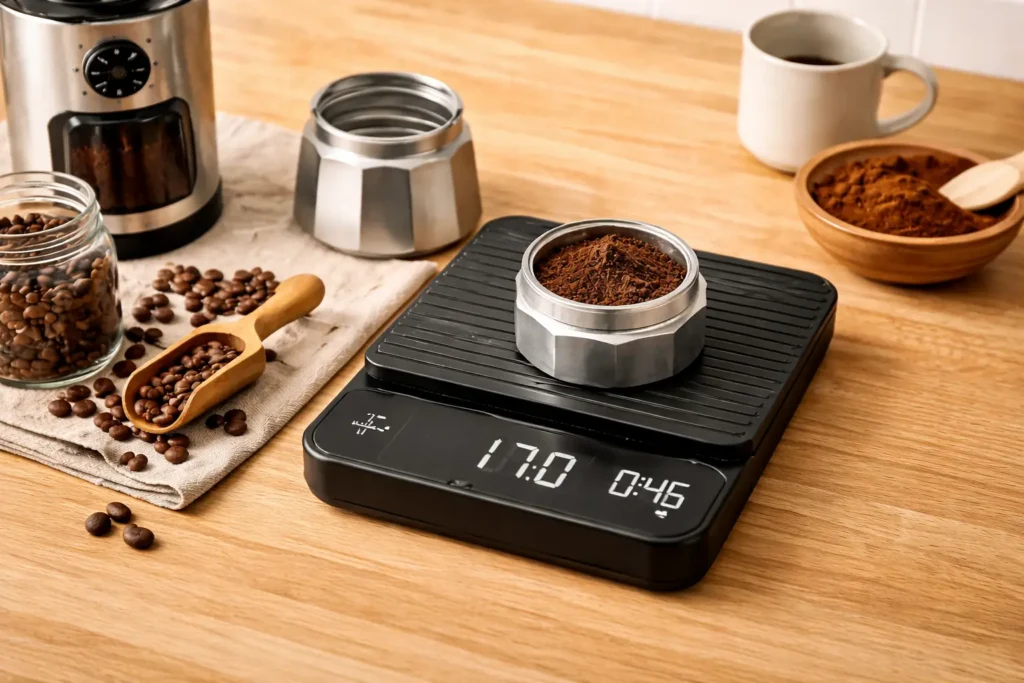
Best for Beginners: OXO Brew Precision Scale with Timer
If you’ve never weighed coffee before, this is the scale to start with. One-button operation, auto-start timer when liquid hits the surface, and a large easy-to-read display make it the fastest path from measuring spoons to consistent gram-accurate ratios.
- Auto-starts timer when brewing begins — removes one variable
- 1g resolution — accurate enough for every filter method
- Large platform fits any brewer or French press
Disclosure: CoffeeGearHub may earn from qualifying purchases.
Water Quality and Bean Freshness
If cups stay flat or muted despite dialling in ratio and grind, check your water and beans before making further adjustments. These two factors are the hidden ceiling on brew quality — no ratio tweak will fix stale beans or heavily chlorinated water.
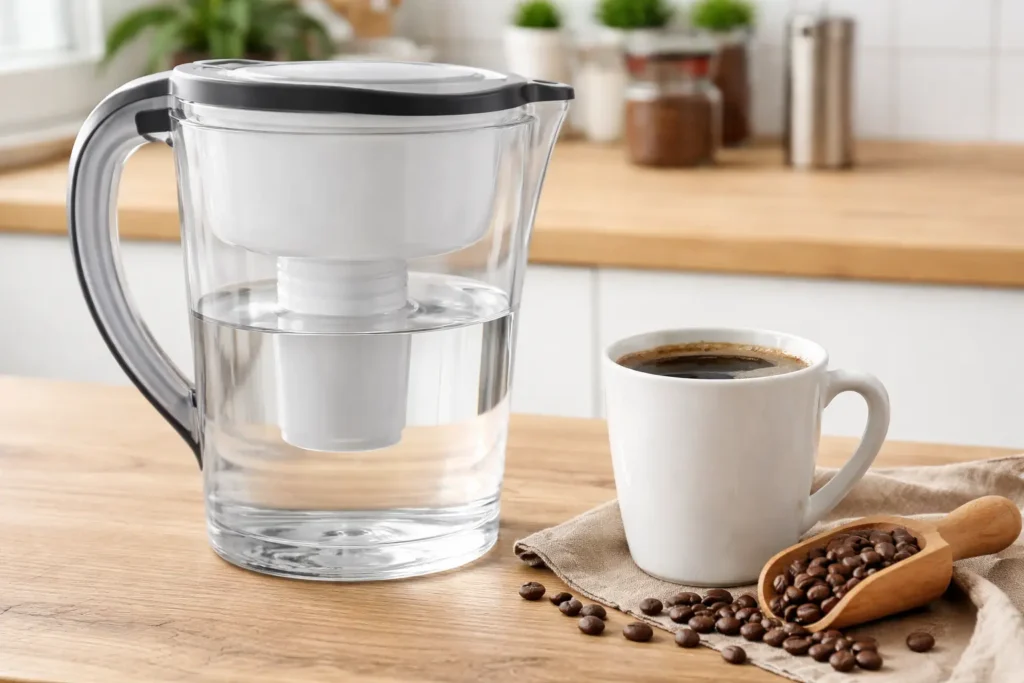
Coffee-Friendly Water Filter Pitcher
If your tap water tastes “off” — chlorine, metallic, or flat — your coffee will too, regardless of how dialled-in your ratio is. Filtering improves clarity and makes grind and ratio adjustments easier to taste because the water baseline stays neutral.
- Removes chlorine and metallic flavours that mask coffee sweetness
- Makes ratio adjustments produce cleaner, more readable feedback
- SCA recommends 75–150 ppm TDS as the ideal water range for brewing
Disclosure: CoffeeGearHub may earn from qualifying purchases.
Troubleshooting Matrix: Symptom → Fix
Identify your symptom, confirm whether it’s a ratio (strength) or grind (extraction) issue, then apply the fix in order.
| Symptom | What it usually means | Fix (in order) |
|---|---|---|
| Weak + flat | Ratio too high (too little coffee) | Lower ratio by 1–2 points → check roast date |
| Overpowering / too strong | Ratio too low (too much coffee) | Raise ratio by 1–2 points |
| Sour / sharp / hollow | Under-extraction | Finer grind → hotter water → longer contact time |
| Bitter / dry / harsh | Over-extraction | Coarser grind → cooler water → shorter contact time |
| Balanced but thin body | Ratio too high or method mismatch | Lower ratio slightly; try French press or AeroPress for more body |
| Sour AND bitter simultaneously | Inconsistent grind (blade grinder) | Upgrade to burr grinder — ratio changes alone won’t fix this |
| Good flavor but changes day to day | Dose or water inconsistency | Weigh coffee and water every brew — don’t estimate |
| Flat and muted despite correct ratio | Stale beans or bad water | Check roast date (use within 4 weeks); filter tap water |
Essential Gear: Scales, Kettles + Grinders
You cannot reliably hit a target coffee brew ratio without weighing both coffee and water. A burr grinder then ensures your grind is consistent enough that ratio changes produce clean, readable results in the cup.
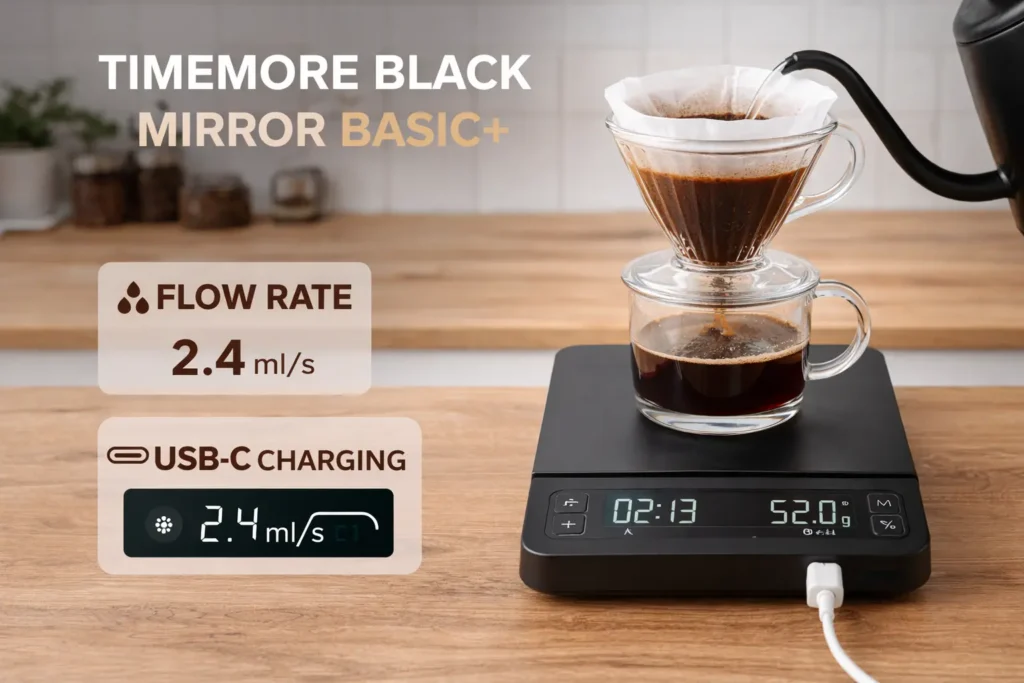
Best Value Scale: Timemore Black Mirror Basic+
The best value scale for ratio brewing. 0.1g accuracy, USB-C charging, built-in flow rate display, and a response time that rivals scales costing three times as much. If you’re serious about hitting precise brew ratios consistently, this is the upgrade that pays for itself immediately.
- 0.1g resolution — essential for repeatable ratios and espresso
- Built-in timer removes one variable during every brew
- USB-C charging — no AA battery hassle
Disclosure: CoffeeGearHub may earn from qualifying purchases.
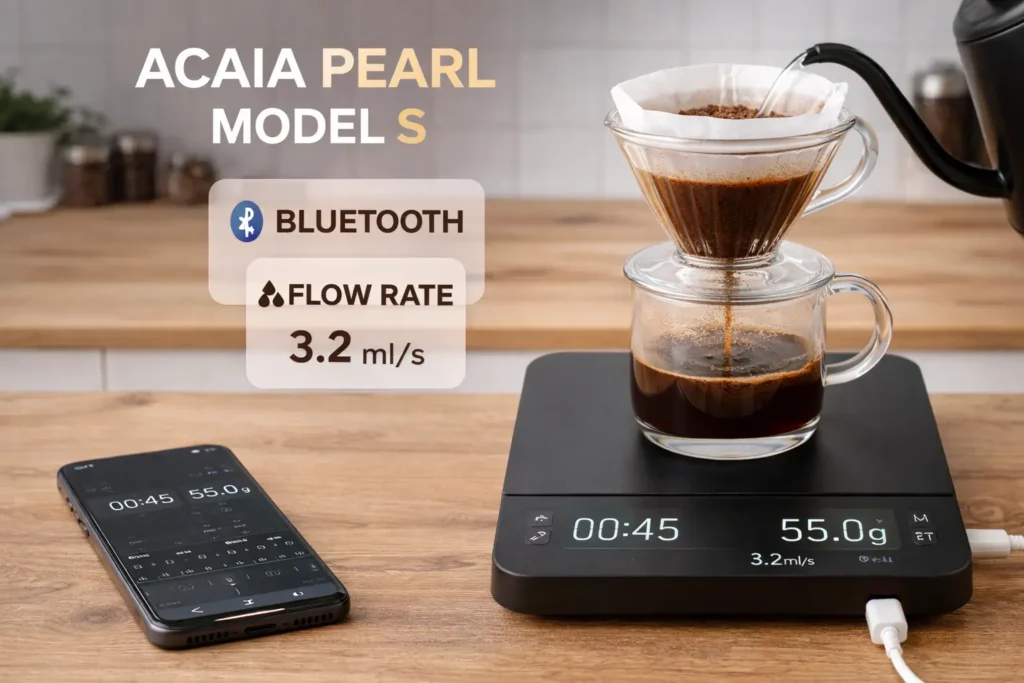
Premium Pick: Acaia Pearl Model S
The gold standard for pour-over and espresso ratio work. Bluetooth app integration, built-in flow rate indicator, and 0.1g precision make this the most powerful scale for serious ratio dialling-in at home or in a café. If you brew specialty coffee daily, the Acaia pays for itself in data.
- Real-time flow rate display for pour-over precision
- Bluetooth app tracks and logs every brew session
- Auto-tare and auto-start timer built in
Disclosure: CoffeeGearHub may earn from qualifying purchases.
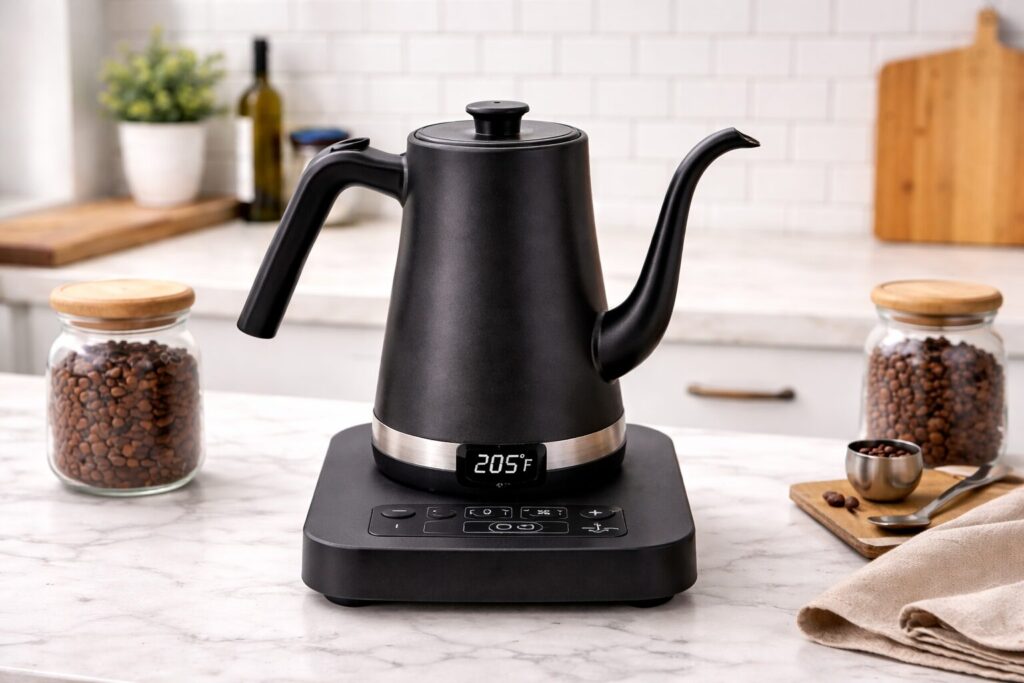
Fellow Stagg EKG Electric Gooseneck Kettle
Temperature is the secondary lever in ratio brewing — especially across roast levels. The Stagg EKG holds temperature to ±1°C for 60 minutes, removes all guesswork from your water, and means that when you adjust your coffee-to-water ratio, it’s the only thing changing between brews.
- Light roast: 96–100°C unlocks sweetness and fruit notes
- Dark roast: 85–91°C reduces harshness and bitterness
- 60-minute hold mode — set temperature once, brew all morning
Disclosure: CoffeeGearHub may earn from qualifying purchases.
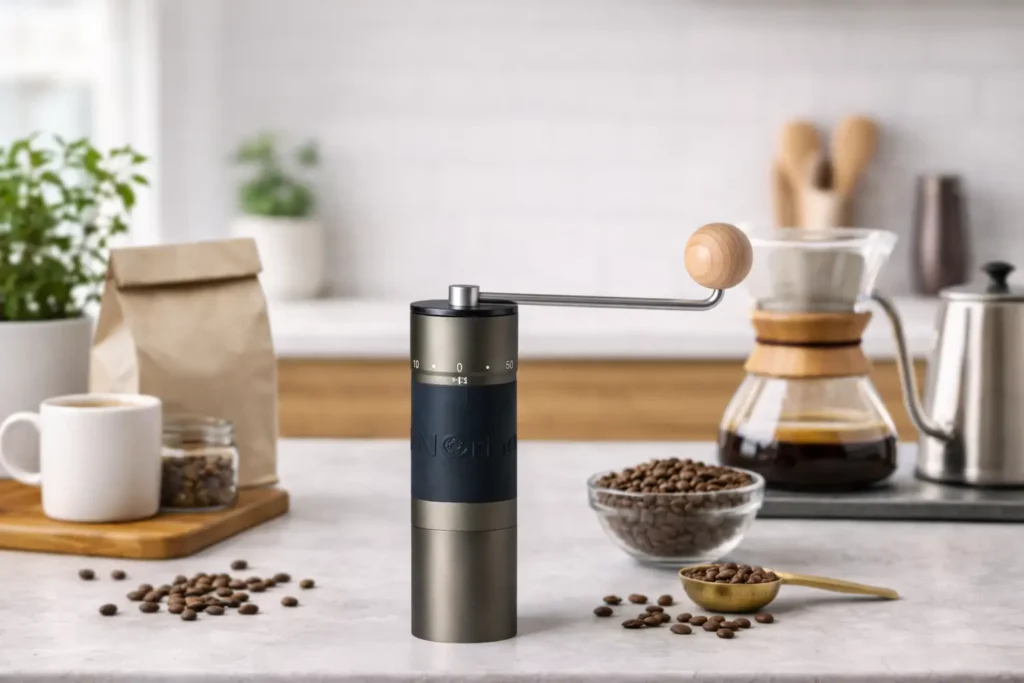
Best Manual Grinder: KINGrinder K6
Grind consistency is the third leg of the ratio-brewing stool. The K6’s 48mm stainless steel conical burrs produce a narrow, predictable particle distribution across the full grind range — meaning when you change your ratio, the flavor change in the cup is clean and readable, not muddied by inconsistent grinding.
- 48mm stainless burrs — excellent across pour over + AeroPress range
- 100 click steps — fine enough to move 1–2 clicks at a time
- All-metal construction; great travel companion
Disclosure: CoffeeGearHub may earn from qualifying purchases.
Quick Reference Cheat Sheet
Bookmark this section or pin it above your brew station. All ratios are starting points — adjust by ±1 for roast level and personal preference.
| Brew method | Sweet spot ratio | Per 300g water | Roast tip |
|---|---|---|---|
| Espresso | 1:2 (dose:yield) | 18g → 36g yield | Light: 1:2.5. Dark: 1:1.8 |
| V60 / Pour Over | 1:15 | 20g coffee | Light: 1:14–1:15. Dark: 1:16–1:17 |
| Chemex | 1:16 | 19g coffee | Medium-coarse grind; 1:16–1:17 |
| AeroPress (standard) | 1:15 | 20g coffee | Fine for concentrate; coarser for inverted |
| French Press | 1:13 | 23g coffee | Coarse grind always; 4 min steep |
| Drip / Filter | 1:16 | 19g coffee | SCA Golden Cup standard |
| Cold Brew (concentrate) | 1:5 | 60g coffee | Dilute 1:1; 16hr fridge |
| Cold Brew (RTD) | 1:10 | 30g coffee | 18–24hr fridge; coarse grind |
| Moka Pot | Fill basket | ~15g coffee | Fine-medium; never tamp |
| Turkish | 1:11 | 27g coffee | Ultra-fine grind; unfiltered |
Final Takeaway
1:15 is your baseline. Taste is your feedback loop. A balanced, clean finish is your calibration signal. Change ratio to fix strength, change grind to fix extraction flavor — one variable at a time — and stop when sweetness is obvious and the finish is clean. That locked recipe, written down, is worth more than any bag of expensive beans brewed inconsistently.
FAQs: Coffee Brew Ratio
What is the best coffee brew ratio?
For most filter methods, 1:15 to 1:16 is the best starting point. Espresso uses a completely different system — 1:2 (dose:yield) is the standard. Adjust within the recommended range for your method based on roast level and taste preference.
Should I measure coffee by weight or volume?
Always by weight (grams). Volume measurements like tablespoons and scoops vary significantly with grind size and roast level — the same scoop can hold 5g or 8g depending on coffee density. A basic digital scale costs under $20 and is the single most impactful home brewing upgrade.
Does the ratio change for light vs dark roast?
Yes. Light roasts are denser and less soluble — use a lower ratio (more coffee, e.g. 1:14–1:15) to compensate. Dark roasts extract faster — use a higher ratio (less coffee, e.g. 1:16–1:17) to avoid bitterness.
Why does my coffee taste weak even at the right ratio?
The most common causes: grind too coarse (under-extraction), water temperature too low, stale beans (check roast date — use within 4 weeks), or poor water quality. Ratio alone cannot fix extraction problems — it only controls concentration.
What is the golden ratio for coffee?
The SCA Golden Cup Standard recommends 55–65g of coffee per litre of water for drip brewing — approximately 1:15 to 1:18. This produces a TDS of 1.15–1.45% at an extraction yield of 18–22%. It’s a useful starting framework, but every brew method has its own optimal range.
My coffee tastes both sour and bitter — what’s wrong?
That’s the classic sign of inconsistent grinding — usually from a blade grinder producing a mix of coarse particles (under-extracted, sour) and fine dust (over-extracted, bitter) simultaneously. No ratio adjustment will fix this. Upgrading to a burr grinder produces immediate improvement.
What is the coffee-to-water ratio for cold brew?
For cold brew concentrate (the most common approach), use a 1:5 ratio — 100g coffee to 500g cold water — steep 14–18 hours in the fridge, then dilute 1:1 before drinking. For ready-to-drink cold brew, use 1:8 to 1:12 and steep 18–24 hours without diluting.
Continue Learning
BREW RATIO CLUSTER
Want to apply these ratios to espresso-style lattes? Pair the AeroPress concentrate playbook above with a quality milk frother for café-style drinks without an espresso machine.
☕
Written by the CoffeeGearHub Editorial Team
CoffeeGearHub is a specialty coffee equipment resource run by home brewers and coffee enthusiasts. Our guides are researched using published brewing science, SCA standards, grinder manufacturer specifications, and established specialty-coffee community knowledge. We review and update our pillar content regularly. About CoffeeGearHub →
Schema note: For FAQ + HowTo schema, add it via Rank Math’s Schema Generator (recommended) instead of embedding JSON-LD scripts in the editor, which often triggers Gutenberg “invalid content” warnings.