
Fix My Coffee: Diagnose and Fix Every Coffee Problem by Brew Method
Editorial standards: this guide is a troubleshooting hub. It separates technique fixes from equipment upgrades so you can start with the smallest change likely to solve the problem.
At a glance
Diagnose the symptom, then jump to the brew method
Start with what the cup tastes like, then move to the section for your brewer.
Most recurring problems come back to grind consistency, ratio, bean freshness, water, or maintenance.
Editorial analysis
Change one variable at a time so the result teaches you something
If you change grind, ratio, temperature, and time together, you may improve the cup without learning which change mattered.
A simple diagnosis sequence makes troubleshooting faster and prevents unnecessary equipment purchases.
The 30-Second Answer
Start with the symptom: sour means extract more, bitter usually means extract less, weak coffee may need more coffee rather than more extraction, and flat coffee calls for a freshness, water, or maintenance check. Then use the brew-method section to make the smallest relevant change.
Useful diagnostic gear
Start with these representative choices
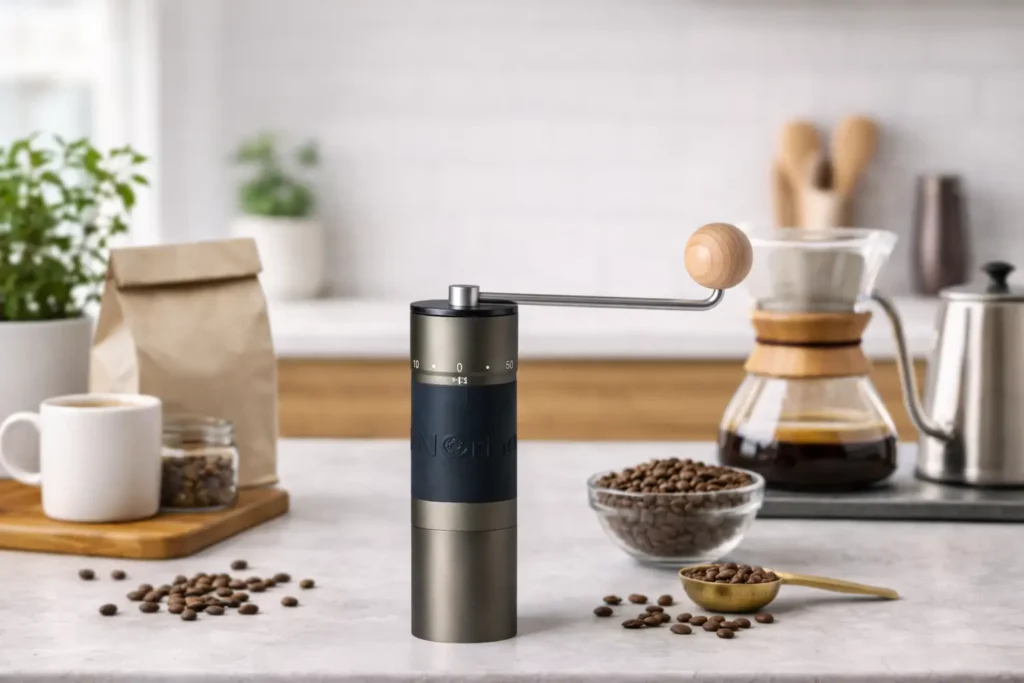
KINGrinder K6 — diagnose grind inconsistency
A repeatable burr grinder helps separate technique problems from particle-size inconsistency.
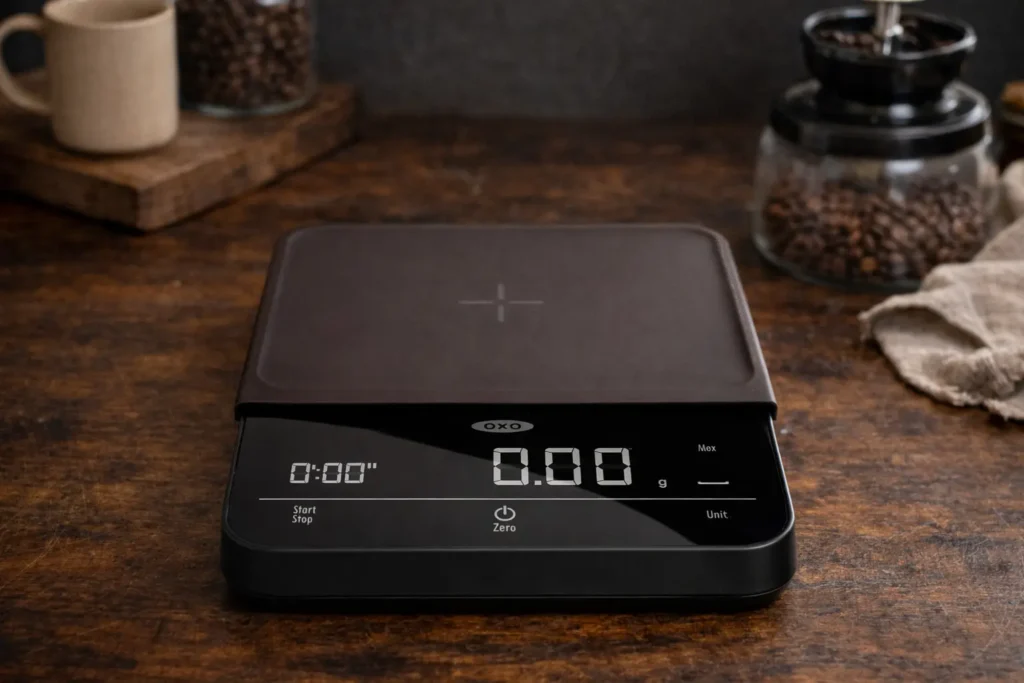
Coffee scale — diagnose ratio problems
Weighing coffee and water gives you a stable baseline before you start changing grind or brew time.
Affiliate disclosure: Amazon links may earn CoffeeGearHub a commission at no additional cost to you.
Step 1 — Diagnose the Symptom
| Symptom | What it means | Most likely cause | First fix to try |
|---|---|---|---|
| ☕ Bitter | Over-extracted — too much pulled from the grounds | Grind too fine, brew time too long, or water too hot | Coarsen grind one notch, or reduce brew time by 15-30 seconds |
| 🍋 Sour / sharp | Under-extracted — not enough pulled from the grounds | Grind too coarse, brew time too short, or water not hot enough | Fine grind one notch, or extend brew time by 20-30 seconds |
| 💧 Weak / watery | Ratio problem or under-extraction | Too little coffee, grind too coarse | Check your ratio (start at 1:15 coffee:water), then fine the grind |
| 🌀 Muddy / gritty | Fine particles in the cup | Grind too fine, poor filter seal, or filter has holes | Coarsen grind; for French press, pour slowly without stirring |
| 🤷 Flat / dull | Stale beans or dead water | Beans over 4 weeks from roast, or distilled water | Use fresher beans; switch to filtered tap or bottled spring water |
| 💨 Papery / chemical | Filter wasn’t rinsed, or chlorinated water | Unrinsed paper filter, or tap water | Pre-rinse paper filter with hot water before brewing |
| 🦪 Inconsistent cup to cup | Grind inconsistency | Blade grinder or worn burrs | Upgrade to a burr grinder — this is the root cause of most coffee problems |
If your coffee is consistently inconsistent — sometimes bitter, sometimes sour, never quite right — a burr grinder is almost always the answer. Blade grinders produce wildly uneven particle sizes that extract at different rates in the same cup, creating a bitter-sour combination no technique can fix.
Step 2 — Go to Your Brew Method
Each card below covers the most common problems for that brew method. Click through to the full troubleshooting guide for detailed fixes, dial-in systems, and before/after taste comparisons.
☕ AeroPress
- Weak or watery — grind too coarse or steep too short; extend to 2 minutes
- Bitter — water too hot (target 175-185°F for light roasts, 195°F for dark) or over-steep
- Muddy — switch from metal to paper filter; metal allows fines through
- Hard to press — grind is too fine; coarsen one notch at a time
✨ Pour Over
- Sour — grind too coarse or drawdown too fast; slow your pour and fine the grind
- Bitter — grind too fine or over-pouring in the final stages; coarsen one notch
- Drawdown too fast (<2 min) — grind is too coarse; fine one notch
- Drawdown too slow (>4 min) — grind too fine or uneven pour; coarsen grind
🏠 Espresso
- Shot pulls too fast (<20 sec) — grind too coarse; fine one notch at a time
- Shot pulls too slow (>35 sec) — grind too fine or puck too compressed; coarsen grind or reduce tamp pressure
- Sour espresso — under-extracted; fine grind to slow the shot
- Channeling (uneven extraction) — inconsistent distribution or tamp; focus on level, even puck prep
🍵 French Press
- Bitter — steep time too long or grind too fine; reduce steep to 3:30 and coarsen grind
- Gritty / muddy — grind too fine; use a medium-coarse grind, the consistency of sea salt
- Weak — grind too coarse or ratio off; check 1:15 ratio and fine grind slightly
- Grounds in the cup — coarsen grind; pour slowly without stirring before pouring
☕ Drip Coffee
- Bitter — most drip machines brew too hot; use a medium grind and check your machine reaches 195-205°F
- Weak — ratio is usually the culprit; use 60g coffee per litre of water as a baseline
- Flat / boring — stale beans or machine needs descaling; descale monthly
- Inconsistent — cheap blade grinder; upgrade to a burr grinder for immediate improvement
🔵 Moka Pot
- Bitter / burnt — heat too high; brew on medium-low and remove from heat the moment gurgling starts
- Weak or watery — don’t tamp the basket; loose grounds and correct fill level is correct
- Leaking from seal — gasket worn or basket overfilled; replace the rubber seal
- Sputtering violently — heat too high or water below the valve; reduce heat immediately
⚙️ Grinder problems
- Stale, flat taste despite fresh beans — old coffee oils coating the burrs; clean the grinder
- High grind retention — grounds stuck in chute changing flavour; brush out after each use
- Inconsistent grind even after calibration — burrs may be worn; check burr age and replace if needed
- Static clumping — add one drop of water to beans before grinding (the Ross Droplet Technique)
❓ General problems
- Nothing works, taste never improves — beans are likely stale; roast date should be within 4 weeks
- Coffee tastes different every morning — grind inconsistency; check grinder calibration or upgrade
- Was great, now tastes bad — equipment needs cleaning; descale machine and clean grinder
- Tastes like plastic or chemicals — new equipment needs a full hot-water rinse cycle before first use
The Three Root Causes Behind 90% of Coffee Problems
Most coffee problems trace back to one of three root causes. Understanding which one you’re dealing with tells you exactly what to change — and what to ignore.
1. Grind inconsistency
The most common root cause. Blade grinders and worn burr grinders produce a mix of fine and coarse particles that simultaneously over-extract and under-extract in the same cup. The result is a muddled, bitter-sour combination that no other variable can fix.
Fix: upgrade to a burr grinder — this is the single highest-impact change for most home brewers.
2. Wrong ratio
Most people use too little coffee. The SCA standard for filter coffee is 60g per litre of water (1:16.7). Many home brewers use half that and wonder why coffee tastes weak and flat. Ratio problems produce a specific kind of weak — thin, watery, and lacking sweetness — that’s different from under-extraction.
Fix: weigh your coffee and water. Use our brew ratio guide to set a proper baseline for your method.
3. Stale beans
Coffee goes stale fast. Roasted coffee is best used within 2-4 weeks of the roast date — not the best-by date, which is often a year out. Stale beans produce flat, cardboard-like coffee with no aroma. No amount of technique adjustment will fix stale beans.
Fix: look for a roast date on the bag. Buy from a local roaster or specialty retailer that prints roast dates. Store in an airtight container away from light and heat — not the freezer.
Tools That Make Troubleshooting Easier
KINGrinder K6 — grind diagnostic
Use a consistent burr grinder when the same recipe swings between sour, bitter, and muddy despite careful timing.
Coffee scale — ratio diagnostic
A stable coffee-to-water ratio makes it much easier to identify whether the remaining issue is extraction or equipment.
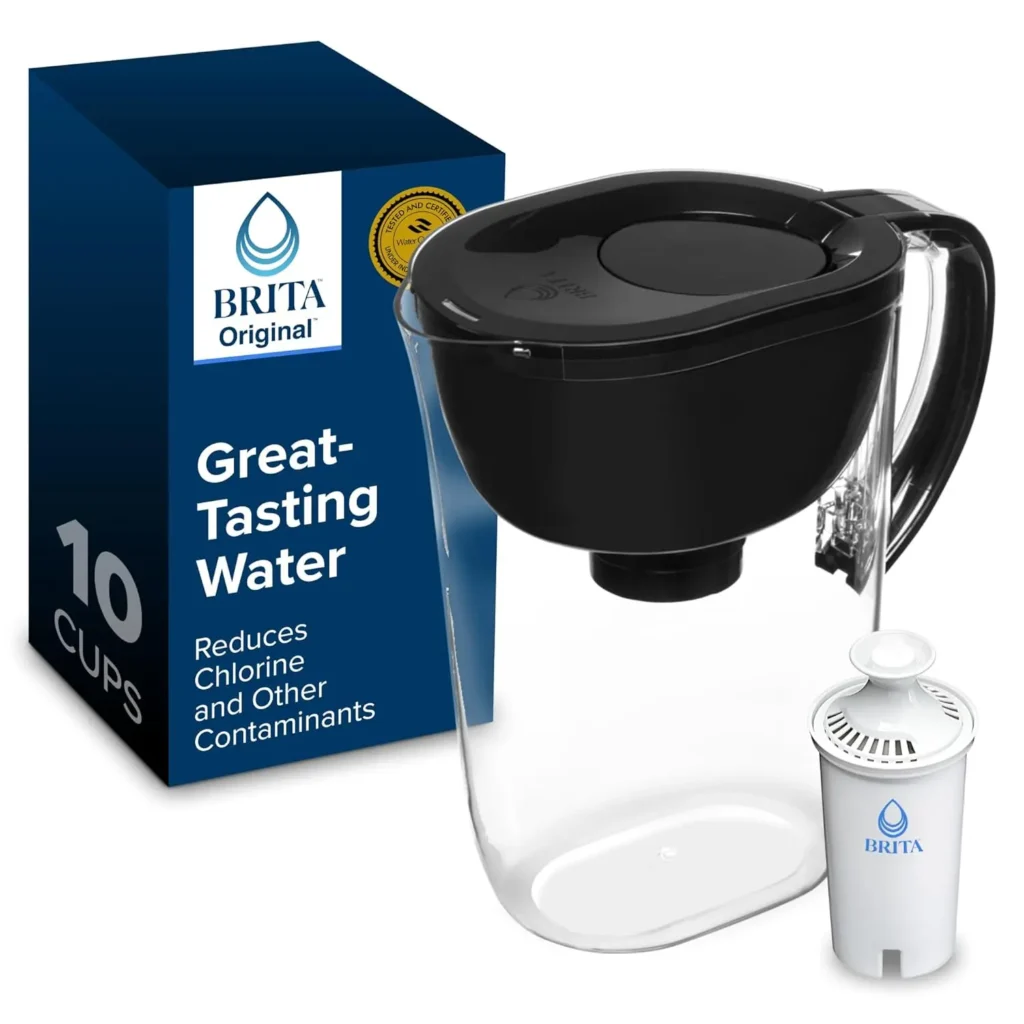
Water filter pitcher — water-quality diagnostic
If multiple brewers all taste chemical, chalky, or muted, test the water before changing every recipe.
When to Upgrade vs When to Adjust Technique
| If you have this problem | Try technique first | Consider upgrading if |
|---|---|---|
| Bitter coffee | Coarsen grind, reduce brew time, lower water temp | Bitterness persists across grind settings — may be worn burrs |
| Sour coffee | Fine grind, extend brew time, raise water temp | Coffee never tastes balanced regardless of adjustments |
| Inconsistent cup to cup | Clean your grinder thoroughly | Inconsistency returns after cleaning — burrs are worn or it’s a blade grinder |
| Flat / no aroma | Check bean freshness (roast date within 4 weeks) | Fresh beans still taste flat — machine may need descaling |
| Espresso issues | Adjust grind, distribution, and tamp before anything else | Still can’t dial in after 20+ attempts — may need a dedicated espresso grinder |
Find the right grinder for your budget and brew method
FAQs – Fix My Coffee
Why does my coffee taste bitter?
Bitter coffee is almost always over-extraction — the water pulled too many compounds from the grounds. The three most common causes: grind too fine, brew time too long, or water too hot. For drip and pour over, coarsen the grind one notch. For espresso, coarsen the grind to slow the shot. For French press, reduce steep time and coarsen the grind.
Why does my coffee taste sour?
Sour coffee is under-extraction — not enough was pulled from the grounds. Common causes: grind too coarse, brew time too short, or water not hot enough. For filter methods, fine the grind one notch. For AeroPress, extend steep time by 30 seconds. For espresso, fine the grind to slow the shot into the 25-30 second range.
Why does my coffee taste weak?
Weak coffee usually means the coffee-to-water ratio is off. Check your ratio first — a standard starting point is 1:15 for filter methods. If the ratio is correct and coffee still tastes thin, the grind is too coarse causing under-extraction.
Does a better grinder actually improve coffee taste?
Yes, consistently and noticeably. A burr grinder produces uniform particle sizes so every particle extracts at the same rate. Uneven grind from a blade grinder creates a mix of sizes that simultaneously over-extract and under-extract in the same cup — producing bitter-sour muddle that no brew technique can fix. Upgrading a grinder is the single change that most improves cup quality across every brew method.
What is the most common reason coffee tastes bad?
The most common cause is grind inconsistency — from a blade grinder, a dirty burr grinder, or worn burrs. The second most common is the wrong ratio (usually too little coffee). The third is stale beans — coffee goes stale within 2-4 weeks of roast, and no technique fixes stale beans.
How do I fix muddy or gritty coffee?
Muddy texture means fine particles are getting through the filter. For French press: coarsen the grind, steep exactly 4 minutes, and pour slowly without stirring. For AeroPress: switch from a metal filter to paper. For pour over: check the filter is fully sealed against the dripper. For drip: replace the filter if it has holes.
Can water quality affect coffee taste?
Yes, significantly. Coffee is 98-99% water. Heavily chlorinated tap water adds off-flavours. Distilled water has no minerals and produces flat, dull extraction. Filtered tap water or bottled spring water in the 50-150 ppm TDS range works well for most home brewing.
CoffeeGearHub product shortlist