
10 Drip Coffee Mistakes
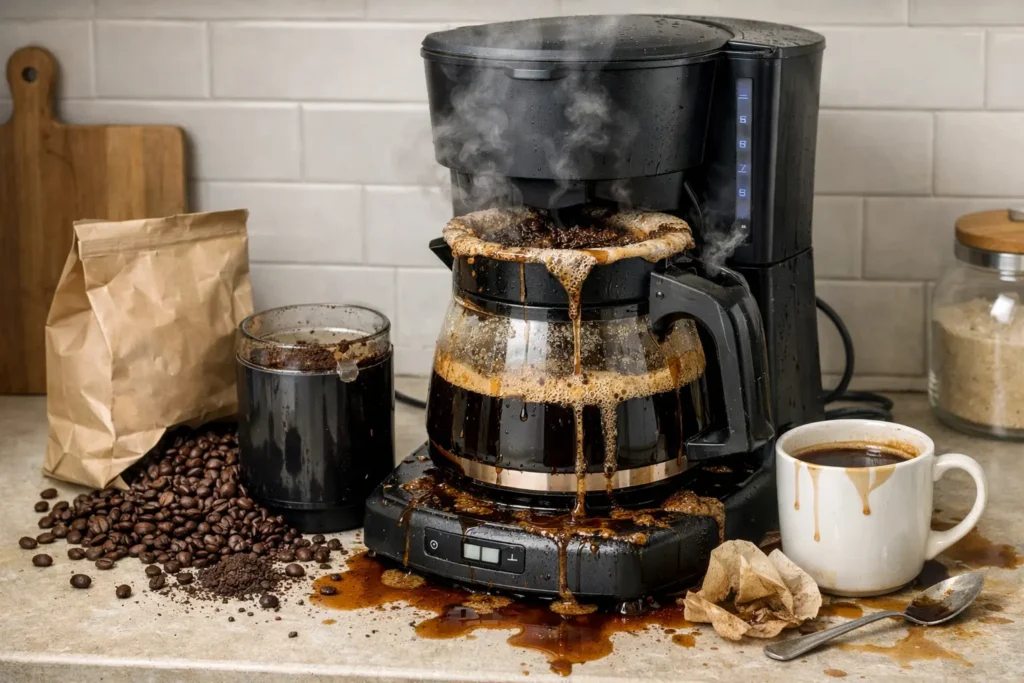
Editorial standards: this guide focuses on repeatable brewing variables, practical ownership, and clearly labeled product examples. Recommendations are separated from technique so the article remains useful even if you already own the equipment.
At a glance
Most bad drip coffee comes from a few repeatable mistakes
Weak, bitter, stale, or inconsistent drip coffee is usually traceable to grind quality, dose, water, freshness, machine temperature, or maintenance.
Fixing those variables one at a time is more effective than replacing everything at once.
Editorial analysis
Diagnose the cup before buying another brewer
A machine can be the problem, but many households are limited first by stale coffee, inconsistent grinding, or an imprecise dose.
Use taste and brew behavior to identify the bottleneck, then make the smallest change that addresses it.
The 30-Second Answer
The most common drip mistakes are uneven grinding, under-dosing, stale beans, poor water, low brew temperature, scale buildup, wrong grind size, poor storage, and leaving coffee on a warming plate too long. Measure first, then adjust one variable at a time.
Start with the highest-impact options
Start with these representative choices
These examples make the equipment side of the guide concrete while keeping the main article focused on brewing decisions.
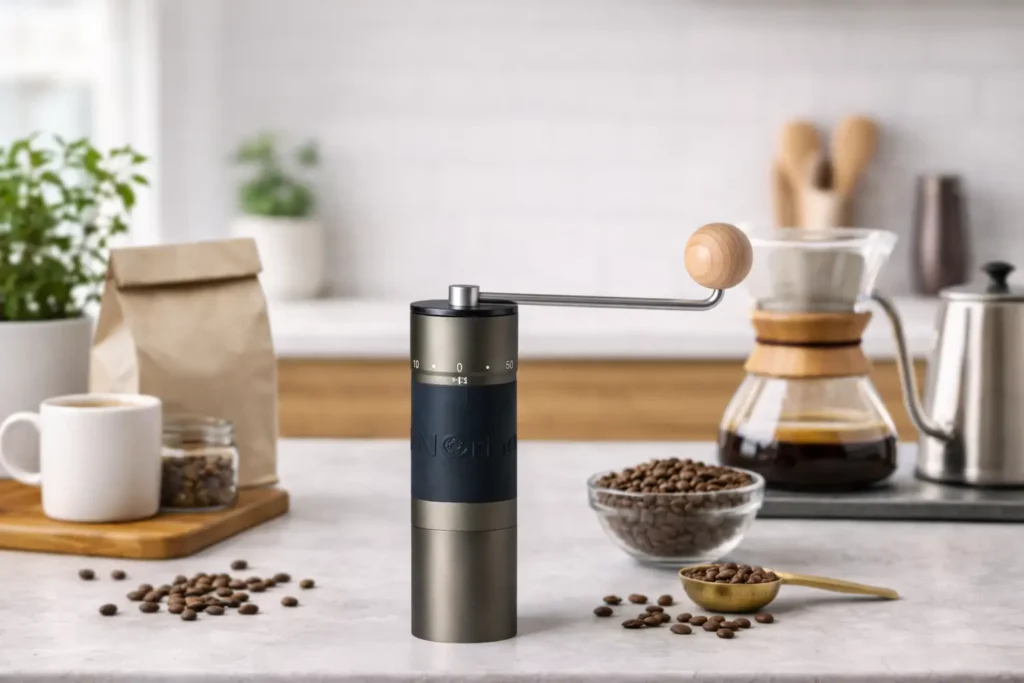
KINGrinder K6 — solve the grind problem first
A consistent burr grinder addresses two of the most common drip problems: uneven particles and the wrong grind range.
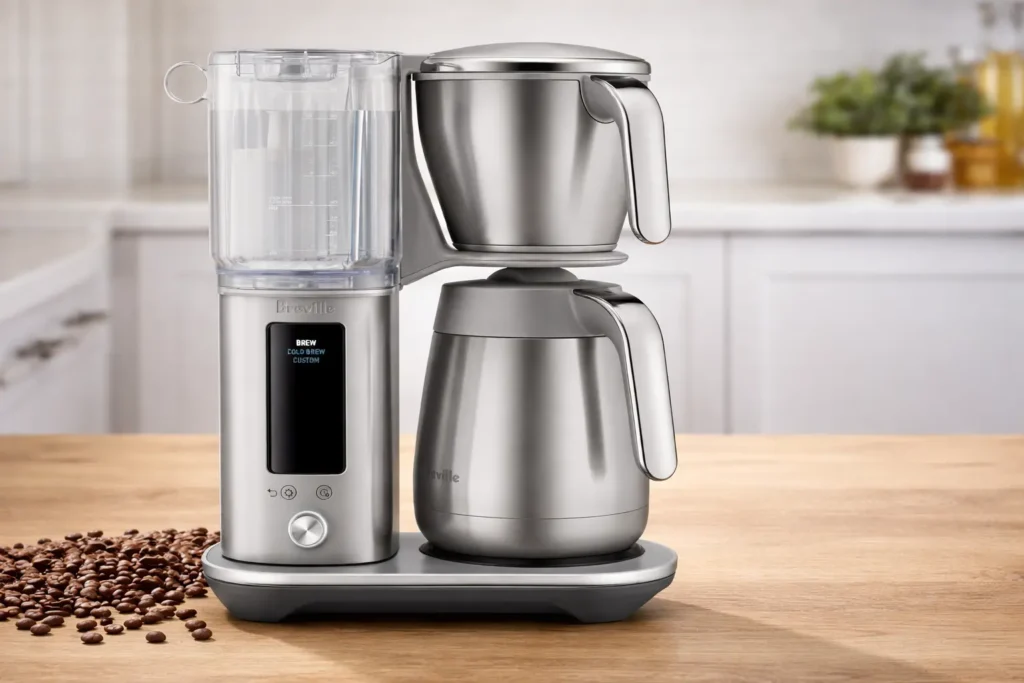
Breville Precision Brewer — temperature-controlled reference
A useful comparison point when your current machine appears to be the limiting variable.
Affiliate disclosure: Amazon links may earn CoffeeGearHub a commission at no additional cost to you. Prices and availability can change.
Mistake #1: Using a Blade Grinder or Pre-Ground Coffee
🚫 Impact: Highest. This is the single most impactful change you can make to your drip coffee setup.
A blade grinder chops coffee into a wide mix of particle sizes. Fine dust extracts very quickly, while large chunks extract much more slowly.
Both end up in the same basket, so the cup can taste bitter and hollow at once. A burr grinder produces a tighter range and gives you a much better chance of even extraction.
A burr grinder works entirely differently: two abrasive surfaces rotate against each other at a fixed distance, slicing every bean into particles of the same target size. The result is a batch of grounds where every particle extracts at the same rate through the same water flow. The extraction builds in a controlled sequence — acidity first, then sweetness and body, then a small, balanced amount of bitterness. The cup reflects the bean rather than the random chaos of the grind.
Pre-ground coffee has the same problem from the other direction: by the time you brew with it, the dramatically increased surface area of ground coffee has been oxidising for days, weeks, or months since it was ground. The aromatic volatile compounds that produce the aroma and complexity of fresh coffee are largely gone. Pre-ground grocery store coffee is stale by design — it is shelf-stable, not quality-optimised. Grinding immediately before brewing captures the full aromatic complexity the bean contains, producing a cup with a pronounced, layered aroma that pre-ground coffee entirely lacks.
✅ The fix: Switch to a burr grinder and grind whole beans immediately before every brew. For drip coffee at medium settings, the KINGrinder K6 grinds a full 12-cup dose (60g) in under three minutes with no electricity. The Baratza Encore is the standard entry electric recommendation for households grinding larger volumes daily. Either grinder produces an immediate and dramatic improvement over any blade grinder from the first cup. See gear picks below.
Mistake #2: Not Using Enough Coffee
🚫 Impact: Very high. Most home brewers use 30–50% less coffee than necessary. The fix is free — just use more.
Under-dosing is one of the most common drip mistakes because volume measurements are inconsistent. A few tablespoons can vary widely depending on the coffee and grind.
Start by weighing both coffee and water. Once the ratio is repeatable, you can adjust strength deliberately instead of guessing from scoop counts.
The physics of under-dosing is counterintuitive: using less coffee does not produce milder or gentler coffee — it produces over-extracted, bitter, thin coffee. A small amount of coffee over-extracts quickly relative to the large volume of water passing through it, releasing harsh bitter compounds before the water moves on to nothing. You get a weak, bitter, flat cup with no body — the worst of both worlds. Using the correct dose produces a cup that is simultaneously fuller in body, sweeter, and cleaner because the extraction balance is correct.
✅ The fix: Use the drip coffee ratio starting range of 55–60g per litre. Weigh your dose on a kitchen scale. Use the reference table below for common carafe sizes.
| Carafe size | Water volume | Correct dose (55g/L) | Strong preference (60g/L) |
|---|---|---|---|
| 4-cup | 500ml | 28g | 30g |
| 6-cup | 750ml | 41g | 45g |
| 8-cup | 1,000ml | 55g | 60g |
| 10-cup | 1,250ml | 69g | 75g |
| 12-cup | 1,500ml | 83g | 90g |
Mistake #3: Leaving Coffee on the Warming Plate
🚫 Impact: Very high. The most common cause of coffee that tastes fine from the first cup and progressively worse from every cup after. Affects every setup with a glass carafe.
A warming plate can make the first cup taste fine and the later cups progressively harsher. The plate keeps applying heat long after brewing is finished.
That speeds oxidation and can scorch oils near the bottom of the carafe. If you drink coffee slowly, thermal storage is usually kinder to the flavor.
There is no perfect warming-plate setting that stops this process. The practical fix is to remove direct heat.
Serve the coffee soon after brewing or transfer it to a thermal carafe. The brew stays hot without being continuously reheated.
✅ The fix: Two options. Option A (free, works now): Transfer the entire brew from the glass carafe into a preheated thermal carafe immediately after the brew cycle completes, then turn off the machine. A thermal flask or vacuum carafe purchased separately works perfectly. Option B (long-term): Upgrade to a drip machine with a built-in thermal carafe. The Breville Precision Brewer and OXO Brew 9-Cup both include thermal carafes as standard and are SCA Gold Cup certified. See gear picks.
Mistake #4: Using Stale Beans Without a Roast Date
🚫 Impact: High. Freshness is the quality ceiling — no grinder or machine upgrade produces excellent coffee from stale beans.
Coffee beans contain hundreds of volatile aromatic compounds that give coffee its complexity, sweetness, and origin character. These compounds begin degrading immediately after roasting as they react with oxygen. The process accelerates dramatically once beans are ground — the increased surface area of ground coffee exposes far more material to oxygen at once. Whole beans begin to noticeably stale after about 35–40 days post-roast. By 60 days, the most delicate aromatic compounds are significantly depleted. By 90 days, even the remaining compounds produce a flat, papery, hollow cup that no brewing technique can rescue.
The single most important label on any bag of coffee is the roast date — not the best-before date, not the “freshly roasted” marketing claim, not the packaging date. The roast date tells you when the quality clock started. Most grocery store coffee carries only a best-before date, which typically represents coffee roasted 6–18 months before purchase. Vacuum-sealed tins of commercial blends are specifically designed to be shelf-stable at the expense of freshness. The sealed packaging preserves the coffee from oxygen but cannot reverse the staling that occurred before sealing.
✅ The fix: Buy whole bean coffee with a visible roast date printed on the bag. Use beans within 35 days of that date. Specialty roasters who ship directly — Stumptown, Intelligentsia, Counter Culture, and many regional roasters — typically ship within a few days of roasting and print the roast date on every bag. If a bag does not show a roast date, assume the coffee is past its peak and buy something that does. The freshness improvement from roast-dated beans over undated grocery store coffee is one of the most immediately perceptible quality improvements in home coffee.
Mistake #5: Using Unfiltered Tap Water
💡 Impact: Moderate to high depending on local water quality. Significant for machine longevity in all cases.
Coffee is mostly water, so poor water can affect both taste and machine performance. Hard water leaves mineral scale, while chlorine or other treatment flavors can show up clearly in lighter roasts.
Filtered water is a useful default for many homes. It can improve flavor and reduce scale without removing every mineral from the water.
The opposite extreme — very soft water or pure distilled water — presents a different problem. Without the mineral ions that facilitate the electrochemical extraction process, coffee under-extracts even at correct temperature and dose, producing flat, thin cups. The mineral content of water is not incidental to extraction: it is part of the mechanism.
✅ The fix: Use filtered tap water. A standard Brita-style carbon block filter removes chlorine, heavy metals, and reduces scale-forming minerals while retaining the moderate mineral content the SCA recommends for drip brewing. This costs very little per litre, immediately improves cup quality in hard or chlorinated water areas, and significantly extends machine lifespan by reducing scale accumulation. Do not use distilled water — it produces flat, under-extracted coffee. Filtered tap water is the practical optimum for almost every household.
Mistake #6: Owning a Machine That Doesn’t Brew Hot Enough
🚫 Impact: High. No grind, dose, or bean improvement compensates for a machine that cannot reach SCA-standard brew temperature.
Brew temperature is one of the most important machine-side variables in drip coffee. If the water is too cool, the cup can stay sour, thin, and underdeveloped.
SCA-certified brewers are useful reference points because they are evaluated against temperature and brew-performance targets. If a machine consistently brews too cool, better beans alone will not solve the problem.
Most budget drip machines brew at 75–85°C. This is not a small shortfall — it is a 10–20°C gap from the optimal range. The SCA’s Gold Cup certification program tests machines specifically for temperature consistency; only machines that reliably achieve 92–96°C receive certification. If your drip coffee consistently tastes flat and sour despite fresh beans and a burr grinder, machine temperature is almost certainly the root cause. No adjustment of any other variable produces a balanced cup from an under-temperature machine.
✅ The fix: Upgrade to an SCA Gold Cup certified drip machine. The Breville Precision Brewer and OXO Brew 9-Cup are both certified, both include thermal carafes (fixing Mistake #3 simultaneously), and both produce dramatically better coffee from the same beans and grind as any budget uncertified machine. If your current machine is not certified and your coffee tastes persistently flat and sour despite addressing the other mistakes in this guide, the machine is the limiting variable. See gear picks below.
Mistake #7: Never Descaling the Machine
💡 Impact: Moderate and accumulating. The machine that brewed correctly last year may already be under-performing significantly without a single visible sign.
Scale builds gradually inside a drip machine. Mineral deposits can reduce heating efficiency and slow water flow, so the decline in coffee quality may be easy to miss.
If brew cycles become longer or the cup gets flatter over time, maintenance deserves attention before you blame the beans.
Descale on a schedule that matches your water hardness and the manufacturer’s instructions. Commercial descaler is the safest default when the manufacturer recommends it.
After descaling, flush the machine thoroughly with clean water. Then taste the next brew before changing other variables.
Mistake #8: Using the Wrong Grind Size for Drip
💡 Impact: Moderate. Most relevant for anyone who has recently switched from another brewing method to drip without adjusting the grinder.
Drip coffee usually needs a medium grind. Too fine can slow the basket and push extraction toward bitterness; too coarse can let water pass too quickly and leave the cup weak.
Use brew time and taste together. If the machine is otherwise working correctly, small grind changes are often the cleanest way to fine-tune extraction.
The most common version of this mistake is using a grind setting calibrated for another method — French press grounds (too coarse) or pour over grounds (sometimes too fine for a drip basket’s flow rate) — in a drip machine. Different brew methods have different target grind sizes, and switching between them without adjusting the grinder produces suboptimal results in the new method even if the grind was perfect for the previous one.
✅ The fix: Use a medium grind setting. On the KINGrinder K6, target 101–115 clicks from zero depending on roast level (coarser for dark roasts, finer for light). On the Baratza Encore, target settings 15–24. If your brew takes under 3 minutes: grind 2–3 steps finer. If it takes over 7 minutes or the basket overflows: grind 2–3 steps coarser. Use total brew time as your diagnostic signal — it tells you whether flow rate is in range before you even taste the coffee.
Mistake #9: Storing Beans Incorrectly
💡 Impact: Moderate. Bad storage turns fresh beans stale in days; good storage extends peak quality by 2–3 weeks.
Oxygen, heat, light, and moisture all speed coffee staling. An open bag near a warm appliance exposes the beans to several of those at once.
Store coffee sealed, cool, dry, and away from sunlight. Room temperature is usually easier to manage than repeatedly moving beans in and out of the refrigerator.
The freezer gets a more nuanced answer. For long-term storage of beans you won’t use for several weeks, the freezer is actually a good option — provided the beans are in an airtight container and you remove the entire quantity you plan to use at once, allow it to come to room temperature fully before opening, and never refreeze. Partial use from a frozen bag causes repeated temperature cycling and moisture exposure that defeats the purpose.
Use an airtight, opaque container or reseal a good coffee bag between brews. Buy amounts you can finish while the coffee still tastes fresh.
Storage helps, but it cannot stop aging completely. Smaller, more frequent purchases are usually more effective than trying to preserve a large bag for months.
Mistake #10: Measuring Coffee by Volume Instead of Weight
💡 Impact: Moderate. The root cause of cup-to-cup inconsistency even when every other variable is correct.
Volume measurements — tablespoons, coffee scoops, the lines inside the machine’s basket — are systematically unreliable for coffee because coffee density varies significantly with roast level and bean origin. A standard 2-tablespoon scoop holds approximately 10–12g of a dense medium roast. But Only 7–9g of a light, fluffy light roast, and up to 13–14g of a compact dark roast. This means “two scoops” of different coffees can vary by 30–40% in actual weight. A difference that produces noticeably different cups even from the same machine, water, and grind.
Volume measurement also accumulates error over the life of a bag: as beans at the bottom of the bag break down slightly, they become denser and pack more tightly into a scoop. The cup brewed from the last scoop of a bag measured by volume is measurably different from the first cup even if everything else stays the same. Weight measurement eliminates this variable entirely — 41g is 41g regardless of roast level, bean origin, or where you are in the bag.
Weighing your dose removes one of the easiest sources of inconsistency. A basic kitchen scale is accurate enough for drip coffee.
Once you know the dose that works for your carafe, repeat it and make deliberate changes from there. That takes only seconds and is more reliable than counting scoops.
Quick-Fix Summary: All 10 Mistakes at a Glance
| # | Mistake | Impact | Fix | Cost of fix |
|---|---|---|---|---|
| 1 | Blade grinder or pre-ground coffee | 🔴 Highest | Switch to a burr grinder; grind immediately before every brew | K6 grinder; one-time investment |
| 2 | Too little coffee (under-dosing) | 🔴 Very high | Use 55–60g per litre; weigh every dose | Free — just use more coffee |
| 3 | Leaving coffee on a warming plate | 🔴 Very high | Transfer immediately to a thermal carafe; or upgrade to a thermal carafe machine | Free (thermal vessel) or machine upgrade |
| 4 | Stale beans without a roast date | 🟠 High | Buy roast-dated whole beans; use within 35 days | Comparable cost — buy from specialty roasters |
| 5 | Unfiltered tap water | 🟠 Moderate–high | Use filtered tap water (Brita or similar) | Filter jug — low ongoing cost |
| 6 | Machine doesn’t reach 92°C | 🟠 High | Upgrade to an SCA Gold Cup certified machine | Machine upgrade; the most significant investment |
| 7 | Never descaling | 🟡 Moderate, accumulating | Descale every 1–3 months with vinegar or Dezcal | Free (vinegar) or low cost (Dezcal) |
| 8 | Wrong grind size for drip | 🟡 Moderate | Medium grind — K6: 101–115 clicks; Encore: steps 15–24 | Free — adjustment only |
| 9 | Storing beans incorrectly | 🟡 Moderate | Airtight opaque container; room temperature; away from heat and light | Low — airtight canister |
| 10 | Measuring by volume not weight | 🟡 Moderate | Weigh every dose on a kitchen scale | Basic kitchen scale — low cost |
Gear Picks: The Upgrades That Fix the Most Mistakes at Once
Two equipment upgrades address the highest-impact mistakes in this guide simultaneously. A burr grinder fixes Mistake #1 and unlocks correct grind size for Mistake #8. An SCA-certified machine with a thermal carafe fixes Mistake #6 and Mistake #3 in one purchase. These are the two picks we recommend.
Disclosure: CoffeeGearHub may earn a commission on qualifying purchases through affiliate links on this page, at no cost to you. Our recommendations are editorially independent.
KINGrinder K6 — fix grind consistency
A strong first upgrade when a blade grinder or inconsistent grind is causing bitter and weak flavors in the same brew.
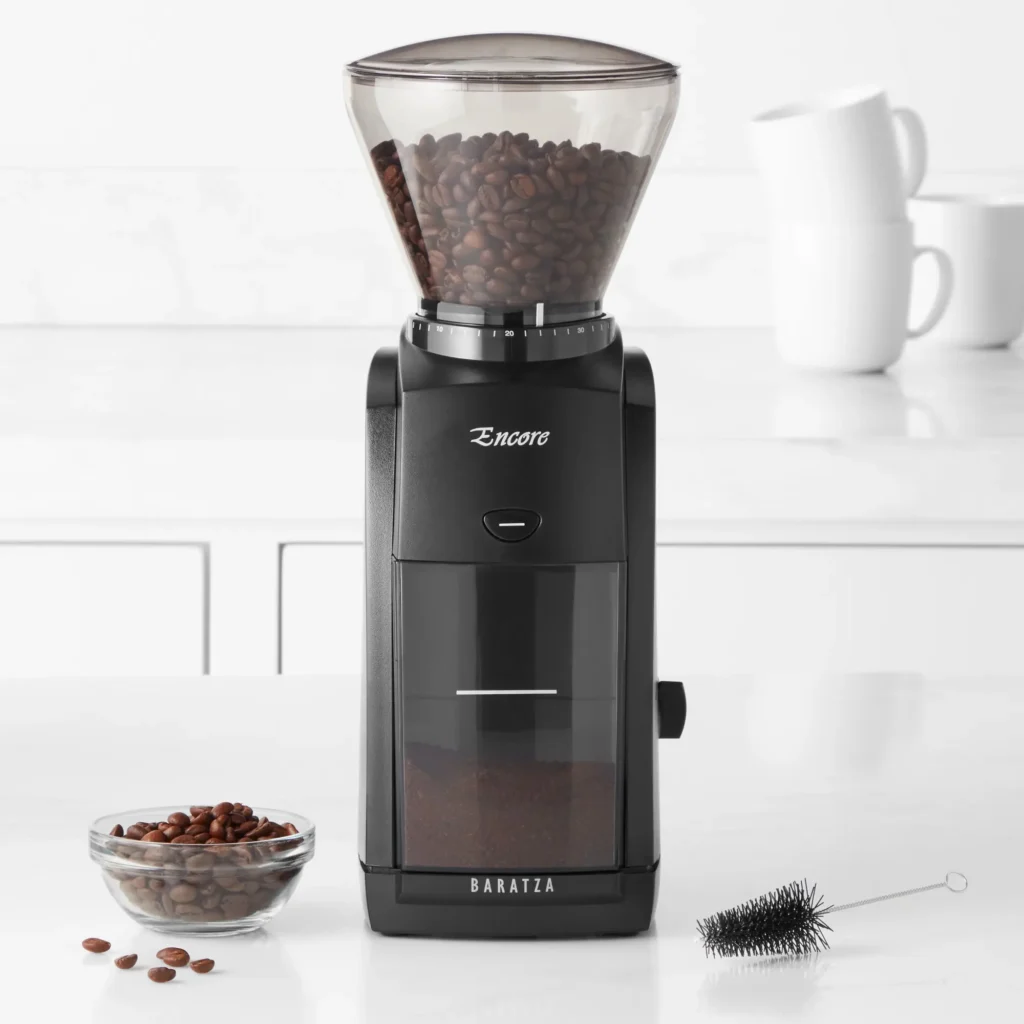
Baratza Encore — electric consistency upgrade
A practical electric option for households that want repeatable medium-range grinding without hand cranking.
Breville Precision Brewer — machine-side upgrade
Useful when temperature control and automatic brewing performance are the remaining limitations in the setup.
FAQs: Drip Coffee Mistakes
Why does my drip coffee always taste bitter?
Bitter drip coffee has three common causes: grind too fine (over-extraction), too much coffee in the basket (high dose), or warming plate degradation (coffee scorching on a glass carafe after brewing). Fix in this order: confirm you are using a medium grind, confirm your dose is at the SCA ratio of 55g per litre, and transfer brewed coffee to a thermal carafe immediately after the brew cycle. If bitterness persists after all three, descale your machine — scale buildup can cause temperature spikes that over-extract.
Why does my drip coffee always taste weak or watery?
Weak drip coffee is almost always under-dosing — using far less coffee than the SCA Golden Cup standard of 55g per litre. Most people use 30–40g per litre. Fix by weighing your dose on a kitchen scale and targeting 55–60g per litre. A blade grinder can also produce weak-tasting coffee — large uneven particles under-extract into sourness and weakness even at the correct dose.
Does the coffee-to-water ratio matter for drip coffee?
Yes — it is the most immediately impactful variable after grinder type and bean freshness. The SCA Golden Cup standard is 55g of coffee per litre of water. For a 6-cup carafe, that is 41–45g. For a 12-cup carafe, 83–90g. Most home brewers use less than half this amount. Volume scoops are unreliable — always weigh on a kitchen scale.
Should I use filtered water for drip coffee?
Yes. Coffee is approximately 98% water, so water quality directly affects both extraction chemistry and long-term machine health. Hard tap water causes scale buildup in the heating element, lowering brew temperature and shortening machine life. Very soft or distilled water lacks the mineral content needed for good extraction. Filtered tap water from a standard Brita-style filter is the practical recommendation for most households.
How long can you leave coffee on a warming plate?
Don’t leave it at all. Warming plates apply continuous low heat to the bottom of a glass carafe, scorching coffee oils and accelerating oxidation. The degradation is noticeable within 20 minutes and significant within 45 minutes. Transfer brewed coffee to a preheated thermal carafe immediately after the brew cycle, or upgrade to a machine with a built-in thermal carafe.
Does a blade grinder affect drip coffee quality?
Yes — dramatically. Blade grinders chop coffee unevenly, producing a mix of powder-fine particles and large chunks. In a drip basket, fine particles over-extract into bitterness while large chunks barely extract, contributing sourness and weakness. The result is a cup that is simultaneously bitter and hollow regardless of how good the beans are. Switching to any quality burr grinder produces an immediate and noticeable improvement.
How often should I clean my drip coffee maker?
Rinse the carafe and basket daily. Descale every 1–3 months depending on water hardness — this is the most skipped and most important maintenance step. Signs descaling is overdue: brew cycle taking longer than usual, coffee tasting progressively flatter, machine making more noise. Use Urnex Dezcal or a 50/50 white vinegar and water solution, run a full brew cycle, then flush with two clean water cycles.
What is the best grind size for drip coffee?
Drip coffee requires a medium grind — coarser than pour over or AeroPress, finer than French press. On the KINGrinder K6, medium drip grind is approximately 101–115 clicks from zero depending on roast level. On the Baratza Encore, use settings 15–24. Grind too fine and the basket clogs and over-extracts. Grind too coarse and the coffee under-extracts into weakness and sourness.
Why does my drip coffee taste different every time?
Inconsistent drip coffee is almost always a dose consistency problem — scooping by volume rather than weighing. Coffee density varies significantly between roast levels and bean origins, so the same number of scoops produces a different weight each time. Weigh your dose on a kitchen scale every brew and cup-to-cup inconsistency will largely disappear.
Can I use any beans for drip coffee?
Yes — drip coffee handles light through dark roast well. The non-negotiable is freshness. Always buy whole bean coffee with a visible roast date and use within 35 days. Grocery store coffee without a roast date is likely past its peak regardless of roast level, and no brewing improvement compensates for stale beans.
CoffeeGearHub product shortlist
Keep improving the setup
Use these CoffeeGearHub guides for the next buying or brewing step.