
Last Updated: March 2026 • 25–30 min read • Complete Guide: 3 Methods + Ratios + Troubleshooting + Gear Picks
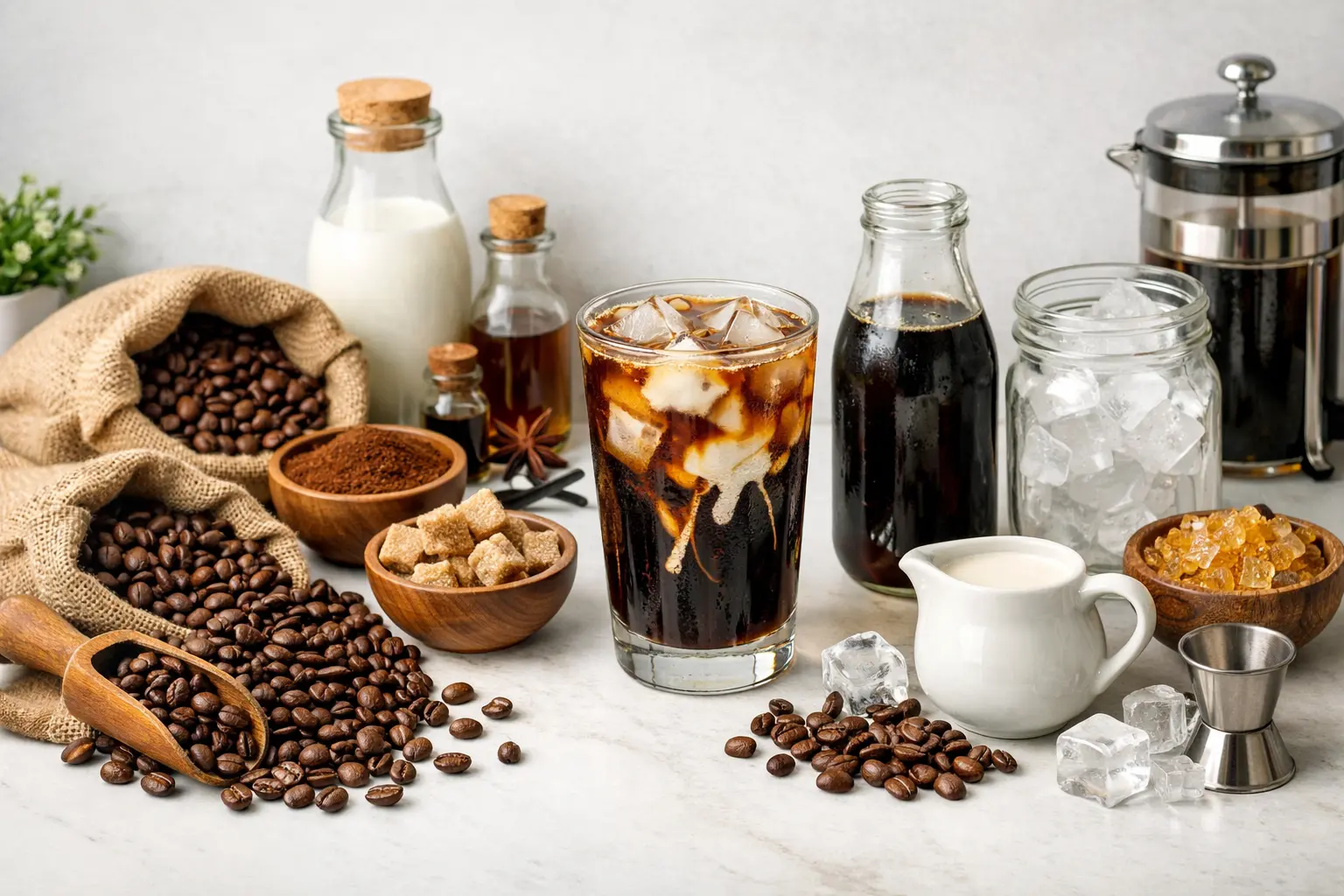
Most homemade iced coffee tastes weak, bitter, or watery — because it is brewed the same way as hot coffee. Iced coffee requires a different approach: you need to plan for dilution, cool the coffee quickly to preserve aroma, and choose the right method for your time and taste. This complete guide covers three café-proven iced coffee methods — hot brew over ice, Japanese flash brew, and cold brew concentrate — with exact ratios, grind size references, a full troubleshooting matrix, and the specific gear picks that make each method work consistently.
✍️ Editorial note: This guide is researched and written by the editors at CoffeeGearHub.com using published brewing science, SCA brewing standards, and established specialty-coffee community knowledge. All product links are affiliate links — we may earn a commission at no cost to you. Affiliate Disclosure: CoffeeGearHub.com participates in the Amazon Services LLC Associates Program. As an Amazon Associate, we earn from qualifying purchases.
🛒 New to Amazon? Try Prime free for fast, free shipping on every pick in this guide — or try Audible free if you’d rather listen while your coffee brews.
🛒 New to Amazon? Try Prime free for fast, free shipping on every pick in this guide — or try Audible free if you’d rather listen while your coffee brews.
The 30-Second Answer
The fastest fix for weak iced coffee is not more coffee — it is a stronger brew ratio. Normal hot coffee at 1:15 dilutes to 1:20 over ice. Start at 1:13 for hot-over-ice methods. For the best café-style result, use Japanese flash brew: brew hot directly onto weighed ice, which locks in aroma and produces a clean, bright cup without any watery finish. For weekly batch prep, cold brew concentrate at 1:4–1:5 diluted 1:1 is the most convenient setup.
- Fastest method: hot brew over ice at 1:12–1:13 — ready in under 10 minutes with any brewer
- Best flavour: Japanese flash brew — brewed hot directly onto ice, café-quality result
- Best for convenience: cold brew concentrate — one batch lasts the whole week
- Watery fix: tighten the ratio, not add more ice — the ice is already the problem
- Bitter fix: grind coarser; shorten brew time; avoid dark roast over-extraction
Choose Your Method — Jump Straight to the Recipe
Japanese Flash Brew
Bright, aromatic, café-style iced coffee brewed hot directly onto ice — no watery finish, no stale taste.
Hot Brew Over Ice
Brew stronger coffee and pour directly over ice. Works with any brewer. Ready in under 10 minutes.
Cold Brew Concentrate
Smooth concentrate you prep once and keep in the fridge all week. Batch-ready, low-effort, great in milk drinks.
Table of Contents
Iced Coffee vs Cold Brew: The Important Distinction
These terms are used interchangeably everywhere — including at cafés — but they describe fundamentally different brewing methods that produce different flavour profiles and require completely different ratios and techniques.
| Feature | Iced Coffee (hot brewed) | Cold Brew |
|---|---|---|
| Brew temperature | Hot (90–96°C), then chilled | Cold or room temperature throughout |
| Brew time | 5–10 minutes | 12–24 hours |
| Flavour character | Brighter, more aromatic, higher perceived acidity — closer to the bean’s original character | Smoother, rounder, lower perceived acidity — mellow and rich |
| Caffeine | Similar to standard hot brew per volume | Higher per volume when served as concentrate; dilutes to similar when served correctly |
| Best for | Immediate iced coffee; highlighting bean character; flash brew pour-over clarity | Batch prep; grab-and-go convenience; milk-based iced drinks; anyone who finds hot-brew iced coffee too acidic |
| Starting ratio | 1:12–1:14 (stronger than hot coffee to compensate for dilution) | 1:4–1:5 concentrate (dilute 1:1 before drinking) |
This guide covers all three methods — hot over ice, flash brew, and cold brew base. If you want the full cold brew deep dive including a larger batch calculator, steep time variables, and cold brew troubleshooting, see the dedicated How to Make Cold Brew Coffee at Home guide.
Why Most Iced Coffee Tastes Weak or Bitter
The most common iced coffee problem — a watery, flat, or weak result — has a single consistent cause: brewing hot coffee at normal strength and adding ice on top. A standard hot coffee ratio of 1:15–1:17 sits at the bottom end of the SCA Golden Cup range and is calibrated for drinking hot, not diluting. When a full glass of ice melts into that coffee, the effective ratio reaches 1:19–1:22. The result always tastes thin because it is thin — not because the brew method failed or the beans are poor quality.
Bitterness comes from the opposite direction. Attempting to fix weak iced coffee by grinding finer or extending brew time increases extraction of bitter compounds — particularly when the coffee cools slowly in the brewer before hitting ice. The correct fix for weak iced coffee is a stronger brew ratio, not more extraction time or a finer grind.
⚠️ The single most common iced coffee mistake: brewing at normal hot-coffee strength and pouring over a full glass of ice. The ice is not optional — it dilutes. The ratio must be set before brewing to account for how much ice you are using, or the drink is always going to be watery regardless of bean quality or technique.
Method 1: Hot Brew Over Ice (Fastest — Works with Any Brewer)
This is the method most people already use — and it produces excellent results when the ratio is set correctly. You can use a drip machine, pour over, AeroPress, or moka pot. The key is brewing at higher concentration so the ice melts into a balanced drink rather than a dilute one.
Starting ratios by preference
| Style | Brew ratio | Ice target | Best for |
|---|---|---|---|
| Balanced black iced coffee | 1:13–1:14 | 30–35% of final drink weight | Pour over or drip machine; medium roast; drinking straight |
| Milk drink base (stronger) | 1:11–1:12 | 30–40% of final drink weight | Iced lattes; milk or cream addition; medium-dark roast |
| Gentle black iced coffee | 1:14–1:15 | 25% of final drink weight (less ice) | Lower ice volume; drinking quickly before ice melts |
Example recipe — one large glass (approximately 350g finished drink)
- Coffee: 22g (medium grind)
- Hot water: 285g at 93°C
- Ice in glass: 140g (weighed)
Brew the coffee directly over the ice in a carafe or glass. Stir for 5 seconds. Taste after 1 minute once the ice has diluted the brew. If still weak, reduce water to 260g next time (same coffee dose). If too strong, increase water to 300g.
🔬 Weigh the ice. Ice volume varies dramatically — a full glass of ice can weigh anywhere from 80g to 200g depending on cube size and how full you fill it. Weigh your ice on the same scale you use for coffee and water. Unweighed ice is the most common reason a recipe that “worked last time” produces a different result this time.
Method 2: Japanese Flash Brew (Best Flavour — Café-Style Result)
Japanese iced coffee (flash brew) is the method used at specialty cafés for good reason — it produces the best of both extraction worlds. You brew hot (so the coffee extracts its full aromatic and flavour compound range), but you cool it instantly by brewing directly onto ice already in the server. This captures the brightness and clarity of hot-brewed pour over while locking in the volatile aromatics before they can escape — something hot coffee cooling slowly in a carafe loses in the first few minutes.
Flash brew ratio formula
Total water for the recipe is split between hot brew water and ice. The ice portion replaces the water that would normally produce the finished drink volume — it is not additional dilution, it is the dilution built into the recipe.
Total water (g) = hot brew water + ice weight
Starting split: 60% hot water / 40% ice
| Final drink target | Coffee dose | Hot water | Ice (in server) | Overall ratio |
|---|---|---|---|---|
| 1 large cup (~350g) | 22g | 210g | 140g | ≈ 1:16 total |
| 2 cups (~600g) | 38g | 360g | 240g | ≈ 1:16 total |
| Stronger base | 22g | 198g | 132g | ≈ 1:15 total |
Grind and technique for flash brew
- Grind slightly finer than standard pour over — the reduced hot water volume means each gram of water is in contact with the grounds for less time, so the grind needs to be finer to compensate and reach full extraction.
- Bloom as normal — 45g of hot water for 30–40 seconds to degas.
- Pour slowly and steadily — keep the pour rate controlled and even. Rushing the pour shortens contact time and causes under-extraction and sourness.
- Confirm ice is in the server before brewing — weigh and place the ice before starting. The coffee must hit cold immediately as it flows through.
✅ Flash brew troubleshooting shortcut: if the result tastes sour, the grind was too coarse — grind one step finer next brew. If it tastes bitter, the pour was too slow or grind too fine — grind one step coarser. Flash brew is more grind-sensitive than hot-over-ice because the reduced water volume gives the grind less margin for error.
Method 3: Cold Brew Concentrate (Prep Ahead — All-Week Convenience)
Cold brew concentrate is the most convenient iced coffee routine for daily drinkers — you steep a large batch once, strain it, and have grab-and-go iced coffee for the entire week. The cold extraction produces a smooth, round flavour with low perceived acidity, which makes it particularly effective in milk-based drinks where the rounder profile cuts through milk without sharpness.
Cold brew concentrate baseline recipe
- Ratio: 1:4 to 1:5 by weight (concentrate) — 100g coffee to 400–500g cold water
- Grind: coarse (sea salt texture) — fine grounds over-extract and create harsh bitterness over a long steep
- Steep time: 12–18 hours in the fridge (or 10–14 hours at room temperature — taste after 12)
- Serve: dilute 1:1 with cold water or milk over ice — this brings the final ratio to approximately 1:9–1:10, similar to a strong drip coffee strength
⚠️ Room temperature cold brew steeps faster. If steeping at 18–21°C rather than in the fridge, taste after 10–12 hours and strain when it tastes right. Room temperature over-steeped cold brew develops a harsh, medicinal bitterness that dilution cannot fix — when in doubt, go shorter and taste frequently.
For the complete cold brew guide — including a full batch calculator, steep time variables by water temperature, and the difference between concentrate and ready-to-drink ratios — see How to Make Cold Brew Coffee at Home. For brewer recommendations, see Best Cold Brew Coffee Makers.
Ratios + Grind Size Cheat Sheet
Pin this or bookmark it for quick reference. All ratios are starting points — adjust ±1 ratio point based on your ice weight and taste preference.
| Method | Brew ratio | Grind size | Temperature | Best for |
|---|---|---|---|---|
| Hot brew over ice | 1:12–1:14 | Medium | 93°C | Fast iced coffee with any brewer |
| Japanese flash brew ✓ | 1:15–1:16 total (60% hot / 40% ice) | Medium-fine (slightly finer than normal pour over) | 93–96°C | Best flavour and aroma — café style |
| Cold brew concentrate | 1:4–1:5 | Coarse (sea salt) | Cold / room temp | Weekly batch prep; smooth profile; milk drinks |
| Cold brew RTD | 1:8–1:10 | Coarse | Cold / room temp | Drink straight without diluting |
🔬 Pro move — coffee ice cubes: freeze leftover cold brew or hot-brew iced coffee in an ice tray. Use coffee ice cubes instead of water ice cubes. The drink stays cold without any dilution as the cubes melt, preserving strength from the first sip to the last.
Best Beans for Iced Coffee
Cold temperature suppresses bitterness perception slightly but amplifies thin body and reduces sweetness — meaning iced coffee highlights what is already there in the bean rather than masking it. Beans that taste balanced hot taste excellent cold. Beans that taste slightly flat hot taste hollow cold. The best beans for iced coffee have strong sweetness and body to carry through dilution and temperature.
| Roast level | Best iced coffee use | Why | Watch out for |
|---|---|---|---|
| Light roast | Japanese flash brew only | Bright fruit acidity reads as refreshing when flash-chilled instantly; aromatic complexity shines | Under-extracts easily over ice; requires precise grind and slow pour; not forgiving for beginners |
| Medium roast ✓ | All methods — the best starting point | Balanced sweetness and body carry through dilution; chocolate and caramel notes persist cold | Very few — this is the most forgiving roast level for iced coffee |
| Medium-dark roast | Milk-based iced drinks, iced lattes | Bold enough to stay present through milk dilution; deep chocolate/caramel notes pair well with oat or dairy milk | Can tip into bitterness if grind is too fine or brew time too long |
| Dark roast | Cold brew concentrate only | Cold extraction at 1:4–1:5 extracts at a controlled rate that prevents the bitter over-extraction that hot methods produce from dark roast | Avoid for hot-over-ice or flash brew — dark roast extracts bitter compounds rapidly at hot brewing temperatures |
For a specific bean shortlist optimised for cold extraction, see Best Coffee Beans for Cold Brew — many of those picks flash brew excellently too. For buying fundamentals (origin, process, freshness), see Coffee Bean Buying Guide.
Sweeteners + Milk: How to Make Iced Lattes Taste Like the Café Version
Two problems show up constantly when people make iced coffee at home with milk and sweetener: the sugar sinks and does not dissolve, and the milk makes the drink taste weak. Both have simple fixes.
Simple Syrup
Cold liquid dissolves granulated sugar slowly — it sinks, concentrates at the bottom, and produces a drink that is sweet only in the last few sips. Simple syrup dissolves instantly in cold drinks.
- Mix equal parts hot water and sugar; stir until clear
- Store in the fridge for up to two weeks
- Start with 1–2 teaspoons per drink and adjust
Iced Latte Base (No Espresso Machine Needed)
The reason café iced lattes stay present through milk is that they use a strong espresso base. You can replicate this without an espresso machine by brewing at a high concentration.
- Brew at 1:11–1:12 (strong concentrate)
- Flash brew or hot-over-ice over 100g of ice
- Pour over fresh ice in a glass; add 150–180ml of oat or dairy milk
- Add simple syrup to taste; stir and serve immediately
Troubleshooting: Fix Every Iced Coffee Problem
Every iced coffee problem maps to a specific variable. Identify your symptom and apply the fix in order — change one thing per batch.
| Symptom | Cause | Fix — in order |
|---|---|---|
| Weak / watery after ice melts | Brew ratio too high for ice volume | Reduce water (tighten ratio to 1:12–1:13) → weigh ice next time → try coffee ice cubes |
| Weak even with strong ratio | Grind too coarse — under-extracted despite correct strength target | Grind 2 steps finer → confirm dose is correct → re-pull and compare |
| Bitter / harsh | Grind too fine; brew too long; dark roast over-extracted | Grind coarser → shorten brew time → switch to medium or medium-dark roast |
| Sour / thin — hot-over-ice | Under-extraction — grind too coarse or too little coffee | Grind finer → confirm dose at least 20g per 300g water → extend brew time slightly |
| Sour — flash brew specifically | Grind too coarse for reduced water volume; or pour too fast | Grind one step finer → slow the pour rate → confirm 60/40 water/ice split |
| Flat and lacking aroma | Beans stale; or coffee cooled slowly before hitting ice | Check roast date — use within 35 days → for flash brew: confirm ice is in server before first drop of coffee flows through |
| Cold brew too bitter after steeping | Steep time too long; or grind too fine | Reduce steep time to 12–14 hours → confirm grind is coarse (sea salt) not medium → shorten further if still bitter |
| Cold brew too weak / watery | Ratio too high; or not diluting concentrate correctly | Confirm ratio is 1:4–1:5 (not 1:8) for concentrate → dilute 1:1 with water before serving → if undiluted, ratio may be too high |
| Inconsistent result batch to batch | Ice not weighed; dose not weighed; ratio varying | Weigh coffee, water, and ice every time — even small variations in ice weight change final strength noticeably |
Recommended Gear for Every Iced Coffee Method
Each gear pick below solves a specific iced coffee problem. The scale is universal — it is the single most impactful tool for every method. The V60 is the flash brew tool. The cold brew maker is for batch prep. The K6 grinder applies to all three methods.
Disclosure: CoffeeGearHub may earn a commission on qualifying purchases through affiliate links on this page, at no cost to you. Our recommendations are editorially independent. CoffeeGearHub.com participates in the Amazon Services LLC Associates Program. As an Amazon Associate, we earn from qualifying purchases.
🛒 New to Amazon? Try Prime free for fast, free shipping on every pick in this guide — or try Audible free if you’d rather listen while your coffee brews.
🛒 New to Amazon? Try Prime free for fast, free shipping on every pick in this guide — or try Audible free if you’d rather listen while your coffee brews.
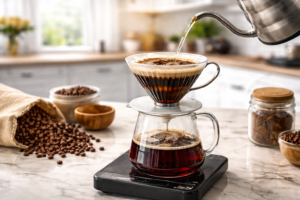
Best for Flash Brew: Hario V60 Ceramic Pour-Over Dripper
Japanese flash brew requires controlled, consistent water flow over the grounds — which is exactly what the Hario V60 is designed for. The ceramic construction maintains brew temperature more consistently than plastic alternatives, and the large spiral ridges and single extraction hole give you full control over flow rate through pour technique. This is the workhorse of café flash brew setups and the correct tool for brewing directly onto ice in a server below.
- Why for flash brew: flow rate control means you can slow the pour to compensate for the finer grind that flash brew requires
- Ceramic construction: consistent temperature during extraction; no plastic taste transfer
- Server pairing: brew directly into the V60 server or any heatproof vessel that fits ice underneath
Disclosure: CoffeeGearHub may earn from qualifying purchases.
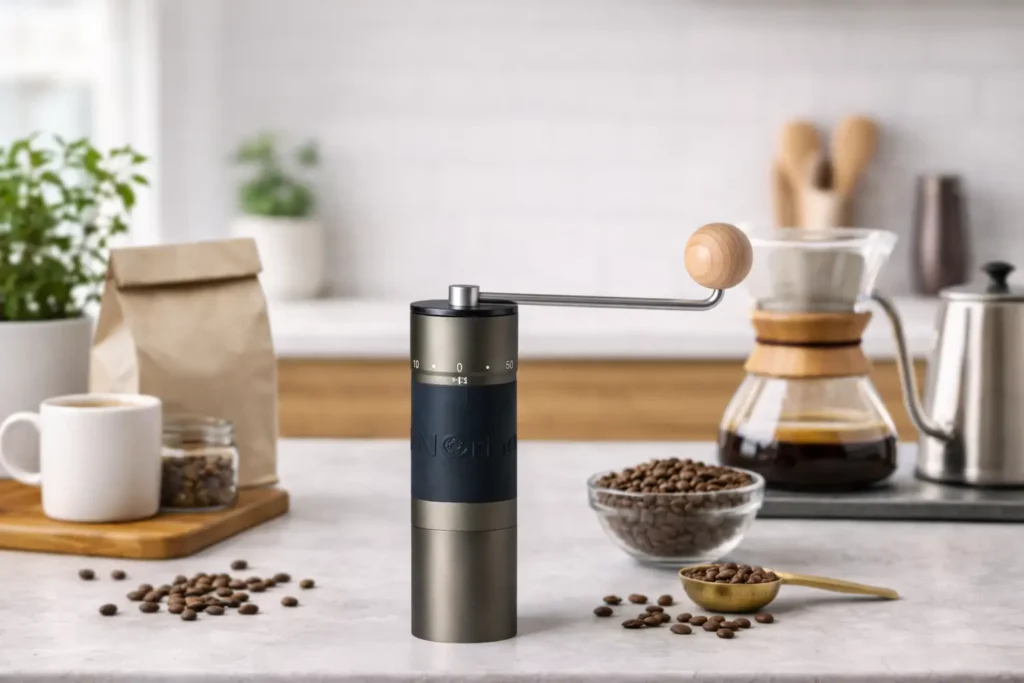
Biggest Quality Upgrade: KINGrinder K6 Manual Burr Grinder
The single most impactful upgrade for iced coffee consistency is a burr grinder — and the K6 is the CoffeeGearHub standard recommendation for all non-espresso brewing. Iced coffee is ratio-sensitive and grind-sensitive: inconsistent particle sizes from a blade grinder produce chaotic extraction that is impossible to dial in, particularly for flash brew where the reduced water volume means every gram of grind quality matters. The K6’s 100-click system provides precise adjustment between medium-fine (flash brew), medium (hot-over-ice), and coarse (cold brew) settings from a single grinder.
- Flash brew setting: 30–38 clicks (medium-fine)
- Hot-over-ice setting: 34–42 clicks (medium)
- Cold brew setting: 65–80 clicks (coarse)
- All three methods covered from one grinder with no compromise
Disclosure: CoffeeGearHub may earn from qualifying purchases.
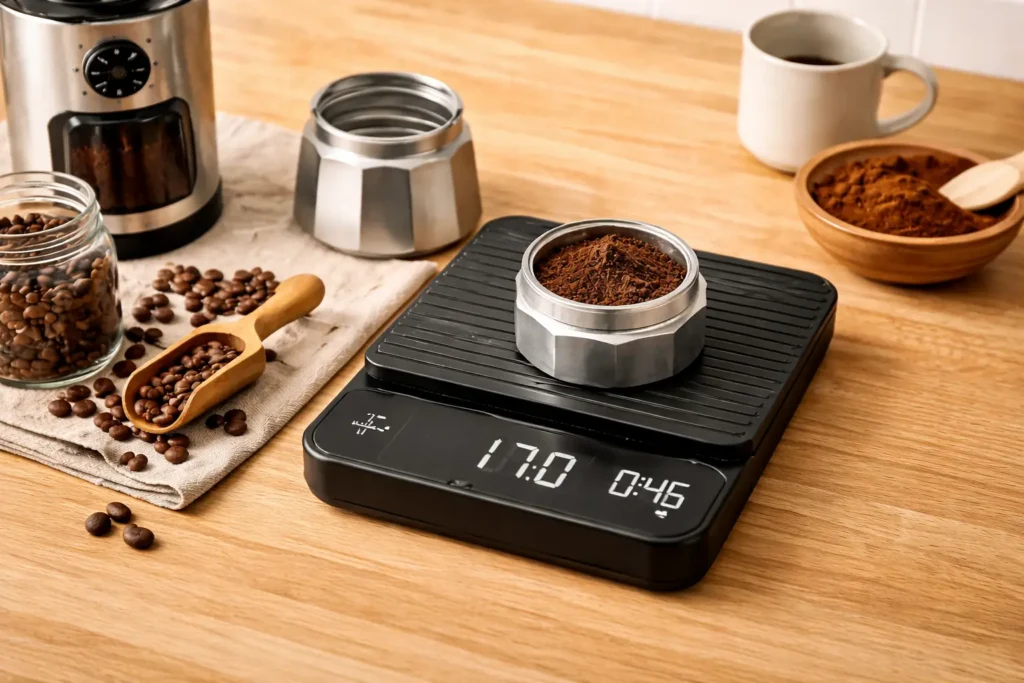
Makes Ratios Automatic: OXO Brew Precision Scale with Timer
Iced coffee is more ratio-sensitive than hot coffee — a 20g ice weight variation changes your final drink by a full ratio point. Weighing coffee, water, and ice every time is the single habit that makes iced coffee consistently excellent rather than occasionally good. The OXO Brew Precision Scale is the CoffeeGearHub standard beginner scale pick: one-button operation, auto-start timer when liquid hits the platform, and a large platform that accommodates any glass, carafe, or cold brew pitcher directly on the scale.
- 1g resolution: accurate enough for all iced coffee and cold brew ratio work
- Auto-start timer: triggers when liquid hits the platform — tracks your flash brew pour time without a separate timer
- Large platform: fits a 1L cold brew pitcher, a full-size French press, or any standard carafe directly on the scale
Disclosure: CoffeeGearHub may earn from qualifying purchases.
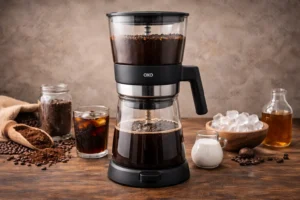
Best for Weekly Batch Prep: OXO Brew Cold Brew Coffee Maker
If you want iced coffee all week without daily brewing, cold brew concentrate is the most practical workflow — and the OXO Brew is the most beginner-friendly cold brew maker available. The rainmaker lid distributes water evenly across the grounds for consistent saturation at any ratio, the built-in measurement markings remove the guesswork from concentrate vs ready-to-drink ratios, and the glass carafe stores the finished concentrate directly in the fridge without decanting into a separate container. Makes up to 32oz of concentrate per batch.
- Rainmaker lid: even ground saturation at 1:4–1:5 concentrate ratios
- Built-in markings: no separate measuring needed for water; ratio measurement built into the carafe
- Makes 32oz concentrate: dilutes to approximately 64oz of finished iced coffee — a week’s supply for a daily drinker
Disclosure: CoffeeGearHub may earn from qualifying purchases.
FAQs: How to Make Iced Coffee at Home
What is the difference between iced coffee and cold brew?
Iced coffee is brewed hot and chilled with ice — brighter, more aromatic, ready in minutes. Cold brew is extracted using cold water over 12–24 hours, producing a smoother, lower-perceived-acidity result. Both are valid; the right choice depends on time available and the flavour profile you prefer.
What is the best ratio for iced coffee?
For hot coffee poured over ice, brew at 1:12–1:14 — stronger than standard to compensate for ice dilution. For Japanese flash brew, use 1:15 total water split 60% hot water and 40% ice. For cold brew concentrate, use 1:4 to 1:5 and dilute 1:1 before drinking.
How do I stop iced coffee from tasting watery?
Brew stronger to account for ice dilution — start at 1:13 instead of 1:16. Weigh your ice (unweighed ice is the most common cause of inconsistency). For ongoing dilution, freeze leftover coffee into coffee ice cubes so the drink stays cold without further dilution.
Why is my iced coffee bitter?
Most common causes: grind too fine, brew time too long, or dark roast over-extracted at hot brewing temperature. Fix by grinding slightly coarser, shortening brew contact time, and using medium or medium-dark roast. For cold brew, bitter results usually mean steep time is too long — reduce to 12 hours for room-temperature steeping.
Why does my Japanese flash brew taste sour?
Sourness in flash brew is almost always under-extraction — the grind is too coarse or the pour is too fast. Grind one step finer and slow the pour. Confirm you are using the correct 60/40 hot water to ice split, not a full-strength ratio with ice added separately.
What coffee beans are best for iced coffee?
Medium roast with chocolate, caramel, or nutty notes is the most balanced starting point for black iced coffee. Medium-dark roast is best for iced lattes because it stays present through milk dilution. Light roast can produce excellent flash brew but requires precise technique — it under-extracts easily over ice.
Can I make iced coffee with a drip machine?
Yes. Brew at 1:12–1:14 and pour directly over a measured amount of ice in a carafe or glass. Stir briefly and taste. If still weak after ice melts, tighten ratio (use less water) on the next batch.
How long does iced coffee last in the fridge?
Hot-brew iced coffee tastes best the same day and goes flat within 24 hours. Cold brew concentrate keeps for approximately 7 days refrigerated in a sealed container. For best results with hot-brew methods, make what you will drink in that session.
What is the best sweetener for iced coffee?
Simple syrup — equal parts sugar and hot water stirred until clear — dissolves instantly in cold drinks. Granulated sugar dissolves slowly and concentrates at the bottom. Make a batch of simple syrup and store it in the fridge for up to two weeks for fast, consistent sweetening.
Do I need a burr grinder for good iced coffee?
Not strictly, but it is the single most impactful upgrade for consistency. A burr grinder produces even particle sizes that extract cleanly — especially important for flash brew where grind size directly controls how much the coffee extracts before hitting the ice. Blade grinders produce inconsistent particles that make reproducible iced coffee very difficult.
Continue Learning
COLD COFFEE GUIDES
Want to dial in your ratios across all brewing methods? The full coffee brew ratio guide covers every method — pour over, drip, French press, AeroPress, espresso, and cold brew — with a unified calculator chart and a step-by-step dial-in framework.
☕
Written by the CoffeeGearHub Editorial Team
CoffeeGearHub is a specialty coffee equipment resource run by home brewers and coffee enthusiasts. Our guides are researched using published brewing science, SCA standards, grinder manufacturer specifications, and established specialty-coffee community knowledge. We review and update our pillar content regularly. About CoffeeGearHub →