
Best Cold Brew Coffee Makers (2026): Top Amazon Best Sellers Compared
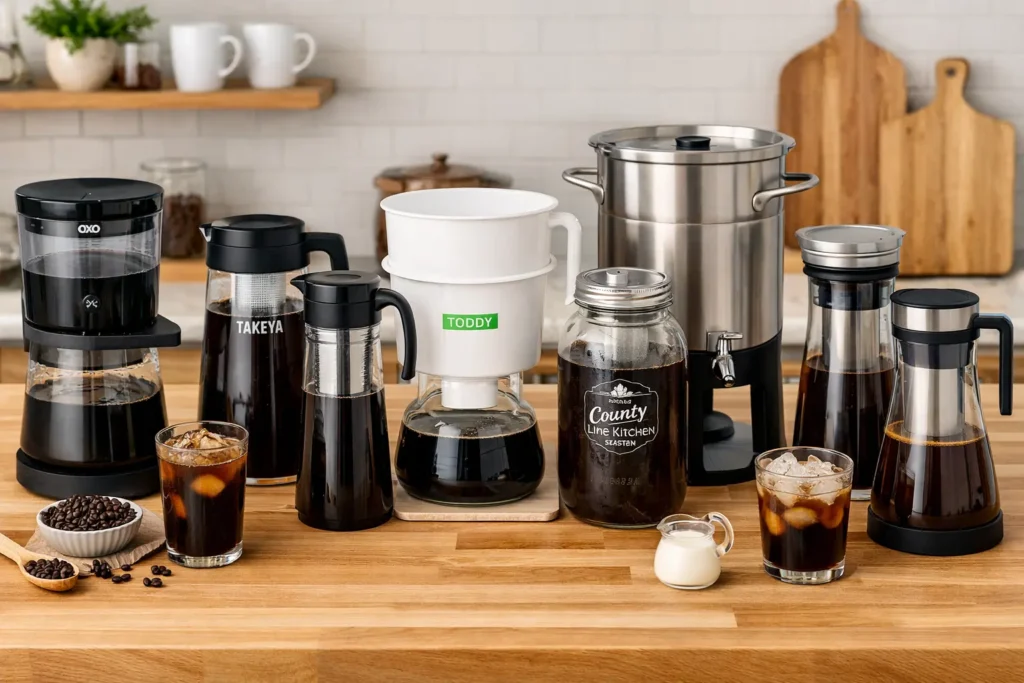
Editorial standards: this guide compares brewer design, filtration, capacity, workflow, maintenance, and current retailer availability. CoffeeGearHub does not claim hands-on testing where it has not occurred, and retailer rankings, bundles, sellers, and prices can change.
At a glance
Choose filtration and workflow before capacity
OXO and Toddy-style systems make the most sense when you want cleaner concentrate and controlled draining. Takeya, Primula, County Line, and Hario prioritize simpler immersion brewing and refrigerator-friendly storage.
Editorial analysis
The best cold-brew maker depends on how you serve it
Cold-brew brewers are simpler than espresso machines, but the designs still solve different problems. Mesh immersion pitchers are easy to fill and store; drain systems add filtration control and are better suited to concentrate.
Capacity matters only after you decide whether you want ready-to-drink coffee or concentrate. A large pitcher is not automatically better if it produces more sediment than you enjoy, and a premium drain system is unnecessary if your priority is a quick refrigerator batch.
The 30-Second Answer
Choose the OXO Good Grips if you want cleaner concentrate with controlled draining and lower sediment. Choose the Hario Mizudashi if you want a compact, simple immersion pitcher for ready-to-drink cold brew.
Use those two as the starting reference points, then compare capacity, filtration, cleanup, and batch style across the full shortlist below.
Compare current options
Start with these representative choices
Use these as reference points for the two main cold-brew workflows before comparing the full shortlist in detail.
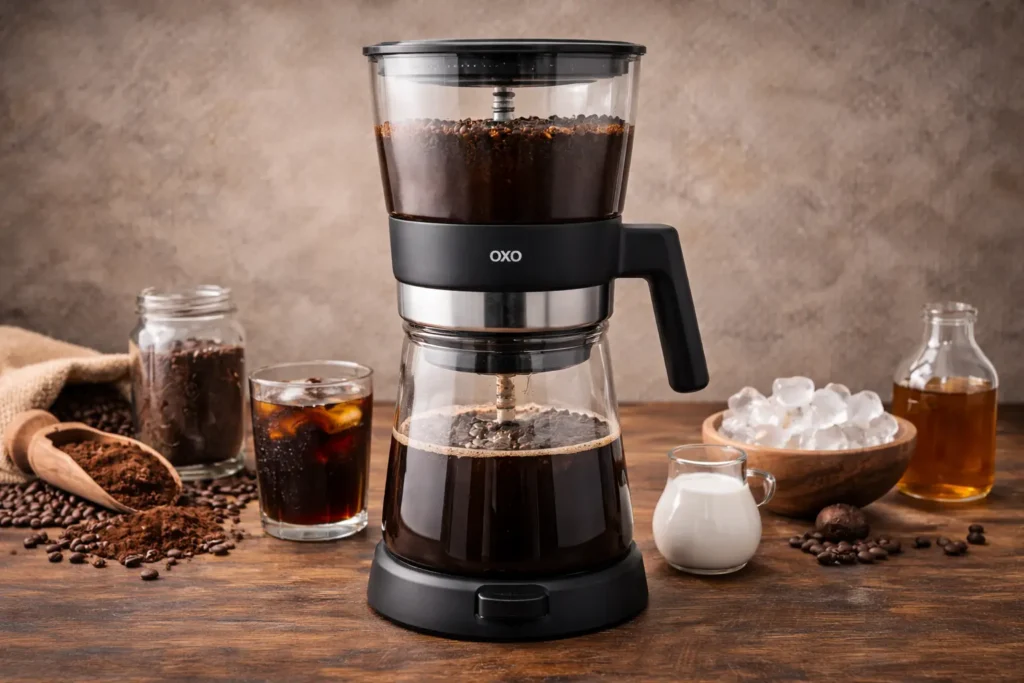
OXO Good Grips — Concentrate and Cleaner Filtration
The OXO is the representative choice when you want to brew concentrate, control the drain, and reduce sediment compared with a basic mesh-pitcher workflow.
Use this side of the comparison if: you prefer concentrate that can be diluted over ice or used as a stronger base for milk drinks.
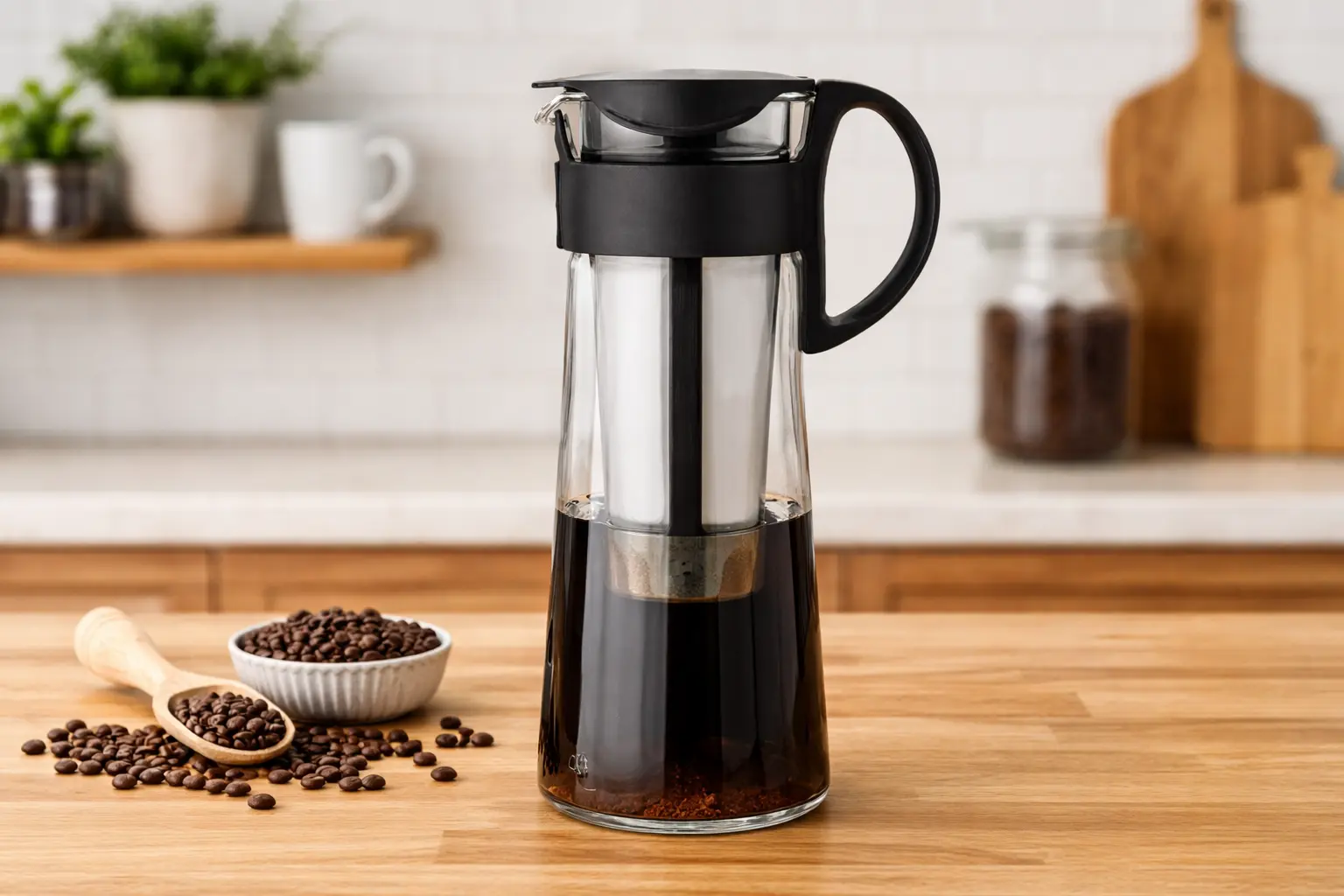
Hario Mizudashi — Compact Ready-to-Drink Batches
The Hario is the simpler counterpoint: a compact immersion pitcher with a removable fine-mesh basket and an easy steep-and-store refrigerator workflow.
Use this side of the comparison if: you want frequent ready-to-drink batches without a separate concentrate or draining workflow.
View CoffeeGearHub product details → Check Price on Amazon →
Affiliate disclosure: These links may earn CoffeeGearHub a commission at no additional cost to you. As an Amazon Associate, we earn from qualifying purchases. Prices, sellers, bundles, and availability can change.
Quick Comparison: Best Cold Brew Coffee Makers
If you only want the fastest “which one should I buy?” answer, this table is it. Below, we break down each brewer with detailed pros/cons, use-cases, and brew tips.
| Cold brew maker | Capacity / style | Filtration | Best fit |
|---|---|---|---|
| OXO Good Grips | Concentrate system; about 32oz finished carafe | Perforated filter with optional paper filtration | Clean concentrate and low sediment |
| Takeya Deluxe 2 Qt | Large immersion pitcher | Fine-mesh filter tube | Weekly batches and fridge-friendly storage |
| Primula Burke Deluxe | Glass immersion pitcher | Mesh core | Budget-conscious first cold-brew setup |
| County Line Kitchen 2 Qt | Wide-mouth glass jar | Stainless mesh filter | Simple cleanup and durable big-batch brewing |
| Toddy Cold Brew System | Large concentrate system | Base filter with optional paper filtration | Heavy use and smooth concentrate |
| Hario Mizudashi | Compact immersion pitcher | Fine-mesh basket | Small fridges and ready-to-drink batches |
Related reading: If your cold brew tastes weak, sour, or muddy, fix it with grind + ratio fundamentals from How to Dial In Coffee at Home (yes, the principles apply—even though it also covers drip and espresso).
How We Picked the Best Cold Brew Coffee Makers
This guide focuses on Amazon best sellers and consistently top-reviewed models. Popularity matters because it usually correlates with reliable performance, replacement parts availability, and strong “real-world” feedback over time. We then filter those best sellers through criteria that actually impact your cup quality and day-to-day experience:
- Filtration performance: Does it create a clean concentrate or a gritty one?
- Ease of use: How fast can you brew with minimal mess and repeatable results?
- Cleaning: Does it rinse clean, or does it trap coffee sludge?
- Capacity-to-footprint: Can it live in your fridge without becoming a nuisance?
- Value: Are you paying for better filtration/control, or just aesthetics?
Bottom line: the best cold brew maker isn’t “the most expensive.” It’s the one that matches how you drink cold brew—black over ice, diluted concentrate, or milk-based drinks—without adding friction.
What Matters Most When Buying a Cold Brew Coffee Maker
1) Filtration: The “Sediment vs Clean” Tradeoff
Cold brew is forgiving, but filtration is where cheap brewers fall apart. You can still make decent cold brew in a jar, but you’ll usually get either:
- Cleaner concentrate: Better filtration, fewer fines, smoother finish, better for lattes and “iced Americano” style drinks.
- More body + more sediment: Some people like the heavier mouthfeel; others hate the grit.
If you want the cleanest results, pick a system that supports paper filtration or has a very fine, well-designed metal filter. For many home brewers, the OXO wins here because you can use optional paper filters to polish the concentrate.
2) Capacity: Daily Iced Coffee vs Weekly Batching
Be honest: do you drink cold brew daily, or only on weekends? Most people either:
- Daily drinkers: prefer 600–1000 ml pitchers (Hario-style) because it’s easy to refresh and fits anywhere.
- Batch brewers: prefer 2-quart pitchers (Takeya, County Line Kitchen) so they can brew once and forget it.
- Heavy users / families: may prefer Toddy-style systems for larger concentrate production.
3) Materials: Glass vs Plastic vs Stainless
Glass is flavor-neutral and doesn’t hold odors. Plastic is durable and often lighter, but some low-quality plastics can retain coffee smell over time. Stainless steel is durable and blocks light (which can help slow oxidation), but it’s less common in pitcher-style cold brew kits unless it’s part of the filter assembly.
Pro tip: if you’re brewing inside the fridge for 12–24 hours, light exposure is usually minimal. The bigger factor is simply keeping air out and cleaning oils regularly.
Related reading: For best flavor, keep beans fresh with How to Store Coffee Beans.
Best Cold Brew Coffee Makers
These six brewers cover the main cold-brew workflows: clean concentrate, large immersion batches, low-cost entry setups, easy-clean glass systems, heavy-use concentrate brewing, and compact refrigerator pitchers. Choose by filtration and serving routine before capacity or appearance.
Best for clean concentrate
OXO Good Grips Cold Brew Coffee Maker
OXO is the strongest fit when filtration quality matters more than minimal parts. Its concentrate-oriented design helps saturate the grounds evenly and then drains the finished coffee into a separate carafe, which makes it easier to keep sludge out of the serving vessel.
Best for: iced lattes, diluted concentrate, and drinkers who dislike sediment. Watch for: a higher purchase price and a more involved workflow than a simple immersion pitcher.
Starting recipe: coarse grind, about 1:4 coffee-to-water by weight for concentrate, and roughly 14–18 hours refrigerated. Paper filtration can further clean up the cup.
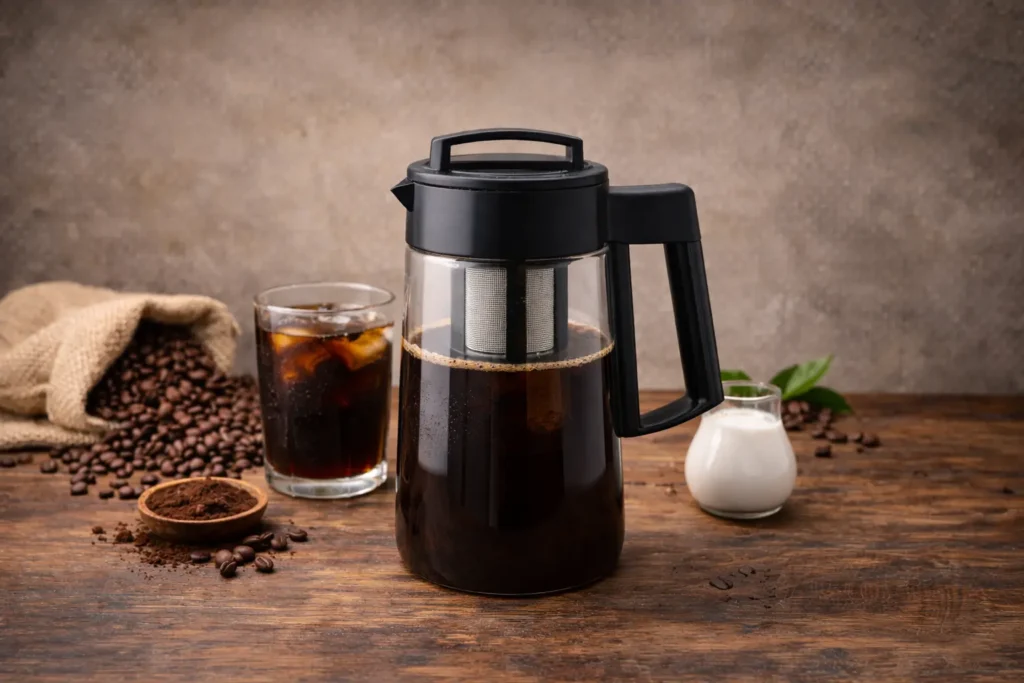
Best big-batch pitcher
Takeya Deluxe 2 Quart
Takeya is built around a simple “brew once, pour for several days” routine. The removable mesh filter sits inside a refrigerator-friendly pitcher, so the workflow is straightforward and the 2-quart format suits households that drink cold brew frequently.
Best for: large ready-to-drink batches and easy refrigerator storage. Watch for: some fines can pass through the mesh, particularly with an inconsistent grinder.
Starting recipe: coarse grind, about 1:8 for ready-to-drink or 1:6 for a stronger batch, and 12–18 hours refrigerated. Paper-filter the finished brew once if you want a cleaner finish.
Best budget option
Primula Burke Deluxe
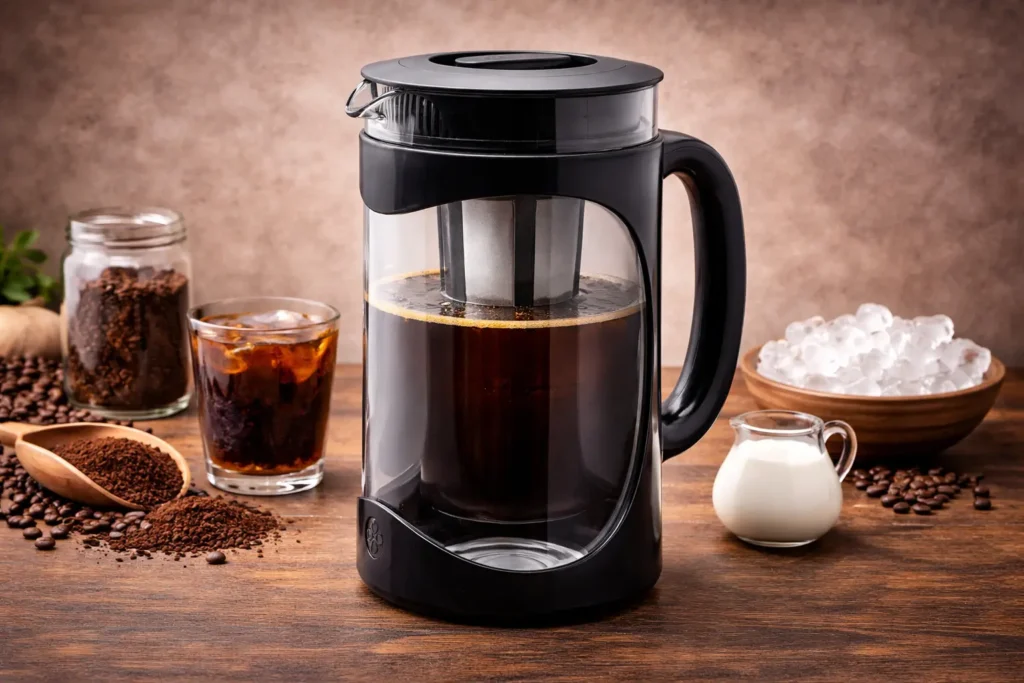
Primula keeps the format basic: a glass pitcher and mesh core filter at a lower entry price. That makes it a sensible first cold-brew maker when you want to test the routine before buying a more elaborate concentrate system.
Best for: beginners and occasional cold-brew drinkers. Watch for: filtration is basic, so fines can collect at the bottom of the pitcher.
A single pass through a paper filter after brewing is the easiest upgrade if you like the Primula workflow but want a cleaner cup.
Best wide-mouth glass system
County Line Kitchen 2 Quart
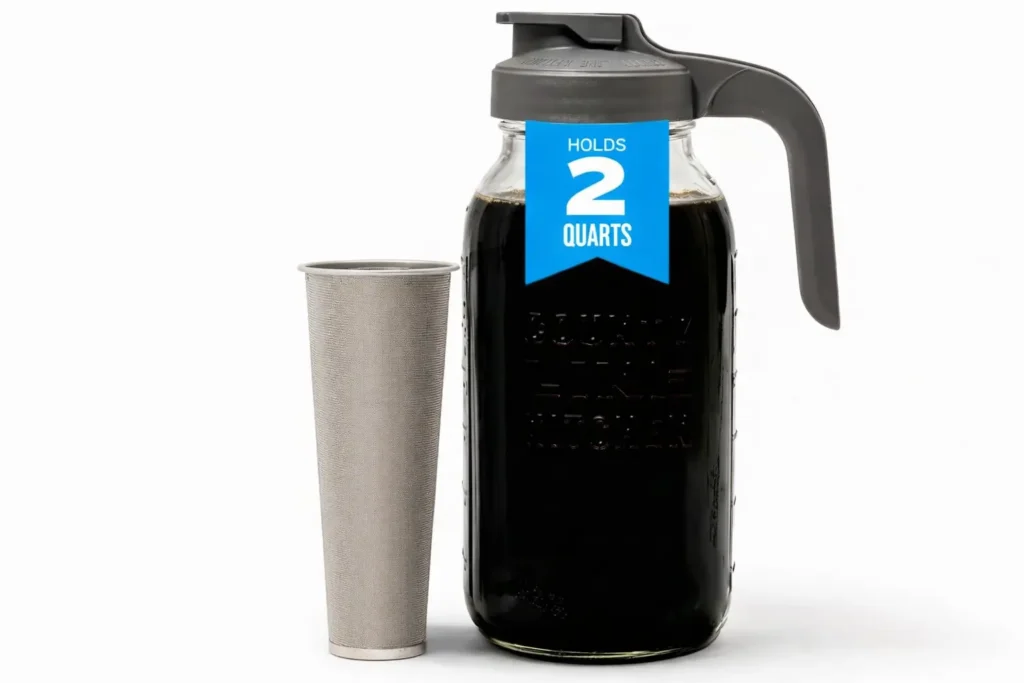
The appeal here is simplicity: a wide-mouth glass vessel that is easy to reach into and clean, paired with a removable stainless-steel filter. The large jar format works well for households that want a durable batch brewer without a drain mechanism or multiple specialty parts.
Best for: easy cleaning, durable glass storage, and large batches. Watch for: fine particles can still pass through the metal filter.
If clarity matters, paper-filter the finished cold brew once before storing it.
Best classic concentrate system
Toddy Cold Brew System
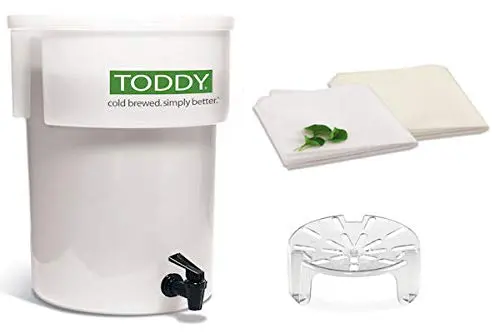
Toddy remains a useful reference for heavy-use concentrate brewing because the system is designed around a large steep and controlled filtration. With the appropriate filters, it can produce smooth concentrate for black cold brew, milk drinks, and sweetened iced coffee.
Best for: households that use cold brew quickly and want concentrate in larger volumes. Watch for: more pieces and a more involved setup than pitcher-style brewers.
Paper filtration produces the cleanest finish; the standard base filtration retains more body.
Best compact pitcher
Hario Mizudashi
The Mizudashi is a straightforward daily-use pitcher: add coffee to the filter basket, fill with water, steep, remove the basket, and refrigerate. Its smaller footprint makes more sense for frequent ready-to-drink batches than for producing a large concentrate supply.
Best for: small kitchens, compact refrigerator shelves, and simple ready-to-drink cold brew. Watch for: smaller capacity means more frequent brewing.
Affiliate disclosure: Product links above are affiliate links. CoffeeGearHub may earn from qualifying purchases at no additional cost to you. Prices and availability can change.
Comparison Deep Dive: Which Style Fits Your Routine?
Most cold brew makers fall into two categories: immersion pitchers (Takeya, Primula, County Line, Hario) and concentrate/drain systems (OXO, Toddy-style). Here’s how to choose without overthinking it.
| Style | Workflow | Strengths / trade-offs | Best for |
|---|---|---|---|
| Immersion pitcher | Grounds steep directly in water; remove the filter after steeping. | Simpler, fewer parts, and easy refrigerator storage; mesh versions can allow more sediment through. | Daily ready-to-drink batches and big-batch fridge brewing. |
| Concentrate / drain system | Grounds steep, then finished coffee drains into a separate carafe. | Cleaner concentrate and better filtration control; usually costs more and adds steps. | Milk drinks, dilution flexibility, and people who strongly dislike sediment. |
Rule of thumb: If you make milk drinks or hate sediment, buy the OXO (or Toddy). If you want simple, affordable, and “good enough to great,” buy a pitcher system and polish with paper when needed.
Cold Brew Ratios, Grind Size, and Steep Time (Dial It In Once)
Cold brew is less sensitive than espresso, but it’s not “anything goes.” If your cold brew tastes watery, harsh, or muddy, it’s almost always one of these: grind too fine, ratio too weak, or steep too long in warm conditions. For a dedicated concentrate-versus-ready-to-drink reference with batch-size and dilution tables, see the Cold Brew Ratio Chart.
Best grind size for cold brew
Start with coarse. Think: raw sugar or coarse sea salt. A finer grind increases extraction speed and bitterness—and it increases fines that slip through filters. If your cold brew is too weak, adjust ratio first before going finer.
Best cold brew ratios (by weight)
Use a kitchen scale for one batch and you’ll never guess again. Here are reliable starting ratios:
| Goal | Coffee : Water | Example | How to Serve |
|---|---|---|---|
| Concentrate | 1:4 | 200 g coffee + 800 g water | Dilute 1:1 with water or milk (adjust to taste) |
| Strong Ready-to-Drink | 1:6 | 150 g coffee + 900 g water | Pour over ice; add a splash of milk |
| Standard Ready-to-Drink | 1:8 | 125 g coffee + 1000 g water | Pour over ice as-is |
Pro tip: If you use volume measurements (cups/spoons), you’ll get “pretty good” results. But weight gives you repeatable results across grinders and bean densities.
Best steep time (fridge vs room temp)
- Fridge steep: 12–18 hours is a sweet spot; up to 24 hours for darker, heavier concentrate.
- Room temp steep: 10–14 hours is often enough. If you go long at room temp, watch for harsher flavors.
If your cold brew is bitter: shorten steep time, keep it colder, and confirm your grinder isn’t producing excessive fines. If it’s sour/weak: increase ratio or extend steep time before grinding finer.
Internal link: For grind/ratio fundamentals that translate to every brew style, see How to Dial In Coffee at Home.
Common Cold Brew Mistakes (and How to Fix Them)
Mistake #1: Grinding too fine
This is the #1 cause of muddy, bitter cold brew. Fine grind creates more fines that clog filters and push extraction into harsh territory. Fix it by going coarser and increasing ratio slightly if needed.
Mistake #2: “More time = better”
Not always. At some point, longer steeping stops adding sweetness and starts adding woody bitterness—especially at room temperature. If you want stronger cold brew, increase coffee dose instead of steeping forever.
Mistake #3: Using stale beans
Cold brew can hide defects better than hot coffee, but it can’t fix stale beans. You’ll get “flat chocolate water” instead of sweetness and clarity. Buy beans with a visible roast date and store them correctly. Not sure whether cold brew or hot-brewed iced coffee suits you better? Compare them in cold brew vs iced coffee.
Internal links: How to Store Coffee Beans • Coffee Bean Buying Guide
Mistake #4: Not filtering enough
If your cold brew tastes “dusty” or leaves sludge at the bottom of the glass, your filter is letting fines through. This is common in mesh systems. The fix is easy: pour once through paper after brewing. Cleaner cup, smoother finish.
Mistake #5: Storing concentrate incorrectly
Cold brew oxidizes slowly but surely. Store concentrate in a sealed container in the fridge and keep air exposure minimal. If you’re making big batches, use a pitcher with a tight lid and decant into smaller containers as you go so the “main batch” sees less air.
Three Ways to Serve Cold Brew (That Actually Taste Good)
Cold brew can be incredibly versatile, but most people sabotage it by diluting too much or using the wrong milk ratio. Use these as baseline “recipes,” then adjust strength to taste.
1) Black Cold Brew Over Ice (clean + refreshing)
- If concentrate: 1 part concentrate + 1 part water, pour over ice
- If ready-to-drink: pour over ice as-is
- Optional: pinch of salt for perceived sweetness (tiny amount!)
2) Cold Brew + Oat Milk (sweet, creamy, café-style)
- Concentrate: 1 part concentrate + 1 part oat milk
- Optional: cinnamon or vanilla syrup
3) Iced Latte Style (strong, balanced, “coffee shop”)
- Fill glass with ice
- Add 2–3 oz concentrate
- Add 6–8 oz milk (or alt milk)
- Sweeten lightly if needed
Bean tip: Medium and dark roasts usually create the most satisfying cold brew base. Light roasts can work, but they often benefit from slightly longer steep times and a tighter ratio to avoid “tea-like” thinness.
Cleaning + Maintenance (Keep Your Cold Brew Tasting Fresh)
Cold brew leaves behind oils that stick to filters and pitcher walls. If you notice your coffee tasting “stale” even with fresh beans, it’s usually a cleaning issue—not the recipe.
- After each batch: rinse filter immediately, then wash with dish soap.
- Weekly (or every 2–3 batches): soak filter in warm water + gentle detergent, then rinse thoroughly.
- Avoid odor retention: let components dry fully before storing.
Storage tip: Concentrate is best within 5–7 days. It’s usually safe longer, but flavor quality drops as aromatics fade and oxidation increases. Smaller batches more often often taste better than one huge batch that sits for two weeks.
Recommended Cold Brew Accessories
The brewer matters, but grind consistency, measuring, and final filtration can change the cup just as much. These are the three supporting tools worth prioritizing.
Supporting gear
Upgrade the parts that affect repeatability
Affiliate disclosure: These Amazon links may earn CoffeeGearHub a commission at no additional cost to you.
Whichever brewer you choose, storage decides how long each batch stays good. Our guide to how long cold brew lasts covers fridge life, the best containers, and signs a batch has gone bad.
FAQs
What grind size is best for cold brew coffee?
Use a coarse grind (similar to raw sugar). A grind that’s too fine increases bitterness and pushes coffee fines through filters, creating a muddy cup.
How long should cold brew steep?
In the fridge, 12–18 hours is a reliable sweet spot. You can go up to 24 hours for darker, heavier concentrate. At room temperature, 10–14 hours is often enough to avoid harshness.
What is the best coffee-to-water ratio for cold brew?
For concentrate, start at 1:4 (by weight). For ready-to-drink, use 1:8. If your cold brew is weak, increase dose before grinding finer.
Is cold brew less acidic than iced coffee?
Cold brew is often perceived as smoother and less sharp because it extracts differently at low temperatures. If you’re sensitive, choose chocolate-forward medium/dark roasts and avoid over-steeping.
How long does cold brew concentrate last in the fridge?
For best flavor, drink it within 5–7 days in a sealed container. It may last longer, but aromatics fade and oxidation reduces sweetness and clarity.
Why is my cold brew bitter?
Common causes: grind too fine, steep time too long (especially warm), or too many fines. Fix it by going coarser, shortening the steep, and/or filtering through paper once.
Why is my cold brew watery or sour?
You likely used too little coffee or didn’t steep long enough. Increase the coffee dose (ratio) first, then consider extending steep time before changing grind size.
Do I need a special cold brew coffee maker?
No—any jar can work—but a purpose-built cold brew maker reduces mess, improves filtration, and makes repeatable results much easier. If you hate sediment, choose a system that supports paper filtration.
CoffeeGearHub product shortlist
Continue with cold-brew gear on CoffeeGearHub
Review specifications and current verified merchant offers on CoffeeGearHub before leaving the site.
Continue Learning
Cold brew fundamentals
Improve the rest of the setup