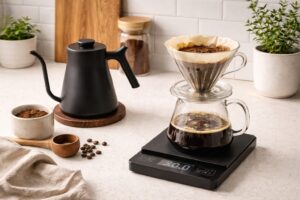
Choosing between a manual coffee grinder and an electric coffee grinder is one of the most important decisions a home coffee drinker can make. While both can produce excellent coffee, they serve very different routines, budgets, and brewing goals.
This guide breaks down manual vs electric coffee grinders in real-world terms—not marketing hype. We’ll explain how each type works, where each excels, the trade-offs to consider, and which option makes the most sense for your specific brewing style.
If you’re deciding what to buy, this comparison will help you choose confidently.
Related guides: Best Burr Coffee Grinders · Grind Size Explained · Burr vs Blade Coffee Grinders · Best Burr Grinders for Espresso
Quick Answer (For Impatient Buyers)
- Choose an electric coffee grinder if you brew daily, value convenience, or make espresso regularly.
- Choose a manual coffee grinder if you brew smaller amounts, value portability, or want excellent grind quality at a lower price.
Both can make great coffee—the difference is workflow, speed, and consistency under pressure.
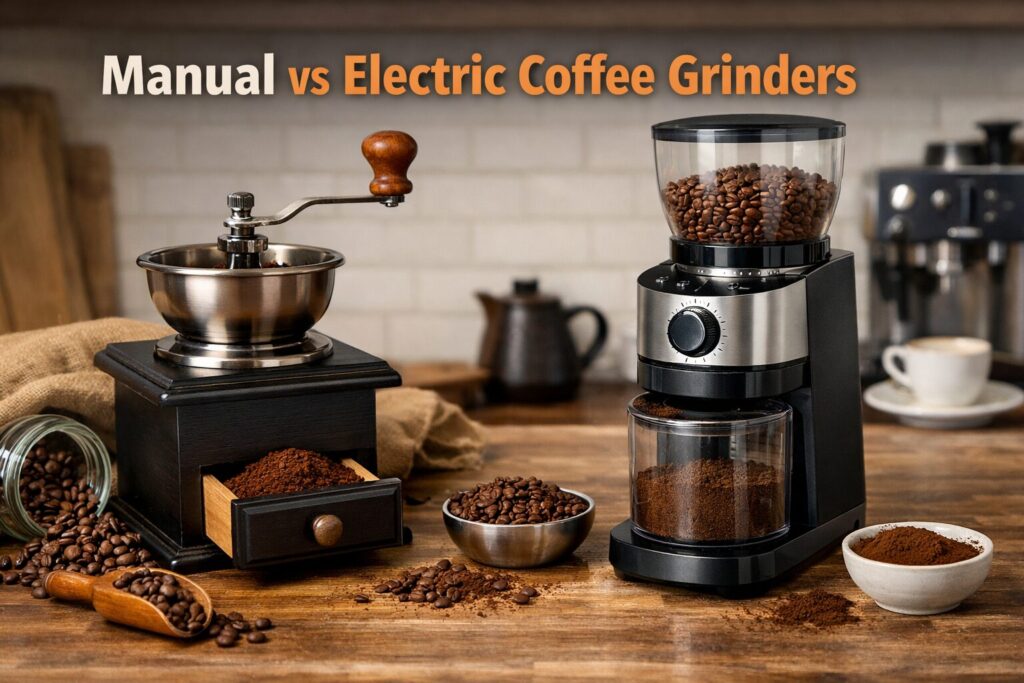
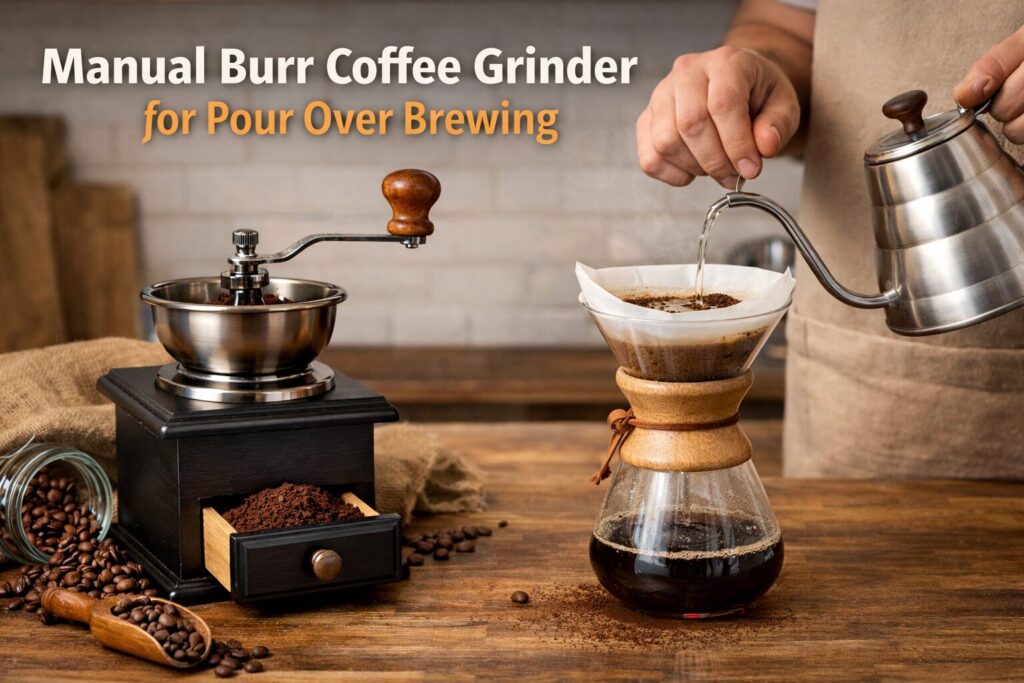
What Is a Manual Coffee Grinder?
A manual coffee grinder uses hand power to rotate burrs that crush coffee beans into uniform particles. Most quality manual grinders use steel or ceramic burrs, and many outperform entry-level electric grinders in grind consistency.
Key characteristics
- No electricity required
- Compact and travel-friendly
- Slower, but highly consistent
- Excellent price-to-performance ratio
Typical use cases
- Pour-over (V60, Kalita, Chemex)
- Aeropress
- Drip coffee
- Travel or small kitchens
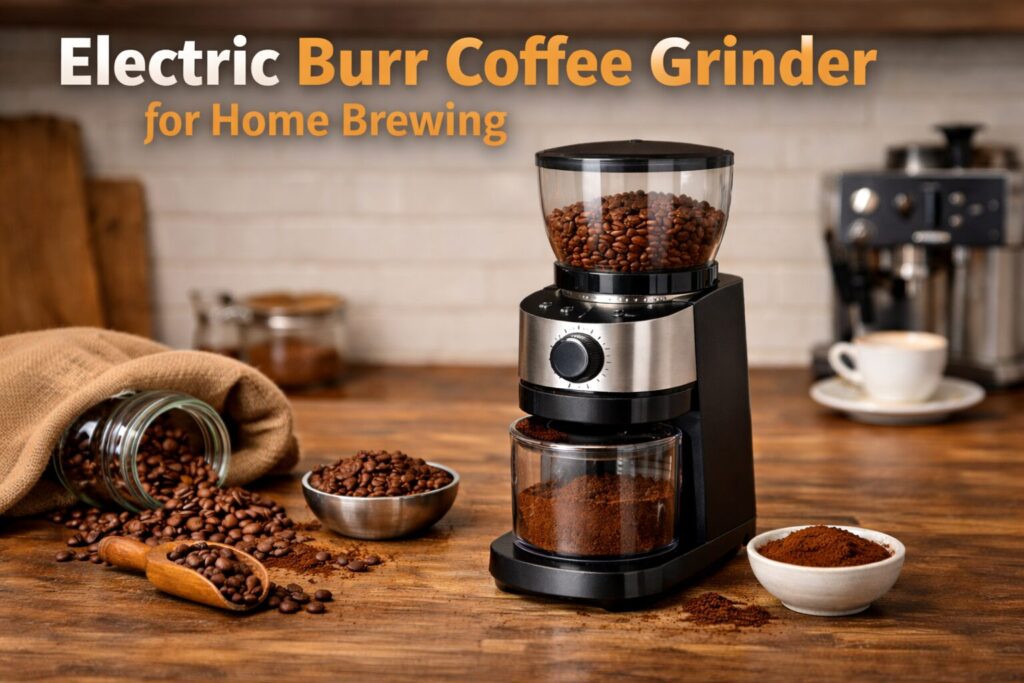
What Is an Electric Coffee Grinder?
An electric coffee grinder uses a motor to spin burrs at a fixed speed. Quality electric grinders focus on burr alignment, motor stability, and grind adjustment precision—especially important for espresso.
Key characteristics
- Fast and convenient
- Ideal for daily brewing
- Handles larger volumes easily
- Required for most espresso workflows
Typical use cases
- Espresso
- Daily drip or batch brewing
- Multiple cups per session
- Busy households
Manual vs Electric Coffee Grinders: Side-by-Side Comparison
| Feature | Manual Grinder | Electric Grinder |
|---|---|---|
| Convenience | Low–Moderate | High |
| Speed | Slow | Fast |
| Noise | Very quiet | Moderate |
| Portability | Excellent | Poor |
| Counter space | Minimal | Larger footprint |
| Grind consistency | Excellent (good models) | Excellent |
| Espresso capability | Limited (model-dependent) | Strong |
| Price-to-performance | Very high | Varies |
| Maintenance | Simple | More components |
Grind Quality: Which Is Actually Better?
Manual grinders often produce better grind consistency at lower prices than electric grinders because they avoid motor vibration and typically rotate burrs more slowly, which can reduce excess fines in filter brewing.
However, electric grinders dominate espresso because espresso requires very fine, repeatable adjustments and grinding espresso by hand is slow and physically demanding for most people.
Bottom line: Manual grinders shine for filter coffee. Electric grinders win for espresso and higher volume routines.
Brewing Method Compatibility
| Brewing Method | Manual Grinder | Electric Grinder |
|---|---|---|
| Pour-over | ✅ Excellent | ✅ Excellent |
| Drip coffee | ✅ Excellent | ✅ Excellent |
| French press | ✅ Excellent | ✅ Excellent |
| Aeropress | ✅ Excellent | ✅ Excellent |
| Espresso | ⚠️ Limited | ✅ Best choice |
Tip: If you’re unsure what grind size you need for your brewer, see: Grind Size Explained.
Real-World Workflow Differences (What Most Guides Miss)
Manual grinder reality
- Grinding 20–25g takes ~30–60 seconds for filter coffee
- Excellent for one or two cups
- Quiet enough for early mornings
- Less ideal when serving guests or brewing large batches
Electric grinder reality
- Grinding takes seconds
- Better for back-to-back shots and busy routines
- Louder, but consistent
- Encourages repeatable daily workflow
This is where lifestyle matters more than specs.
Cost vs Performance: What Delivers Better Value?
| Budget | Best fit | Why |
|---|---|---|
| Under $100 | Manual | Better burr quality for the money |
| $100–$200 | Manual or entry electric | Depends on convenience vs grind quality |
| $200–$400 | Electric | Strong balance of speed and consistency |
| Espresso-focused | Electric | Fine adjustment + repeatability matters |
In many cases, a $150 manual grinder can rival grind quality from a $200+ electric grinder. Electric grinders pay off when convenience and volume matter more than cost.
Common Buying Mistakes
- Buying a blade grinder to “save money”
- Assuming all burr grinders work for espresso
- Overpaying for features you won’t use
- Underestimating how often you’ll grind
- Choosing speed over consistency
Understanding your routine matters more than brand names or motor wattage.
Which Should You Choose?
Choose a manual coffee grinder if:
- You brew pour-over or drip most of the time
- You value grind quality over speed
- You travel or have limited counter space
- You want maximum value per dollar
Choose an electric coffee grinder if:
- You brew espresso frequently
- You make coffee daily (or for multiple people)
- You prioritize convenience and speed
- You want consistent results without manual effort
For many homes, a manual grinder is the best “starter upgrade,” while an electric grinder becomes essential as your routine grows.
Frequently Asked Questions
Is a manual coffee grinder better than an electric one?
Neither is universally better. Manual grinders often deliver better grind quality for the price, while electric grinders are faster and more convenient for daily routines.
Can a manual grinder be used for espresso?
Some high-quality manual grinders can grind fine enough for espresso, but the process is slower and more physically demanding than using an espresso-capable electric grinder.
Do electric grinders make better coffee?
Not necessarily. Coffee quality depends primarily on burr design, alignment, and adjustment—not whether the grinder is manual or electric.
Which lasts longer: manual or electric grinders?
Manual grinders often last a long time because they have fewer components. Electric grinders can also last many years, but depend more on motor quality and maintenance.
Final Verdict
The manual vs electric coffee grinder decision is about lifestyle, not just taste. Manual grinders offer excellent value, quiet operation, and portability. Electric grinders offer speed, convenience, and better espresso workflow.
Choose the grinder type that matches how you brew today—then upgrade later if your routine and expectations change.