Last Updated: February 27, 2026 • 18–25 min read
The moka pot is simple—but the right accessories dramatically improve consistency, flavor, and versatility. If you’re brewing with a stovetop espresso maker, a few smart upgrades can solve common issues like bitterness, sputtering, uneven extraction, and “metallic” taste. This pillar guide covers what to buy (and what to skip), plus the extraction science behind why each accessory works—so you can build a moka setup that tastes cleaner, sweeter, and more repeatable.
Quick Takeaways
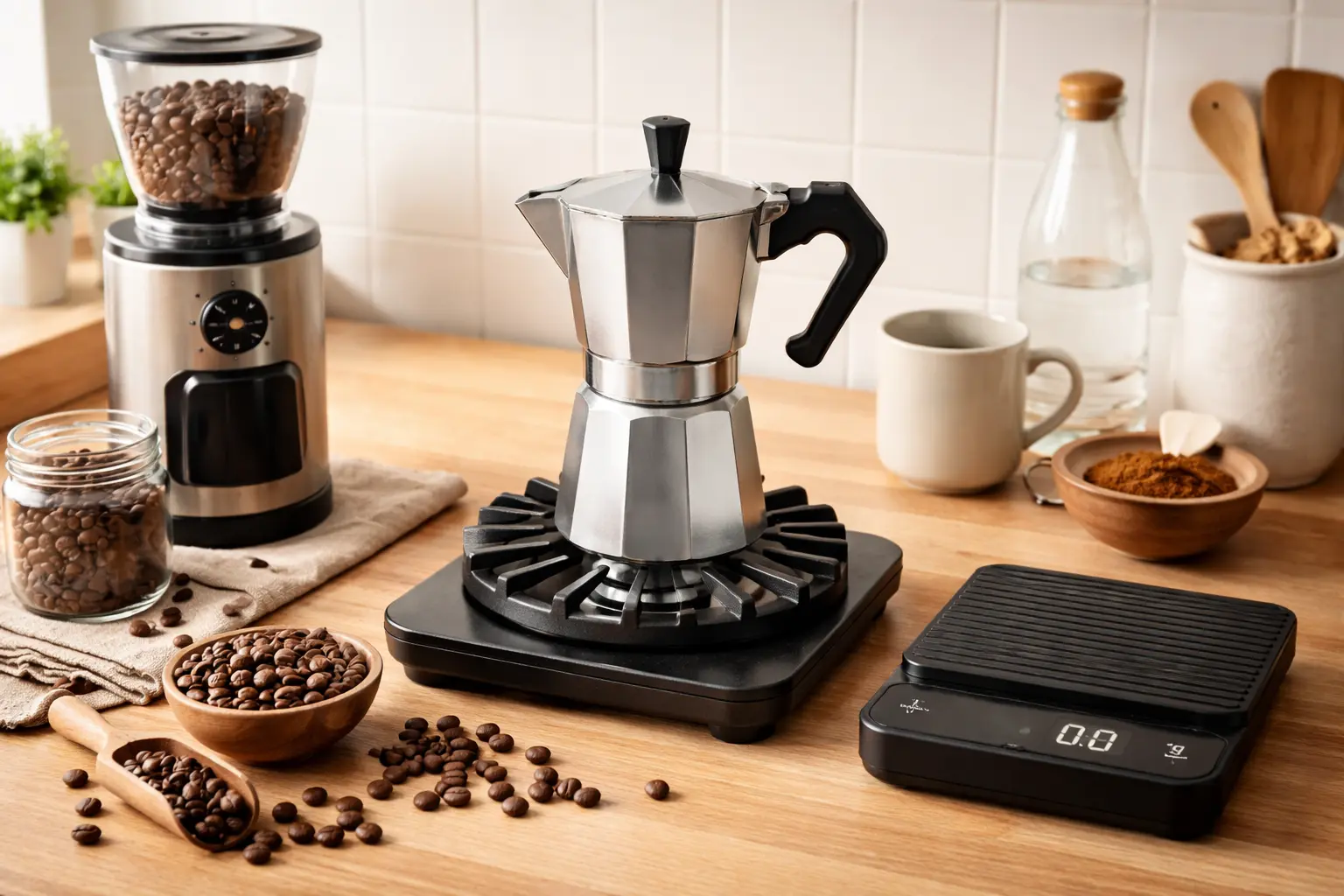
- A burr grinder is the #1 upgrade for better moka flavor and fewer harsh notes.
- A heat diffuser plate reduces scorching and bitterness by smoothing the heat curve.
- A precision scale makes your coffee repeatable (and helps you dial in fast).
- A milk frother turns moka coffee into café-style drinks (lattes, cappuccinos, cortados).
- Paper filters are optional but can improve clarity and reduce sludge.
- Fresh gaskets + a clean filter plate restore proper pressure and reduce off-flavors.
Table of Contents
Why Accessories Matter for Moka Brewing
A moka pot isn’t an espresso machine, but it’s also not “just drip.” It’s a compact pressure brewer that sits between the two: water heats in the base, pressure builds, and hot water is pushed through coffee into the upper chamber. Because there’s no built-in temperature control, pressure gauge, or pump, your results are disproportionately affected by small changes in the things you can control:
- Heat curve (how fast you ramp from room temp to brew pressure)
- Grind consistency (particle size distribution + fines content)
- Dose and basket fill (headspace + resistance)
- Water chemistry (mineral content changes perceived bitterness/sweetness)
- Seal integrity (gasket + filter plate condition governs pressure path)
The best accessories help you control the brew more gently (smoother heat), more consistently (repeatable ratios), or more cleanly (reduced sludge and off-flavors). If you want a broader dialing-in framework for all brew methods, start here: How to Dial In Coffee at Home (Drip, Pour-Over, Espresso).
Extraction Science: What’s Happening Inside a Moka Pot

To choose moka accessories intelligently, it helps to understand the brew mechanics. A moka pot’s flavor is mostly determined by contact time, brew temperature, and flow resistance. Those variables are linked: grind size changes resistance (and flow), which changes contact time; heat changes brew temperature (and pressure), which changes flow speed.
Pressure & Flow: Why “Too Hot Too Fast” Tastes Harsh
When you blast high heat, the base chamber ramps quickly. Pressure rises fast, water surges through the coffee bed, and the brew can move from a calm stream to aggressive sputtering rapidly. That tends to produce two common problems:
- Uneven extraction: fast flow encourages channels, extracting some particles heavily while bypassing others.
- Overheated end phase: near the finish, more steam and very hot water push through, increasing bitterness and astringency.
Accessories like a heat diffuser plate help because they smooth the heat ramp. Your target is a steady brew phase with controlled output—then an intentionally gentle stop before the harshest end phase dominates.
Particle Size Distribution: The Real Grinder Story
Moka pots are sensitive to fines (tiny powder-like particles). Too many fines can choke flow, increase bitterness, and create “mud” in the cup. Too coarse overall can lead to weak, sour coffee because water passes through too easily. This is why a burr grinder is transformative: it narrows particle distribution so water flows more evenly and extraction becomes more predictable.
Blade grinders typically produce a mix of boulders + powder. In moka brewing, boulders under-extract (hollow/sour) while powder over-extracts (bitter/dry). A burr grinder reduces both extremes and lets you make small changes rather than guessing.
Temperature Sweet Spot: Why Preheating Can Help (and Hurt)
Preheating water can shorten time-on-heat, which sometimes reduces “baked” flavors. But boiling water plus high heat can also accelerate the brew, increasing harshness. The trick is to use moderately hot water (not a rolling boil), then use a gentle heat setting (or diffuser) for a calm extraction.
Top Moka Pot Accessories (Quick Picks)
Best Upgrade: Burr Grinder
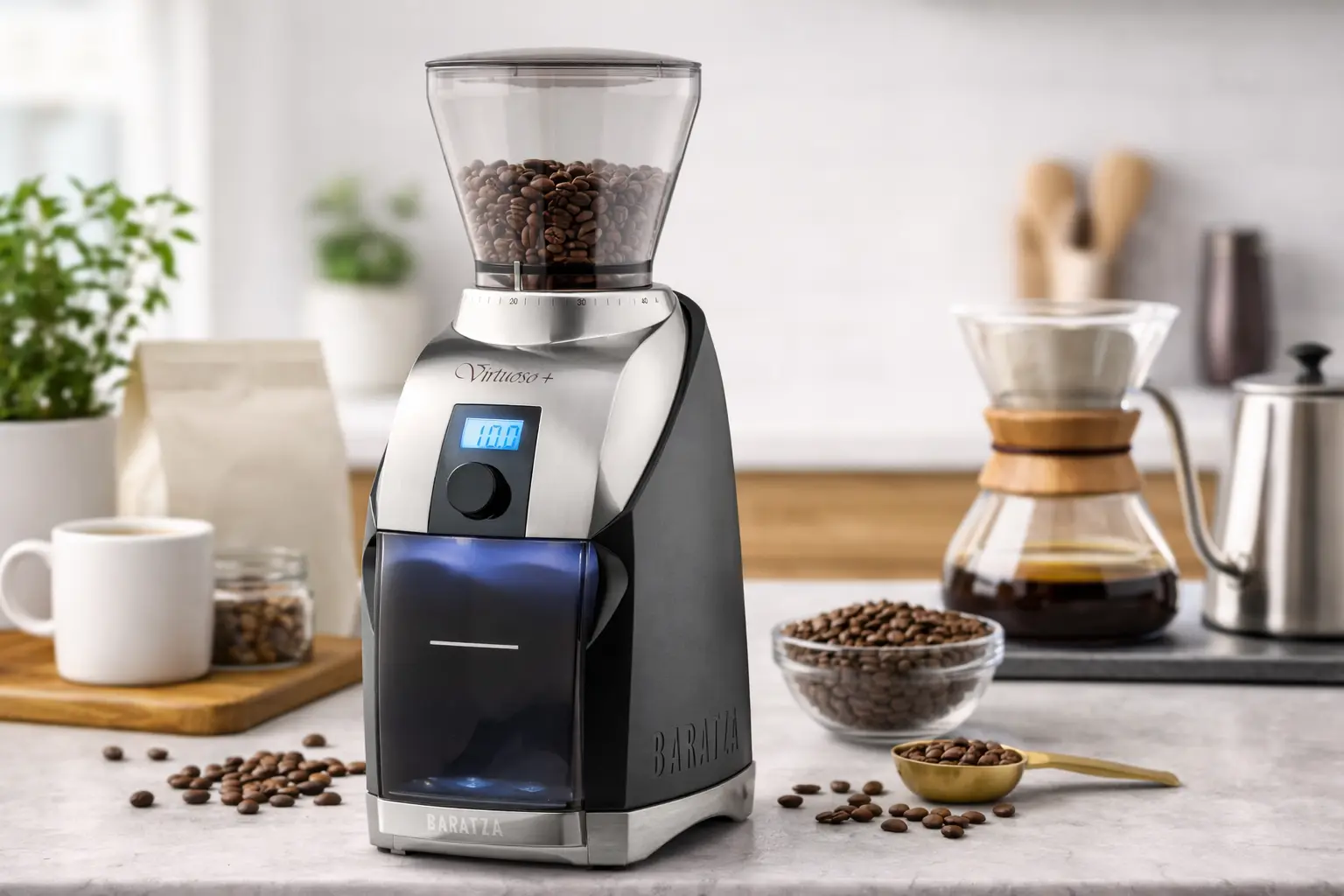
Why it works: More even particles create steadier flow, better sweetness, and fewer harsh notes.
- Improves clarity and balance
- Reduces fines-driven bitterness
- Makes dialing in repeatable
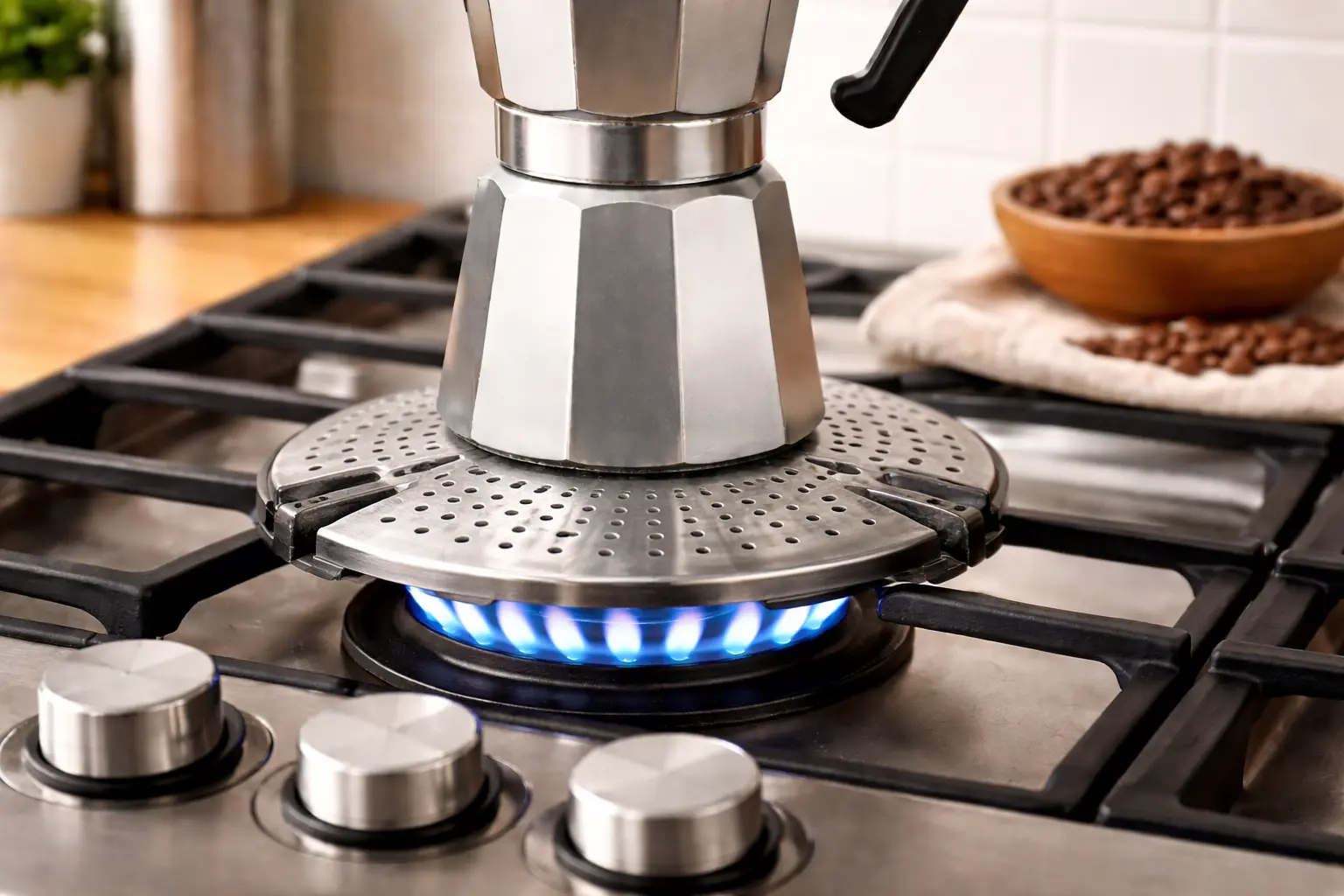
Heat Control: Diffuser Plate
Why it works: Spreads heat evenly and slows the ramp—less scorching, less sputter, smoother finish.
- More forgiving on gas stoves
- Helps small moka sizes
- Improves sweetness and body
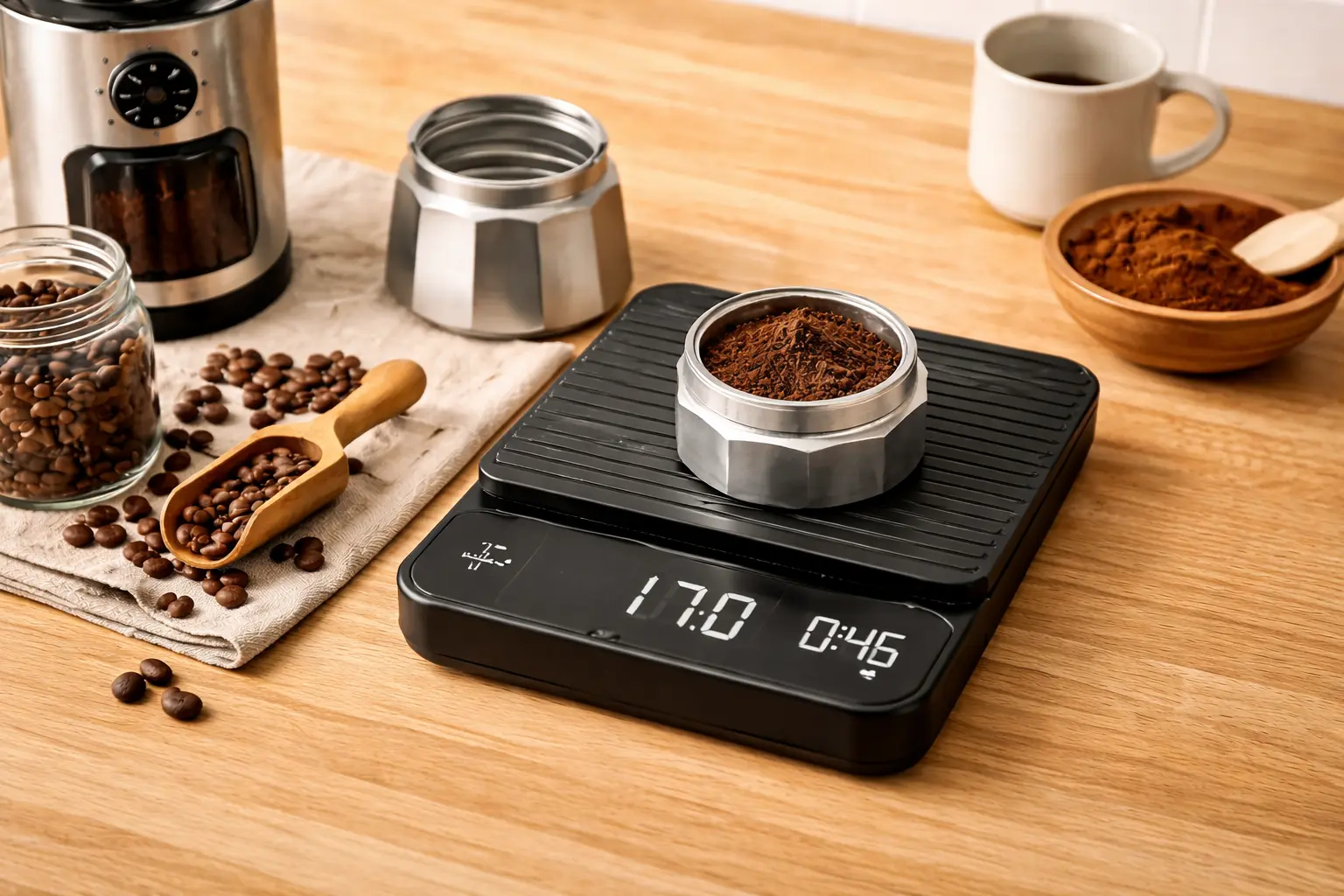
Consistency: Coffee Scale
Why it works: Helps you repeat recipes and make one-variable adjustments when dialing in.
- 0.1g precision recommended
- Timer is useful
- Small footprint fits tight spaces
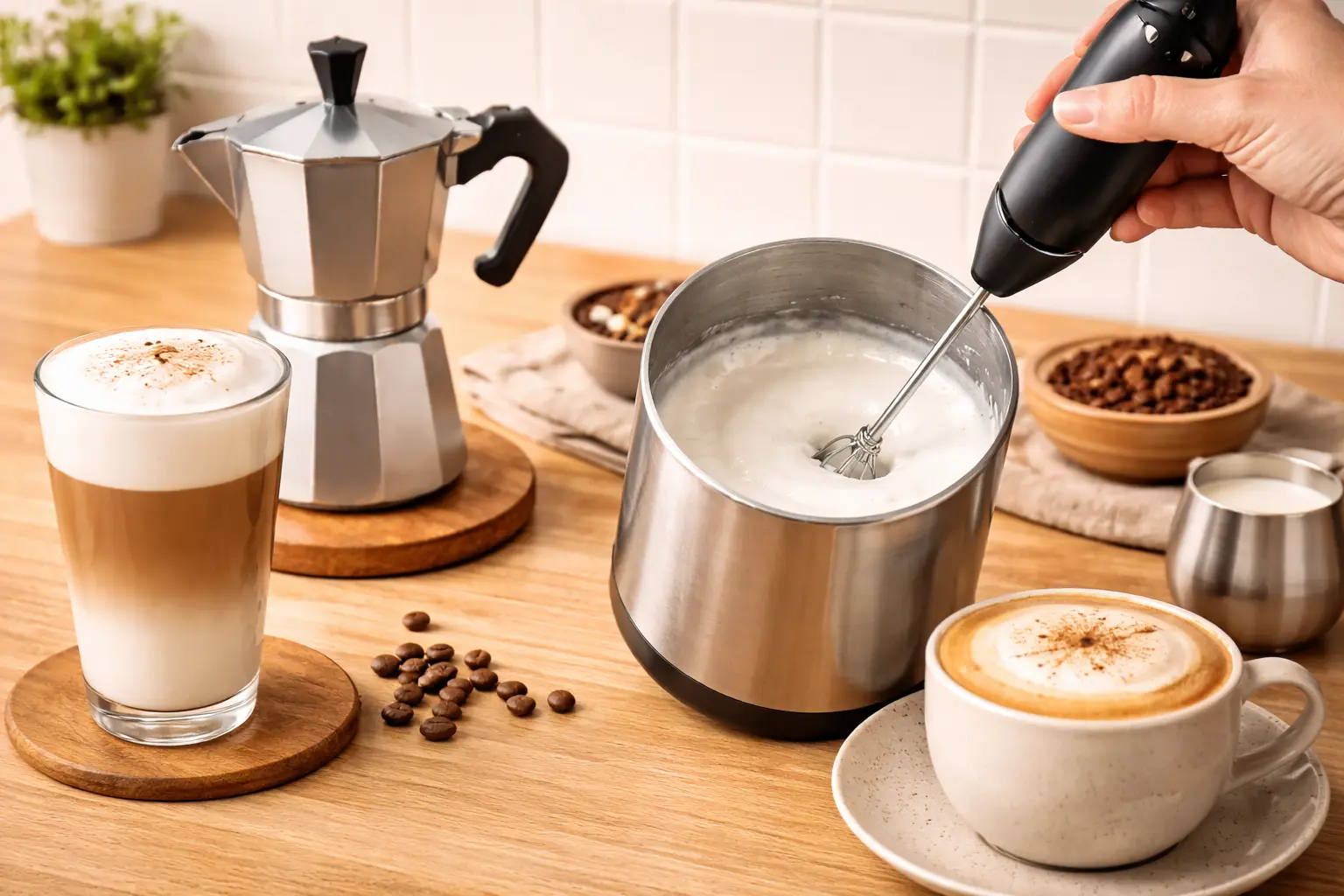
Milk Drinks: Frother
Why it works: Moka concentrate + textured milk = café-style drinks at home.
- Handheld = budget + fast
- Automatic = consistent foam
- Great for iced drinks too
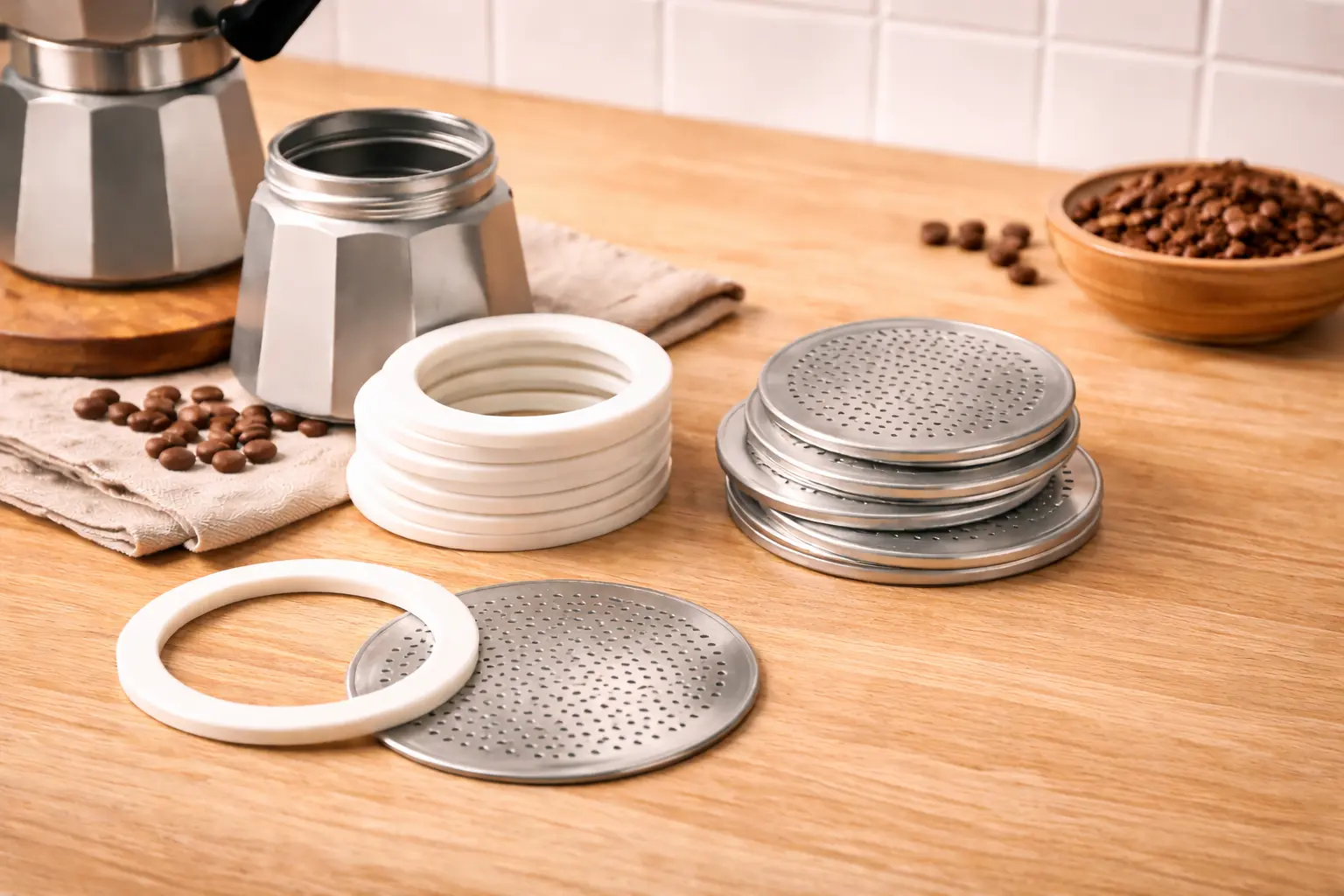
Restore Performance: Gaskets
Why it works: A fresh seal restores proper pressure path and reduces leaks/off flavors.
- Fixes steam leakage
- Helps weak brews
- Silicone often lasts longer
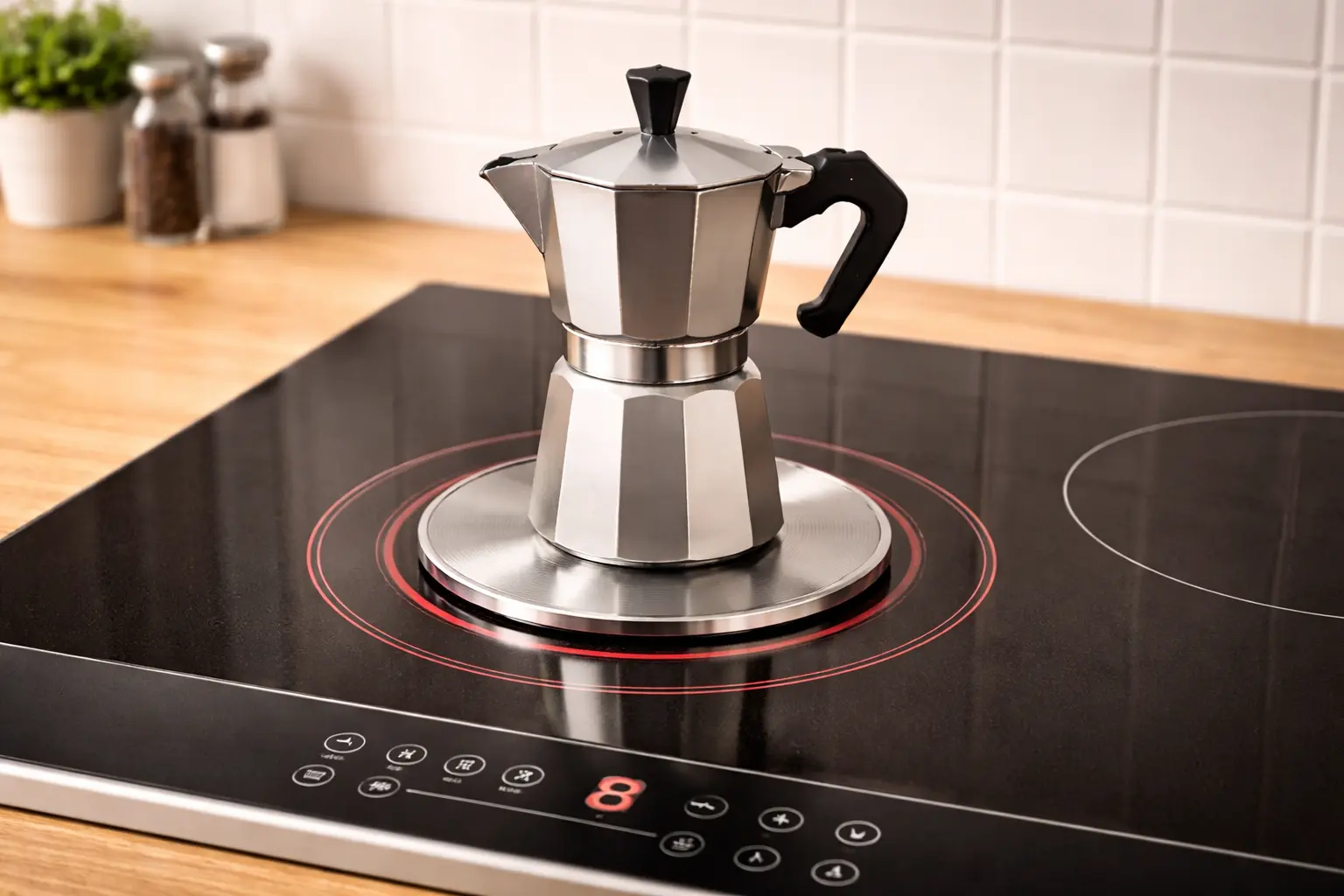
Induction: Adapter Disc
Why it works: Lets aluminum moka pots work on induction and stabilizes heat transfer.
- Required for many aluminum pots
- Helps on electric burners too
- Pairs well with diffuser plates
Burr Grinder (Most Important Upgrade)
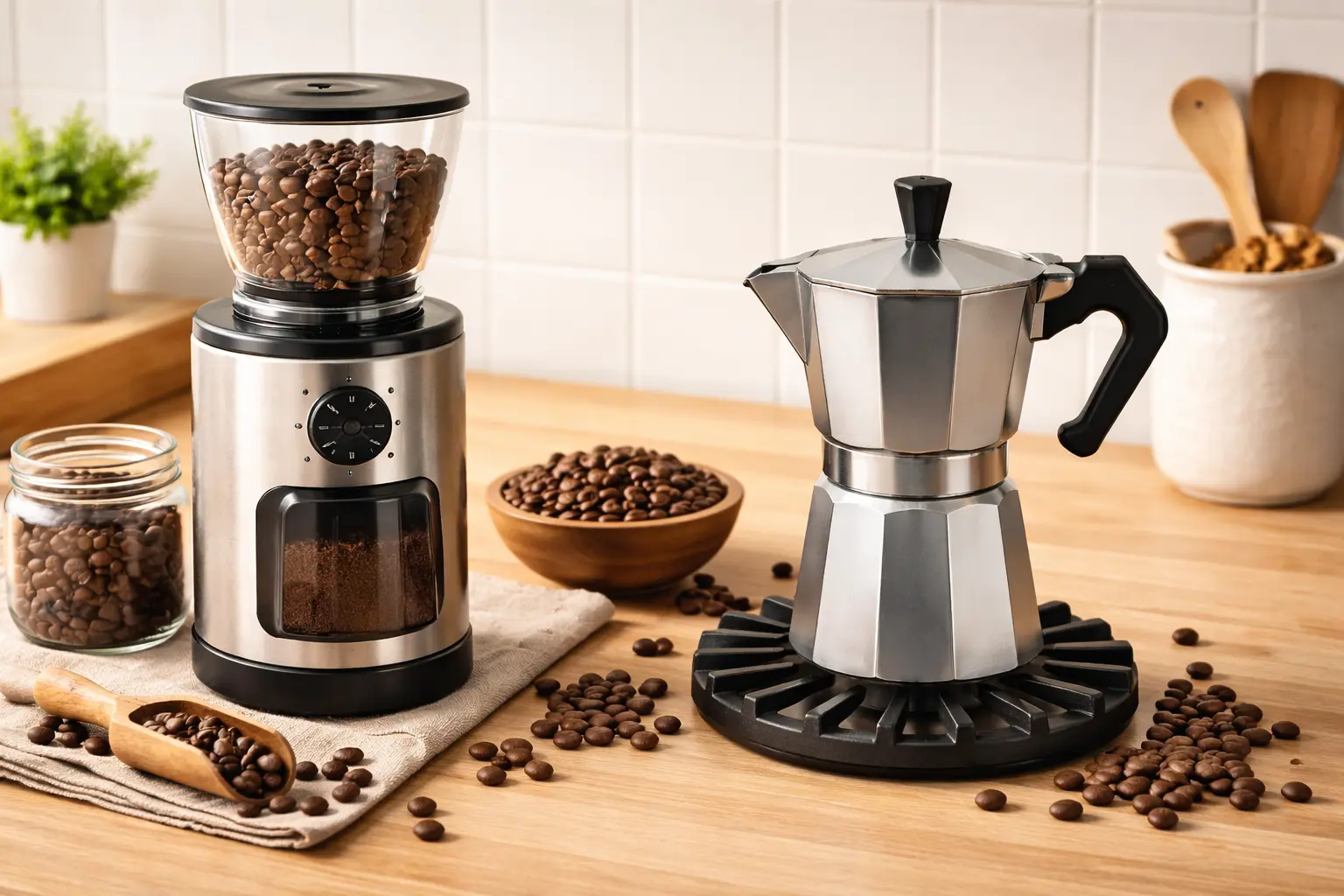
If your moka coffee tastes harsh one day and weak the next, your grinder is usually the reason. Moka needs a medium-fine grind—finer than drip, coarser than espresso. A burr grinder improves flavor because it creates a narrower particle size distribution, which stabilizes flow through the coffee bed.
How a Grinder Improves Extraction (Science, Simplified)
Extraction happens at the particle surface. If you have boulders and powder in the same basket, water finds easy routes through gaps and also gets stuck in dense pockets. That produces both under-extracted and over-extracted flavors at once—sour and bitter. Burr grinders reduce that chaos by making particles more consistent, so the bed behaves like a uniform filter.
What Grind Setting Should You Use for Moka?
Start around “table salt” texture. Then:
- Too bitter / harsh / dry: go slightly coarser and reduce heat.
- Too weak / sour / watery: go slightly finer (small steps) or increase brew control (diffuser).
Read our: Best Coffee Grinders for Moka Pot guide
Heat Diffuser Plate (Heat Curve Control)
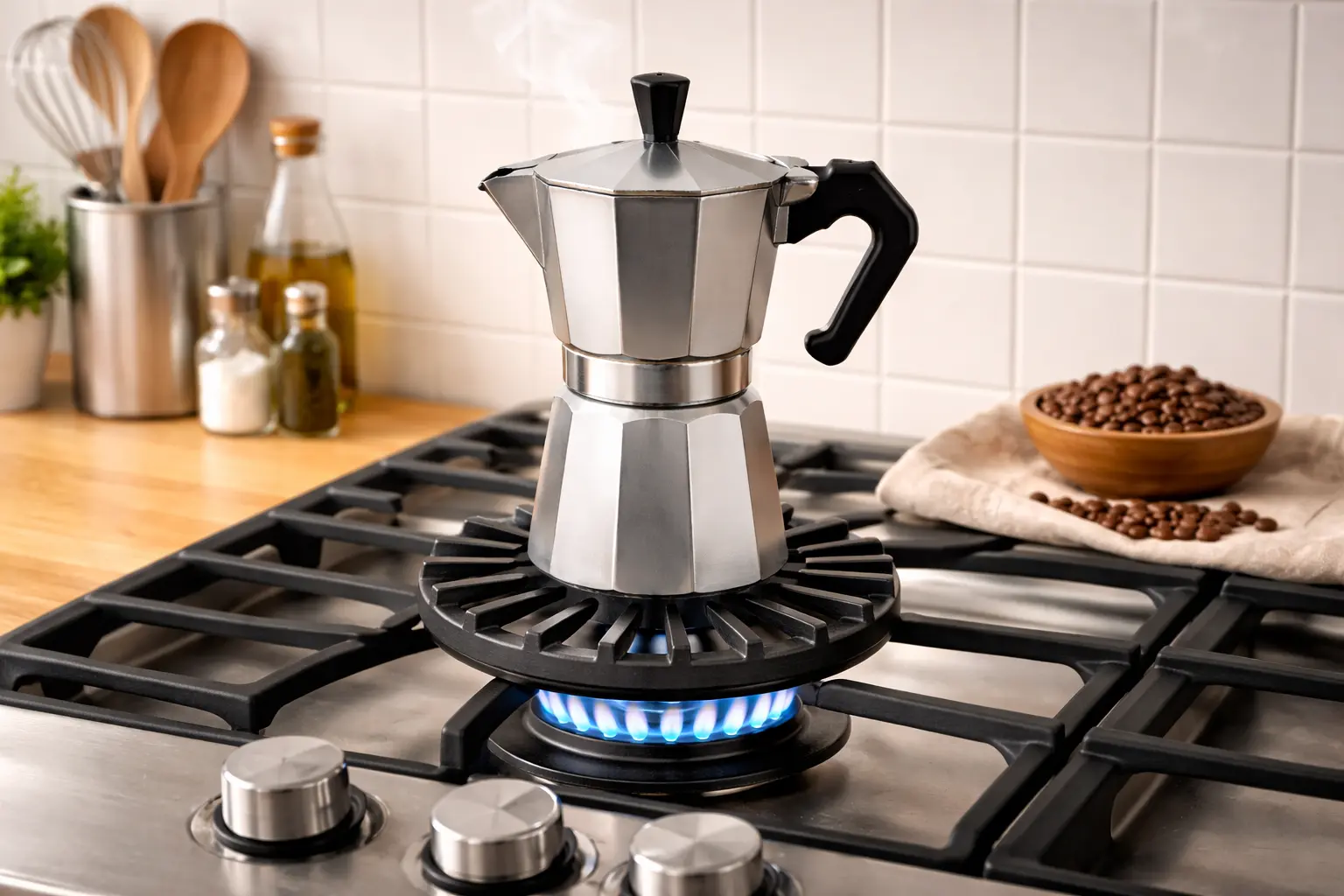
A diffuser plate is one of the best ways to reduce “moka harshness.” The main improvement is that it creates a smoother heat ramp and reduces hotspots. That helps you spend more time in the stable, sweet extraction phase—and less time in the harsh, steam-driven end phase.
What a Diffuser Fixes
- Burnt or ashy bitterness: often from overheating the base.
- Sudden sputtering: abrupt boiling and steam surges.
- Inconsistent results: less sensitivity to burner “personality.”
Pro tip: A diffuser is also useful on electric coils for reducing the “on/off cycling” effect that can cause temperature spikes.
Precision Scale (Repeatability = Better Coffee)
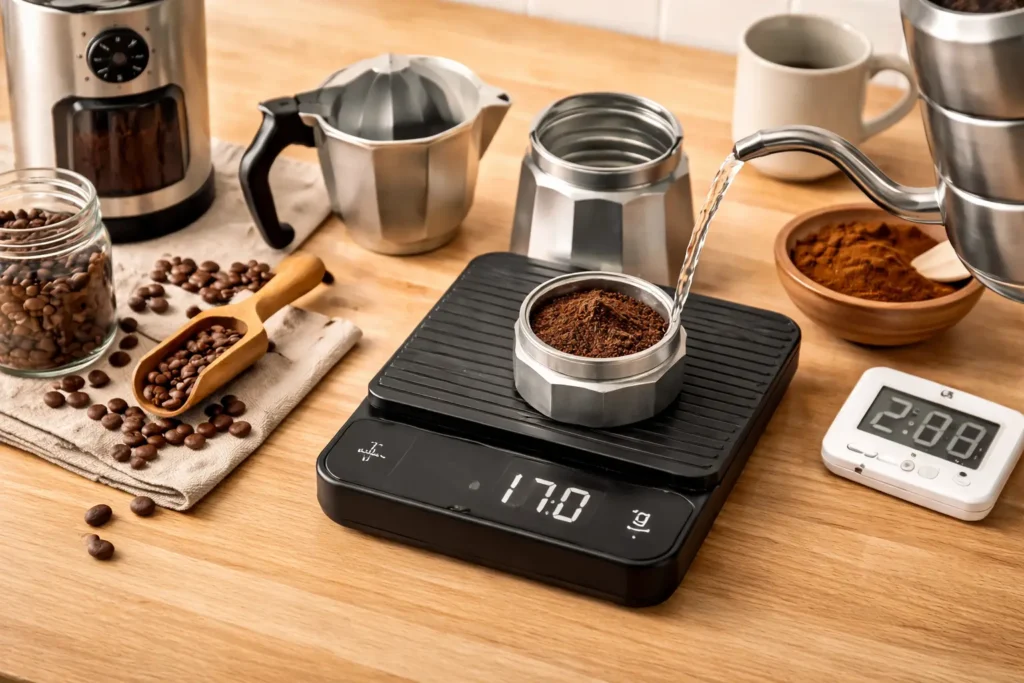
Moka brewing is often “fill the basket, fill the base,” which works—but it’s hard to troubleshoot. A scale turns your moka pot into a repeatable recipe. That matters because the best way to improve coffee is to change one variable at a time and keep everything else constant.
Baseline Ratios for Moka
Use these ratios as a starting point (coffee-to-water by weight):
- Balanced: 1:8
- Stronger: 1:7
- Softer: 1:9
Reality check: moka pots are constrained by basket volume and safety fill lines. Ratios help you compare results across coffees and sizes, but if your brew tastes harsh, heat control and grind adjustment usually matter more than drastically changing the fill.
Water Upgrades (The Hidden Lever)
Water quality changes how you experience bitterness, sweetness, and clarity. If you’re already controlling grind and heat but still get sharp finishes, water is worth addressing. Very hard water can exaggerate chalky or harsh notes, while very soft water can taste flat or sour.
Option A: Filtered Water (Best Simple Move)
A carbon filter pitcher or faucet filter is often enough to improve taste. Many “metallic” complaints are partly water chemistry and partly old gaskets or built-up oils under the filter plate.
Option B: Brew Water (For Maximum Consistency)
If you want a very consistent cup, consider remineralized brewing water or a low-mineral bottled water that tastes clean. This is a “final 10%” move—best after you’ve nailed grind and heat.
Read our: Water Quality for Better Coffee guide.
Paper Filters (Optional, But Useful)
Paper filtering can be surprisingly effective for moka. Place a small paper filter (often an AeroPress round) on top of the coffee bed, under the upper screen. It reduces fines migration, which often smooths bitterness and improves clarity—especially with darker roasts or grinders that produce more fines.
What You’ll Notice
- Cleaner flavor: less sludge and fewer harsh edges.
- Smoother finish: especially with medium-dark and dark roasts.
- More clarity: easier to taste origin notes in medium roasts.
If you love traditional thick moka texture, skip paper. If you want cleaner flavors, it’s a low-cost experiment.
Replacement Gaskets & Filter Plates (Fix Leaks + Off Flavors)
Gaskets directly affect brew mechanics. If the seal is compromised, pressure escapes where it shouldn’t, and water may take an easier route that reduces extraction. Meanwhile, old rubber can hold odors or contribute off flavors—often described as rubbery or metallic.
Signs You Need a New Gasket
- Steam leaking from the side seam
- Weak output even with correct fill
- Water pooling above the puck
- Persistent rubber smell/taste
Upgrade tip: Many brewers prefer silicone gaskets because they resist heat degradation and tend to hold fewer smells over time.
Induction Adapter Disc (If You Brew on Induction)
Most aluminum moka pots won’t work on induction cooktops without a magnetic interface. An induction adapter disc provides that surface, heats up, and transfers energy to the moka pot. If you brew on induction and love an aluminum pot, this accessory is essential.
Note: If you want the simplest induction workflow, consider an induction-compatible moka pot—but if you already own aluminum, the disc is the practical solution.
Milk Frothing Tools (Make Moka Café Drinks)
Moka coffee is concentrated and pairs exceptionally well with milk. If your goal is lattes or cappuccinos, a frother is the fastest quality-of-life upgrade.
Handheld vs. Automatic vs. Manual Pump
- Handheld wand: inexpensive, quick, best for casual foam and iced drinks.
- Automatic frother: most consistent texture, easiest workflow.
- Manual pump frother: capable of great microfoam with practice, no electricity.
If you want better latte texture and easier pouring, pair your frother with a small milk pitcher.
Cleaning & Maintenance Tools (Prevent Off Flavors)
Many moka pots taste metallic or bitter because oils build up—especially under the filter plate and around the gasket seat. A minimal maintenance kit helps keep flavor clean:
- Soft brush for threads and filter plate holes
- Microfiber cloth for drying (prevents oxidation and water spots)
- Optional equipment cleaner used sparingly and rinsed thoroughly
Avoid: storing the pot sealed shut (traps odor), leaving coffee inside for hours, and aggressive steel scrubbers that damage surfaces.
A “Pro” Moka Workflow (Repeatable + Sweet)
Accessories help most when they support a consistent workflow. Here’s a method that tends to produce clean, sweet moka coffee without harsh finishes.
- Fill the base with filtered water to the valve line.
- Grind medium-fine (start around table salt).
- Fill the basket level without tamping (tamping often increases bitterness).
- Optional: place a paper filter on top of the bed for extra clarity.
- Assemble snugly (firm, but don’t over-tighten).
- Brew on medium-low heat or use a diffuser for a smooth ramp.
- Stop early when the stream turns pale or begins to sputter aggressively; briefly cool the base under running water to halt extraction.
This workflow targets the “sweet middle” of moka extraction (steady stream, stable-ish temperature) and avoids the harsh end phase where steam dominates. Your diffuser + grinder do most of the heavy lifting here.
Troubleshooting by Symptom
Use this section as a diagnostic checklist. Change one variable at a time.
If It’s Too Bitter / Harsh
- Lower heat or add a diffuser (most common fix).
- Grind slightly coarser (tiny changes matter).
- Stop the brew earlier (avoid the final sputter).
- Try a paper filter to reduce fines migration.
- Deep clean the filter plate + replace old gaskets if odors persist.
If It’s Weak / Watery
- Grind slightly finer.
- Ensure the basket is filled level (no large voids).
- Confirm water is filled to the correct line.
- Check gasket seal—leaks reduce effective pressure.
If It Sputters Violently
- Reduce heat and/or use a diffuser.
- Check gasket seating and tighten the top properly.
- Clean the filter plate holes (clogs amplify sputter).
If It Tastes Metallic
- Deep clean (especially under the filter plate and gasket channel).
- Replace an old rubber gasket (silicone often helps).
- Try filtered water (hard water can exaggerate metallic notes).
Accessories You Can Skip (Usually)
- Distribution tools/WDT: moka baskets are shallow; impact is limited compared to espresso.
- Tampers: tamping often chokes flow and increases harshness.
- Pressure gadgets: not very actionable for most home brewers.
FAQs
What is the single best accessory for a moka pot?
A burr grinder. Grind consistency is the biggest driver of moka flavor because it stabilizes flow through the coffee bed and reduces the boulders-and-powder problem that causes both sour and bitter notes. Next read: /best-coffee-grinders-for-moka-pot/
Do paper filters actually improve moka pot coffee?
They can. A small paper filter placed on top of the basket can reduce fines and sludge, smoothing bitterness and improving clarity. If you prefer traditional heavy moka body, skip the filter. Next read: /moka-pot-troubleshooting/
Should I tamp coffee in a moka pot?
No. Tamping often chokes the basket and increases harshness because moka relies on steam pressure, not a pump. Fill the basket level and avoid compressing the bed. Next read: /how-to-dial-in-coffee-at-home-drip-pour-over-espresso/
Why does my moka pot sputter and spray?
Usually too much heat (fast pressure ramp), a clogged filter plate, or a compromised gasket seal. Lower heat, use a diffuser, clean the filter holes, and replace old gaskets if steam leaks at the seam. Next read: /moka-pot-troubleshooting/
What grind size is best for moka pot?
Medium-fine—finer than drip, coarser than espresso (around table salt). If bitter or harsh, go slightly coarser and reduce heat. If weak or sour, go slightly finer. Next read: /coffee-grind-size-chart/
How often should I replace moka pot gaskets?
Usually every 6–12 months depending on use. Replace sooner if you notice steam leakage, weak brews, or rubber odors. Silicone gaskets often last longer. Next read: /moka-pot-troubleshooting/
Can I use an aluminum moka pot on induction?
Not directly in most cases. You typically need an induction adapter disc to provide a magnetic heating surface. Next read: /moka-pot-accessories/
Why does my moka coffee taste metallic?
Common causes are built-up coffee oils, old rubber gaskets, and hard water. Deep clean the filter plate and gasket seat, replace worn gaskets, and test with filtered water. Next read: /best-water-for-coffee/
Is a scale really necessary for moka pot brewing?
Not required, but it’s one of the fastest ways to improve consistency. A scale helps you repeat recipes and make controlled grind/heat changes without guessing. Next read: /how-to-dial-in-coffee-at-home-drip-pour-over-espresso/
What accessories help most for making moka lattes?
A milk frother (handheld or automatic) plus a small pitcher. Moka coffee is concentrated and pairs extremely well with milk, so frothing is the easiest way to expand your drink menu. Next read: /best-milk-frothers-for-coffee/
Next Reads
| Best Coffee Grinders for Moka Pot Dial in medium-fine grind without bitterness or clogging. | Best Coffee Beans for Moka Pot Roasts and blends that stay sweet under pressure. |
| Moka Pot Troubleshooting Guide Fix sputtering, bitterness, weak brews, and leaks. | Coffee Grind Size Chart Visual targets for moka, espresso, pour-over, and drip. |
Final Thoughts
You don’t need a drawer full of gadgets to make excellent moka coffee. Focus on upgrades that control the core variables: grind consistency, heat curve, repeatability, and seal integrity. Start with a burr grinder and a diffuser plate, then add a scale and maintenance parts. Once your moka brews are consistently sweet and steady, optional extras like paper filters and milk tools become fun, high-reward additions.
Next step: If you want a complete dialing-in framework, read How to Dial In Coffee at Home (Drip, Pour-Over, Espresso).