

Last Updated: February 16, 2026 | 18–22 min read
Origins, Processing, Roast Levels & How to Pick Beans for Your Brew Method
Buying the right coffee beans matters more than most gear upgrades. Before grinders, kettles, or fancy brewers, the beans you choose set the ceiling for flavor. This guide breaks down coffee origins, processing methods, freshness, roast levels, and label terms—so you can buy beans with confidence (and stop wasting money on bags that don’t match your taste).

Key takeaways (save these)
- Roast date & freshness beat almost every “fancy” label claim. Buy whole beans and aim to brew them within a sensible freshness window.
- Origin + processing tells you the flavor “shape”: washed = cleaner/brighter, natural = fruitier/sweeter, honey = balanced.
- Roast level changes everything: very dark roasts mute origin and amplify roast flavors (smoke, cocoa, bitterness).
- Match beans to your brewer: pour-over loves clarity, French press loves body, espresso needs balance and consistent extraction.
- Ignore vague terms like “premium” and “gourmet.” Look for origin, process, roast date, and clear roaster info.
Recommended “bean upgrades” (quick wins)
If you want better coffee immediately, these three choices usually move the needle the most—without changing your brewer.
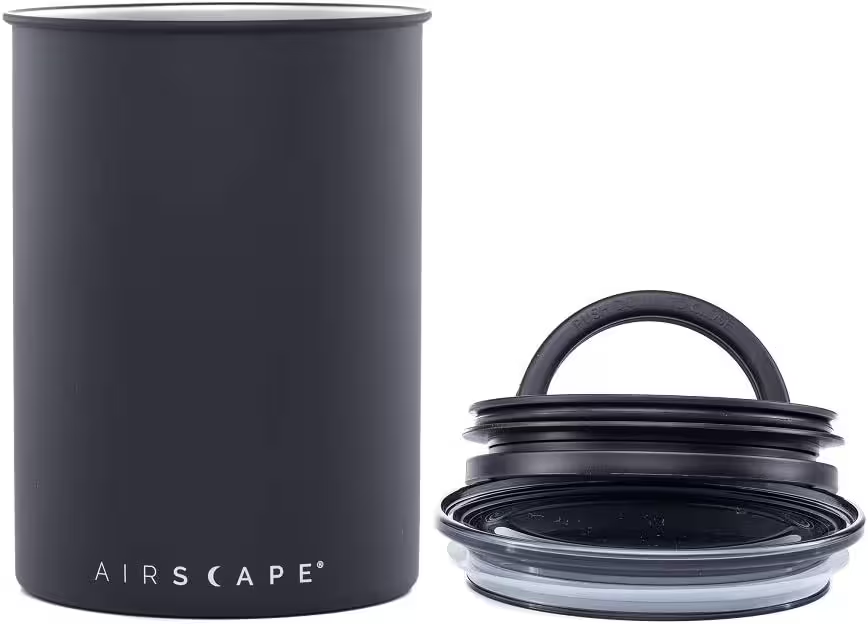
Airtight bean storage
Proper storage to preserve the integrity and quality of the whole coffee bean, Protects flavor from oxygen, light,
Burr grinder (fresh grind)
Freshly ground beans taste dramatically better than pre-ground. A burr grinder is the #1 “flavor multiplier.”

Coffee scale (dose & ratio)
Once you buy better beans, measuring coffee-to-water ratio helps you actually taste them the way the roaster intended.
Start with this: What actually affects coffee flavor (and what’s mostly marketing)
Coffee labels can look like a foreign language—origin, processing method, varietal, altitude, tasting notes, certifications. The truth is: a few factors do most of the heavy lifting, and you can learn them quickly.
Think of coffee flavor like a “stack”:
- Freshness (roast date + storage)
- Roast level (light/medium/dark)
- Origin & terroir (climate, elevation, soil)
- Processing method (washed, natural, honey, etc.)
- Your brew method + grind + ratio (how you extract it)
If you nail freshness and roast level, you’ll avoid most disappointing bags. Origin and processing then help you pick flavors you’ll actually enjoy—instead of rolling the dice.
| Factor | Why it matters | Best “simple rule” |
|---|---|---|
| Roast date | Stale beans taste flat, woody, dull; espresso can become inconsistent | Prefer bags with a clear roast date (not only “best by”) |
| Roast level | Controls brightness, sweetness, bitterness, and how origin shows up | Start with medium; go lighter for clarity, darker for roast-driven flavor |
| Origin | Predicts acidity, fruit, cocoa/nut, body, and aroma “style” | Africa = bright/floral; Americas = balanced/sweet; Asia = earthy/heavy |
| Processing | Changes sweetness and mouthfeel; can add fruitiness or “funk” | Washed = clean; Natural = fruity; Honey = balanced |
| Brew method fit | Some beans shine in pour-over, others in espresso or press | Match clarity vs body to the brewer you use most |
Coffee freshness: roast date, rest time, and when beans taste best
Freshness is the biggest “silent” variable in coffee buying. A great origin and process won’t matter if the coffee is stale—or if you’re brewing it at the wrong time after roast.
Roast date vs “best by”
Roast date tells you when the beans were roasted. That’s what you want. A “best by” date is often set many months out and doesn’t tell you whether the bag sat on a shelf for weeks before you bought it.
If you only remember one shopping habit: buy beans with a clear roast date from a roaster you trust—and store them properly once opened.
Rest time (degassing): why coffee can taste worse when it’s “too fresh”
Freshly roasted coffee releases CO₂ (degassing). Too much CO₂ can make extraction unstable, especially for espresso, leading to sourness, channeling, and wild shot times. For filter coffee (drip/pour-over), the impact is usually smaller—but you can still get “gassy” brews that taste sharp or underdeveloped.
| Brew method | Typical “best window” after roast | What happens if too fresh | What happens if too old |
|---|---|---|---|
| Pour-over / drip | ~3–21 days (varies by roast) | Extra CO₂ can push uneven extraction; sharper acidity | Flatter aroma, less sweetness; “papery/woody” notes |
| Espresso | ~7–28 days (often needs more rest) | Channeling, spurting, sour shots, inconsistent timing | Thin crema, fast shots, dull flavor |
| French press / cold brew | ~3–30 days | Less common problems, but can taste sharp | Muted flavor, less richness |
Practical shopping tip: If you brew espresso at home, consider buying beans a little ahead of time, then using them after a week of rest. If you brew drip, you can often start sooner (especially medium and darker roasts).
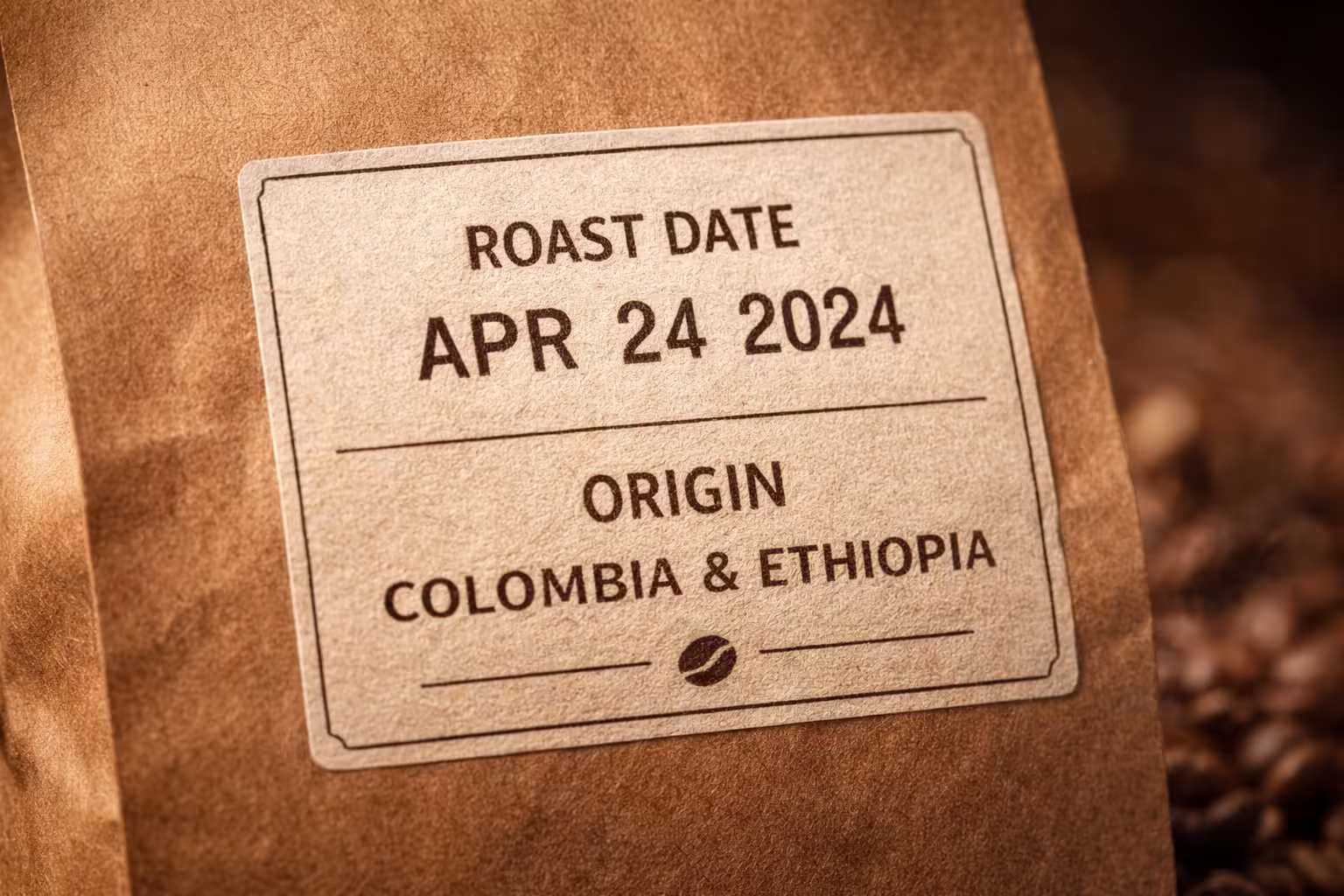
How to store beans once you buy them
Oxygen is the enemy. Heat, light, and moisture also degrade flavor. If your beans taste great for the first few days and then fade fast, storage is often the culprit.
- Keep beans in an airtight container (or reseal the original bag tightly).
- Store in a cool, dark cabinet (not next to your oven or sunny window).
- Avoid the fridge (condensation + odor transfer). Freezer can be useful for long-term storage if done carefully and sealed well.
- Buy smaller quantities if you drink slowly—freshness beats bulk discounts.
Related reading you can link internally later: “How to Store Coffee Beans (Beginner vs Advanced)” and “How Often Should You Replace Coffee Beans?”
Coffee origins explained: how growing region shapes flavor
Coffee is grown along the “coffee belt” near the equator. But “origin” isn’t just geography—it’s a shorthand for how climate, elevation, and farming practices influence flavor. In general:
- Higher elevation often means denser beans and brighter acidity.
- Climate & rainfall affect sweetness and aromatics.
- Soil and local varieties influence the character of fruit, florals, and cocoa/nut notes.
Use origin as a flavor compass. It won’t predict every coffee perfectly, but it helps you pick coffees that trend toward your preferences.
Africa (Ethiopia, Kenya, Rwanda, Burundi)
African coffees are often bright, complex, aromatic, and “lifted.” If you enjoy tea-like clarity, citrus, berries, or florals, Africa is your playground.
- Common notes: citrus, berries, florals, stone fruit, tea-like
- Best for: pour-over, Chemex, AeroPress
- Buying tip: washed Africans tend to be ultra-clean; naturals can be intensely fruity
Central America (Colombia, Guatemala, Costa Rica, Honduras)
Central America is known for balance: sweetness, moderate acidity, and familiar flavors that still have character. Great if you want “specialty coffee” without going too wild.
- Common notes: caramel, cocoa, apple, mild citrus, brown sugar
- Best for: drip, pour-over, approachable espresso blends
- Buying tip: honey-processed coffees here often deliver a sweet, smooth “crowd-pleaser” profile
South America (Brazil, Peru, Ecuador)
South American coffees—especially Brazil—often bring nutty sweetness, cocoa, and low-acid comfort. They’re common in espresso blends because they add body and chocolate notes that behave well in milk.
- Common notes: nuts, cocoa, peanut butter, milk chocolate, gentle sweetness
- Best for: espresso, French press, drip, milk-based drinks
- Buying tip: look for medium roasts if you want sweetness without heavy roast flavor
Asia & Pacific (Sumatra, Java, India, Papua New Guinea)
Many Asia/Pacific coffees are bold, earthy, spicy with heavier body—especially those processed in ways that emphasize richness. If you love deep chocolate, spice, and heavy mouthfeel, this region can be a perfect match.
- Common notes: earth, spice, smoke, dark chocolate, herbal
- Best for: French press, espresso, cold brew
- Buying tip: these can shine as a “base” coffee in blends for extra body
| Region | Flavor “headline” | Acidity | Body | Best brew matches |
|---|---|---|---|---|
| Africa | Bright, floral, fruity | Higher | Light–medium | Pour-over, Chemex, AeroPress |
| Central America | Balanced, sweet, approachable | Medium | Medium | Drip, pour-over, espresso blends |
| South America | Nutty, cocoa, smooth | Lower–medium | Medium–full | Espresso, French press, drip |
| Asia/Pacific | Earthy, spicy, heavy | Lower | Full | French press, cold brew, espresso |
Processing methods (this matters more than you think)
Processing describes how the coffee fruit (the “cherry”) is removed from the seed (the bean). This step can change sweetness, acidity, and mouthfeel dramatically. Two coffees from the same region can taste totally different if processed differently.

Washed (wet) process
Washed coffees remove the fruit before drying. The result is usually cleaner, clearer flavor—great for tasting origin nuance (floral notes, citrus, subtle sweetness).
- Tends to taste like: crisp, clean, “transparent”
- Great if you like: bright coffee with defined tasting notes
- Best for: pour-over, drip, lighter roasts
Natural (dry) process
Natural coffees dry with the fruit intact. This often increases fruitiness and sweetness, and can introduce heavier body. High-quality naturals can taste like berries and jam; poorly processed ones can taste “funky.”
- Tends to taste like: fruity, sweet, sometimes wine-like
- Great if you like: bold fruit notes or dessert-like sweetness
- Best for: espresso (when balanced), AeroPress, adventurous pour-over
Honey / pulped natural
Honey process removes some fruit but leaves some mucilage during drying. Think of it as a “middle path”: often sweeter than washed and cleaner than natural.
- Tends to taste like: sweet, smooth, balanced
- Great if you like: clarity plus syrupy sweetness
- Best for: drip, pour-over, espresso blends
Other terms you may see
Some bags include processing terms like anaerobic, carbonic maceration, or fermentation-forward lots. These can be amazing—but they can also be polarizing. If you’re new, treat these as “advanced” flavors and start with washed/honey coffees first.
| Process | Clarity | Sweetness | Fruit intensity | “Safe” for beginners? |
|---|---|---|---|---|
| Washed | High | Medium | Low–medium | Yes (very) |
| Honey | Medium–high | Medium–high | Medium | Yes |
| Natural | Low–medium | High | High | Sometimes (depends) |
| Anaerobic / experimental | Varies | Often high | Often very high | For adventurous palates |
Roast levels: light vs medium vs dark (and how to avoid disappointment)
Roast level affects flavor more than origin once coffee gets very dark. That’s why a “dark roast Ethiopia” often tastes less like berries and more like cocoa and smoke: roast flavors dominate.
Here’s a practical way to think about roast levels:
- Light roast highlights acidity and origin character (floral, fruit, citrus).
- Medium roast balances sweetness, acidity, and body—often the easiest “daily driver.”
- Dark roast emphasizes roast flavors (chocolate, smoke, bitterness) and heavier body.
| Roast | Flavor profile | Best for | Common mistake |
|---|---|---|---|
| Light | Bright, acidic, origin-forward, aromatic | Pour-over, Chemex, AeroPress | Brewing too cool/too fast → sour, underdeveloped taste |
| Medium | Balanced sweetness, versatile, approachable | Drip, espresso, most home brewers | Buying “medium” that’s actually dark (some brands label loosely) |
| Dark | Bold, roasty, smoky, more bitterness | Milk drinks, French press, cold brew | Expecting fruity origin notes that roast level masks |

How to choose beans for your brewing method (simple matching rules)
Different brewers highlight different parts of coffee. If you match the bean style to the extraction style, you’ll get better results with less dialing-in frustration.
| Brew method | What it emphasizes | Best bean styles | If you like… |
|---|---|---|---|
| Pour-over (V60 / Kalita / Chemex) | Clarity, aromatics, layered notes | Light–medium roast; washed or honey; Africa/Central America | Tea-like, bright, fruity/floral |
| Drip coffee maker | Balance and sweetness (when brewed well) | Medium roast; Central/South America; washed/honey | Comfortable daily coffee with flavor |
| French press | Body, oils, heavier mouthfeel | Medium–dark roast; South America/Asia; chocolaty profiles | Rich, thick, “bold” coffee |
| Espresso | Intensity, sweetness balance, extraction precision | Medium to medium-dark; lower acid profiles; blend-friendly | Chocolate/caramel, milk drinks, consistent shots |
| Cold brew | Low perceived acidity; smoothness | Medium–dark; chocolaty/nutty; South America/Asia | Smooth, mellow, easy sipping |
Want a tighter brewing system? Pair your bean choice with the right ratios and grind sizes:
- Drip coffee ratio guide (for better sweetness and consistency)
- Coffee grind size chart (to match beans to your brewer)
- How to dial in coffee at home (drip, pour-over, espresso)
Reading coffee tasting notes (without getting tricked)
Tasting notes are not ingredients. If a bag says “blueberry, jasmine, honey,” nobody added blueberries or flowers. These notes describe aroma and flavor associations that trained tasters perceive—often based on acidity type, sweetness, and aromatics.
Here’s how to use tasting notes properly:
- Use notes to choose direction (fruit vs chocolate, floral vs nutty), not exact flavors.
- Look for the “category” note: fruit/floral often means brighter; cocoa/nut often means smoother.
- Match notes to your brew method: fruity/floral shines in pour-over; cocoa/nut shines in press and espresso.
| If the bag says… | It often means… | Try this brew match |
|---|---|---|
| Floral, jasmine, bergamot | High aromatics, lighter body, bright finish | Pour-over / Chemex |
| Berry, tropical fruit, winey | Natural or experimental processing; bold fruit | AeroPress, pour-over (if you like fruit-forward) |
| Caramel, brown sugar, toffee | Medium roast sweetness; approachable balance | Drip, espresso blends |
| Cocoa, nuts, peanut butter | Lower acidity; comforting, rich profiles | French press, espresso, cold brew |
| Smoky, roasty, dark chocolate | Darker roast flavors dominate | Milk drinks, cold brew |
What to look for on a coffee bag (and what to ignore)
Most “bad buys” happen because the bag looks premium but gives you almost no useful information. Great coffee doesn’t need fancy language—it needs clarity.
Green flags ✅
- Roast date (not just “best by”)
- Origin details (country/region; sometimes farm/co-op)
- Processing method (washed/natural/honey)
- Roast level stated clearly (light/medium/dark)
- Roaster transparency (who roasted it, where, contact info)
Red flags ❌
- Only “best by” date (no roast date)
- Vague terms like premium, gourmet, special
- No origin or processing listed
- “Dark roast” marketed as higher quality
- Overly broad tasting notes without context
Beginner-friendly buying paths (pick the one that matches your taste)
If you’re not sure what you like yet, the fastest way is to choose a path and run a short “taste experiment” over 2–3 bags. Keep your brew method consistent and adjust grind/ratio only if needed.
| Your preference | Buy this | What to avoid (for now) | Best brew methods |
|---|---|---|---|
| I want smooth, classic coffee | Medium roast Colombia/Brazil; washed/honey | Very light roasts, experimental processing | Drip, French press |
| I want bright, fruity coffee | Light roast Ethiopia/Kenya; washed or natural | Very dark roasts (hide origin) | Pour-over, AeroPress |
| I want chocolatey coffee for milk drinks | Medium-dark South America blend; low acidity | Super fruity naturals (can clash with milk) | Espresso, moka pot |
| I want “bold” without harshness | Medium roast with cocoa/nut notes | Charred very dark roasts | French press, drip |
Recommended coffee beans to start with (Amazon picks + how to choose)
If you want reliable beans available on Amazon, focus on options that provide clear roast level and are known for consistent flavor. Use the cards below as “style categories” and pick the one that matches your taste and brew method. (Replace the links/images with your Amazon Associates SiteStripe assets.)

Balanced medium roast (daily driver)
Best for: drip machines, pour-over, “I just want good coffee” mornings.
Flavor vibe: caramel, cocoa, gentle fruit, easy sweetness.
See also: Drip coffee ratio guide

Fruity light roast (pour-over favorite)
Best for: V60, Chemex, Kalita, AeroPress.
Flavor vibe: citrus, berry, floral aromatics, bright finish.
See also: Dial in coffee at home

Espresso-friendly blend (milk drinks)
Best for: espresso machines, moka pot, cappuccino/latte.
Flavor vibe: chocolate, caramel, lower acidity, consistent extraction.
See also: Best espresso beans for home espresso
Tip: Always buy whole beans and grind just before brewing. If you’re still using pre-ground coffee, upgrading to a burr grinder often beats buying more expensive beans.
A simple “bean buying checklist” you can use anywhere
Use this checklist in-store, online, or on Amazon. It’s designed to prevent the two most common issues: buying stale coffee and buying the wrong style for your taste.
- Find the roast date. If there isn’t one, be cautious.
- Confirm roast level. If you like smooth coffee, start medium. If you love bright fruit, go light.
- Check origin + processing. Washed for clean clarity; natural for fruit; honey for balanced sweetness.
- Match to brew method. Pour-over wants clarity; press wants body; espresso wants balance.
- Buy the right size. Smaller bags help you stay in the “best window.”
Next steps: brew better with the right fundamentals (internal links)
Once you’ve chosen better beans, your next improvements should follow this order:
- A quality burr grinder (freshness + consistent particle size)
- Using the correct grind size (prevents bitterness or sourness)
- Using the right coffee-to-water ratio (sweetness + clarity)
- Matching beans to your brew method (clarity vs body)
FAQs
Is it better to buy whole beans or pre-ground?
Whole beans almost always taste better because grinding accelerates staling dramatically. If you want the best value from good beans, buy whole and grind right before brewing.
How long do coffee beans stay fresh?
It depends on roast level, storage, and brew method, but many coffees taste best within a few weeks of roast. Espresso often benefits from extra rest (around a week or more) before it tastes its best.
What does “washed” vs “natural” mean?
Washed coffees tend to be cleaner and clearer with more defined acidity. Natural coffees often taste fruitier and sweeter with heavier body. Honey (pulped natural) sits between the two.
Do light roasts have more caffeine than dark roasts?
Per bean, differences are small. In practice, caffeine depends more on how much coffee you use (dose) and your recipe than roast level alone.
Which beans are best for drip coffee makers?
Medium roasts from Central or South America are often the easiest win: sweet, balanced, and forgiving. Use a consistent ratio and grind size for best results.
What’s the difference between single-origin and blends?
Single-origin coffees highlight a specific region/farm’s character (often more distinct). Blends are designed for balance and consistency—great for espresso and everyday brewing.
What should I ignore on coffee labels?
Ignore vague quality terms (“premium,” “gourmet”) and focus on roast date, roast level, origin, processing, and roaster transparency.