
Philips 3200 LatteGo Review — Still the Easiest Super-Automatic?
Editorial standards: this review separates manufacturer specifications from published third-party testing and long-term owner feedback. CoffeeGearHub does not claim hands-on testing of this unit where it has not occurred, and model bundles, software, pricing, and availability can change.
At a glance
The 3200 is primarily a convenience machine
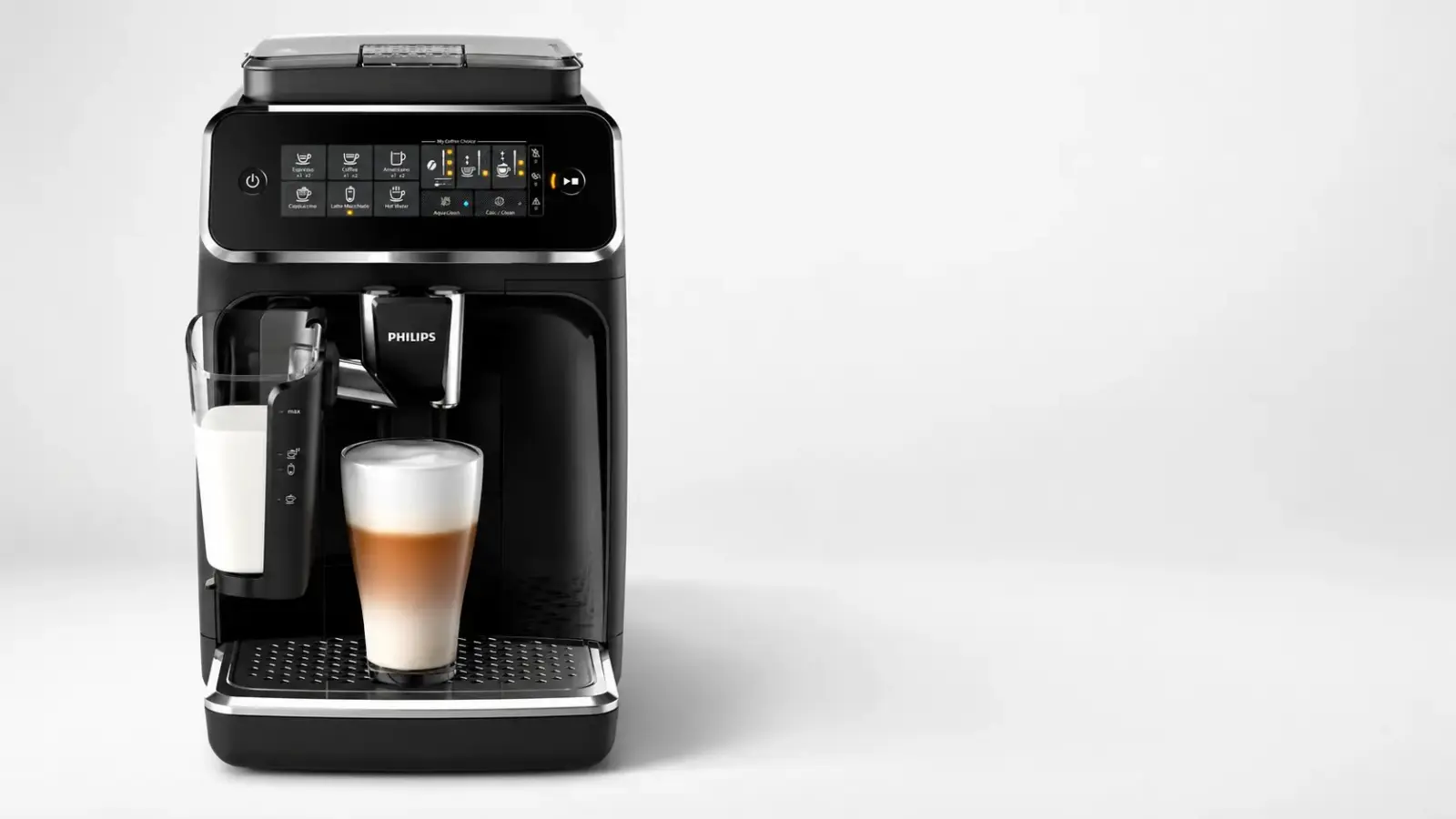
The strongest case for the Philips 3200 is the low-friction workflow: built-in grinding, one-touch drinks, a two-piece LatteGo milk system, and relatively simple cleanup. Its trade-off is less manual control over straight espresso than a semi-automatic setup.
Editorial analysis
Buy it for repeatability and milk-drink convenience—not maximum espresso control
The 3200 makes the most sense for households that value push-button operation and easy milk cleanup. Its ceramic grinder and integrated brew system reduce the number of separate tools and techniques a new owner has to manage.
A semi-automatic machine such as the Bambino Plus asks more of the user but gives substantially more control over grinder choice, dose, yield, and puck preparation.
The 30-Second Answer
The Philips 3200 LatteGo remains a strong fit for milk-drink households that want fresh-ground coffee and one-touch convenience with very little technique. Choose a semi-automatic such as the Breville Bambino Plus instead if you want more control over espresso quality and are willing to use a separate grinder.
Compare current options
Start with these representative choices
Use these as the two reference workflows before reading the full review.
Philips 3200 LatteGo — One-Touch Convenience
An integrated bean-to-cup machine with a ceramic grinder and the two-piece LatteGo milk system.
Best starting point if: it is the reference choice for users who want fresh-ground milk drinks without learning a portafilter workflow.
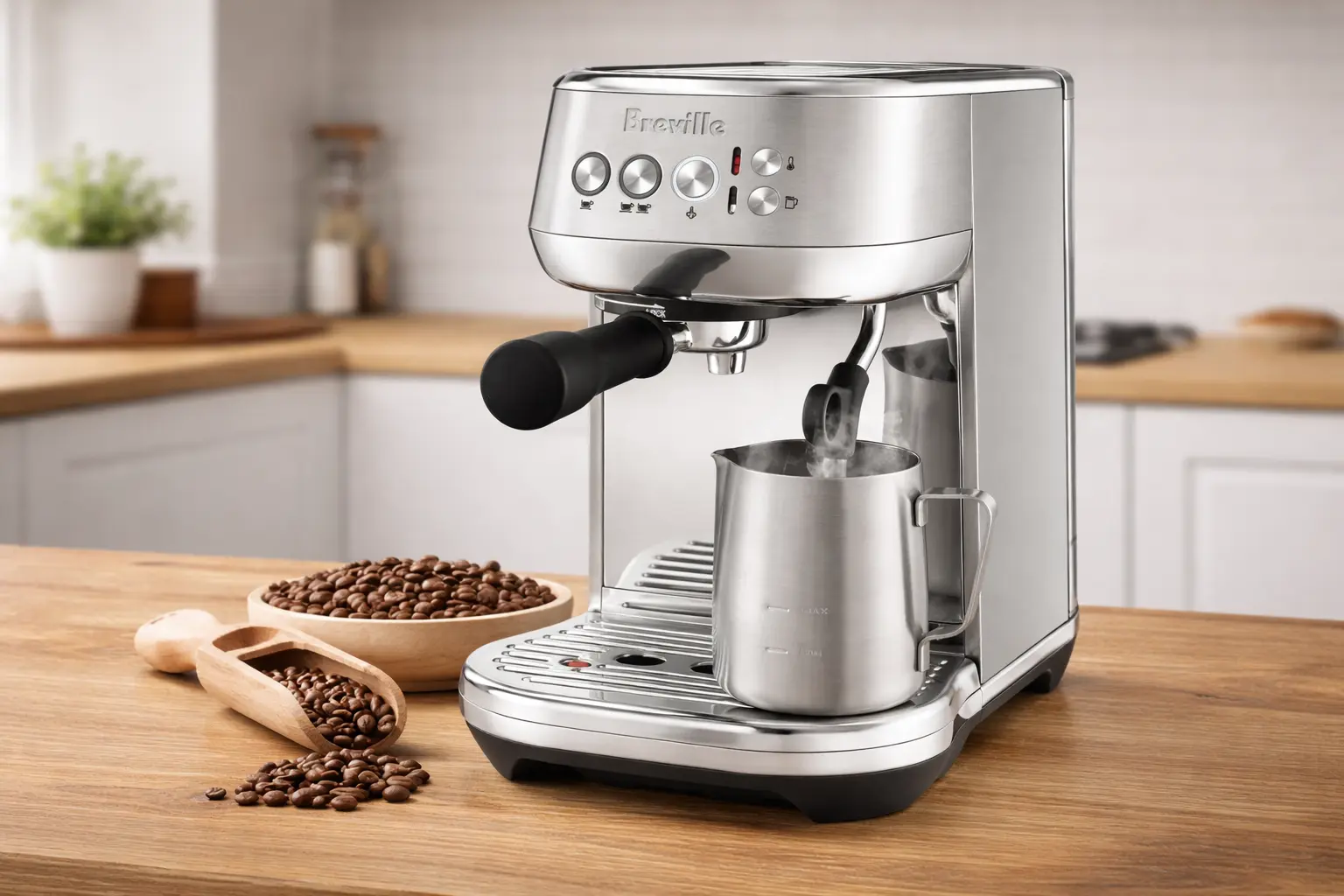
Breville Bambino Plus — More Manual Control
A compact semi-automatic machine that separates espresso preparation from the grinder and gives the user more control over the recipe.
Best starting point if: it is the useful counterpoint when shot quality and upgrade flexibility matter more than one-touch operation.
Affiliate disclosure: Amazon links may earn CoffeeGearHub a commission at no additional cost to you. Prices, sellers, bundles, and availability can change.
At-a-Glance Spec Table
| Feature | What You Get |
|---|---|
| Grinder | Built-in ceramic flat burr, 12 grind settings, rated up to ~20,000 cups |
| Milk System | LatteGo — 2-part carafe, no internal tubing, dishwasher-safe |
| Water Tank | 1.8L removable reservoir |
| Drink Menu | Espresso, Coffee, Americano, Cappuccino, Latte Macchiato, Hot Water (some regional variants add Iced Coffee) |
| Descaling | AquaClean filter — rated for up to 5,000 cups between descales when used as directed |
| Footprint | ~17 x 14.6 x 9.7 inches |
| Typical Street Price | ~$550–$800 depending on retailer and promotions |
| Best For | Beginners who want milk drinks with minimal cleanup and near-zero setup effort |
Check current price and available bundle deals:
Disclosure: CoffeeGearHub may earn from qualifying purchases.
What Makes the Philips 3200 Different
A Real Ceramic Burr Grinder, Not a Blade
Reviewers consistently point out that including a ceramic flat burr grinder at this price point is unusual, since ceramic flat grinders are more commonly found on pricier machines. The grinder offers 12 settings for dialing in grind size, though one important quirk shows up across multiple reviews: Philips recommends against changing the grind setting unless the machine is actively grinding, since doing so risks jamming the burrs, and the company also suggests avoiding grind-setting changes for the first 100–150 cups of use. One long-term reviewer also flagged that the grinder runs noticeably loud compared to other flat burr grinders they’d tested — a complaint echoed in head-to-head comparisons against the De’Longhi Magnifica Evo’s stainless steel grinder, which several reviewers describe as quieter and finer-grinding, even though the Philips ceramic burrs are rated to outlast it (roughly 20,000 cups vs a shorter service life for standard steel burrs).
The LatteGo Milk System
LatteGo is Philips’ signature milk-frothing carafe, and it’s the single biggest reason this machine shows up on “easiest to maintain” lists. The system uses just two parts — no internal tubing to disassemble or descale — and the whole assembly is dishwasher-safe. It’s built to create smooth, silky microfoam suitable for lattes and cappuccinos without the multi-piece cleanup that traditional steam wands or carafe-and-tube systems require. In direct comparisons against De’Longhi’s milk container, reviewers note the LatteGo is marginally easier to clean day-to-day, though both brands recommend a weekly dishwasher cycle for a deeper clean — meaning the practical daily-use gap between the two is smaller than marketing suggests.
AquaClean Filtration
The AquaClean filter is rated to let you brew up to 5,000 cups before the machine needs a full descaling cycle, which is a meaningful convenience if you’re moving from a manual espresso setup where scale buildup is a constant maintenance chore. That said, filter life assumes you’re using it as directed — hard water areas will still want to watch mineral buildup between cycles, and it’s worth budgeting for replacement filters as a recurring cost.
Build & Footprint
At roughly 15 inches tall and 17 inches wide, the 3200 commands more counter space than some rivals, but reviewers frame that bulk as a tradeoff for build quality — the matte black casing uses higher-grade plastics with stainless steel accents, giving it a more upscale look than its price tag suggests. If counter space is tight, measure twice before buying; this is not a compact machine in the way the Bambino Plus is.
Where the Reviews Disagree — Espresso Strength
⚠️ This is the most consistent criticism across independent testing: straight espresso shots from the 3200 tend to come out milder than what a manual or semi-automatic machine produces. One outlet summarized it directly — the machine makes it easy to whip up a cappuccino, but the coffee itself could be stronger. A long-term tester echoed the same concern, noting weak espresso shots as one of the drawbacks after months of daily use, alongside a milk-container lid they felt was flimsy. Head-to-head comparisons against the De’Longhi Magnifica Evo go further, with at least one reviewer giving the Magnifica the edge specifically because the espresso itself tasted richer and more flavorful.
If straight, intense espresso shots are your priority over milk drinks, this is the tradeoff to weigh — the “My Coffee Choice” setting lets you adjust aroma strength and volume, but it won’t fully close the gap with a dedicated semi-automatic paired with a quality grinder, like the Breville Bambino Plus discussed in the comparison section below.
Setup, Sizing & What’s in the Box
- Machine footprint: roughly 17 x 14.6 x 9.7 inches — plan counter clearance accordingly
- 1.8L water reservoir — described in reviews as generous for a compact super-automatic, comfortable for a household’s daily use without constant refilling
- Included accessories: measuring scoop, water hardness test strip, AquaClean filter, LatteGo storage lid, and a small tube of brew-group grease
- Initial setup involves a first cleaning cycle and running the AquaClean filter before your first real cup — budget 20–30 minutes for unboxing and setup
A removable brew group is included as well, which reviewers note makes ongoing maintenance friendlier than fixed-brew-group designs — though it’s worth noting that in direct comparisons, De’Longhi’s brew unit is described as smaller, simpler, and somewhat easier to clean than Philips’, giving De’Longhi a slight edge specifically on long-term maintenance simplicity.
Bean Recommendations for the Philips 3200
Reviewers who’ve spent extended time with the 3200 generally recommend starting with medium or medium-dark roasts, since very light roasts can be hit-or-miss on this platform, and keeping beans on the drier side since oily beans are more prone to sticking in the grinder chute. For a deeper dive into which roast profiles pair best with super-automatic grinders like this one, see our Best Coffee Beans for Espresso guide.
Philips 3200 vs. the Rest of the LatteGo Lineup
Philips differentiates its LatteGo family mainly by interface, drink count, and quality-of-life extras rather than fundamentally different brewing technology — the brew group, LatteGo system, AquaClean filter, and ceramic grinder concept carry across the whole line. The 1200 and 2200 sit at the entry point, the 3200 is the step up where the feature set feels complete for a small household, and the 4300 and 5400 add a color display, more drink options, and user profiles.
| Model | Display | Drink Options | Best For |
|---|---|---|---|
| 1200 / 2200 | Basic buttons | Fewer presets | Simplest entry point, tightest budget |
| 3200 (this review) | Icon-based touch panel | 6 core drinks | Small household wanting LatteGo without paying for a screen |
| 4300 / 5400 | Color touchscreen | More recipes + user profiles | Larger households with varied drink preferences |
In practice: if you want the LatteGo system’s ease of cleaning without paying for a color touchscreen or multiple user profiles, the 3200 is the sensible middle tier. If you’re brewing for more than 2–3 people with different drink preferences, the step up to the 4300 may be worth the added cost.
Philips 3200 vs Breville Bambino Plus vs De’Longhi Magnifica Evo
These three machines occupy a similar price bracket and get cross-shopped constantly, but they solve genuinely different problems. Here’s how independent comparisons — drawing on outlets including Coffeeness, Serious Eats, and CNN Underscored — break them down.
| Factor | Philips 3200 LatteGo | Breville Bambino Plus | De’Longhi Magnifica Evo |
|---|---|---|---|
| Built-in grinder | Yes — ceramic flat burr | No — requires separate grinder | Yes — stainless steel burr |
| Milk system | LatteGo automatic carafe | Manual steam wand, automatic microfoam texturing | Automatic milk carafe, less customizable foam density |
| Straight espresso quality | Mild — reviewers’ most common complaint | Strong — best-rated of the three for pure espresso | Richer/more flavorful than Philips in published head-to-head comparisons |
| Noise level | Grinder is notably loud | Moderate | Quieter grinder than Philips |
| Hands-on effort required | Lowest — true one-touch | Highest — manual milk texturing, separate grinder to manage | Low — one-touch with manual frothing on some functions |
| Best for | Milk-drink lovers who want zero learning curve | Aspiring home baristas who want café-quality espresso and are willing to learn | Buyers who want richer espresso than Philips without Bambino’s hands-on component |
🔬 The honest bottom line from independent comparisons: the Bambino Plus is rated ahead on pure espresso and microfoam quality, but it demands a separate grinder purchase and a willingness to learn basic dial-in technique. The Philips 3200 trades some of that ceiling for a genuinely lower floor — you can make a passable latte on day one with zero technique. If you already have a grinder you like, or you’re drawn to CoffeeGearHub’s Best Espresso Machines for Beginners guide because you want to learn the craft, the Bambino Plus is the better fit. If your priority is convenience and consistent milk drinks with the least possible daily effort, the Philips 3200 remains the stronger pick.
Pros & Cons at a Glance
✅ Pros
- Built-in ceramic burr grinder is unusual at this price tier, rated for ~20,000 cups
- LatteGo milk system is genuinely low-maintenance and dishwasher-safe
- AquaClean filter extends time between full descales to ~5,000 cups
- Removable brew group simplifies upkeep
- Minimal learning curve for milk-based drinks — true one-touch operation
⚠️ Cons
- Straight espresso shots run milder than manual/semi-automatic machines and rival De’Longhi models
- Grinder is loud in operation compared to steel-burr rivals
- Milk container lid described as flimsy by at least one long-term tester
- Larger footprint than compact rivals like the Bambino Plus
- Grind setting changes require the machine to be actively running
Troubleshooting & Maintenance Matrix
| Symptom | Likely Cause | Fix |
|---|---|---|
| Espresso tastes weak/watery | Default recipe favors milk drinks over shot intensity | Use the “My Coffee Choice” setting to increase aroma strength; grind one setting finer only after 150 cups of break-in |
| Grinder jammed or won’t adjust | Grind setting changed while machine was idle, not actively grinding | Only adjust the grind dial while the machine is mid-grind; consult manual for jam-clearing steps if it locks up |
| Milk froth inconsistent or watery | LatteGo carafe not fully seated, or milk temperature too warm before frothing | Reseat the two-piece carafe fully; use cold milk straight from the fridge |
| Descale reminder appearing early | Hard water accelerating mineral buildup faster than the AquaClean filter offsets | Run a manual descale cycle with Philips-approved solution; consider a water softening pitcher for refills |
| Coffee grounds sticking in chute | Beans too oily (common with dark/very oily roasts) | Switch to medium or medium-dark roast beans that run drier; clean the chute per the manual weekly |
For general descaling and upkeep principles that apply across super-automatic machines, see our How to Descale an Espresso Machine guide.
FAQs – Phillips 3200 LatteGo
Does the Philips 3200 LatteGo grind fresh beans for every cup?
How often do I need to descale the Philips 3200?
Is the Philips 3200 good for straight espresso, or only milk drinks?
What’s the difference between the Philips 3200 and 4300?
Philips 3200 vs Breville Bambino Plus — which should I buy?
Is the Philips 3200 grinder loud?
CoffeeGearHub’s reviews are research-based, drawing on published testing, manufacturer specifications, and verified owner feedback rather than in-house hands-on testing. This helps us give you a fair, well-rounded picture from multiple independent sources rather than a single reviewer’s experience.
Reference check
Sources and Verification
Machine specifications and maintenance requirements can change by model and region. Current ownership guidance should be checked against the Philips manual for the exact 3200-series model and compatible cleaning products.
CoffeeGearHub product shortlist
Compare related CoffeeGearHub product pages
Compare the semi-automatic alternative and core espresso tools before leaving the site.
Continue Learning
Own and maintain the machine
In this guide
- The 30-Second Answer
- At-a-Glance Spec Table
- What Makes the Philips 3200 Different
- Where the Reviews Disagree — Espresso Strength
- Setup, Sizing & What’s in the Box
- Bean Recommendations for the Philips 3200
- Philips 3200 vs. the Rest of the LatteGo Lineup
- Philips 3200 vs Breville Bambino Plus vs De’Longhi Magnifica Evo
- Pros & Cons at a Glance
- Troubleshooting & Maintenance Matrix
- FAQs – Phillips 3200 LatteGo
- Sources and Verification
- Continue Learning