
Last Updated: September 2026 • 18–24 minute read • Office Buying Guide: Commercial vs Home Brewers + Throughput + Reservoirs + Certifications + Support + Cost
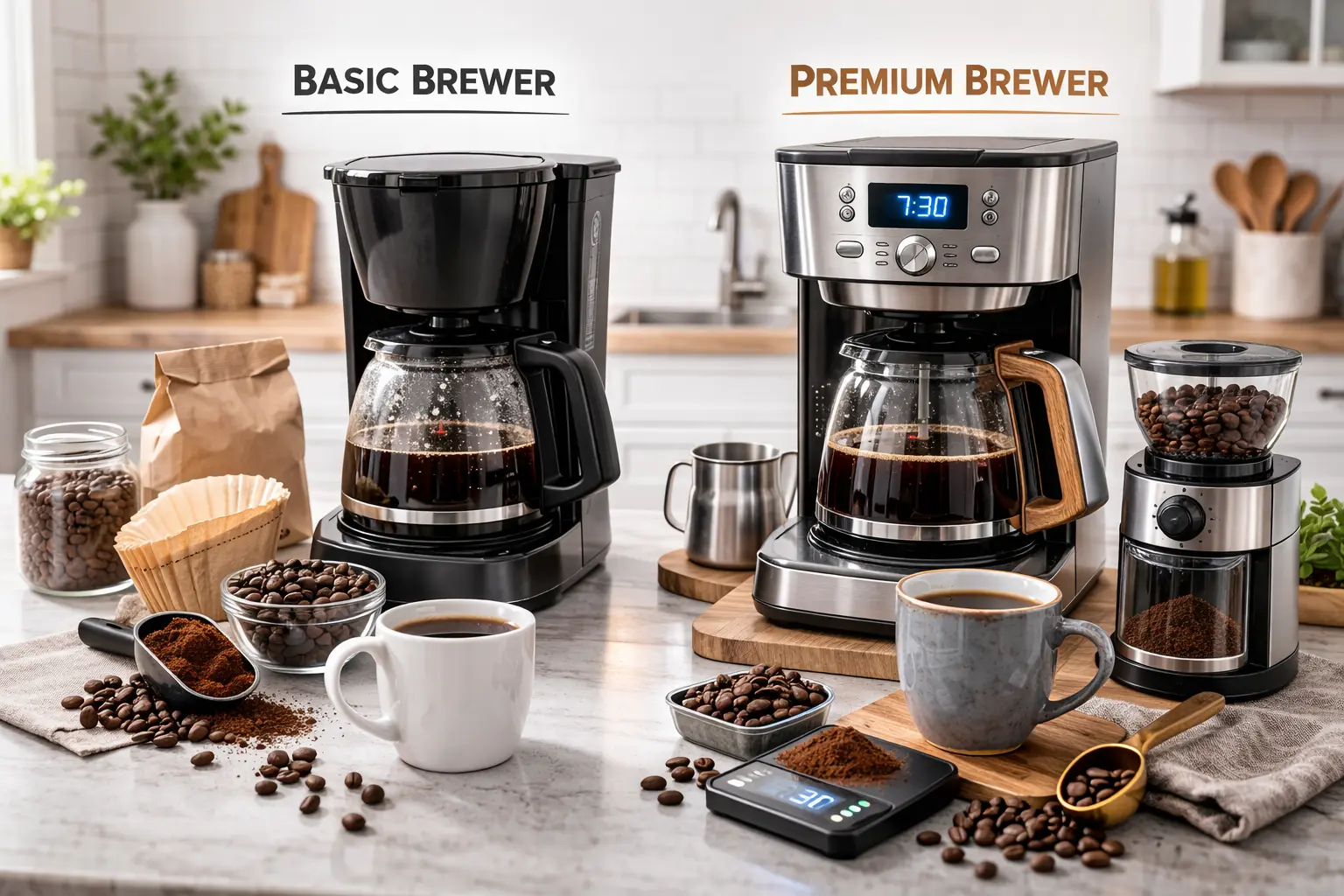
The difference between a commercial coffee maker and a home coffee maker in an office is not simply size or price. The more useful question is whether the machine is designed, listed, and supported for the kind of workload your workplace will give it.
A five-person office making one morning pot can reasonably use equipment that would be a poor fit for a busy waiting room serving drinks throughout the day. At the other end, buying a commercial brewer for a three-person team can add cost and complexity without solving a real problem.
This guide explains how to tell when home equipment is enough, when commercial-oriented hardware becomes the better fit, and which specifications matter before you spend more for a “business” machine.
✍️ Editorial note: This guide uses current manufacturer classifications and specifications to compare business-oriented and home-use coffee makers. We do not claim hands-on testing where it has not occurred. Product links may be affiliate links; as an Amazon Associate, CoffeeGearHub earns from qualifying purchases at no extra cost to you.
How We Compare Commercial and Home Coffee Makers
- Manufacturer classification: whether the brewer is positioned for commercial/business use, home use, or both.
- Throughput: how many drinks or batches the office expects during peak periods.
- Water system: reservoir size, refill frequency, and whether direct plumbing is available.
- Shared-use features: simple controls, drainable tanks, automatic on/off, brew-size options, and easy cleanup.
- Certifications and support: commercial listings, foodservice certifications where applicable, and the manufacturer’s business support channel.
The 30-Second Answer
A home coffee maker can be enough for a lightly used small office. Commercial equipment starts to make more sense when the brewer is used repeatedly throughout the day, many people depend on it, the office needs a large reservoir or direct plumbing, or the manufacturer specifically provides business-oriented support and certifications for that environment.
- 1–5 regular coffee drinkers: a good home thermal-carafe brewer or home single-serve machine can be reasonable.
- 5–10 users with staggered demand: a large-reservoir commercial-oriented single-serve brewer becomes more attractive.
- 10–25 users or frequent customer service: commercial equipment deserves serious consideration.
- Heavy continuous use: choose around duty, water supply, serviceability, and business support—not the lowest purchase price.
🏢 Four useful reference points
Keurig K155 OfficePRO
Commercial-oriented reference
90 oz reservoir • NSF foodservice • Commercial UL
Keurig K-1500
Small-business reference
96 oz reservoir • Strong Brew • Quiet Brew • drainable tank
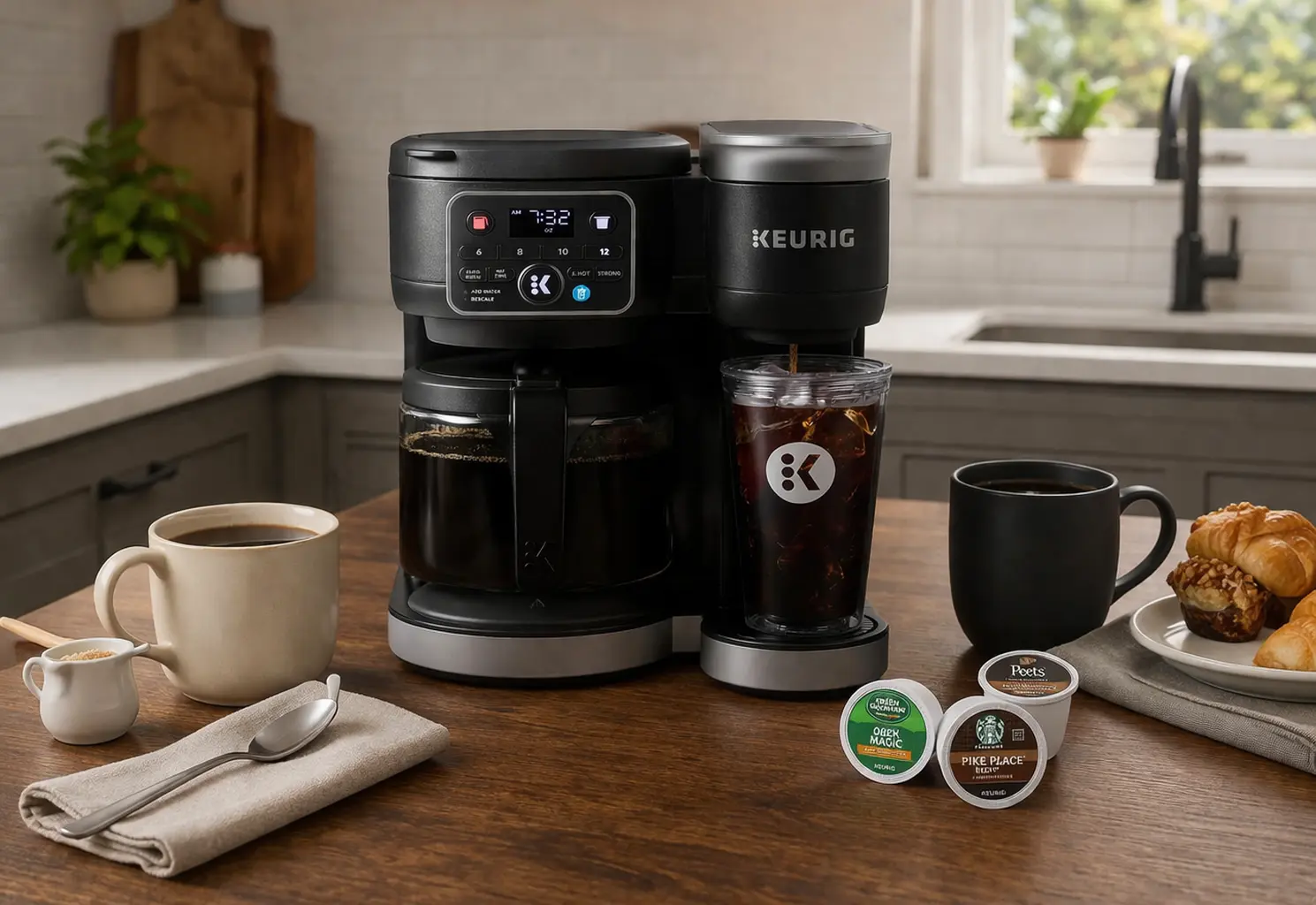
Keurig K-Duo Gen 2
Home-use hybrid reference
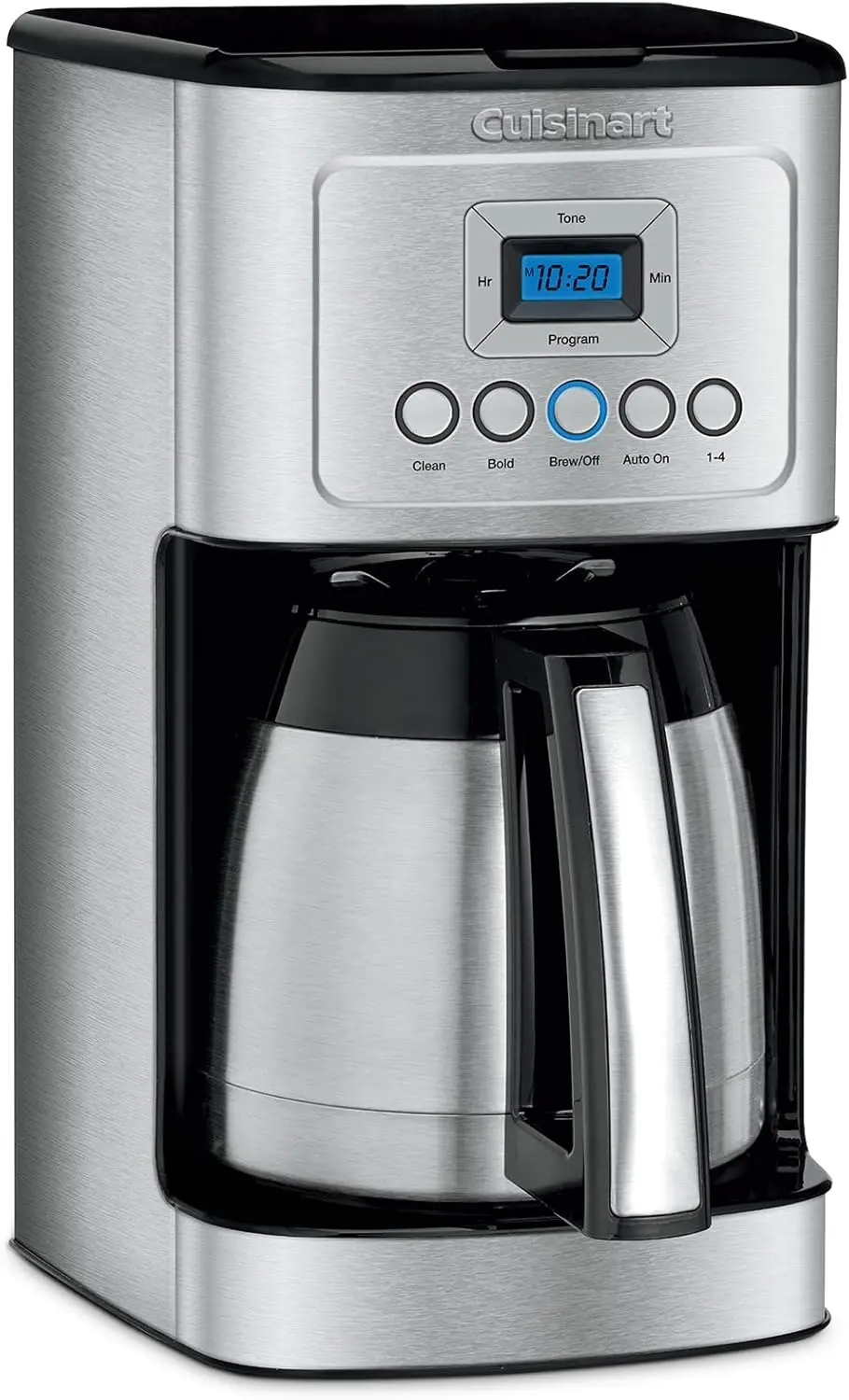
Cuisinart DCC-3400
Home thermal-carafe reference
Table of Contents
What “Commercial” Actually Changes
“Commercial” is useful only when it describes real differences in how the manufacturer positions and supports the brewer. Keurig’s current K150-series documentation, for example, identifies the platform as a commercial brewing system and lists the K155 with a 90-ounce reservoir, foodservice NSF certification, and commercial UL listing. The K-1500 is positioned for small businesses and includes a 96-ounce reservoir, Strong Brew, Quiet Brew Technology, automatic on/off, four cup sizes, and a drainable internal tank.
Those features do not automatically mean every commercial brewer makes better-tasting coffee. They indicate that the machine is being sold around a shared-use business workflow. That is different from taking a machine designed primarily for a kitchen and simply putting it in a break room.
Commercial classification also does not mean a machine is necessary for every office. Some home brewers are perfectly reasonable when the workload is light. The important thing is to match the machine to the use case rather than treating “commercial” as a quality badge.
When a Home Coffee Maker Is Enough for an Office
A home brewer is easiest to justify when the office behaves more like a household: a small number of regular coffee drinkers, one or two predictable brew periods, and enough downtime between cycles that the machine is not being used continuously.
A 12-cup thermal-carafe brewer can be a strong fit for a five-person office that makes one pot in the morning. Cuisinart’s current DCC-3400NAS, for example, is a 12-cup thermal brewer with regular/bold strength control, 24-hour programmability, a 1–4 cup setting, Brew Pause, a decalcification indicator, and a three-year limited warranty.
A home brewer makes sense when:
- one or two batches cover most of the day’s demand;
- the brewer has long idle periods;
- one person or a small team handles cleanup;
- the office does not need direct plumbing or very large reservoirs;
- there is no requirement for commercial foodservice certification.
When Commercial Equipment Starts to Make More Sense
The strongest argument for commercial equipment is repeated shared use. If the brewer becomes a piece of workplace infrastructure—something many people depend on throughout the day—the cost of refill interruptions, confusing controls, downtime, and weak support starts to matter more.
Commercial-oriented machines can also solve specific workflow problems. A larger reservoir means fewer refills. A drainable internal tank makes moving or servicing the brewer easier. Direct-plumb options eliminate reservoir refilling entirely. Business support channels can be useful when the brewer is part of an office operation rather than a personal appliance.
Important: commercial equipment is not automatically maintenance-free. Shared-use machines still need cleaning, descaling, supply management, and someone responsible for the station.
Throughput Matters More Than Headcount Alone
Two ten-person offices can have completely different coffee requirements. In one office, four people drink coffee at 8:30 a.m. and nobody uses the machine again. In another, employees, visitors, and customers make drinks continuously from morning through late afternoon.
That is why the better planning question is how many drinks are made during the busiest hour. Peak demand determines whether people will constantly refill the reservoir, wait for another batch, or interrupt each other at a single-serve machine.
| Peak pattern | What usually works | What to watch |
|---|---|---|
| 3–5 drinks in one morning window | Home thermal-carafe or home single serve | Do not overbuy capacity |
| 5–10 drinks spread through the day | Large-reservoir single serve or batch brewer | Refill frequency and cleanup |
| 10+ drinks in short bursts | Commercial-oriented brewer or larger batch workflow | Queueing and reservoir recovery |
| Employees + customers all day | Commercial equipment deserves priority | Downtime, support, sanitation, and supply management |
Reservoir Size and Plumbing Can Decide the Question
A small reservoir is manageable at home because one person notices when it is empty. In an office, an empty reservoir becomes a shared annoyance. If several people use the machine, reservoir capacity can matter more than extra drink settings.
The K155’s 90-ounce reservoir and the K-1500’s 96-ounce reservoir are examples of business-oriented capacity. The K150 platform also includes options that can be configured for direct water-line plumbing. That can make sense where refill labor itself becomes the problem.
Do not pay for plumbing merely because it exists. A refillable reservoir is often simpler for small offices and avoids installation requirements. Plumbing becomes more compelling when the brewer is used often enough that people are constantly carrying pitchers to the machine.
Certifications and Business Support Are Real Differences
One of the clearest differences between commercial and home equipment is that some business-oriented brewers carry certifications or listings relevant to shared or foodservice use. Keurig currently lists the K155 as NSF certified for foodservice and commercially UL listed.
That does not mean every office legally requires those certifications; requirements vary by environment and jurisdiction. It does mean the manufacturer has documented that brewer for a different use context than a home-only model.
Support is another consideration. Keurig maintains separate commercial sales and technical-support channels for its business systems. When a brewer is mission-critical to a customer-facing environment, access to a business support path can be more valuable than another home-oriented convenience feature.
Commercial vs Home Coffee Maker Examples
Commercial reference: Keurig K155 OfficePRO
The K155 is a useful commercial reference because Keurig explicitly positions it in the K150 commercial platform. Current documentation lists a 90-ounce reservoir, 4–10 ounce brew sizes, a full-color touch screen, NSF foodservice certification, and commercial UL listing.
Best fit: shared offices and customer-facing environments that value easy individual drinks and business-oriented classification.
Small-business reference: Keurig K-1500 / K-1550
Keurig positions the K-1500 platform for small businesses. Current specs include a 96-ounce reservoir, Strong Brew, Quiet Brew Technology, four cup sizes, automatic on/off, and a drainable internal tank.
Best fit: smaller offices with frequent single-serve demand that want a simple commercial-oriented machine without direct plumbing.
Home hybrid reference: Keurig K-Duo Gen 2
Keurig’s commercial catalog currently labels the K-Duo Hot & Iced Gen 2 as for home use only. That makes it a good example of a machine that can still be useful in a light office because its hybrid workflow may matter more than commercial classification.
Best fit: a small office that genuinely wants both K-Cup brewing and a shared carafe, with relatively light daily demand.
Trade-off: choose it for flexibility, not because it is a commercial-duty office machine.
Home speed reference: BUNN Speed Brew Platinum Thermal
BUNN describes the Speed Brew Platinum Thermal as a home coffee maker, even though it uses an internal commercial-grade stainless-steel hot-water tank. BUNN says it can brew a full 50-ounce thermal carafe in about four minutes and backs Speed Brew models with a three-year warranty.
This is a useful reminder that one commercial-style component does not make the entire machine commercial equipment. For a small office that values fast batch brewing, it may still be an attractive home-class option.
Decision Table: Which Class Fits Your Office?
| Office situation | Home equipment | Commercial equipment |
|---|---|---|
| 1–5 coffee drinkers, one morning brew | Usually reasonable | Often unnecessary |
| 5–10 users, staggered single-serve demand | Possible if use is light | Worth considering for reservoir size and shared use |
| 10–25 regular users | Can become a bottleneck | Often the more logical starting point |
| Waiting room / customer area | Possible for light managed service | Stronger fit when service is frequent |
| Continuous use throughout the workday | Not the ideal assumption | Prioritize business-oriented equipment |
| Need direct plumbing | Rare | Commoner option on commercial platforms |
Compare Total Cost, Not Just the Machine Price
A lower purchase price does not automatically mean a lower-cost office setup. The ongoing cost can include coffee, K-Cups, filters, water filters, cleaning products, cups, creamers, service time, and the labor involved in refilling and maintaining the station.
Single-serve systems are convenient but typically create a higher consumable cost per drink than batch brewing. Batch brewers can lower coffee cost, but they can also waste coffee if the office repeatedly brews more than people drink. A plumbed brewer reduces refill labor but can add installation complexity.
The right financial comparison is therefore not “commercial machine versus cheaper home machine.” It is the complete office workflow over time. Our Office Coffee Station Setup guide covers the supporting supplies and restocking system in more detail.
Buying for an Office or Small Business?
If the same account will also buy coffee, filters, cups, cleaning supplies, and other workplace essentials, compare organizational purchasing options separately from personal shopping.
Helpful Next Guides
Use the next guide based on whether you are choosing the brewer or building the complete office system around it.
Frequently Asked Questions
Does a small office need a commercial coffee maker?
Not necessarily. A lightly used small office can often use a good home brewer successfully. Commercial-oriented equipment becomes more relevant as usage, refill frequency, shared demand, customer service, and support requirements increase.
What is the main difference between a commercial and home coffee maker?
The useful differences are manufacturer classification, shared-use features, reservoir or plumbing options, certifications where applicable, and business support. Commercial does not automatically mean better-tasting coffee.
Can I use a home Keurig in an office?
A home Keurig can make sense in a lightly used small office, but Keurig distinguishes home-use-only models from its business-oriented commercial systems. For heavier shared use, compare the K155, K-1500/K-1550, and other commercial platforms.
When should an office consider a plumbed coffee maker?
Direct plumbing becomes more useful when reservoir refilling is frequent enough to interrupt the workflow. Small offices often do fine with a large refillable reservoir and avoid the added installation requirements.
Is a BUNN Speed Brew a commercial coffee maker?
BUNN markets Speed Brew as a home coffee maker. It uses an internal commercial-grade stainless-steel hot-water tank, but the product itself remains part of BUNN’s home retail line.
Continue Learning
Sources & Verification
Manufacturer classification and specifications were checked against current first-party documentation. Retailer listings can vary by seller or bundle, so verify the exact model before purchase.
Before buying: verify commercial-use classification, warranty terms, electrical requirements, water connection needs, and the exact model number for the office environment.
Written by the CoffeeGearHub Editorial Team
CoffeeGearHub compares verified specifications, workflow differences, maintenance requirements, and long-term ownership costs so readers can make practical equipment decisions without assuming a higher price automatically means a better fit. About CoffeeGearHub →