
Last Updated: September 2026 • 22–30 min read • Full Comparison: Brewing Technology + Coffee Quality + Cost Per Cup + Machine Picks + Decision Guide
Editorial note: This guide is researched and written by the editors at CoffeeGearHub.com using published brewing science, equipment manufacturer specifications, and established specialty-coffee community knowledge. Recommendations reflect research consensus rather than in-house lab testing. All product links are affiliate links — we may earn a commission at no cost to you.
Buying for a workplace or small business? Our new Best Coffee Makers for Offices & Small Businesses guide compares commercial Keurig systems, thermal carafe brewers, team-size fit, recurring supply costs, and office procurement options.
The 30-Second Answer
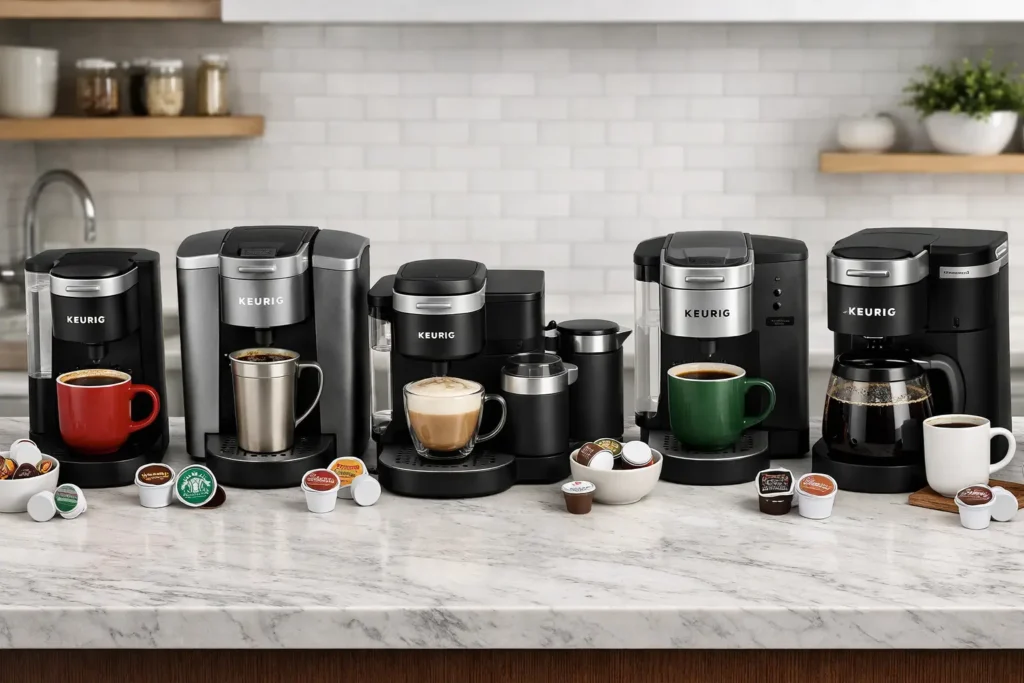
Keurig vs drip coffee maker is ultimately a trade-off between convenience and value. Keurig brews a single cup in under a minute from a sealed pod — fast, flexible, zero measuring. A drip coffee maker brews a full pot from fresh-ground beans — lower cost per cup, better flavor ceiling, and better suited to households where multiple people want coffee at once. They are both completely different products solving completely different problems.
- Pick Keurig if: you brew one cup at a time, want variety across beverages, live alone or have a household with wildly different drink preferences, and are willing to pay the pod premium for the convenience
- Pick drip if: you brew 2+ cups daily, want better-tasting coffee, care about ongoing cost, want to use fresh-ground beans, or brew for multiple people at once
- Key truth: Drip coffee from a quality machine with fresh-ground beans produces noticeably better flavor than any Keurig — but Keurig’s convenience advantage is real. The right choice depends entirely on how you actually drink coffee day to day
If you choose Keurig, the next decisions are the brewer and the coffee. See our Best Keurig Machines guide for the current lineup, Best Coffee for Keurig for pod choices, and Reusable K-Cup Filter guide if lower cost and fresh grounds are priorities.
Who This Guide Is For — Jump to What You Need
Deciding between the two
Read Quick Verdict + Brewing Technology + Decision Guide.
Focused on cost
Jump to Cost Per Cup + Reusable Pods + Long-Term Value.
Want better-tasting coffee
Go straight to Coffee Quality + Drip Machine Picks.
Household of 2 or more
Read Drink Types + Decision Guide.
Table of Contents
Quick Verdict (Choose in 30 Seconds)
Pick Keurig if…
- You brew one cup at a time and want it ready in under 90 seconds
- You live alone or rarely brew multiple cups at once
- Your household drinks different beverages — coffee, tea, hot cocoa — not just coffee
- You want zero measuring, grinding, or morning complexity
- You are willing to pay more per cup for the convenience
- You drink coffee in a dorm room, office, or small space
Pick drip if…
- You or your household drinks 2 or more cups daily
- You want the lowest possible cost per cup
- You care about coffee flavor quality and want fresh-ground beans to matter
- You want to experiment with different coffees and grind settings
- You want a machine that improves noticeably with a burr grinder
- You prefer less packaging waste without needing a recycling workaround
At-a-Glance Comparison Table
| Category | Keurig | Drip Coffee Maker | Winner |
|---|---|---|---|
| Brewing method | Single-serve pod (1–2 bar pressure) | Batch gravity drip (multiple cups) | Depends on use case |
| Coffee flavor quality | Mild — pre-ground pods limit freshness | Better — especially with fresh-ground beans | Drip (with good grinder) |
| Cups per brew | 1 cup per cycle (6–12oz) | 4–12+ cups per batch | Drip for households |
| Brew speed (first cup) | ~60–90 seconds | 4–8 minutes for full pot | Keurig |
| Pod / bean cost per cup | $0.35–$0.70 (standard K-Cup) | $0.15–$0.35 (bagged coffee) | Drip |
| Fresh-ground bean support | With reusable pod only | Yes — standard operation | Drip |
| Beverage variety | Coffee, tea, hot cocoa, specialty drinks | Coffee only | Keurig |
| Machine price range | Entry-level to upper mid-range | Entry-level to premium | Tie — comparable tiers available in both |
| Ongoing cost (annual) | $183–$256 (1 cup/day, K-Cups) | $55–$128 (1 cup/day, bagged beans) | Drip |
| Environmental impact | Plastic pod per cup (hard to recycle) | Paper filter only (compostable) | Drip |
| Maintenance complexity | Moderate — needle cleaning + descaling | Simple — carafe + basket + descaling | Drip |
| Counter space | Compact — most models under 13″ tall | Compact – similar footprint at larger capacity | Tie |
| Best for households | 1 person or mixed-beverage households | 2+ people drinking the same coffee | Depends on household |
The real decision point: If you brew one cup at a time and convenience matters more than cost or flavor nuance, Keurig is a genuinely good fit. If you brew multiple cups, care about what is in your cup, or want the lowest possible ongoing cost — a drip machine is better in every measurable way except speed of the first cup.
Brewing Technology: How Each System Actually Works
How Keurig Brews
Keurig machines use sealed plastic pods called K-Cups, each containing a pre-measured portion of pre-ground coffee and a small paper filter. A needle pierces the top and bottom of the pod, hot water is forced through under low pressure — typically 1–2 bars — and the brewed coffee drains directly into your cup in about 60 seconds.
The sealed pod format offers genuine convenience: no measuring, no cleanup beyond the pod itself, and no grinder required. The trade-offs are that the coffee is pre-ground (and has been for months by the time you use it), the pod creates plastic waste per cup, and the low-pressure brewing does not extract as fully as a well-calibrated drip machine. Keurig’s newer MultiStream models use a 5-needle system that saturates the grounds more evenly, partially closing the extraction quality gap.
- Pressure: ~1–2 bars
- Pod type: plastic K-Cups with pre-ground coffee and paper filter
- Output: single-serve coffee, 6–12oz per brew
- Brew time: ~60–90 seconds per cup
How Drip Coffee Makers Brew
Drip coffee makers work by heating water in a reservoir and dripping it through a basket of ground coffee and a paper or reusable filter using gravity. The water saturates the grounds from above, extracts flavor as it passes through, and collects in a carafe below. The process typically takes 4–8 minutes for a full pot and produces 8–12 cups per cycle.
The key variable in drip brewing quality is brew temperature. SCA (Specialty Coffee Association) standards specify 197–205°F for optimal extraction — machines that cannot reach this range systematically under-extract, producing weak, flat coffee regardless of bean quality. Budget drip machines often brew at 180–190°F. Certified machines like the Breville Precision Brewer hit the target temperature range consistently and produce noticeably better cups. A burr grinder compounds the improvement significantly.
- Method: gravity drip through paper or reusable filter
- Optimal temperature: 197–205°F (SCA standard)
- Output: 4–12+ cups per batch
- Brew time: 4–8 minutes for full pot
Coffee Quality: The Honest Comparison
A quality drip machine with freshly ground beans produces better coffee than a Keurig — and the gap is meaningful, not marginal. The reasons are straightforward: K-Cups contain pre-ground coffee that was packaged weeks or months earlier. Pre-ground coffee degrades faster than whole beans because of the greatly increased surface area exposed to oxygen. By the time a K-Cup is brewed, the coffee inside has lost a significant portion of its aromatics.
Drip coffee with whole beans, ground fresh before brewing, retains far more volatile aromatics. The brew temperature advantage of a quality drip machine also contributes: a machine hitting 200°F consistently extracts more soluble coffee compounds than a machine at 185°F, producing a fuller-flavored, less watery cup. The grinder matters even more than the machine — see Best Coffee Grinders for Home Brewing.
| Quality Factor | Keurig (standard K-Cup) | Drip (quality machine + fresh grounds) |
|---|---|---|
| Coffee freshness | Pre-ground, sealed weeks–months ago | As fresh as your beans and grind |
| Aroma intensity | Mild — volatile aromatics mostly gone by brewing | Strong — fresh grind releases aromatics on contact with hot water |
| Body / mouthfeel | Light to medium | Medium to full — better extraction at correct temperature |
| Flavor consistency | High — same pod, same result | Variable — depends on grinder, ratio, machine quality |
| Flavor ceiling | Limited by pod freshness | High — limited mainly by bean quality |
| Improvement potential | Moderate — reusable pod + fresh grounds closes gap | High — better grinder, better beans, better ratio all compound |
The grinder variable: A Keurig with a reusable pod and freshly ground specialty coffee beats a cheap drip machine with pre-ground grocery store coffee. But a quality drip machine paired with a burr grinder and fresh beans beats any Keurig setup. The upgrade path for drip is longer and more rewarding. For Keurig, it largely ends at the reusable pod. For more, see Burr vs Blade Coffee Grinders and Grind Size Explained.
Household Use and Drink Types
What Keurig Does Well
- Single-serve coffee on demand — no leftover pot getting stale on a warming plate
- Mixed households — one person drinks coffee, another drinks tea, another drinks hot cocoa
- Office environments where people want quick individual cups with no shared pot
- Iced coffee (K-Elite and K-Supreme Plus have dedicated iced settings)
- Variety seekers — access to thousands of K-Cup varieties including limited and seasonal blends
What Drip Does Well
- Batch brewing for 2 or more people — one brew cycle serves everyone
- Thermal carafe models keep coffee hot for hours without a warming plate that cooks and degrades flavor
- Programmable brewing — set it the night before and wake up to a full pot already made
- Works with any beans you choose — specialty roasters, locally roasted, whole-bean fresh-ground
- Better pairing with a grinder for genuine flavor improvement
Household size matters most here: For a single person brewing one cup on a rushed morning, Keurig’s convenience argument is strong. For two people both wanting coffee at 7am, drip brews one batch in 6 minutes while Keurig requires two separate cycles — and drip produces twice the coffee at roughly 40% of the per-cup cost. The breakeven point where drip becomes the more practical choice is roughly two cups per morning, daily.
Cost Per Cup: Full Breakdown
The ongoing cost difference between Keurig and drip is the most consequential long-term factor in this decision. A K-Cup costs $0.35–$0.70 per cup. Quality bagged coffee for a drip machine typically costs $0.15–$0.35 per cup depending on the brand and roast. That gap adds up to $60–$200 per year at one cup per day, and it doubles or triples for households brewing more volume.
| Brewing Method | Avg. Cost Per Cup | Annual Cost (1 cup/day) | 3-Year Total |
|---|---|---|---|
| Keurig with K-Cups (name brand) | $0.50–$0.70 | ~$183–$256 | ~$548–$767 |
| Keurig with K-Cups (store brand / bulk) | $0.35–$0.50 | ~$128–$183 | ~$383–$548 |
| Keurig with reusable pod + ground coffee | $0.15–$0.30 | ~$55–$110 | ~$165–$330 |
| Drip (grocery store / mid-range beans) | $0.15–$0.25 | ~$55–$91 | ~$165–$274 |
| Drip (specialty / fresh-roasted beans) | $0.25–$0.40 | ~$91–$146 | ~$274–$438 |
The cost reality: Keurig with a reusable pod and quality ground coffee matches drip on per-cup cost while keeping the convenience advantage. Standard name-brand K-Cups cost roughly 2–3x as much as drip coffee brewed from the same quality beans. At two cups per day per household, that gap is $200–$400 per year — enough to pay for a quality drip machine in year one and continue saving indefinitely after.
Reusable Pods: Keurig’s Best Upgrade
A reusable K-Cup pod is the single best upgrade available to Keurig owners — it simultaneously lowers the cost per cup to match drip brewing, eliminates single-use plastic waste, and allows you to brew any coffee you choose rather than being limited to pod selection. Most current Keurig models are compatible with the Keurig My K-Cup Universal Reusable Filter.
With a reusable pod and a bag of quality ground coffee, Keurig’s flavor output improves meaningfully — you are no longer limited by stale pre-ground coffee sealed months earlier. If you pair a reusable pod with a burr grinder and freshly ground beans, Keurig’s cup quality comes significantly closer to a mid-range drip machine. The convenience advantage (single cup on demand) remains fully intact.
| Factor | Standard K-Cup | Reusable K-Cup + Ground Coffee |
|---|---|---|
| Cost per cup | $0.35–$0.70 | $0.15–$0.30 |
| Plastic waste | One pod per cup | Zero single-use plastic |
| Coffee freshness | Pre-ground, sealed months ago | As fresh as your bag or grinder |
| Flavor quality | Limited by K-Cup contents | Any coffee you choose — including fresh-ground |
| Upfront cost | None — use stock pods | Low one-time cost for reusable filter — check Amazon for current price |
| Payback period | N/A | 30–60 cups — typically 2–4 weeks of daily use |
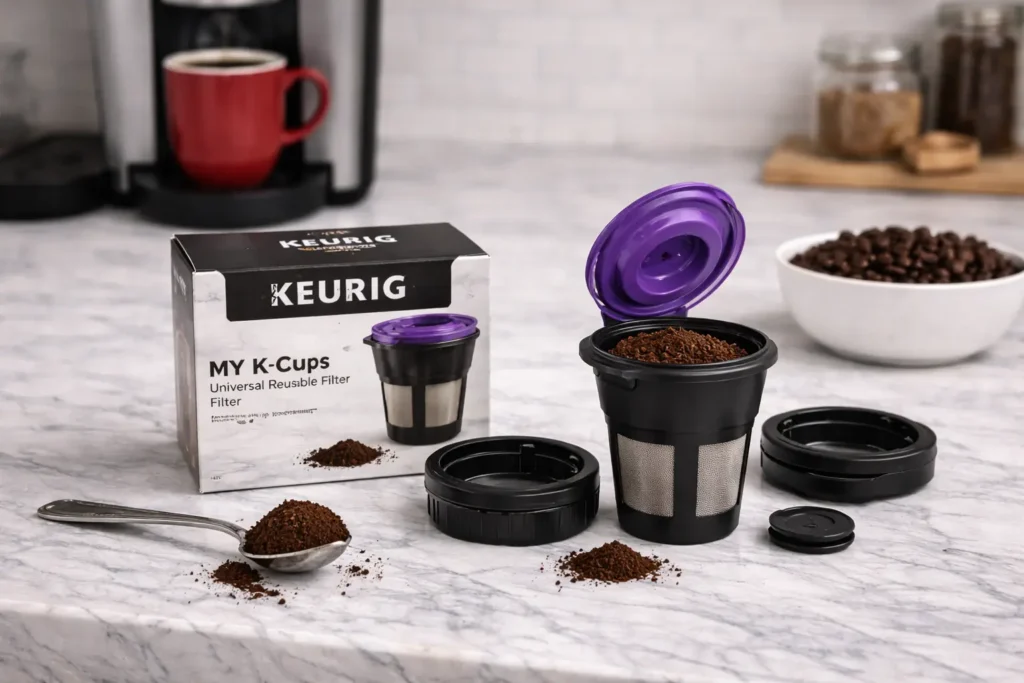
Keurig My K-Cup Universal Reusable Filter
The official Keurig reusable pod — compatible with most current Keurig 1.0 and 2.0 machines. Fill it with any ground coffee, snap it in, and brew. The single best upgrade for reducing Keurig’s cost per cup and improving the flavor ceiling of any Keurig setup.
- Compatible with most Keurig models — check your machine’s compatibility page
- Easy fill, easy cleanup, dishwasher safe
- Low one-time investment — recoup cost in weeks of daily use
Best Keurig Machines in 2026
If you have decided Keurig is the right fit, these are the three models that make the most sense for different use cases. For a fuller breakdown of the full Keurig lineup, see Best Keurig Machines (2026).
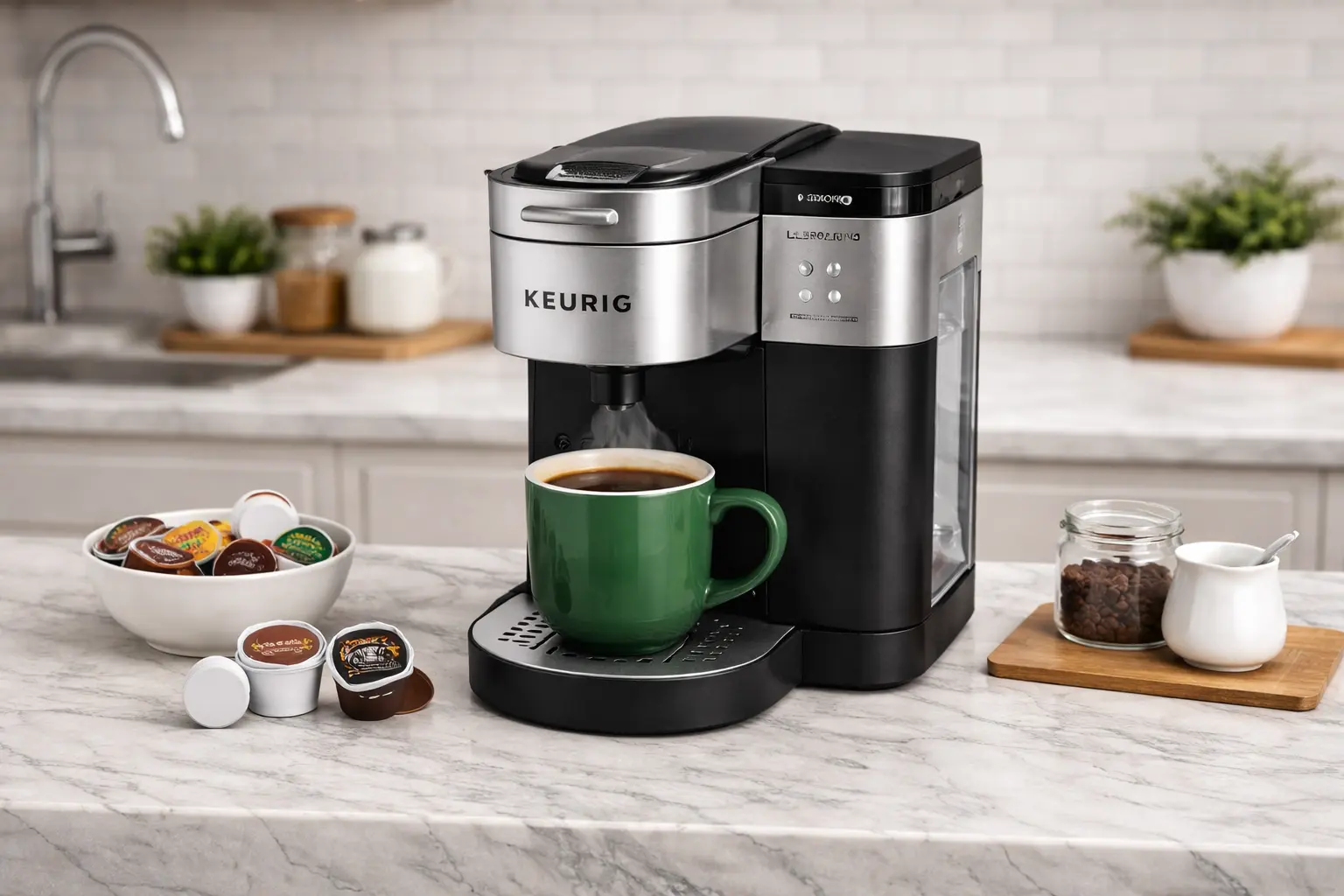
Keurig K-Supreme Plus Smart
Best overall Keurig
The best Keurig for buyers who want the closest approximation to drip coffee quality — MultiStream extraction uses 5 needles that saturate grounds more evenly than standard single-needle models, producing a noticeably fuller-flavored cup.
- MultiStream extraction — best flavor of any Keurig
- Custom brew profiles — temperature, strength, size
- Brew sizes: 6, 8, 10, 12oz
- App integration — schedule brews remotely
- Budget tier: Upper mid-range — check Amazon for current price
Best for: daily Keurig drinkers who want the best flavor possible and are willing to pay for it.
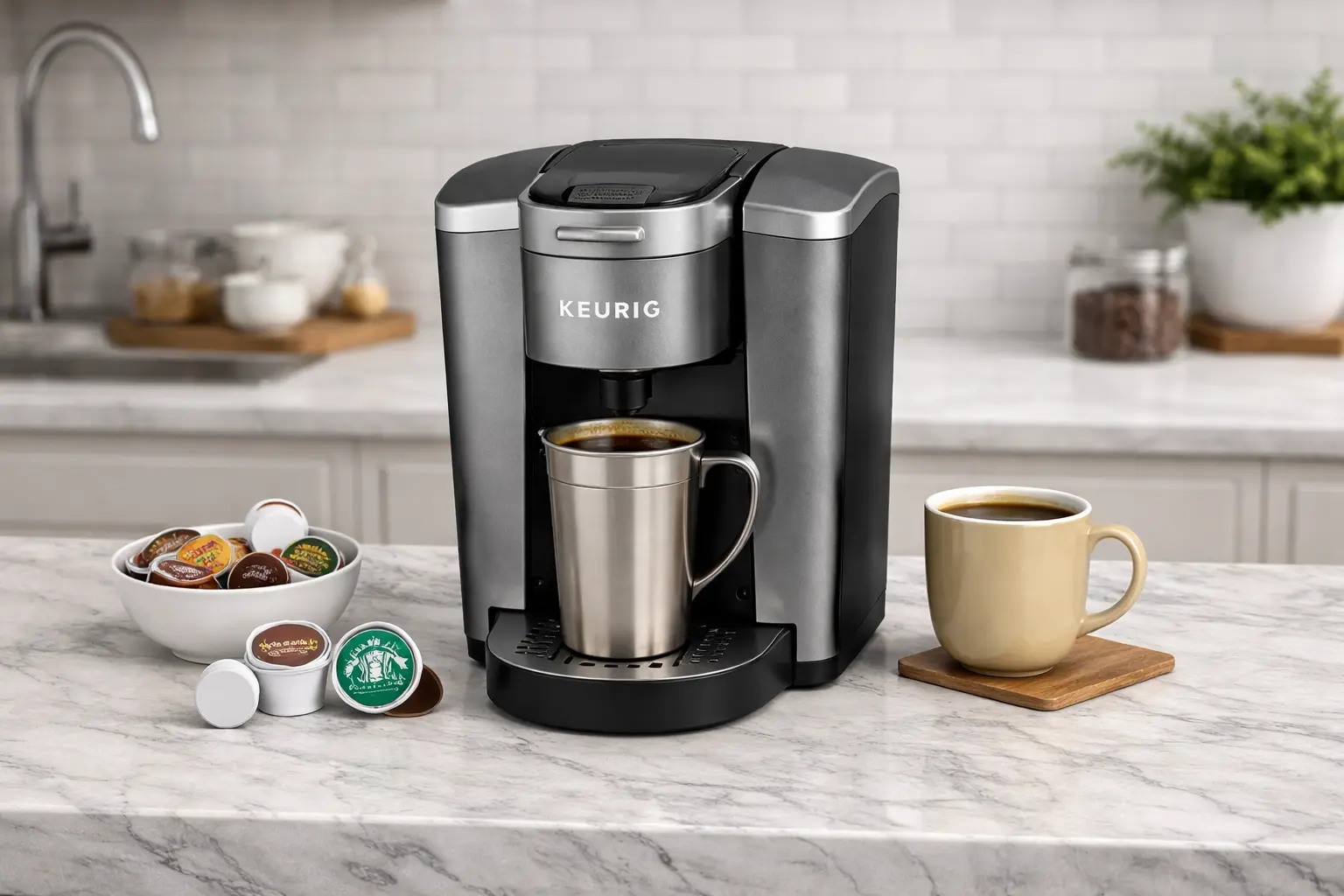
Keurig K-Elite
Best value Keurig
Reliable and feature-rich at a lower price than the K-Supreme Plus Smart. The strong brew mode produces a noticeably bolder cup — the best option for drip coffee drinkers who miss the body of a full pot.
- Strong brew mode — increased concentration for a fuller cup
- Iced coffee setting — brews concentrated hot coffee over ice
- 75oz water reservoir — fewer refills
- Brew sizes: 4, 6, 8, 10, 12oz
- Budget tier: Mid-range — check Amazon for current price
Best for: former drip drinkers switching to Keurig who want a bolder cup without paying K-Supreme Plus Smart prices.
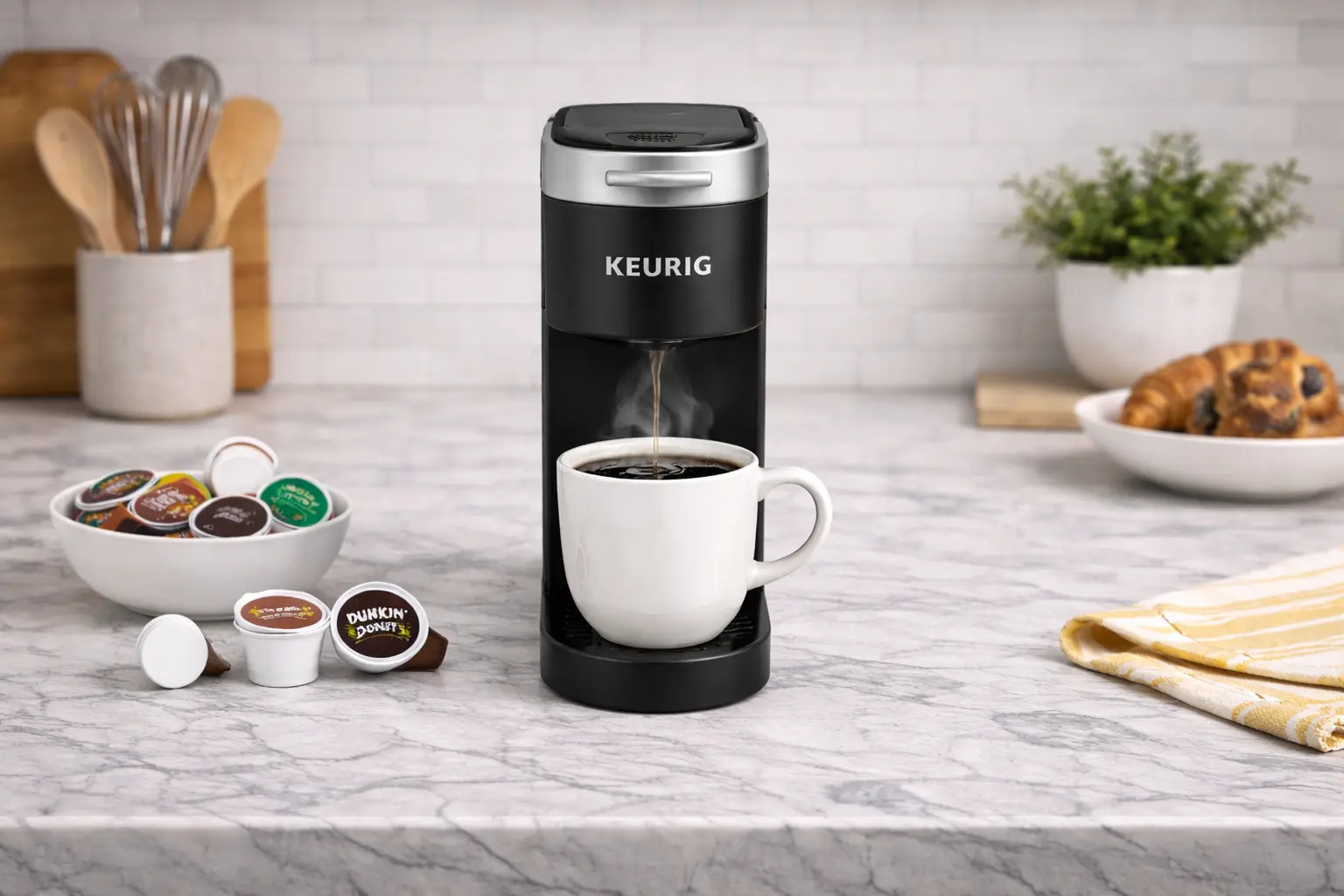
Keurig K-Mini
Best budget / compact Keurig
The most compact Keurig available at under 5 inches wide. Ideal for dorm rooms, offices, or secondary coffee stations where counter space is limited. Basic brewing with no strength control — simple and affordable.
- Smallest footprint of any Keurig — 4.5″ wide
- Fill reservoir per cup — no tank to scale up
- Brew sizes: 6–12oz
- No strength control or programmable features
- Budget tier: Entry-level — check Amazon for current price
Best for: dorm rooms, small offices, or anyone who brews infrequently and wants the cheapest possible Keurig entry point.
Best Drip Coffee Makers in 2026
The most important spec to look for in a drip machine is brew temperature — a machine that cannot reach 197–205°F will under-extract regardless of bean quality or grind. SCA-certified machines meet this standard by definition. For a full breakdown of the drip coffee maker market, see Best Coffee Makers for Everyday Brewing.
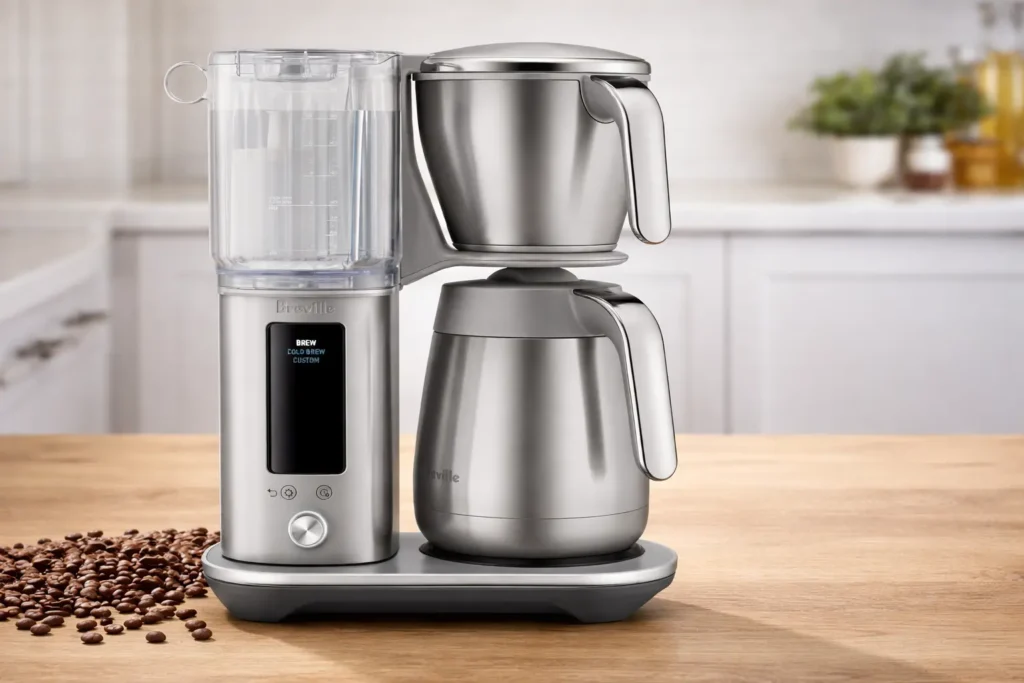
Breville Precision Brewer Thermal
Best overall drip coffee maker
The most consistently recommended home drip machine for serious coffee drinkers. SCA-certified to brew at the correct temperature (197–205°F), with a pre-infusion bloom cycle that improves extraction of fresh-ground specialty beans more than any other drip machine in this price range.
- SCA-certified — brews at 197–205°F, the gold standard for drip extraction
- Pre-infusion bloom — saturates grounds before brewing for better extraction of fresh beans
- Thermal carafe — keeps coffee hot without a warming plate that degrades flavor
- Capacity: 8 cups / 40oz thermal carafe
- Budget tier: Premium — check Amazon for current price
Best for: buyers who want the best flavor a home drip machine can produce and are willing to invest accordingly.
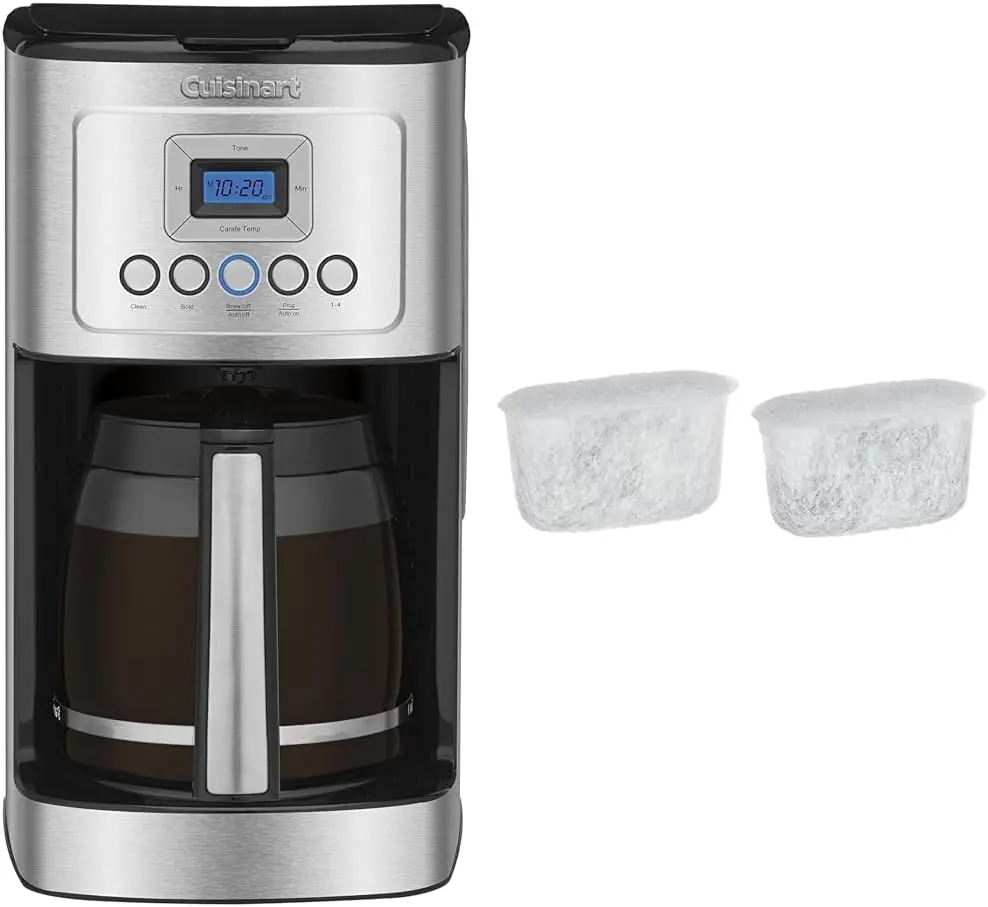
Cuisinart DCC-3200P1
Best value drip coffee maker
The most widely recommended mid-range drip machine — programmable, consistent, and available at a price that is easy to justify when switching from Keurig. Brews a full 14-cup carafe reliably and pairs well with a burr grinder for a significant step up from K-Cup quality.
- 14-cup glass carafe — largest capacity in this price class
- Programmable 24-hour advance — wake up to a fresh pot
- Brew strength control (regular and bold settings)
- Auto shutoff — adjustable from 0–4 hours
- Budget tier: Mid-range — check Amazon for current price
Best for: households switching from Keurig who want a reliable full-pot drip machine at a low cost-of-entry.

Mr. Coffee 12-Cup Programmable
Best budget drip coffee maker
The simplest and most affordable path to lower-cost, better-value coffee than Keurig. Brews a full pot reliably, programmable 24-hour advance, and produces coffee that tastes better than pre-ground K-Cups even without a burr grinder — purely because fresh bagged beans beat stale pods.
- 12-cup capacity at the lowest entry price in this comparison
- 24-hour programmable — set overnight for morning coffee
- Brew strength selector (regular / bold)
- Pause-and-pour for mid-brew cups
- Budget tier: Entry-level — check Amazon for current price
Best for: budget buyers switching from Keurig primarily for cost savings who want the lowest machine entry point.
Drip Coffee Maker Types: Which to Choose
Not all drip machines are identical — they differ meaningfully in how they keep coffee hot, how well they brew, and what temperature they reach. Choosing the right type prevents the most common drip coffee disappointments.
| Type | How it works | Pros | Cons | Best for |
|---|---|---|---|---|
| Programmable with glass carafe | Brews into glass carafe on a warming plate | Inexpensive, widely available, programmable | Warming plate degrades flavor after 30–40 minutes | Budget buyers who drink coffee quickly after brewing |
| Thermal carafe | Brews into double-wall insulated carafe — no warming plate | Coffee stays fresh 2–3 hours; better flavor | Slightly higher cost; carafe must be pre-heated for best results | Anyone who doesn’t finish the pot within 30 minutes of brewing |
| SCA-certified precision brewer | Brews at exact SCA-spec temperature (197–205°F) with bloom cycle | Best extraction quality of any drip method | Premium price point — see Amazon for current pricing | Serious coffee drinkers who want drip at its best |
| Pour-over style auto-drip | Showerhead distributes water evenly like manual pour-over | More even extraction than single-stream; better bloom | Pricier; overkill for everyday use | Pour-over drinkers who want hands-off consistency |
The warming plate problem: Most budget drip machines keep coffee hot on a glass carafe warming plate. After 30–40 minutes, the warming plate begins cooking the coffee — producing the stale, slightly burnt flavor that most people associate with office drip coffee. A thermal carafe eliminates this entirely. It is the single most impactful hardware difference to look for after temperature accuracy.
Maintenance Comparison
Both machines require regular descaling and cleaning — mineral scale and old coffee oils degrade flavor in either system if ignored. The maintenance routines differ in complexity and what fails when neglected.
| Maintenance Task | Keurig | Drip Coffee Maker |
|---|---|---|
| Daily rinse | Empty drip tray if needed; wipe exterior | Rinse carafe and filter basket |
| Weekly cleaning | Remove and rinse water reservoir; wipe needle | Wash carafe and basket with dish soap |
| Needle cleaning | Required — clogged needles cause weak brewing or no flow | Not applicable |
| Descaling | Every 3–6 months (Keurig descale solution required) | Every 1–3 months depending on water hardness |
| Filter replacement | Water filter in reservoir every 2 months (if applicable) | Paper filters per brew; reusable filters every 3–6 months |
| Failure mode when neglected | Clogged needles, scale in water path, pump damage | Scale buildup reduces brew temp; stale oil taste |
| Maintenance difficulty | Moderate — more internal components to access | Simple — carafe, basket, and water reservoir are all accessible |
For drip-specific cleaning instructions: How to Clean a Drip Coffee Maker. For Keurig descaling: How to Descale a Keurig.
Environmental Impact
Drip coffee has a clear environmental advantage over standard K-Cup brewing. A drip machine with a reusable filter produces essentially no single-use packaging waste per cup — just spent grounds that can be composted. Even with paper filters, the waste is minimal and fully compostable. Keurig K-Cups are made from plastic and are difficult to recycle in most curbside programs, generating one pod per cup of plastic waste.
| Factor | Keurig (standard K-Cups) | Keurig (reusable pod) | Drip (paper filter) | Drip (reusable filter) |
|---|---|---|---|---|
| Packaging waste per cup | 1 plastic pod | None | 1 paper filter (compostable) | None |
| Curbside recyclable | Rarely | N/A | Compostable | N/A |
| Grounds disposal | Sealed in pod — composting requires disassembly | Grounds easy to compost | Filter + grounds compostable together | Grounds easy to compost |
| Energy use | Higher — heats water for each individual cup | Higher — same | Lower — one heat cycle for full batch | Lower — same |
If sustainability matters to you: A drip machine with a reusable metal filter is the most sustainable pod-free home coffee setup available. Keurig with a reusable pod also eliminates single-use plastic and matches drip on a per-cup waste basis. Standard single-use K-Cups generate approximately 365 plastic pods per person per year at one cup per day — the most avoidable ongoing waste in home coffee equipment.
Long-Term Value: Which System Costs Less Over Time?
Machine purchase price is a one-time cost that matters less than ongoing pod or bean pricing over a 3–5 year ownership period. For a household of two people each drinking one cup per day, the annual cost difference between K-Cups and drip from bagged beans is substantial — enough to recoup even a premium drip machine in year one and continue saving every year after.
| Setup | Machine Tier | Annual Coffee Cost (1 cup/day) | 3-Year Coffee Cost |
|---|---|---|---|
| Mr. Coffee 12-Cup + bagged beans | Entry-level | ~$55–$91 | ~$165–$274 |
| Cuisinart DCC-3200P1 + bagged beans | Mid-range | ~$55–$91 | ~$165–$274 |
| Breville Precision Brewer + specialty beans | Premium | ~$91–$146 | ~$274–$438 |
| Keurig K-Mini + reusable pod + ground coffee | Entry-level | ~$55–$110 | ~$165–$330 |
| Keurig K-Elite + K-Cups (name brand) | Mid-range | ~$183–$256 | ~$548–$767 |
| Keurig K-Supreme Plus Smart + K-Cups | Upper mid-range | ~$183–$256 | ~$548–$767 |
The Cuisinart DCC-3200P1 with bagged beans delivers the best ongoing coffee value in this comparison — producing better-tasting coffee than any K-Cup setup at roughly half the annual coffee cost. The machine pays for itself quickly through the savings on pod costs alone.
Which Should You Buy? Practical Decision Guide
| Your situation | Buy this | Why |
|---|---|---|
| You brew one cup per morning and hate measuring anything | Keurig K-Elite | Strong brew mode, iced setting, large reservoir — best Keurig for the daily solo drinker |
| You brew 2+ cups every morning for your household | Cuisinart DCC-3200P1 | Brews a full pot at a time for less per cup; program it the night before |
| You want the best-tasting drip coffee possible | Breville Precision Brewer + burr grinder | SCA-certified temperature + fresh-ground beans = the best drip coffee available at home |
| You want to lower your Keurig pod costs without switching machines | Keep your Keurig + add reusable K-Cup | Drops per-cup coffee cost significantly while improving flavor — best upgrade with no machine change required |
| You want the absolute cheapest possible daily coffee | Mr. Coffee 12-Cup + store-brand bagged beans | Entry-level machine + lowest-cost beans — least expensive daily coffee setup available |
| Your household drinks coffee, tea, and hot cocoa | Keurig K-Supreme Plus Smart | K-Cup variety covers all three; MultiStream extraction makes the coffee side as good as Keurig gets |
| You travel or need coffee in a small space | Keurig K-Mini | 4.5″ wide, per-cup reservoir, minimum footprint — best small-space coffee |
| You care about sustainability and are currently using K-Cups | Cuisinart DCC-3200P1 + reusable filter | Zero single-use packaging, compostable grounds, lower energy per cup, cheaper to run |
| You want to try drip without a big investment | Mr. Coffee 12-Cup | Entry-level machine that pays for itself quickly through K-Cup savings; full upgrade path available later |
| You want the best Keurig flavor closest to drip quality | Keurig K-Supreme Plus Smart + reusable pod + fresh-ground beans | MultiStream extraction + fresh ground coffee = the highest Keurig flavor ceiling available |
FAQs: Keurig vs Drip Coffee Makers
Is Keurig better than a drip coffee maker?
Neither is universally better — they serve different needs. Keurig is better for single-serve convenience, speed, and household beverage variety. A drip coffee maker is better for cost per cup, coffee flavor quality, multi-cup batch brewing, and fresh-ground bean support. If you brew one cup at a time and convenience matters most, Keurig wins. If you brew multiple cups daily and want better flavor at lower cost, a drip machine wins.
Does Keurig coffee taste different from drip coffee?
Yes. Keurig uses pre-ground coffee sealed in plastic pods — those grounds are older than typical bagged coffee and the low-pressure brewing extracts less flavor complexity than a quality drip machine brewed at the correct temperature. A well-tuned drip machine with freshly ground beans produces noticeably richer, more aromatic coffee. The gap narrows significantly with a reusable K-Cup pod and fresh-ground specialty coffee.
Is Keurig cheaper than drip coffee?
No — Keurig is significantly more expensive per cup than drip. Standard K-Cups cost noticeably more per serving than bagged coffee brewed in a drip machine at the same quality level. Over a year of daily use, the K-Cup premium adds up substantially. The gap narrows considerably if you use a reusable K-Cup pod with your own ground coffee, which brings Keurig’s per-cup coffee cost in line with drip brewing.
Can a Keurig make as much coffee as a drip machine?
Most Keurig machines brew 6–12oz per cycle — one cup at a time. Drip machines brew 8–12 cups (40–60oz) in a single batch. For households of two or more people wanting coffee simultaneously, a drip machine is dramatically more efficient. Keurig’s K-Duo model adds carafe-brewing capability but at a higher price and with the added complexity of a two-in-one machine.
Which is easier to maintain — Keurig or a drip coffee maker?
Drip coffee makers are generally easier to maintain — the carafe, basket, and reservoir are all directly accessible and simple to clean. Keurig maintenance is more involved because the needle that punctures pods can clog with coffee grounds and requires dedicated cleaning. Both machines require regular descaling, but Keurig’s internal water path is more complex. See How to Clean a Drip Coffee Maker for the full routine.
What is the best drip coffee maker for daily use?
The Breville Precision Brewer is the most consistently recommended home drip machine for serious coffee drinkers — SCA-certified temperature, pre-infusion bloom cycle, and a thermal carafe. For most buyers the Cuisinart DCC-3200P1 is the best value — reliable, programmable, and produces noticeably better coffee than any K-Cup setup. See Best Coffee Makers for Everyday Brewing for the full list.
Can I use fresh-ground coffee in a Keurig?
Yes, with a reusable K-Cup pod like the Keurig My K-Cup Universal Reusable Filter. Fill it with any ground coffee and brew as normal. This significantly improves Keurig’s flavor quality and drops the per-cup coffee cost to match drip brewing. It is the single best upgrade available to Keurig owners — a low one-time purchase that pays for itself quickly in daily use.
Which is more environmentally friendly — Keurig or drip?
Drip coffee makers produce essentially zero single-use packaging waste — spent paper filters and grounds are both compostable, and reusable metal filters eliminate even that. Standard K-Cups generate one plastic pod per cup that is difficult to recycle in most curbside programs. Keurig with a reusable pod eliminates this gap, but standard K-Cup use makes Keurig significantly less environmentally friendly than drip.
Is a Keurig worth it for a household of two or more?
Generally no. For two or more people drinking coffee at the same time, a drip machine brews one batch for the whole household in 6 minutes at lower per-cup cost. The main reason to choose Keurig in a multi-person household is when people drink very different beverages — one person wants coffee, another wants tea, another wants hot cocoa — where Keurig’s K-Cup variety is genuinely more convenient than running multiple appliances.
What is the best Keurig for someone switching from drip?
The Keurig K-Supreme Plus Smart is the best Keurig for former drip drinkers — its MultiStream extraction system saturates grounds more evenly than standard single-needle models, producing a noticeably fuller-flavored cup. Pair it with a reusable K-Cup pod and quality ground coffee for the closest Keurig approximation to drip quality. The K-Elite is a more affordable alternative with a strong brew mode that partially closes the flavor gap.
Next Reads
DRIP COFFEE GUIDES
KEURIG GUIDES
Considering a pod machine vs Nespresso? If espresso-style drinks are on the table, the Keurig vs Nespresso comparison covers that decision in full — including why espresso quality and drip quality are fundamentally different problems.
☕
Written by the CoffeeGearHub Editorial Team
CoffeeGearHub is a specialty coffee equipment resource produced by the CoffeeGearHub Editorial Team. Our guides are researched using published brewing science, equipment manufacturer specifications, and established specialty-coffee community knowledge. We review and update our pillar content regularly. About CoffeeGearHub →