Last updated: February 2026 • 22–25 min read
Quick takeaway: A good coffee scale is the fastest way to improve consistency at home. Measuring coffee and water by weight—not scoops—makes ratios repeatable, fixes weak or bitter brews, and removes guesswork from drip, pour-over, and espresso. This guide explains what actually matters in a coffee scale, when features help (or don’t), and which scales are worth buying for real home brewing.
This guide is written for real home brewers—simple setups, limited counter space, and practical budgets.
Who This Guide Is For (And Who Can Skip It)
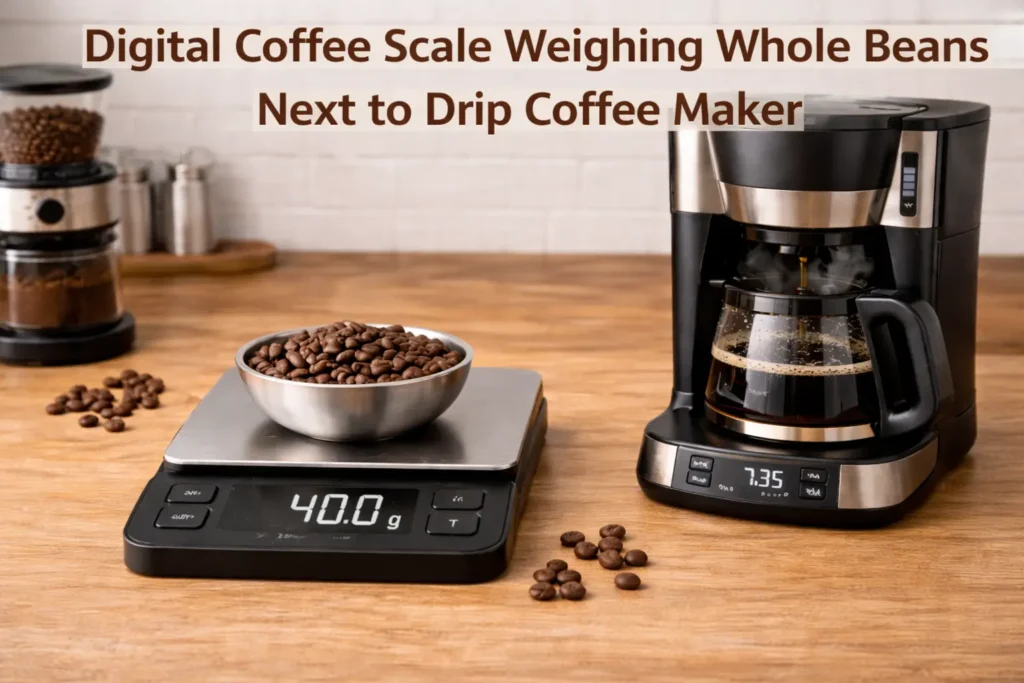
- This guide is for you if: your coffee tastes different day to day, you brew drip or pour-over at home, or you want consistent results without obsessing over gear.
- You can skip this guide if: you only use pre-ground coffee, never adjust ratios, and aren’t interested in improving consistency.
For most home brewers, upgrading to a scale improves coffee more than upgrading the coffee maker itself.
Key Takeaways
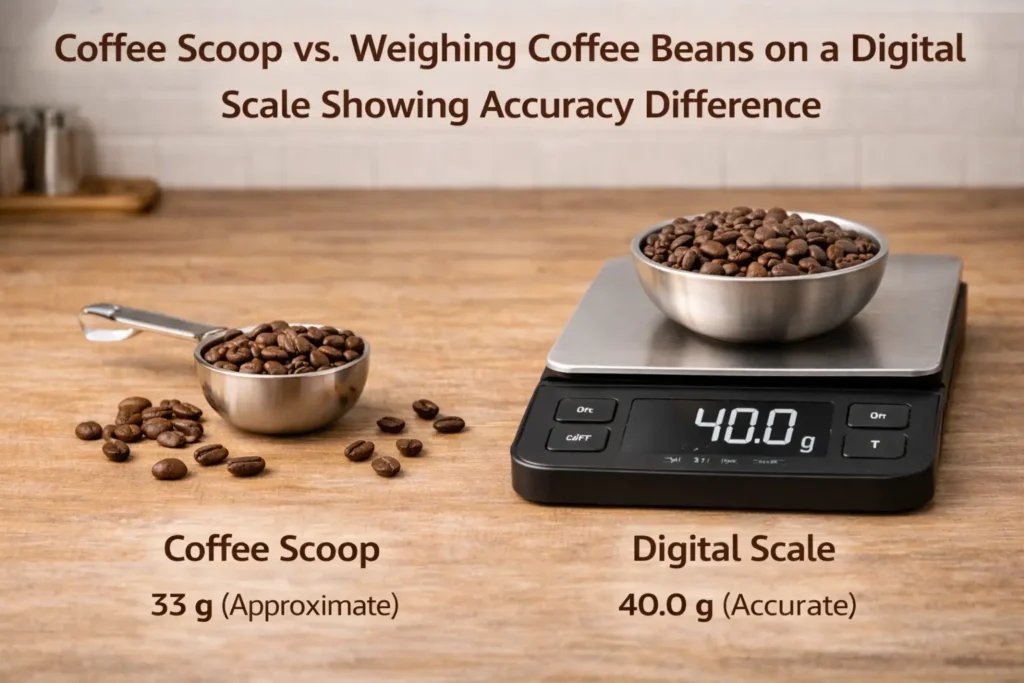
- Measuring by weight is far more accurate than scoops
- 0.1g resolution is ideal for coffee brewing
- Timers are helpful—but not required for drip coffee
- You don’t need an expensive espresso scale for great results
If you’re new to brewing, start with Coffee Brewing Foundations, then come back here to lock in consistency.
Why a Coffee Scale Matters More Than Scoops
Scoops vary depending on grind size, bean density, and how full they’re packed. That’s why coffee often tastes different day to day—even when nothing else changes.
- Beans vary in size and density
- Different grinds weigh different amounts per scoop
- Water volume markings are often inaccurate
A scale removes those variables. Once measurements are consistent, adjustments actually work. That’s why scales pair so well with our drip coffee ratio guide and common drip coffee mistakes.
What Actually Changes When You Start Weighing Coffee
Most people expect a scale to make coffee “more precise.” What it really does is make coffee easier to fix.
- You can repeat good cups instead of guessing
- Weak or bitter coffee becomes easier to diagnose
- Ratio changes finally make sense
- Grind size adjustments become noticeable
Once weight is consistent, flavor problems usually trace back to one clear variable.
What Actually Matters in a Coffee Scale
- Accuracy (0.1g resolution): Necessary for dialing in ratios; anything coarser hides meaningful changes.
- Response speed: Slow scales lag during pour-over and make adjustments frustrating.
- Capacity: Drip brewers need 2kg+ for full carafes.
- Timer: Helpful for pour-over, optional for drip.
- Form factor: Compact scales fit more setups and get used more often.
For drip coffee, reliability matters more than smart features or apps.
Do You Really Need a Timer?
Timers are useful—but they’re not mandatory for great coffee.
- Helpful for: pour-over learning, espresso shots
- Less important for: automatic drip coffee
- Does not fix: bad ratios, stale beans, wrong grind size
Which Scale Features Matter for Your Brewing Style?
| Brewing Style | What Matters Most | Why |
|---|---|---|
| Drip coffee | Capacity + accuracy | Full carafes need room; ratios need consistency |
| Pour-over | Fast response + timer | Pour control and bloom timing matter |
| Espresso | Speed + precision | Small changes affect extraction |
Best Coffee Scales for Home Brewing
These picks focus on accuracy, speed, and real-world usability—so you can brew repeatable drip and pour-over without guessing. Each recommendation includes who it’s best for, what to watch out for, and a simple “buy if” summary.
Best Overall: Timemore Black Mirror Basic Plus
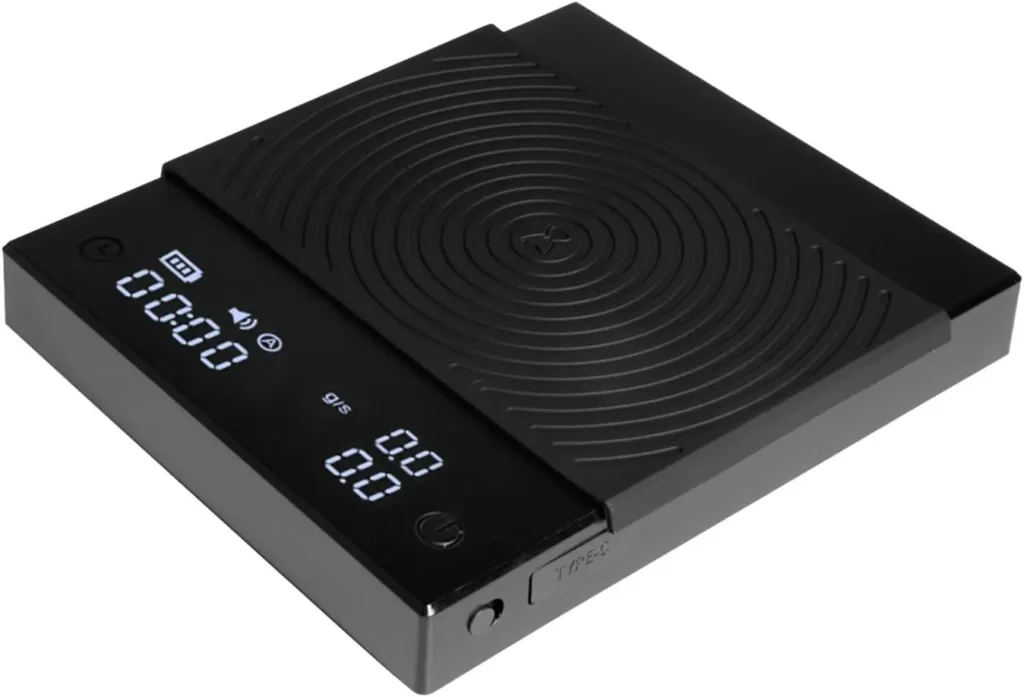
Why it’s a top pick: Fast response, consistent readings, and a built-in timer make this an easy “daily driver” for drip and pour-over. It improves repeatability without making your routine feel fussy.
- Best for: drip coffee, pour-over, espresso beginners
- Strengths: quick refresh, 0.1g precision, reliable day-to-day
- Watch-outs: keep it dry; wipe clean instead of rinsing
Buy this if: you want one scale that works for basically everything and you’ll use it daily.
Price may vary. We may earn a commission at no cost to you.
Best Budget Pick: Greater Goods Digital Coffee Scale
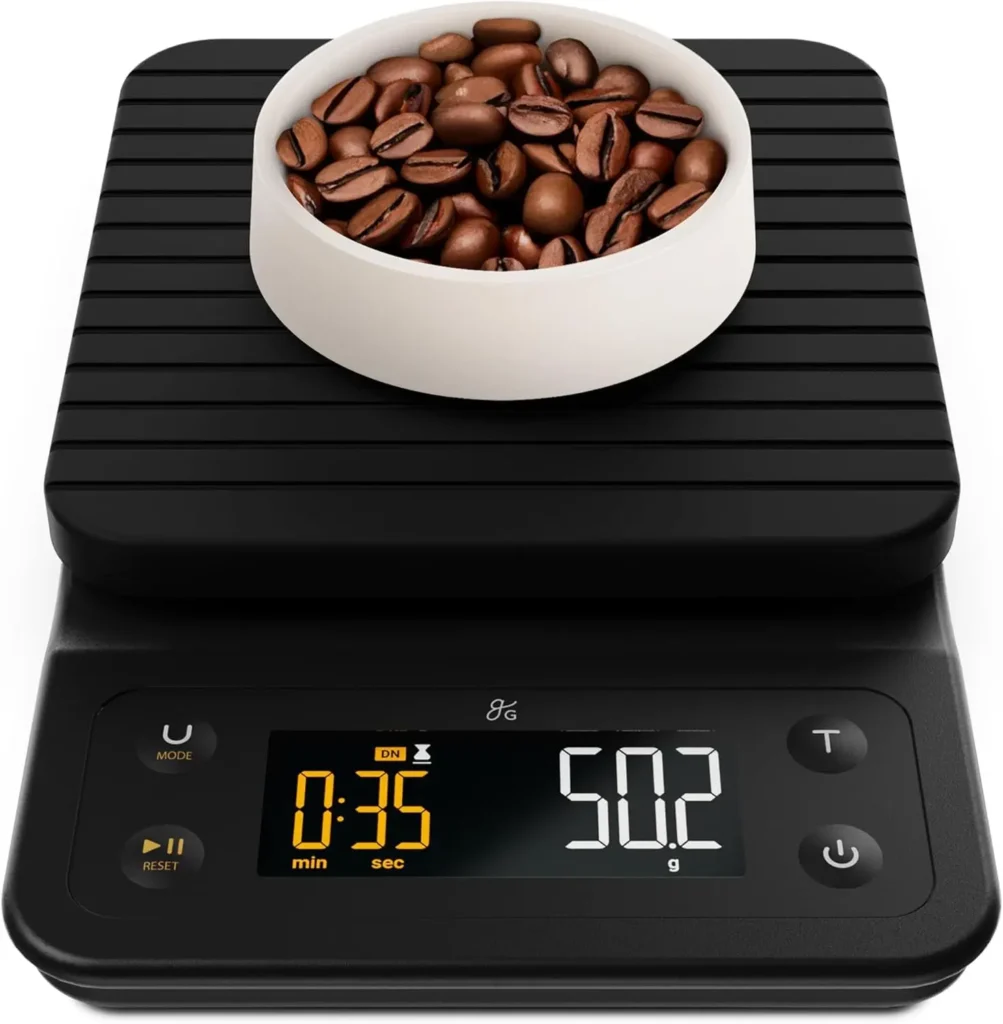
Why it’s a great value: If your main goal is consistent drip coffee, this is the simplest upgrade that works. It’s accurate enough to learn ratios fast and stop guessing every morning.
- Best for: drip coffee, batch brewing, beginners
- Strengths: simple controls, solid accuracy for the price
- Watch-outs: no timer (rarely needed for drip)
Buy this if: you want accurate drip ratios on a budget and don’t care about extra features.
Price may vary. We may earn a commission at no cost to you.
Best Coffee-Specific Classic: Hario V60 Drip Scale
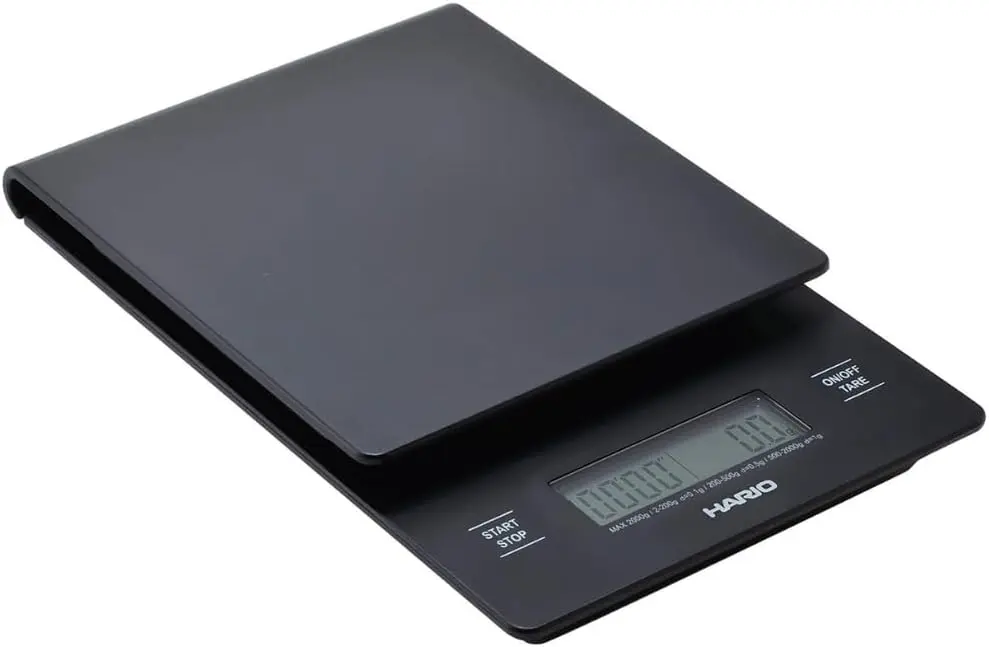
Why it’s still popular: It’s coffee-first and straightforward. The timer helps you learn pour-over rhythm, and the interface stays simple—no apps, no menus.
- Best for: pour-over, small drip batches
- Strengths: built-in timer, simple operation
- Watch-outs: older design; not as snappy as newer scales
Buy this if: you mainly brew pour-over and want a simple coffee-specific scale with a timer.
Price may vary. We may earn a commission at no cost to you.
Price may vary. We may earn a commission at no cost to you.
Common Coffee Scale Mistakes
- Using volume instead of weight
- Forgetting to tare the scale
- Using slow or inaccurate scales
- Ignoring battery quality
FAQs
Do I really need a coffee scale for home brewing?
If you want consistent coffee, yes. A scale makes your coffee-to-water ratio repeatable, so you can recreate good cups and fix bad ones without guessing.
What’s the best accuracy for a coffee scale?
A coffee scale with 0.1g resolution is ideal. It’s precise enough for drip and pour-over and becomes even more useful if you ever brew espresso.
Can I use a regular kitchen scale instead of a coffee scale?
You can, but many kitchen scales are slower to update and less precise. That lag makes pour-over timing and small recipe adjustments harder, even if the scale technically “works.”
Do I need a coffee scale with a timer?
A timer is helpful for pour-over and espresso, but it’s optional for drip coffee. Accuracy and stability matter more than timing for most automatic drip brewers.
What capacity should a coffee scale have for drip coffee?
Look for at least 2 kg (2000 g) capacity. Full carafes and larger brew setups can exceed smaller scale limits.
Why does my scale “drift” or change numbers while brewing?
Drift often comes from unstable surfaces, vibration from brewing, or a scale that updates slowly. Placing the scale on a flat counter and avoiding contact with the machine can help.
What’s the easiest way to use a coffee scale for drip coffee?
Tare your empty carafe or mug, add coffee by grams, then add brew water by grams using your target ratio (like 1:16). This is the simplest way to get repeatable results.
Will a coffee scale make my coffee taste better?
Indirectly, yes. A scale won’t change your beans, but it makes your brewing consistent—so you can dial in the right ratio and grind size. That usually improves flavor more than upgrading a coffee maker.