
How Long Does Cold Brew Last? Fridge Life, Storage, and Signs It’s Gone Bad (2026)
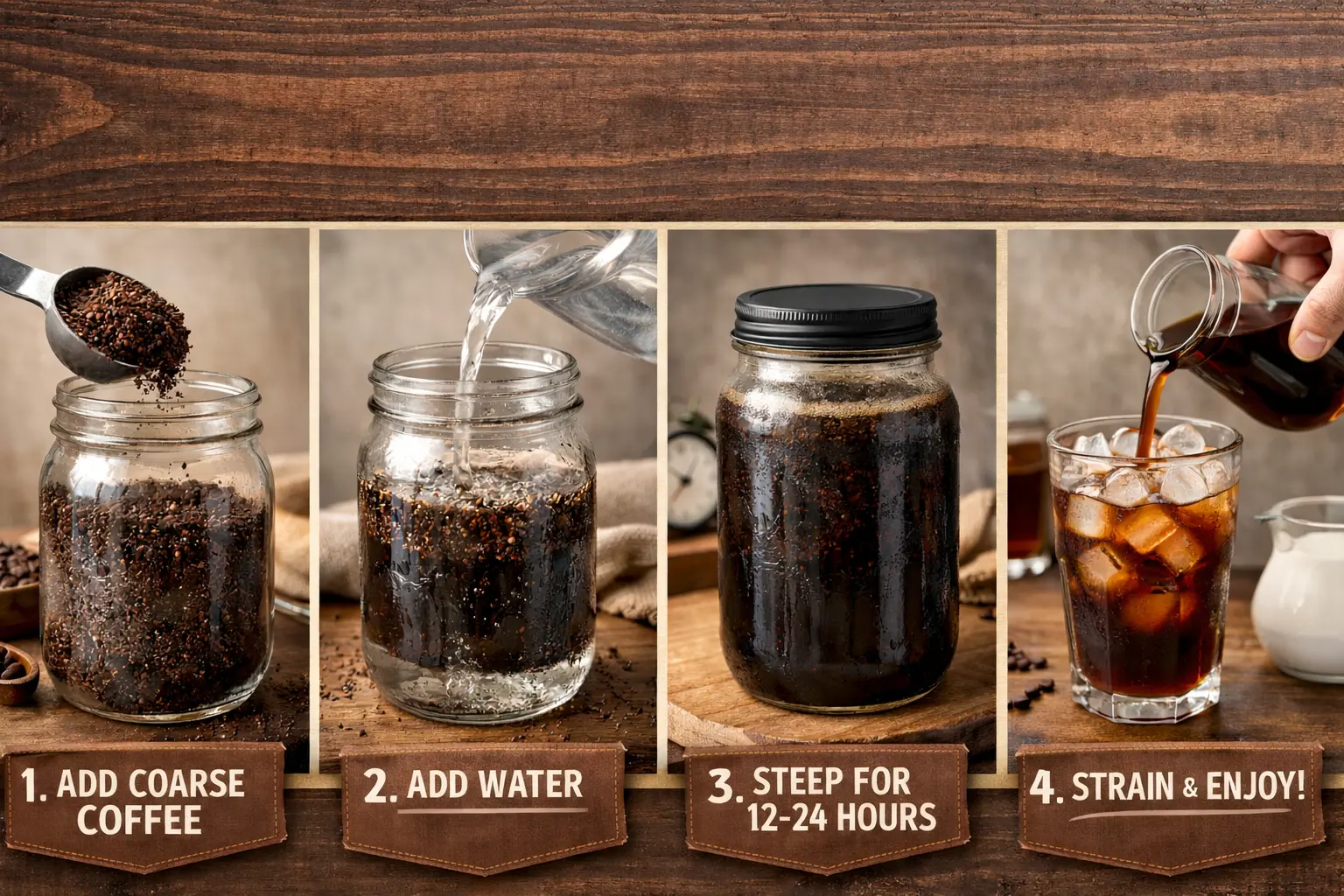
Editorial standards: storage guidance is based on established coffee-handling practice, USDA general food-safety guidance for refrigeration and perishable dairy, manufacturer instructions, and CoffeeGearHub’s existing cold brew guides. This is general guidance, not a food-safety guarantee; when in doubt, throw it out. CoffeeGearHub does not claim hands-on testing where it has not occurred.
At a glance
What this cold brew storage guide covers
How long each kind of cold brew lasts, why flavor fades before coffee spoils, how to tell when it has gone bad, how to store and freeze it, the brewing choices that extend its life, food-safety basics, how much to brew for a week, and the makers that make storage easy.
Editorial analysis
Cold brew usually goes stale long before it goes bad
Strained, refrigerated cold brew is a fairly stable drink, which is one reason people love making a batch on Sunday. But “safe to drink” and “tastes good” are not the same thing. Coffee aromatics fade and oxidize day by day, so the best-tasting window is shorter than the time it stays drinkable.
How long yours lasts depends mostly on three things: whether it is concentrate or diluted, whether anything perishable such as milk has been added, and how cleanly it was strained and stored.
The 30-Second Answer
Undiluted cold brew concentrate tastes best within about 5–7 days in a sealed container in the fridge. Diluted cold brew is best within about 2–3 days, and cold brew mixed with milk or cream should be drunk the same day. Store-bought cold brew should follow its label.
Strain it completely, keep it sealed and cold (40°F / 4°C or below), and dilute only what you will drink. If it smells sour or rancid, shows mold, or tastes off, throw it away.
Compare current options
Start with these representative choices
Makers that make storage easy. Our best cold brew coffee makers guide compares more options.
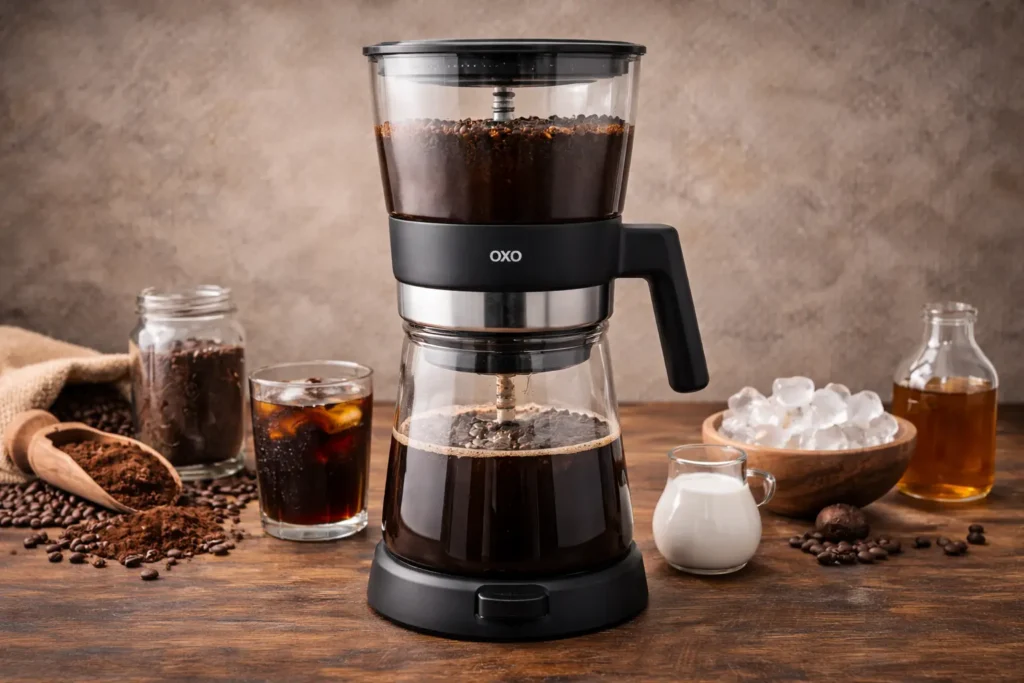
OXO Good Grips Cold Brew — Best for concentrate
Drains concentrate away from the grounds into a sealed glass carafe, so you store clean concentrate and dilute as you go.
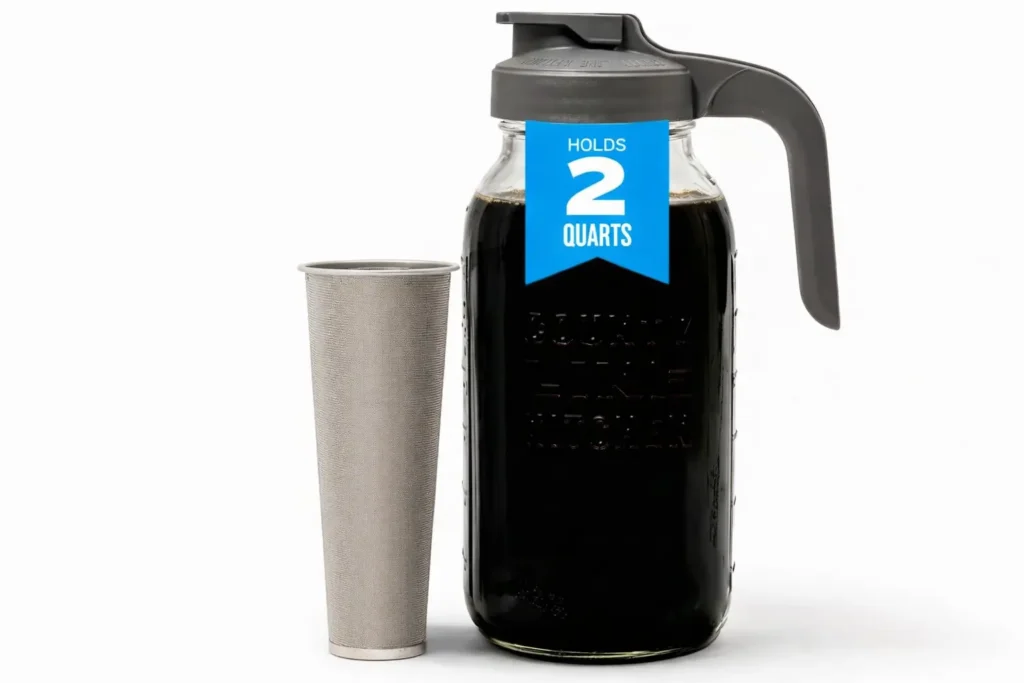
County Line Kitchen 2-Quart — Glass storage
A wide-mouth glass jar with a stainless filter. Glass resists odors and is easy to clean between batches.
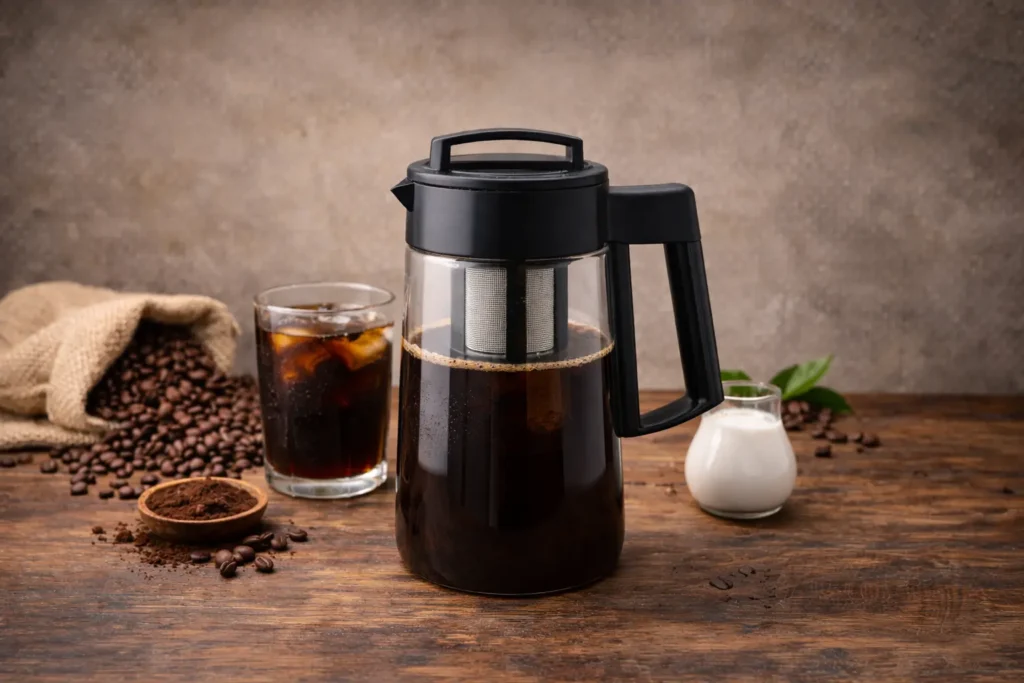
Takeya Deluxe 2-Quart — Fridge-friendly pitcher
A sealed pitcher that fits refrigerator doors. Lift the filter out after steeping and store the brew in the same pitcher.
Affiliate disclosure: Amazon links may earn CoffeeGearHub a commission at no additional cost to you. Prices and availability can change.
How Long Each Kind of Cold Brew Lasts
There is no single shelf life for cold brew, because “cold brew” covers several quite different drinks. A strained, undiluted concentrate is about as stable as brewed coffee gets. The same coffee diluted with water fades faster, and the moment you add milk it becomes a dairy drink with dairy rules. The table below summarizes the windows for best flavor; the sections after it explain the reasoning so you can judge your own batch.
| Type | Where | Best quality | Notes |
|---|---|---|---|
| Concentrate (undiluted, strained) | Fridge, sealed | About 5–7 days | Flavor fades gradually; keep undiluted until serving |
| Diluted with water | Fridge, sealed | About 2–3 days | Dilution speeds flavor loss; dilute per glass when you can |
| With milk, cream, or plant milk | Fridge | Same day | Treat it like the milk; do not leave it out more than 2 hours |
| Sweetened with syrup (no milk) | Fridge, sealed | About 2–3 days | Sugar does not extend flavor life |
| Store-bought, unopened or opened | As labeled | Per the label | Many brands list a number of days once opened |
| Frozen as ice cubes | Freezer | About 1–2 months for best flavor | Great for iced coffee that does not water down |
These ranges match our cold brew guide and cold brew maker guide. They describe best flavor, not a precise safety cutoff, so use your senses as well as the calendar.
Why Cold Brew Goes Stale Before It Goes Bad
The moment you strain cold brew, the clock starts on its flavor. Coffee is full of aromatic compounds, and many of them react slowly with oxygen. Over several days, the bright, sweet, chocolatey notes that made the first glass so good flatten into something dull, sometimes faintly papery. Every time you open the container, more of the volatile aromas you smell escape into the fridge.
Dilution speeds this up, which is why water-diluted cold brew loses its appeal in two or three days while concentrate holds on for a week. Leftover fine particles play a part too. If your filter let sediment through, those fines keep extracting slowly in the fridge and can push a smooth brew toward bitterness and a muddy texture. A clean, thorough strain is one of the simplest ways to make a batch last.
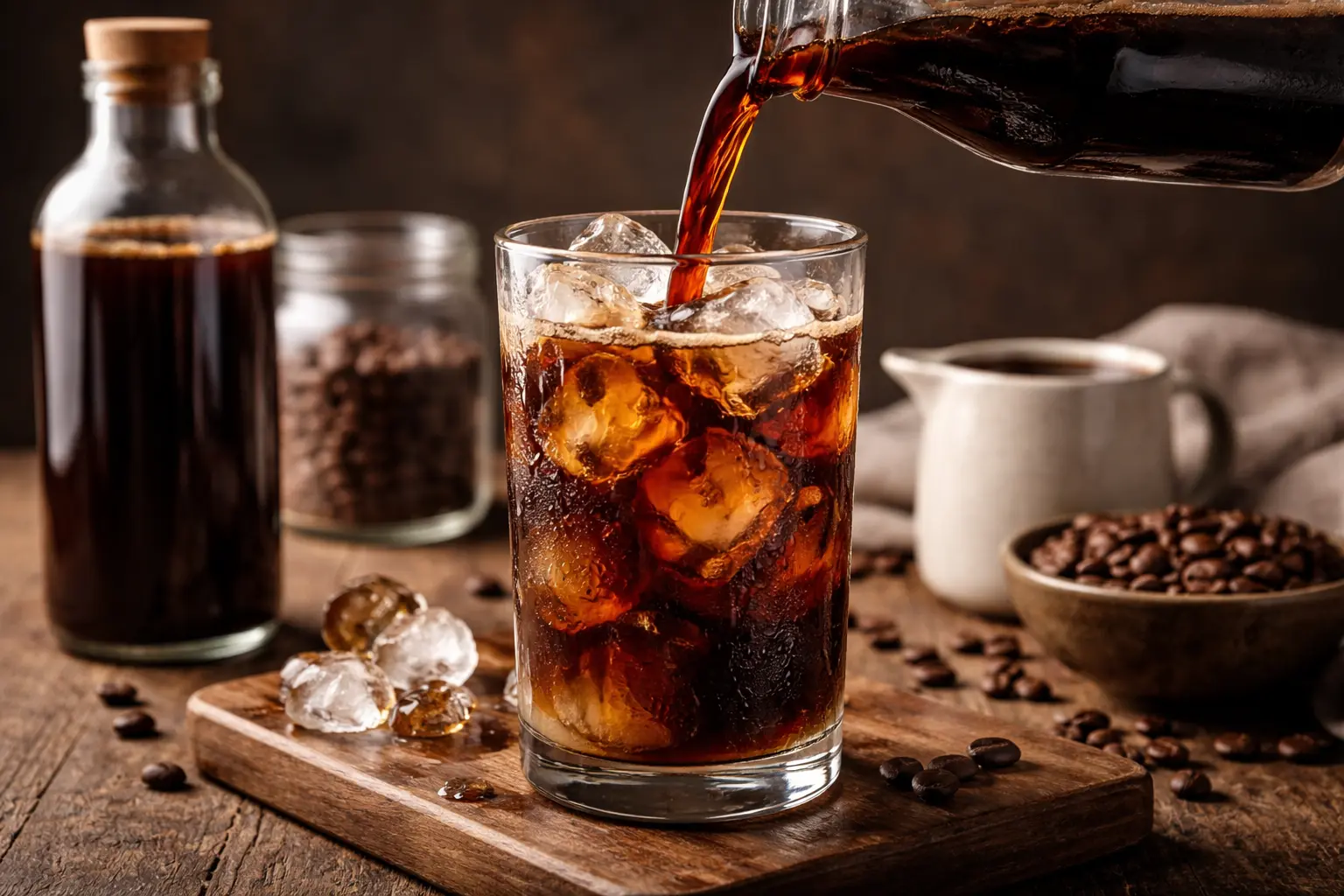
None of this makes stale cold brew unsafe. It simply means a five-day-old glass is less enjoyable than a one-day-old glass, and that most of the advice in this guide is really about protecting flavor rather than avoiding illness.
How to Tell If Cold Brew Has Gone Bad
Stale and spoiled are different things, and your nose is the best tool for telling them apart. Stale cold brew smells and tastes flat, like coffee that has lost its spark. Spoiled cold brew smells sour, rancid, fermented, or vinegary, and that is a clear signal to pour it out. Look as well as smell: any mold, film, or fuzzy spots on the surface or around the rim of the container mean the batch is done, and cloudiness that was not there before is another warning sign.
Taste is the last check, not the first. A sharp, sour, or simply wrong taste is different from the dull flatness of old coffee, and it is not worth pushing through. With milk drinks the signals are more obvious: separation, curdling, or a sour milk smell means it goes down the drain. Cold brew is cheap to make, so when in doubt, throw it out and start a fresh batch.
Storing Cold Brew So It Tastes Fresh All Week
Good storage starts before the coffee ever reaches the fridge. Strain completely as soon as the brew tastes right, usually somewhere between 12 and 24 hours of steeping, and if you want the cleanest, longest-keeping result, pass it through a paper filter once after the mesh filter. That second pass removes the fines that would otherwise keep extracting.
Next, choose the container. Glass bottles or jars with tight lids are ideal because glass does not hold odors and an airtight seal limits oxygen. A mason jar works well, as does a maker that stores the brew in its own sealed carafe or pitcher. Avoid open pitchers and covered bowls, which let the coffee absorb fridge smells and oxidize quickly. Stainless bottles are fine for taking cold brew on the go, though you cannot see how much is left.
Then keep it cold, at 40°F (4°C) or below, ideally toward the back of the fridge rather than in a door that warms every time it opens. Store it as concentrate and dilute one glass at a time. Add milk and sweetener at serving time rather than to the whole batch. As the week goes on, decant into a smaller bottle so less air sits above the coffee, and label the brew date on a strip of tape so you are never guessing.
If stored cold brew starts tasting like the fridge, the container is not airtight or a plastic pitcher has begun holding odors; switch to sealed glass. If it grows more bitter by the day, fines are the likely cause, so filter through paper next time. For more on ratios and batch strength, see our cold brew ratio chart.
Brewing Choices That Change Shelf Life
Two decisions you make at brewing time affect how long a batch stays good. The first is strength. Concentrate, brewed at roughly 1:4 to 1:5, generally holds its flavor better than ready-to-drink cold brew at about 1:8. There is less water relative to coffee, it takes up less fridge space, and because each serving is small you open the container less often. Ready-to-drink cold brew is undeniably convenient, since you simply pour it over ice, but it is best finished within a few days. If you love the convenience, brew ready-to-drink batches small and often, or keep concentrate and mix one glass at a time.
The second is where you steep. Steeping in the fridge takes a little longer, often 14 to 24 hours, but keeps the coffee cold from start to finish, which is the most hygienic approach. Steeping on the counter extracts faster, with many recipes tasting ready around 10 to 12 hours at 18–21°C, and can taste slightly fuller, but the brew should go into the fridge as soon as it is strained. Either way, the flavor clock starts when you strain. Our iced coffee guide and French press cold brew guide include room-temperature timing, and our guide to how long to steep cold brew breaks down steep times by grind, ratio, and temperature.
Freezing Cold Brew
Freezing is the best way to rescue a batch before it fades. Pour concentrate or diluted cold brew into ice cube trays, then move the frozen cubes into a sealed freezer bag and use them within about one to two months for the best flavor. Coffee ice cubes solve one of iced coffee’s oldest problems, because they chill the drink without watering it down as they melt. Blend a handful with milk for a quick frappé-style drink, or thaw cubes in the fridge if you want liquid cold brew again, accepting a little flavor loss compared with fresh.
Food Safety Basics
Cold brew is made without heat, so ordinary kitchen hygiene matters more than it does for hot coffee. The U.S. Department of Agriculture recommends keeping refrigerators at 40°F (4°C) or below and not leaving perishable foods, including milk, in the “danger zone” between 40°F and 140°F for more than two hours, or one hour above 90°F. In practice, that means steeping in the fridge when you can, refrigerating promptly after a shorter counter steep, and treating any cold brew with milk or cream as a perishable dairy drink.
Clean equipment matters just as much. Wash and dry your maker and filters thoroughly between batches, because old coffee oils turn rancid and spoil the next brew. Never top up an old batch with new cold brew; finish or discard the old one first. If you have a health condition or are making cold brew in quantity for others, follow official food-safety guidance and your equipment’s instructions.
How Much Cold Brew to Make for a Week
Because concentrate is at its best within about five to seven days, the easiest way to avoid waste is to brew only what you will drink. The amounts below assume a 1:5 concentrate diluted 1:1 into roughly 8 oz (240 ml) servings.
| Drinks per week | Coffee | Water | Concentrate yield (approx.) |
|---|---|---|---|
| 3–4 | 100 g | 500 g | About 400 ml (after absorption) |
| 5–7 | 160 g | 800 g | About 650 ml |
| 10–14 (two people) | 300 g | 1.5 kg | About 1.2 L |
Grounds absorb water, so you get back noticeably less concentrate than the water you put in. If you regularly have some left at the end of the week, brew a smaller batch or freeze the extra as cubes; if you run out early, two smaller batches a week usually taste better than one large one.
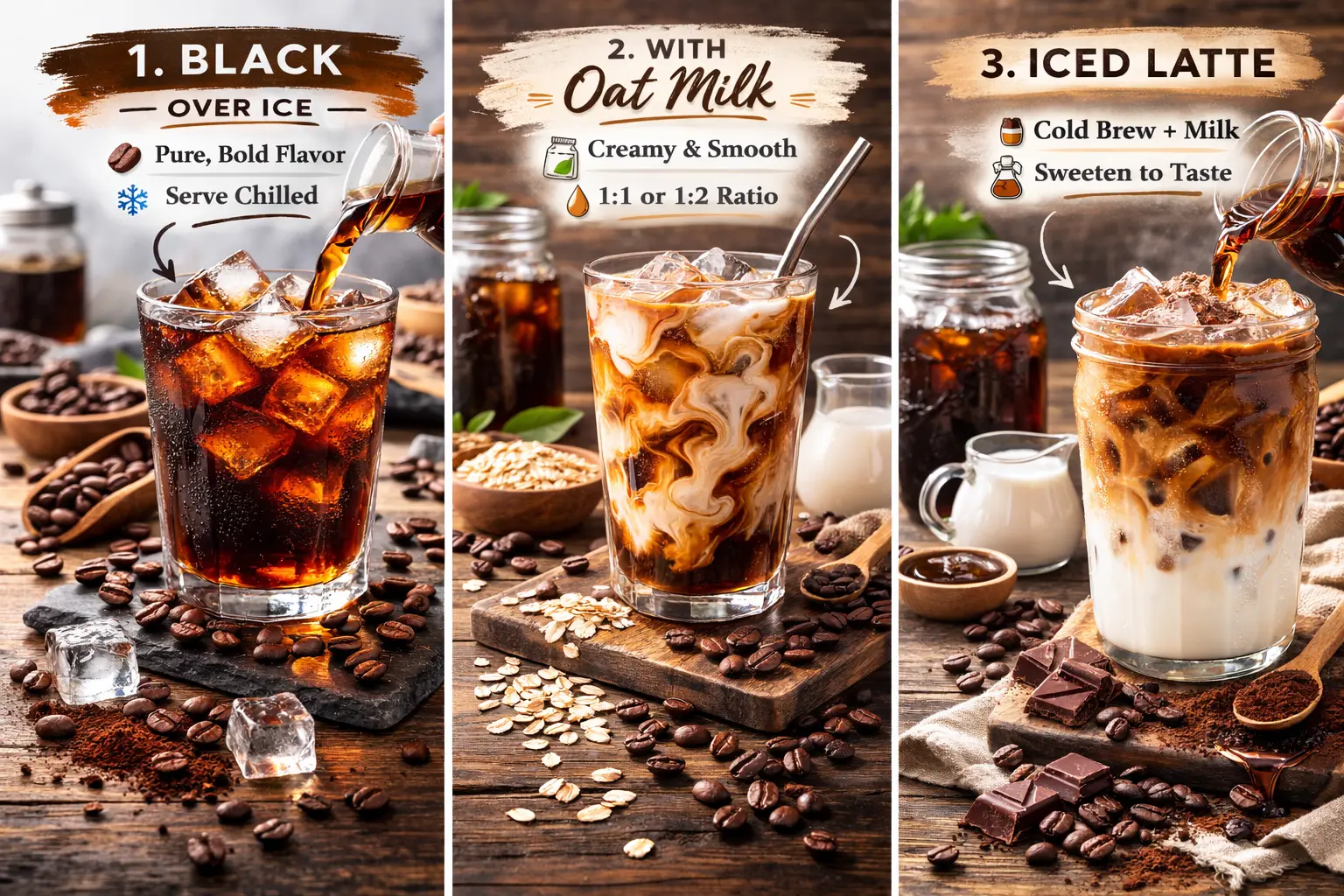
A consistent coarse grind makes batches easier to strain and more repeatable from week to week. A hand grinder such as the KINGrinder K6 at around 150 clicks works well. Start with fresh beans roasted within the last few weeks and clean-tasting water, and see our water quality guide if your tap water tastes strong. For serving ideas, from black over ice to cold foam lattes, see cold brew vs iced coffee.
Cold Brew Makers That Make Storage Easy
Any cold brew maker can produce a good batch, but some make clean storage almost automatic. What matters is how well the maker separates brew from grounds, whether the finished coffee lives in a sealed container, and whether that container resists odors and is easy to clean.
The OXO Good Grips Cold Brew is our pick for concentrate drinkers. A perforated rainmaker lid spreads water evenly over the grounds, and when steeping is done a switch drains the concentrate into a glass carafe with a stopper. Grounds are separated promptly and the coffee is stored in glass, which is exactly the combination that helps concentrate keep its flavor. It has more parts than a pitcher and takes up counter space while brewing.
If you prefer glass from start to finish, the County Line Kitchen 2-Quart is a wide-mouth jar with a removable stainless filter. It is easy to clean thoroughly and does not absorb odors, though some fines pass the metal mesh, so a quick paper-filter pass helps. The Takeya Deluxe takes the opposite approach: a sealed plastic pitcher that fits most fridge doors, with a mesh filter you simply lift out after steeping. It is the most convenient of the three, at the cost of plastic that can hold odors over time.
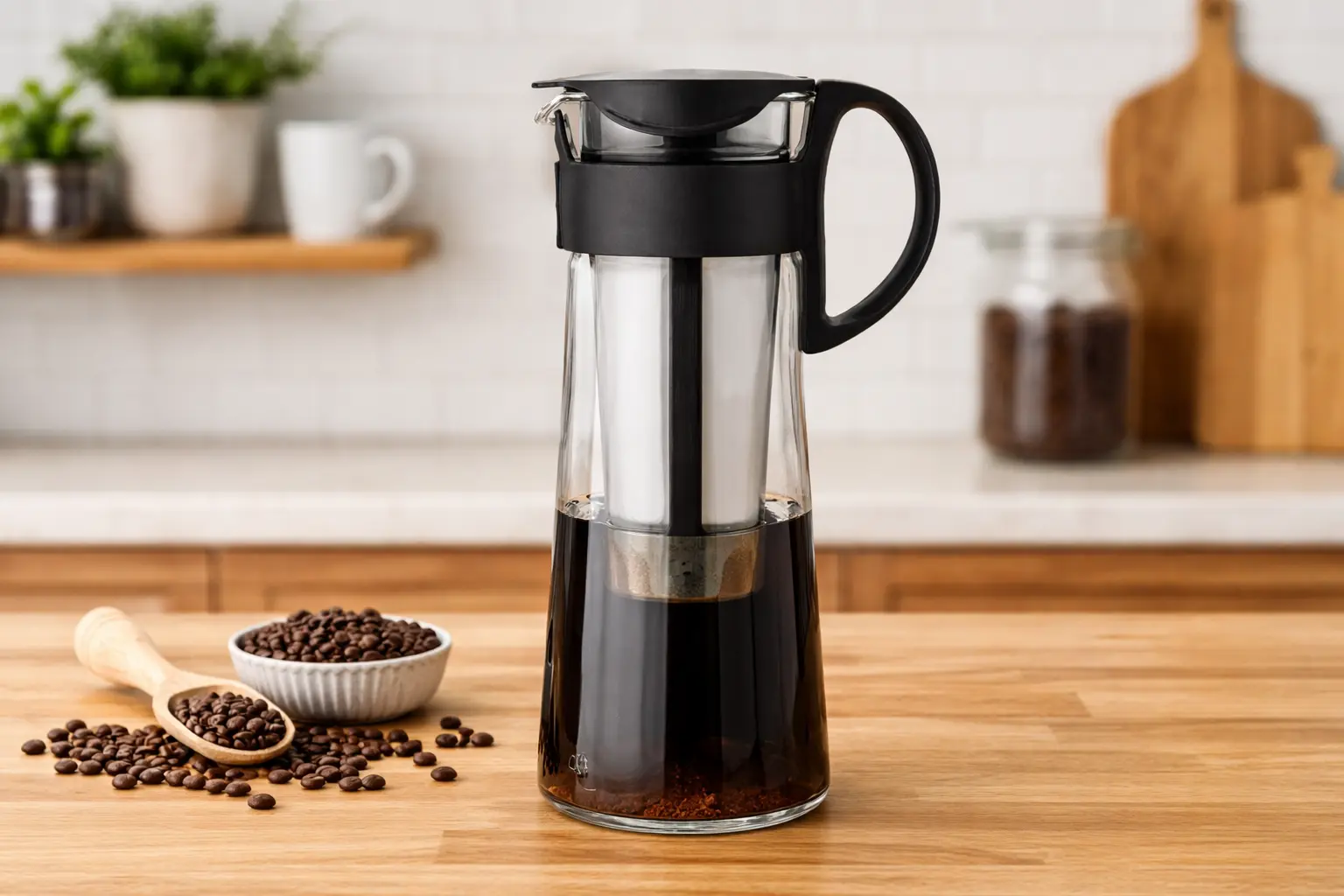
Two more makers suit particular habits. The Hario Mizudashi is a slim pitcher with a fine mesh basket, built for small batches, and small batches are the most reliable way to drink cold brew at its freshest. It is not designed for concentrate, so it fits people who brew little and often.
At the other end, the Toddy Cold Brew System is a classic large-batch concentrate system with a glass decanter for storage. It makes sense for households that go through cold brew quickly, though its reusable filter needs careful cleaning and storage between uses.
Our Advice
For most people, the simplest routine is also the one that keeps cold brew tasting best: brew a concentrate, strain it thoroughly, store it in a sealed glass container at the back of the fridge, and dilute one glass at a time. Drink it within about a week, add milk only at serving time, and freeze whatever you will not finish. If you want a maker that does most of this for you, the OXO Good Grips Cold Brew is the strongest choice for concentrate, and the County Line Kitchen jar is the best pick if you prefer glass from start to finish.
Brew Cold Brew That Keeps
A maker that separates the grounds and stores the brew sealed makes a week of good cold brew easy.
As an Amazon Associate, CoffeeGearHub earns from qualifying purchases.
Editorial bottom line: Store strained cold brew concentrate sealed in the fridge and enjoy it within about a week; dilute only what you will drink. Add milk at serving time and drink milk-based cold brew the same day. Freeze extra as ice cubes, and when in doubt, throw it out.
Frequently Asked Questions
How long does cold brew concentrate last in the fridge?
For the best flavor, drink it within about 5–7 days. Keep it strained, sealed, and at 40°F (4°C) or below.
How long does cold brew with milk last?
Drink it the same day. Treat it like milk and do not leave it at room temperature for more than 2 hours.
Can you leave cold brew out overnight?
It is best not to. Refrigerate cold brew promptly after brewing, and never leave cold brew with milk out for more than 2 hours.
Does cold brew last longer than hot coffee?
Generally yes. Strained, refrigerated cold brew concentrate keeps its flavor for several days, while hot-brewed coffee tastes stale within a day.
How long can cold brew steep before it goes bad?
Most recipes steep 12–24 hours. Past about 24 hours, many coffees turn bitter and woody, so strain it once it tastes right.
Is it safe to drink week-old cold brew?
Strained concentrate that has been sealed and refrigerated and still smells and tastes normal is generally fine, though its flavor will have faded. Discard anything that smells sour, shows mold, or contains milk.
Sources and Further Reading
Refrigeration and perishable-food timing follow the USDA Food Safety and Inspection Service “danger zone” guidance. Storage windows are consistent with CoffeeGearHub’s existing cold brew and cold brew maker guides and manufacturer instructions. This is general guidance; follow product labels and official food-safety advice.
CoffeeGearHub product shortlist
Continue with related products on CoffeeGearHub
Review product categories and current verified merchant offers on CoffeeGearHub before leaving the site.