
Best Cold Brew Coffee Makers (2026): Pitchers, Concentrate Systems, and Compact Picks
Editorial standards: this guide compares filtration, capacity, materials, and cleaning using manufacturer information and independent owner and reviewer reports. Ratios and steep times are starting points that vary with coffee, grind, and taste. CoffeeGearHub does not claim hands-on testing where it has not occurred.
At a glance
Choose filtration and workflow before capacity
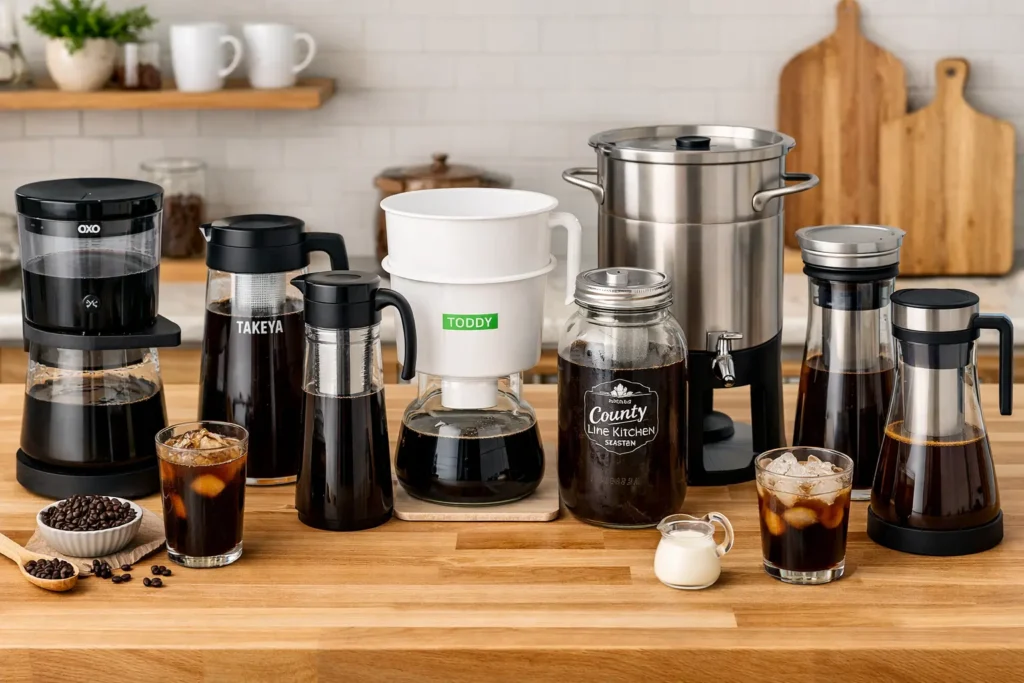
Six cold brew makers compared by style, what matters when buying, an in-depth look at each, starting ratios and steep times, common mistakes, three ways to serve cold brew, cleaning, and the accessories that make results repeatable.
Editorial analysis
The best cold brew maker depends on how you serve it
Cold brew makers fall into two camps. Pitchers with a mesh core brew ready-to-drink coffee you pour straight over ice, while concentrate systems brew a strong base you dilute with water or milk. Choosing the style that matches how you drink matters more than any single feature.
Filtration decides how clean the cup is, capacity decides how often you brew, and the number of parts decides how easy cleaning is. A coarse, consistent grind and a weighed ratio improve every maker on this list.
The 30-Second Answer
For concentrate and the cleanest cup, choose the OXO Good Grips Cold Brew Coffee Maker. For big ready-to-drink batches, the Takeya Deluxe 2 Quart pitcher is the easiest everyday option, and the Hario Mizudashi is the best compact pitcher. The Primula Burke is the budget start, the County Line Kitchen jar suits easy cleaning, and the Toddy suits heavy concentrate users.
Whichever you choose, grind coarse, weigh your ratio, steep in the fridge for about 12 to 18 hours, and filter once through paper if you want a cleaner finish.
Compare current options
Start with these representative choices
Three starting points: a concentrate system with cleaner filtration, a large everyday pitcher, and a compact pitcher for small kitchens.
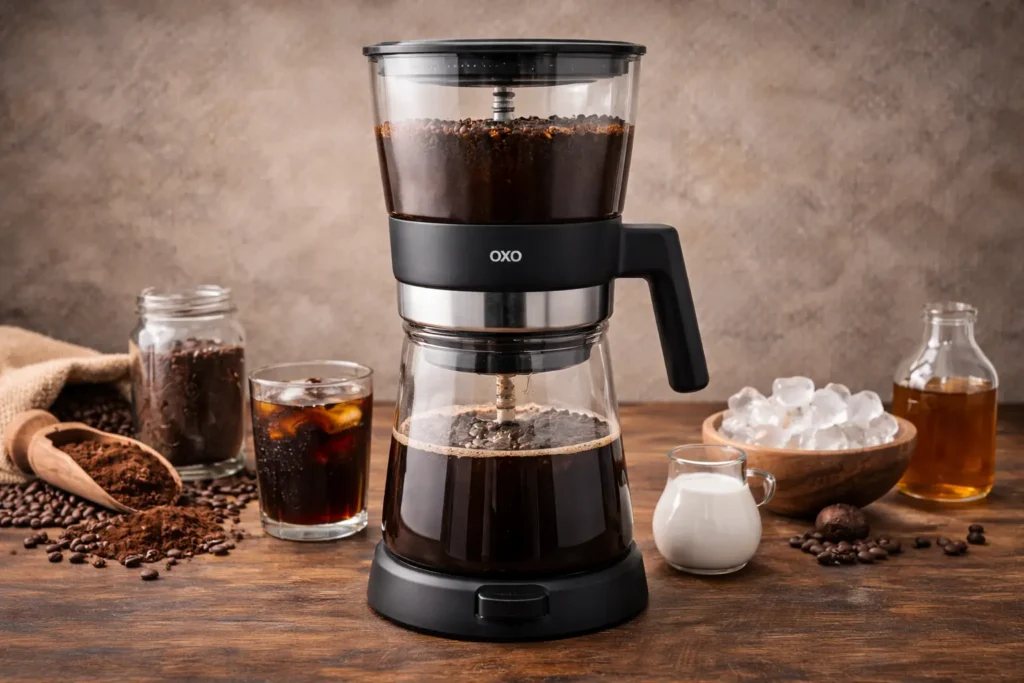
OXO Good Grips — Concentrate
Brews concentrate and drains it into a separate carafe through a fine filter, keeping sludge out of the serving vessel.
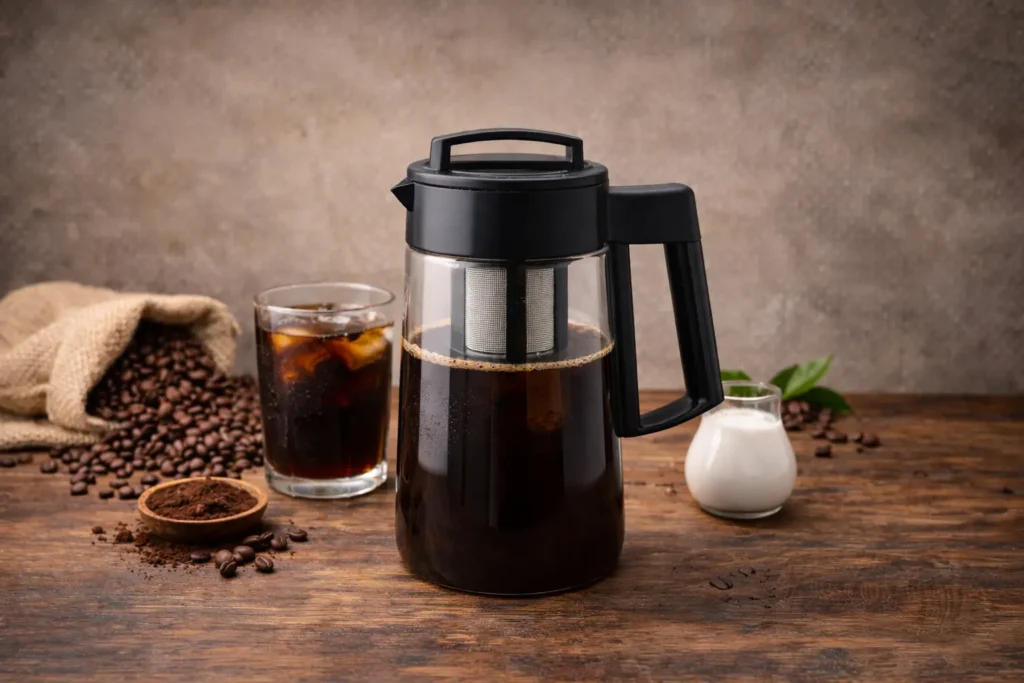
Takeya Deluxe — Big batches
A fridge-friendly 2-quart pitcher with a removable mesh filter for brew-once, pour-all-week cold brew.
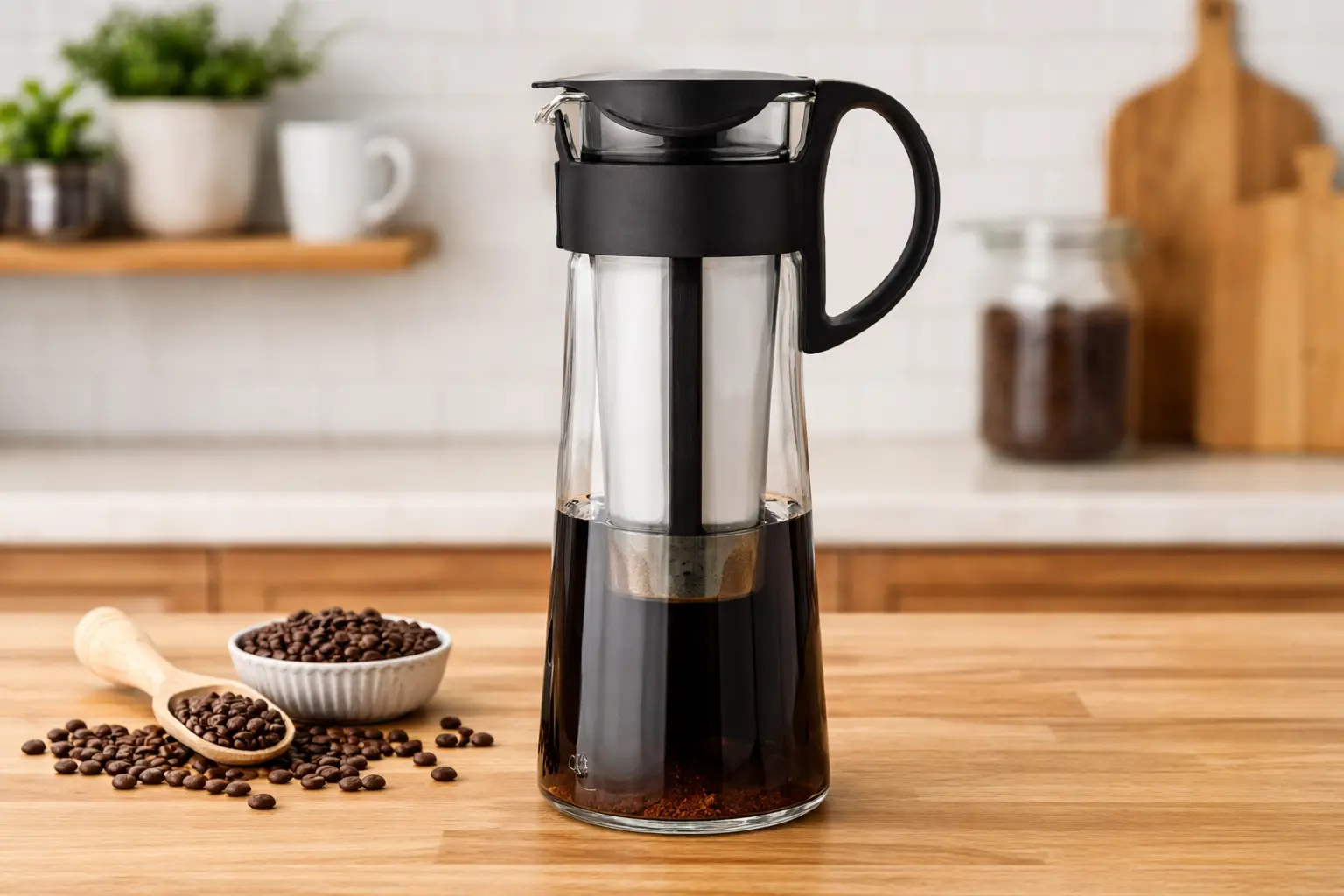
Hario Mizudashi — Compact
A slim pitcher with a fine mesh basket that fits fridge doors and suits regular small batches.
Affiliate disclosure: Amazon links may earn CoffeeGearHub a commission at no additional cost to you. Prices and availability can change.
Cold Brew Coffee Makers Compared
The table groups the six makers by style, filtration, and best use. Ready-to-drink pitchers brew coffee you pour straight over ice, while concentrate systems brew a stronger base you dilute with water or milk. Read across the filtration column first, because the filter shapes the texture of every glass more than capacity or materials do.
| Maker | Style | Filtration | Best for |
|---|---|---|---|
| OXO Good Grips | Concentrate with carafe | Fine mesh plus optional paper | Iced lattes, cleaner concentrate |
| Takeya Deluxe 2 Qt | Ready-to-drink pitcher | Mesh core | Large weekly batches |
| Primula Burke | Ready-to-drink pitcher | Mesh core | Budget first maker |
| County Line Kitchen 2 Qt | Wide-mouth glass jar | Stainless mesh | Easy cleaning, large batches |
| Toddy | Concentrate system | Felt or paper filter | Heavy concentrate use |
| Hario Mizudashi | Compact pitcher | Fine mesh basket | Small kitchens, daily batches |
What Matters When Buying a Cold Brew Maker
Filtration is the biggest difference. Mesh cores are simple and reusable but let some fines through, which can leave sediment and a heavier texture. Finer filters, felt pads, and paper produce a cleaner, smoother cup at the cost of more parts or consumables. If sediment bothers you, choose a maker with finer filtration or plan to pass the finished brew through a paper filter once.
Capacity comes next. A 2-quart pitcher suits households that drink cold brew daily and want to brew once or twice a week, while a compact pitcher suits one person or a small fridge. Finally, consider materials and cleaning: glass does not hold odors and is easy to inspect, plastic is light and durable, and makers with fewer parts are quicker to clean, which matters when you brew every few days.
OXO Good Grips: Best for Concentrate and a Cleaner Cup
The OXO Good Grips Cold Brew Coffee Maker is the strongest choice when filtration quality matters more than minimal parts. A perforated rainmaker lid spreads water evenly over the grounds, and when the steep is done you release the brew into a separate glass carafe through a fine mesh filter, with optional paper filters for an even cleaner result. That keeps sludge out of the serving vessel.
It is designed for concentrate, which suits iced lattes and diluted cold brew. A starting point is a coarse grind at about 1:4 to 1:5 coffee to water by weight, steeped roughly 12 to 18 hours. The trade-offs are a higher price and a more involved setup than a simple pitcher, and the brewer takes up counter space while steeping.
Takeya Deluxe 2 Quart: Best Big-Batch Pitcher
The Takeya Deluxe 2 Quart is built around a simple routine: brew once and pour for several days. A removable mesh filter sits inside a fridge-friendly pitcher with an airtight lid, so the whole thing steeps and stores in the refrigerator, and the 2-quart size suits households that drink cold brew most days.
Some fines pass through the mesh, especially with an inconsistent grinder, so a coarse burr grind helps. Start around 1:8 for ready-to-drink cold brew or 1:6 for a stronger batch, and steep about 12 to 18 hours in the fridge. If you want a cleaner finish, pour the brewed coffee once through a paper filter before storing.
Primula Burke Deluxe: Best Budget Option
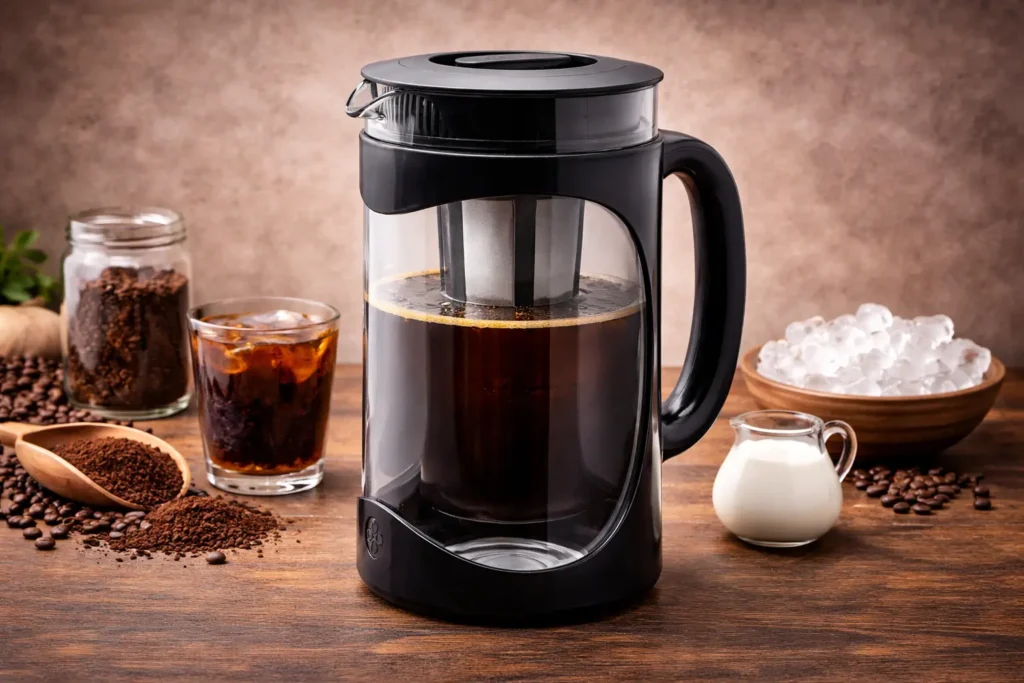
The Primula Burke Deluxe keeps things basic: a glass pitcher and a mesh core filter at a low entry price. That makes it a sensible first cold brew maker if you want to try the routine before investing in a more elaborate system.
Filtration is basic, so fines can settle at the bottom of the pitcher. A single pass through a paper filter after brewing is the easiest upgrade if you like the workflow but want a cleaner cup. It suits beginners and occasional cold brew drinkers well.
County Line Kitchen 2 Quart: Best Wide-Mouth Glass Jar
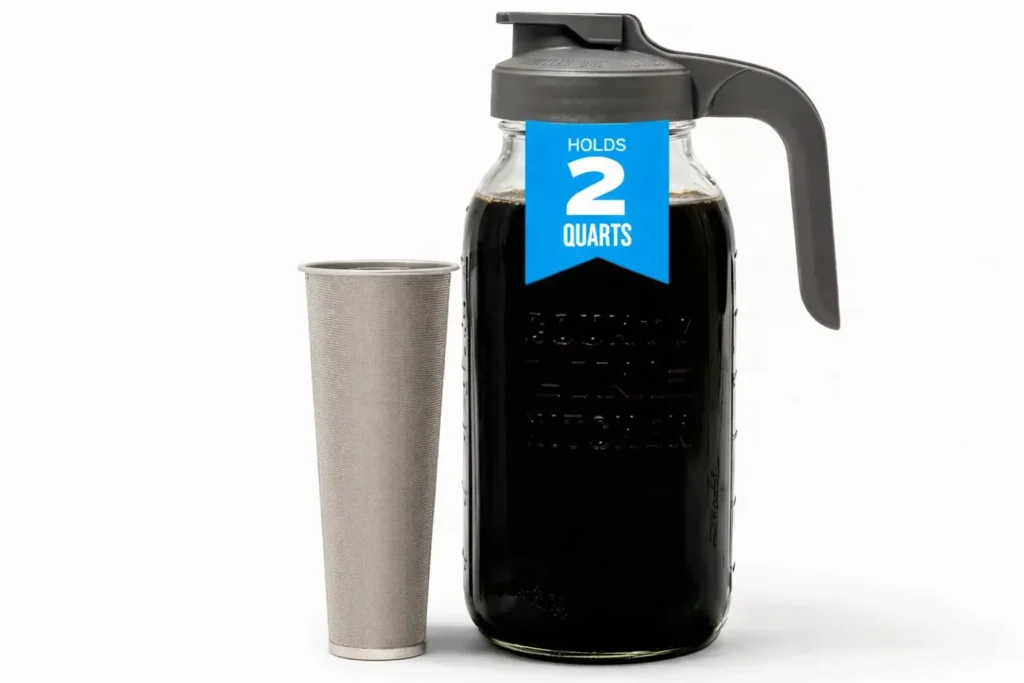
The County Line Kitchen 2 Quart appeals through simplicity: a wide-mouth glass jar that is easy to reach into and clean, with a removable stainless filter. The large jar works well for households that want a durable batch brewer without drains or specialty parts, and glass does not hold coffee odors.
Fine particles can still pass the metal filter, so grind coarse and consider a paper-filter pass before storing if clarity matters. It suits easy cleaning, large batches, and anyone who prefers glass storage.
Toddy Cold Brew System: Best Classic Concentrate System
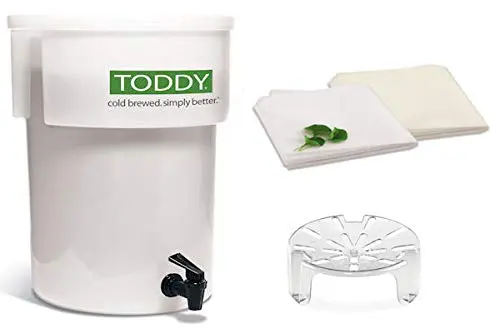
The Toddy Cold Brew System is a long-standing reference for heavy concentrate users. You steep a large batch in a brewing container with a filter pad and stopper at the base, then pull the stopper and let the concentrate drain into a glass decanter. With its filters, it produces smooth concentrate for black cold brew, milk drinks, and sweetened iced coffee.
It has more pieces and a more involved setup than pitcher brewers, and the filter pads need proper care between uses. Paper filters give the cleanest finish; the standard pad retains a little more body. Choose it if your household goes through cold brew quickly and prefers concentrate in larger volumes.
Hario Mizudashi: Best Compact Pitcher
The Hario Mizudashi is a simple daily-use pitcher: add coffee to the fine mesh basket, fill with water, steep, remove the basket, and refrigerate. Its slim profile fits fridge doors and small shelves, and the fine mesh keeps the cup reasonably clean for a pitcher design.
Its smaller capacity means brewing more often, which suits one or two people who drink cold brew regularly rather than households that want a large weekly supply. It is a good choice for small kitchens and for anyone who wants ready-to-drink cold brew with minimal fuss.
Which Style Fits Your Routine?
If you mostly drink cold brew black over ice and want it ready to pour, choose a pitcher: the Takeya for large batches, the Hario Mizudashi for small kitchens, or the Primula on a budget. Pitchers keep the routine simple because the brewer is also the storage container, and you can pour straight from the fridge.
If you make iced lattes, sweetened drinks, or want to control strength glass by glass, choose a concentrate system such as the OXO or Toddy. Concentrate takes up less fridge space for the same number of drinks and dilutes to taste. If cleaning is your priority, the wide-mouth County Line Kitchen jar is the easiest to scrub and inspect.
Cold Brew Ratios, Grind Size, and Steep Time
Use a coarse grind, similar to French press or slightly coarser, from a burr grinder. A consistent coarse grind reduces fines that pass through mesh filters and cause bitterness and sludge. Weigh coffee and water so you can repeat a batch you like.
| Style | Coffee to water by weight | Steep time | Serving |
|---|---|---|---|
| Ready-to-drink | About 1:8 | 12–18 hours in the fridge | Pour over ice |
| Stronger ready-to-drink | About 1:6 | 12–18 hours in the fridge | Over ice, splash of milk |
| Concentrate | About 1:4 to 1:5 | 12–18 hours in the fridge | Dilute about 1:1 with water or milk |
At room temperature, extraction is faster, so 12 to 15 hours is usually enough before moving the brew to the fridge. Our cold brew ratio chart covers more batch sizes, and our cold brew guide walks through the full method.
Choosing Beans for Cold Brew
Cold water extracts fewer of the bright, acidic compounds that hot water pulls out, so cold brew tends to emphasize body, sweetness, and chocolate or nutty flavors. Medium and medium-dark roasts from Brazil, Colombia, and Central America are dependable starting points because those flavors carry through a long, cold steep. Light, floral coffees can work too, but they often taste muted compared with the same beans brewed hot.
Freshness matters as much as origin. Coffee that is a few days to a few weeks past its roast date gives the fullest flavor, while stale beans taste flat no matter which maker you use. Buy whole beans, store them sealed away from light and heat, and grind just before brewing. Our bean storage guide covers the details.
Glass, Plastic, or Stainless?
Glass pitchers and jars, such as the County Line Kitchen and Primula, do not absorb odors or stains and let you see how much cold brew remains. They are heavier and can break if dropped, so they suit households that keep the maker on a fridge shelf rather than carrying it around. Glass is also the easiest material to judge for cleanliness, because any film or residue is visible.
BPA-free plastic, used in pitchers like the Takeya and Hario, is lighter, tougher, and often fits fridge doors better, though it can slowly pick up coffee aromas over time. Stainless filters are durable and reusable, while felt and paper filters trade a little convenience for a cleaner cup. None of these materials changes flavor much when the maker is cleaned after each batch.
Common Cold Brew Mistakes
Grinding too fine is the most common problem. Fine grounds over-extract during a long steep, turn bitter, clog filters, and leave sludge; grind coarse and use a burr grinder. Another mistake is assuming longer is always better. Past about a day, cold brew often tastes woody, flat, or stale rather than stronger, so adjust strength with the ratio instead of the clock.
Stale beans make dull cold brew just as they make dull hot coffee, so use coffee within a few weeks of roasting. Under-filtering leaves gritty texture; a paper-filter pass fixes it. Finally, store finished cold brew sealed in the fridge, since an open container picks up odors and loses aroma. Our cold brew storage guide covers how long it keeps.
Three Ways to Serve Cold Brew
For a clean, refreshing glass, pour ready-to-drink cold brew straight over ice, or dilute concentrate about one to one with cold water. For a sweeter, creamier café-style drink, combine cold brew with oat or dairy milk over ice; concentrate keeps the coffee flavor from being washed out. For an iced latte style drink, use concentrate with an equal part of milk and a little simple syrup if you like it sweet.
Because cold brew is low in perceived acidity and naturally smooth, it pairs well with chocolatey, nutty coffees. Our cold brew beans guide suggests coffees to try, and our cold brew vs iced coffee comparison explains how the two differ.
Cleaning and Maintenance
Empty the grounds as soon as the steep ends, then rinse the filter from the outside in to push trapped grounds out of the mesh. Wash the pitcher or carafe and filter with warm, soapy water after each batch, because coffee oils turn stale and affect the next brew. Use a soft brush on mesh filters and check the manufacturer’s guidance before using a dishwasher.
Felt filters like the Toddy’s need special care: rinse them well, store them in water in the fridge between uses, and replace them periodically. Paper filters are single-use. A clean maker keeps cold brew tasting fresh, and a quick rinse right after brewing saves scrubbing later.
Recommended Cold Brew Accessories
A burr grinder is the most useful upgrade, since a consistent coarse grind reduces bitterness and sediment. A kitchen or coffee scale makes ratios repeatable, so you can brew the same batch every week. Paper filters give a final clean-up pass when mesh filtration leaves fines behind.
Airtight bottles or jars help store finished cold brew in the fridge without picking up odors. None of these accessories is expensive, and together they make the difference between inconsistent batches and cold brew you can rely on.
Brew Better Cold Brew
The OXO suits concentrate; the Takeya suits big ready-to-drink batches.
As an Amazon Associate, CoffeeGearHub earns from qualifying purchases.
Editorial bottom line: Choose the OXO Good Grips for concentrate and cleaner filtration, the Takeya Deluxe for big batches, the Hario Mizudashi for small kitchens, and the Primula Burke on a budget. Grind coarse, weigh your ratio, steep 12 to 18 hours, and store sealed in the fridge.
Frequently Asked Questions
What is the best cold brew coffee maker?
It depends on how you drink it. The OXO Good Grips is best for concentrate and a cleaner cup, the Takeya Deluxe for large ready-to-drink batches, and the Hario Mizudashi for compact fridges. The Primula Burke is a sound budget start.
What grind size is best for cold brew?
Coarse, similar to French press or slightly coarser. A consistent burr grind reduces fines that pass through mesh filters and cause muddiness or bitterness.
What is a good cold brew ratio?
About 1:8 by weight for ready-to-drink cold brew, or 1:4 to 1:5 for concentrate that you dilute. Start there and adjust for strength.
How long should cold brew steep?
Roughly 12 to 18 hours in the refrigerator, or 12 to 15 hours at room temperature before chilling. Much longer steeps rarely improve flavor and can taste woody or flat.
How long does cold brew last?
Kept sealed in the refrigerator, ready-to-drink cold brew usually tastes best within about a week, and concentrate often a little longer. Discard it if it tastes sour or off.
Can I make cold brew without a special maker?
Yes. Steep coarse coffee in a jar, then strain through a fine sieve and a paper filter. A dedicated maker simply makes filtering and cleanup easier.
Sources and Further Reading
Product details come from OXO, Takeya, Primula, County Line Kitchen, Toddy, and Hario published product information and care instructions. Brewing ratios follow common specialty practice; extraction concepts follow the Specialty Coffee Association’s brewing standards. CoffeeGearHub did not test these makers hands-on; this guide relies on published information and owner and reviewer reports.
CoffeeGearHub product shortlist
Continue with related products on CoffeeGearHub
Review product categories and current verified merchant offers on CoffeeGearHub before leaving the site.