Last updated: February 2026 • 16–20 min read
Quick takeaway: Most bad drip coffee isn’t caused by the coffee maker — it’s caused by small, fixable mistakes. This guide walks through the most common drip coffee mistakes, explains why they happen, and shows exactly how to fix them without buying a new machine.
This guide is written for real home drip machines, from basic brewers to SCA-certified models.
Key Takeaways
- Drip coffee problems are usually about ratio, grind, or freshness
- Using scoops instead of a scale causes inconsistent results
- Very light or very dark roasts are harder to brew well in basic machines
- Most fixes cost nothing — just better technique
If you want a simple baseline before troubleshooting, start with our Drip Coffee Ratio (Simple Chart + Fixes).
Mistake #1: Using the Wrong Coffee-to-Water Ratio
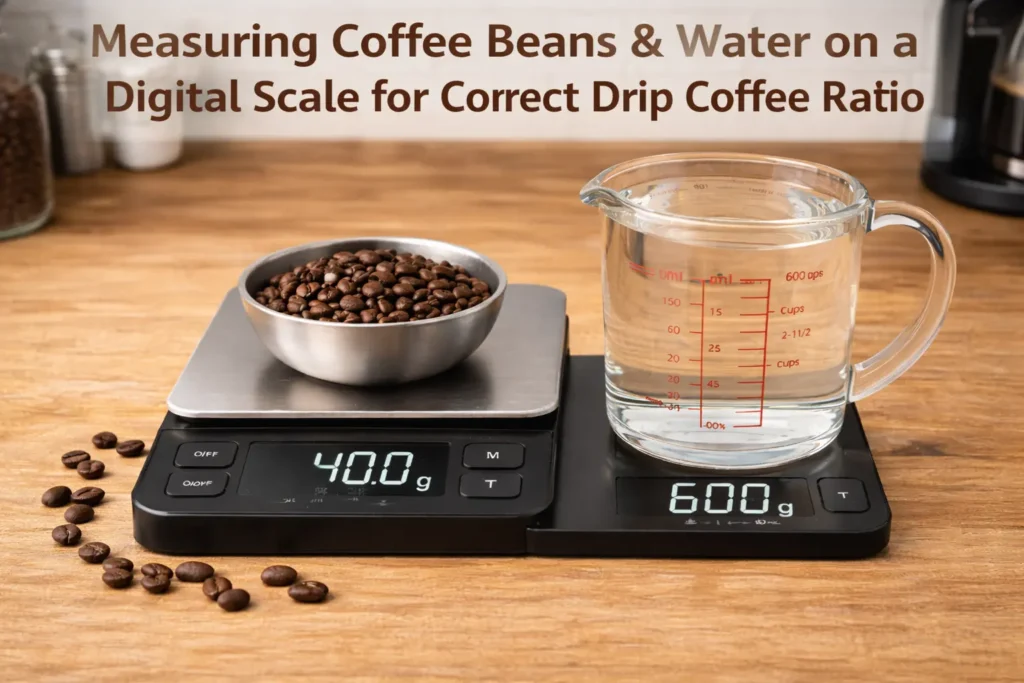
This is the most common drip coffee mistake — and the easiest to fix. Too little coffee leads to watery, weak cups. Too much coffee often tastes bitter and harsh.
- Weak coffee: too little coffee or too much water
- Bitter coffee: too much coffee for the grind size
Fix: Start with a 1:16 ratio (1 gram of coffee to 16 grams of water). Adjust slightly stronger or weaker based on taste.
Mistake #2: Grinding Too Fine (or Too Coarse)
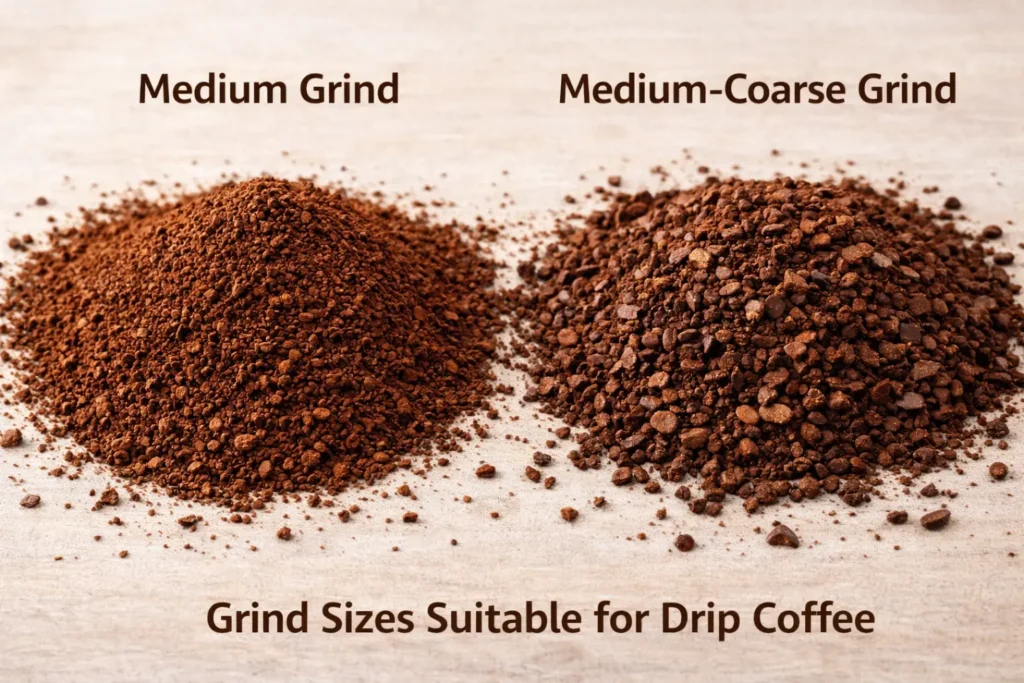
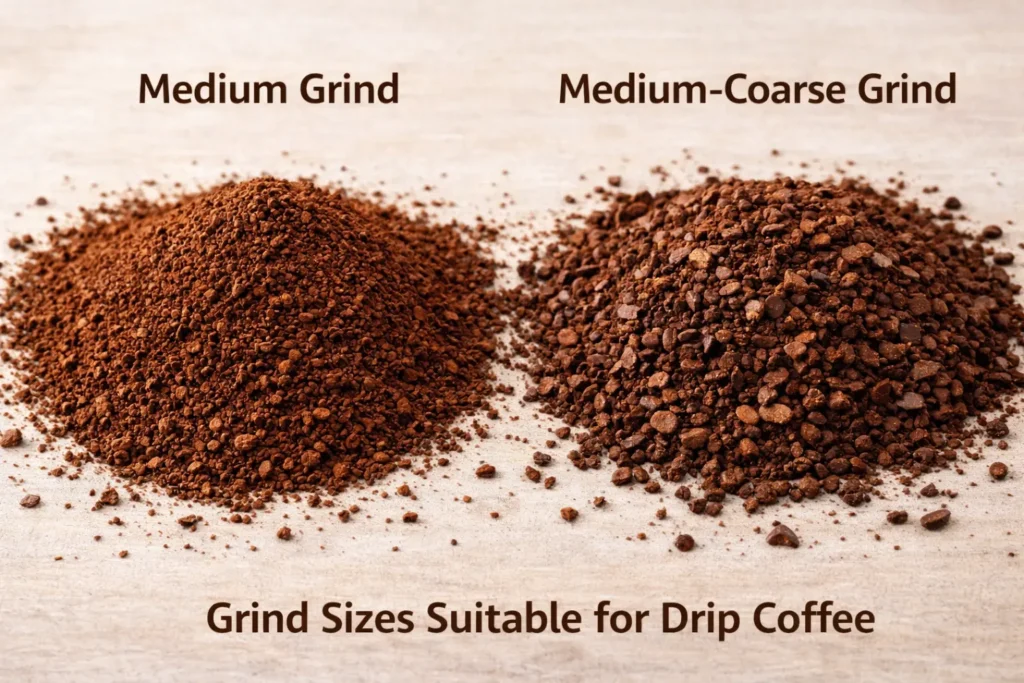
Drip coffee requires a medium grind. Anything much finer slows extraction and causes bitterness. Anything much coarser causes under-extraction and sour or hollow flavors.
- Too fine: bitter, dry, harsh coffee
- Too coarse: sour, thin, weak coffee
Fix: Set your burr grinder to a medium grind and adjust one step at a time. Use our coffee grind size chart for reference.
Mistake #3: Using Stale or Old Coffee Beans
No recipe can fix stale beans. Old coffee loses sweetness, aroma, and body — leaving coffee flat or lifeless.
- Pre-ground coffee stales quickly after opening
- Whole beans lose flavor when exposed to air and heat
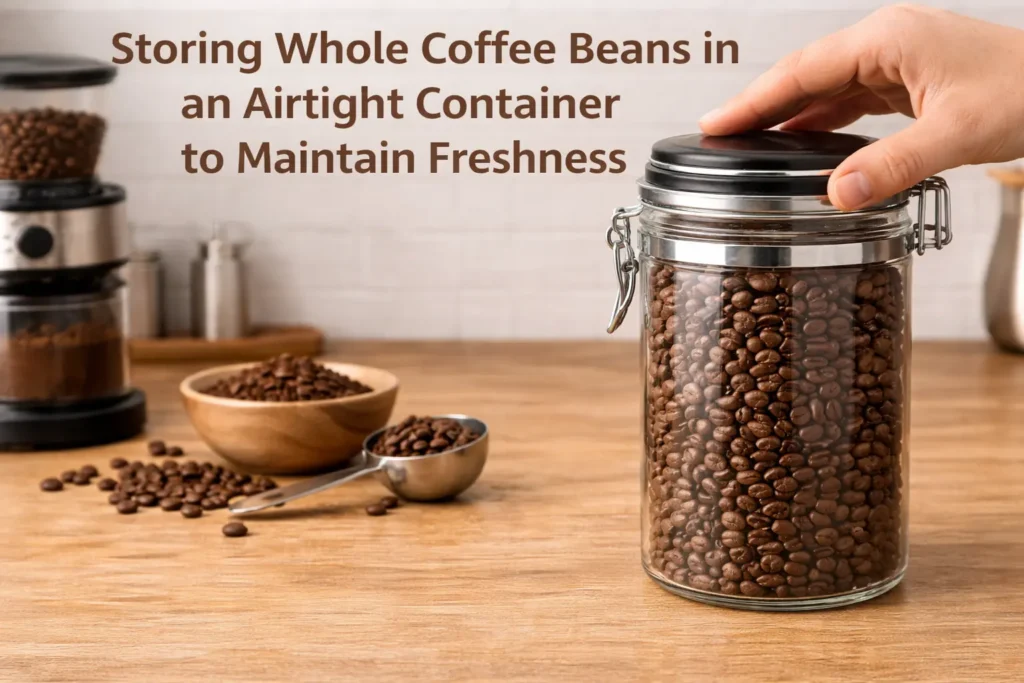
Fix: Buy whole beans when possible, store them in an airtight container, and aim to use them within a few weeks of opening.
Mistake #4: Using the Wrong Roast Level for Your Machine
Many beginners assume lighter roasts are “better.” In reality, very light roasts are harder to extract and often taste sour in standard drip machines.
- Very light roasts: often sour or sharp in basic brewers
- Very dark roasts: often bitter or smoky
Fix: Choose medium or medium-dark roasts, especially if your machine is not SCA-certified. See our best coffee beans for drip coffee guide.
Mistake #5: Not Using a Scale
Scoops are inconsistent because grind size and bean density vary. This leads to coffee that tastes different every day.
Fix: A simple digital scale lets you repeat the same ratio every time. It’s one of the cheapest upgrades with the biggest payoff.
Price may vary. We may earn a commission at no cost to you.
Mistake #6: Ignoring Water Quality
Coffee is mostly water. If your tap water tastes bad on its own, it will taste bad in coffee — no matter how good your beans are.
Fix: Use filtered water if possible. If coffee always tastes harsh or flat, read our water quality for coffee guide.
Mistake #7: Brewing Large Batches Without Adjusting
Drip coffee doesn’t scale perfectly. Large batches often need slightly more coffee to avoid tasting flat.
- Small batches (1–2 cups): standard 1:16 works well
- Large batches (8+ cups): often taste better closer to 1:15
Mistake #8: Changing Too Many Variables at Once
When coffee tastes bad, many people change the beans, grind, ratio, and water all at once — making it impossible to learn what actually helped.
Fix: Change one thing at a time. Taste. Then adjust again.
Quick Drip Coffee Troubleshooting
| Problem | Likely Cause | Fix |
|---|---|---|
| Weak coffee | Too little coffee | Increase dose or tighten ratio |
| Bitter coffee | Grind too fine | Grind coarser |
| Sour coffee | Under-extraction | Grind finer or use fresher beans |
| Flat coffee | Stale beans | Use fresher whole beans |
FAQs
Why does my drip coffee taste bitter?
Bitterness usually comes from grinding too fine, using too much coffee, or brewing very dark roasts. Start by grinding coarser and using a balanced ratio like 1:16.
Why does my drip coffee taste weak or watery?
Weak coffee is typically caused by too little coffee, a grind that’s too coarse, or stale beans. Increasing your dose slightly and grinding fresh usually fixes it.
Does grind size really matter for drip coffee?
Yes. Drip coffee is very sensitive to grind size. Even small changes can shift coffee from sour to bitter.
Is a burr grinder necessary for drip coffee?
It’s not required, but it dramatically improves consistency and flavor. Burr grinders produce even particles that extract more evenly.
What is the best coffee-to-water ratio for drip coffee?
A 1:16 ratio (1 gram of coffee to 16 grams of water) is a reliable starting point for most drip machines.
Can bad water ruin drip coffee?
Absolutely. Coffee is mostly water. If your tap water tastes harsh or flat, your coffee will too—filtered water usually helps.
Why does my coffee taste sour from a drip machine?
Sour flavors usually indicate under-extraction, often caused by a grind that’s too coarse, too little coffee, or very light roasts.
Why does my drip coffee taste different every day?
Inconsistent measuring, changing grind size, or stale beans are the most common causes. Using a scale and grinding fresh improves consistency immediately.
Next Steps: Improve Your Drip Coffee
If you want to keep improving your drip coffee, these guides build naturally on what you just learned. Start with technique, then refine ingredients and gear.