Last updated: February 2026 • 20 min read
Quick answer: The best drip coffee ratio for most people is 1:16 — that’s 1 gram of coffee for every 16 grams of water. But the “right” ratio depends on your coffee maker, grind size, and taste preferences. This guide gives you a simple chart, explains when to adjust it, and shows how to fix weak or bitter coffee fast.
This guide is written for home brewers using real drip machines—not lab equipment or café setups.
Key Takeaways
- Start with a 1:16 coffee-to-water ratio for drip coffee
- Use a slightly stronger ratio (1:15) if coffee tastes weak
- Use a weaker ratio (1:17) if coffee tastes bitter or harsh
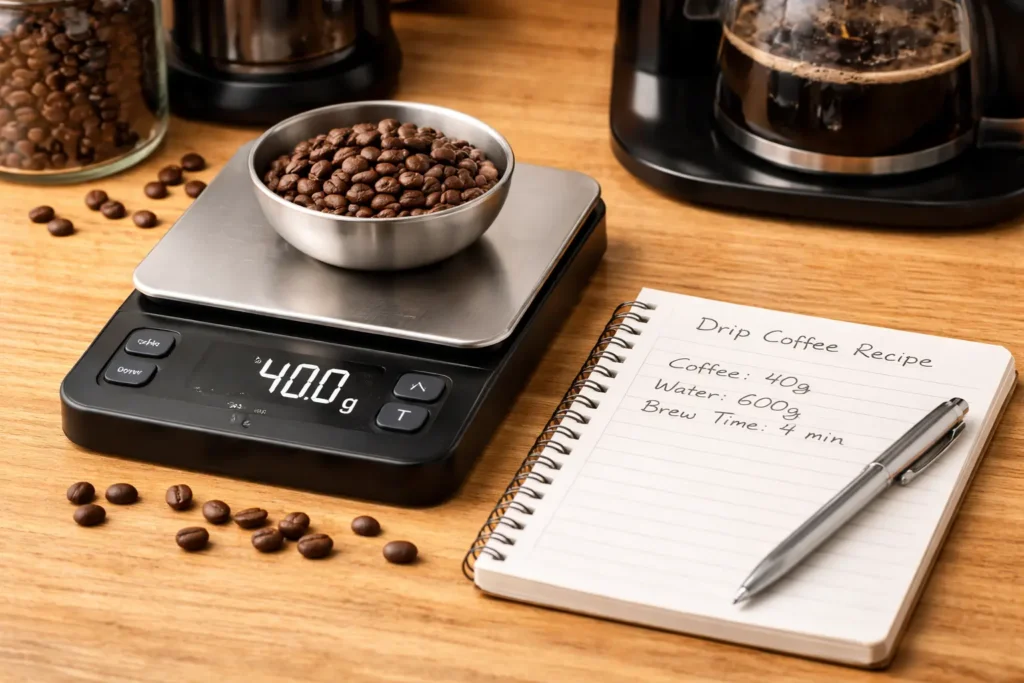
- Measuring by weight is far more accurate than scoops
If you’re new to brewing, start with our Coffee Brewing Foundations guide, then come back here to dial in ratios correctly.
What Is a Drip Coffee Ratio?
A drip coffee ratio describes how much coffee you use compared to how much water you brew with. It’s written as coffee:water.
- 1:16 = 1 gram of coffee for every 16 grams of water
- 1:15 = stronger coffee
- 1:17 = lighter coffee
Drip machines don’t allow much control during brewing, which makes ratios especially important. A small change in dose can dramatically affect flavor.
Simple Drip Coffee Ratio Chart
If you only use one ratio, use 1:16. It’s balanced, easy, and works across most machines and roast levels.

| Coffee Maker “Cups”* | Water | Coffee (1:16) | Coffee (1:15) |
|---|---|---|---|
| 2 cups | 500 g | 31 g | 33 g |
| 4 cups | 1 L (1000 g) | 62 g | 67 g |
| 8 cups | 2 L (2000 g) | 125 g | 133 g |
Want a quick reference? Bookmark this page or save the ratio chart so you don’t have to re-measure every morning.
Adjusting Ratios for Small vs Large Batches
Drip coffee doesn’t scale perfectly. As batch size increases, extraction efficiency changes.
- 1–2 cups: Use standard 1:16
- 4–6 cups: 1:15.5 often tastes more balanced
- 8+ cups: Many people prefer closer to 1:15
This is why “the same recipe” can taste weaker when you brew a full carafe.
*Tip: “Cups” on coffee makers are usually 5–6 oz, not standard measuring cups. If you want consistent results, measure your brew water by weight.
Why 1:16 Is the Best Starting Point
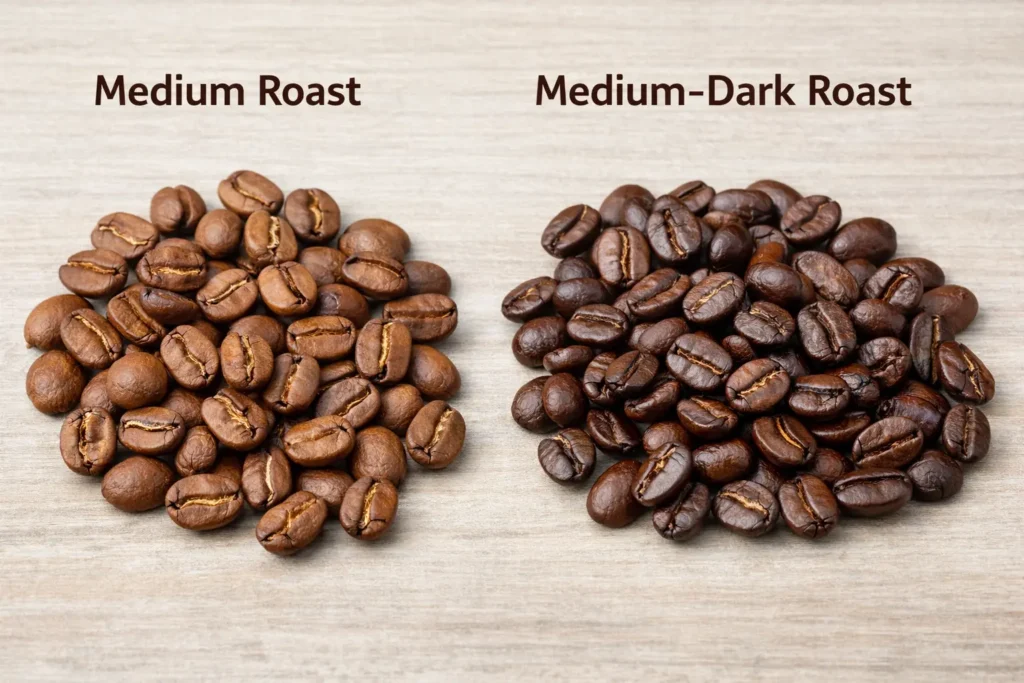
1:16 balances strength and extraction for most drip machines. It’s strong enough to avoid watery coffee but light enough to prevent bitterness. If you’re using medium or medium-dark beans, this ratio is almost always a safe starting point.
Real-World Brewing Notes (What Actually Happens at Home)
In real kitchens—not labs—small variables add up. Here’s what most people notice when brewing drip coffee day to day:
- Morning brews often taste weaker because beans weren’t measured carefully
- Larger batches need slightly more coffee to avoid tasting flat
- Pre-ground coffee usually requires a stronger ratio to compensate for staling
- Medium roasts are far more forgiving than light roasts in basic machines
If your weekday coffee tastes different from your weekend coffee, it’s usually a ratio or batch-size issue—not your machine.
How Grind Size Affects Drip Coffee Ratios
Grind size and ratio work together. If you change one without considering the other, you’ll often end up chasing your tail with “weak” or “bitter” cups.
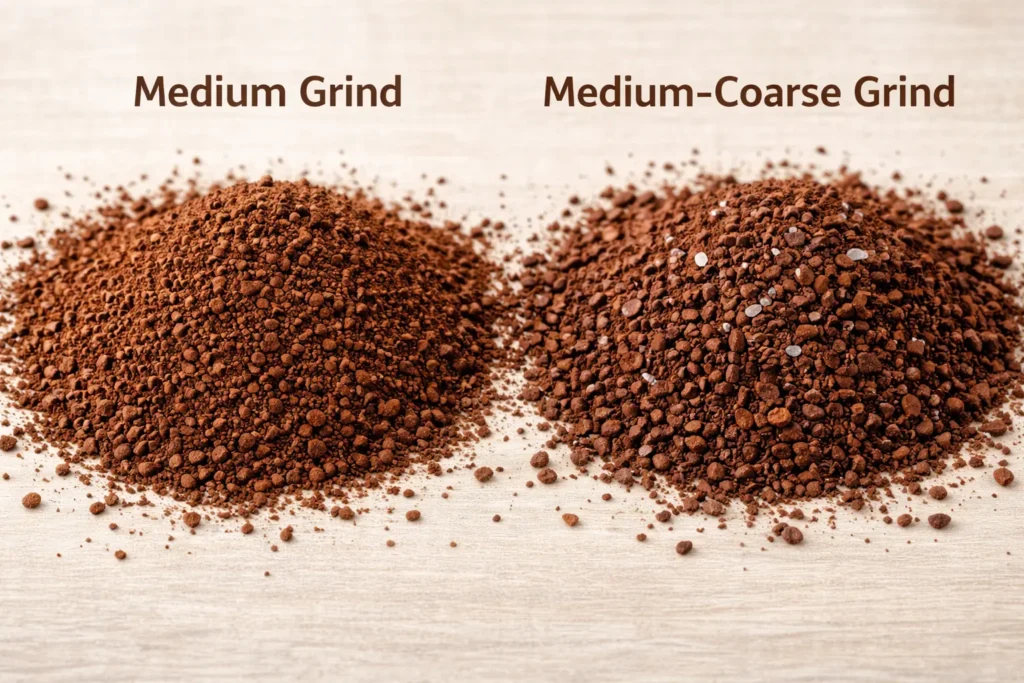
- Too coarse: coffee tastes weak or sour → grind slightly finer or move from 1:17 to 1:16
- Too fine: coffee tastes bitter or harsh → grind coarser or move from 1:15 to 1:16
For a simple reference, use our coffee grind size chart and match “drip” as your baseline.
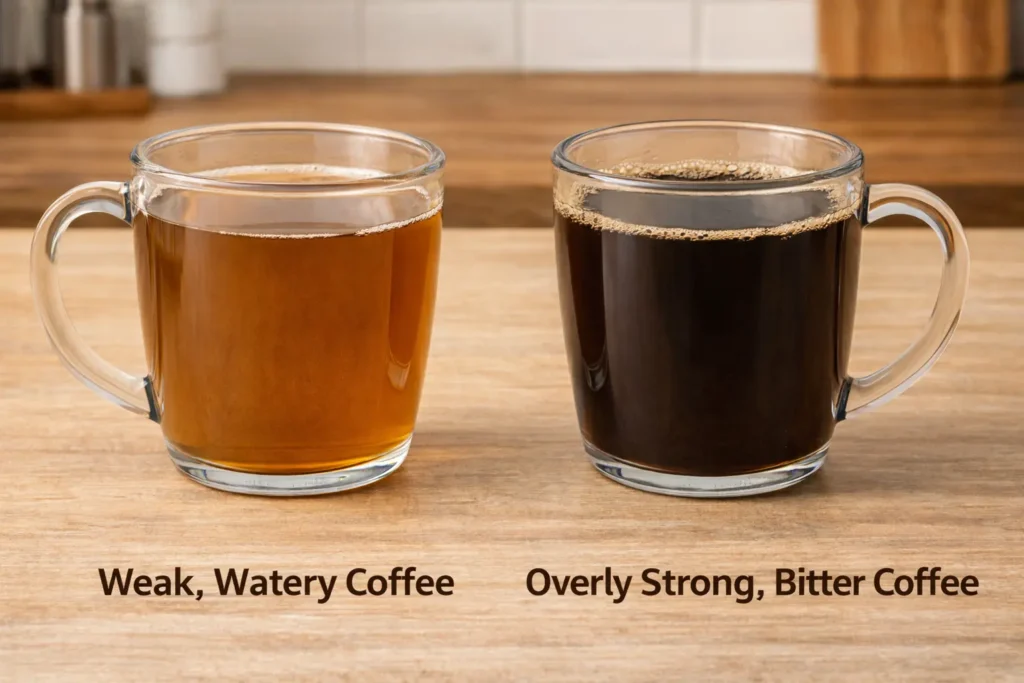
How to Fix Weak, Bitter, or Flat Drip Coffee
If your coffee tastes “off,” don’t guess. Use the quick fixes below. Most drip problems come down to one of three things: dose, grind size, or bean freshness.
| Taste Problem | Likely Cause | Quick Fix (Do This Next) |
|---|---|---|
| Weak / watery | Too little coffee or grind too coarse | Move from 1:17 → 1:16, or grind slightly finer |
| Bitter / harsh | Grind too fine or roast too dark | Grind coarser, or move from 1:15 → 1:16 |
| Sour / sharp | Under-extraction (often too coarse) | Grind finer, keep ratio at 1:16 |
| Flat / dull | Stale beans | Use fresher whole beans; store airtight |
Dialing In by Taste Preference
There’s no single “perfect” ratio—only what tastes right to you.
- If you like bold coffee: Start at 1:15
- If you like balanced coffee: Start at 1:16
- If you like lighter coffee: Start at 1:17
Make one change at a time and taste the difference. That’s how you learn quickly.
For bean upgrades that actually work in drip machines, see best coffee beans for drip coffee makers.
Measuring Coffee Correctly
Scoops are inconsistent because grind size and bean density vary. If you want repeatable coffee (and easier troubleshooting), use a scale. It’s the simplest “upgrade” that makes the biggest difference.
Price may vary. We may earn a commission at no cost to you.
If you want curated picks by budget, see our best coffee scales guide.
Gear That Makes Drip Coffee Ratios Easier
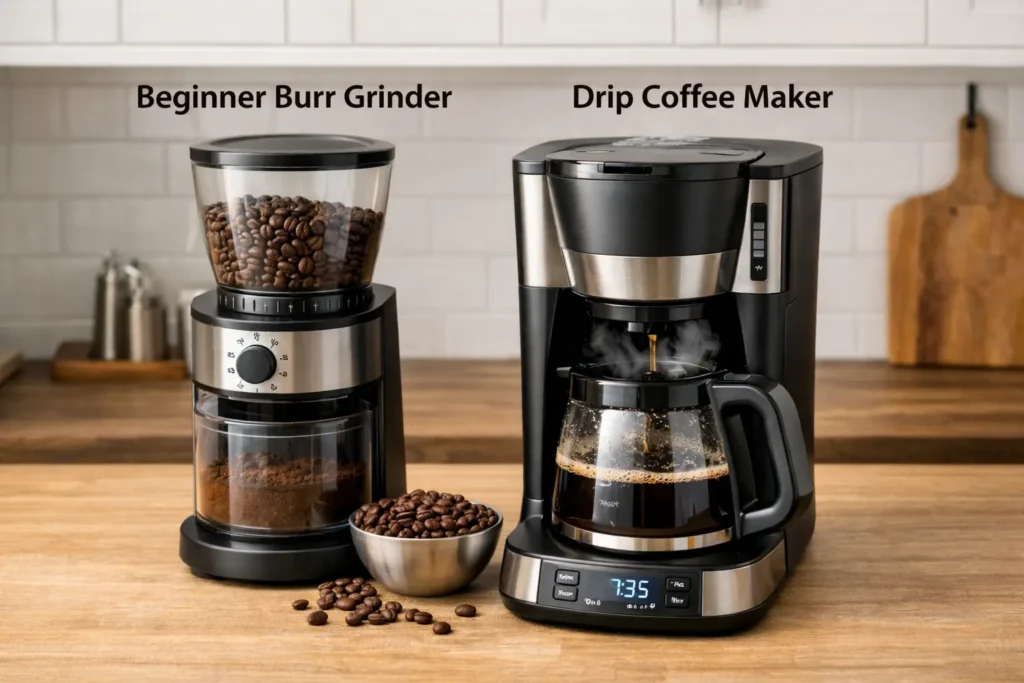
You don’t need fancy gear for great drip coffee, but two items make ratios and results dramatically easier: a scale and a burr grinder.
Price may vary. We may earn a commission at no cost to you.
Need grinder help? Start with our best coffee grinders guide.
What Most People Get Wrong About Drip Coffee Ratios
- Using scoops instead of weight
- Ignoring batch size changes
- Assuming bitterness always means too much coffee
- Changing multiple variables at once
Fixing just one of these usually improves coffee immediately.
FAQs
What is the best coffee-to-water ratio for drip coffee?
For most drip coffee makers, a 1:16 ratio is the best starting point. That means 1 gram of coffee for every 16 grams of water, producing a balanced cup for most beans and machines.
How much coffee should I use per cup of drip coffee?
Drip coffee maker “cups” are usually 5–6 ounces. A good guideline is 15–17 grams of coffee per cup, depending on how strong you like your coffee.
Why does my drip coffee taste weak even with the right ratio?
Weak coffee is often caused by stale beans, a grind that’s too coarse, or under-dosing. Try grinding slightly finer or increasing your coffee dose before changing the ratio.
Why does my drip coffee taste bitter at a 1:16 ratio?
Bitterness usually comes from grind size or roast level, not the ratio alone. Grinding too fine or using very dark roasts can cause over-extraction even at a correct ratio.
Should I change the ratio for light or dark roast coffee?
Yes. Light roasts often taste better slightly stronger (around 1:15–1:15.5), while dark roasts usually taste smoother at 1:16–1:17.
Does grind size affect the drip coffee ratio?
Absolutely. Grind size and ratio work together. A coarser grind may need a stronger ratio, while a finer grind may need a weaker one to avoid bitterness.
Do I need a scale to measure drip coffee ratios?
A scale isn’t required, but it’s the most accurate way to measure coffee and water. Scoops vary by grind size and bean density, which leads to inconsistent results.
Why does my coffee taste different when brewing a full pot?
Drip coffee doesn’t scale perfectly. Larger batches often need slightly more coffee (a tighter ratio) to avoid tasting flat or weak.
Related Guides: Improve Your Drip Coffee
These guides work together to help you dial in better drip coffee. Start with technique, then refine beans, grind, and water for consistent results.
Tip: If coffee tastes off, adjust one variable at a time—ratio, grind size, beans, or water.